
Wild Coast
South Africa's most remote, undeveloped coastline — Mdumbi, Coffee Bay, and Bulungula, the former Transkei. No tar roads to the beach, no chain hotels, real Xhosa village-run tourism.

Straight talk: Some links on this page are affiliate links — if you book through them, Secrets of Surf Travel earns a small commission at no extra cost to you. We only link places and people we’d use ourselves, and coverage is never for sale. Those commissions are what keep this site running and fund the next trip.
Getting There
Mthatha Airport (IATA: UTT) is the closer gateway, but served by a single route — Johannesburg via SA Airlink — and has a documented history of operational issues (a 2019 suspension over sub-standard emergency-response systems). East London (King Phalo Airport, ELS) is meaningfully better-connected — Airlink and CemAir to Johannesburg, CemAir to Cape Town, and FlySafair to Cape Town, Durban, and Johannesburg — at the cost of a longer overland leg into the Wild Coast. If your dates are flexible, East London's reliability is the safer bet.
Realistic total travel time from the US: a long-haul flight to Johannesburg (often 20+ hours from the West Coast via a connection), plus a domestic leg to Mthatha or East London, plus the overland leg to your lodge. Door-to-door, budget 24-30+ hours before you're settled in — this is not a quick add-on to another trip.
Ground Transport
- This is a call-ahead region, not a book-online one. Lodges in Coffee Bay, Mdumbi, and Bulungula typically arrange shuttle pickup from Mthatha (historically staged from the Shell Ultra City) once you've booked directly by phone or WhatsApp — don't assume a shuttle exists until your specific lodge confirms it. Some backpacker operators that historically ran shuttles here appear to no longer be reliably active; confirm before you fly.
- Roads are genuinely rough — this is not exaggeration. The N2 and R61 are the main paved arteries, but roads into the coastal towns themselves are predominantly gravel and often in poor repair, with livestock crossing a real and recurring hazard. Coffee Bay's own regional tourism site explicitly discourages driving after dark.
- 4x4 recommended, not always strictly required. A standard rental can often reach the main lodges in good conditions, but a 4x4 or high-clearance vehicle is the safer call for secondary roads, and Bulungula's access is reported as the roughest of the three hubs.
- Minibus taxis are a real, cheap, commonly-used mode here — an informal system based out of Mthatha's taxi rank, not a scheduled or bookable service.
When to Go & What to Pack
- Reversed seasons, same as the rest of South Africa: summer is November-February, winter is June-August. Air temperatures run roughly 17-28°C in summer and 9-21°C in winter — pack layers.
- Water temperature — between Cape Town's cold water and Durban's warm water: Coffee Bay averages roughly 20.6°C at the August low up to 24.9°C at the February high — a comfortable year-round range, warmer than the Cape Town zone, cooler than KwaZulu-Natal.
- No malaria risk. This stretch of the Eastern Cape falls outside all recognized South African malaria transmission zones (limited to Kruger, Mpumalanga, Limpopo, and northern KwaZulu-Natal) — no prophylaxis needed.
- Connectivity — expect patchy coverage. Sparse population and low development mean cell signal is commonly reported as spotty in valleys, better on hilltops and at lodge main buildings. Confirm connectivity expectations directly with your lodge.
Good to Know
- The advisory: the same countrywide US State Department Level 2 rating covered on the other South Africa zone pages — no region-specific advisory found for the Wild Coast.
- Crime, honestly assessed: Eastern Cape as a province shows among the highest homicide rates in South Africa nationally — a real, citable figure. But that province-wide number is heavily weighted by urban centers (Gqeberha, East London), not the sparsely populated Wild Coast villages themselves. One dated, non-quantified local note worth passing on: a regional travel guide has described Coffee Bay itself as having "fallen on hard times" with buildings falling into disrepair — normal travel precautions apply, and there's no evidence the lodges themselves are a crime hotspot.
- Health — the thinnest medical infrastructure of any zone on this site. The regional referral hospital is Nelson Mandela Academic Hospital in Mthatha, a real public teaching hospital, but resourced for a very poor district. Given the gravel-road remoteness and distance from Mthatha to the lodges, travel insurance with medical evacuation coverage is a genuinely load-bearing recommendation here — more so than in the Cape Town or Jeffreys Bay zones.
Respecting the Locals
This stretch of the former Transkei runs on community ownership, not corporate tourism — lodges like Mdumbi Backpackers and Bulungula Lodge are owned and staffed by the Xhosa villages they sit inside, not outside operators leasing the view. There's no resort infrastructure here to hide behind: what you spend goes straight into a village economy that was here long before any tourist arrived. Treat that ownership model as the baseline for how you show up here, not as a nice detail.
- Locals get first priority, always. Watch a session before you paddle out. Learn who's who before you learn the wave. Sit inside and catch what they let through — the leftovers are yours, not the set waves.
- Don't backpaddle. Ever. Being in position doesn't make the next wave yours, especially if you didn't wait your turn. If a local wants a wave, let them have it…even if it IS your turn. That older guy who may not be the best surfer out there has probably been surfing that wave before you even sat on a board. If you don't know someone, assume they're local.
- Don't snake. This shouldn't even need to be said, but…dropping in on someone, local or not, is the ultimate disrespect and the fastest way to be sent out of the water. Don't be that guy!
- Say hi. A “howzit,” “whatsup,” or “nice wave,” eye contact, or a nod in the channel — it costs nothing and it's the fastest way from stranger to welcome.
- This is somebody's home, not a resort amenity. The break you're surfing is where a local kid learned to swim, where someone's uncle has surfed for forty years. Act like a guest, because you are one.
- Spend where it actually helps. The food truck, the local shaper, the family-run rental, the local photographer — that's where a surf trip's money should land, not just the chain hotel gift shop. See The No-Reveal Code for why that's the whole premise of this site.
- Leave it better than you found it. Pick up trash that isn't yours. Don't touch reef, wildlife, or cultural sites.
Locals have watched hundreds, if not thousands, of people come and go — some for days, some for months or years — and almost all of them eventually go home. The locals are still there. It takes many, many years to actually become one. Keep that in mind the next time you feel entitled to the same waves they get.
None of this is a secret handshake. It's just how you'd want a guest to act in your own backyard.
Mdumbi (Tshani Village)
The anchor is a single, community-owned lodge — this hub has essentially no separate commercial layer beyond it, which is honest and expected for this zone.
Stays
- Mdumbi BackpackersTshani village, above Mdumbi BeachBudget 100% community-owned, the longest-running lodge on this stretch, directly above the beach. Cash/EFT only, no card payments, no liquor license. 4.7/5 (100 reviews) — guests cite "the breathtaking location and the warm, welcoming community spirit." mdumbi.co.za @mdumbi mdumbi@mdumbi.co.za
- Sizani LodgeTshani village, overlooking the Mdumbi river mouth Self-catering alternative to backpacker-dorm style, with a river-mouth/beach view. sizanilodge.business.site WhatsApp
Where to Eat
Only Mdumbi Backpackers' own communal chill-out hall/restaurant — no standalone restaurants exist in this hub, expected for its size.
Surf Guides, Camps, Shops, Repair, Wheels, Photographers, Wellness
No independent, branded businesses in any of these categories — a real gap, not an oversight. Surfing here is arranged informally through Mdumbi Backpackers directly rather than through a separate guiding company; the same is true for board rental. Car rental is only available back at Mthatha Airport (roughly 1h45-2h drive) via the major chains.
Other Adventures
- Mdumbi River kayakingVia Mdumbi BackpackersKayaking up the river past mangroves and kingfishers.
- Cliff jumping & hidden sea cavesVia Mdumbi BackpackersGuide-led access to hidden coastal caves — needs local tide/safety knowledge.
Also run through the lodge, per its own activity list: snorkeling, fishing, horse riding, hiking, paragliding, and seasonal whale/dolphin watching, most directly run by local villagers.
Coffee Bay
The zone's most established hub — several backpacker lodges, the closest thing to a village center, and access to the famous Hole in the Wall landmark.
Surf Guides & Tours
No independent surf-guide company — coaching is bundled directly into Coffee Shack Backpackers and Bomvu Paradise Backpackers (below) rather than run as a separate business.
Stays
- Coffee Shack Backpackers1 Coffee Shack WayBudget The flagship, most surf-oriented lodge in Coffee Bay — on-beach at the Bomvu River mouth, the most structured surf-guiding program in the whole zone plus board/wetsuit rental. coffeeshack.co.za @coffeeshackbackpackers WhatsApp
- Ocean View HotelCoffee BayMid-range Coffee Bay's actual hotel-tier property, beachfront, with a Saturday seafood buffet.
- Nenga River Lodge~150m from the main beachMid-range12 units plus 6 camping sites, licensed restaurant and bar.nengariverlodge1@gmail.com
- Sheep & Stars Guest HouseCoffee BayMid-rangeRural huts with a touch of luxury.sheepandstars@wildcoast.earth
Bomvu Paradise Backpackers is still listed by third-party directories as operating, but its official domain has expired to a parked page — a real credibility flag. Confirm by phone (+27 47 575 2073) before relying on it as active.
Where to Eat
No standalone restaurants independent of lodging — dining here is lodge-attached: Ocean View Hotel's restaurant, Coffee Shack's Babalaza Cafe & Bar, Nenga River Lodge's licensed restaurant. Honest and expected for this hub.
Surf Shops & Board Rentals
Lodge-run only — Coffee Shack rents boards and wetsuits directly. No independent standalone surf shop, ding repair, or surf photographer confirmed anywhere in Coffee Bay.
Wheels
No local car or scooter rental — nearest options are the major chains at Mthatha Airport, roughly a 2-hour drive.
Other Adventures
- Hole in the Wall guided hikeVia Coffee Shack or local trailhead guidesBudgetGuided access to the famous rock-arch landmark — bookable through Coffee Shack, or with independent local guides (one named guide, "Prince," referenced in local directories) at the trailhead.
- Mapuzi Cliffs & cave explorationVia Coffee ShackCliff jumping and cave exploration, guide-led.
Bulungula (Nqileni Village)
Cultural and eco-tourism, not a surf destination — genuinely no organized surf scene here, and we're saying so plainly rather than stretching for a surf angle. This is the zone's strongest hub for real, community-run Xhosa cultural tourism.
Stays
- Bulungula LodgeNqileni Village, Elliotdale DistrictBudget Fair Trade certified, 100% owned and managed by Nqileni village — a genuine, verifiable community-ownership model, not marketing language. Rondavels, forest cabins, and a campground; on-site restaurant with traditional and vegetarian options. 4.4/5 (102 Google reviews) — Lonely Planet called it "spectacular"; Rough Guide called it "one of the World's ultimate ethical travel experiences." bulungula.co.za @bulungula_lodge WhatsApp
- Bulungula HomestayNqileni VillageVillage homestay program run separately through the Bulungula Incubator community NGO.nkuli@bulungulaincubator.org
Tourism spend here directly funds the Bulungula Incubator's education, health, and livelihoods programs in the village — a genuine differentiator for this hub, not a marketing line.
Where to Eat
Only Bulungula Lodge's own restaurant plus a self-catering kitchen — no standalone restaurants, expected for this hub.
Surf Guides, Shops, Repair, Wheels, Photographers, Wellness
Not applicable — this hub has no surf-tourism presence at all. Yoga is offered at Bulungula Lodge; no dedicated massage or wellness business exists separately.
Other Adventures
- Xhosa village cultural toursVia Bulungula LodgeGuided village tours run by and directly benefiting Nqileni village, plus a dedicated women's empowerment tour and a herbalist tour.
- Fishing with local fishermenVia Bulungula LodgeA genuine local activity, not a staged tourist product.
- Horseback riding & kayakingVia Bulungula LodgeBeach and headland horse trails, plus river/estuary kayaking.
Local Secrets
Nine non-surf reasons this zone rewards the curious — this is genuinely the most underdocumented zone on the site, and it shows in the photo coverage below. That's an honest reflection of how remote this coastline really is.
- Hole in the Wall Golden hour, sunrise or sunset
An iconic natural rock arch cut into a sea cliff at the Mpako River mouth near Coffee Bay — the Xhosa name, esiKhaleni ("place of sound"), comes from the way waves boom through the opening. Local lore treats it as a gateway to the ancestors.
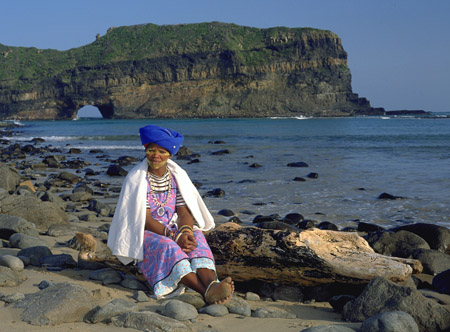 Photo: South African Tourism / Wikimedia Commons (CC BY 2.0)
 - Xhosa Village Homestays & Rondavel Life Year-round; more atmospheric in the dry winter months (May-Sep)
Staying in or visiting traditional rondavel homesteads, learning the building style and daily rhythm of Xhosa homestead life — a real, non-staged draw of this zone specifically because there's no built tourist infrastructure here.
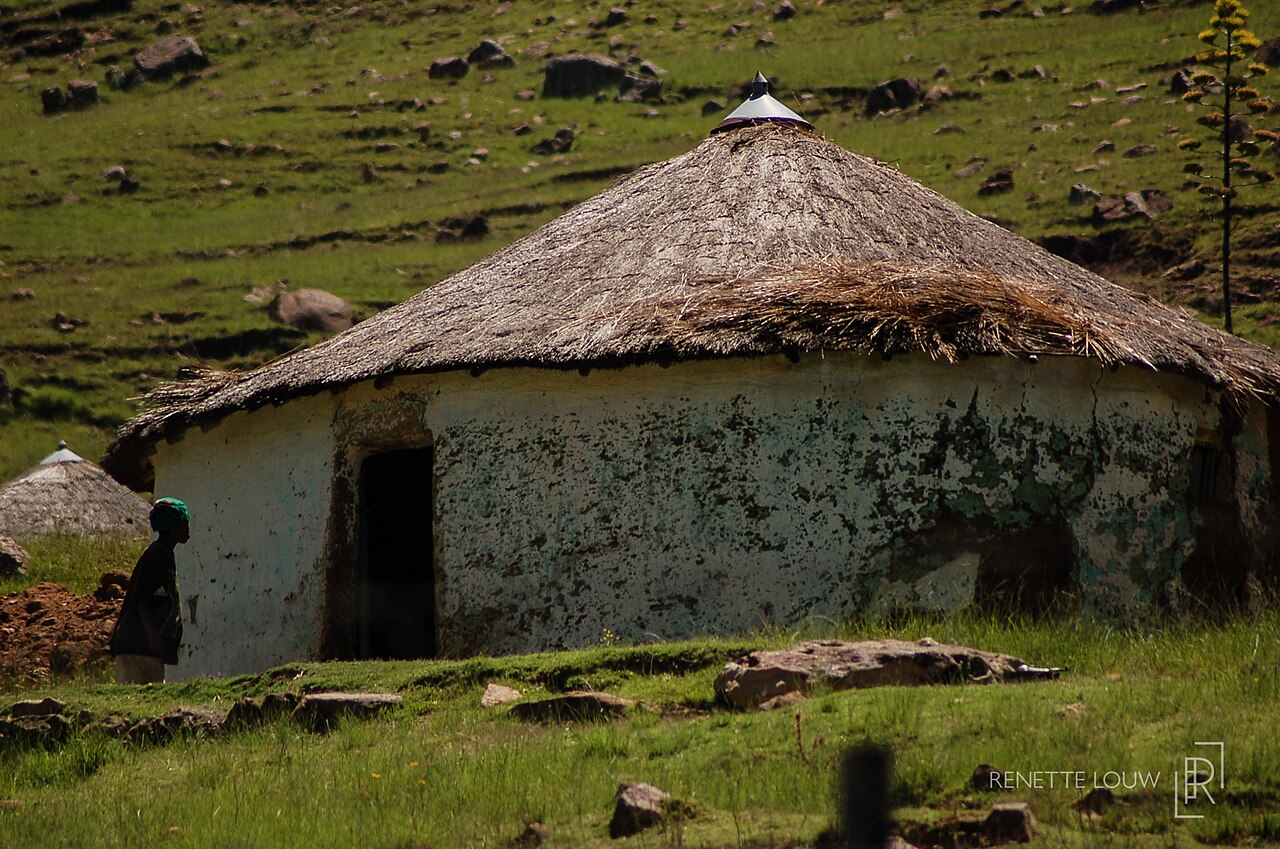 Photo: RenetteLouwLouw / Wikimedia Commons (CC BY-SA 4.0)
 - Village-to-Village Hiking, "No Cars, No Roads" Dry winter months (Apr-Sep) for firmer underfoot conditions
A marked hiking connection between Mdumbi and Coffee Bay, plus general Wild Coast coastal-path walking along headlands and wave-cut cliffs — this zone's total lack of tar roads and reliance on footpaths between villages is itself a genuine point of difference.
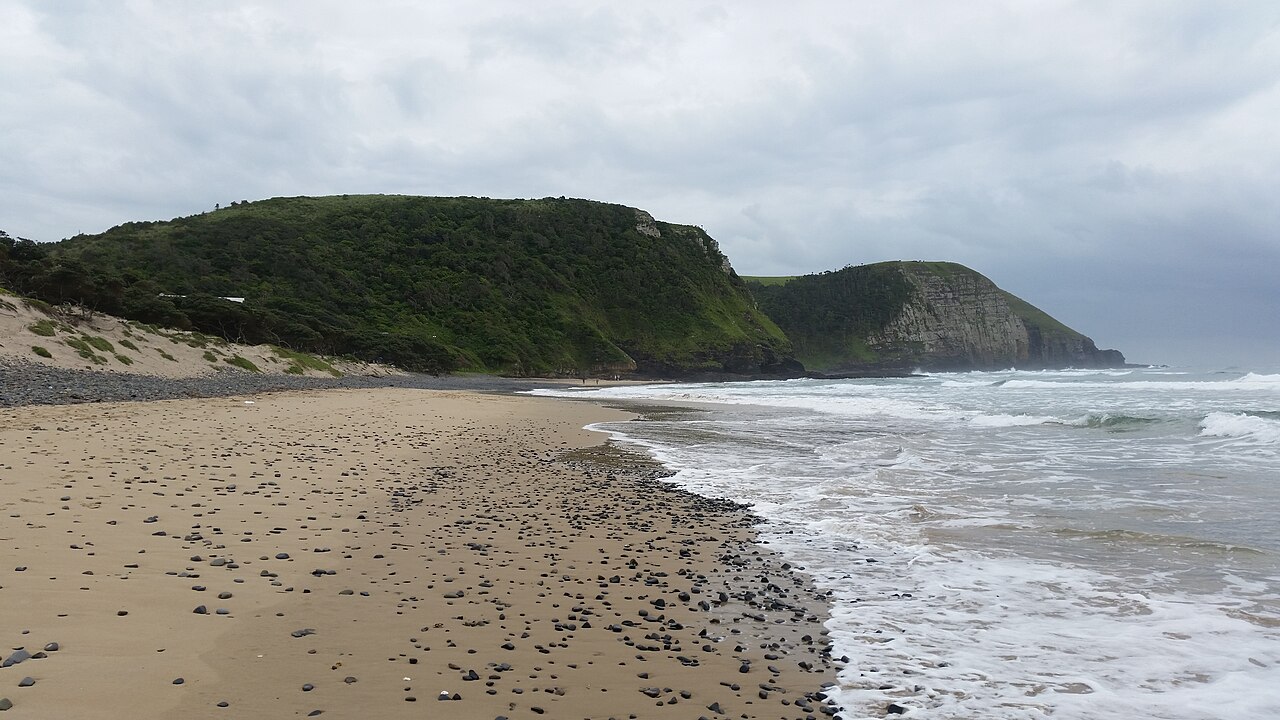 Photo: hermansmit / Wikimedia Commons (CC BY-SA 3.0)
 - Bulungula Lodge Cultural Programs Year-round, daytime
A 100% community-owned tourism enterprise in Nqileni village — guided Xhosa village tours, a women's empowerment tour, and a herbalist tour, run entirely by local residents and Fair Trade certified.
- Herbalist & Traditional Knowledge Visits Via Bulungula Lodge, year-round
A respectful, community-sanctioned visit with a local herbalist, part of Bulungula Lodge's cultural program — not a staged tourist performance.
- Horseback Riding on Wild Coast Beaches Low tide; cooler months (May-Aug) most comfortable
Long stretches of open beach and headland make this a genuine local draw, offered directly through Bulungula Lodge's activity roster.
- River & Estuary Paddling Rising tide, calmer mornings
Kayaking up the Mdumbi River past mangroves and kingfishers, or canoeing at Bulungula — calm, mangrove-lined water rather than open ocean.
- Sunrise/Sunset Viewpoint & Stargazing Clear winter nights (May-Aug) for stargazing; any season for sunset/sunrise
Mdumbi Backpackers specifically markets its hilltop view tower for sundowners, sunrise trips, and stargazing — a genuine feature of an area with zero light pollution and no built infrastructure.
- Seasonal Whale & Dolphin Watching Roughly June-November, South African winter/spring
Southern right and humpback whale migration passes this stretch of coast — opportunistic rather than a bookable tour, spotted from shore at Mdumbi.
Several activities above have no real photo coverage on Wikimedia Commons or Flickr — this zone is genuinely under-documented relative to Cape Town or Jeffreys Bay. Rather than substitute an unrelated or fake-matching photo, those entries are text-only. That's an honest outcome, not a shortcut.
Questions people actually ask.
Should I fly into Mthatha or East London?
Mthatha Airport (IATA: UTT) is closer to Coffee Bay, Mdumbi, and Bulungula, but it's served by a single route — Johannesburg via SA Airlink — and has a documented history of operational issues. East London (ELS) has more domestic connections (Johannesburg, Cape Town, Durban) but means a longer overland leg into the Wild Coast. If your dates are flexible, East London's flight reliability is the safer bet.
How do I actually get from the airport to my lodge?
This is not a book-online region. Lodges in Coffee Bay, Mdumbi, and Bulungula typically arrange shuttle pickup from Mthatha once you've booked directly — contact your lodge by phone or WhatsApp ahead of arrival to confirm pickup, cost, and timing. Don't assume a shuttle exists until your specific lodge confirms it.
Do I need a 4x4?
Recommended, not always strictly required. Main roads in are tarred but pothole-heavy with livestock crossing regularly; roads branching to the coast and between towns are largely gravel and can be rough. A standard rental can often make it to the main lodges in good conditions, but a 4x4 or high-clearance vehicle is the safer call, and driving after dark on these roads is not recommended.
Is this a malaria area?
No. This stretch of the Eastern Cape falls outside all recognized South African malaria transmission zones, which are limited to Kruger, Mpumalanga, Limpopo, and northern KwaZulu-Natal. No prophylaxis is needed here.
Is the Wild Coast safe?
As safe as it is remote, with the same national-level cautions that apply everywhere in South Africa. Eastern Cape as a province shows high crime statistics, but those numbers are driven mainly by its cities, not the sparsely populated Wild Coast villages where the lodges sit. The bigger practical risk in this zone is logistical — rough roads and thin medical infrastructure — rather than crime.
How rustic is this trip, really?
Genuinely rustic — this is the least-developed zone on the site. Expect gravel roads, patchy cell signal, a single regional hospital in Mthatha as your medical backstop, and lodges that run on phone and WhatsApp booking rather than polished online systems. That's the draw as much as the challenge. Travel insurance with medical evacuation coverage is worth taking seriously here specifically.
Disclosure & how this page works.
Straight talk: Some links on this page are affiliate links — if you book through them, Secrets of Surf Travel earns a small commission at no extra cost to you. We only link places and people we’d use ourselves, and coverage is never for sale. Those commissions are what keep this site running and fund the next trip.
Every listing was researched in 2026 and is being verified in person. This zone in particular runs on phone and WhatsApp booking, not polished online systems — treat prices, hours, and even operating status as strong starting points and confirm directly with the lodge before you fly. And per the No-Reveal Code: you will find no surf spots on this page, ever.