
Vendée & Charente-Maritime
A gentler, more family-oriented stretch of French Atlantic coast than the Basque Country — nicknamed the Côte de Lumière for its sunshine hours, with beach breaks that mostly sit in a swell shadow from Brittany. Brétignolles-sur-Mer and Saint-Jean-de-Monts anchor the mainland; Île de Ré and Île d'Oléron, two very differently-charactered islands, sit just offshore across real toll and toll-free bridges.

Straight talk: Some links on this page are affiliate links — if you book through them, Secrets of Surf Travel earns a small commission at no extra cost to you. We only link places and people we’d use ourselves, and coverage is never for sale. Those commissions are what keep this site running and fund the next trip.
Some vacation-rental search links on this page (marked “Search Vrbo rentals” or “Search Booking.com stays”) are affiliate links. Every vendor link below is still a plain courtesy link. As more partnerships come online, more links may earn us a commission; the promise above holds either way.
Getting There
Nantes Atlantique (NTE) is the gateway for Brétignolles-sur-Mer and Saint-Jean-de-Monts — roughly an hour's drive to Saint-Jean-de-Monts. Like the site's other France zone, no direct US routes exist; expect to connect through Paris or another European hub.
La Rochelle-Île de Ré Airport (LRH) is the gateway for the two islands — only Ryanair, easyJet, and Jet2 fly there, mostly from the UK and a handful of European cities, again with no direct US service. LRH sits essentially at the foot of the Île de Ré bridge (about 16 minutes' drive); Île d'Oléron is roughly an hour further south.
Documents: same Schengen rules as the site's French Basque Country zone — no visa needed for US citizens for stays under 90 days within any 180-day period.
Ground Transport
- France drives on the RIGHT. Unlike the site's compact Basque Country zone, a car is genuinely necessary here — neither island has train service, bus coverage is thin, and the gap between the mainland Vendée towns and the islands runs roughly 2 hours.
- Île de Ré's bridge is tolled — a round-trip car toll runs roughly €9 in low season up to €20 in high season (collected only on the mainland side); pedestrians and cyclists cross free. Île d'Oléron's viaduct has been toll-free since 1991 — it held the record as France's longest bridge until 1974.
- A regional train (SNCF TER) connects Nantes to Saint-Jean-de-Monts, roughly 6 trains/day, about 1h20-1h25. Brétignolles-sur-Mer sits about 27km/28 minutes from Saint-Jean-de-Monts by road.
- Once on either island, flat, protected cycle paths (100-170km of them, depending on the island) are a genuinely strong way to get around locally, even if a car got you there.
When to Go & What to Pack
- This coast sits partly in a swell shadow from Brittany, so the beach breaks here genuinely don't carry the raw power of Hossegor and the Landes coast further south — though points and reefs between the beach breaks pick up real quality. The region is nicknamed the Côte de Lumière for having the most sunshine hours on the French Atlantic coast.
- The "gentle, family-friendly" reputation is real but not universal — know the one real exception. Several named beaches (Dune and Normandelière at Brétignolles, among others) are genuinely gentle-sloped and beginner-appropriate. La Sauzaie itself is the opposite: an experienced-surfers-only reef break, working mid-to-high tide, occasionally floodlit for night sessions. Don't let the region's general reputation set the wrong expectation there.
- Water temperature tracks the same Bay of Biscay profile as the Basque Country coast: peaking roughly 66-73°F (19-23°C) around mid-August, dropping to 50-52°F (10-11°C) around the March minimum. A 2mm shorty or 3/2mm spring suit covers the warm months; a 5/4mm or 5/3mm with 3mm boots and gloves is right for the March low.
- July and August are peak season everywhere in this zone — Île de Ré traffic is genuinely notorious, prices roughly double low-season rates, and accommodation books out months ahead. May, June, and September offer better crowds and pricing while keeping decent weather.
Good to Know
- Safety: same France-wide Level 2, Exercise Increased Caution baseline as the site's Basque Country zone — nothing in the research flags this rural/coastal region as elevated risk beyond ordinary petty-theft precautions.
- Currency: Euro.
- Language: French. Unlike Basque Country's living regional-language identity, this coast's heritage language, Poitevin-Saintongeais, is classified by UNESCO as severely endangered with no comparable everyday-identity movement — though it's a genuine historical ancestor of Acadian and Cajun French, a small but real piece of trivia.
- Emergency number: 112, same as the rest of the EU.
- Cost of living: somewhat cheaper than Biarritz and the Basque Country, though the margin is modest rather than dramatic — La Rochelle runs roughly €60/day budget, €139/day mid-range, €281/day luxury, versus Biarritz's €68/€156/€313.
Respecting the Locals
This coast's real economy has never been surfing — it's oyster farming, one of France's most important production regions, and on Île de Ré, a centuries-old salt-marsh trade still worked by hand today. The mainland towns run campsite-dominant and family-oriented, built around a slower, quieter rhythm than the bigger Basque Country crowds further south, and the working farmers and salt harvesters who share this coastline with visiting surfers were here long before anyone came for the waves. Respect that this is a working coast first.
- Locals get first priority, always. Watch a session before you paddle out. Learn who's who before you learn the wave. Sit inside and catch what they let through — the leftovers are yours, not the set waves.
- Don't backpaddle. Ever. Being in position doesn't make the next wave yours, especially if you didn't wait your turn. If a local wants a wave, let them have it…even if it IS your turn. That older guy who may not be the best surfer out there has probably been surfing that wave before you even sat on a board. If you don't know someone, assume they're local.
- Don't snake. This shouldn't even need to be said, but…dropping in on someone, local or not, is the ultimate disrespect and the fastest way to be sent out of the water. Don't be that guy!
- Say hi. A “howzit,” “whatsup,” or “nice wave,” eye contact, or a nod in the channel — it costs nothing and it's the fastest way from stranger to welcome.
- This is somebody's home, not a resort amenity. The break you're surfing is where a local kid learned to swim, where someone's uncle has surfed for forty years. Act like a guest, because you are one.
- Spend where it actually helps. The food truck, the local shaper, the family-run rental, the local photographer — that's where a surf trip's money should land, not just the chain hotel gift shop. See The No-Reveal Code for why that's the whole premise of this site.
- Leave it better than you found it. Pick up trash that isn't yours. Don't touch reef, wildlife, or cultural sites.
Locals have watched hundreds, if not thousands, of people come and go — some for days, some for months or years — and almost all of them eventually go home. The locals are still there. It takes many, many years to actually become one. Keep that in mind the next time you feel entitled to the same waves they get.
None of this is a secret handshake. It's just how you'd want a guest to act in your own backyard.
Brétignolles-sur-Mer
A standard, campsite-dominant French family beach-resort town along 12km of coastline — its unofficial motto translates to "live the sea in the countryside." La Sauzaie, the zone's one serious reef break, is a beach within this commune, not an independent town — every business serving it is really a Brétignolles-sur-Mer business, several of which specifically run sessions there.
Brétignolles-sur-Mer runs campsite-dominant, with a thin hotel tier — the honest French family-beach-resort accommodation mix.
Surf Schools
- Breti SurfschoolDunes 1 beachFounded 2016, year-round, instruction from age 6 plus rental — a genuine family-atmosphere reputation. breti-surfschool.com · Facebook · Map
- Ombak SurfcoachingItinerant, including La Sauzaie when conditions suitSmall groups, chooses the day's spot based on swell and skill level. ombaksurf.fr · Instagram · Map
- Bahia Rip Curl Surf ShopBrétignolles-sur-MerRental across surf, bodyboard, and SUP, mid-April through mid-November. bahiaripcurlsurfshop.fr · Map
Stays — genuinely a campsite-dominant town
- Camping Les DunesDirect beach accessMid-range5-star, heated indoor pool and waterslides. campinglesdunes.fr · Instagram · Map
- Camping Le Bon Accueil1km from the seaBudgetTraditional-tier, shaded tent pitches plus mobile homes. Map
Hotel-tier stays are genuinely thin here — Hôtellerie Les Brisants (Marais Girard beach view) is the main hotel-style option found.
Where to Eat
Genuinely thin for a dedicated oyster-shack scene directly in town — the closest well-documented standout seafood house (Le Poisson Rouge) is actually a short drive south in Les Sables-d'Olonne, worth knowing as a day-trip option rather than an in-town pick.
Wheels
- Le Goëland BleuHeart of BrétignollesMountain, hybrid, e-bike, kids' bikes, and tandems. goelandbleu.fr · Map
No dedicated car-rental agency was found in town — visitors typically rent in Les Sables-d'Olonne or Challans.
Surfboard & Wetsuit Repair
- Jam'in SurfboardsBrétignolles-sur-MerCustom, handmade boards since 2011, plus repairs and modifications. jamin-surfboards.com · Map
Other Adventures
- Lac Jaunay water sports baseBrétignolles-sur-MerBudgetA supervised free beach with pedalo, kayak, and windsurf/sailing courses for kids, June-September. Map
Saint-Jean-de-Monts
A campsite-led market with the region's most complete water-sports base, backed by over 170km of flat, protected cycle paths through dunes, forest, and marsh. The beach break here works "once in a while" — best in spring, especially March, and often flat in summer, a real contrast to the more consistent spots elsewhere in the zone.
Saint-Jean-de-Monts leans campsite-led too, 5-star water-park sites anchoring a market built around the region's cycle-path network.
Surf Schools & Water Sports
- Base Nautique de Saint-Jean-de-MontsSaint-Jean-de-MontsThe region's most complete water-sports center — surf, sailing, SUP, kayak, kitesurf, and more, year-round, all state-certified instructors. labasenautique.fr · Map86% recommend rate on 61 Facebook reviews, praised for honestly refunding no-wind sessions.
- Riding FactoryPlage des DemoisellesInstruction at a newer "urban spot" between Saint-Jean-de-Monts and Saint-Hilaire-de-Riez. ridingfactory.fr · Map
Stays
- Le Tropicana15 min walk to the beachMid-range5-star campsite with a 2,000m² water park. le-tropicana.com · Map
- La ForêtSaint-Jean-de-MontsMid-rangeThe first Green Key-certified campsite in the Vendée, only 40 rentals — genuinely intimate. hpa-laforet.com · Map
Where to Eat — real oyster culture
- Le Mord'EauSaint-Jean-de-MontsMid-rangeA dedicated seafood and oyster specialist. le-mordeau.fr · Map
- Le Bien HeureuxSaint-Jean-de-MontsMid-rangeOysters sourced directly from nearby Fromentine. le-bien-heureux.fr · Map
Wheels
- Cycl'hopNear the tourist office40+ years renting bikes near the town center, from €15/day. cyclhop.fr · Map
- VélivéloSaint-Jean-de-MontsE-bikes from €20, with maps for the area's 170km regional cycle-path network — you can ride protected paths all the way to Noirmoutier. myvelivelo.fr · Map
Surfboard & Wetsuit Repair
- Base Nautique SJM shopAvenue de l'EstacadeRepairs and click-and-collect gear. labasenautique.fr · Map
Massage & Wellness
- Valdys Resort Thalasso & SpaAvenue des Pays de MontsUpperA genuine destination-tier spa — 31°C heated seawater pool, full thalassotherapy program, notable for this coast. thalasso.com · Map
Other Adventures
- L'Huîtrière de Fromentine oyster-farm tourLa Barre-de-Monts, adjacent communeBudgetA 1.5-hour guided visit ending in a tasting — genuinely bookable through the local tourist office, Wednesdays in July-August. Tourist office listing · Map
Île de Ré
A chic, upscale Parisian-weekend-getaway island nicknamed "Ré la Blanche" for its whitewashed villages under a strict building code limiting shutter and door colors to twelve permitted shades. A genuine centuries-old salt-marsh economy — roughly 460 hectares still hand-harvested today — sits alongside the island's real luxury-boutique hotel tier.
Île de Ré's stays run genuine upscale-boutique hotel alongside budget camping — the real luxury-boutique tier of this chic, whitewashed island.
Search Vrbo rentals on Île de Ré →
Search Agoda stays in Search Booking.com stays on Île de Ré →
Surf Schools
- Surf'in RéItinerant, based at Le Bois-Plage-en-RéMeets at multiple points island-wide, Easter through October.@surf_in_re
- Papaï Paddle and SurfGollandières beach, Bois-Plage-en-RéSUP and surf school plus rentals since 2010 — also runs guided salt-marsh SUP tours. papaipaddle.com · Map
Stays — the real upscale-boutique tier
- HR Hôtel & Spa MarinLa FlotteLuxury5-star, 9/10 from 1,368 reviews, with a 34°C heated seawater marine spa circuit. hotel-hr-spamarin.fr · Map"Room impeccable down to the smallest detail. Absolutely charming staff." — guest review
- Hôtel Le SénéchalArs-en-Ré, near the portMid-rangeA 3-star charm hotel, from roughly €130/night — "probably the best value you'll find on Ré, where everything is a bit expensive." hotel-le-senechal.com · Map
- Flower Camping Les IlatesLoix, 750m from the beachBudgetThe honest budget counterweight to the island's boutique-hotel tier — 4-star with a pool and waterslide. camping-loix.com · Map
Where to Eat — a real, strong oyster-shack culture
- La Cabane OcéaneLa FlotteMid-rangeWalk-in tasting across multiple oyster grades — 10+ years operating. lacabaneoceane.com · Map
- Sophie à la PlageLa FlotteMid-rangeOpened May 2026 — sources direct from beds meters from the table. sophiealaplage.fr · Map
Wheels — a genuinely strong cycling culture
- Les Vélos de Margaux3 locations island-wideOpen 7 days/week from April, across the island's 100-150km of protected paths. lesvelosdemargaux.fr · Map
E.Leclerc Location in Saint-Martin-de-Ré is the clearest dedicated car-rental agency.
Surfboard & Wetsuit Repair
- Z-BoardLa CouardeManufacturer plus repair and rental. zboardsurf.com · Map
Massage & Wellness
- HR Spa MarinLa FlotteLuxuryTreatments from €118/50min, a new Polynesian-inspired Lomi-Lomi. hotel-hr-spamarin.fr · Map
Other Adventures
- Écomusée du Marais SalantLoixBudgetOpen since 1997, roughly 25,000 visitors a year, with guided salt-harvest workshops. marais-salant.com · Map
Île d'Oléron
Genuinely more low-key than Île de Ré — never acquired a reputation for chic, and tourism reads here as a seasonal add-on to everyday fishing and farming life rather than the dominant identity. The heartland of the Marennes-Oléron oyster basin, Europe's leading oyster-production area, with colorful cabanes ostréicoles lining the channels as a real, distinctive visual landmark.
Île d'Oléron's stays skew thalassotherapy hotel and dune-set boutique, honestly thinner than Île de Ré's tier next door.
Search Vrbo rentals on Île d'Oléron →
Search Agoda stays in Search Booking.com stays on Île d'Oléron →
Surf Schools
- École Take OffPlage des Allassins, Dolus-d'OléronFounded 2009 by Volodia "Volo" Pertsowsky, État-certified since 2008 — 5.0/5 on Google from 197 reviews."Super école de surf. Les moniteurs étaient top." — Google reviewer@takeoff_ecoledesurf
- Line Up École de Surf, Foil & WingfoilSeulières beachDirect spot access from the parking area. lineup-ecoledesurf.com · Instagram · Map
Stays
- Bel Hôtel Oléron Thalasso & SpaGatseau beach/pine forest, Saint-Trojan areaUpperThe island's headline thalassotherapy hotel, upmarket-renovated. belhotel-oleron.com · Map
- Hôtel Île de LumièreNear La Cotinière fishing portMid-rangeDune-set boutique property with direct beach access. hotel-iledelumiere.com · Map
Genuinely no Île-de-Ré-style luxury/boutique tier exists here — a confirmed, honest reflection of the island's more low-key character rather than a research gap.
Where to Eat — the strongest oyster category in the whole zone
- Fort-Royer oyster villageSaint-Pierre-d'OléronBudgetThe island's original oyster-farming hamlet — guided tours plus a 6-oyster tasting, April-August. Tourist office listing · Map
- La Cotinière fishing portLa CotinièreMid-rangeCovered market halls with fresh-off-the-boat bass, sea bream, langoustine, and oysters — a genuine working fishing port, not a tourist recreation. Tourist office listing · Map
Wheels — the strongest cycling infrastructure in the zone
- Beach Bikes4 sales points island-wideThe island's leading rental operator across 160km+ of paths. beachbikes.fr · Map
Europcar has branches in both Saint-Georges-d'Oléron and Dolus-d'Oléron, positioned for ferry, plane, and train arrivals.
Surfboard & Wetsuit Repair
Massage & Wellness
- Bel Hôtel Oléron Thalasso & SpaSaint-Trojan areaThe island's headline wellness destination — marine-product treatments and a heated seawater pool with massage jets. belhotel-oleron.com · Map
Other Adventures
- Phare de ChassironSaint-Denis-d'OléronBudgetA black-and-white striped lighthouse, 224 steps, with coastal exhibits. st-denis-oleron.com · Map
Local Secrets
Eleven non-surf reasons this zone rewards the curious — a Vauban fortress town still lived in within its own walls, a fortress made famous by television but built for genuine 19th-century coastal defense, and a bell tower painted black and white specifically so sailors could find it against the horizon.
- Marais Salants (Salt Marshes) July-August, during active harvest, early morning light
Salt has been worked on Île de Ré since the Gallo-Roman era, with real exploitation beginning under Benedictine monks in the Middle Ages and peaking in the 19th century. Today roughly 100 artisanal salt workers still hand-harvest coarse salt and prized fleur de sel across some 460 hectares in the island's north.
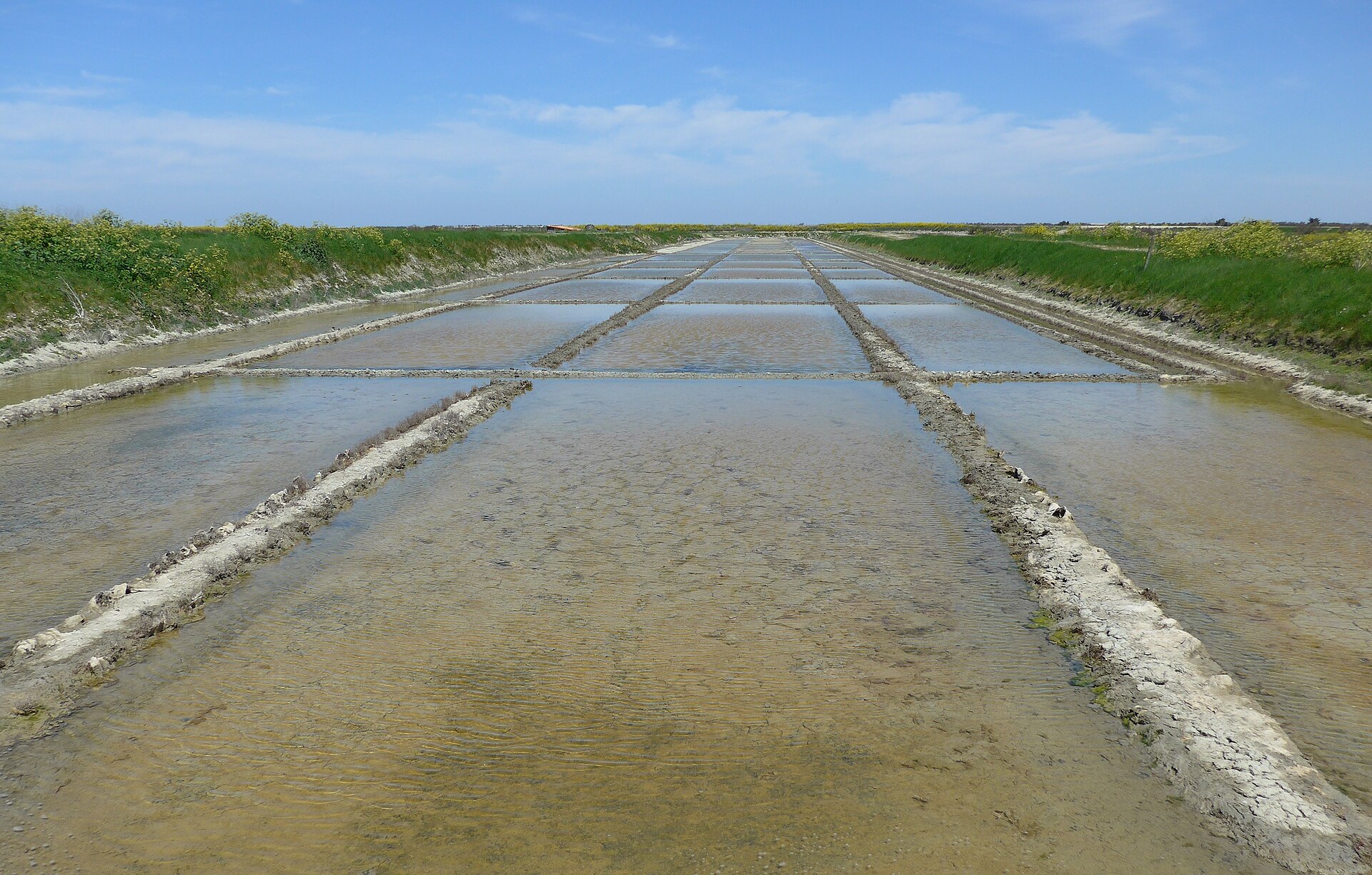 Photo: Celeda / Wikimedia Commons (CC BY-SA 4.0)
 - Citadelle de Saint-Martin-de-Ré Shoulder season (May-June, September) to avoid ramparts crowds
Completed under Louis XIV by engineer Vauban, this 14km semicircular rampart is one of 12 Vauban sites inscribed as a UNESCO World Heritage network since 2008 — the most complete example in Europe of a fortified town still lived in within its own walls. The citadel itself now functions as France's largest central prison and isn't open to visitors, but the ramparts are walkable year-round.
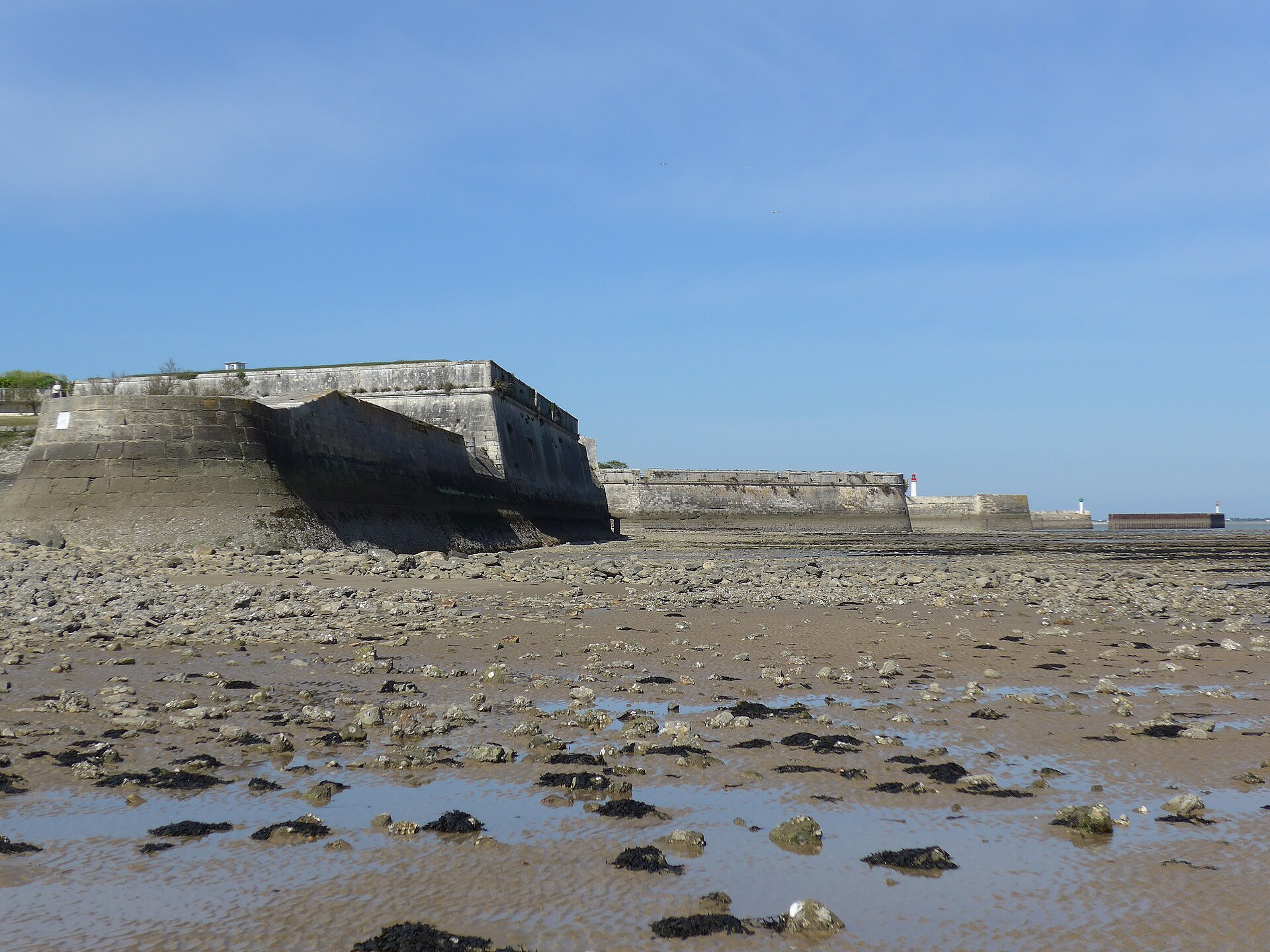 Photo: Celeda / Wikimedia Commons (CC BY-SA 4.0)
 - Phare des Baleines Near sunset, for the best light over the Pertuis Breton
Two structures stand at this site: an older 1669 Colbert-era tower and the current 57m lighthouse, built 1849-1854 after the old tower proved too low for the new Fresnel lens. Climbing its 257 steps rewards visitors with a panoramic island view.
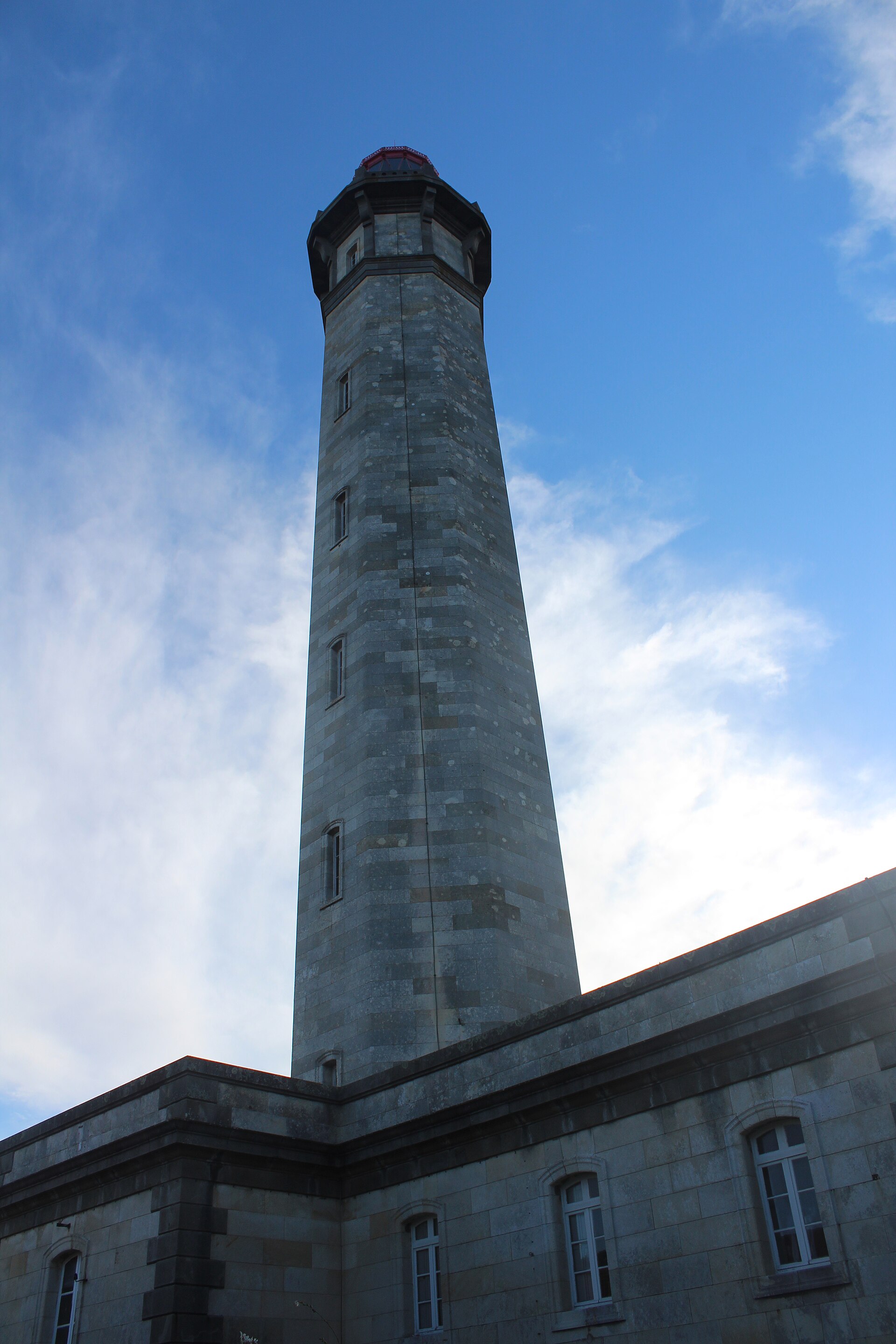 Photo: Franck-fnba / Wikimedia Commons (CC BY-SA 4.0)
 - Fort Boyard April-October, by boat excursion from Fouras, Boyardville, or Île d'Aix
A genuine 19th-century French coastal fort, built 1803-1857 to defend the Rochefort naval arsenal, sitting on a sandbank between Île-d'Aix and Île d'Oléron. It was already obsolete by completion — modern artillery had outpaced stone fortification — and later served as a military prison before being abandoned in 1913, long before its television fame. Visible only from the water; not open to visits inside.
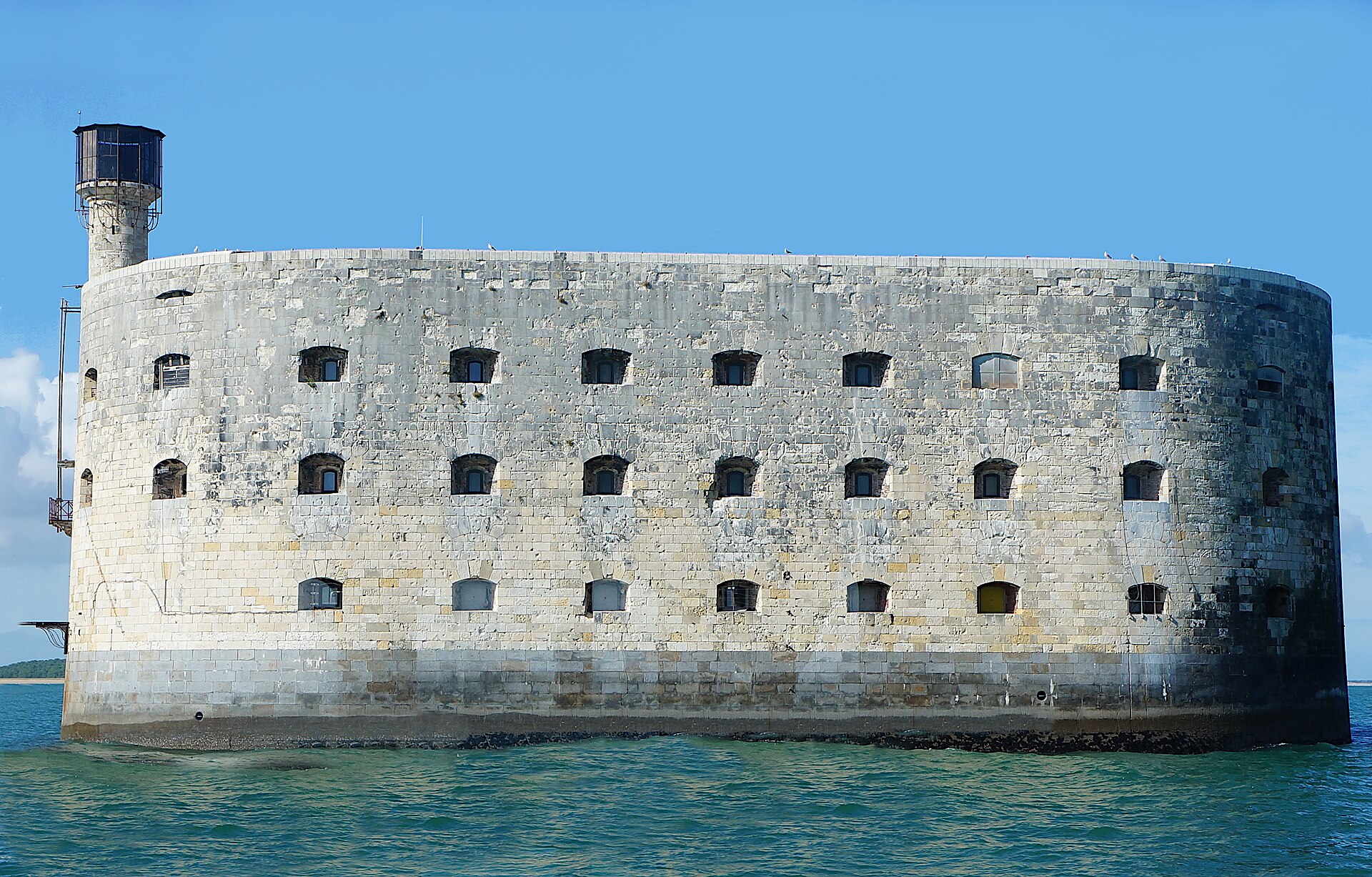 Photo: Pierre André Leclercq / Wikimedia Commons (CC BY-SA 4.0)
 - Cabanes Ostréicoles (Oyster Huts) September-April for the best tasting season; year-round for the visual landscape
Oyster farming here dates to the 17th century, expanding significantly after a shipwreck accidentally seeded Portuguese oysters in the basin in 1868. Marennes-Oléron is Europe's leading oyster-production basin, holding IGP (Protected Geographic Indication) and Label Rouge status — the brightly painted wooden cabanes on stilts along the channels are a genuine, distinctive visual landmark.
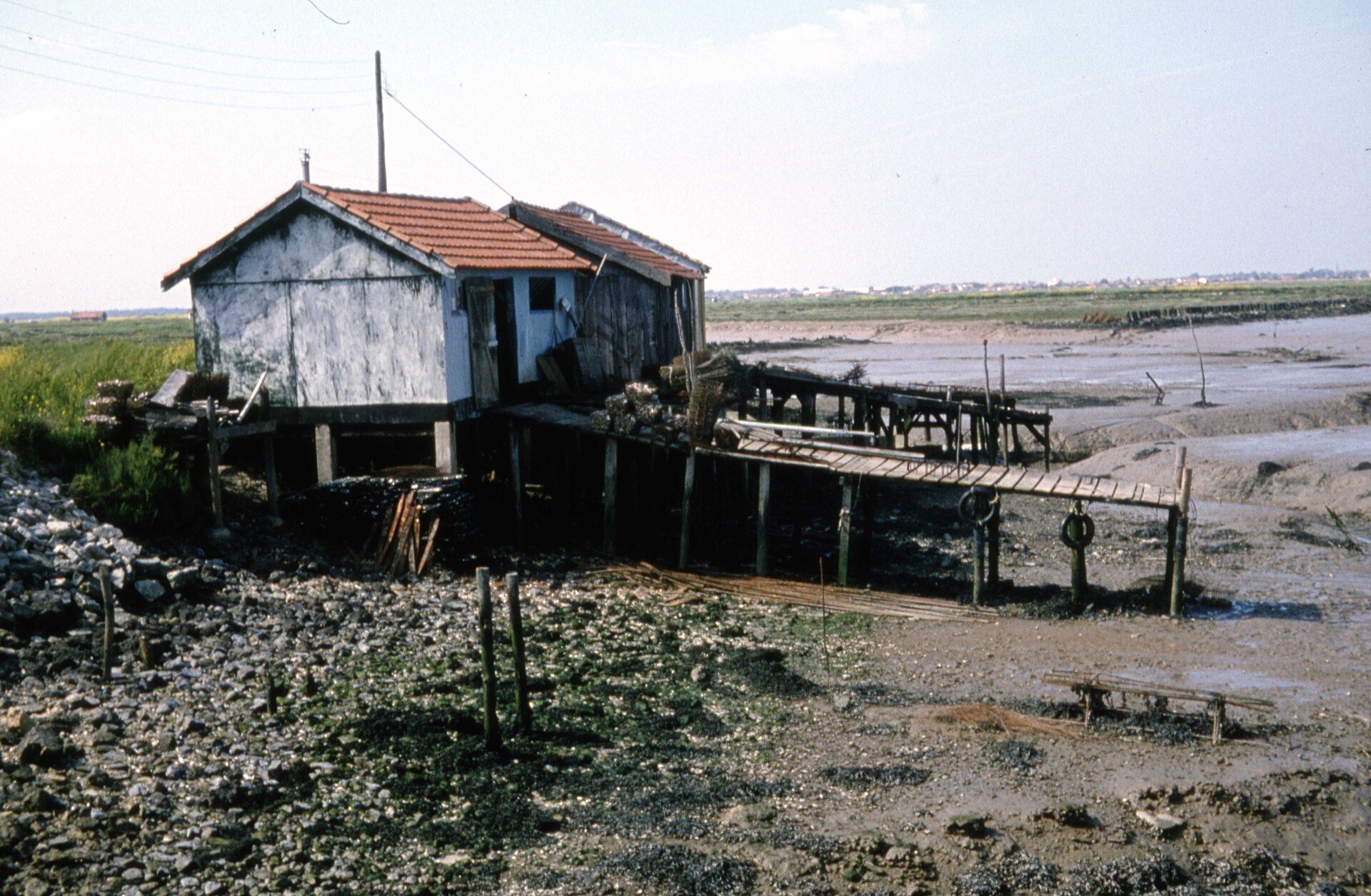 Photo: Jean-Pierre Bazard / Wikimedia Commons (CC BY-SA 3.0)
 - Église Saint-Étienne, Ars-en-Ré Golden hour, visible from across the salt marshes
Dating in part to the 6th-12th centuries, with a distinctive 15th-century Gothic spire painted black and white specifically to function as a maritime landmark — the two-tone paint let sailors distinguish it from the horizon at over 20km in both bright and dark conditions.
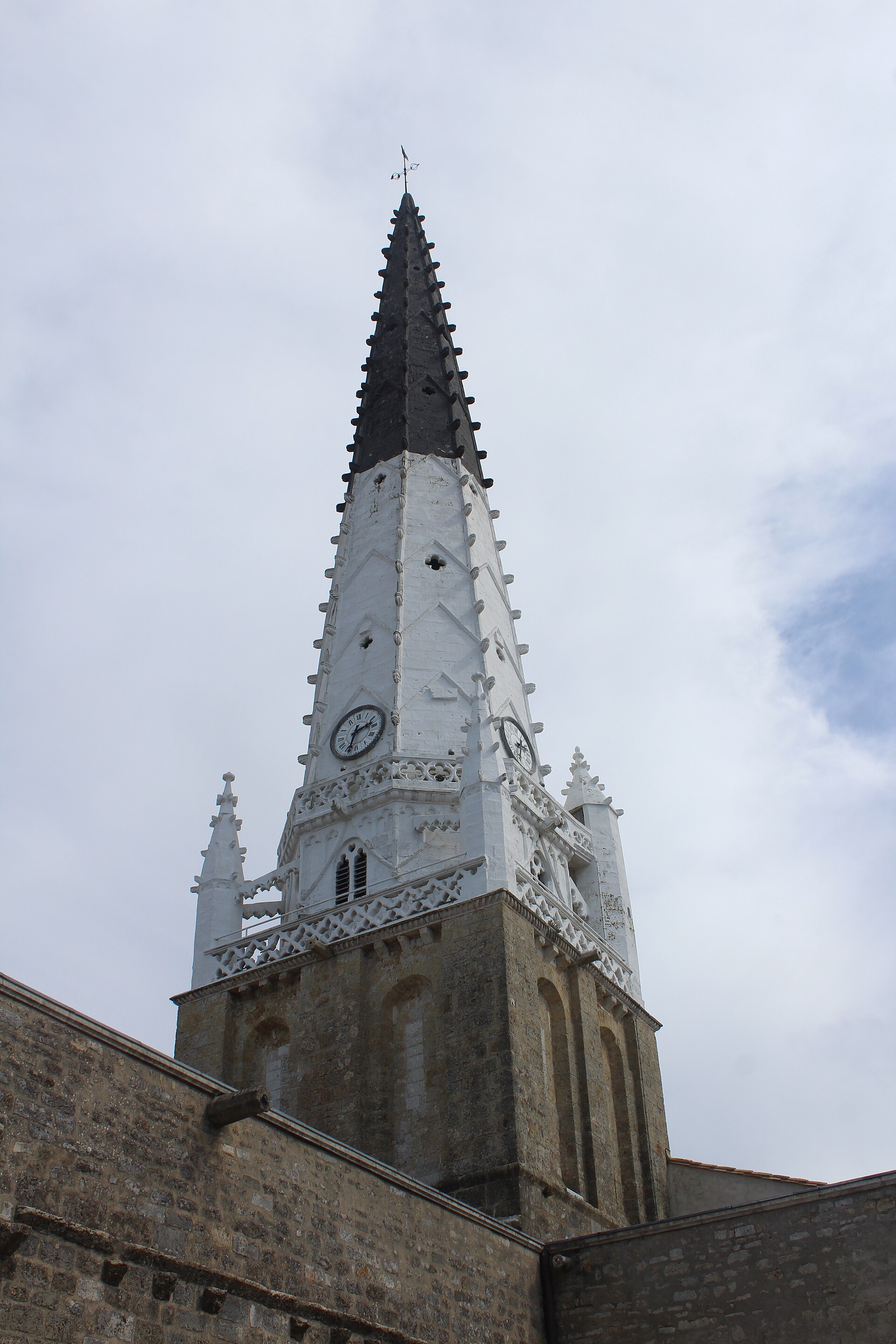 Photo: Franck-fnba / Wikimedia Commons (CC BY-SA 4.0)
 - Réserve Naturelle Nationale de Moëze-Oléron October-March, for peak migratory and wintering bird numbers
A marshland and mudflat site and one of France's top spots for wintering waders, hosting roughly 150 bird species across the year on old salt-pan terrain now managed for conservation.
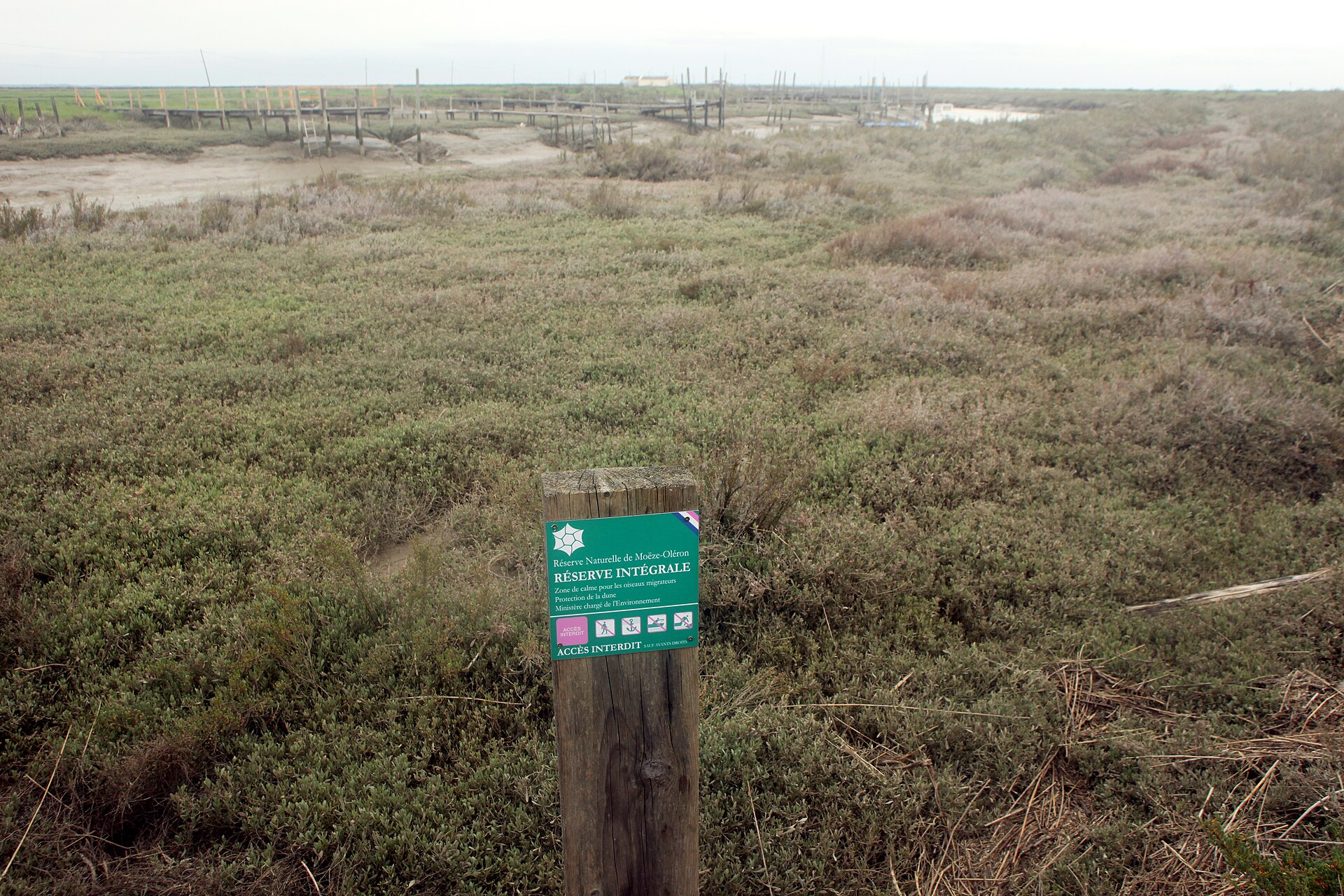 Photo: Pmau / Wikimedia Commons (CC BY-SA 4.0)
 - Pont de l'Île de Ré Sunset, viewed from Rivedoux-Plage beach
Inaugurated in 1988 and built in just 20 months, this 2.9km cable-stayed toll bridge has a 201-meter central span between twin towers rising 88 meters above sea level, engineered to withstand harsh Atlantic conditions.
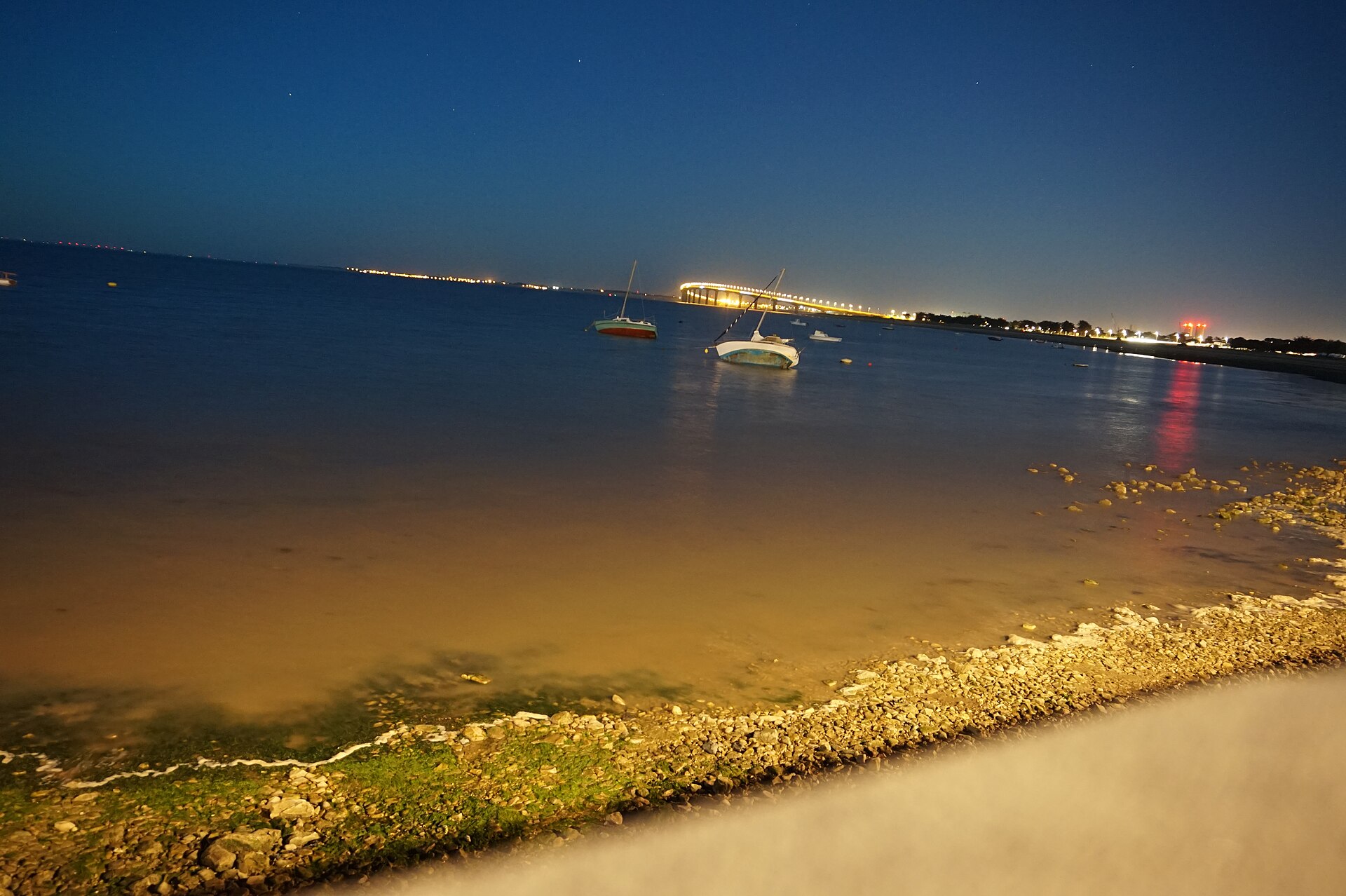 Photo: Keficor / Wikimedia Commons (CC BY-SA 4.0)
 - Viaduc de l'Île d'Oléron Any season, best long views from the Bourcefranc-le-Chapus side
Built 1964-1966, this 3,027-meter viaduct on 45 piers held the record as France's longest bridge until 1974. Unlike Île de Ré's bridge, it's been toll-free since 1991, ending reliance on the old car ferry.
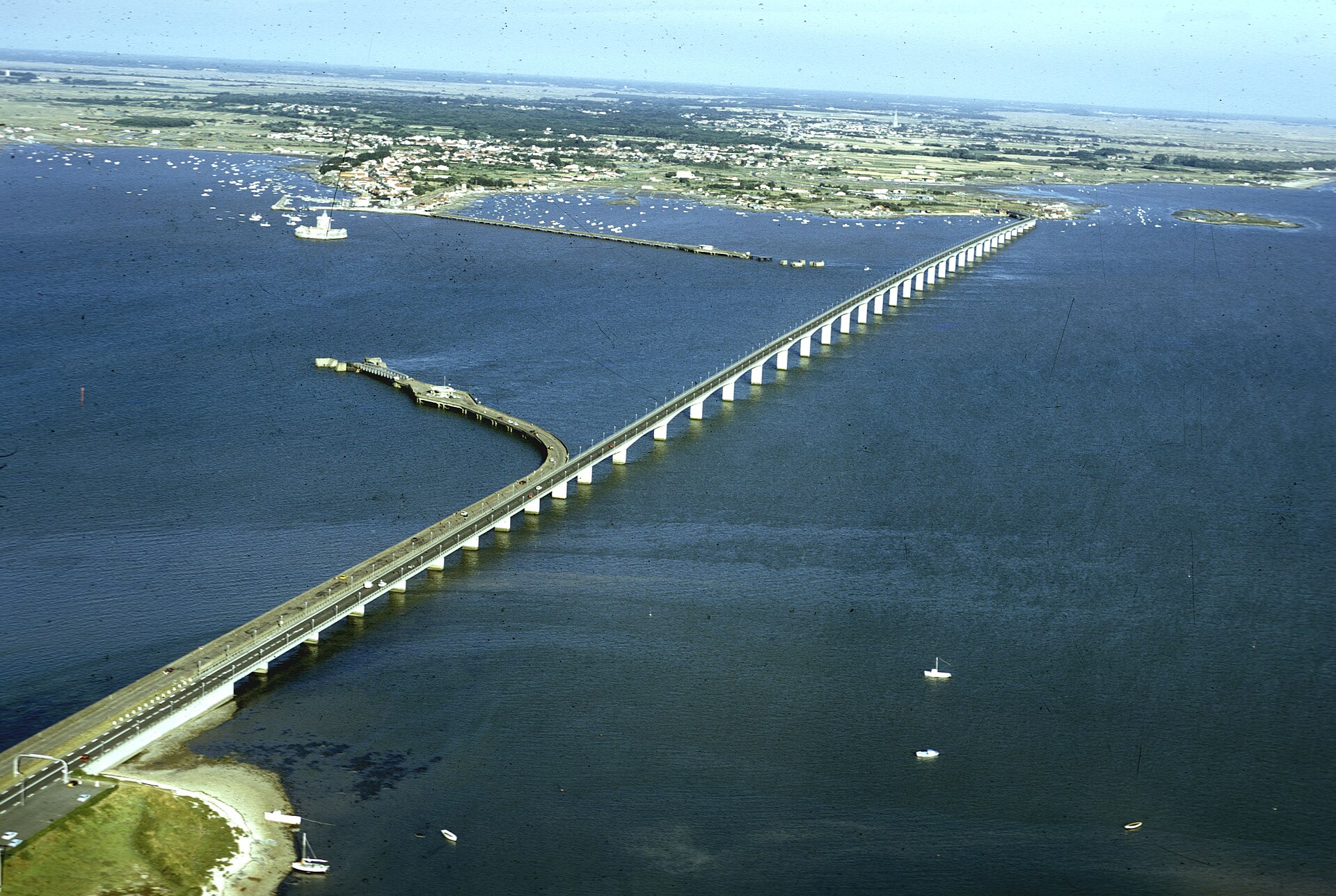 Photo: Jacques Dassié / Wikimedia Commons (CC BY-SA 4.0)
 - Musée de la Bourrine du Bois-Juquaud Spring through early autumn (confirm current-year hours)
Bourrines are the traditional Vendée marshland houses — earthen walls, thatched roofs, built low against coastal wind. This restored ecomuseum, near Saint-Jean-de-Monts, recreates a working bourrine circa the early 20th century.
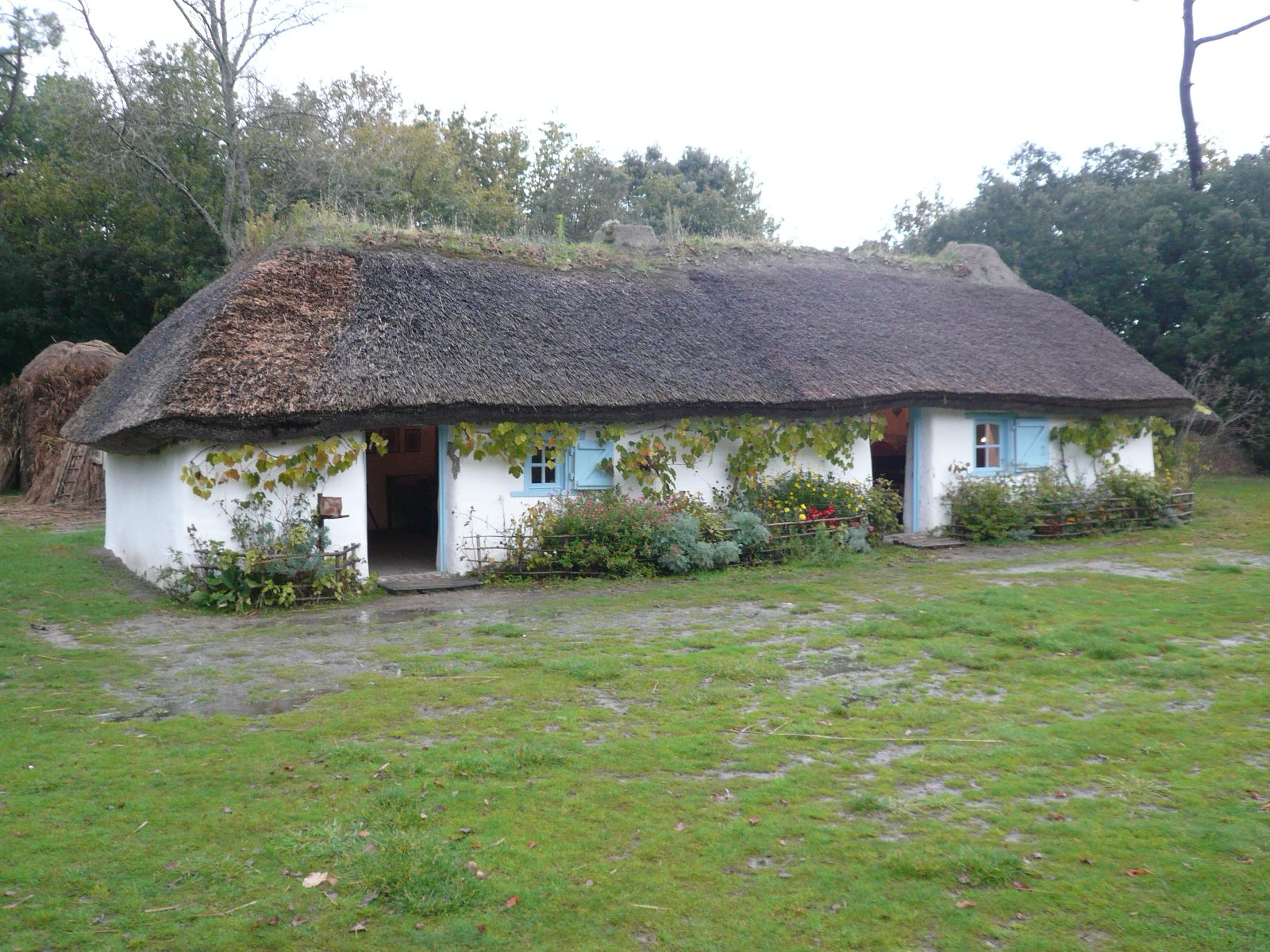 Photo: Stefi123 / Wikimedia Commons (CC BY-SA 3.0)
 - Dolmen de la Pierre Levée Any season; a quick roadside stop, best in soft morning or evening light
A genuine Neolithic megalith — three orthostats supporting a 45cm-thick capstone — excavated in 1904, when researchers found a small skeleton beneath the slab. Inscribed as a Historic Monument in 1984, it sits at a road roundabout in Brétignolles-sur-Mer, known locally by regional legend as the Pierre du Diable.
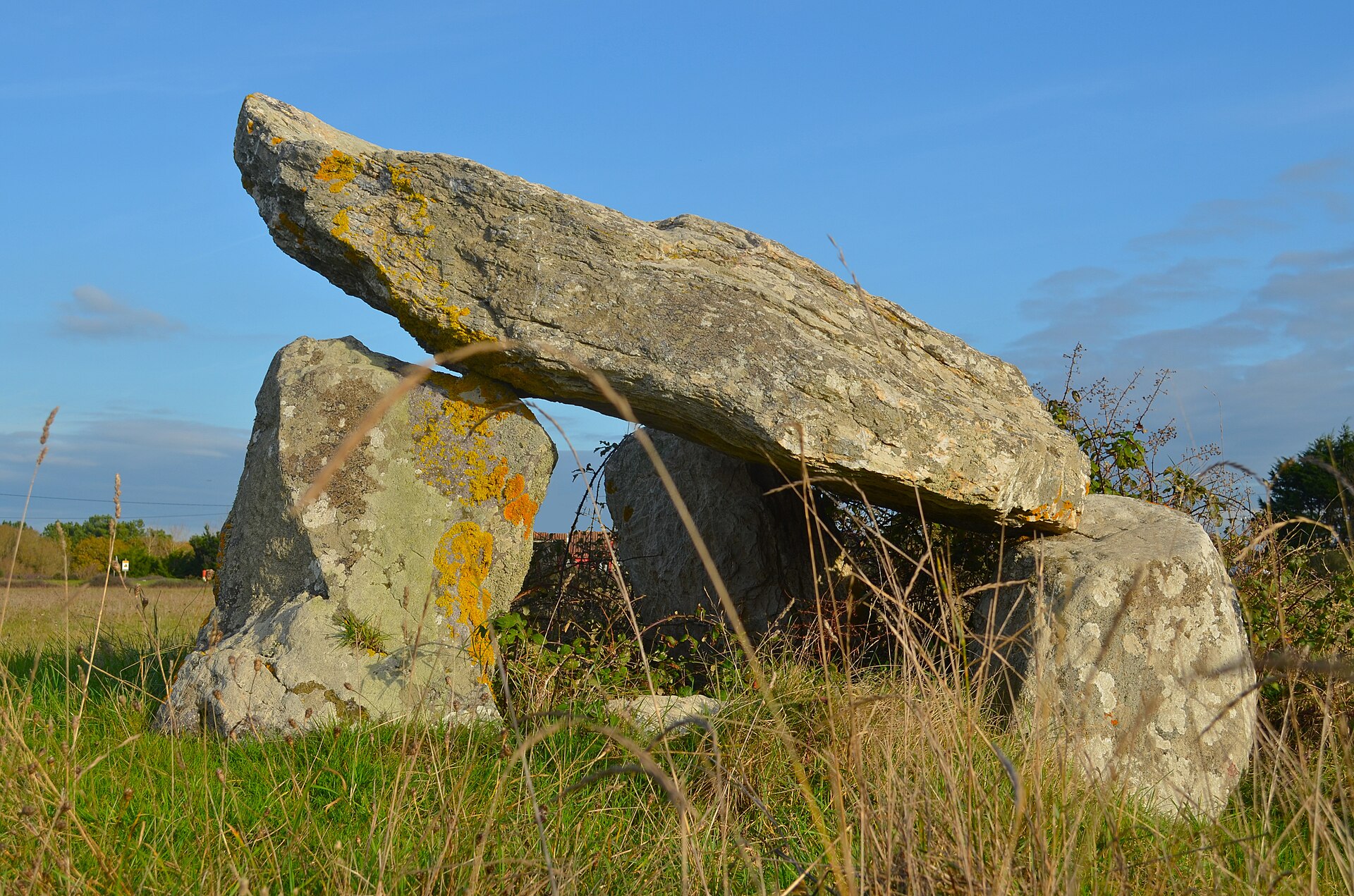 Photo: Selbymay / Wikimedia Commons (CC BY-SA 3.0)
Questions people actually ask.
Is La Sauzaie a separate town I should plan a stop for?
No — La Sauzaie is a beach within the commune of Brétignolles-sur-Mer, not an independent town with its own business district. Every vendor serving La Sauzaie is really a Brétignolles-sur-Mer business, several of which specifically run sessions there because it's the area's premier reef break.
How do I get to the two islands, and is there a toll?
Île de Ré connects to the mainland via a toll bridge — round-trip car toll runs roughly €9 in low season up to €20 in high season, collected only on the mainland side; pedestrians and cyclists cross free. Île d'Oléron's bridge has been toll-free since 1991. Neither island has train service; from La Rochelle, a regional bus line reaches Île de Ré's villages, but a car is genuinely the practical way to see this zone.
Is this a beginner-friendly zone?
Broadly yes, more than the site's Basque Country zone — this coast sits partly in a swell shadow from Brittany, and several named beaches are specifically gentle-sloped and family-friendly. The real exception is La Sauzaie itself, an experienced-surfers-only reef break working mid-to-high tide — the region's family-friendly reputation doesn't apply there.
What's the real tidal safety concern here?
Charente-Maritime carries a genuinely significant tidal range — averaging over 4 meters at spring tide around Île de Ré, higher on big-coefficient days. Official guidance is specific and worth repeating: check tide times before walking any foreshore or sandbank, and never turn your back on the sea — the incoming tide can advance fast enough to cut off a return route before you realize it.
What makes this coast worth visiting beyond the surf?
This is one of France's most important oyster-farming regions — the Marennes-Oléron basin produces roughly 40,000 tonnes a year, about half of French national consumption, carrying IGP (protected geographic indication) and Label Rouge status. Île de Ré adds a genuine centuries-old salt-marsh economy on top of that, still hand-harvested today.
Disclosure & how this page works.
Straight talk: Some links on this page are affiliate links — if you book through them, Secrets of Surf Travel earns a small commission at no extra cost to you. We only link places and people we’d use ourselves, and coverage is never for sale. Those commissions are what keep this site running and fund the next trip.
Today, the “Search Vrbo rentals” and “Search Booking.com stays” links on this page are affiliate links — every vendor listing link is still a plain courtesy link. As partnerships with these local businesses come online, more links (and discount codes, where Secrets of Surf Travel benefits from their use) may earn us a commission, and this page will keep saying so plainly. Coverage is never for sale: nobody on this page paid to be here, and nobody can.
Every listing was researched in 2026 and is being verified in person. Prices, hours, and policies change — treat them as strong starting points and confirm directly with the business. And per the No-Reveal Code: you will find no surf spots on this page, ever.