
Tuamotu Atolls
Stated honestly, up front: this is a diving-and-atoll-culture zone, not a surf destination — the most credible global surf atlases confirm only one real break in this entire region, expert-only and private-boat-access. What Fakarava, Rangiroa, and Tikehau actually offer is the largest known grey reef shark aggregation on Earth, one of the largest atolls anywhere, pink sand and a bird sanctuary, and a genuinely remote island life running on rainwater and cash. Real surf exists here for self-sufficient, boat-equipped, advanced travelers — as a bonus, not the headline.
Straight talk: Some links on this page are affiliate links — if you book through them, Secrets of Surf Travel earns a small commission at no extra cost to you. We only link places and people we'd use ourselves, and coverage is never for sale. Those commissions are what keep this site running and fund the next trip.
Some vacation-rental search links on this page (marked "Search Vrbo rentals," "Search Booking.com stays," or "Search Agoda stays") are affiliate links. Every vendor link below is still a plain courtesy link. As more partnerships come online, more links may earn us a commission; the promise above holds either way.
Read this before any pass entry: every atoll pass here reverses current with the tide, and it's only considered safe to dive or swim on an incoming tide — an outgoing current can sweep a diver or swimmer straight out to open ocean. Strength also shifts with the lunar cycle and recent wind/swell, so the same pass can be calm one day and genuinely dangerous the next. Book with an established local dive operator who plans around slack/incoming timing rather than self-guiding a pass entry.
Getting There
All three atolls are reached by Air Tahiti domestic flights from Papeete — there's no international gateway here. Rangiroa is roughly a 1-hour direct flight from Tahiti; Fakarava roughly 1h10. Real, useful inter-atoll hops exist too: Rangiroa–Tikehau runs nonstop about 4x/week (~20 minutes), and Tikehau–Fakarava about 2x/week — a genuine multi-atoll circuit (Tahiti → Rangiroa → Tikehau → Fakarava → Tahiti or similar) is realistic. Confirm exact weekly frequency on airtahiti.com before booking, since schedules shift seasonally.
Boat/liveaboard access is the other real way in, especially for the surf-charter niche — multi-atoll catamaran trips run by sea rather than air.
Documents: same as Tahiti/Moorea — US citizens are visa-free up to 90 days, passport valid 6+ months beyond travel with proof of onward ticket and sufficient funds.
Ground Transport
- There is no car culture on these atolls. Bikes come free with nearly every pension listed on this page; each atoll is essentially a single road along a narrow strip of land — impossible to get lost.
- Rangiroa has the region's only real motorized-rental market: scooters (~5,200 CFP/day) and small open-air "Bugster" cars through Rangi Rent a Car (Europcar) and independent operators in Avatoru.
- Fakarava has one Super Soco e-scooter rental option; Tikehau has none confirmed — bikes are the honest default on both.
- Reaching pensions not on the main village motu (e.g., Fakarava's Pension Raimiti, Tikehau's Le Tikehau resort) requires a boat transfer, arranged directly with the property.
When to Go & What to Pack
- May-October is the dry season and the best overall window — low rain and storm risk, and it's also the diving high season. June-August is specifically cited as the most reliable window for what surf exists here.
- Water temperature runs warm year-round, in the same upper-70s to low-80s°F range as Tahiti and Moorea — no wetsuit needed.
- Cyclone season runs November-April, the same French Polynesia-wide window — but the Tuamotus sit toward the eastern edge of the cyclone formation zone and are hit less often than the wider South Pacific. Risk still rises sharply in strong El Niño years. The Tuamotus are also confirmed the driest archipelago in French Polynesia overall.
Good to Know
- Currency is the CFP franc (XPF) — same as Tahiti/Moorea. But out here it matters more directly: the outer Tuamotus are largely cash-only. ATMs are scarce to absent on these atolls; withdraw CFP in Papeete before flying out.
- Emergency numbers follow the French standard: 15 medical (SAMU), 17 police, 18 fire.
- This is one of the most medically isolated parts of French Polynesia. Village clinics are nurse-staffed with visiting doctors, not full hospitals — anything serious requires medevac, weather permitting, to the territory's only full-specialty hospital (CHPF) in Papeete. Carry real travel medical/evacuation insurance.
- Atoll life runs on rainwater cisterns and generator power, not a municipal grid or aquifer — most households catch and store their own rainwater, and drought stretches can strain supply. Larger properties (Hotel Kia Ora, Le Tikehau) run their own generator/solar systems; expect occasional outages at smaller pensions.
- Paumotu (Tuamotuan) is the archipelago's own distinct Polynesian language, related to but separate from Tahitian, spoken by roughly 4,000 people here — a real marker of how isolated these atolls historically were from each other.
- No surfboard or wetsuit repair shop exists on any of these three atolls. Bring a full kit — there is no local fallback anywhere in this zone.
Respecting the Locals
These atolls run on a level of self-sufficiency most visitors have never seen — households catching their own rainwater, running their own generators, speaking Paumotu, a distinct Polynesian language that survived because these communities were historically isolated from each other, let alone from the outside world. Surfing here is a real but genuinely niche bonus layered on top of a diving-and-atoll culture, not the reason these places exist, and the handful of surfers who do paddle out are guests in a place with no fallback infrastructure if something goes wrong. That isolation is exactly why the same respect owed to any local lineup matters even more out here.
- Locals get first priority, always. Watch a session before you paddle out. Learn who's who before you learn the wave. Sit inside and catch what they let through — the leftovers are yours, not the set waves.
- Don't backpaddle. Ever. Being in position doesn't make the next wave yours, especially if you didn't wait your turn. If a local wants a wave, let them have it…even if it IS your turn. That older guy who may not be the best surfer out there has probably been surfing that wave before you even sat on a board. If you don't know someone, assume they're local.
- Don't snake. This shouldn't even need to be said, but…dropping in on someone, local or not, is the ultimate disrespect and the fastest way to be sent out of the water. Don't be that guy!
- Say hi. A “howzit,” “whatsup,” or “nice wave,” eye contact, or a nod in the channel — it costs nothing and it's the fastest way from stranger to welcome.
- This is somebody's home, not a resort amenity. The break you're surfing is where a local kid learned to swim, where someone's uncle has surfed for forty years. Act like a guest, because you are one.
- Spend where it actually helps. The food truck, the local shaper, the family-run rental, the local photographer — that's where a surf trip's money should land, not just the chain hotel gift shop. See The No-Reveal Code for why that's the whole premise of this site.
- Leave it better than you found it. Pick up trash that isn't yours. Don't touch reef, wildlife, or cultural sites.
Locals have watched hundreds, if not thousands, of people come and go — some for days, some for months or years — and almost all of them eventually go home. The locals are still there. It takes many, many years to actually become one. Keep that in mind the next time you feel entitled to the same waves they get.
None of this is a secret handshake. It's just how you'd want a guest to act in your own backyard.
Fakarava
A UNESCO Biosphere Reserve atoll, and this region's real headline: the South Pass shark aggregation. No confirmed named surf break exists here — this hub runs entirely on diving and atoll immersion.
Diving Guides
- Tetamanu DivingTetamanu village, southMid-rangeFamily-run, the only operator sitting directly on the South Pass "wall of sharks," state-certified BEES1 instructor. tetamanudiving.com · Facebook · Map
- TOPdive FakaravaNorth Pass (Rotoava) and South Pass centersMid/upperMost professionalized operator on the atoll — 3 boats, Aqualung gear, covers both passes. topdive.com · Facebook · Map
Stays
- Pension Havaiki LodgeRotoava, northMid-rangeModern bungalows, lagoon views, locally-sourced meals. havaiki.com · Facebook · Instagram · Map
- Pension RaimitiSoutheast, ~1.5hr boat transferMid/upperNear Tumakohua/South Pass and Tetamanu village — two bungalow styles, "Robinson" lagoon-side and "Crusoe" ocean-side. raimiti-fakarava.com · Facebook · Instagram · Map
- Fakarava LodgeNear the village entranceBudgetShared kitchen, bikes/wifi/transfers included. Facebook · Map
Rangiroa
One of the largest atolls on Earth, roughly 80km across, with the region's one quasi-verified surf break (unnamed per our No-Reveal Code — expert-only, private boat access, genuinely sharky) and the best motorized-rental and dive-operator infrastructure of the three hubs.
Diving/Surf Guides
- TOPdive RangiroaAvatoru, near Tiputa PassMid/upperSame professionalized multi-island chain as Fakarava, under 10 minutes by boat to top sites. topdive.com · Facebook · Map
- Rangiroa Diving CenterAvatoru, Quai OhotuMid-rangeIndependent local option, also rents bikes. rangiroadivingcenter.com · Facebook · Instagram · Map
Stays
- Hotel Kia Ora Resort & SpaNortheastern coast, between Avatoru and Tiputa passesLuxury58 lagoon/beach/overwater bungalows, the atoll's flagship resort. Confirmed closing November 1, 2026 for a multi-year renovation — check current status before booking if traveling after that date. hotelkiaora.com · Facebook · Instagram · Map
- Pension Tiputa LodgeTiputa villageMid-rangeFitness center, air-con, free breakfast. tiputa-lodge.com · Facebook · Instagram · Map
- Pension Rangiroa PlageAvatoruBudgetLagoon-front, free kayaks — #1-ranked specialty lodging in Avatoru. rangiroaplage.com · Map
Where to Eat
- Snack Rangiroa PlageAvatoruBudgetBeachfront, open evenings (unusual for the region) — fish curries, seafood ceviche, coconut crab. rangiroaplage.com · Map
- Chez LiliBudgetHighly rated local Polynesian eatery. Facebook · Map
Wheels
- Rangi Rent a CarAvatoru, plus desks at Hotel Kia Ora and NovotelLocal Europcar agent — scooters and small open-air "Bugster" cars, roughly 6,500 CFP/8hrs. europcar.com/fr-pf · Map
Massage & Wellness
- Poekura SpaHotel Kia OraLuxuryThe only substantiated dedicated spa across all three hubs — traditional Polynesian Taurumi massage, house oils made with monoi, tamanu, and vanilla. hotelkiaora.com · Instagram · Map
Other Adventures
- Gauguin's PearlNear AvatoruBudgetFull grafting-house and sorting-table tour. gauguinspearl.com · Facebook · Instagram · Map
- Vin de Tahiti / Domaine AmpélidacéesSmall islet near Avatoru, boat/canoe accessMid-rangeSee Local Secrets. vindetahiti.com · Facebook · Instagram · Map
- Drift snorkeling, Tiputa PassMid-rangeBottlenose dolphins, blacktip reef sharks, turtles. Map
Tikehau
The smallest and softest of the three — real pink sand, a protected bird sanctuary, and a single flagship resort. Thinnest vendor bench and thinnest photo coverage of the three atolls, stated honestly rather than padded.
Diving Guides
- Tikehau DivingMarina, Tuherahera villageMid-rangeOpened 2012, private pontoon. tikehaudiving.com · Facebook · Map
- TOPdive TikehauMid/upperSame multi-island chain present on Fakarava and Rangiroa. topdive.com · Facebook · Map
Stays
- Le Tikehau by Pearl ResortsMotu Tiano, ~20 min boat transferLuxuryThe atoll's one true resort — a private 4-hectare islet, 21 overwater suites/bungalows plus 8 beach bungalows, glass-floor units. letikehau.com · Facebook · Instagram · Map
- Pension Tikehau VillageTuherahera villageMid-rangeBamboo/coral/coconut-fiber bungalows, one of the better-regarded pension restaurants, free bikes. tikehau-village.com · Facebook · Map
- Pension JustineTuherahera, near the airportBudget8 bungalows on a long white-sand beach garden. Map
Where to Eat / Wheels / Repair / Wellness
Genuinely thin, and stated honestly: eating is pension dining rooms and the resort's own restaurant, not standalone destinations. No independent motorized rental confirmed — bikes are free at essentially every pension. No repair shop or standalone spa exists here; this is the smallest, softest hub of the three and doesn't pretend otherwise.
Local Secrets
Eight non-surf reasons this zone rewards the curious — the largest known concentration of grey reef sharks on Earth, French Polynesia's only winery, and a protected mid-lagoon bird sanctuary.
- Fakarava South Pass "Wall of Sharks" Peak June-July
300-700 grey reef sharks aggregate densely enough in the Tumakohua/South Pass channel to form a visible wall — the largest known concentration of grey reef sharks on Earth. Peak season overlaps camouflage grouper spawning aggregations, which draw the sharks in to feed.
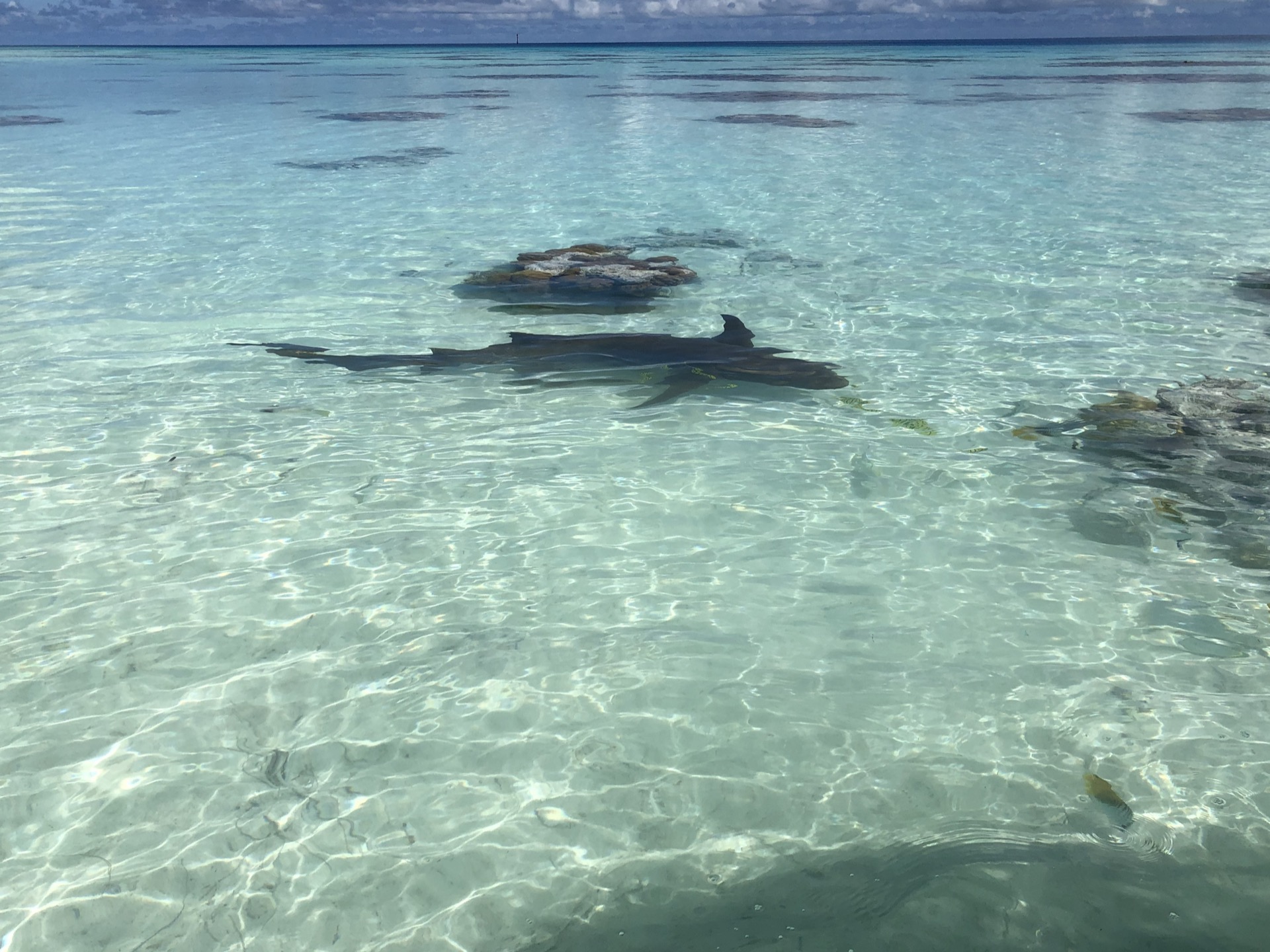 Wikimedia Commons (CC BY-SA 4.0)
 - Fakarava UNESCO Biosphere Reserve Ongoing protected status
Fakarava anchors a wider seven-atoll UNESCO Biosphere Reserve cluster (with Aratika, Kauehi, Niau, Raraka, Taiaro, and Toau) — controlled tourism zoning and protected shark populations, real conservation infrastructure behind the diving reputation.
- Rangiroa's Scale & Blue Lagoon Year-round
One of the largest atolls on Earth, roughly 80km across — large enough to contain its own "Blue Lagoon," a shallow lagoon-within-the-lagoon reachable by motu excursion, with baby blacktip sharks in the shallows.
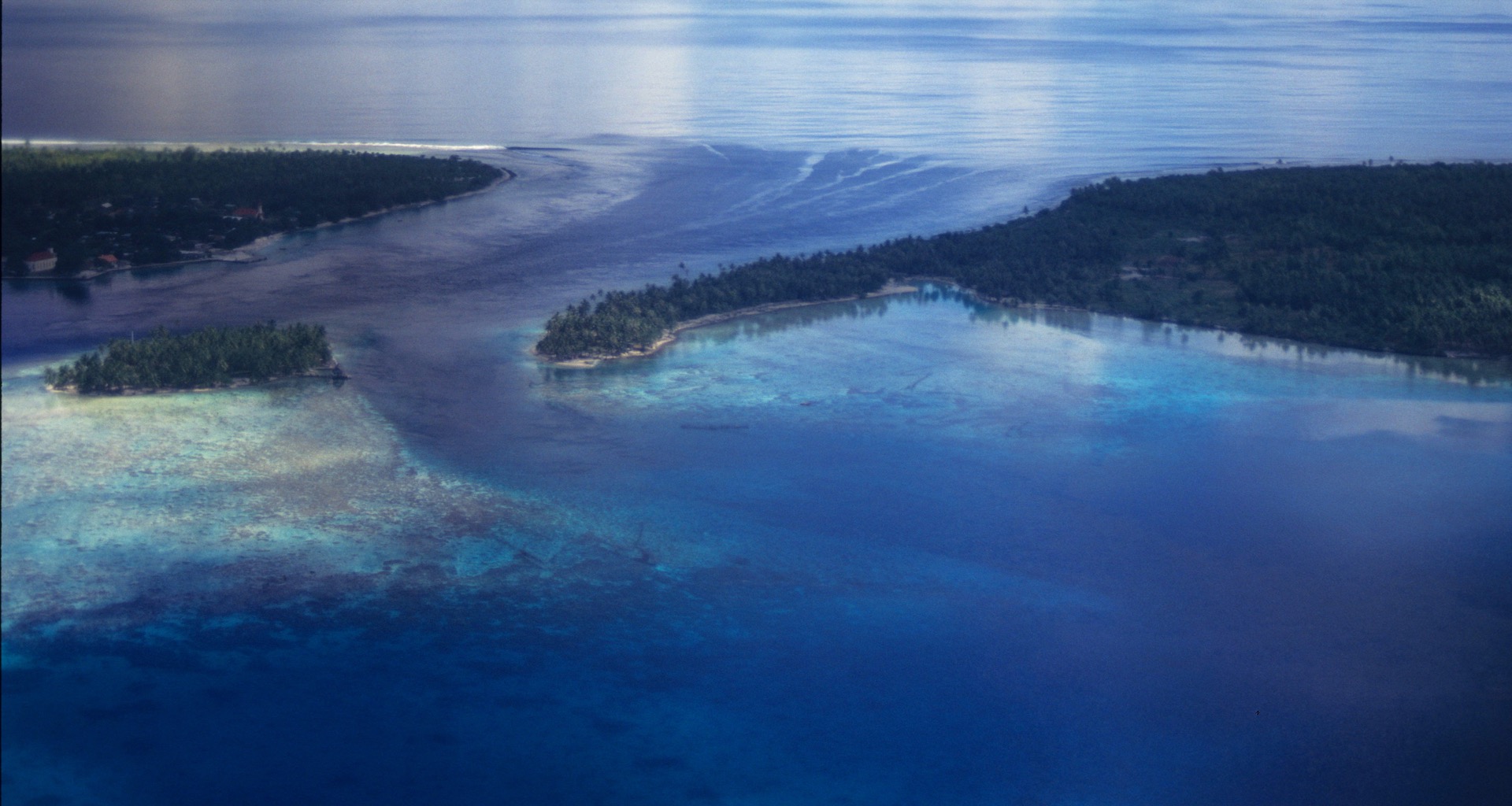 Wikimedia Commons (CC BY 2.0)
 - Vin de Tahiti / Domaine Ampélidacées Year-round, small islet near Avatoru, Rangiroa
French Polynesia's only winery — coral-based soil, founded by Dominique Auroy with a first vintage in 2000, current winemaker Sébastien Thépénier, roughly 40,000 bottles a year. Genuinely distinctive: the grapes are ferried by canoe at harvest since the vineyard sits on an islet with no bridge access.
- Tikehau's Île aux Oiseaux (Bird Island) Guided access only
A small, uninhabited, protected mid-lagoon islet home to nesting colonies of red-footed boobies, brown noddies, and frigatebirds — typically a guided half-day excursion.
- Tikehau's Pink Sand Beaches Year-round, Motu Aua and Motu Ohihi
Real, genuine coloration from crushed coral and foraminifera organisms — Tikehau's best-known natural feature.
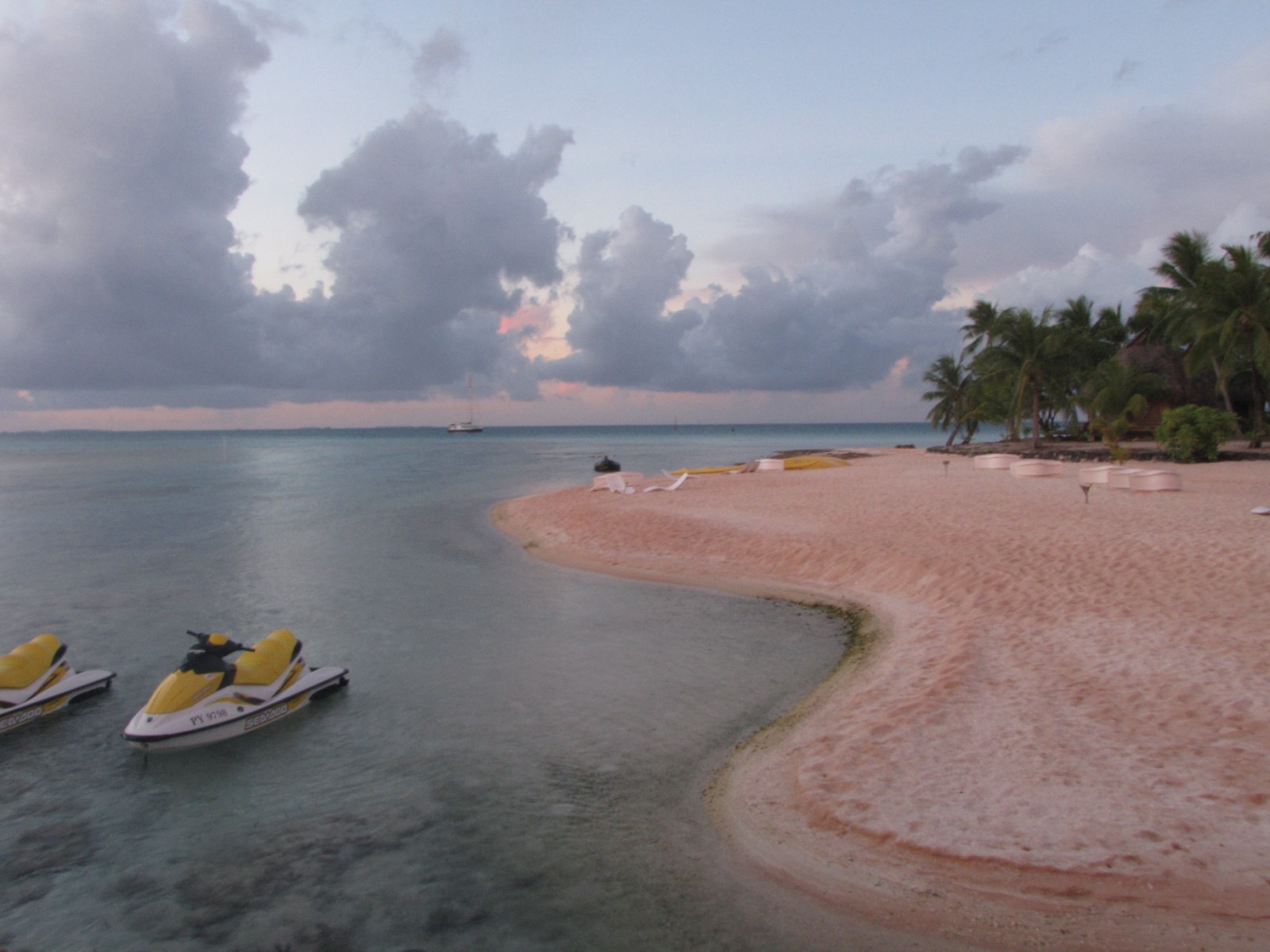 Wikimedia Commons (CC BY-SA 3.0)
 - Black Pearl Farming, Tuamotu-Specific Year-round, farm tours on Rangiroa and near Rotoava, Fakarava
More central to the Tuamotus than to Tahiti/Moorea — the neighboring atoll of Manihi is where French Polynesia's first commercial pearl farms began in the 1960s. Real grafting and sorting demonstrations are open to visitors on Rangiroa and Fakarava.
- Copra & the Coconut Economy Ongoing
The Tuamotus produce roughly 65% of French Polynesia's copra (dried coconut), with plantations covering about 12,000 hectares — two-thirds of the archipelago's arable land. A centuries-old trade good that tied these atolls into the colonial shipping economy and remains a real livelihood alongside pearl farming today.
Two of the eight — black pearl farming and the copra economy — run without a photo here; both are region-wide economic facts rather than single visitable sites with strong Commons coverage. Tikehau's Bird Island also runs without a dedicated photo, since its own Commons category is thin (satellite/aerial images only) and no clearly licensed, species-specific candidate cleared this site's floor.
Questions people actually ask.
Is this really a surf destination?
Honestly, not primarily. The most credible global surf atlases list only one quasi-verified break in this entire region, on Rangiroa's north side, and it's expert-only, private-boat-access, and empty except on weekends. We don't name it per our No-Reveal Code — ask a local dive/boat operator directly. No named break is confirmed on Fakarava or Tikehau. This zone's real identity is diving and atoll culture: the Fakarava South Pass shark aggregation, pink sand beaches, and a genuinely remote island life. Surfing here is a real but niche bonus for self-sufficient, boat-equipped, advanced surfers — bring your own board and repair kit.
How is this different from the Tahiti & Moorea zone?
Completely different trip type. Tahiti and Moorea are reached directly and offer resort infrastructure, restaurants, and (at Teahupo'o) globally famous surf. The Tuamotus are outer atolls reached only by a further domestic flight from Tahiti, running on pensions rather than resorts, cash rather than cards, and rainwater cisterns rather than municipal plumbing. This page treats them as a genuinely separate, more remote zone rather than folding them into the Tahiti/Moorea page.
What's the tidal current danger in the atoll passes?
A real, important, and well-documented safety fact: every atoll pass reverses current direction with the tide, and it's only considered safe to dive or swim on an incoming tide — an outgoing current can sweep a diver or swimmer straight out to open ocean. Current strength also shifts with the lunar cycle and recent wind/swell, so the same pass can be benign one day and genuinely dangerous the next. This is exactly why every reputable local dive operator plans dives around slack or incoming timing, and why self-guiding a pass entry here is a real risk, not overcaution.
What's the water like, and when should I go?
Warm year-round, in the same upper-70s to low-80s°F range as Tahiti and Moorea — no wetsuit needed. May-October is the dry season and the best overall window, with June-August specifically cited for the most reliable conditions on what surf exists here. Cyclone season runs November-April, same as the rest of French Polynesia, though the Tuamotus sit toward the eastern edge of the formation zone and are hit less often than the wider South Pacific — risk still rises in strong El Niño years.
Disclosure & how this page works.
Straight talk: Some links on this page are affiliate links — if you book through them, Secrets of Surf Travel earns a small commission at no extra cost to you. We only link places and people we'd use ourselves, and coverage is never for sale. Those commissions are what keep this site running and fund the next trip.
Today, the "Search Vrbo rentals," "Search Booking.com stays," and "Search Agoda stays" links on this page are affiliate links — every vendor listing link is still a plain courtesy link. As partnerships with these local businesses come online, more links (and discount codes, where Secrets of Surf Travel benefits from their use) may earn us a commission, and this page will keep saying so plainly. Coverage is never for sale: nobody on this page paid to be here, and nobody can.
Every listing was researched in 2026 and is being verified in person. Prices, hours, and policies change — treat them as strong starting points and confirm directly with the business. And per the No-Reveal Code: you will find no surf spots on this page, ever.