
Tokyo Coast
This is the coastline Tokyo surfs on weekends — roughly 35 million people live within a two-hour radius. The honest read: you come here because you're already in Japan for the food, the trains and the temples, and the coast is a superb addition to that trip rather than the reason for it. Chiba is the genuinely surf-shaped side, where Ichinomiya's own town website leads with the line "a town that lives surfing." Shonan is the historic heart of Japanese surfing and a dense, affluent, thoroughly built-up resort suburb.
Straight talk: Some links on this page are affiliate links — if you book through them, Secrets of Surf Travel earns a small commission at no extra cost to you. We only link places and people we'd use ourselves, and coverage is never for sale. Those commissions are what keep this site running and fund the next trip.
Some vacation-rental search links on this page (marked "Search Vrbo rentals," "Search Booking.com stays," or "Search Agoda stays") are affiliate links. Every vendor link below is still a plain courtesy link. As more partnerships come online, more links may earn us a commission; the promise above holds either way.
The structural fact this whole page is built on: Chiba and Shonan are two separate trips, not one. They sit on opposite sides of Tokyo Bay and face different bodies of water — Chiba the open Pacific, Shonan the enclosed Sagami Bay. By car the link is the Tokyo Bay Aqua-Line, 23.7km of tunnel and bridge, and Kazusa-Ichinomiya to Kamakura realistically runs about 1h45m–2h30m door to door depending on traffic. By train there is no coastal shortcut at all — you go inland and back out, roughly 2h15m–2h45m with one and usually two changes. Treat Ichinomiya plus Katsuura as one Chiba trip; they share the JR Sotobō Line and sit about 20–25 minutes apart. Treat Kamakura, Enoshima and Chigasaki as a separate Shonan trip. Do not plan a single base and expect to bounce between them.
Getting There
Narita (NRT) sits inside Chiba Prefecture, which is a genuine and underappreciated advantage for the Chiba hubs — you land already on the right side of Tokyo Bay. There's no direct rail to the Sotobō coast; the rail route runs inland via Chiba Station onto the JR Sotobō Line, roughly two hours. By road it's considerably faster, because it's a cross-peninsula drive rather than a Tokyo transit. Haneda (HND) is the better arrival for Shonan, roughly an hour to 1h20m by rail via Yokohama or central Tokyo.
From Tokyo Station: the JR Sotobō Line serves Ichinomiya at both Kazusa-Ichinomiya and Torami stations, with Katsuura another 20–25 minutes further along. The JR Yokosuka Line runs direct to Kamakura, about 50km south of Tokyo and roughly an hour. The Odakyū Enoshima Line runs from Shinjuku to the Katase-Enoshima terminus, and the JR Tōkaidō Main Line runs direct to Chigasaki. Journey times here are approximate — we could not retrieve a live timetable source, so treat them as planning estimates rather than published figures.
Documents: citizens of the US, Canada, UK, Australia, New Zealand and all EU member states receive 90 days visa-free as temporary visitors, with a handful of nationalities able to extend to six months through the Ministry of Justice. Japan has announced a future online pre-travel authorisation system, JESTA, targeted for around 2030 — not in force now, but worth tracking. Japan also runs a digital pre-arrival declaration portal (Visit Japan Web); check its current requirements before you fly.
Ground Transport
- Trains vs car — the honest call. In Shonan you do not need a car and are usually better off without one: the rail density is exceptional and coastal parking is scarce and expensive on weekends. In Chiba a car is close to essential if you want flexibility, because the Sotobō Line is a single coastal artery with infrequent off-peak service.
- Driving side: left. Most visitors need an International Driving Permit issued under the 1949 Geneva Convention alongside their home licence — but travellers from Germany, France, Switzerland, Belgium, Taiwan, Monaco and Slovenia are not covered by the IDP route and need an official Japanese translation instead. Confirm your own country's route before you fly.
- Tolls and IC cards: expressways are tolled and not cheap. The Aqua-Line has a meaningful discount for electronic toll collection and a substantially lower ETC rate on weekends and holidays — if your rental has an ETC card, use it. Suica and Pasmo work across essentially every rail operator here including the Enoden. One caveat: Japan suspended sale of unregistered Suica and Pasmo cards in 2023 over a chip shortage, with tourist "Welcome Suica" and mobile Suica as the workarounds. We could not verify whether that suspension has lifted — check before arrival and be ready to use mobile Suica.
Board transport on Japanese trains — the real practical issue, and we could not fully verify it. JR's passenger regulations have long permitted two free carry-on items per passenger within a weight limit around 30kg, total dimensions around 250cm, and a maximum single length of about 2 metres. Under that framework a shortboard travels legally and a longboard exceeds the length limit. Both JR East's own baggage page and a secondary rail-luggage guide returned errors to us, so confirm this directly with JR East before relying on it — it's a load-bearing fact and we won't state it as settled. Beyond the written rule: the Enoden in Shonan is a short, narrow, single-track tourist line that runs standing-room-only on weekends and through cherry-blossom and summer season, and carrying a board on it at peak times will not be well received. It operates a paid baggage storage service roughly 09:00–17:00 plus station coin lockers — use them. In Chiba the trains are far emptier and this matters much less. The realistic answer for most visiting surfers: rent locally, or drive.
When to Go & What to Pack
- Late September through November is the sweet spot — post-peak typhoon energy, still-warm water, thinning crowds, excellent land weather. Winter is cold, clear and quiet.
- Typhoon season broadly runs May through November with a pronounced July–October peak and August–September the period of greatest storm activity affecting the Kantō region. That season is simultaneously why this coast gets its most notable surf and why travel is least reliable.
- Golden Week (late April to early May) and O-bon (mid-August) are the two periods to actively avoid for crowds and pricing.
- Water temperature — Chiba monthly averages, in Celsius: January 13.0, February 12.5, March 13.4, April 15.5, May 18.9, June 21.9, July 25.7, August 27.6, September 25.7, October 21.9, November 18.7, December 15.4. These are Chiba figures only. Sagami Bay on the Shonan side is enclosed and may run measurably different, particularly in summer — we did not verify separate Shonan figures and won't publish these as though they cover both.
- Honest wetsuit call by season: August into early September, trunks or a shorty — this is genuinely warm water. Late September to October, shorty or a 3/2 on cooler mornings. November, 3/2 full suit. December, 4/3 and boots. January through March, 5/3 hooded with boots and gloves — February is the bottom, and an offshore winter wind on this coast is genuinely biting. April–May, 4/3 early and 3/2 by late May. June–July, 3/2 into a springsuit, trunks by mid-July.
- Beach seasons are formal here. Katsuura's three supervised beaches open only in July and August, and that pattern is typical across the zone. Outside that window, facilities, lifeguards and beach services are much reduced.
Good to Know
- Currency: Japanese yen. Emergency numbers: 110 police, 119 fire and ambulance, and 118 for the Japan Coast Guard — that last one is the relevant number for a water emergency, and almost no visitor knows it.
- Cash: contactless and IC-card payment is near-universal in Kamakura, Fujisawa and Chigasaki. In the small Chiba coastal towns, at the Katsuura morning market, at small family restaurants and at shrine offices, cash is still frequently the only option. International cards work reliably at 7-Eleven and Japan Post ATMs; many bank-branch ATMs still refuse them.
- English levels, honestly: Kamakura and Enoshima are heavily touristed and you'll manage on English plus gestures. Fujisawa and Chigasaki are moderate. Ichinomiya and Katsuura are genuinely low-English environments — expect to use a translation app for accommodation, restaurants and any surf business. That's not a barrier to a good trip, but go in expecting it. Across every business on this page, only three advertise English clearly and verifiably: KOA LOCALS and Splash Guest House in Katsuura, and BREATH HOTEL in Shonan. We've marked everything else "English unconfirmed" rather than softening it — a roman-letter business name is not evidence of English service.
- Tattoo policies: many onsen, sentō, public pools, gyms and some beach facilities still refuse entry to visibly tattooed guests — a policy rooted in historical association with organised crime rather than aimed at foreigners, and applied inconsistently. There's a real prefecture-by-prefecture directory of accepting establishments at tattoo-friendly.jp. The straightforward workaround is booking accommodation with a private or reservable bath, which removes the question entirely; failing that, carry waterproof cover patches and ask at reception before undressing. Handle it courteously — it's a policy to navigate, not a quaint obstacle to circumvent.
- Etiquette is a cultural obligation here, not a suggestion. Japanese surf culture places heavy weight on order, seniority and quiet observance of the existing hierarchy in the water. Arrive, watch, and wait before paddling out. Don't paddle straight to the peak. Take your turn and not more than your turn. Acknowledge people. Never drop in. Many beaches in this zone have organised local associations, paid parking that funds beach upkeep, and clearly posted local rules — pay the parking, read the signs, follow them. Reports of open hostility toward visiting surfers on this coast are uncommon; reports of visitors being quietly frozen out for pushing in are not. The difference is entirely in your conduct, and getting it wrong reflects on every foreign surfer who follows you.
Respecting the Locals
This coast runs on the etiquette described above as a cultural obligation, not a suggestion — order, seniority, and quiet observance of an established hierarchy in the water. Chiba's hubs, especially Ichinomiya and Katsuura, are low-English, small-town surf economies where a visible love of surfing doesn't translate into visitors having equal standing with the people who built that culture. Shonan carries even more historic weight as the birthplace of Japanese surfing, with generations of local surfers who've earned their place in that water long before any visitor arrives. The same code applies everywhere on this coast:
- Locals get first priority, always. Watch a session before you paddle out. Learn who's who before you learn the wave. Sit inside and catch what they let through — the leftovers are yours, not the set waves.
- Don't backpaddle. Ever. Being in position doesn't make the next wave yours, especially if you didn't wait your turn. If a local wants a wave, let them have it…even if it IS your turn. That older guy who may not be the best surfer out there has probably been surfing that wave before you even sat on a board. If you don't know someone, assume they're local.
- Don't snake. This shouldn't even need to be said, but…dropping in on someone, local or not, is the ultimate disrespect and the fastest way to be sent out of the water. Don't be that guy!
- Say hi. A “howzit,” “whatsup,” or “nice wave,” eye contact, or a nod in the channel — it costs nothing and it's the fastest way from stranger to welcome.
- This is somebody's home, not a resort amenity. The break you're surfing is where a local kid learned to swim, where someone's uncle has surfed for forty years. Act like a guest, because you are one.
- Spend where it actually helps. The food truck, the local shaper, the family-run rental, the local photographer — that's where a surf trip's money should land, not just the chain hotel gift shop. See The No-Reveal Code for why that's the whole premise of this site.
- Leave it better than you found it. Pick up trash that isn't yours. Don't touch reef, wildlife, or cultural sites.
Locals have watched hundreds, if not thousands, of people come and go — some for days, some for months or years — and almost all of them eventually go home. The locals are still there. It takes many, many years to actually become one. Keep that in mind the next time you feel entitled to the same waves they get.
None of this is a secret handshake. It's just how you'd want a guest to act in your own backyard.
Fukushima-treated water, since surfers ask constantly — the factual position, stated once. Japan began discharging ALPS-treated water from Fukushima Daiichi into the Pacific on 24 August 2023, under a decision to release it gradually over roughly thirty years. The IAEA concluded in July 2023 that the plan was "consistent with international safety standards," while explicitly stating that this was neither a recommendation nor an endorsement and that the decision remained Japan's. Monitoring since: initial seawater sampling found tritium below limits; fish caught 4km from the discharge pipe contained no detectable tritium; by the fourth discharge round in March 2024 no elevated tritium had been detected in nearby waters; and Chinese authorities — who imposed a seafood import ban over the discharge and have no incentive to understate it — reported finding no abnormalities in their own independent seawater samples in January and again in July 2025. Chiba and Kanagawa are roughly 200–350km south of the site. There is no evidence in the sources we reviewed of measurable contamination in this zone, and no Japanese, IAEA or third-party advisory against swimming, surfing or eating seafood here. We're not going to amplify a concern the data doesn't support, and we're not going to wave off a reader for asking — the discharge is real and ongoing for decades. The genuine water-quality issue for a surfer on this coast is post-rainfall runoff, particularly in enclosed Sagami Bay, which receives the Sagami River. Stay out for 24–48 hours after significant rain, especially near river mouths and outfalls.
Ichinomiya & Tsurigasaki
A town of about 12,500 people, 60–70km from central Tokyo, that hosted the surfing events of the 2020 Tokyo Olympic Games at Tsurigasaki. The Olympic label is a factual hook and we'll use it as one — it is not evidence that this is a world-class wave destination, and implying otherwise would set you up for disappointment. What Ichinomiya genuinely is: the most visibly surf-shaped town on this coast, with real shaping lineage, a dense cluster of shops around the Torami area, and a town office that puts surfing at the top of its own homepage. It's also a low-English environment and effectively car-dependent — though the tourism association publishes a free cycling-and-surf map and rental bicycles are available at Kazusa-Ichinomiya Station, which partly solves that.
Surf Shops, Schools, Shapers & Repair
- CHP (California Hawaii Promotions)Torami 7428-3Mid-rangeFounded 1976 and the single deepest piece of shaping lineage in Chiba — a Japanese board manufacturer rather than just a retailer, with 100+ boards on the floor at any time, a three-minute walk from the beach. Also distributes Pukas and Borst. Weekdays 09:00–18:00, weekends 06:00–19:00, open 365 days — that weekend 06:00 opening is built around the dawn patrol. Phone 0475-42-4626. English unconfirmed.
- SUNRISE SURF SHOPTorami 7453-2Mid-rangeDirectly in front of the beach with its own in-house shaping room and repair factory on site, which is why they can turn many ding repairs same-day — genuinely useful if you crack a rail mid-trip. Shaped by owner Yuichiro Watanabe, whose father shaped at Mint Magic. Custom-order focused rather than stock; private, level-up and boat-based instruction offered. 08:00–17:00, irregular closures. Phone 0475-36-3266.
- UNIEN RESIN WORKSIchinomiyaMid-rangeA dedicated surfboard repair specialist, not a shop with a repair bench — the right call for a board you actually care about. Does colour-matched and resin-art repairs, builds custom boards under the "Purr Surfboards" label, and makes high-end wetsuits under "Time Dilation" via a 35-year veteran. Phone 090-1057-2292.
- ARASOANTorami 7515Mid-rangeNew and used board sales, rentals, instruction, and a repair bench staffed by a craftsman with 20+ years across polyester, epoxy and moulded constructions. Also does board reshaping, which is unusual anywhere. Phone 0475-42-1363. Japanese-language site only.
- NAKISURF Chiba Kazusa-IchinomiyaIchinomiya 9355-10Mid-rangeShop, rental operation and media presence in one, carrying new and used boards, wetsuits and accessories, with consignment sales, board tune-up and check-out, guided sessions and repair intake. Worth knowing because it's one of very few businesses on this stretch with a substantial, actively maintained online presence and a clear service list — a meaningful advantage in a low-English town. Roughly 08:00–18:00, year-round. Phone 0475-36-3883.
- ALOHAGROUNDIchinomiya 10055Mid-rangeOne of the most complete one-stop setups in town: surf school, board and wetsuit rental, parking, showers and an on-site café, plus free demo-board test rides. Carries Hurley and RVCA. Closes 18:00. Phone 0475-42-1522. Japanese-language site only.
- ONEWORLD SURFSHOP Chiba IchinomiyaTorami 7389Mid-rangeBoard rental ¥5,500/day, wetsuit ¥4,400/day, private and group instruction. Stocks Tyler, Chemistry, Tappy Record and Roberts — a more considered quiver than the average rental counter. They relocated to this address, so older listings carry a stale one. 09:00–17:00. Phone 090-2632-1616.
- SLOWLYIchinomiya 10215Mid-rangeRun by pro surfer Junpei "Pei" Suzuki, who also builds boards under the PeiMADE label. Surf instruction ¥8,000 for two hours with board and wetsuit; SUP from ¥8,000; SUP cruising and fishing ¥12,000 for three hours. And a sauna with cold plunge at ¥3,000 for two hours — a rare genuine recovery option in this hub. Phone 090-4728-3807.
- SURF GARDEN SHOP & CAFETorami 7500-7Mid-rangeShop and café under one roof about 18 minutes' walk from Torami Station, with parking. The café side functions as a de facto meeting point. Weekdays 09:00–18:00, weekends and holidays from 08:00; café closes 17:00. Shop 0475-40-0011, café 0475-40-0040.
- Murasaki Sports — Sequence Surf StoreTorami 7500-8Mid-rangeThe Ichinomiya branch of Japan's biggest surf and skate chain, immediately next door to Surf Garden. Wetsuit repair intake, a designated women's wetsuit specialist, and used-board test rides. Predictable stock and card payment — the safe fallback when the independents are shut. Phone 0475-47-2991.
- NAVIGATOR SURFBOARDSTorami 7535-4Mid-rangeA shaper-led board label with a shopfront in the Torami cluster. 09:00–18:00, closed Thursdays. Phone 0475-36-6103.
- Forest Surfing School IchinomiyaTorami 7238-1Budget–MidA dedicated surf school rather than a retail shop with instruction bolted on. Phone 090-3100-5051.
- Shop DOIchinomiya, opposite the beachMid-rangeUnusual in this zone for carrying serious bodyboard stock alongside surfboards and gear, plus apparel and imported goods. The position directly opposite the water is the selling point.
- DEEP SURFIchinomiya, facing the beachMid-rangeA pro shop owned by JPSA-certified pro surfer Yasumune Inaba, specialising in TOKORO boards. Their site is HTTP-only and failed a secure connection when we checked — treat the web presence as possibly stale and phone ahead.
- seamoodIchinomiya 10130-2, Sea Room 1F-BMid-rangeListed by the tourism association under activities. Phone 070-7661-5817.
Stays
- Shuku IchinomiyaIchinomiya 3269-13, near Tamasaki ShrineBudgetA renovated farmhouse guesthouse and the clearest budget bed in the hub — the one to lead with if you're travelling solo. Phone 080-7049-0421.
- Pension THIRD PLACETorami 7198-2Budget–MidSmall pension in the Torami cluster, walking distance from the shops. Phone 0475-36-2454.
- Hotel Ichinomiya Seaside OtsukaIchinomiya 10000Mid-rangeThe large full-service resort option in town — ocean views, pool, tennis, hot springs and a planetarium. The pick if you're travelling with non-surfing family. Phone 0475-42-6411.
- HOTEL R9 KujukuriIchinomiya 10007Mid-rangeContainer-unit and traditional-build hybrid with private hot tubs on the verandas. The container rooms mean you can come and go at odd hours without disturbing anyone — quietly ideal for dawn patrol. Phone 0475-36-6500.
- TENT Glamping ResortIchinomiya 10217Mid–LuxuryGlamping setup in town. Phone 0475-44-7733.
- VILLA UMICHIKA Kujukuri IchinomiyaTorami 6886-2Mid-rangeWhole-villa rental. Phone 0475-44-7837 — note this is the same line as Vacation House Torami below, so they're likely one operator rather than two independent choices.
- VACATION HOUSE TORAMI 7521Torami 7521-4Mid-rangeOpened September 2021 with a hot tub, sauna and BBQ. Same operator as Villa Umichika.
- HERMiT IchinomiyaIchinomiya 9246-5Mid-rangePhone 070-9050-6943 — shared with Villa Oceania below, same operator.
- Villa Oceania IchinomiyaTorami 7394-2Mid-rangeWhole-property rental in the Torami cluster.
- True North ToramiTorami 34-4Mid-rangeThe English-language business name suggests some foreign-guest orientation, but English is unconfirmed — don't assume it. Phone 080-4189-3440.
- Pretta ToramiTorami 890-1Mid-rangePhone 0475-36-2029.
- Elias GardenTorami 7543Mid-rangePhone 0475-47-3737.
- ShotouhkenIchinomiya 2824Mid–LuxuryA kaiseki inn working with seasonal southern Bōsō ingredients — the treat-yourself-on-the-last-night listing rather than a surf bed. Phone 0475-42-2067.
Where to Eat & Drink
- Big Mama's CafeIchinomiya 10063-2Budget–MidOpens at 08:30, which makes it the practical post-dawn-patrol breakfast in a town where early food near the water is scarce. Winter hours shift to 09:30–16:00. Year-round. Phone 0475-42-4230.
- Restaurant SEA SONGTorami 7528-4Mid-rangeItalian with a wood-fired pizza oven, and a house "surfer plate" that lets you pick your main and sides. The best fed-after-a-session option in the Torami cluster. Phone 0475-42-4288.
- HoshimiyaIchinomiya 2998-2Mid-rangeCreative izakaya known for a house-made menchi cutlet, with a real wine list — unusual for a coastal Chiba town. Phone 070-1543-1173.
- Tonkatsu Ichino-yaTorami 7422-1Budget–MidTonkatsu specialist in the Torami area. Phone 0475-42-1229.
- Niiyama NishiTorami 2018-4, 1FMid-rangeEel and fugu specialist — the local-delicacy stop rather than the everyday one. Phone 090-1036-3013.
- Sushi TomiIchinomiya 2628-3Mid-rangePhone 0475-42-6533.
- Sakana-dokoro MoritaIchinomiya 2515-1Mid-rangeIzakaya. Phone 0475-42-4666.
- Suya Honke CaféIchinomiya 2987Budget–MidPhone 0475-36-3989.
- KoganeanIchinomiya 3141BudgetSoba. Phone 0475-42-3401.
- HoteianIchinomiya 3369BudgetPhone 0475-42-3004.
- IchifukuIchinomiya 2476-3BudgetPhone 0475-42-3109.
- DondonIchinomiya 4999-1BudgetPhone 0475-42-4227.
- Takara-teiIchinomiya 2647BudgetPhone 0475-42-8100.
- Komugi no Dorei — Torami BeachTorami 7417-3BudgetBakery within walking distance of the Torami surf cluster. Phone 080-9266-7497.
- Naminori ParkingChōsei Village, just outside IchinomiyaBudgetA parking-plus-food setup aimed squarely at surfers — exactly the kind of thing that exists only on a coast where surfing is the local economy. Phone 0475-47-3888.
Local Produce, Sake & Souvenirs
- Inahana Sake BreweryTorami 5841Mid-rangeA working local brewery you can visit — the strongest non-surf half-day in this hub. Phone 0475-42-3134.
- KadohachiIchinomiya 3012BudgetFamous for mikan daifuku — a whole mandarin wrapped in mochi. 07:00–18:00, closed Thursdays. Phone 0475-42-2068.
- KanekichiIchinomiya 3019BudgetTheir "Jōsō no Tsuki" confection has taken Monde Selection silver three times. 08:30–17:30, closed Mondays. Phone 0475-42-3233.
- NakamurayaIchinomiya 2827BudgetKnown for "Nagisa Sablé." 08:00–18:00, closed Wednesdays. Phone 0475-42-3234.
- Takara Fresh Fish ShopIchinomiya 2963BudgetSells branded Kujūkuri clams. 08:30–18:30, closed Tuesdays. Phone 0475-42-3129.
- 9983 Kujukuri HoneyMultiple retail points in townBudgetLocal honey — the easiest thing to carry home.
- Minamoto FarmIchinomiyaBudgetPhone 090-7725-9009.
- Charakoya — Ichinomiya papier-mâché and clay dollsIchinomiya 3032-1BudgetArtisans work on site, which makes it a visit rather than a shop. Phone 080-8858-1218.
Wellness & Other
- Tsukumo Judo-Seifuku Clinic, IchinomiyaIchinomiya 10130-3BudgetExplicitly positioned for surfer conditioning and recovery, walking distance from Kazusa-Ichinomiya Station. Our source for this is a 2015 article, so confirm it's still trading before you count on it. Phone 0475-36-3357.
- Kujukuri Hammaichi Equestrian CenterIchinomiya 9963Mid-rangeRuns a guided coastal course along the beach, beginners welcome — a genuinely good flat-day option rather than a filler listing. Phone 0475-42-2851.
- Ichinomiya Country ClubTorami 3166Mid-rangeGolf with rentals and an on-site restaurant. Phone 0475-42-3711.
- Ichinomiya Town Tourism AssociationIchinomiya 2457Worth listing in its own right: they publish a free Cycling & Surf Experience map at the information desk, and rental bicycles are available from Kazusa-Ichinomiya Station — which matters in an otherwise car-dependent hub. Weekdays 08:30–17:00. Phone 0475-42-1425.
- Ichinomiya Town OfficeIchinomiyaThe reliable fallback contact point. Weekdays 08:30–17:15. Phone 0475-42-2111.
Date to know: the Kujūkuri Triathlon runs 3 October 2026 — expect accommodation pressure and possible coastal road closures around then. Car rental is a genuine hole in this hub: no Chiba surf-specific rental operator could be verified, and the national chains at Narita, Haneda and Chiba Station are the fallback. One trap worth naming — a business called "Surfers Rentacar" surfaces prominently in searches for Ichinomiya and has an English site and surf-specific fit-outs, but it is based in Miyazaki, not Chiba. Don't book it expecting a Chiba pickup.
Katsuura
A working fishing city 70–80km from central Tokyo whose port lands the second-largest catch in Chiba Prefecture. Two things make it worth a base rather than a day trip. First, because of the Kuroshio Current it has been recognised as "the city without harsh heat for 100 years" — no recorded day at or above 35°C in a century, with August averaging 25.9°C against a Tokyo summer that routinely passes 35. In an era of brutal Japanese summers that is a legitimately valuable and almost entirely unmarketed fact. Second, the honest structural note: Katsuura has more than twenty verified beds and only three verified surf businesses. That's not a research failure — its surf economy genuinely is small next to Ichinomiya's, and the town's weight sits in onsen, the four-century morning market and the national-park coastline. The irony is that its two best surf businesses are also the two most foreign-traveller-ready in this entire zone.
Surf Schools, Guides & Shops
- KOA LOCALS SURF SHOPHebara 10-1Mid-rangeEnglish: yes — the website is fully bilingual, which makes this the most foreign-traveller-ready surf business in the hub by a distance. Beginner instruction ¥8,000 for two hours, SUP ¥8,000, board rental ¥4,000 for three hours, plus unusual extras including tow-in surfing and a "Monster SUP" at ¥30,000 per board for groups of four or more. 09:00–17:00, irregular closures. Phone 0470-73-7180.
- GO-4-SURFMeeting point at the Sunago-no-ura bus stopMid-rangeGuided surf, SUP and sea-kayak sessions with gear, shower and insurance included in the price, plus complimentary photos. A member of the Katsuura SUP School Association, running association-certified instructors who know the local water, covering Kushihama, Hebara and Ubara. Also operates its own campsite on Katsuura Bay, fifteen seconds from the water, with cabin terraces, air conditioning, microwave, fridge and a shower block. Phone 090-4065-7243.
- MALIBU POINTKushihama 1224-1Mid-rangeCombined minshuku and surf school right at the break locals call "Malibu," so you can sleep and learn in the same place. Their feed shows instruction running with international guests as recently as June 2026, so foreign travellers clearly come through — though English is unconfirmed. SUP too. Phone 0470-64-6480.
Stays
- Splash Guest HouseHebara 1122-4Budget–MidEnglish: yes — bilingual site with a dedicated English phone line and WhatsApp. Literally on the sand inside the national park, with Western and Japanese-style rooms, a licensed B&B permit, a wood-deck BBQ, and in-house surf school, rentals, massage, boat tours, snorkelling and fishing. Rated 5.0 across 110 reviews. The single strongest foreign-facing stay in the hub — start here. English line 0470-64-6088, Japanese 080-1054-4507, WhatsApp +81-80-1054-4507. Open 365 days.
- Minshuku SakashitaKushihama 1199BudgetA year-round minshuku with a soft-water bath, facing both the Malibu break and Kushihama beach inside Katsuura Bay, with the fishing port a short walk away. Genuinely aimed at surfers, divers and anglers rather than being a general inn that tolerates them. Phone 0470-73-1895.
- Ochanoma Guest HouseKatsuuraBudgetA renovated kominka — old folk house — with a sea-view engawa, fifty paces from Moriya beach and walkable from the Sotobō line. Serves shared meals of local seafood and produce, with a café attached on some days.
- UminokaoriKatsuuraMid-rangeWhole-house kominka rental limited to one group per day, with a kids' space and a work space — the family and remote-work listing for this hub.
- Katsuura Tsurun-tsurun Onsen campgroundMatsuno 1143BudgetA campsite attached to an onsen — the cheapest legitimate bed in the hub, and the onsen is the actual draw. Phone 0470-77-0311.
- UbarakanUbara 998Mid-rangeAt Ubara, near the Ubara Risokyō headland trail. Phone 0470-76-0521.
- RinkaisōKushihama 1253Mid-rangeKushihama, so walking distance to the Malibu break. Phone 0470-73-1234.
- Inn KakuiKushihama 17Mid-rangeSeafood-focused inn at Kushihama — in a town that lands the prefecture's second-biggest catch, that matters. Phone 0470-73-1083.
- HinodeyaSumina 815Mid-rangePhone 0470-73-1102.
- Tatsumi RyokanSawakura 43-2Mid-rangePhone 0470-73-2833.
- Minshuku KandaSumina 818-8BudgetPhone 0470-73-1554.
- HamatarobeUbara 858BudgetPhone 0470-76-1582.
- Pension OyakobatoIchinogō 719-5BudgetPhone 0470-77-1810.
- the caveHama 138Budget–MidBBQ-oriented lodging. Phone 080-6242-0091.
- WakabaenHama 297BudgetNo website found — phone-only booking, which in this town is normal rather than a warning sign. Phone 0470-73-0474.
- Katsuura Hilltop HotelSawakura 441-1Mid-rangeConventional business-and-resort hotel — the reliable rain-plan bed. Phone 0470-73-6000.
- Mikazuki Sea Park Hotel KatsuuraSumina 820Mid-rangeLarge chain resort with baths and pools. Phone 0470-73-1115.
- Hotel Blueberry Hill KatsuuraOkitsu 1920Mid-rangePhone 0470-76-3400.
- Ryokusuitei Katsuura Bekkan SuikaiOkitsu 1990LuxuryThe upmarket ryokan-resort option in the hub. Phone 0470-64-6811.
Things to Do & Official Contacts
- Katsuura Morning MarketThe fishing port, ~10 min walk from JR Katsuura StationBudgetSee Local Secrets. Roughly 33 stalls, every day except Wednesday, running for about four centuries. Bring a cooler in summer if you intend to buy seafood — the tourism office says so explicitly, which tells you what people actually buy there.
- Ebi-ami shrimp-net fishing experienceKatsuura portAn early-morning outing with local fishermen pulling shrimp nets, with fresh catch included. Genuinely unusual and not a tourist-industry construction. Book through the tourism office.
- Ubara Risokyō~10 min walk from JR Ubara StationFreeA coastal headland walking trail — the flat-day answer that costs nothing.
- Katsuura Undersea Park & Observation Tower~15 min walk from JR Ubara StationBudgetAn underwater observation tower rather than an aquarium — you descend into it.
- Water IslandKatsuuraBudgetSummer water-recreation facility; advance reservation recommended.
- Katsuura City Tourism OfficeSumina 815-56The single most useful phone number in the hub — it's the booking and information channel for most of the experiences above, and the fallback for anything else. 08:30–17:15, closed over New Year. Phone 0470-73-2500.
Katsuura's three supervised beaches — Ubara, Moriya and Okitsu — open only in July and August. The tourism office also references day-use natural hot-spring bathing but doesn't name a facility, so ask them directly, and ask about tattoo policy at the same time.
Shonan — Kamakura, Enoshima & Chigasaki
Shonan runs along Sagami Bay about 60km southwest of Tokyo, with long dark volcanic-sand beaches and a mild climate. It became a resort for Tokyo's political and moneyed classes in the 1880s and is today a leading water-sports coast; Chigasaki alone has around 243,000 people. This is affluent, dense and thoroughly developed — closer in feel to Sydney's northern beaches than to a surf village. It is also the founding centre of Japanese surfing: Chigasaki is documented as the birthplace of the sport in Japan, and a shop near the shoreline has long claimed to be the country's first surfboard retailer. On a warm weekend this is one of the most crowded stretches of coast in the developed world — the population within reach is enormous and the beach frontage is short. Midweek is a different place entirely.
Surf Shops, Schools & Shapers — Chigasaki
- Fluid Power Surf CraftHigashi-kaigan Minami 1-21-1, ChigasakiMid-rangeFounded 1975 and the single most historically significant shop in Chigasaki. Produces the original "Surfbum" label and is the Japanese distributor for Bear Surfboards. The shaping roster includes owner George Fujisawa plus Takuji Makino, Takanori Aoi and — notably — Randy Rarick and Mike Casey, which is a real Hawaii and California connection rather than a marketing line. Runs two named schools and posts daily local surf reports. 09:00–19:00, closed Tuesdays, three parking spaces. Phone 0467-86-6944.
- Country Line Surf StoreHishinuma-kaigan 4-52, ChigasakiMid-rangeAppointment only — do not turn up unannounced. Specialises in Katsu Kawaminami Surfboards and alternative shapes, keeps a near-museum collection of Japanese surf-culture artefacts, and offers private instruction from ¥3,900 an hour plus trial rentals of boards before you commit to a custom. Phone 0467-84-4611.
- RISE AND SHINEYanagishima-kaigan 2-5, ChigasakiMid-rangeRun by ex-pro surfer Hiroyuki Matsuo. Boards, custom orders, Dove wetsuits, snow-surf gear and board repair. Organises monthly beach cleanups, which tells you what kind of shop it is. 10:00–19:00, closed Wednesdays. Phone 0467-57-1760.
Surf Shops & Schools — Fujisawa, Kugenuma, Tsujido & Enoshima
- WELL SURF & COMPANYKugenuma-kaigan 2-1-14, FujisawaMid-rangeThree minutes' walk from Kugenuma-Kaigan Station, and the 06:30 opening is the standout in a hub where early access is the whole game. Trial instruction ¥6,600 for 90 minutes including board and wetsuit; private ¥8,800 with staff or ¥13,200 with a pro instructor. Hot showers, full amenities, a women-only area, board lockers, and a counter serving local gelato and craft beer. Weekdays 06:30–18:00, weekends to 18:30. Phone 0466-47-7618.
- CoastlineKugenuma-kaigan 2-16-11, FujisawaBudget–MidA strict maximum of two students per instructor — the best ratio we found anywhere in this zone, and the reason to send a nervous first-timer here. Instruction ¥5,000 plus tax including board and wetsuit; hot showers and board lockers. Seasonal hours from 06:00 in summer to 07:00 in winter, though the site still carries a COVID-era closing note, so phone to confirm. Phone 0466-34-1618.
- Mabo RoyalTsujido Higashi-kaigan 4-1-21, FujisawaMid-rangeA long-established Tsujido institution: instruction, SUP instruction, rental, lockers, a membership programme and an online store, with daily wave conditions and staff comments posted publicly. Weekdays 09:00–19:00, weekends from 08:00, closed Thursdays except holidays — and open every day July through September. Phone 0466-34-4310.
- T-StickKugenuma-kaigan 2-15-15, FujisawaMid-rangeBeginner school plus board sales, rentals and lockers — and unusually, an on-site sauna and café-bar, which makes it a plausible all-day base rather than a stop. Advertises that beginners need bring only swimwear, sandals and a towel. Hours not published; call ahead. Phone 0466-36-0324.
- NEW SEEDSKuzuhara 1240, FujisawaMid-rangeThe Shonan repair specialist — 30+ years of board repair and a stated industry-highest-standard finish. Also new and used sales, consignment, trade-in and buyback, one-on-one private instruction across longboard, shortboard and transition, and packing and shipping, which is genuinely useful if you're flying a board home. Note it sits inland at Kuzuhara, not on the beach — a deliberate trip, not a walk-up. Variable hours within a 10:00–20:00 window. Phone 0466-48-9507.
- THE USA SURF / ISA Surf SchoolKugenuma-kaigan 4-3-26, FujisawaMid-rangeAn ISA-accredited school with internationally licensed instructors — the accreditation is the differentiator and the best available signal that instruction meets an international standard. English is not explicitly advertised, but this is the most likely candidate in the hub; verify before you count on it. 08:00–19:00, year-round.
- CCC Surf ShopKugenuma-kaigan, FujisawaMid-rangeThirty-plus years in operation with its own dedicated stretch of beach for instruction — a rare and genuinely useful advantage for a beginner trying to avoid a crowded lineup on a coast this busy.
- MISTY Shonan Enoshima Surfing SchoolKatase-kaigan 2-16-1, FujisawaMid-rangeRight by Katase-Enoshima. Closes 18:00; cards and PayPay accepted, parking available. Phone 0466-22-1915.
- Surfer's StationKugenuma-kaigan 2-16-2, FujisawaMid-rangeParking available, which on this coast is a feature. Phone 0466-38-6009.
- EASY surf KugenumaFujisawa — Katase-Enoshima and Kugenuma-Kaigan stationsBudget–MidA two-hour beginner experience pitched squarely at complete first-timers.
- KAINOS Surfing School / Ocean GlideEnoshimaMid-rangeSmall-group instruction across all levels, children through adults.
- QESTKugenuma-kaigan 1-15-25, FujisawaMid-rangeCloses 17:00, PayPay accepted. No phone listed publicly.
- SURFLANDFujisawa, ~5 min by car from Tsujido StationMid-rangeCustom orders for boards and wetsuits plus board repair, serving both the Fujisawa and Chigasaki sides. Their site failed to load for us — the web presence may be intermittent, so verify before making the trip.
- Warm Up SurfKugenuma-kaigan, FujisawaMid-rangeSurf school running a members' club with its own competitions at Kugenuma. The blog content we could see is undated — treat the web presence as possibly stale and confirm before booking.
Surf & Windsurf — Kamakura
- Gremmie Surf ClubSakanoshita 27-39, KamakuraBudget–MidOne minute's walk from Yuigahama beach and ten from Hasedera Station on the Enoden. Explicitly a small-group school, and explicitly marketed to beginners and to women surfing alone — which is a real and uncommon thing to state. They also make their own-brand boards and keep a lounge for hanging around after. 09:00–18:00, closed Thursdays. Phone 0467-22-9034. Japanese-only site; English not available.
- Okuda Style SurfingZaimokuza, KamakuraMid-rangeAll instruction private and by reservation, covering surf, bodyboard and SUP, plus rentals, showers, changing rooms, board repair and maintenance, and a membership craft-storage facility. Bookings run through their LINE account. 10:00–19:00, open year-round except New Year.
- HONEY SURF CLUBZaimokuza Terrace B1, KamakuraMid-rangeSurf club running trial instruction on Zaimokuza beach. Our source is a 2021 write-up, so confirm current operation before relying on it.
- Fareast Kamakura WindsurfingZaimokuza 6-22-6, KamakuraMid-rangeA long-established windsurfing school, worth listing distinctly — Zaimokuza's wind makes it a better windsurf spot than a surf spot on a lot of days, and knowing that saves you a wasted morning. Weekdays 10:00–17:00, weekends to 18:00. Phone 0467-25-1717.
- Seven Seas Windsurfing SchoolZaimokuza 6-16-35, KamakuraMid-rangeHeaded by Niijima, a three-time consecutive Japanese national windsurfing champion — a real credential rather than a claim. Closes 18:00; cards, PayPay and parking. Phone 0467-22-5050.
- HilOhanaZaimokuza 6-14-11, KamakuraMid-rangeWindsurfing school at Zaimokuza teaching children through adults. Closes 17:00, PayPay accepted. Phone 0467-23-5770.
Stays
- WeBase KamakuraYuigahama 4-10-7, KamakuraMid-rangeOne minute's walk from Yuigahama beach and three minutes by Enoden from Kamakura Station. The surf-relevant detail: outdoor shower booths and beach-towel rental, plus a large public bath with a self-service dry sauna. Rooms range from Japanese-style through Premium Twin; there's a teppanyaki restaurant and a lounge with complimentary snacks. Some English support. Phone 0467-22-1221.
- Beach Side House KugenumaKugenuma-kaigan 1-12-13, FujisawaBudget–MidSelf-described "surfer's secret base" — eight minutes' walk from Kugenuma-Kaigan Station, three minutes from the water, right by the Kugenuma shopping street. No phone number is published and the booking route is unclear, so plan for that. Japanese-language site.
- Kamakura Prince HotelShichirigahama Higashi 1-2-18, KamakuraMid–LuxuryA hillside Seibu Prince property eight minutes' walk from Shichirigahama Station, where every room looks over the Shonan sea and upper floors get Enoshima and Mt Fuji together. Entirely non-smoking, with an outdoor pool, parking, massage service and a shuttle bus, plus French dining at Le Trianon. One of very few properties on this coast genuinely set up for international guests. Phone 0467-32-1111.
- BREATH HOTELKugenuma-kaigan 1-7-11, FujisawaLuxuryEnglish: yes — full English site. Ocean-facing rooms looking at Enoshima, in-room spa and aesthetic treatments, soft-water bathing, and a free shuttle from both Kugenuma-Kaigan and Katase-Enoshima stations, 10:00–20:00. Important restriction: adults 16+ only — under-high-school-age children are not admitted, so this is not a family listing. Phone 0466-47-7722.
Where to Eat & Drink
- Pacific DRIVE-INShichirigahama Higashi 2-1-12, KamakuraBudget–MidA Hawaiian plate-lunch drive-in facing Shichirigahama — garlic shrimp, kalua pig and cabbage, loco moco, pancakes — with coffee custom-blended by a Tokyo roaster. Worth knowing precisely because it opens at 08:00: on this coast, early food near the water is genuinely scarce. Note there's also a Shinjuku branch, so specify Shichirigahama. Phone 0467-32-9777.
- Double DoorsShichirigahama Higashi 2-2-2, KamakuraMid-rangeOceanfront with terrace seating over Shichirigahama, dogs welcome, takeout and delivery available. Weekdays 11:00–22:00, weekends from 10:30, last orders 21:00, open seven days. Phone 0467-40-3247.
- Windera Cafe ShichirigahamaTriangle Shichirigahama building, KamakuraBudget–MidEvery seat is ocean-view inside a yellow ship-shaped building, with terrace tables and pet-friendly seating. On clear days you get Enoshima and Mt Fuji in the same frame.
- Amalfi DELLA SERAShichirigahama / Inamuragasaki, KamakuraMid–LuxuryClifftop Italian above the water — the sunset-dinner listing for this hub.
- La Bastide sur la MerKoshigoe, KamakuraLuxuryFrench, in a South-of-France seaside residence setting, and among the highest-rated restaurants on this coast.
Getting Around & Flat-Day Options
- Enoshima Electric Railway (Enoden)Fujisawa ↔ Enoshima ↔ KamakuraPractically the most useful single operator in the hub for anyone travelling with gear: a one-day hop-on-hop-off pass, a staffed baggage storage service 09:00–17:00, coin lockers, currency exchange, ATMs and tourist information at multiple stations.
- Shonan MonorailŌfuna ↔ Shōnan-EnoshimaBudgetSee Local Secrets — a suspended monorail and one of the best short rides in Japan.
- Enoshima AquariumFujisawaMid-rangeJellyfish, dolphins, penguins, sea lions and sea turtles. Hours vary substantially by date — we saw both 09:00–17:00 and 08:00–19:00 in the published schedule — so check before going. Web ticketing available.
- Kamakura City Tourist AssociationKamakuraTheir official guide is unusually good on the thing that actually matters here: early-morning and evening visiting to dodge the crowds, plus hiking and model courses.
Two honest gaps in this hub. We could not surface a single named, currently-operating surf photography business anywhere in the zone — our read is that the Japanese market runs this through Instagram accounts and personal networks rather than searchable businesses, so a targeted handle sweep is the only way in. And no Shonan-specific car rental was verified; the majors operate at both airports and major stations, but in Shonan our honest recommendation is to skip the car entirely. One correction worth recording: California General Store in Fujisawa is permanently closed (announced 2021), and bills Shichirigahama — long treated as the definitive Shonan beachfront brunch — did not appear on the brand's own Japan site when we checked, which lists only Tokyo locations. Sources conflict on that second one, so we've left it off rather than send you to a closed door.
Local Secrets
Nine real reasons this zone rewards the curious — a four-century fish market, thousands of medieval cave tombs almost nobody walks to, and a suspended monorail that no foreign visitor knows exists.
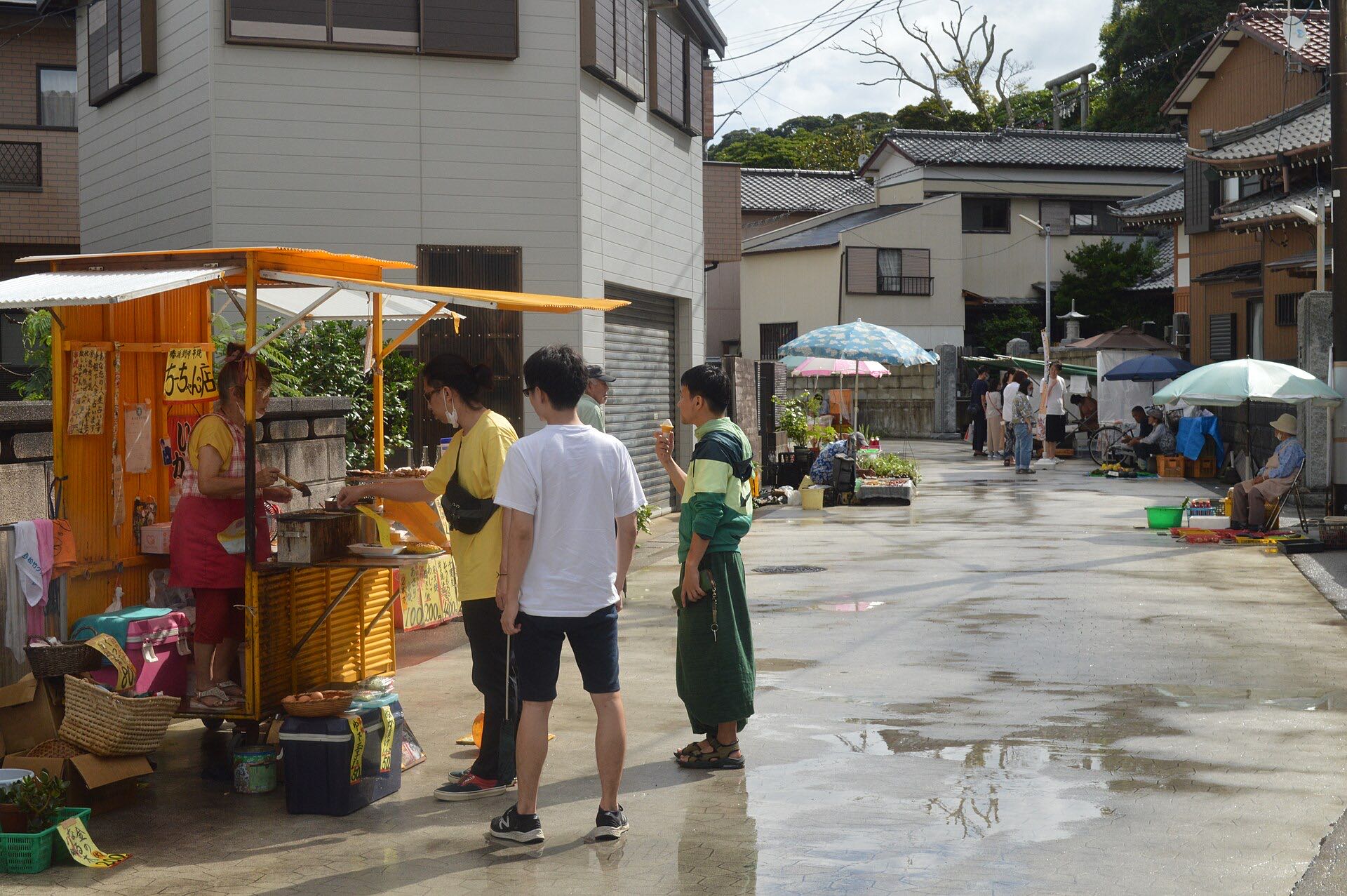
- Katsuura Morning Market Daily except Wednesdays, at the fishing port
Roughly 33 stalls, counted among the three largest morning markets in Japan, running for about four hundred years. It is a working market where local people buy food rather than a staged attraction, which is exactly why it's worth the early alarm — and the tourism office's own advice to bring a cooler in summer tells you what people actually come away with.
 Asturio Cantabrio via Wikimedia Commons (CC BY-SA 4.0)
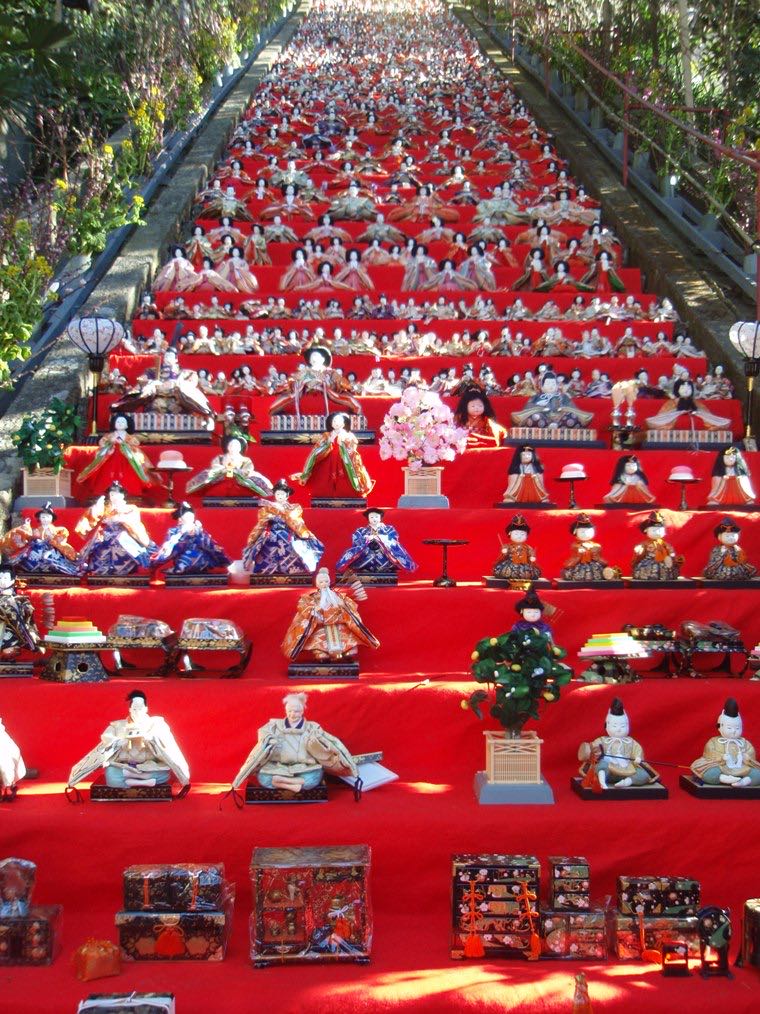
 - Katsuura Big Hina Matsuri Late February to early March, Tomisaki Shrine and around town
Tens of thousands of hina dolls arranged across the town, most spectacularly banked up the stone stairway of Tomisaki Shrine. One of the largest doll festivals in Japan — and it happens in the dead of the off-season, which means a genuinely striking spectacle without the crowds of a spring or autumn festival.
 Soica2001 via Wikimedia Commons (public domain)
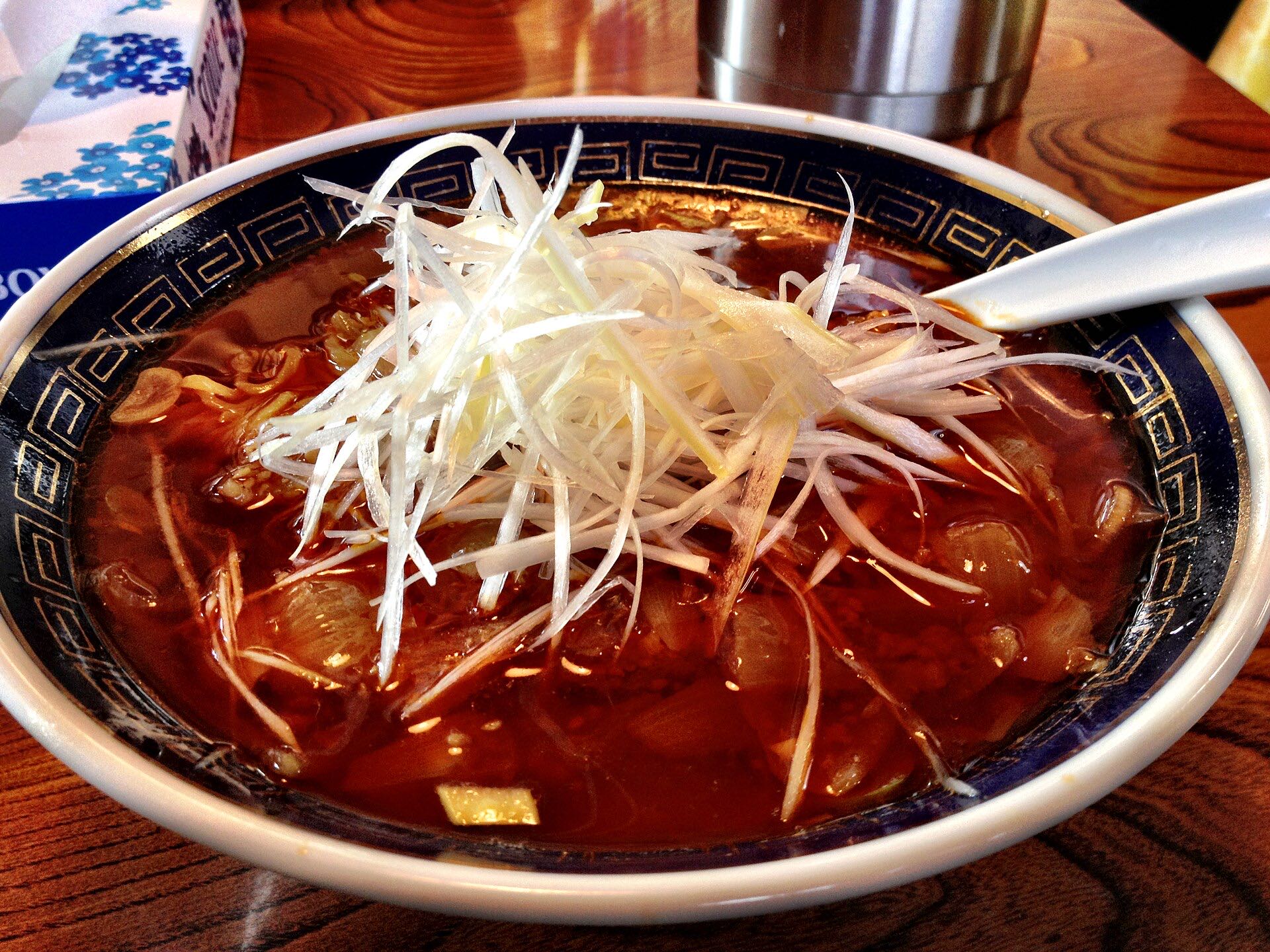
 - Katsuura tantanmen Katsuura, year-round
A local variant of tantanmen that has become its own recognised regional dish — soy-based, heavy on chilli oil and raw onion, and reportedly developed as a warming meal for fishermen and divers coming off cold water. That origin makes it a near-perfect post-session meal, and it's the single most concrete food reason to stop in Katsuura.
 ayustety via Wikimedia Commons (CC BY-SA 2.0)
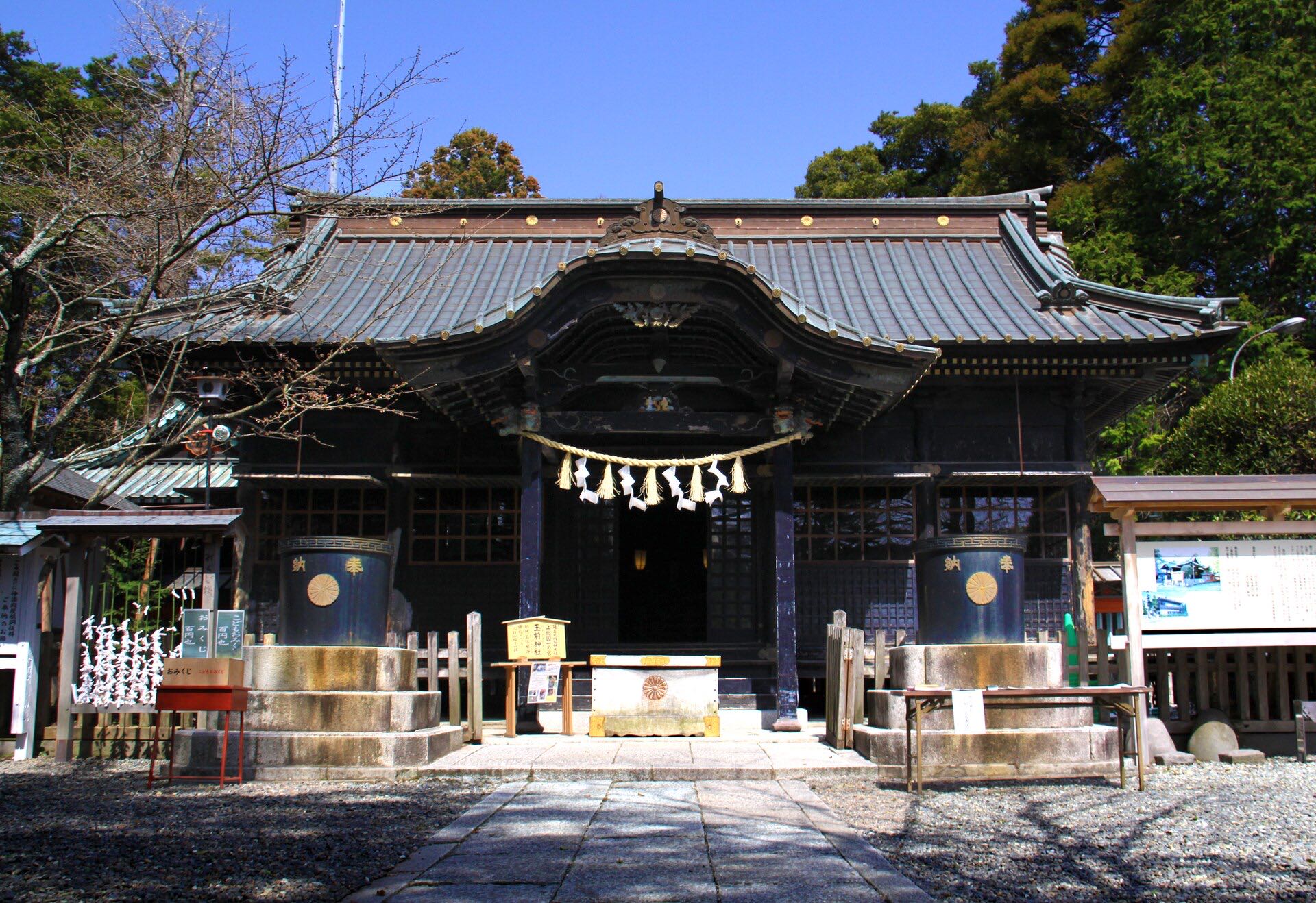
 - Tamasaki Shrine Ichinomiya town centre, year-round; main festival 13 September
This is the reason the town is called Ichinomiya at all: the shrine is the ichinomiya, or chief shrine, of the former Kazusa Province, and the town took its name from that rank. Its enshrined deity is Tamayori-hime no mikoto, daughter of the sea-dragon god Watatsumi — a sea lineage, on a surf coast. The 13 September festival features kagura designated an Intangible Cultural Property of Chiba Prefecture. Most surfers pass within a few minutes of it and never go in.
 ChiefHira via Wikimedia Commons (CC BY-SA 3.0)
 - The Shonan Monorail Ōfuna to Shōnan-Enoshima, 14 minutes, year-round
A suspended monorail where the trains hang beneath the track rather than riding on it. It opened on 7 March 1970 as Japan's first suspended monorail, built by Mitsubishi Heavy Industries as a demonstration line, and it climbs steep grades and swings through tight curves over the hills behind Kamakura — 6.6km, eight stations. It's a commuter line that happens to be one of the best short rides in Japan, and almost no foreign visitor knows it exists.
 Syced via Wikimedia Commons (CC0)
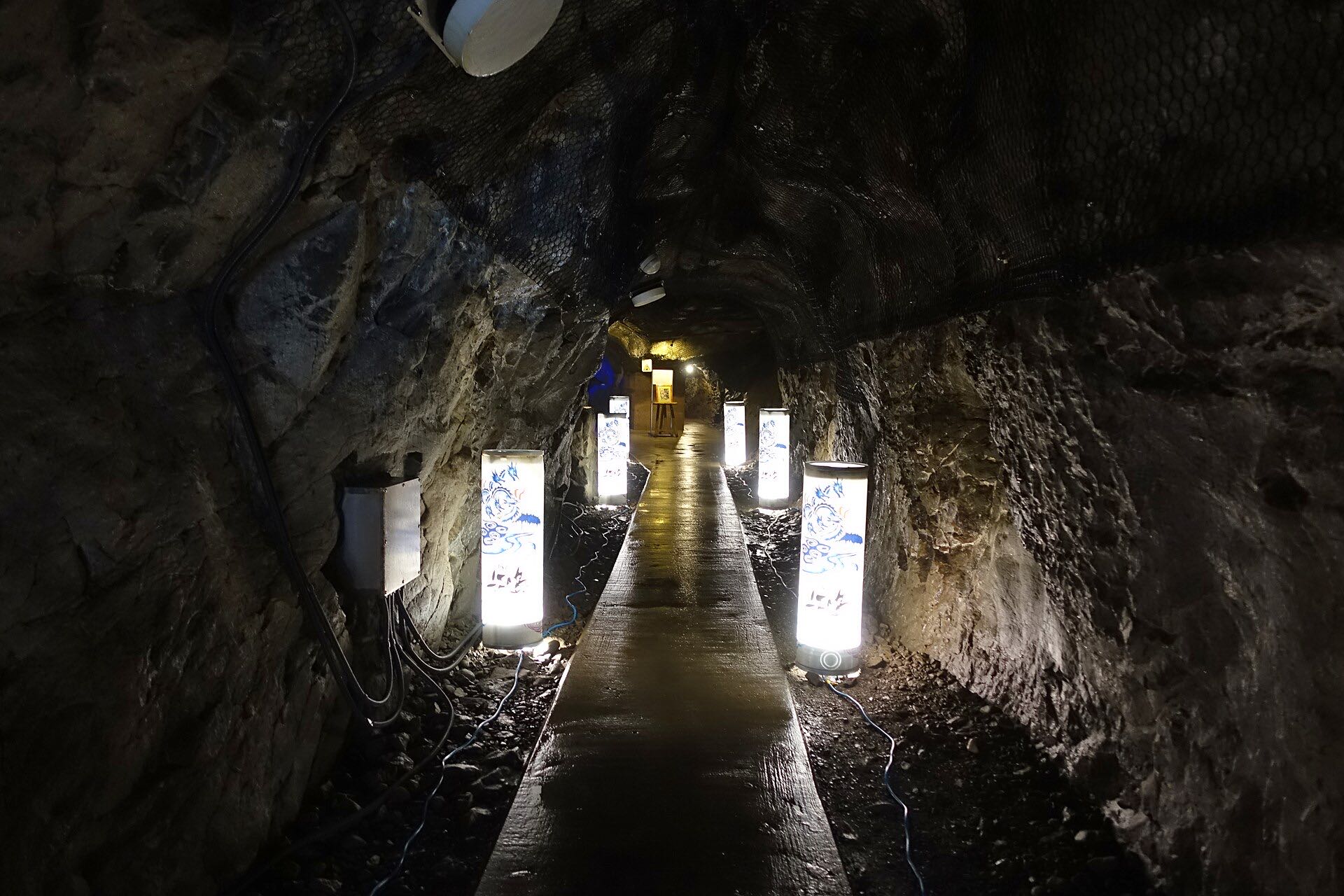
 - The Iwaya Caves, Enoshima Year-round, paid entry
Two sea caves cut by wave erosion at the far end of the island, the first running 153 metres and the second 56, historically used as Buddhist training and retreat sites. The walk out to them takes you past most of the day-trip crowd, and the caves themselves are dark, dripping and genuinely atmospheric — a different Enoshima from the Sea Candle and the escalators.
 Daderot via Wikimedia Commons (CC0)
 - Kamakura's yagura cave tombs Throughout the hills around the city, year-round, free
Kamakura's hillsides hold thousands of yagura — medieval cave tombs carved into the sandstone, many of them along the hiking trails that ring the city. There's no ticket, no queue and in most cases no signage. Walk the ridge trails instead of Komachi-dōri and you'll find them, and you'll find the Kamakura that predates the tour buses.
- Chigasaki's Aloha culture Year-round; Aloha Friday runs through summer
Chigasaki has run an official Aloha Friday since 2003, encouraging aloha shirts as summer business dress, and has been a sister city of Honolulu since 2014. It's also the home town of Keisuke Kuwata of Southern All Stars, one of the most significant bands in postwar Japanese music — to the point that a section of the beach is named after them. The Hawaiian thread here is not marketing veneer laid over a Japanese town; it's a genuine, decades-deep local identity, and it explains a lot about why this coast feels the way it does.
- Katsuura, the town that doesn't get hot Summer
Katsuura has been recognised as a city with no day at or above 35°C in a hundred years, August averaging 25.9°C against a Tokyo summer that routinely passes 35. In an era of increasingly brutal Japanese summers, that is a legitimately valuable and almost entirely unmarketed fact about the place — and the reason to pick it as a July or August base over anywhere else within reach of Tokyo.
Questions people actually ask.
Is this worth flying to Japan for, as a surf trip?
Honestly, no — and any source that tells you otherwise is selling something. Fly to Japan for Japan. This coast is an outstanding component of a Japan trip, and if you want to surf while you're there it's by far the most accessible option from Tokyo. But it's a weekend coast for 35 million people, not a remote wave-rich destination, and going in with the right expectation is the difference between a great trip and a disappointed one.
Chiba or Shonan — which should I pick?
If you want the surf-town feel, more space in the water and the Olympic association, go to Chiba — Ichinomiya, with Katsuura as a second base. If you want to combine the coast with temples, food, easy rail access and international-standard accommodation, go to Shonan. If you have a week, do both, but base separately: they're two hours apart on opposite sides of Tokyo Bay and there's no efficient coastal route between them.
Can I bring my own board on the train?
Assume it will be awkward and plan around it. Japanese rail rules have long capped free carry-on baggage at around 2 metres in length and 250cm in total dimensions — under which a shortboard is fine and a longboard is not — but we were unable to verify the current official rule from JR East, so confirm directly before you travel. Beyond the written rule, the Enoden in Shonan is a small, crowded tourist line where a board at peak times is genuinely inconsiderate; it operates a paid baggage storage service 09:00–17:00 and station coin lockers, and you should use them. The path of least resistance for most visitors is renting locally or driving.
Do I need a car?
In Shonan, no, and you'll probably be happier without one — the rail coverage is exceptional and coastal parking is scarce and costly. In Chiba, effectively yes if you want flexibility, because the Sotobō Line is a single artery with thin off-peak service. Remember Japan drives on the left, most visitors need an International Driving Permit under the 1949 Geneva Convention (several nationalities need an official translation instead), and expressway tolls including the Aqua-Line are significant — use an ETC card, and note the Aqua-Line's much lower weekend and holiday ETC rate.
I have tattoos. Is that going to be a problem?
Not for surfing, and not for daily life. It may be a problem for onsen, sentō, public pools and some gyms, where policies vary from outright refusal to acceptance with cover patches to full tattoo-friendliness. The straightforward workaround is to book accommodation with a private or reservable bath, which removes the question entirely; failing that, carry waterproof cover patches and ask at reception before undressing. There's a real prefecture-by-prefecture directory of accepting establishments at tattoo-friendly.jp.
Is Fukushima water a real concern here?
Short version: no evidence says so, and we're not going to pretend otherwise in either direction. Japan began discharging ALPS-treated water in August 2023 over a planned thirty-year period; the IAEA found the plan consistent with international safety standards while explicitly declining to call that an endorsement. Monitoring has found tritium below limits in seawater near the discharge, none detectable in fish caught 4km from the pipe, and no abnormalities in independent Chinese sampling reported in 2025 — from a party that banned Japanese seafood over the discharge and has no reason to soften the finding. Chiba and Kanagawa are 200–350km south. The genuine water-quality issue for a surfer on this coast is post-rainfall runoff — stay out for 24–48 hours after heavy rain, especially near river mouths.
How bad are the crowds, really?
Shonan on a warm weekend is one of the most crowded stretches of coast in the developed world — the population within reach is enormous and the beach frontage is short. That's a courtesy issue more than a safety issue, but at high density in the water it becomes both. Midweek is a different place entirely, and Chiba is consistently less pressured than Shonan. If your trip has any flexibility at all, use it.
Disclosure & how this page works.
Straight talk: Some links on this page are affiliate links — if you book through them, Secrets of Surf Travel earns a small commission at no extra cost to you. We only link places and people we'd use ourselves, and coverage is never for sale. Those commissions are what keep this site running and fund the next trip.
Today, the "Search Vrbo rentals" and "Search Booking.com stays" links on this page are affiliate links — every vendor listing link is still a plain courtesy link. As partnerships with these local businesses come online, more links (and discount codes, where Secrets of Surf Travel benefits from their use) may earn us a commission, and this page will keep saying so plainly. Coverage is never for sale: nobody on this page paid to be here, and nobody can.
Every listing was researched in 2026 and is being verified in person. Prices, hours, and policies change — treat them as strong starting points and confirm directly with the business. Where two sources disagreed, or where a business's web presence looked stale, we said so in the listing rather than quietly picking one. And per the No-Reveal Code: you will find no surf spots on this page, ever. Tsurigasaki is a signposted Olympic venue with its own municipal tourism page and there's no secret to protect there — but hubs and towns by name is where it stops. No break descriptions, no directions to water.