
Galicia
Spain's third and final zone on this site, and its own distinct country in almost every way that matters — its own language (Galego, co-official with Spanish, closer to Portuguese), and a coastline that faces the open Atlantic directly instead of the sheltered Bay of Biscay. Pantín hosts a genuine WSL-level contest. Ferrol carries real 18th-century naval history. The Costa da Morte earned its name honestly, from centuries of real shipwrecks, and ends at Cape Finisterre — historically believed to be the literal edge of the known world.

Straight talk: Some links on this page are affiliate links — if you book through them, Secrets of Surf Travel earns a small commission at no extra cost to you. We only link places and people we’d use ourselves, and coverage is never for sale. Those commissions are what keep this site running and fund the next trip.
Some vacation-rental search links on this page (marked “Search Vrbo rentals” or “Search Booking.com stays”) are affiliate links. Every vendor link below is still a plain courtesy link. As more partnerships come online, more links may earn us a commission; the promise above holds either way.
Getting There
No single airport is optimal for this whole zone — worth planning around. Santiago de Compostela (SCQ) has the strongest overall connectivity, including a real direct United Airlines route from Newark — the only true direct-US flight this site has found anywhere in Europe so far — plus dense European connections, and sits closer to the Costa da Morte towns. A Coruña (LCG) has no direct US service but is closer to Pantín and Ferrol (roughly 50 minutes to Pantín).
Drive times: from SCQ, Muxía runs roughly 1 hour 14 minutes, Camariñas roughly 1 hour 15 minutes.
Documents: same Schengen rules as this site's other Spain and France zones — no visa needed for US citizens for stays under 90 days within any 180-day period.
Ground Transport
- Spain drives on the RIGHT. The AP-9 "Autopista del Atlántico" toll motorway runs the length of this coast, well-engineered and well-maintained.
- A regional train connects A Coruña and Ferrol directly (about 1h15, several trains daily) — but no meaningful rail service reaches the Costa da Morte towns at all. Bus or car is the only way there.
- Pantín and Ferrol sit close together (roughly 20-30 minutes apart), but the Costa da Morte towns run a genuine 1.5-2 hour drive further southwest — this is another spread-out zone, similar to the site's other Spain zones.
- A car is effectively necessary to see the whole zone, given the lack of rail to the Costa da Morte and the real distance involved.
When to Go & What to Pack
- Galicia faces the open Atlantic directly, without the Bay of Biscay's partial buffering that shapes the site's Basque Country and Cantabria & Asturias zones — swell arrives harder and earlier here. The Costa da Morte in particular is known to hold surf even when Galicia's other breaks have gotten too big.
- Best months: September-November, with October flagged as the most consistent for Atlantic storm swell.
- Water temperature runs consistent across the zone: peaking roughly 64-70°F (18-21°C) in mid-August, dropping to 54-55°F (12-13°C) around the March low. A 3/2mm wetsuit covers summer; 4/3mm with boots is right for winter.
- High season is July-August, same as the rest of Spain; November-March is genuinely better value, if colder.
Good to Know
- Safety: same low-risk Spain baseline as this site's other Spain zones. The real safety notes here are about the ocean and cliffs, not crime — see the callout above.
- Currency: Euro.
- Language: Galician (Galego), co-official with Spanish since Galicia's 1981 Statute of Autonomy — one of Spain's five official languages. It shares medieval roots with Portuguese and is largely mutually intelligible with it, genuinely distinct from Spanish rather than a dialect. More normalized and prominent than Asturian, and notably less politically charged than Basque.
- Emergency number: 112, same as the rest of the EU, staffed multilingually.
- Cost of living: genuinely budget-friendly relative to the rest of Europe and comparable to or cheaper than the site's Cantabria & Asturias zone — treat it as one of the more affordable stops on this coast.
Respecting the Locals
Galicia is its own distinct country in almost every way that matters — its own co-official language, Galego, and a working coastal economy that runs on percebe (goose barnacle) harvesting, one of the most dangerous fishing jobs in the world, and on the pilgrims who arrive on foot at Cape Finisterre after weeks on the Camino de Santiago. The Costa da Morte earned its name from real, documented shipwrecks and a real environmental disaster, not marketing. This is a place with its own long relationship to the Atlantic, well before surfers showed up.
- Locals get first priority, always. Watch a session before you paddle out. Learn who's who before you learn the wave. Sit inside and catch what they let through — the leftovers are yours, not the set waves.
- Don't backpaddle. Ever. Being in position doesn't make the next wave yours, especially if you didn't wait your turn. If a local wants a wave, let them have it…even if it IS your turn. That older guy who may not be the best surfer out there has probably been surfing that wave before you even sat on a board. If you don't know someone, assume they're local.
- Don't snake. This shouldn't even need to be said, but…dropping in on someone, local or not, is the ultimate disrespect and the fastest way to be sent out of the water. Don't be that guy!
- Say hi. A “howzit,” “whatsup,” or “nice wave,” eye contact, or a nod in the channel — it costs nothing and it's the fastest way from stranger to welcome.
- This is somebody's home, not a resort amenity. The break you're surfing is where a local kid learned to swim, where someone's uncle has surfed for forty years. Act like a guest, because you are one.
- Spend where it actually helps. The food truck, the local shaper, the family-run rental, the local photographer — that's where a surf trip's money should land, not just the chain hotel gift shop. See The No-Reveal Code for why that's the whole premise of this site.
- Leave it better than you found it. Pick up trash that isn't yours. Don't touch reef, wildlife, or cultural sites.
Locals have watched hundreds, if not thousands, of people come and go — some for days, some for months or years — and almost all of them eventually go home. The locals are still there. It takes many, many years to actually become one. Keep that in mind the next time you feel entitled to the same waves they get.
None of this is a secret handshake. It's just how you'd want a guest to act in your own backyard.
Pantín
Named after Esmeralda Pantín, daughter of a settler who arrived here in 1747 — and home to the ABANCA Pantín Classic Galicia Pro, founded 1988 and elevated for 2026 to a WSL Qualifying Series QS 6,000 International event, held in late August, one of Europe's most emblematic surf contests.
Casas rurales and family-run guesthouses dot the countryside around Pantín, a genuine independent-lodging alternative to the beachfront apartment blocks.
Surf Schools & Board Rental
- Pantín Surf CampPantín beachThe permanent official host school of the Pantín Classic — the first surf school in Spain to earn tourism-quality certification. pantinsurfcamp.es · Instagram · Map
- Santiago de Pantín Surf SchoolRight on Pantín beachClasses plus board, wetsuit, and paddle rental. santiagodepantin.com · Instagram · Map
- Valdo Surf SchoolPantín (also a Doniños location)Instructors certified by both the Galician and Spanish Surf Federations. valdosurf.com · Instagram · Map
Stays
- Las Olas by PantínSteps from the beachMid-rangeApartments with an on-site restaurant and terrace. lasolasbypantin.com · Instagram · Map
- Casa Rural Pantín~19 min walk to the beachBudget-midA rural house with a garden and mountain-view patio. Map
Where to Eat — real Galician seafood
- Casa CaneiroFrádigas, ValdoviñoMid-rangeA family marisquería serving seafood since 1940 — ranked the #1 seafood spot in Valdoviño. casacaneiro.es · Instagram · Map
- Marisqueiro A RíaPantín areaMid-rangeA seaside spot running from percebes to pulpo a la gallega. Map
Wheels
No dedicated rental storefront sits in Pantín itself — the nearest real option is Ferrol, roughly 20 minutes away.
Surfboard & Wetsuit Repair
No standalone shop in Pantín beyond the surf schools' own rental counters — the nearest dedicated repair specialist, La Rampa Garage, is in A Coruña, a real drive away.
Other Adventures
- ABANCA Pantín Classic Galicia ProPantín beachBudgetFree to watch as a spectator — one of Europe's premier surf events, held on the beach itself. classicsurfpro.com · Map
Ferrol & Doniños
A real historic naval city — Felipe V established Ferrol as the Atlantic's main naval port in 1724, and by 1790 its arsenal employed 5,440 workers and could maintain 70 ships. Doniños beach nearby, a Blue Flag-awarded 1,900m stretch, is consistently windy and has hosted European Junior Surfing Championships since 2006.
Surf Schools & Board Rental
- Spot Surf SchoolDoniños beachOperating since 2008, 4.9/5 from 300+ reviews — small, homogeneous group classes with full rental gear. spotsurfschool.com · Instagram · Map
- Valdo Surf School (Doniños)Praia de DoniñosOpened July 2013, the same certified operator as the Pantín location. valdosurf.com · Instagram · Map
Stays
- Parador de FerrolHistoric districtUpperNear the Church of San Francisco and Herrera Gardens. paradores.es · Map
- Hotel Alda El SuizoMagdalena neighborhoodMid-rangeAn early-19th-century modernist building. aldahotels.es · Map
Where to Eat
- A BateaPaseo MarítimoMid-rangeSea views with nécora, pulpo a feira, prawns, and squid. Map
- Enxebre (Parador de Ferrol)Parador de FerrolUpperTerrace dining, traditional Galician pulpo a feira. paradores.es · Map
Wheels
- GANXO RentFerrolVan rental explicitly covering Ferrol, Narón, and Valdoviño. ganxorent.com · Map
- Ferrol en Bici / BiciFerrolterra18 stations across Ferrol and NarónPublic bike-share. biciferrolterra.com · Facebook · Map
Massage & Wellness
- Hotel Spa OdeonFerrolA dedicated spa hotel with real packages. hotelodeonferrol.com · Map
Other Adventures
- Fundación Exponav (Museum of Naval Construction)Ferrol's Naval Construction RouteBudget4,000m² across two floors on Ferrol's real naval-history route. exponav.org · Facebook · Map
- Military Arsenal of Ferrol guided tourFerrolMid-rangeReservation-required access to the former Military Instruction Barracks and cannon battery. ferrolguias.com · Map
Costa da Morte
Fisterra, Muxía, and Camariñas — a genuinely rural, remote stretch where a real dark maritime history meets the terminus of the Camino de Santiago. Cape Finisterre was long believed the literal edge of the known world; today it's where many pilgrims end their walk with a swim in the Atlantic rather than the once-common (and actually only 1980s-era) tradition of burning their boots.
Surf Schools & Board Rental
- Surf FisterraMar de Fóra beach, FisterraRun by professional surfer Eric Rebière, 20+ years of experience — explicitly serves Camino pilgrims finishing their walk alongside travelers. surffisterra.com · Instagram · Map
- Tipiti Surf SchoolNemiña beach, Muxía areaLocal instruction on the Costa da Morte's more remote stretch. tipitisurf.com · Instagram · Map
Stays
- Parador Costa da MorteMuxíaUpperA full-service property with a real, dedicated spa — the clear wellness anchor for this hub. paradores.es · Map
- Albergue de Peregrinos de FisterraFisterraBudgetMunicipal, Xunta-run pilgrim hostel — real, distinctive Camino infrastructure, one-night max stay. Map
Where to Eat — genuine percebe (goose barnacle) country
- Puerto ArnelaCamariñasMid-rangeA specialist in Galician percebes, blue lobster rice, and seafood platters. hotelpuertoarnela.com · Instagram · Map
- Restaurante El PuertoFisterraMid-rangePulpo a feira with cachelos, daily market-fresh seafood. elpuertofisterra.com · Instagram · Map
Camariñas is genuinely one of Galicia's most important percebe ports — a real, distinctive detail for this hub, not generic filler.
Wheels
Genuinely thin — no dedicated local car- or bike-rental storefront confirmed in Fisterra, Camariñas, or Muxía. Book ahead via Santiago Airport or an aggregator service before you arrive.
Massage & Wellness
The Parador Costa da Morte's spa is the one clearly verified option in this hub — genuinely thin beyond it.
Other Adventures
- Camiño dos Faros (Lighthouse Way)Along the Costa da MorteBudgetA long-distance coastal hiking route linking the coast's real lighthouses. caminodosfaros.com · Map
Local Secrets
Thirteen non-surf reasons this zone rewards the curious — a cemetery dedicated to a single 1890 shipwreck, one of Europe's most dangerous fishing jobs, and an 18th-century naval district on the UNESCO Tentative List.
- Cabo Fisterra Lighthouse & the 0.00km Marker May-September for weather; sunset is the iconic moment
The 1853 granite lighthouse marks the cape the Romans called finis terrae ("land's end"), long believed the edge of the known world. A stone marker reading "Km. 0,00" stands nearby, the traditional finishing point for pilgrims continuing past Santiago on the Camino Finisterre.
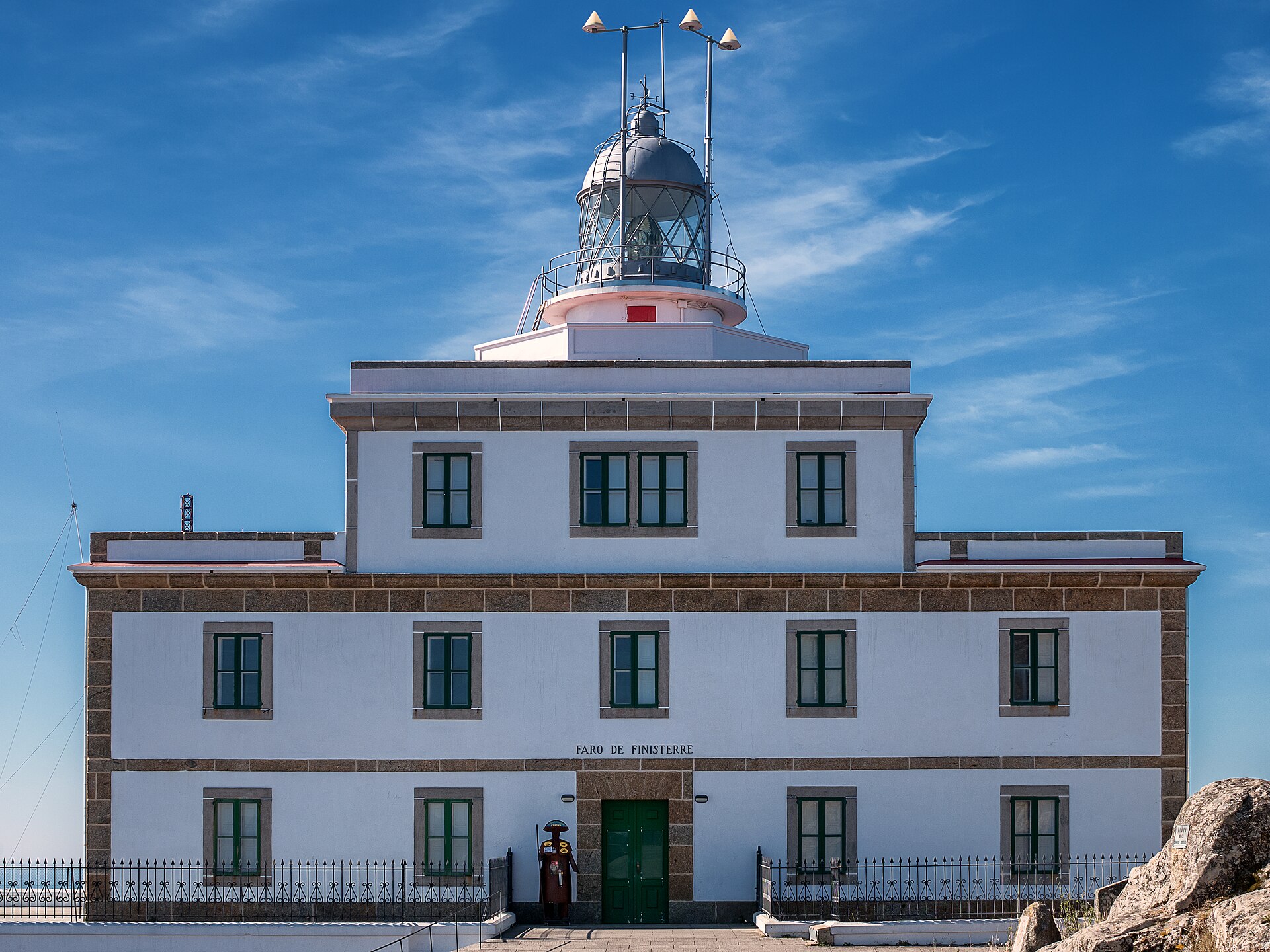 Photo: Basotxerri / Wikimedia Commons (CC BY-SA 4.0)
 - Cementerio de los Ingleses (English Cemetery) Year-round; quietest outside summer midday
A real memorial to the 1890 wreck of the HMS Serpent, a British torpedo cruiser that ran aground at Punta do Boi with only 3 of 175 crew surviving — the only necropolis in the world dedicated to victims of a single shipwreck.
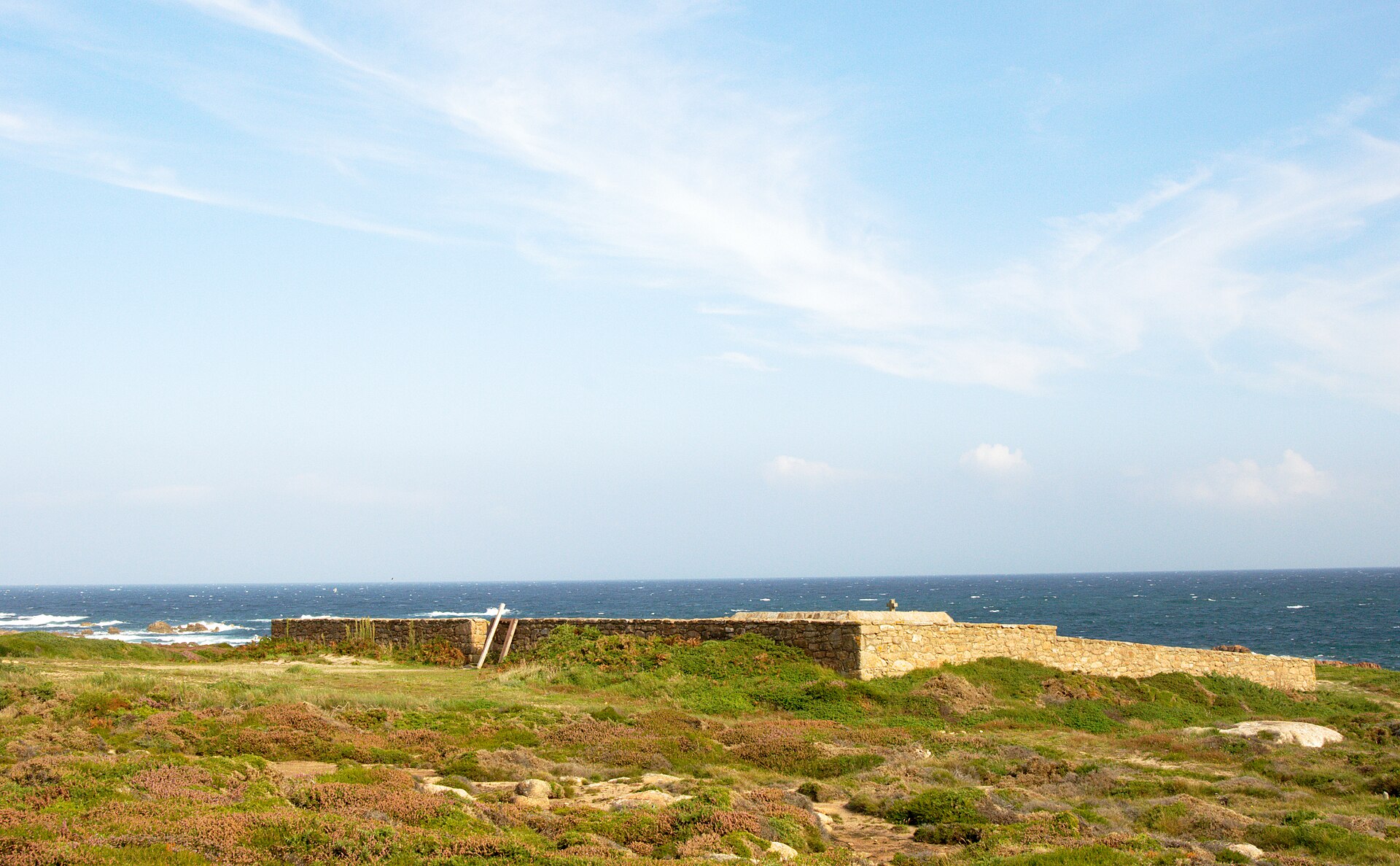 Photo: Mussklprozz / Wikimedia Commons (CC BY-SA 4.0)
 - Santuario da Virxe da Barca Second Sunday of September for the romería; otherwise any calm day (very exposed site)
A pilgrimage chapel on a wave-battered granite point — legend holds the Virgin Mary appeared here in a stone boat. The real, documented rock formations tied to the legend, including the Pedra de Abalar (rocking stone), remain part of active local ritual today.
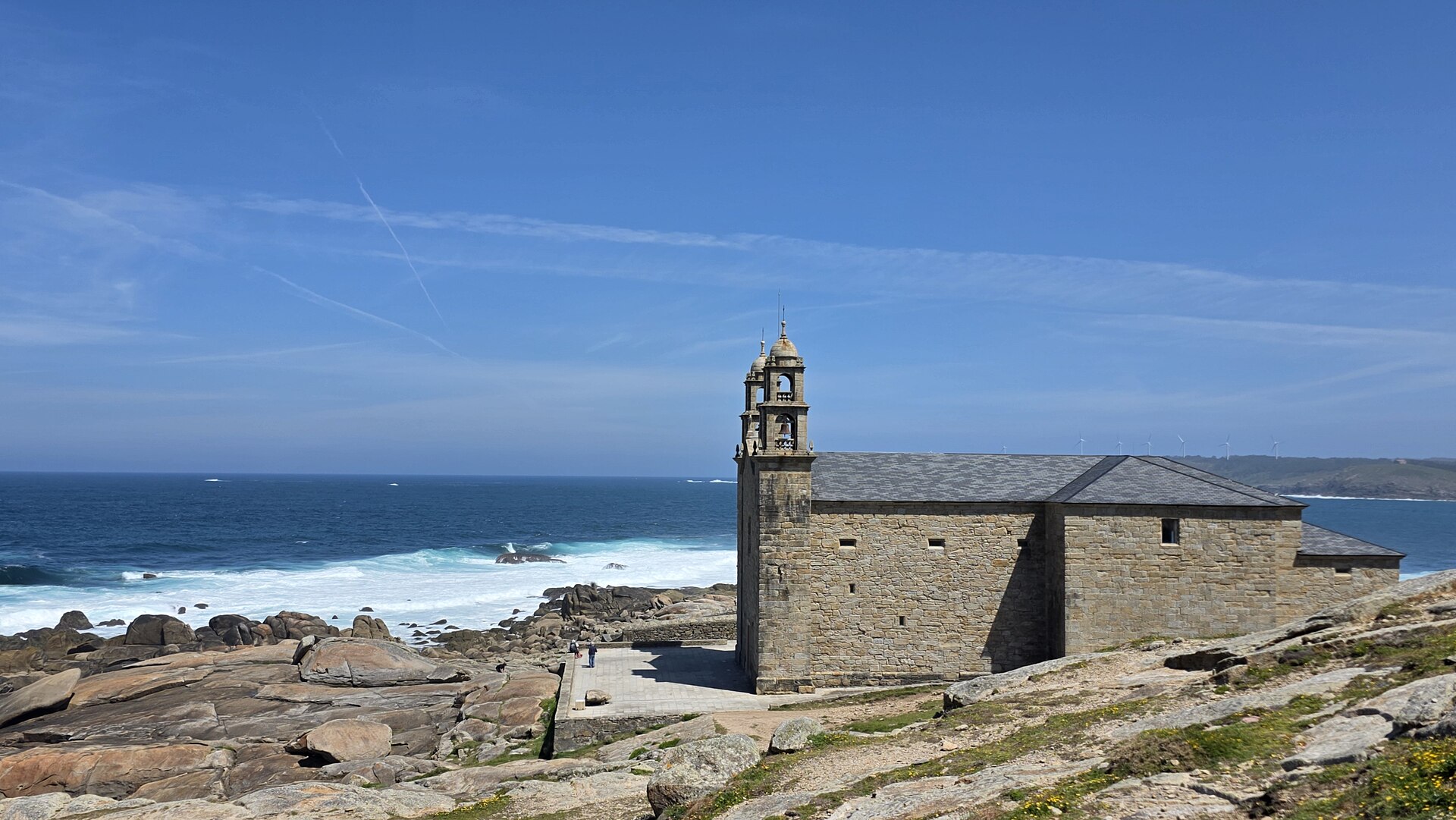 Photo: JensKunstfreund / Wikimedia Commons (CC BY-SA 4.0)
 - Prestige Oil Spill History A historical/interpretive note, not a destination to "visit"
On November 13, 2002, the tanker Prestige broke apart roughly 130 miles off this coast, spilling over 20,000 tonnes of fuel oil that fouled 800+ km of coastline and devastated local fishing and shellfish communities — a real environmental disaster whose recovery took roughly eight years, and which sparked the "Nunca Máis" volunteer cleanup and protest movement.
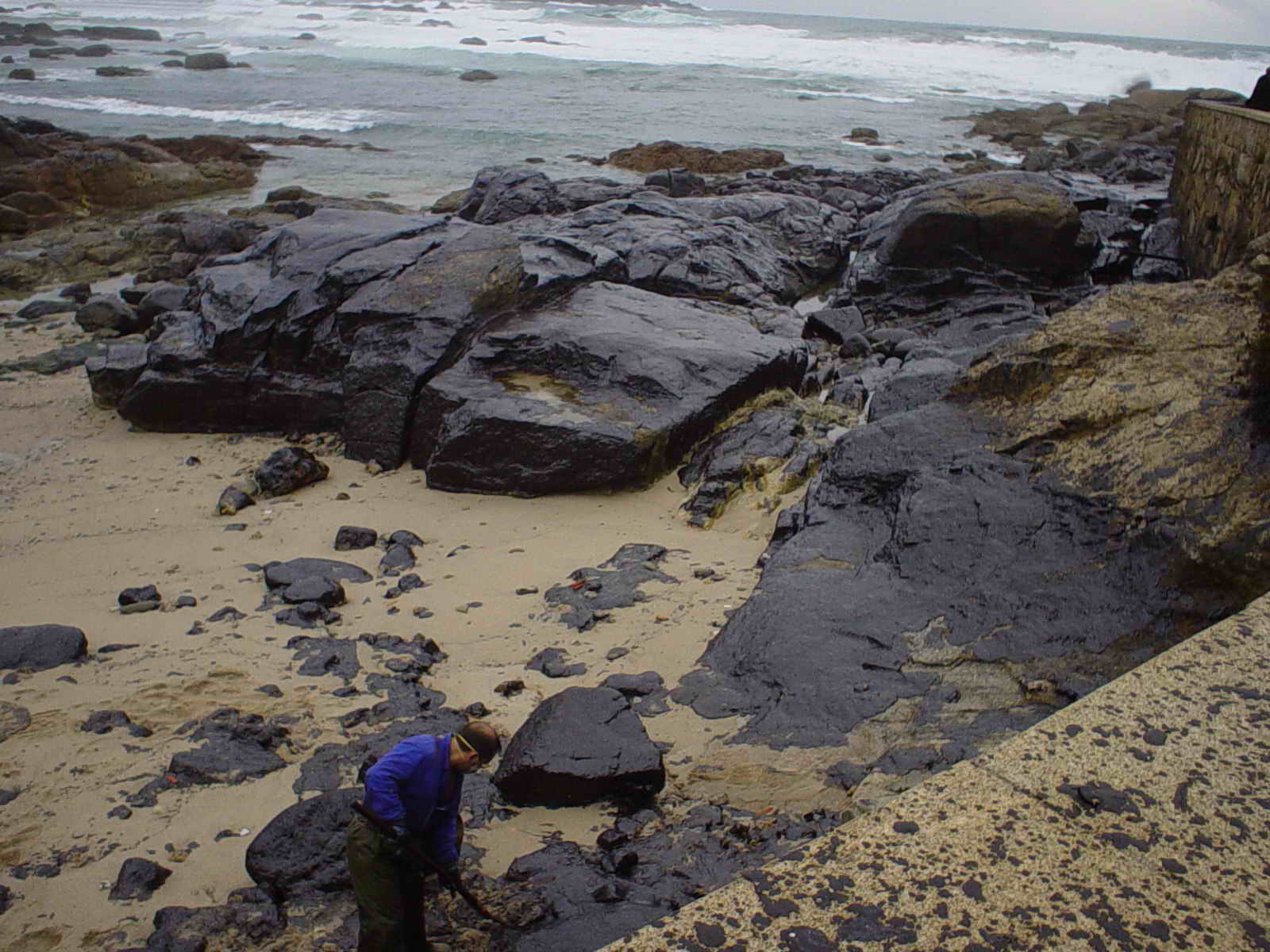 Photo: Luis Miguel Bugallo Sánchez (Lmbuga) / Wikimedia Commons (CC BY-SA 3.0)
 - Ferrol Naval Arsenal (Puerta del Dique) Weekday mornings, museum hours
A real 18th-century naval arsenal gate, part of the largest naval base built in Spain under Ferdinand VI and Charles III — making Ferrol Europe's principal Enlightenment-era military shipbuilding city. Now home to the Exponav maritime museum.
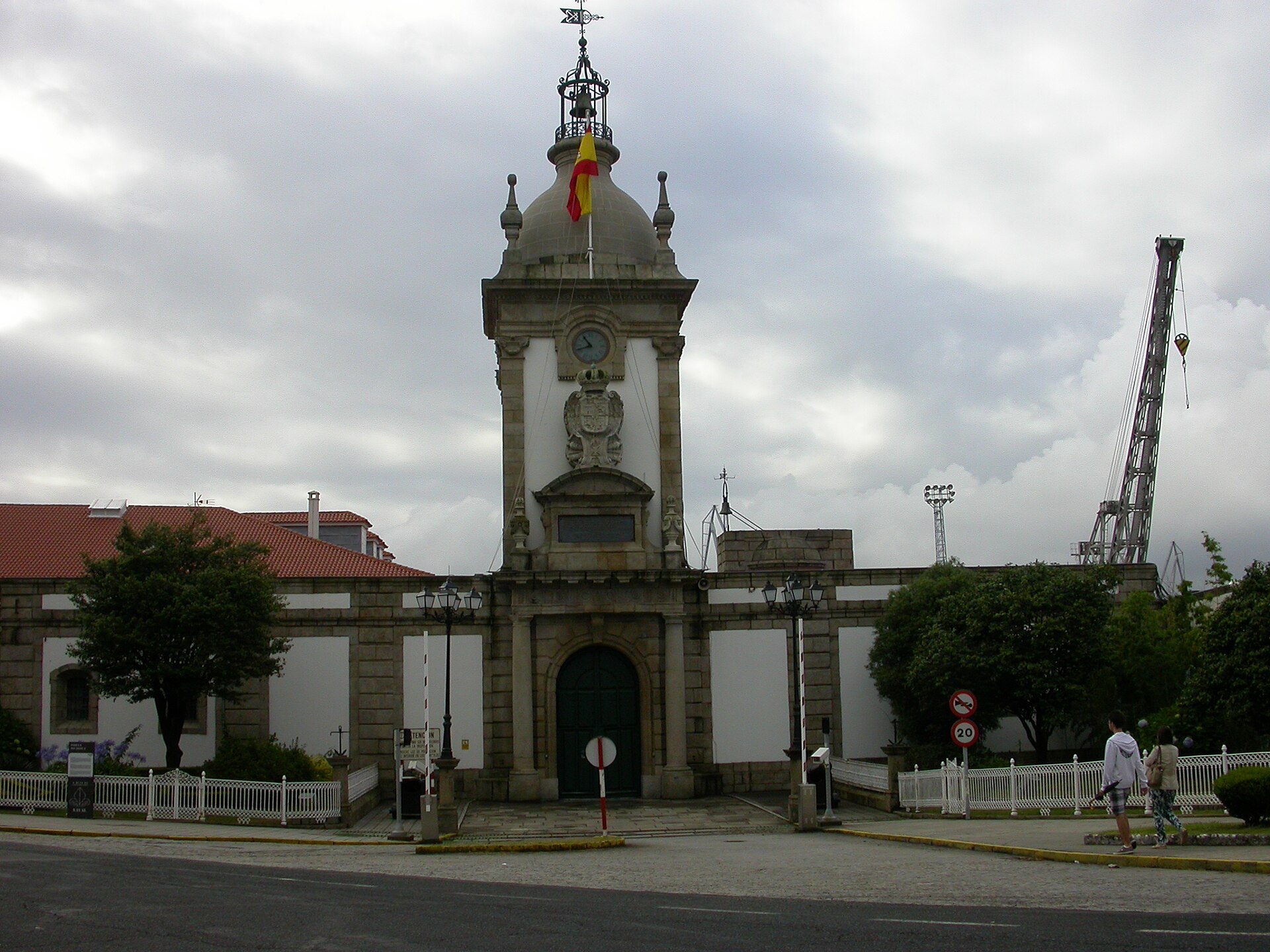 Photo: Jaccroube / Wikimedia Commons (CC BY-SA 3.0 ES)
 - The Magdalena Quarter Any season; golden hour on the glass galerías
A perfectly symmetrical 18th-century grid neighborhood with glassed-in balconies — Spain's clearest surviving example of Enlightenment ("Ilustrado") urban planning. On Spain's UNESCO Tentative List since 2007, though not yet an inscribed World Heritage Site.
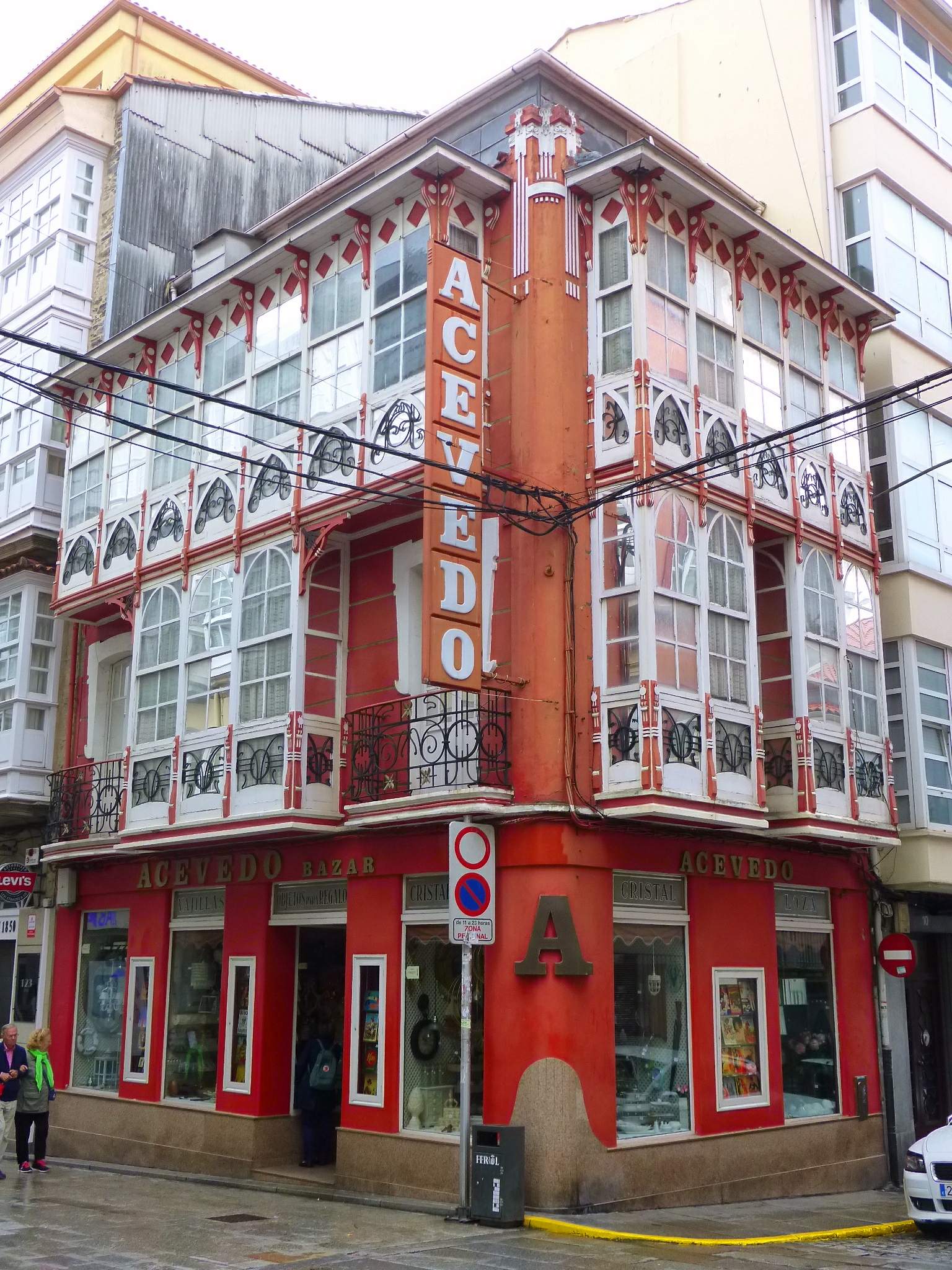 Photo: Zarateman / Wikimedia Commons (CC0)
 - Tesoro de Bedoya A museum-piece reference, not an on-site visit
A real Iron Age hoard — a diadem, earrings, rings, and coins — sealed in a bronze vessel roughly 2,000-2,300 years ago and discovered in Doniños in the early 20th century, now held at the Museo de Pontevedra.
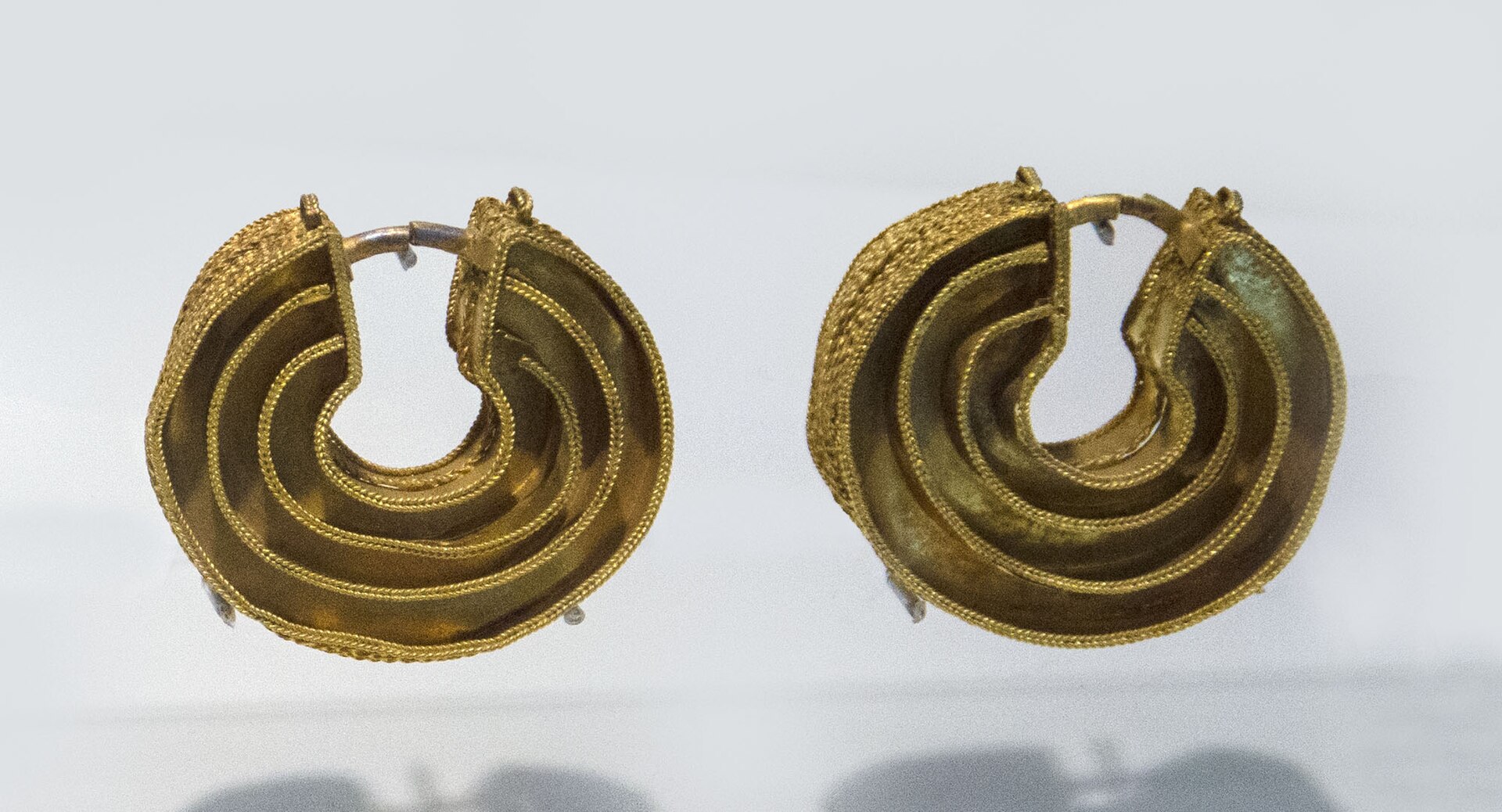 Photo: Ángel M. Felicísimo / Wikimedia Commons (CC BY 2.0)
 - Museo do Encaixe & Monumento á Palilleira Year-round; lacemakers often work publicly in the plaza in summer
Camariñas is Galicia's living center of encaje de bolillos (bobbin lace), a craft likely introduced by Flemish or Dutch traders in the 16th century and declared Intangible Cultural Heritage by the Xunta de Galicia. A bronze monument to the palilleira (lacemaker), erected 1985, honors the tradition in the town center.
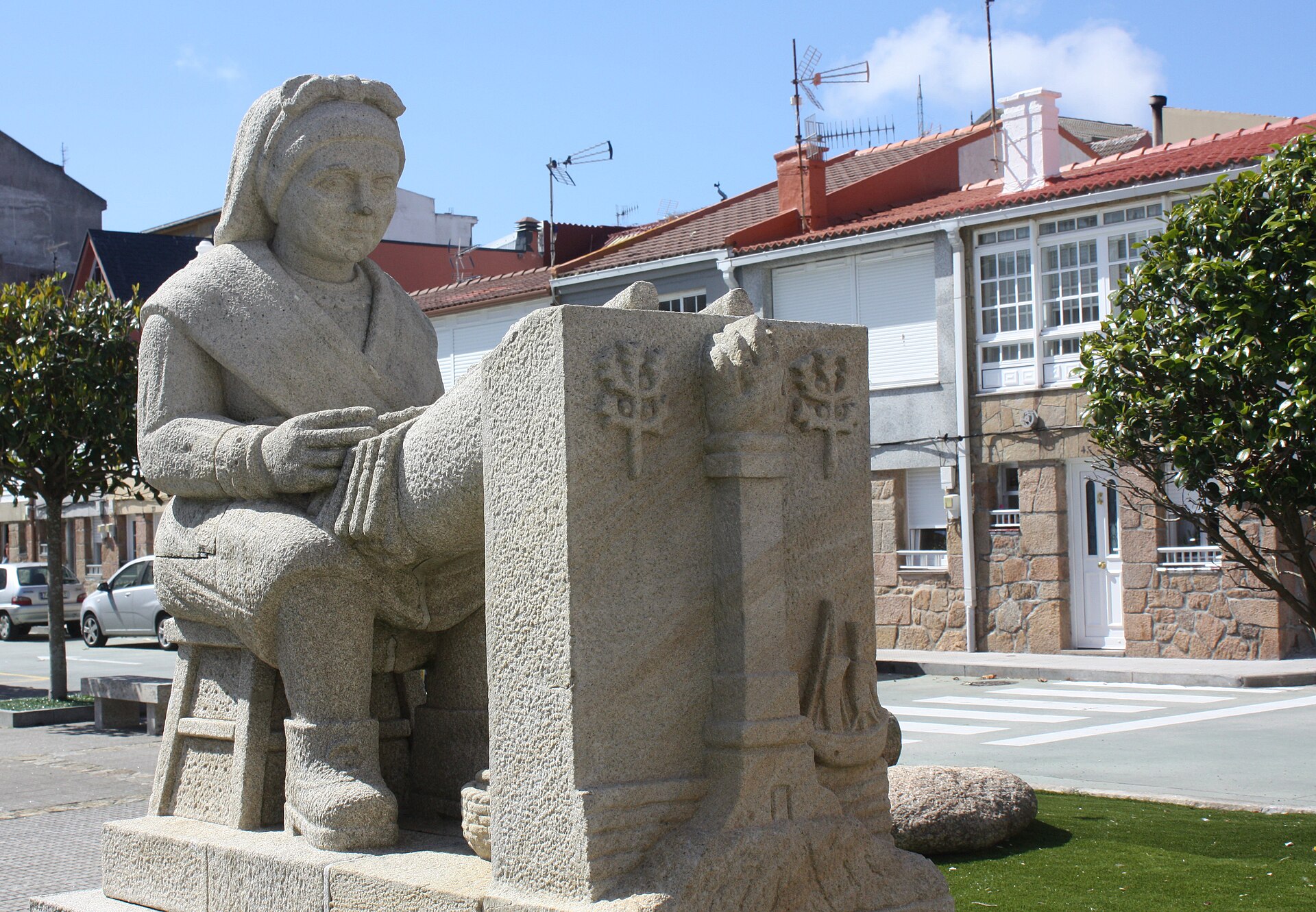 Photo: P.Lameiro / Wikimedia Commons (CC BY-SA 3.0)
 - Cabo Vilán Lighthouse Late afternoon for the cliffside light
Completed in 1896, this was the first lighthouse in Spain to run on electric light. Its 25-meter tower stands atop a 105-meter cliff and remains one of the coast's most powerful beams.
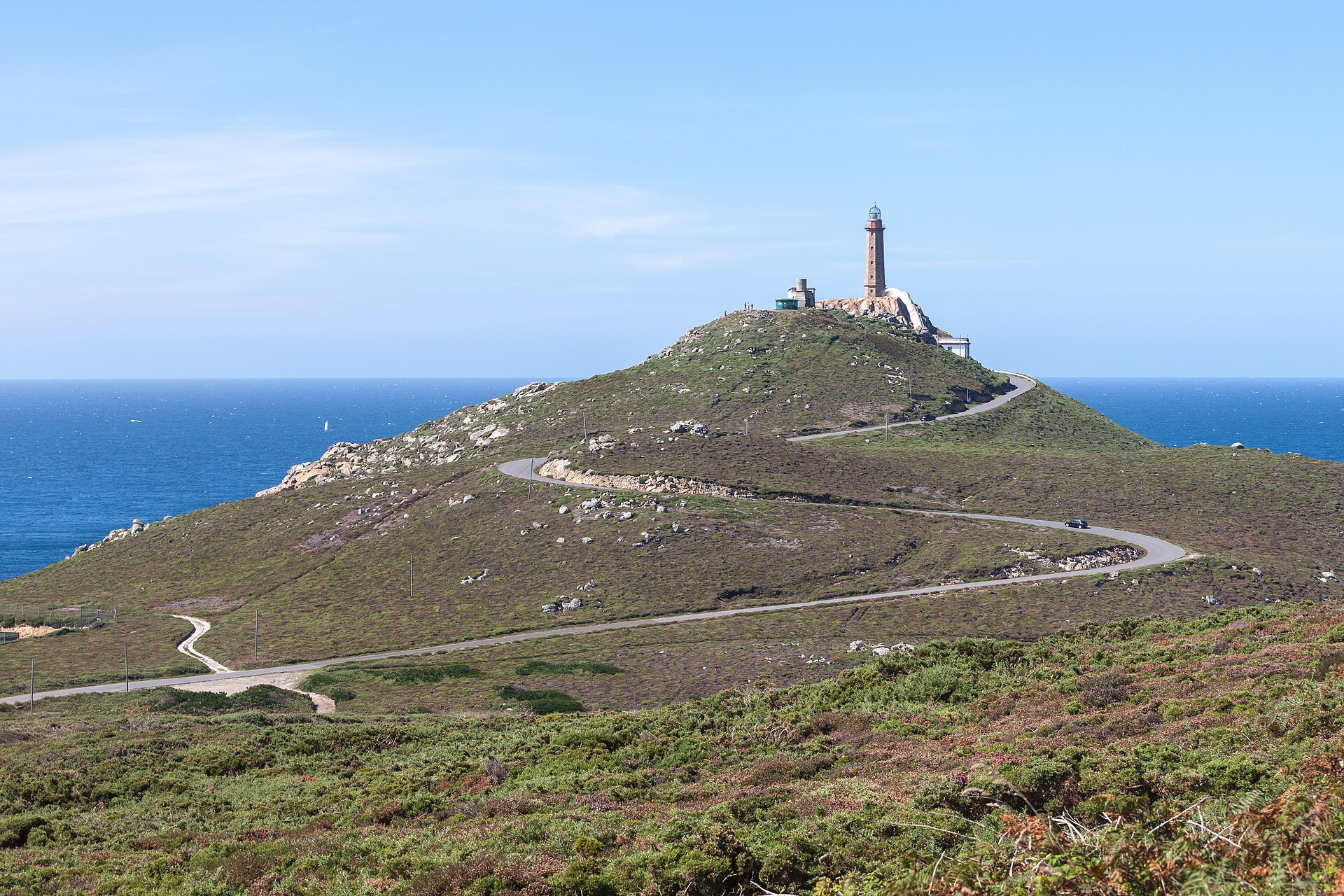 Photo: Luis Miguel Bugallo Sánchez (Lmbuga) / Wikimedia Commons (CC BY-SA 3.0)
 - Punta Nariga Lighthouse Anytime; especially dramatic in stormy weather
Inaugurated 1997 and reportedly the last lighthouse built in Spain, designed by architect César Portela as a triangular prism of pink granite evoking a ship's prow — striking contemporary architecture set into the cliffs.
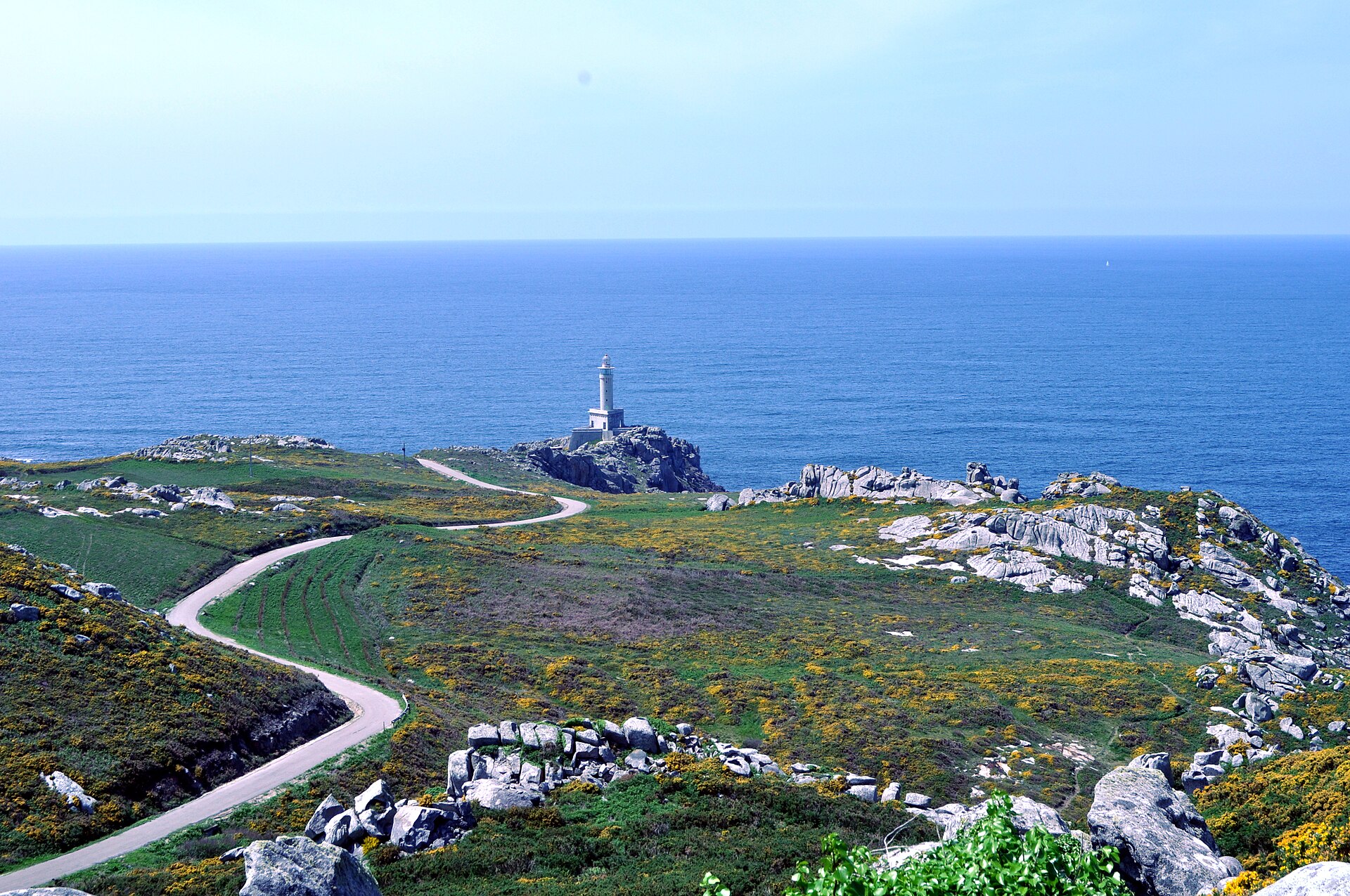 Photo: Raúl Hidalgo / Wikimedia Commons (CC0)
 - Castro de Borneiro Spring or early autumn for the walking trail; unshaded site
A real, excavated Iron Age hillfort (6th century BCE-1st century CE), the only fully excavated castro on the Costa da Morte, with 29+ circular structures, defensive double walls, and an adjoining metalworking quarter.
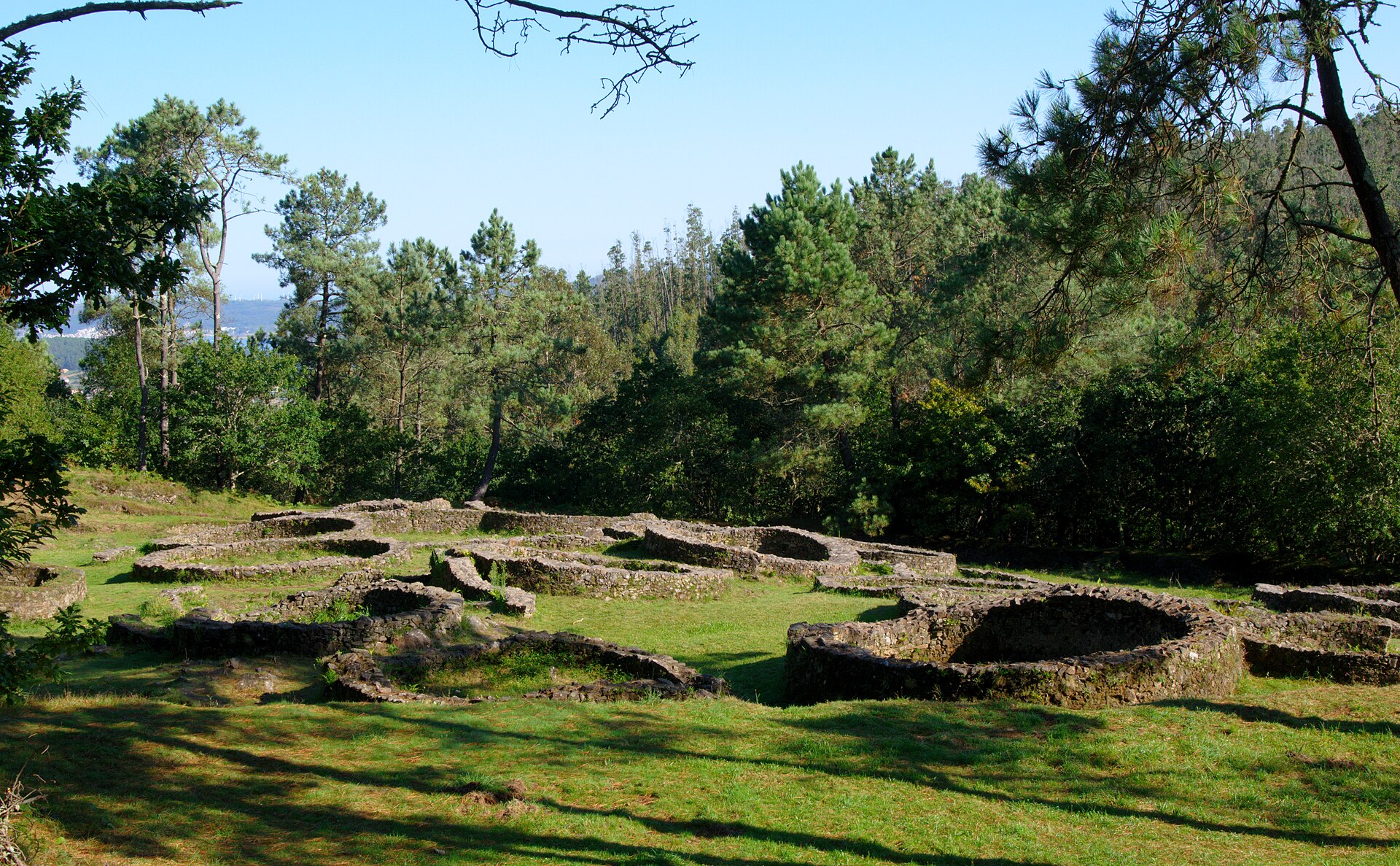 Photo: Mussklprozz / Wikimedia Commons (CC BY-SA 4.0)
 - Percebes (Goose Barnacle) Harvesting Summer, around the Festa do Percebe do Roncudo in Corme
The Costa da Morte's most famous seafood tradition: percebeiros free-dive or rope-descend the wave-battered Roncudo rocks to hand-harvest goose barnacles, one of the most dangerous fishing jobs in the world, fetching up to 200 euros/kg.
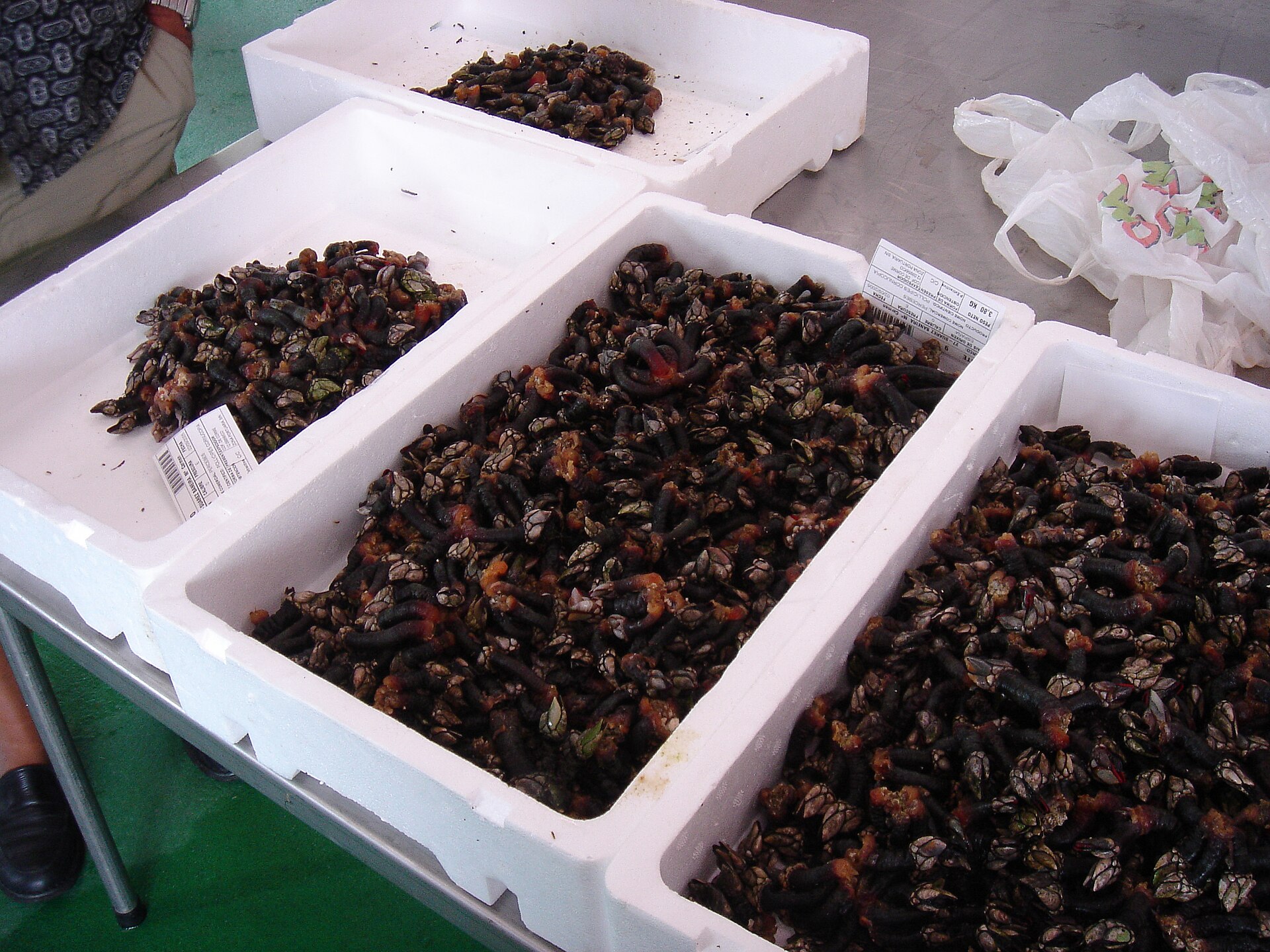 Photo: E Mosqueira / Wikimedia Commons (CC BY-SA 3.0)
 - Lagoa de Doniños Winter for migratory birdwatching; year-round for the walking path
A protected freshwater lagoon directly behind Doniños beach, a Natura 2000 Site of Community Importance and Special Protection Area for Birds, home to herons, kingfishers, and wintering waterfowl.
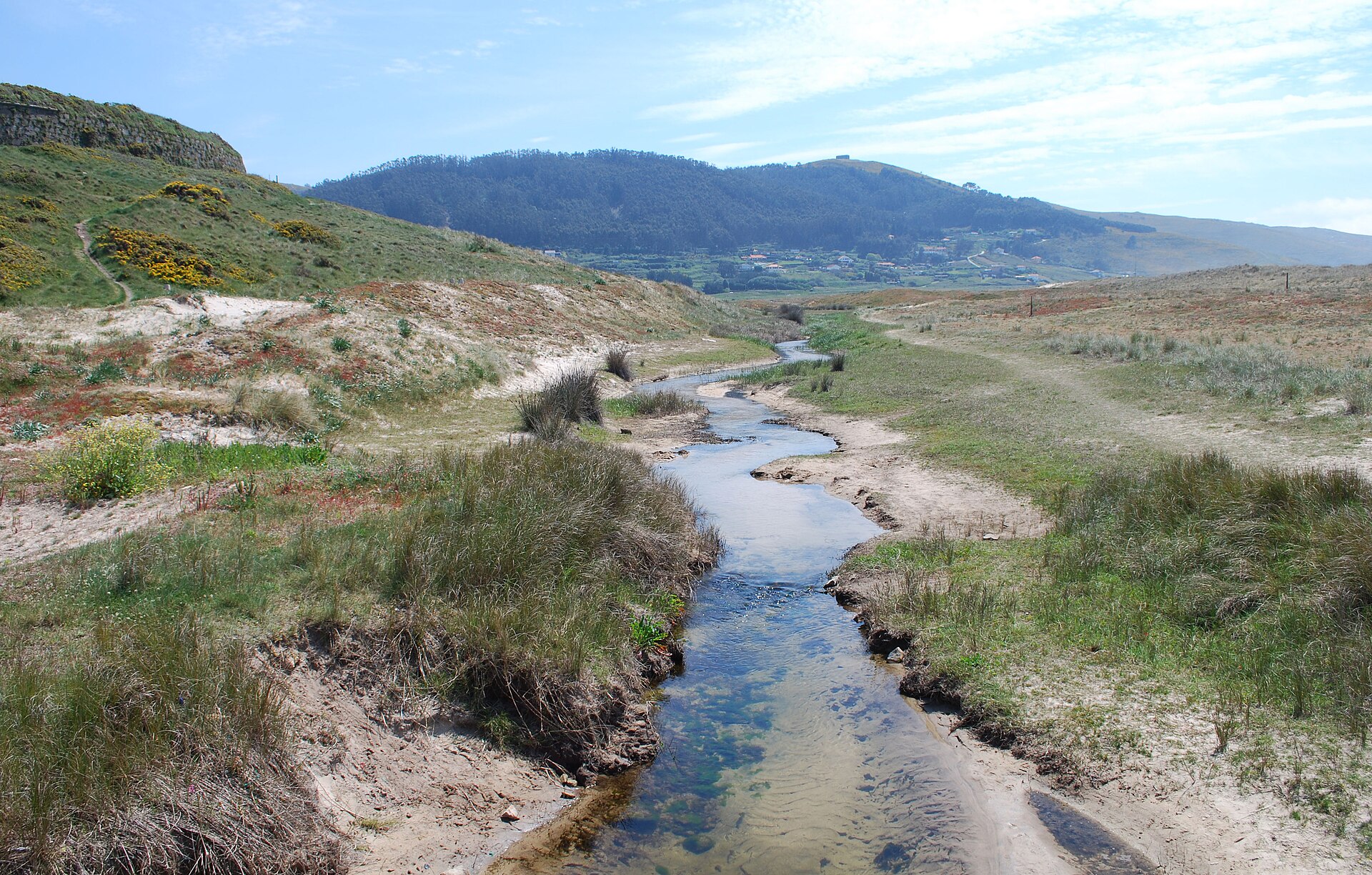 Photo: Ajuanta / Wikimedia Commons (CC0)
Questions people actually ask.
Which airport should I fly into for this zone?
Honestly, no single airport is optimal for the whole zone. Santiago de Compostela (SCQ) has the strongest overall connectivity — including a real direct United Airlines route from Newark, the only true direct-US option this site has found anywhere in Europe so far — and sits closer to the Costa da Morte towns. A Coruña (LCG) has no direct US service but is closer to Pantín and Ferrol. Pick based on which sub-area you're prioritizing.
Is the Costa da Morte's name just marketing?
No — it's real, documented maritime history. Sailors have called this stretch the murderous coast since the Middle Ages, and the name appeared in print by 1904. Notable historic wrecks include the HMS Serpent (1890), which killed 173 of 176 crew — a real memorial cemetery in Camariñas is dedicated to that single wreck. The coast also suffered a major, well-documented disaster in 2002 when the tanker Prestige broke apart offshore, spilling over 20,000 tonnes of fuel oil across 800+ km of coastline.
Can I still burn my boots at Cape Finisterre?
You shouldn't, and it's worth knowing the tradition is more recent than it looks — burning boots or clothing at the cape is often assumed to be an ancient pilgrim custom, but it actually only dates to the 1980s, started by foreign visitors, and is now discouraged for real environmental reasons. Many pilgrims today mark the end of their walk with a swim in the Atlantic instead.
Is Galicia's Celtic heritage real?
It's genuinely more nuanced than the tourism marketing suggests. Galicia has real, documented pre-Roman Iron Age hillfort settlements (castros) and a bagpipe tradition with solid documentation back to at least the 13th century. But modern "Celtic nation" branding is, per historians, partly an invented tradition — the region's actual Celtic-language substrate died out centuries before the bagpipe itself is first documented. Real archaeology, real old music tradition, contested modern rebrand.
Is the surf here stronger than in Cantabria or the Basque Country?
Generally yes. Galicia faces the open Atlantic directly, without the Bay of Biscay's partial buffering — swell arrives harder and earlier here than at this site's Basque Country or Cantabria & Asturias zones. The Costa da Morte in particular is known to hold surf even when Galicia's other breaks have gotten too big.
Disclosure & how this page works.
Straight talk: Some links on this page are affiliate links — if you book through them, Secrets of Surf Travel earns a small commission at no extra cost to you. We only link places and people we’d use ourselves, and coverage is never for sale. Those commissions are what keep this site running and fund the next trip.
Today, the “Search Vrbo rentals” and “Search Booking.com stays” links on this page are affiliate links — every vendor listing link is still a plain courtesy link. As partnerships with these local businesses come online, more links (and discount codes, where Secrets of Surf Travel benefits from their use) may earn us a commission, and this page will keep saying so plainly. Coverage is never for sale: nobody on this page paid to be here, and nobody can.
Every listing was researched in 2026 and is being verified in person. Prices, hours, and policies change — treat them as strong starting points and confirm directly with the business. And per the No-Reveal Code: you will find no surf spots on this page, ever.