
Cantabria & Asturias
Spain's Green Coast — genuinely lush, dairy-and-cider country carved by dramatic limestone cliffs. Somo anchors Spain's first officially designated Surf Reserve, reachable from Santander by a real passenger ferry across the bay. Loredo sits quieter next door. Further west in Asturias, Ribadesella and Llanes trade the Basque/Cantabrian seafood identity for real fishing-village history, cider culture, and two of the world's most significant prehistoric cave-art sites.

Straight talk: Some links on this page are affiliate links — if you book through them, Secrets of Surf Travel earns a small commission at no extra cost to you. We only link places and people we’d use ourselves, and coverage is never for sale. Those commissions are what keep this site running and fund the next trip.
Some vacation-rental search links on this page (marked “Search Vrbo rentals” or “Search Booking.com stays”) are affiliate links. Every vendor link below is still a plain courtesy link. As more partnerships come online, more links may earn us a commission; the promise above holds either way.
Getting There
Santander Airport (SDR) is the gateway for Somo and Loredo — no direct US flights, mostly domestic Spain and European routes; expect to connect through Madrid or a European hub. Drive time to Somo is roughly 21-30 minutes.
Asturias Airport (OVD), near Oviedo/Gijón, is the gateway for Ribadesella and Llanes — again no direct US service. Drive time to Ribadesella is roughly 1 hour 5 minutes; to Llanes, roughly 1 hour 20 minutes.
Documents: same Schengen rules as this site's other Spain and France zones — no visa needed for US citizens for stays under 90 days within any 180-day period.
Ground Transport
- Spain drives on the RIGHT. The A-8 "Autovía del Cantábrico," mostly toll-free, runs the length of this coast and is well-maintained.
- The FEVE coastal railway technically connects this whole zone — Santander to Llanes, Ribadesella, and on toward Oviedo/Gijón — but it carries real, documented reliability problems from deteriorating infrastructure and aging rolling stock that have repeatedly caused service cancellations. Don't build a trip around it working perfectly.
- This is another genuinely spread-out zone, similar to the site's Basque Country zone: Somo/Loredo to Ribadesella runs roughly 135km (1h18m); to Llanes, roughly 109km (1h10m). Llanes and Ribadesella themselves sit close together, about 30km (25 minutes) apart.
- A car is the realistic way to cover this whole zone, given the FEVE's reliability issues and the real distance between the two sub-clusters.
When to Go & What to Pack
- Same Bay of Biscay Atlantic groundswell system as this site's other Spain and France zones, with the best swell window running autumn through winter.
- Water temperature runs roughly 55-59°F (13-15°C) in winter, up to a peak of 66-73°F (19-22.7°C) in July-August, cooling from 64-68°F (18-20°C) toward the mid-teens Celsius by November. A 4/3mm wetsuit covers most sessions; serious winter surf calls for 5/4mm with boots and gloves.
- Autumn (September-November) offers the best real trade-off — consistent swell, still-comfortable water, and genuine relief from summer crowds. Winter brings more powerful, colder, more expert-oriented waves.
- Summer crowding here is real and worth planning around — this is a genuinely popular Spanish domestic summer-vacation coast, not just a foreign-tourist stretch. Nearby beach towns are documented seeing their populations multiply several times over in July-August.
Good to Know
- Safety: same low-risk Spain baseline as this site's Basque Country zone — nothing region-specific here changes that picture.
- Currency: Euro.
- Language: Spanish, but Asturias carries its own real regional language, Asturian (Bable) — worth knowing precisely that it's not co-official the way Basque is next door. Asturias's own Statute of Autonomy only commits to "promoting" and "protecting" the language, and a 2025 proposal to grant it co-official status failed to win the required three-fifths parliamentary support.
- Emergency number: 112, same as the rest of the EU.
- Cost of living: generally more affordable than San Sebastián's high-end culinary-tourism prices, though we couldn't pin down a single reliable comparative daily-budget figure specific to this coast — treat it as genuinely mid-tier Spain rather than a hard number.
Respecting the Locals
This zone carries two distinct local identities worth respecting on their own terms. Somo isn't just a beach town — it's Spain's first officially designated Surf Reserve, a real, protected status the community fought for, not a marketing label. Further west, Ribadesella and Llanes run on cider-making and working fishing-village life that predates surf tourism entirely, alongside some of the most significant prehistoric cave-art sites on Earth. Show up treating both halves as places people actually live and work, not backdrops for a trip.
- Locals get first priority, always. Watch a session before you paddle out. Learn who's who before you learn the wave. Sit inside and catch what they let through — the leftovers are yours, not the set waves.
- Don't backpaddle. Ever. Being in position doesn't make the next wave yours, especially if you didn't wait your turn. If a local wants a wave, let them have it…even if it IS your turn. That older guy who may not be the best surfer out there has probably been surfing that wave before you even sat on a board. If you don't know someone, assume they're local.
- Don't snake. This shouldn't even need to be said, but…dropping in on someone, local or not, is the ultimate disrespect and the fastest way to be sent out of the water. Don't be that guy!
- Say hi. A “howzit,” “whatsup,” or “nice wave,” eye contact, or a nod in the channel — it costs nothing and it's the fastest way from stranger to welcome.
- This is somebody's home, not a resort amenity. The break you're surfing is where a local kid learned to swim, where someone's uncle has surfed for forty years. Act like a guest, because you are one.
- Spend where it actually helps. The food truck, the local shaper, the family-run rental, the local photographer — that's where a surf trip's money should land, not just the chain hotel gift shop. See The No-Reveal Code for why that's the whole premise of this site.
- Leave it better than you found it. Pick up trash that isn't yours. Don't touch reef, wildlife, or cultural sites.
Locals have watched hundreds, if not thousands, of people come and go — some for days, some for months or years — and almost all of them eventually go home. The locals are still there. It takes many, many years to actually become one. Keep that in mind the next time you feel entitled to the same waves they get.
None of this is a secret handshake. It's just how you'd want a guest to act in your own backyard.
Somo
Part of Ribamontán al Mar, the municipality declared Spain's first official Surf Reserve in 2012 — a real, meaningful designation, not marketing. A genuinely distinctive access method: a small passenger ferry crosses Santander Bay directly from the city, avoiding the longer road route around it.
Surf Schools & Board Rental
- Escuela Cántabra de SurfSomo beachSpain's first surf school, operating since 1991 — a genuine historic anchor for Spanish surfing. escuelacantabradesurf.com · Map
- Xpeedin SurfPlaya de SomoBeachfront shop since 1977 — board+wetsuit from €10/hour, €20/day. xpeedinsurfschool.com · Map
- Sunset Surf SchoolSomo beachFounded by pioneers of Spanish surfing, 20+ years running. escueladesurfsunset.com · Map
Stays
- Hotel Torres de SomoCalle Arna 66Upper4-star boutique, 30 rooms, sustainability-certified, private pool — a 15-minute ferry ride from Santander. hoteltorresdesomo.com · Map
- Cantabria Surf Hostel100m from Somo beachBudget36 beds across 4 dorm rooms, run alongside Escuela Cántabra de Surf. alohasurfhostel.es · Map
Where to Eat — real Cantabrian seafood
- Asador ItxaskiBetween Pedreña and Somo, at the sports portMid-rangeSeafood specialist — reviewers single out the lobster rice and razor clams. asadoritxaski.com · Map
- El Galeón de SomoSomoMid-rangeA broad, seafood-forward menu. elgaleondesomo.es · Map
Santoña, roughly 20 minutes away, is this coast's real historic anchovy-canning town, worth a specific detour for the trade Cantabria is genuinely known for.
Wheels
- Wild-RideSuesa, Ribamontán al MarFat bike rental (electric and non-electric), usable on beach, cliffs, and forest — delivers to Somo/Loredo accommodations. wild-ride.es · Map
No dedicated car-rental agency is based in Somo itself — car rental here effectively means picking up in Santander, a short ferry ride or drive away.
Surfboard & Wetsuit Repair
- DAMNPIN SurfNear Somo and Liencres beaches30+ years of board, windsurf, and wingfoil repair specialization. damnpin.com · Map
Other Adventures
- Los Reginas ferry to SantanderSomo dockBudgetA genuinely distinctive access method — roughly 20-25 minutes across the bay, running since the 1970s, roughly every 30 minutes on weekdays. losreginas.com · Map
Loredo
The quieter neighbor at the eastern end of Somo's beach — a genuinely more relaxed pace, family-friendly beginner-oriented waves, and the traditional summer "Derby de Loredo" beach horse race.
Surf Schools & Board Rental
- Loredo Surf School1-minute walk to the beach23+ years running, tied to a pioneer of Spanish surfing — also runs on-site apartment lodging. loredosurfschool.eu · Map
- Latas SurfCovers Somo and LoredoFull rental range from foam beginner boards to epoxy/fiberglass. latassurf.com · Map
Stays
- La Posada de LangreLoredo areaUpperThe dedicated spa hotel for this hub — see Wellness below. posadadelangre.com · Map
- Aloha Surf Hostel Somo6-min walk to Langre BeachBudget-mid26 rooms, a real budget anchor for this pairing of towns. alohasurfhostel.es · Map
Where to Eat
- Restaurante En UnoNear Loredo beach/Ría de CubasMid-rangeA genuine local favorite Japanese-Brazilian fusion spot, a real change of pace from the coast's usual seafood houses. enunosomo.es · Map
Wheels
- Loredo AventuraLoredoBike rental fleet with free delivery/pickup for groups of 2 or more. loredoaventura.com · Map
Massage & Wellness
- La Posada de LangreLoredoBody scrub, reflexology, and body wrap treatments — the standout spa option for this hub. posadadelangre.com · Map
Other Adventures
- Altamira Museum day tripSantillana del MarBudgetA feasible day-trip add from this base — see Local Secrets below. cultura.gob.es/mnaltamira · Map
Ribadesella
A real, historic fishing town straddling the Sella river mouth — host since 1929-30 of the Descenso Internacional del Sella, a 20km kayak race drawing 300,000+ spectators, and home to Tito Bustillo Cave, one of the world's most significant prehistoric cave-art sites, right in town.
Surf Schools & Board Rental
- Waikiki Surf ShopRibadesellaThe deepest local pedigree on this coast — founder "Nano" brought the first surfboards to Ribadesella in July 1971, opened the area's first surf shop in 1990. waikikisurfshop.es · Map
- Santa Marina Surf CampPlaya de Santa MarinaManufactures its own school boards, partners with O'Neill wetsuits. santamarinasurfcamp.com · Map
Stays
- Hotel Villa Rosario PalaceteRibadesellaUpperA historic seafront building, ranked #1 of 17 Ribadesella hotels — breakfast includes real Asturian cheese and jamón ibérico. hotelvillarosario.com · Map
- Hotel La Piconera & SpaSardallaMid-rangeA rural setting doubling as a genuine wellness destination — see below. lapiconerahotel.es · Map
Where to Eat — real Asturian cuisine
Wheels
- Dani BikesRibadesellaSale, rental, and repair, including e-bikes from roughly €40/half-day. danibikes.es · Map
Surfboard & Wetsuit Repair
- Waikiki Surf ShopRibadesellaRepair lineage dating to the founder's board-building background from the 1970s-90s. waikikisurfshop.es · Map
Massage & Wellness
- Hotel La Piconera & SpaSardallaMid-rangeA full water circuit with therapeutic jets, jacuzzi, and Finnish sauna — day pass roughly €25/person. lapiconerahotel.es · Map
Other Adventures
- Ruta del Cares~50-minute drive via Cangas de OnísMid-rangeA real, famous hiking route — worth the drive, not a doorstep activity. turismoasturias.es · Map
Llanes
A picturesque historic fishing and whaling port carrying real 19th-century "Indiano" architecture, built on wealth brought back by returnees from the Americas. The harbor's Cubos de la Memoria — Agustín Ibarrola's painted breakwater blocks — is one of the most genuinely iconic, non-generic landmarks on this whole coast.
Llanes' lodging scene leans heavily on casas rurales — independent rural houses and guesthouses scattered through the countryside around town, a real alternative to the hotel-spa anchors below.
Surf Schools & Board Rental
- Llanes Escuela de SurfSan Antolín beachThe first surf school in Llanes, teaching since 1998, self-described official surf school of Asturias. llanesescueladesurf.com · Map
- Llanes Surf & AventuraLlanesAdventure-sport crossover school alongside surf instruction. surfllanes.com · Map
Stays
- Silken Spa La Hacienda de Don JuanLlanes, 800m from the beachUpperA full spa complex doubling as the town's wellness anchor. hoteles-silken.com · Map
- Primorías LlanesLa Pereda, 2km from centerUpperFour houses on a large rural property, strong for group or family stays. primorias.es · Map
Llanes' lodging scene runs heavily on casas rurales (rural guesthouses) — real and plentiful, but worth vetting individually rather than assuming any single listing site's roundup.
Where to Eat — real Asturian cuisine
- Sidrería Casa El RubiuOutskirts of LlanesBudgetCachopo de rape, escalopines al cabrales, and fabada from roughly €11. sidreriacasaelrubiu.com · Map
- Sidrería La CasonaLlanes old townMid-rangeSignature verdinas con marisco — a real Cantabrian-Asturian crossover dish. sidrerialacasona.es · Map
Wheels
- Llanes AventuraLlanesMountain bike rental, and the operator who maintains the Senda Costera coastal path. llanesaventura.com · Map
Massage & Wellness
Other Adventures
- Senda CosteraBustio to RibadesellaBudgetA real long-distance coastal trail running through the Llanes district. turismoasturias.es · Map
Local Secrets
Twelve non-surf reasons this zone rewards the curious — two of the world's most significant prehistoric cave-art sites, a painted breakwater by a Basque master, and a landlocked beach that fills with tide through underground tunnels no one can see.
- Altamira Museum & Neocueva Any season; book the timed Neocueva slot ahead
The original cave (roughly 14,000-year-old polychrome bison paintings, UNESCO World Heritage) has been closed to general public access since 2002 — only 5 people a week from a waiting list that itself closed in 2002 may enter. Nearly all visitors instead see the Neocueva, a scientifically precise, full-scale replica built into the adjacent museum.
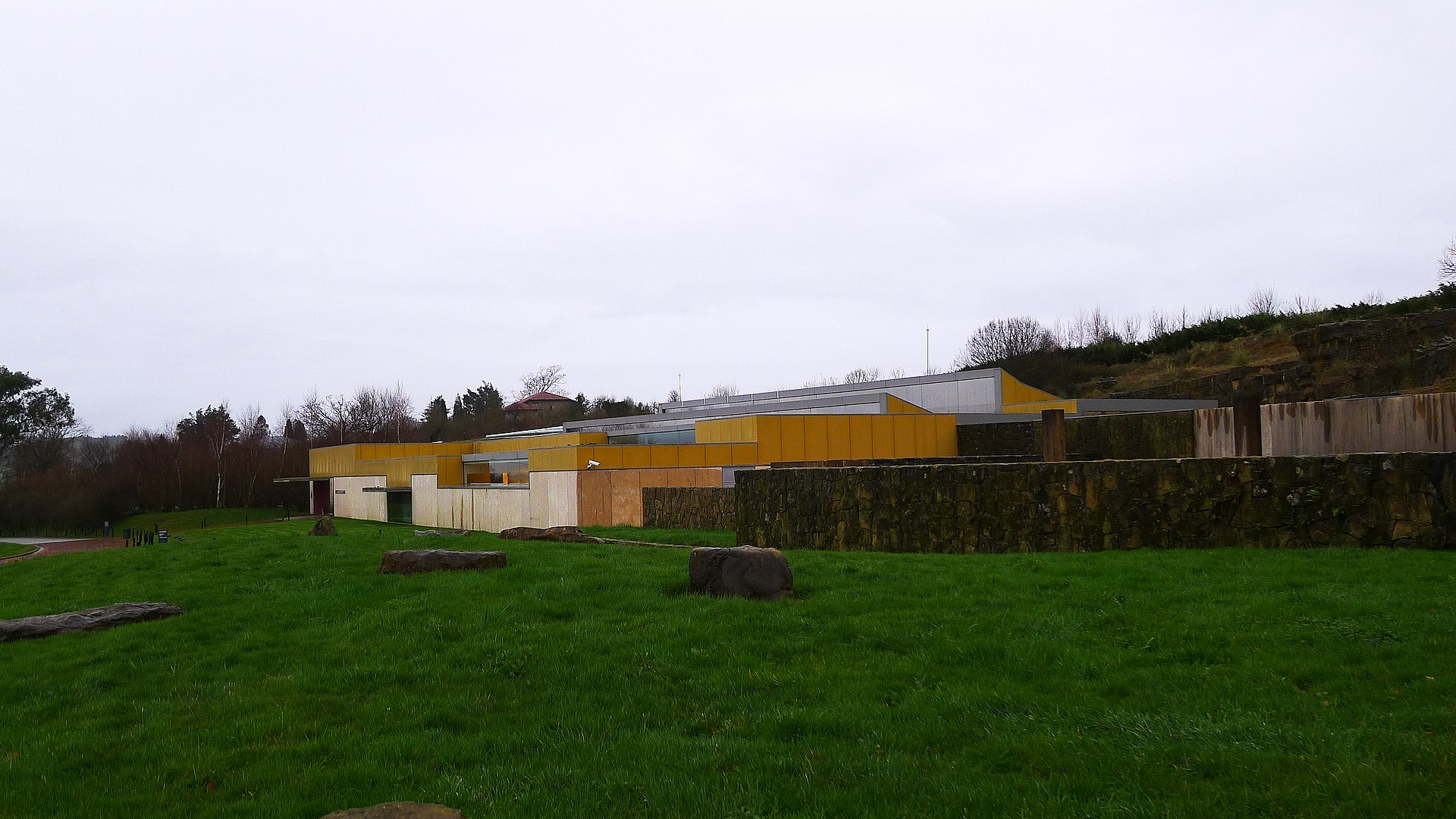 Photo: José Luis Filpo Cabana / Wikimedia Commons (CC BY 3.0)
 - Santillana del Mar Old Town Early morning or evening, to beat day-tripper coach crowds
Locals joke the town is "neither santa, nor llana, nor by the mar" — it sits inland on a hill, and its name actually derives from Santa Juliana, whose relics rest in the Romanesque Colegiata. Its cobbled streets are considered among the best-preserved medieval ensembles in Spain.
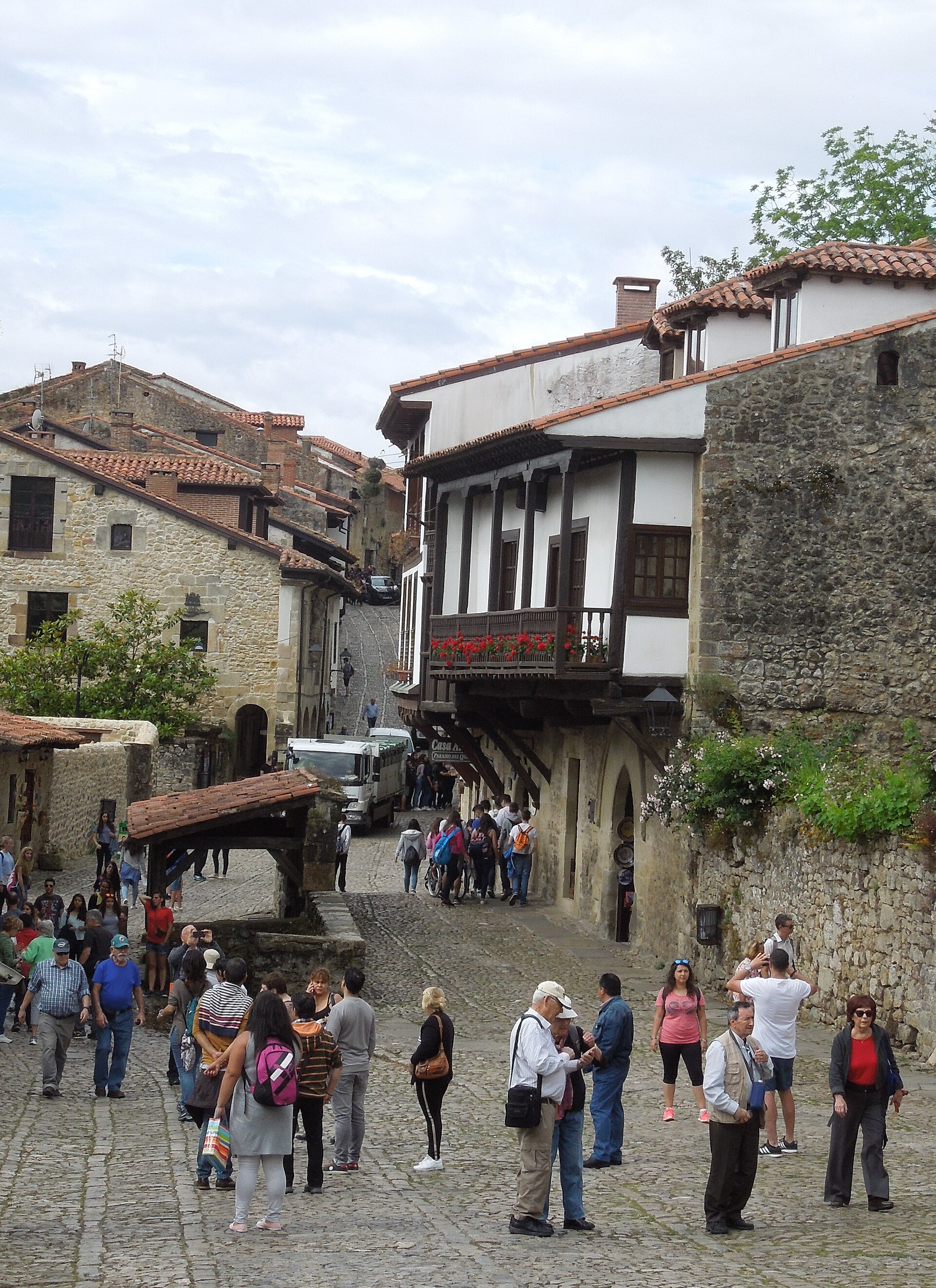 Photo: Cosal / Wikimedia Commons (CC BY-SA 4.0)
 - Cubos de la Memoria Daylight, calm seas, ideally low tide for full breakwater access
Basque artist Agustín Ibarrola painted the concrete blocks of Llanes' harbor breakwater so colors and shapes interlock into three-dimensional forms that shift as you walk the pier — one of Spain's best-known works of public land art.
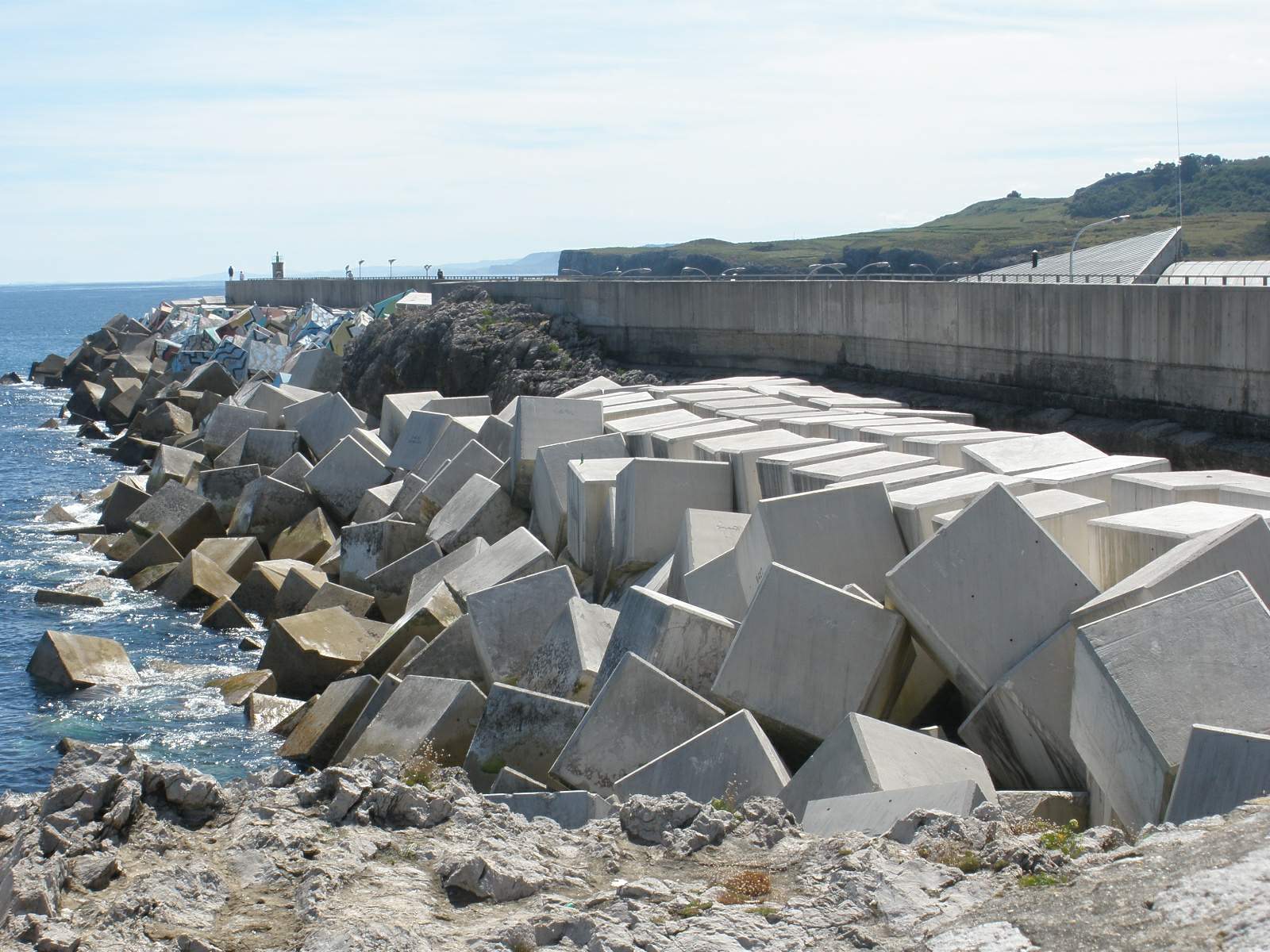 Photo: Zarateman / Wikimedia Commons (CC0)
 - Tito Bustillo Cave Art Centre Book well ahead for the roughly March-October season
A second major UNESCO-listed Paleolithic cave-art site, located right in Ribadesella itself. Open seasonally with strictly limited daily visitor numbers to control humidity and CO2, advance booking required months ahead, and photography banned inside to protect the paintings.
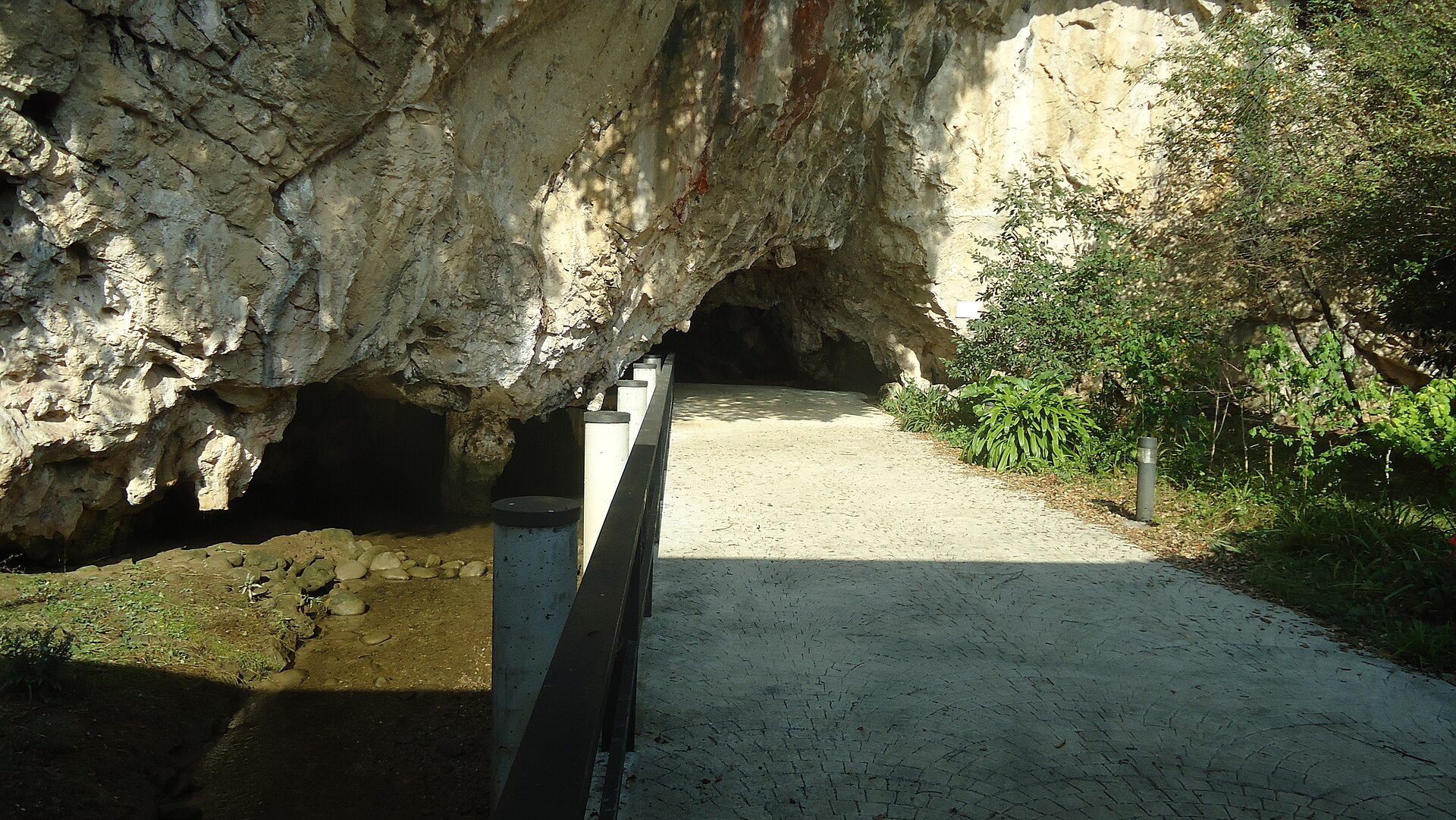 Photo: Falconaumanni / Wikimedia Commons (CC BY 3.0)
 - Descenso Internacional del Sella Early August — the Saturday after August 2nd, annually
A 20km canoe and kayak race down the Sella River from Arriondas to Ribadesella, first run in 1929-30 and held nearly every year since — now drawing 300,000+ spectators, a huge regional folk festival as much as a race.
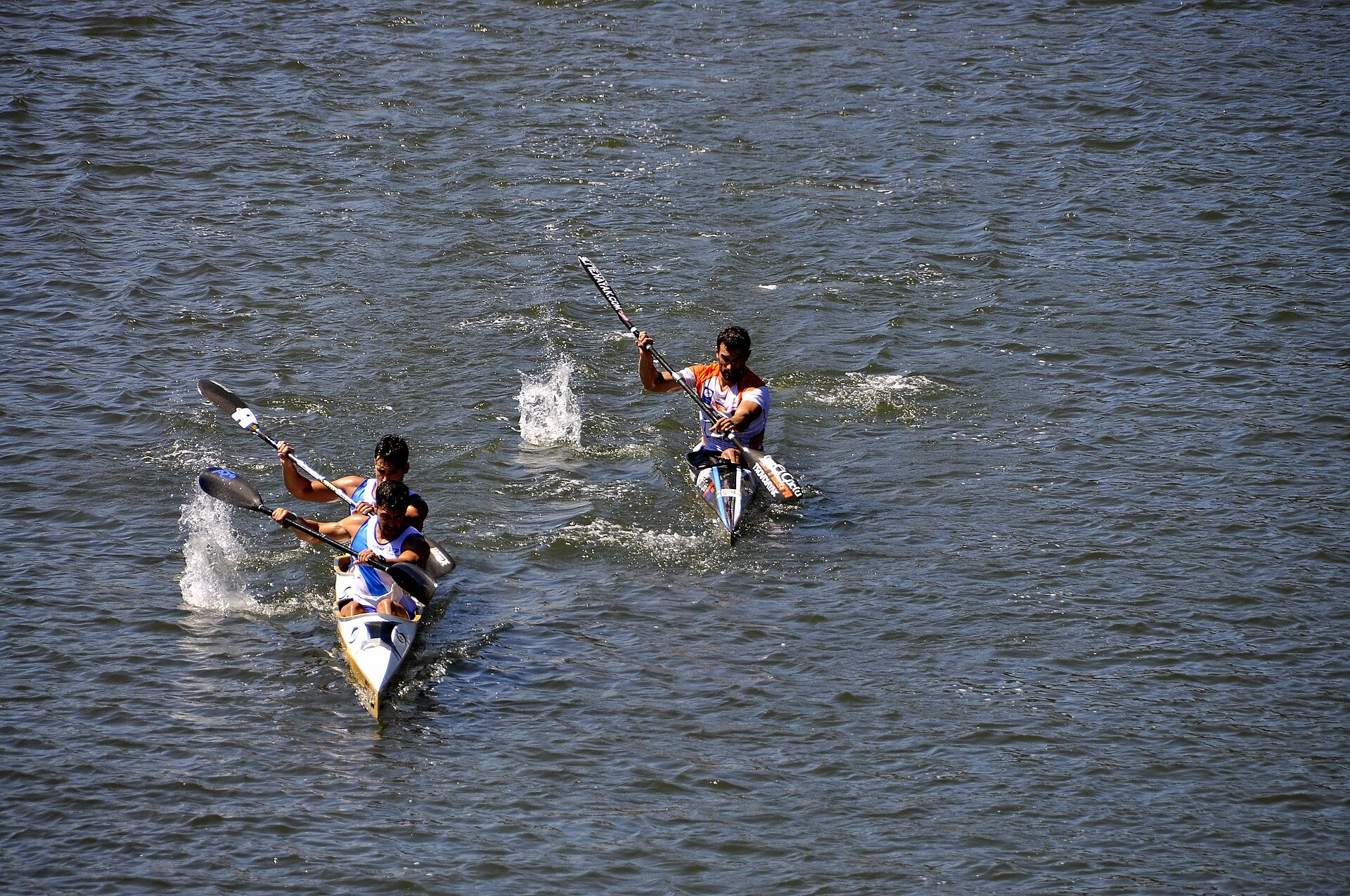 Photo: Ricardo Yagüe / Wikimedia Commons (CC BY-SA 4.0)
 - Palacio de la Magdalena Morning, outside July-August when the palace hosts a summer university
A real royal palace built for Alfonso XIII and completed in 1912, on its own peninsula in Santander Bay — reachable from Somo/Loredo via the passenger ferry across the bay plus a short walk in Santander.
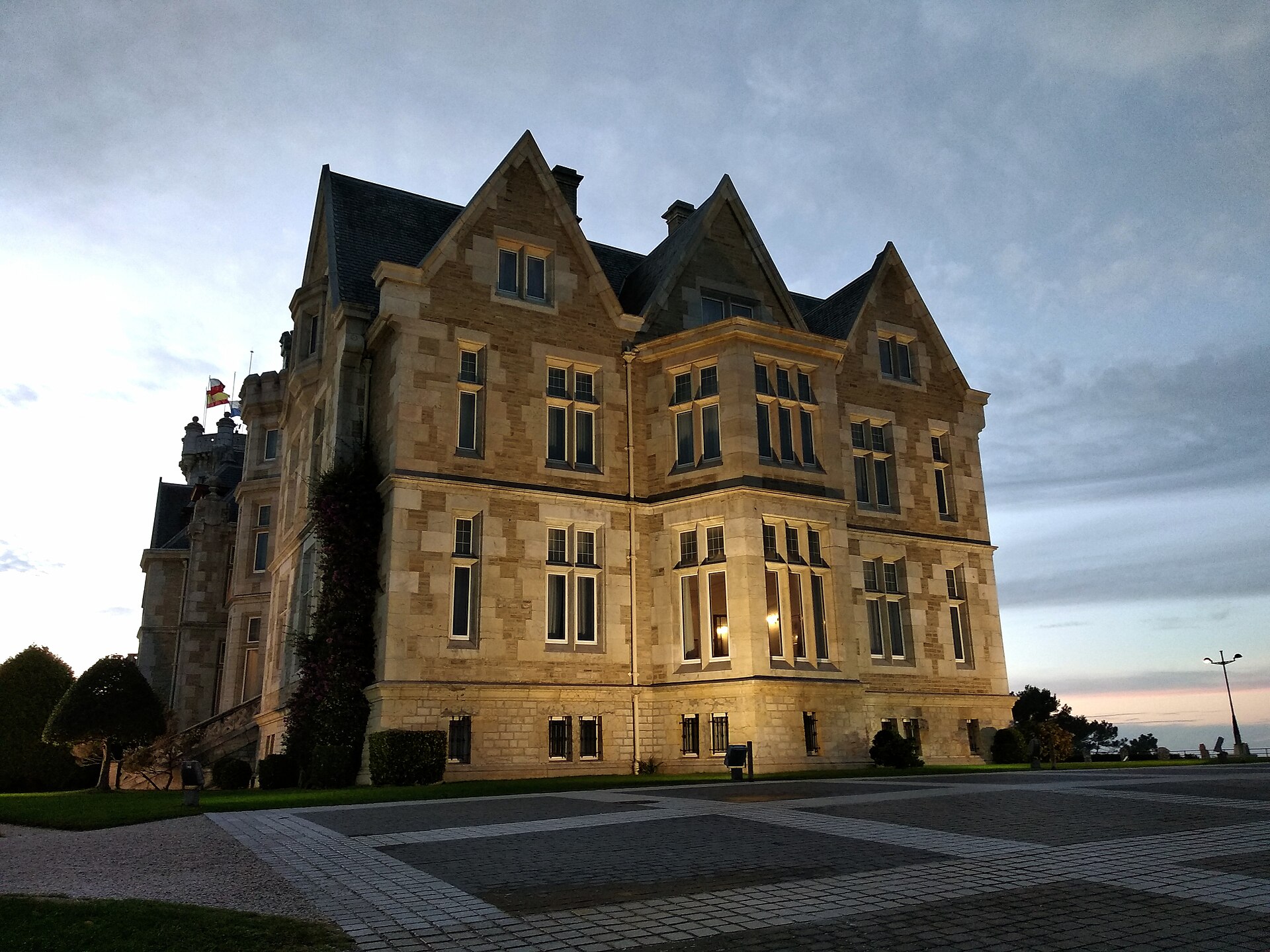 Photo: Jesús Gómez Fernández (Corso) / Wikimedia Commons (CC BY-SA 4.0)
 - Asturian Cider Culture (Escanciar) Year-round in any sidrería; autumn for pressing season
Asturian cider is poured from a bottle held high overhead into a glass held low, "breaking" the still cider to release its aroma — a serving ritual so central to local identity it was declared UNESCO Intangible Cultural Heritage in 2024.
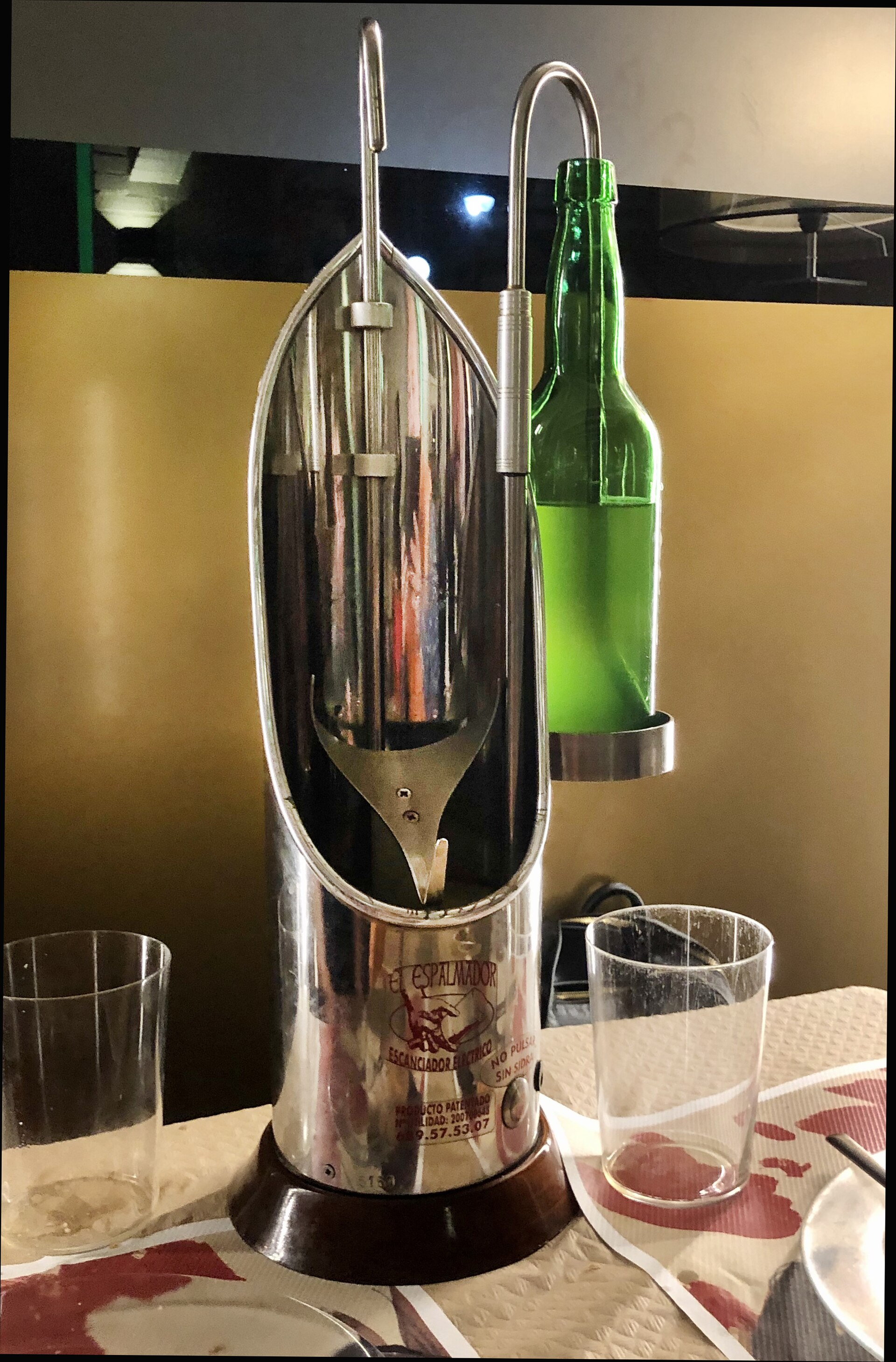 Photo: Amasuela / Wikimedia Commons (CC BY 4.0)
 - Bufones de Pría Rough seas or incoming swell, viewed only from the marked, fenced viewpoints
Natural marine blowholes — karst chimneys carved through coastal limestone by erosion — that shoot pressurized jets of seawater and air 20+ meters into the air with a thunderous roar when swell is running. Declared a Natural Monument in 2001.
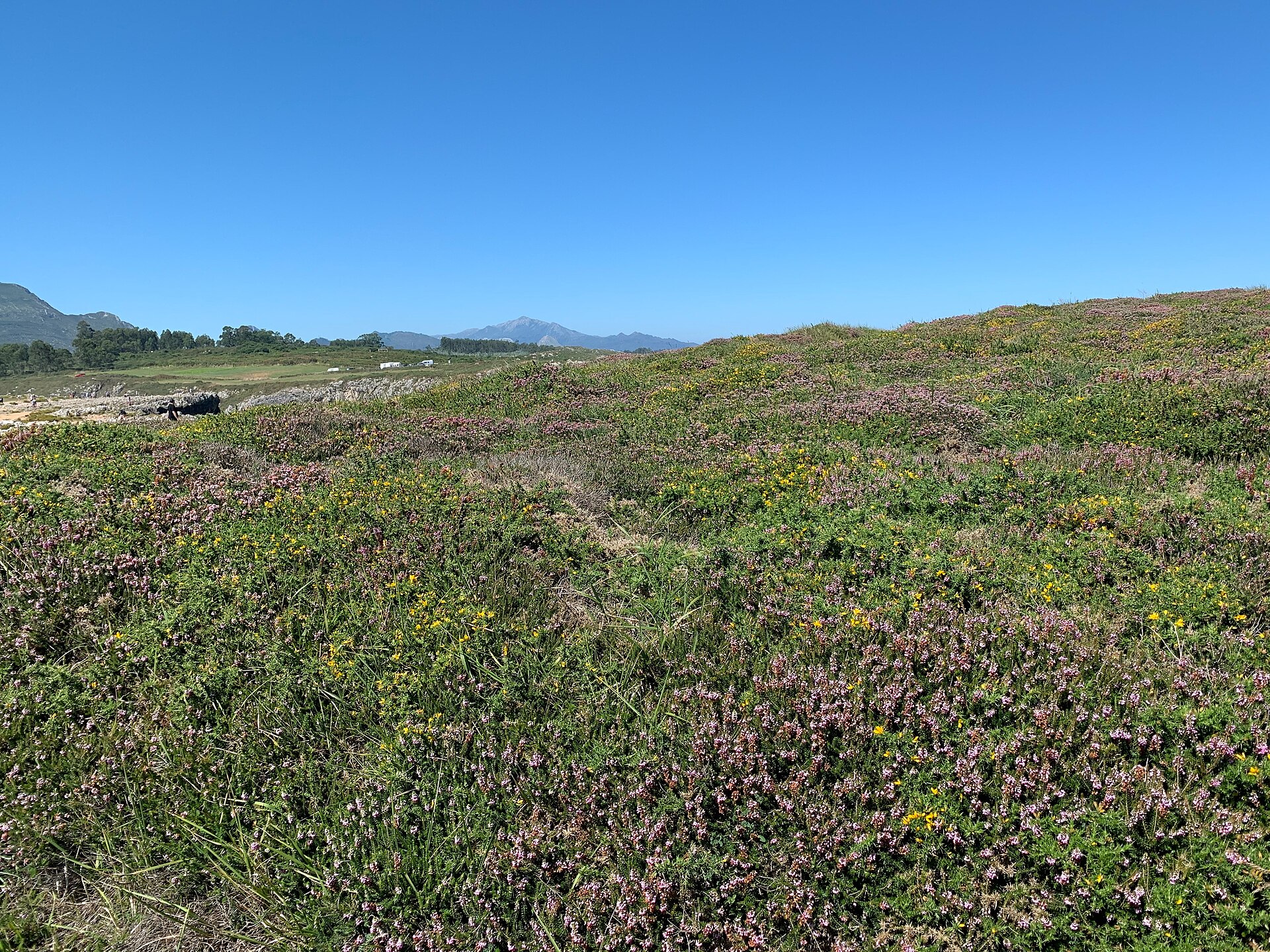 Photo: Robot8A / Wikimedia Commons (CC BY-SA 4.0)
 - Ermita de Santa Justa Calm-sea days, low tide, via the marked coastal path from Ubiarco
A tiny stone hermitage built into a coastal cliff face, tradition holding it was inhabited by an anchorite hermit in the 8th-10th centuries — the current chapel dates to the 16th century and holds relics still honored in an annual July 19 pilgrimage.
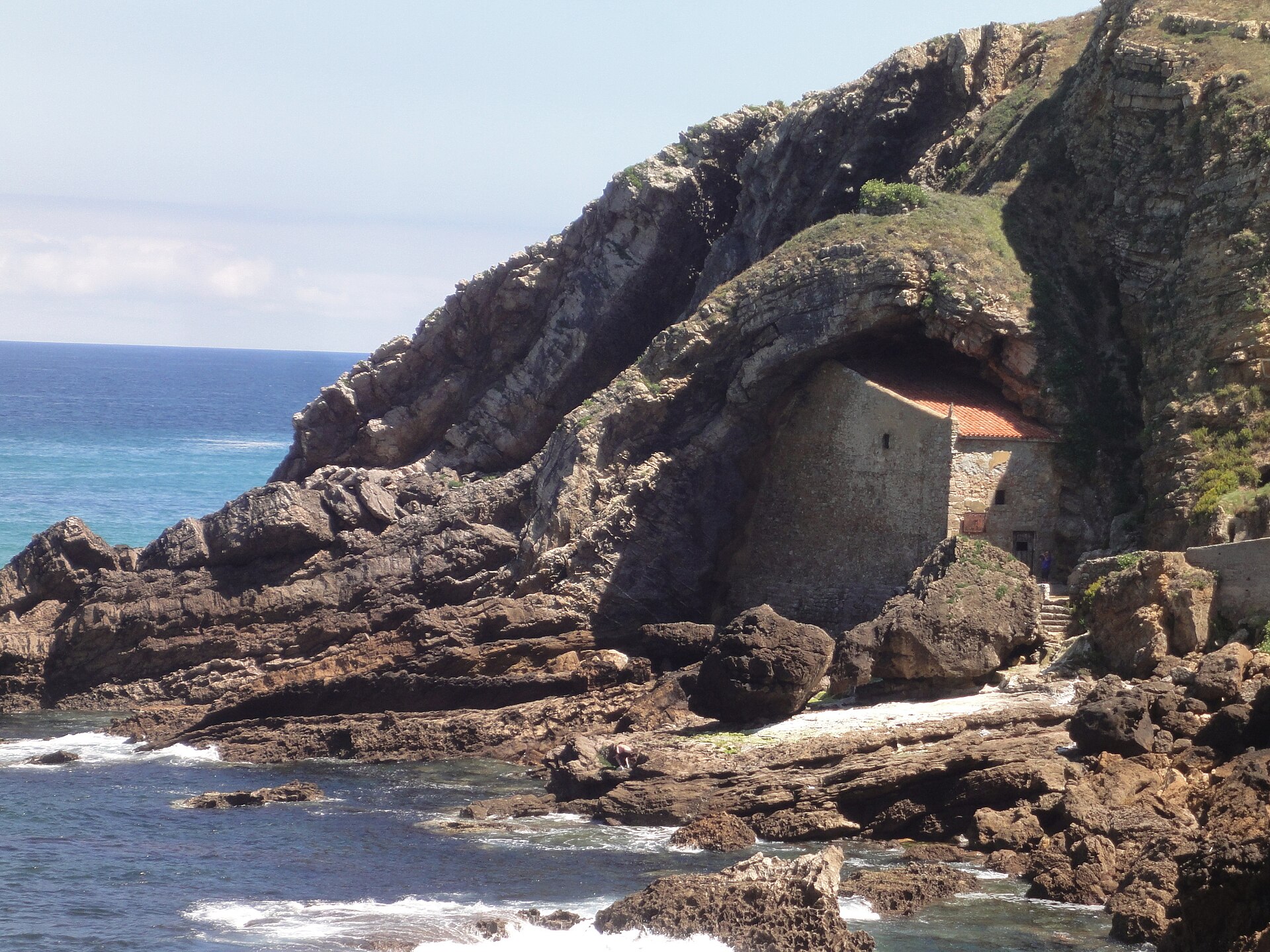 Photo: JnCrlsMG / Wikimedia Commons (CC BY-SA 4.0)
 - Basílica de Santa María del Concejo Daytime outside Mass hours; interior lighting best late morning
Llanes' principal church, built from the 1240s through the 15th century, showing the transition from Romanesque to Gothic architecture — elevated to Minor Basilica status in 1973, sitting in the heart of the old town by the harbor.
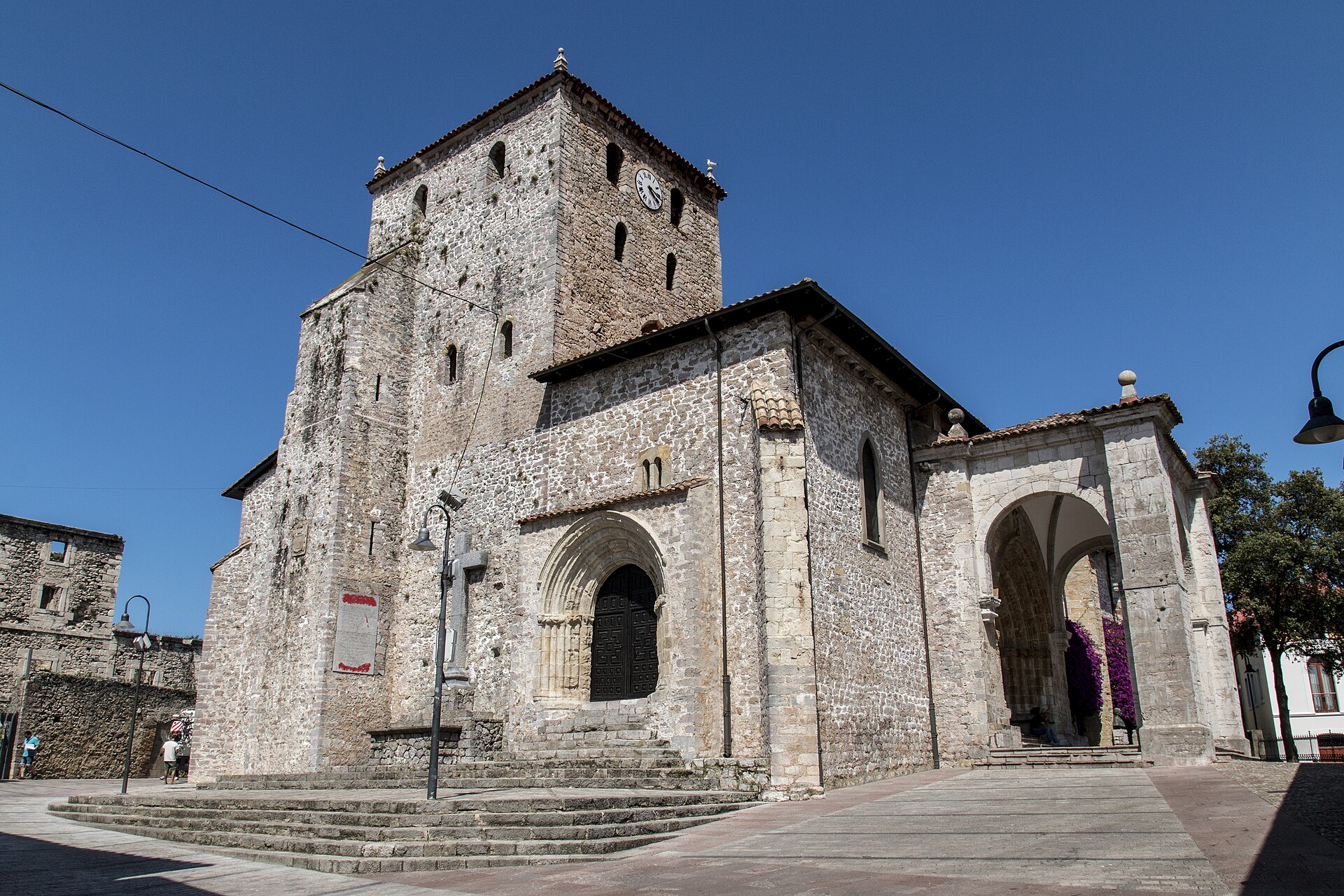 Photo: David Álvarez López / Wikimedia Commons (CC BY 2.0)
 - Playa de Gulpiyuri High tide, when the inland beach fills with water — check tide tables first
A landlocked "beach" — a flooded karst sinkhole about 100m from the coast, connected to the Cantabrian Sea only through underground tunnels, so the tide rises and falls inside it even though no sea is visible. Reached via a roughly 1km walk through fields from Naves village.
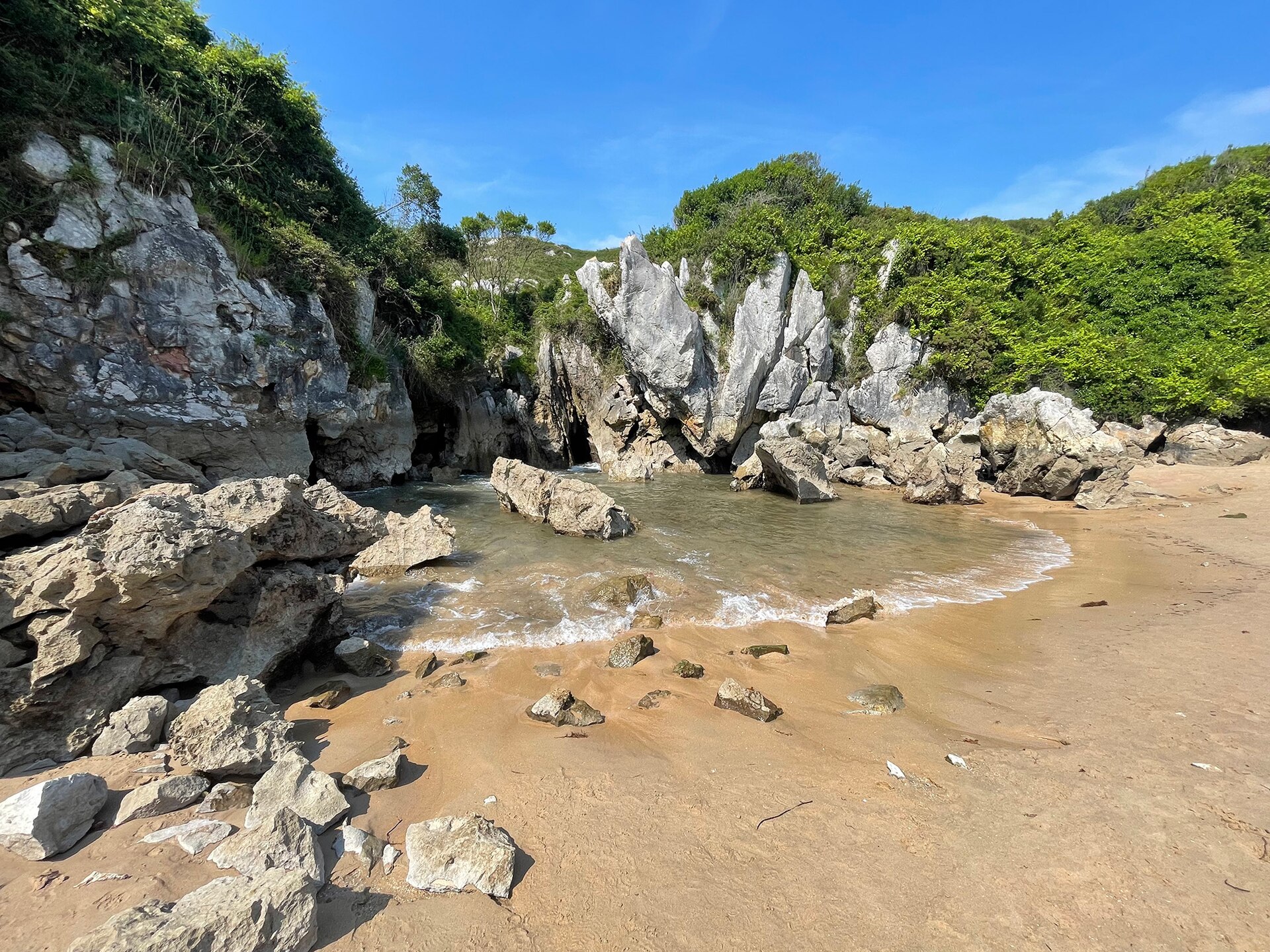 Photo: Einaz80 / Wikimedia Commons (CC BY-SA 4.0)
 - Faro de la Isla de Mouro Clear-weather viewing from Cabo Menor or the Magdalena Peninsula walkways
A lighthouse operating since 1860, in the English rock-lighthouse style, on tiny, uninhabited Isla de Mouro at the mouth of Santander Bay — visible from the Somo/Loredo side of the bay, not open to visit.
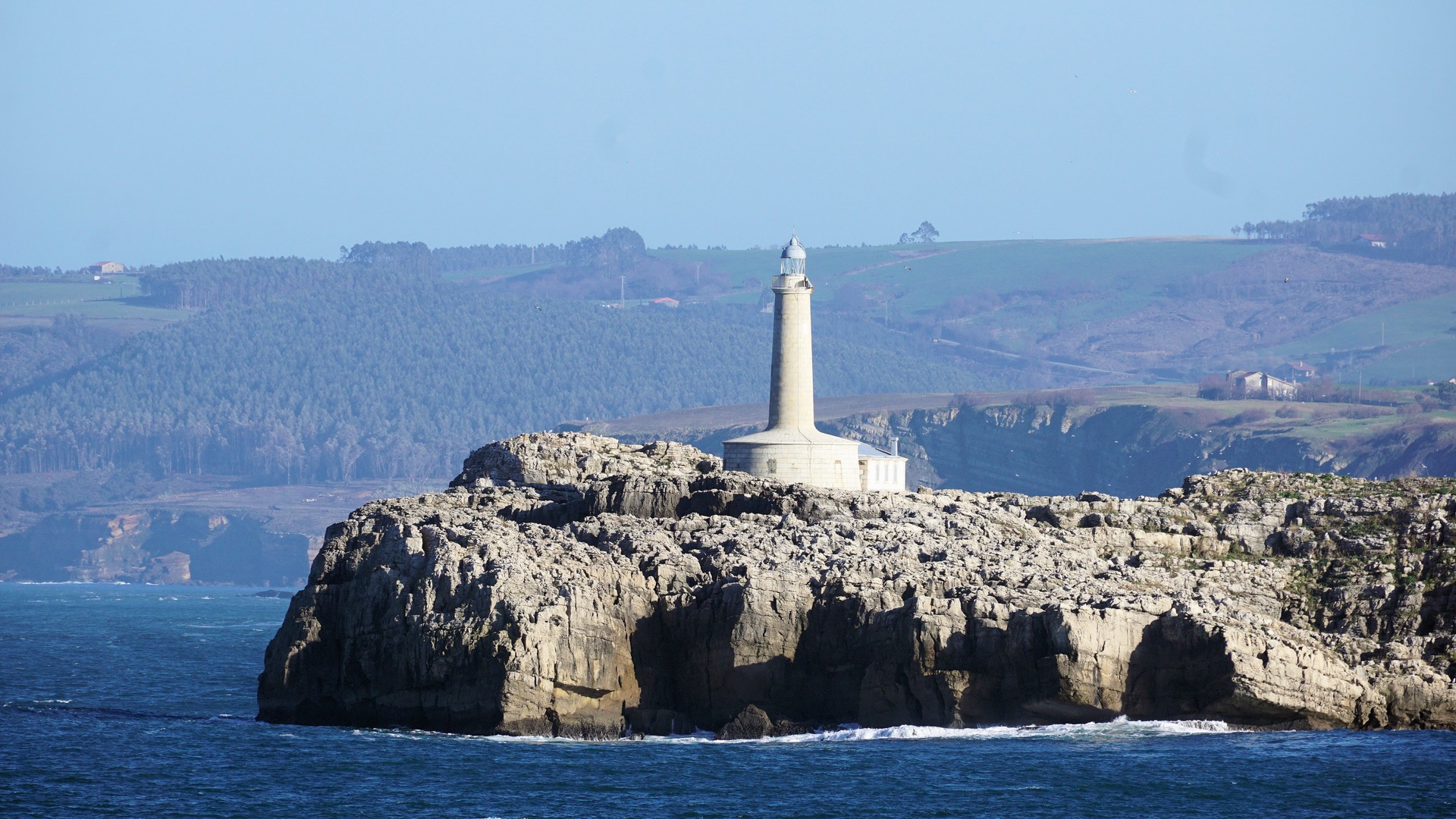 Photo: Coralma / Wikimedia Commons (CC0)
Questions people actually ask.
How do I get from Santander to Somo?
A genuinely distinctive option: a small passenger ferry (Los Reginas) runs Santander-Pedreña-Somo year-round, roughly a 20-25 minute crossing, departing about every 30 minutes on weekdays and hourly on weekends — a low-effort way to skip the ~25km road route around the bay. The road route by car takes about 21-30 minutes depending on the exact endpoint.
Can I visit the real Altamira cave paintings?
Realistically, no — the original cave has been closed to general public access since 2002 to protect the roughly 14,000-year-old paintings. Only 5 people a week from a waiting list that itself closed in 2002 may enter, and no new applications are being accepted. Nearly every visitor instead sees the Neocueva, a scientifically precise, full-scale replica built into the adjacent museum — genuinely worth the visit on its own terms.
Is a car necessary to see this whole zone?
Practically, yes. The FEVE coastal railway does technically connect Santander to Llanes and Ribadesella, but it carries real, documented reliability problems — deteriorating infrastructure and rolling-stock issues that have repeatedly caused cancellations. Combined with the roughly 110-135km spread between the Somo/Loredo cluster and the Ribadesella/Llanes cluster, a car is the realistic way to cover this whole zone.
Is Asturian a living language here, like Basque?
It's real and protected, but with markedly less institutional standing than Basque has next door. Asturian (Bable) is not co-official with Spanish — Asturias's own Statute of Autonomy only commits to "promoting" and "protecting" it, and a 2025 proposal to grant it co-official status failed to win the required three-fifths parliamentary support.
When is this coast most crowded?
July and August, genuinely — this is a real, popular Spanish domestic summer-vacation coast, not just a foreign-tourist destination. Nearby beach towns are documented as seeing their populations multiply several times over in peak summer. Autumn (September-November) offers the better trade-off: still-comfortable water, consistent swell, and real relief from the crowds.
Disclosure & how this page works.
Straight talk: Some links on this page are affiliate links — if you book through them, Secrets of Surf Travel earns a small commission at no extra cost to you. We only link places and people we’d use ourselves, and coverage is never for sale. Those commissions are what keep this site running and fund the next trip.
Today, the “Search Vrbo rentals” and “Search Booking.com stays” links on this page are affiliate links — every vendor listing link is still a plain courtesy link. As partnerships with these local businesses come online, more links (and discount codes, where Secrets of Surf Travel benefits from their use) may earn us a commission, and this page will keep saying so plainly. Coverage is never for sale: nobody on this page paid to be here, and nobody can.
Every listing was researched in 2026 and is being verified in person. Prices, hours, and policies change — treat them as strong starting points and confirm directly with the business. And per the No-Reveal Code: you will find no surf spots on this page, ever.