
Solomon Islands
Stated honestly up front: Gizo is a real, developed hub — boat-access surf lodges, a dive operator, a working town. Rendova, reached via Munda, is one lodge and a genuinely major piece of WWII history, not a second peer hub, and this page doesn't pretend otherwise. Both sit in Western Province, in the same waters where a young JFK's PT boat went down — and where two Solomon Islander scouts, not Kennedy, are the real heroes of the story.
Straight talk: Some links on this page are affiliate links — if you book through them, Secrets of Surf Travel earns a small commission at no extra cost to you. We only link places and people we'd use ourselves, and coverage is never for sale. Those commissions are what keep this site running and fund the next trip.
Some vacation-rental search links on this page (marked "Search Vrbo rentals," "Search Booking.com stays," or "Search Agoda stays") are affiliate links. Every vendor link below is still a plain courtesy link. As more partnerships come online, more links may earn us a commission; the promise above holds either way.
Current safety context — read this before booking: The US State Department rates the Solomon Islands Level 2, Exercise Increased Caution, citing crime and civil unrest — but that risk is real and specifically concentrated in Honiara, not Western Province where this zone's hubs sit. Western Province carries its own, distinct real risks instead: unexploded WWII ordnance, still being newly discovered on land and underwater, and — more urgently — recovery from Tropical Cyclone Maila, a Category 5 storm that struck Western Province directly in April 2026, damaging schools, health facilities, and telecommunications across the region, with Gizo Island and Rendova named among the affected areas. International recovery funding (including a $5 million World Bank release) was still active as of mid-2026. Confirm current lodge operating status directly before booking — this page's vendor listings are researched, not a guarantee that every property has fully reopened.
Getting There
Honiara International Airport (HIR), on Guadalcanal, is the country's only international gateway — about 380km from Gizo. There's no direct US service. Realistic routing: LAX to Nadi, Fiji (Fiji Airways), then Nadi to Honiara (Fiji Airways, Solomon Airlines, or Air Niugini, roughly 3x/week); or US to Brisbane, then Brisbane to Honiara (Solomon Airlines or Qantas, close to daily combined). Expect a genuine multi-day, multi-stop trip either way.
Honiara to Western Province: Solomon Airlines, the only domestic carrier, flies Honiara to Gizo/Nusatupe (GZO) and Honiara to Munda (MUA), roughly 1-1.5 hours, several times weekly. There is no airstrip on Rendova — reaching Titiru Eco Lodge means flying into Munda, then a roughly 30-45 minute boat transfer.
Documents: US citizens don't need a visa in advance — a visitor's permit valid up to 3 months is issued on arrival, with a passport valid 6+ months beyond the trip, proof of onward/return travel, and proof of sufficient funds.
Ground Transport
- This is a boat-first zone, not a car-rental one. No confirmed independent car-rental or scooter operator exists in Gizo — car rental in-country concentrates at Honiara's airport.
- Banana boats/long boats from Gizo's wharf and market are the real transport layer to surrounding islands and Noro.
- PMVs (public motor vehicles) circulate around Gizo town for a flat fare, roughly SBD 30.
- Driving is on the left, where it applies at all.
- ATMs are reliable only in Honiara and Gizo — bring cash for Rendova and the Munda area.
When to Go & What to Pack
- Surf season runs November-April, averaging 3-6ft swells on reef setups, with some breaks handling up to 10ft.
- Water temperature stays warm year-round, roughly 79-88°F (26-31°C) — no wetsuit needed; rash vest and reef booties are the real gear priority.
- The honest overlap to plan around: cyclone season is also November-April. This isn't a clean "surf now, storm later" split — the peak swell window and the peak storm-risk window are the same months, and 2026's Cyclone Maila is a real, recent reminder of that risk, not a hypothetical.
Good to Know
- Currency is the Solomon Islands Dollar (SBD).
- Emergency numbers: general emergency 112, Police 999. Treat these as national listings — response capacity outside Honiara, including in Gizo and especially Rendova, should be assumed limited.
- Language: English is official, but Solomon Islands Pijin is the real day-to-day lingua franca — only 1-2% of the population is fluent in English. 70+ Melanesian and Polynesian local languages are also spoken across the archipelago.
- No independent surfboard/wetsuit repair shop or standalone massage/wellness business was found anywhere in this zone. What exists is resort-bundled only (an in-house "spa" amenity at one Gizo resort). Bring a travel repair kit.
Respecting the Locals
This zone's own signature story already makes the point: the real heroes of the PT-109 rescue were two Solomon Islander scouts, not the American lieutenant who gets the name recognition — and this page tells it that way on purpose. Titiru Eco Lodge on Rendova was founded by a local villager specifically to keep tourism revenue in the community rather than send it elsewhere, and Skull Island is treated as the sacred site it is, visited only with a local guide. Extend the same weight to the reef breaks: this is Western Province, still recovering from a 2026 cyclone, not a blank canvas for visitors.
- Locals get first priority, always. Watch a session before you paddle out. Learn who's who before you learn the wave. Sit inside and catch what they let through — the leftovers are yours, not the set waves.
- Don't backpaddle. Ever. Being in position doesn't make the next wave yours, especially if you didn't wait your turn. If a local wants a wave, let them have it…even if it IS your turn. That older guy who may not be the best surfer out there has probably been surfing that wave before you even sat on a board. If you don't know someone, assume they're local.
- Don't snake. This shouldn't even need to be said, but…dropping in on someone, local or not, is the ultimate disrespect and the fastest way to be sent out of the water. Don't be that guy!
- Say hi. A “howzit,” “whatsup,” or “nice wave,” eye contact, or a nod in the channel — it costs nothing and it's the fastest way from stranger to welcome.
- This is somebody's home, not a resort amenity. The break you're surfing is where a local kid learned to swim, where someone's uncle has surfed for forty years. Act like a guest, because you are one.
- Spend where it actually helps. The food truck, the local shaper, the family-run rental, the local photographer — that's where a surf trip's money should land, not just the chain hotel gift shop. See The No-Reveal Code for why that's the whole premise of this site.
- Leave it better than you found it. Pick up trash that isn't yours. Don't touch reef, wildlife, or cultural sites.
Locals have watched hundreds, if not thousands, of people come and go — some for days, some for months or years — and almost all of them eventually go home. The locals are still there. It takes many, many years to actually become one. Keep that in mind the next time you feel entitled to the same waves they get.
None of this is a secret handshake. It's just how you'd want a guest to act in your own backyard.
Gizo
Gizo, on Ghizo Island, is Western Province's real hub — a working provincial capital with a market, wharf, multiple boat-access surf/dive lodges, a dive operator, and several restaurants. This runs on boats, not paddle-outs from the sand.
Surf Lodges & Guides
- Sanbis Resort~7 min boat from Nusatupe airstripMid/LuxuryPrivate-beach bungalows, dive shop, and a staff surfer who guides guests to reef breaks by boat. sanbisresort.com · Facebook · Map
- Fatboys ResortMbabanga Island, 10 min boat from GizoMid-rangeOverwater bungalows, eco-focused (renewable energy, reef preservation), runs surf/dive/fishing boat trips. fatboysresort.com · Instagram · Facebook · Map
- Oravae CottageIslet 20 min boat from Gizo, near Vella LavellaBudget/midRobinson-Crusoe-style bungalow built from local materials, close to several breaks, local guides. oravaecottage.com · Instagram · Facebook · Map
Stays
- Gizo HotelGizo town, waterfrontBudget/midThe in-town base — restaurant reportedly runs the only proper espresso machine on the island. gizohotel.info · Facebook · Map
Where to Eat
- PT 109 RestaurantGizo townBudget/midLocal flavors, named for the Kennedy history — see Local Secrets. Map
- Gizo WaterfrontMid-rangeOcean-view dining. Map
- Shan CafeBudgetLocal Solomon Islands cuisine. Map
Market grills at the wharf (whole reef fish in banana leaf) and "kai bars" cover budget fish/chicken-and-rice. Most places close Sunday for church.
Other Adventures
- Dive GizoGizo townMid-rangePADI center and the dominant operator — wreck diving, reef diving, jungle/waterfall treks, WWII site tours, village cultural tours, and a guided Skull Island day trip. divegizo.com · Instagram · Facebook · Map
- Toa Maru wreck dive~20 min boat from GizoMid-rangeSee Local Secrets. Map
- Kennedy Island snorkel trip15 min boat from GizoBudgetSee Local Secrets. Map
Rendova
Stated plainly: Rendova today is one lodge, not a vendor ecosystem. Reached via a flight to Munda plus a boat transfer, it carries real, distinct WWII history — the actual PT-boat base and rescue endpoint from the PT-109 story — worth including for that reason even though this page won't pretend it has a restaurant scene or repair shop it doesn't have.
Stays
- Titiru Eco LodgeEgholo/Ughele villages, Sangiri Bay, RendovaMid-rangeSolar-powered, rainwater-collecting eco lodge founded 2012 by the late Kilo Paza, a Rendova local, specifically to keep tourism revenue in-community. Garden and overwater bungalows; activities (mangrove walks, dugout-canoe paddling, night crabbing, game fishing, a Rendova Peak historical hike, cave exploring) bundled in rather than sold as separate vendors. Facebook · Tourism Solomons listing · Map
Agoda's partner search returned no inventory for Titiru Eco Lodge or Rendova — a real platform gap for a lodge this small and remote, deferred rather than forced.
Everything else
No independently verifiable restaurant, wheels, repair, wellness, or additional adventure vendor exists on Rendova itself beyond Titiru's bundled activities. For a fuller "other adventures" bench near this hub, the real options sit across the water in Munda: Dive Munda, Zipolo Habu Resort (Vona Vona Lagoon), and Skull Island boat trips — arranged through Munda operators, not built out as Rendova listings here.
Local Secrets
Eight non-surf reasons this zone rewards the curious, centered on the real Solomon Islander story behind PT-109, WWII wreck diving in The Slot, and a sacred site handled with the respect it deserves.
- Biuku Gasa & Eroni Kumana Historical context, Western Province
The real heroes of the PT-109 story: two Solomon Islander coastwatcher scouts, based out of a Kolombangara observation post, who found Kennedy's stranded crew and paddled roughly 35 miles through Japanese-controlled waters carrying a coconut-shell message asking for rescue. This page centers them rather than treating the story as Kennedy's alone.
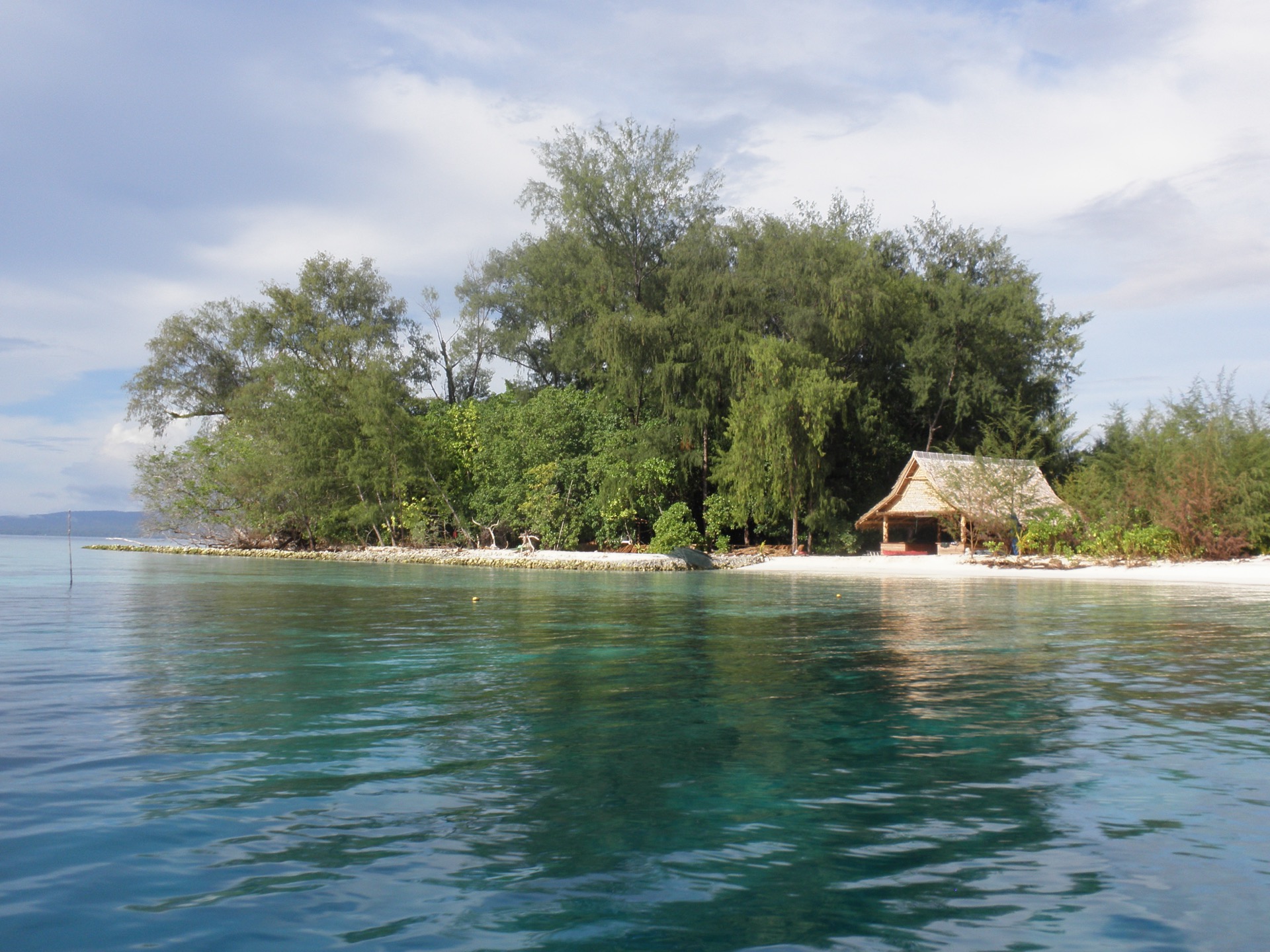
- Kennedy Island (Kasolo Island) Year-round, 15 min boat from Gizo
A roughly 1.17-hectare island — formerly Kasolo, now popularly Kennedy Island — where PT-109's survivors first swam ashore on August 2, 1943, after their boat was rammed and sunk in nearby Blackett Strait.
 Wikimedia Commons (CC BY-SA 3.0)
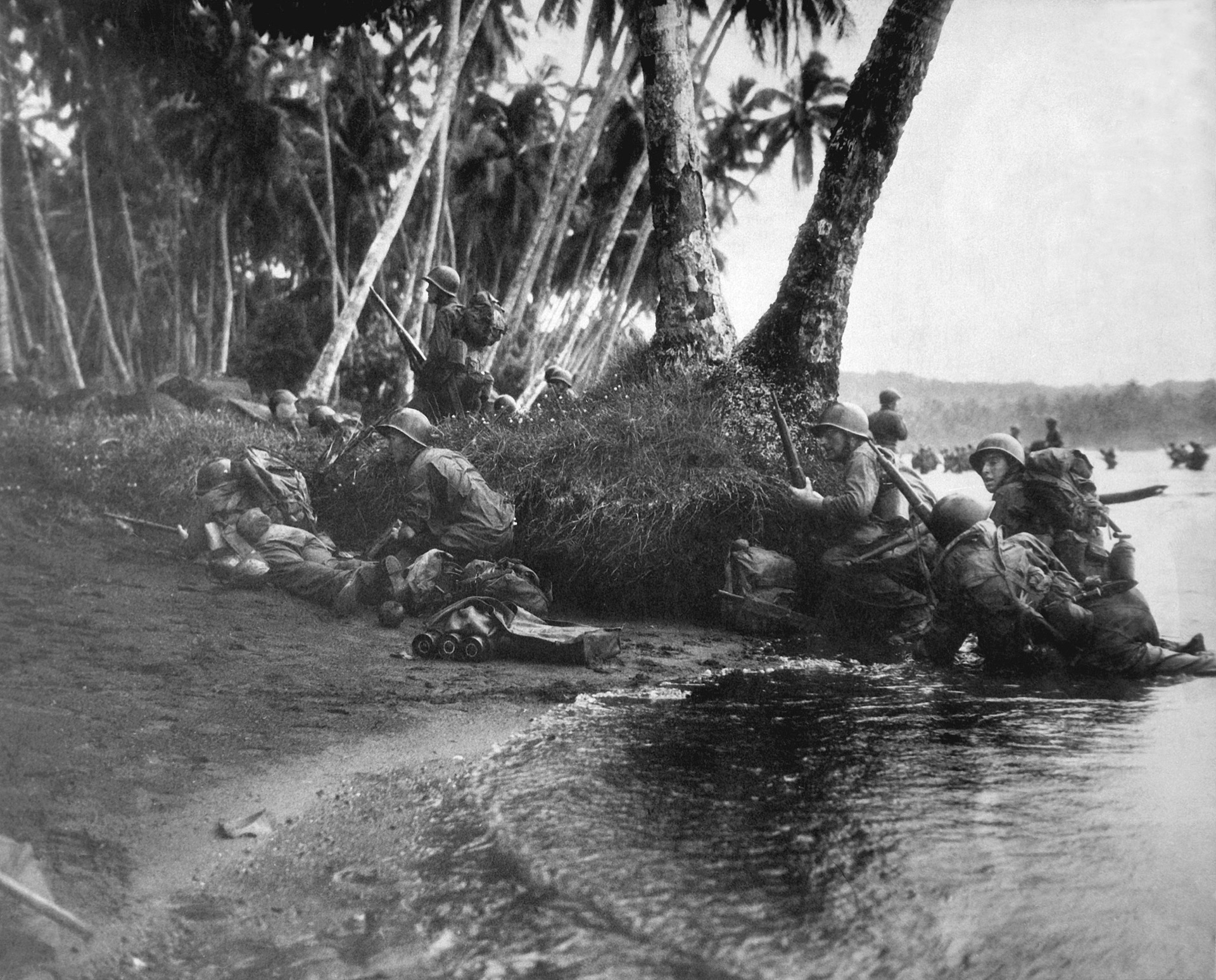
 - Rendova's PT Boat Base & the Rescue Historical context, Rendova
Fourteen PT boats sortied from a US base on Rendova the night PT-109 was lost, and survivors were brought there on August 8, 1943 — the coconut message itself was addressed "Rendova, Rendova!" This is Rendova's own distinct piece of the story, not just a Gizo footnote.
 Wikimedia Commons (Public Domain — US Navy)
 - WWII Wreck Diving — The Slot Year-round, weather permitting, via Dive Gizo
The Toa Maru, a roughly 10,200-ton Japanese transport sunk by USS Searaven on November 25, 1943, is the region's flagship, largely intact wreck dive off Gizo. A Hellcat fighter, a Japanese Zero, and other wrecks reflect the density of the WWII naval campaign fought through "The Slot," the stretch of water running through the New Georgia Sound.
- Battle of Munda Point Historical context, Munda, New Georgia
A month-long 1943 battle (July 2-August 5) to capture the Japanese-built Munda airfield, part of the broader Operation Cartwheel campaign. The airfield became the most important Allied base in the Solomons afterward, and its history is a real day-trip anchor from either Gizo or Rendova.
- Skull Island (Nusa Kunda) Guided boat trips only, via Munda; small entrance fee
A real, still-visited shrine holding roughly 50 chief and warrior skulls, 300 to 1,000 years old, from the pre-colonial headhunting era in Vonavona Lagoon. Stated here as what it is — a sacred site with genuine cultural weight, not a curiosity stop — and visited only with a local guide.
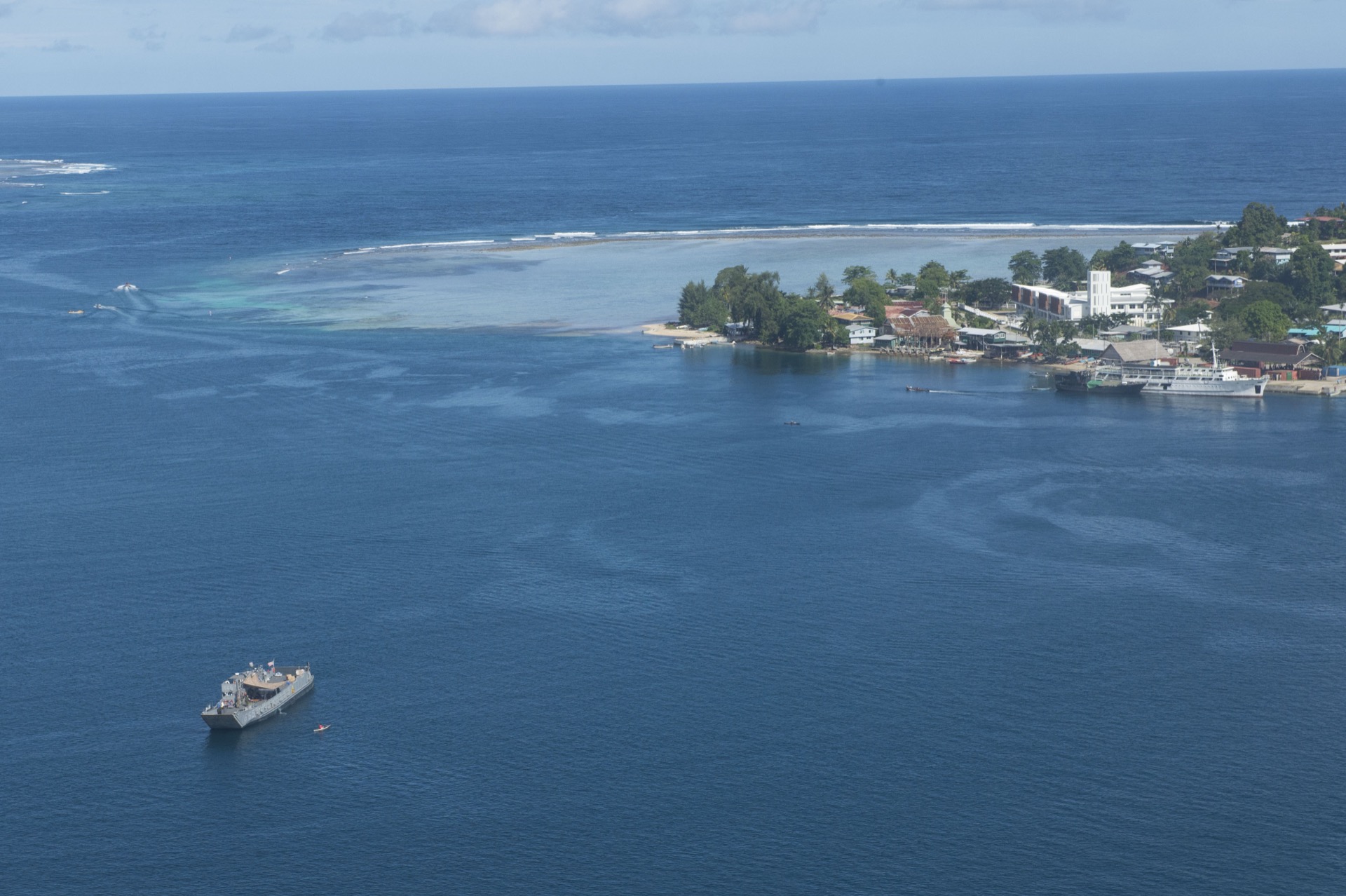
- Gizo Town & Market Daily, Gizo wharf and town center
The real social and commercial center of Western Province — an open-air market and wharf that's also been the site of real humanitarian partnerships, including a 2013 US Navy-led Pacific Partnership mission that ran community health fairs and dental care alongside the town's everyday commerce.
 Wikimedia Commons (Public Domain — US Navy)
 - Kolombangara & Mount Veve Year-round, visible from Gizo; real trekking access
The dormant-volcano island visible from Gizo, and home to the real coastwatcher observation post from which the PT-109 rescue was set in motion. Genuine trekking access exists for travelers who want the geographic context behind the story, without revealing any surf spot.
One of the eight — Skull Island — runs without a photo here. No Wikimedia Commons image with a clear, verifiable license was found for this specific site in research; rather than substitute an unlicensed stock photo for a sacred site, this entry runs as text only.
Questions people actually ask.
Is it safe to visit Gizo and Rendova right now?
Two separate things are true here, and this page keeps them separate rather than blending them. The US State Department rates the Solomon Islands Level 2, Exercise Increased Caution, for crime and civil unrest — but that risk is concentrated in Honiara, not Western Province, where Gizo and Rendova sit. Western Province's own real, distinct risk factors are unexploded WWII ordnance (still being newly discovered) and, as of 2026, recovery from Tropical Cyclone Maila, a Category 5 storm that struck Western Province directly in April 2026 and damaged schools, health facilities, and telecommunications across the region, including Gizo Island and Rendova by name. Confirm current lodge operating status directly before booking — this page is honest that recovery was still underway as of research.
How does the JFK/PT-109 story actually connect to this zone?
Directly and specifically, not as trivia. On August 1-2, 1943, a Japanese destroyer rammed and sank the PT boat commanded by a young Lieutenant John F. Kennedy in Blackett Strait, near Gizo. Kennedy towed an injured crewman four kilometers by life-vest strap to Kasolo Island — now called Kennedy Island, a real 15-minute boat trip from Gizo today. The real story centers two Solomon Islanders: coastwatcher scouts Biuku Gasa and Eroni Kumana, who found the survivors and paddled roughly 35 miles through Japanese-controlled waters carrying Kennedy's coconut-shell message for help. Fourteen PT boats then sortied from a US base on Rendova itself to complete the rescue — Rendova's own, distinct piece of the same history.
How do the two hubs — Gizo and Rendova — actually compare?
Very honestly: Gizo is a real, developed hub with multiple surf/dive lodges, a dive operator, restaurants, and a functioning town. Rendova, reached via Munda, is essentially a single property — Titiru Eco Lodge — with no independent surf guide, restaurant, repair shop, or wellness vendor found in research. This page doesn't pad Rendova into a peer hub; it's included because its PT-109 and WWII-landing history is genuinely significant and distinct from Gizo's, and Titiru itself is a real, community-founded lodge worth knowing about.
What's the water like, and when should I go?
Warm year-round at this equatorial latitude, roughly 79-88°F (26-31°C) — no wetsuit needed. Surf season runs November-April, with average swells of 3-6ft (some breaks handle up to 10ft) on reef setups. Be aware this window directly overlaps South Pacific cyclone season, also November-April — this isn't a clean split between "surf season" and "storm season," they're the same months.
Disclosure & how this page works.
Straight talk: Some links on this page are affiliate links — if you book through them, Secrets of Surf Travel earns a small commission at no extra cost to you. We only link places and people we'd use ourselves, and coverage is never for sale. Those commissions are what keep this site running and fund the next trip.
Today, the "Search Vrbo rentals," "Search Booking.com stays," and "Search Agoda stays" links on this page are affiliate links — every vendor listing link is still a plain courtesy link. Agoda's partner search returned no inventory for Rendova/Titiru specifically, a real platform gap deferred rather than forced. As partnerships with these local businesses come online, more links (and discount codes, where Secrets of Surf Travel benefits from their use) may earn us a commission, and this page will keep saying so plainly. Coverage is never for sale: nobody on this page paid to be here, and nobody can.
Every listing was researched in 2026 and is being verified in person. Prices, hours, and policies change — treat them as strong starting points and confirm directly with the business, especially given 2026's cyclone-recovery context. And per the No-Reveal Code: you will find no surf spots on this page, ever.