
Portugal — Silver Coast
Portugal's most famous surf stretch, and honestly its most crowded. Ericeira is a World Surfing Reserve — only the second ever designated, the first in Europe. Peniche is a real working fishing port with a genuine surf-industry bench to match, plus the gateway to the Berlengas Islands. And Nazaré, an hour up the coast, is a normal fishing town the other 300 days a year — and the site of the biggest waves ever surfed on the planet the rest of the time.

Straight talk: Some links on this page are affiliate links — if you book through them, Secrets of Surf Travel earns a small commission at no extra cost to you. We only link places and people we’d use ourselves, and coverage is never for sale. Those commissions are what keep this site running and fund the next trip.
Some vacation-rental search links on this page (marked “Search Vrbo rentals” or “Search Booking.com stays”) are affiliate links. Every vendor link below is still a plain courtesy link. As more partnerships come online, more links may earn us a commission; the promise above holds either way.
Getting There
Lisbon (LIS) is the gateway for this whole zone. Confirmed drive times: Ericeira roughly 30-60 minutes depending on traffic; Peniche about an hour; Nazaré around 1 hour 20 minutes to 1 hour 45 minutes (117km).
Direct US flights (confirmed): TAP Air Portugal flies nonstop from eight US cities as of 2026 — Boston, Chicago, Los Angeles, Miami, Newark, New York (JFK), San Francisco, and Washington DC — with a ninth route, Orlando, launching October 29, 2026. This research pass confirmed TAP's routes directly; it did not independently verify nonstop United or Delta service into Lisbon, so check those carriers directly if they matter to your booking.
Secondary airport: Porto (OPO), useful mainly if pairing this zone with the site's North Portugal zone — roughly 1 hour 45 minutes to 2 hours 15 minutes to Nazaré, the northern edge of this zone.
Documents: same Schengen rules as this site's other Portugal, Spain, and France zones — no visa needed for US citizens for stays under 90 days within any 180-day period. The EU's ETIAS entry system, previously expected in late 2026, had its Q4 2026 launch target removed in mid-2026 — a 2027 launch is now more likely.
Ground Transport
- Portugal drives on the right, same as this site's other Portugal, Spain, and France zones.
- Rede Expressos runs roughly hourly Lisbon-Nazaré buses (about 1 hour 50 minutes, $9-22) via Sete Rios station, and also serves Peniche. A dedicated Lisbon-Ericeira line wasn't confirmed in this research pass — Ericeira bus connections appear to route through Mafra or via other regional operators; worth a direct check if you're planning bus-only travel there.
- Peniche to Baleal is a very short hop — roughly 3-5km, a 5-10 minute drive or an easy bike ride. Baleal is technically a peninsula, connected to the mainland by a sandy tombolo rather than a bridge.
- Peniche to Nazaré: FlixBus runs 3x daily, about 50 minutes, $5-9.
- No direct rail serves any of these four towns — same pattern as North Portugal's coast, all rail connections route through Lisbon first.
- A car is genuinely recommended for this zone — roughly €30/day — for flexibility chasing conditions between towns and reaching the Nazaré viewpoints. Portugal's highways are good but the toll system takes some getting used to.
When to Go & What to Pack
- Ericeira and Peniche run on a normal surf calendar — most reliable May through October, which is unfortunately also peak crowd season. November through April is quieter with still-good surf, a real tradeoff worth knowing about.
- Nazaré's giant-wave season is a completely different, narrower phenomenon — roughly October through March, with November through February the core window and December-January often producing the year's largest waves. It's driven by the Nazaré Canyon, one of Europe's largest submarine canyons, which funnels and amplifies North Atlantic winter groundswells through wave refraction — sometimes to roughly triple their original size. This only happens with big winter swells; Nazaré is not a giant-wave spot in summer.
- Crowds, stated honestly: Ericeira is genuinely one of the more crowded surf towns in Europe in summer — it's a World Surfing Reserve and major surf-camp hub, and lineups pack out July-August. Peniche's beaches run bigger and more spread out, giving more breathing room, though Supertubos itself draws serious crowds given its WSL-tour caliber.
- Water temperature runs cool year-round: roughly 14-15°C (57-59°F) in March, warming to about 19.5-20°C (67-68°F) by September. This is not a warm-water destination.
- Wetsuit thickness: 3/2mm in summer, 4/3mm in spring/autumn, 5/4mm with boots in winter — including Nazaré's big-wave season, where 5/3mm with boots is common for warmth on long sits.
Good to Know
- Safety: Portugal is ranked 7th on the 2026 Global Peace Index, a position it has held since 2023, and has ranked in the GPI's top 10 every year since 2015 — same fact carried forward from the site's North Portugal zone.
- Supertubos safety callout: serious, advanced-level water with a real, documented injury history for people who go in over their heads. Not a beginner wave, both for difficulty and for the level of the crowd it draws as a WSL Championship Tour venue.
- Currency: Euro. Language: Portuguese. Emergency number: 112.
- Cost of living: Portugal runs roughly 5-15% cheaper than Spain for everyday costs. An inexpensive restaurant meal runs €8-12; a mid-range three-course meal for two runs €25-35. Smaller Centro-region towns like Peniche and Nazaré generally run cheaper than Lisbon.
Respecting the Locals
This zone carries more global surf weight than most on this site — a World Surfing Reserve, a WSL Championship Tour venue, and the canyon that produces the biggest waves ever surfed on the planet all sit within a short drive of each other. But underneath the headlines, these are still real, working fishing communities: Ericeira and Peniche both built their identity on fishing long before surf tourism arrived, and Nazaré's beachfront fish-drying tradition is genuinely still practiced, not staged for visitors. The bigger the crowd this coast draws, the more that history deserves respect rather than being trampled. The same underlying code applies at every hub:
- Locals get first priority, always. Watch a session before you paddle out. Learn who's who before you learn the wave. Sit inside and catch what they let through — the leftovers are yours, not the set waves.
- Don't backpaddle. Ever. Being in position doesn't make the next wave yours, especially if you didn't wait your turn. If a local wants a wave, let them have it…even if it IS your turn. That older guy who may not be the best surfer out there has probably been surfing that wave before you even sat on a board. If you don't know someone, assume they're local.
- Don't snake. This shouldn't even need to be said, but…dropping in on someone, local or not, is the ultimate disrespect and the fastest way to be sent out of the water. Don't be that guy!
- Say hi. A “howzit,” “whatsup,” or “nice wave,” eye contact, or a nod in the channel — it costs nothing and it's the fastest way from stranger to welcome.
- This is somebody's home, not a resort amenity. The break you're surfing is where a local kid learned to swim, where someone's uncle has surfed for forty years. Act like a guest, because you are one.
- Spend where it actually helps. The food truck, the local shaper, the family-run rental, the local photographer — that's where a surf trip's money should land, not just the chain hotel gift shop. See The No-Reveal Code for why that's the whole premise of this site.
- Leave it better than you found it. Pick up trash that isn't yours. Don't touch reef, wildlife, or cultural sites.
Locals have watched hundreds, if not thousands, of people come and go — some for days, some for months or years — and almost all of them eventually go home. The locals are still there. It takes many, many years to actually become one. Keep that in mind the next time you feel entitled to the same waves they get.
None of this is a secret handshake. It's just how you'd want a guest to act in your own backyard.
Ericeira
Designated a World Surfing Reserve on October 14, 2011 by the Save The Waves Coalition — only the second reserve in the world, and the first in Europe. A historic fishing village turned major surf-tourism destination, with real royal history: this is the beach the last king of Portugal sailed from into exile in 1910.
Independent surf houses and hostels are the backbone of Ericeira lodging — built for surfers, not resort tourists.
Surf Schools & Board Rental
- BoardCulture Surf CenterEriceiraSmall, non-packed classes; instructors know the local breaks well. Facebook · Map"His Surf School is, most probably, the best you can pick in the whole area." — Tripadvisor reviewer
- Activity Surf CenterEriceiraBoard, bodyboard, wetsuit, and fin rental alongside instruction. activitysurfcenter.com · Instagram · Map
Stays
- Ericeira Surf HouseEriceiraMid-range#2 of 110 specialty lodgings, 5/5 rated, pitched at surfers who've outgrown surf camps. ericeirasurfhouse.com · Map"Breakfasts as well as the 3 special dinners organized are plentyful and really tasty." — Tripadvisor reviewer
- Ericeira Surf Camp & HostelCentral EriceiraBudgetShort walk to the beach, near shops and restaurants. ericeirasurfcamp.com · Map"Very clean, tidy rooms and amazing breakfast included in the price." — reviewer
Where to Eat
- Ti MatildeEriceira cliffs near Praia do NorteMid-rangeLocal lunch spot for fresh grilled fish, outdoor seating. Instagram · Map
- Marisqueira FurnasEriceiraUpperOcean-view seafood house known for its mariscada mixed-seafood platter. marisqueirafurnas.com · Map
- Tik TakEriceira old townBudgetUnpretentious Portuguese tapas — fried whitebait, chargrilled langoustines, black pork ribs. Facebook · Map
Wheels
Honestly, real operators exist in town but are mostly generic e-bike/scooter rental shops without standout individual names — typical pricing runs about €20 for a half-day bike rental, €60/day for a scooter.
Surfboard & Wetsuit Repair
- Wavegliders Surf ShopRua Mendes Leal 25, EriceiraDing repair regardless of damage size, plus in-town pickup/delivery for €15. wavegliders.pt · Instagram · Map
- Mica SurfboardsEriceiraDing repair specialist, 24-48 hour turnaround. micasurfboards.com · Map
Massage & Wellness
Other Adventures
- Sintra-Cascais Natural Park trailsUnder 30 min from EriceiraBudgetReal coastal hiking — the Cabo da Roca-Ursa Beach trail, or the longer Azenhas do Mar-Cabo da Roca walk. icnf.pt · Map
- Sintra day tripUnder 30 min from EriceiraMid-rangePalaces, Cabo da Roca (mainland Europe's westernmost point), and the postcard village of Azenhas do Mar. parquesdesintra.pt · Map
Peniche & Baleal
A genuine working fishing port with a deep surf-industry bench to match — Peniche is one of Europe's real surf-manufacturing towns, not just a surf-tourism stop. Baleal, a small tidal-peninsula village just north, connects to the mainland by a natural sandbar rather than a bridge.
Baleal's beds lean independent surf houses and hostels, clustered close enough to walk to the water.
Surf Schools & Board Rental
- Peniche On SurfSupertubos & BalealInstructor Pedro repeatedly singled out in reviews as one of the best teachers in the area for all levels. penicheonsurf.com · Map
- Baleal Surf CampBalealOne of the original surf schools in the Peniche area, well-established "Surf Station" rental operation. balealsurfcamp.com · Instagram · Map
Stays
- Surf House BalealBalealMid-rangeFrequently cited as the best place to stay in Baleal, combines instruction/rentals with lodging. Map"The best place to stay in Baleal... breakfast is amazing and rooms are clean and comfy." — reviewer
- Baleal Surf Camp HostelBalealBudgetSteps from the beach, a local bar, and the supermarket. balealsurfcamp.com · Map"The staff all genuinely care about your experience." — reviewer
Where to Eat — genuine fishing-port strength
- Marisqueira MirandumPenicheUpperFamily-run since 1981, sources daily from the local fish auction; house specialty is percebes (goose barnacles) from the Berlengas. Instagram · Facebook · Map
- Abrigo do PescadorPeniche harborMid-rangePart fish market, part restaurant — pick your own catch of the day. Instagram · Facebook · Map
- Tasca do JoelPenicheMid-rangeKnown for fish and seafood plus an unusually deep wine list. tascadojoel.pt · Map
Wheels
- Road&Rent / Roda e-BikePenicheBike and e-bike rental, good for the coastal ride to the Berlengas ferry terminal. rodaebike.com · Map
- PenicherentalsPenicheOne-stop shop for cars, scooters, bikes, and even surfboards. Facebook · Map
Surfboard & Wetsuit Repair
- Custom Glass Surfboard RepairFerrel, near PenicheDedicated repair specialist. Facebook · Map
- On Board Surfshop, Sequoia Surfboards, Fatum SurfboardsPeniche areaA genuinely deep local surf-industry retail bench, reflecting Peniche's status as a real manufacturing town. On Board Surfshop · Sequoia Surfboards · Fatum Surfboards
Massage & Wellness
- Massage Peniche-BalealTravessa do Jardim 2, BalealClassical, sports, relaxing, and Thai massage plus foot reflexology. massagepeniche.pt · Map
Other Adventures
- Berlengas Islands ferryBerlengatur Marina, PenicheMid-rangeA real ~30-minute ferry to a UNESCO Biosphere Reserve — clear water, sea caves, a 17th-century fort, roughly 4 hours round trip. berlengatur.com · Map
Nazaré
A real, working fishing town the other 300 days a year — and, roughly October through March, the site of the biggest waves ever surfed on the planet, driven by the Nazaré Canyon just offshore. Its clifftop old town, Sítio, is reached by a 19th-century funicular, and its beachfront fish-drying tradition is genuinely still practiced, not staged for tourists.
Nazaré's stays run to boutique guesthouses and clifftop casas rather than big hotel chains, especially up in the Sítio old town.
Surf Schools & Board Rental
- Nazaré Surf SchoolAvenida da República, NazaréBeginner-friendly — Praia da Nazaré suits all levels; wheelchair accessible; open year-round, taught in English/French/Spanish/Portuguese. nazaresurfschool.pt · Map
- Surf4YouNazaréEstablished local operator offering instruction and camps. surf4-you.com · Instagram · Map
Stays
- Seven Skirts Boutique GuesthouseCentral NazaréMid-rangeCentral location, praised for comfort and breakfast. accoportugal.pt · Map"We loved our stay in the Seven Skirts Guesthouse." — reviewer
- Casa MiradouroSítio, NazaréMid-rangePerched in the clifftop old town with sweeping views. Map"The view from the apartment is breathtaking." — reviewer
Where to Eat
- SitiadoSítio quarter, NazaréMid-rangeTraditional Portuguese petiscos — codfish cakes, octopus salad, spicy squid — with sunset views over the beach. 4.6/5 across 1,200+ reviews. Instagram · Facebook · Map
- Rosa dos VentosNear Praia da NazaréBudgetGrilled fish and seafood platters. rosadosventosnazare.com · Map
Local dishes worth seeking out by name: caldeirada à Nazarena (mixed fish stew), arroz de tamboril (monkfish rice), açorda de marisco (bread stew with shellfish).
Wheels
- IronDeer / E-Motion NazaréNazaréE-bike rental built around the coastal ride out to the big-wave viewpoint. irondeer.pt · Map
Surfboard & Wetsuit Repair
Honestly thin — Nazaré is a big-wave and tow-surfing town, not a surf-industry town like Peniche or Ericeira. The one identifiable local option, The Surf Spot, has an Instagram-based presence but no major independent review record.
Massage & Wellness
- Thalasso NazaréMiramar hotel group, Nazaré seafrontA genuine thalassotherapy center — seawater, algae, and marine-mud treatments, a real local specialty distinct from generic hotel spas. miramarnazarehotels.com · Map
Other Adventures — the centerpiece of this hub
- Ascensor da Nazaré funicularNazaré beachfront to SítioBudgetA real 1889 funicular, still running, connecting the beach town to the clifftop old town in about 3 minutes. sm-nazare.pt · Map
- Forte de São Miguel Arcanjo & lighthouse museumSítio promontoryBudgetThe best vantage point over Nazaré's big-wave shoreline, with a small museum on the fort's history and the ocean science behind the wave phenomenon. nazarequalifica.pt · Map
Local Secrets
Twelve non-surf reasons this zone rewards the curious — the beach a Portuguese king sailed from into exile, a fortress-turned-political-prison with a real bedsheet-rope escape, and a fish-drying tradition still practiced on Nazaré's beach today.
- Praia dos Pescadores — Where the Last King of Portugal Fled Into Exile Early morning, when the fishing boats come in
On October 5, 1910, the day after Portugal's republican revolution broke out in Lisbon, 20-year-old King Manuel II arrived in Ericeira with his mother and grandmother. Local fishermen rowed the royal family out from this beach in two small boats to the royal yacht, which carried them to Gibraltar and then England — ending 800 years of Portuguese monarchy.
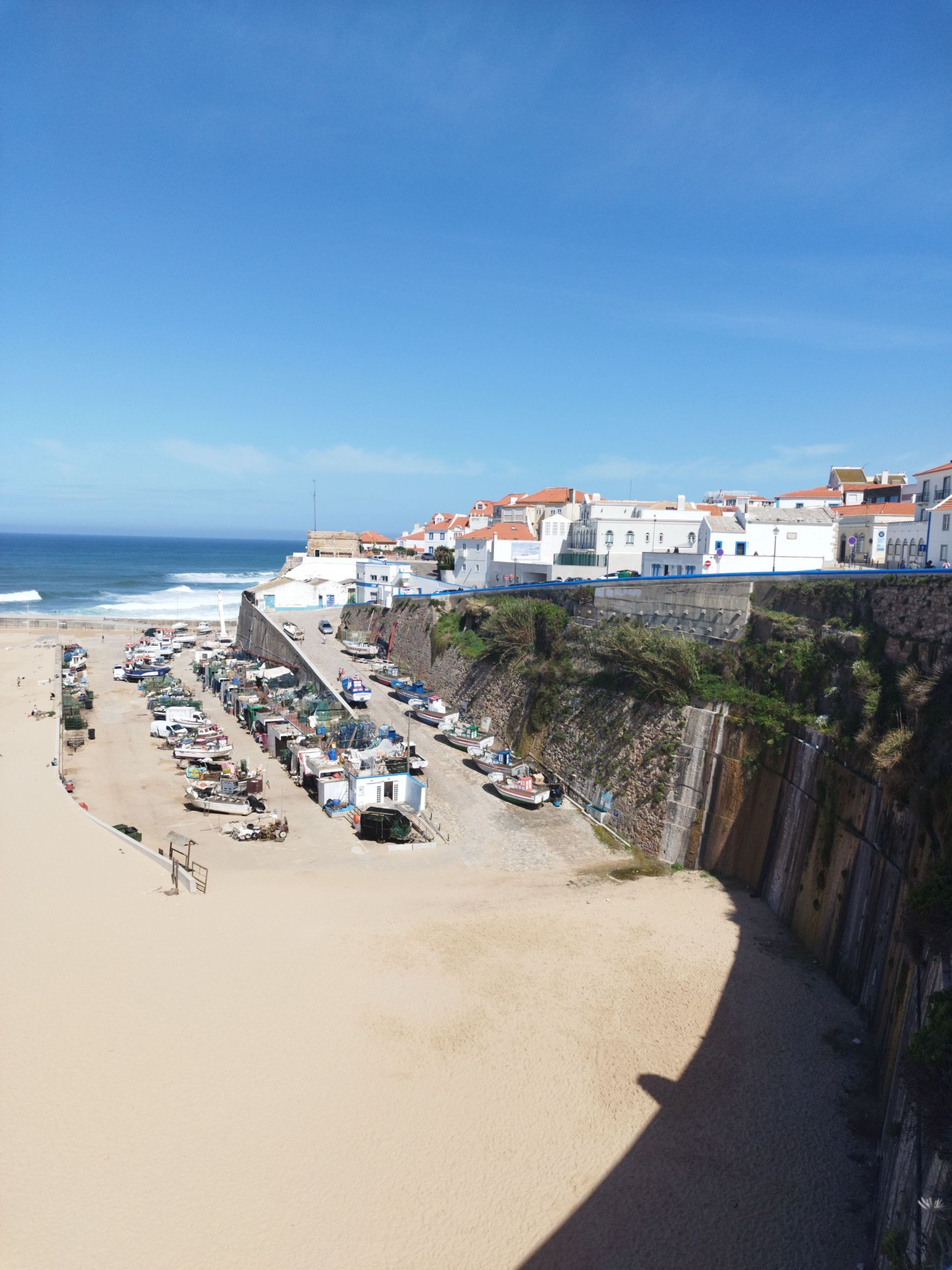 Photo: Alex / Tagzania, Wikimedia Commons (CC BY-SA 4.0)
 - Palácio Nacional de Mafra Weekday mornings, to beat tour groups
A vast baroque complex combining a royal palace, basilica, and Franciscan convent, built 1717-1755 under King João V after a 1711 vow. UNESCO World Heritage-listed since July 2019 — and the town King Manuel II's family passed through on their way to Ericeira just before boarding the yacht into exile.
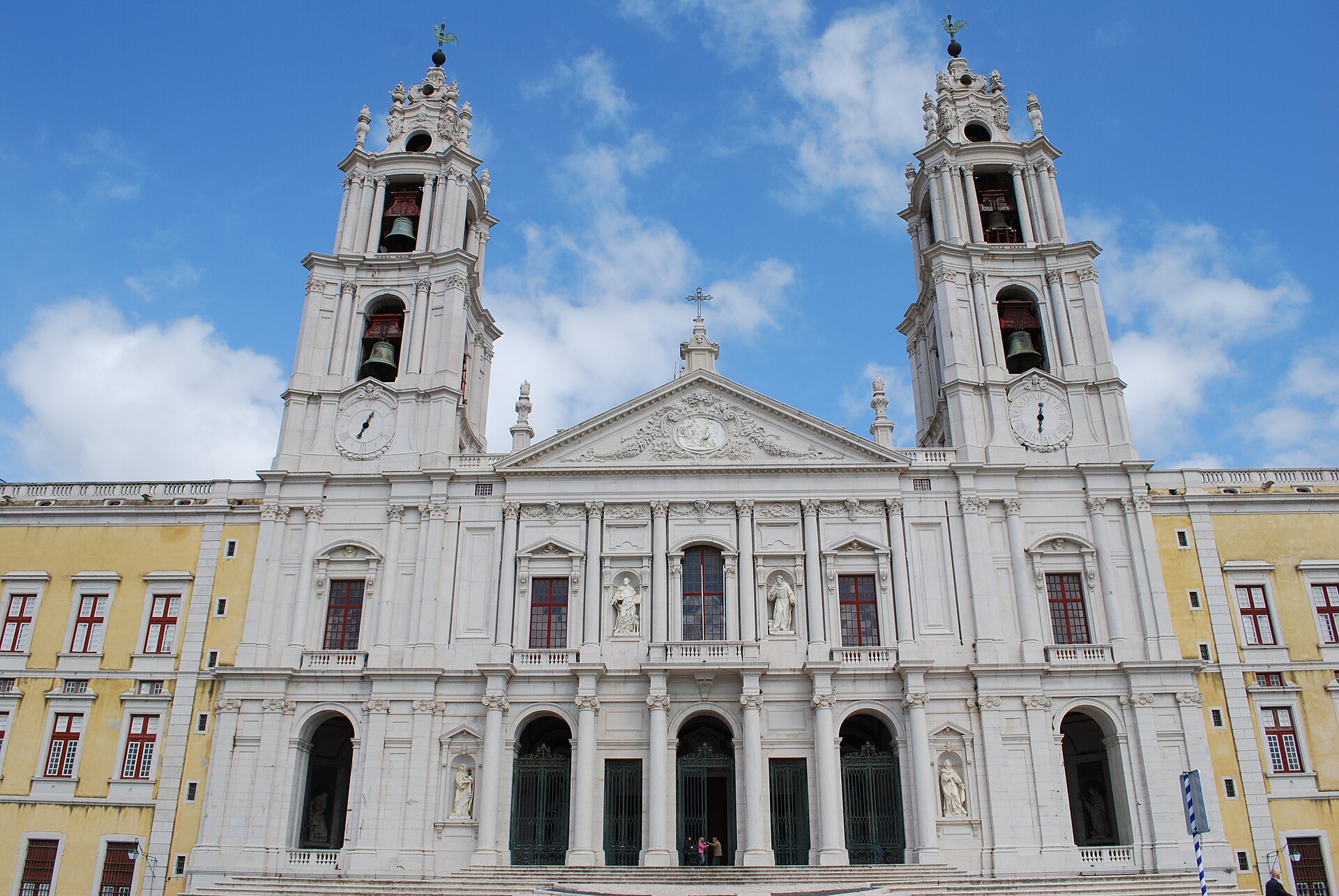 Photo: Concierge.2C / Wikimedia Commons (CC BY-SA 3.0)
 - Igreja de São Pedro, Ericeira Daylight hours for the tile detail
Documented from 1446 as a small outlying chapel, this became Ericeira's main parish church in 1530, with the current building constructed between the early 1600s and 1745. Its walls carry 17th-18th century azulejo panels depicting the life of Saint Peter — declared a National Item of Public Interest in 1984.
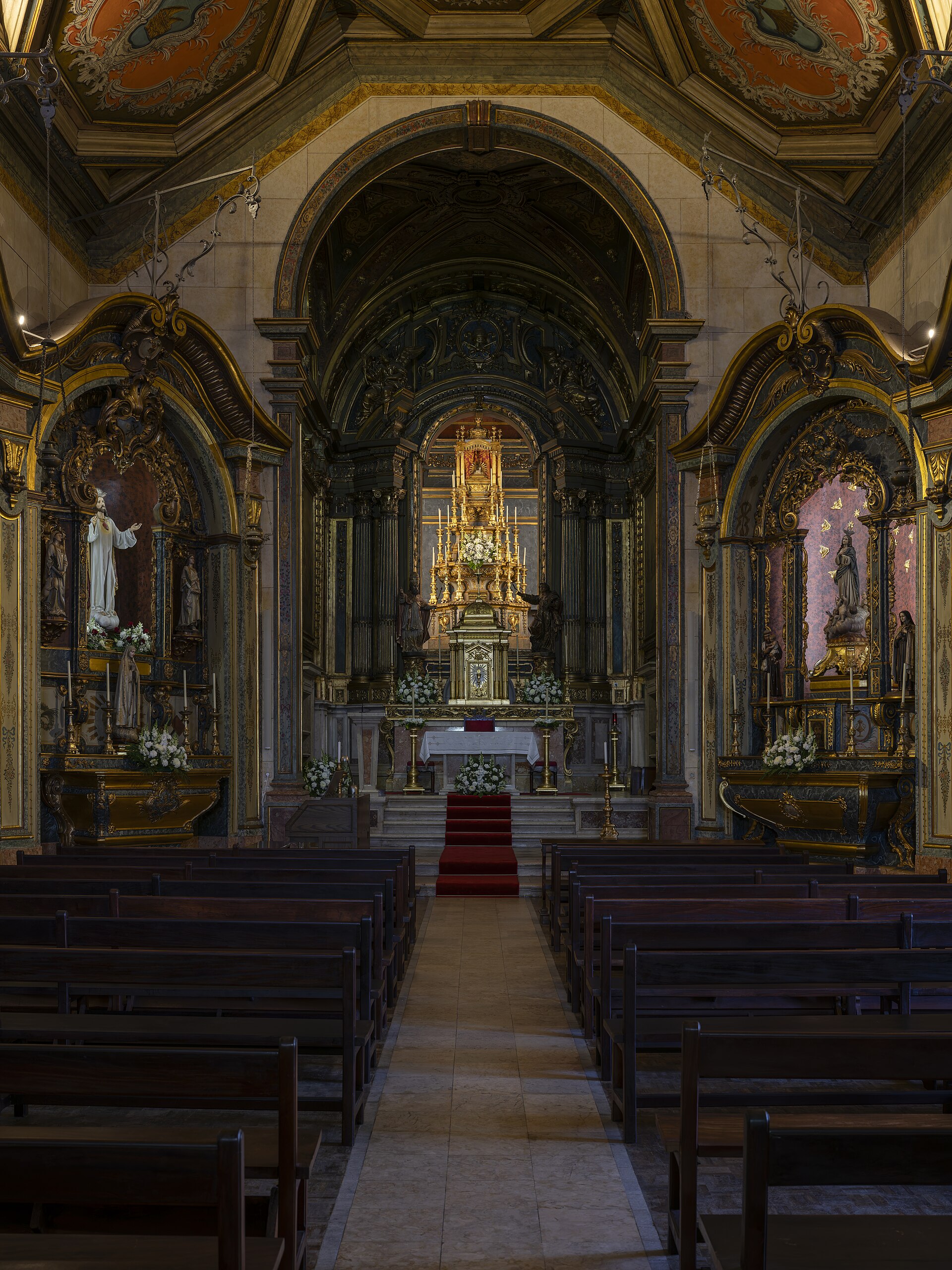 Photo: Jules Verne Times Two / Wikimedia Commons (CC BY-SA 4.0)
 - Sintra-Cascais Natural Park Spring or autumn for hiking comfort
Created in 1994, this roughly 14,500-hectare protected area is a real geology showcase — fossil dunes at Magoito, wave-eroded limestone at Cabo Raso, an actively shifting cliff at Azenhas do Mar, and an exposed chalk layer carrying real dinosaur trackways at Praia Grande.
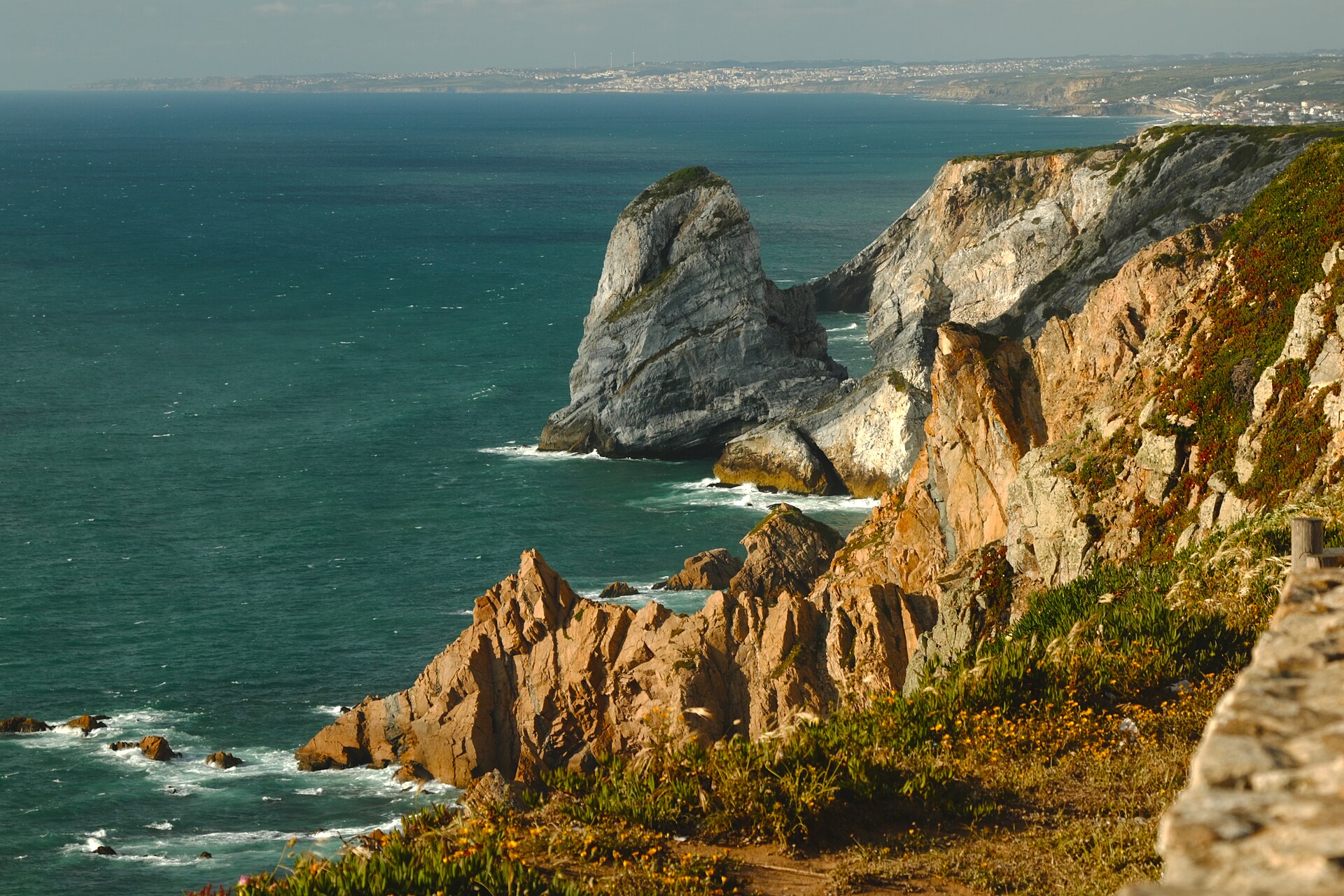 Photo: LensaCibi / Wikimedia Commons (CC BY-SA 4.0)
 - Fortaleza de Peniche — Fortress, Political Prison, Museum Allow 1.5-2 hours; check for a weekly closed day
Built 1557-1567 under King John III, the fortress became a maximum-security political prison in 1934 under the Estado Novo dictatorship until the 1974 Carnation Revolution. Its most famous episode: on January 3, 1960, Communist Party leader Álvaro Cunhal and eight others escaped by lowering themselves down the walls on ropes made of knotted bedsheets. Now the National Museum of Resistance and Freedom.
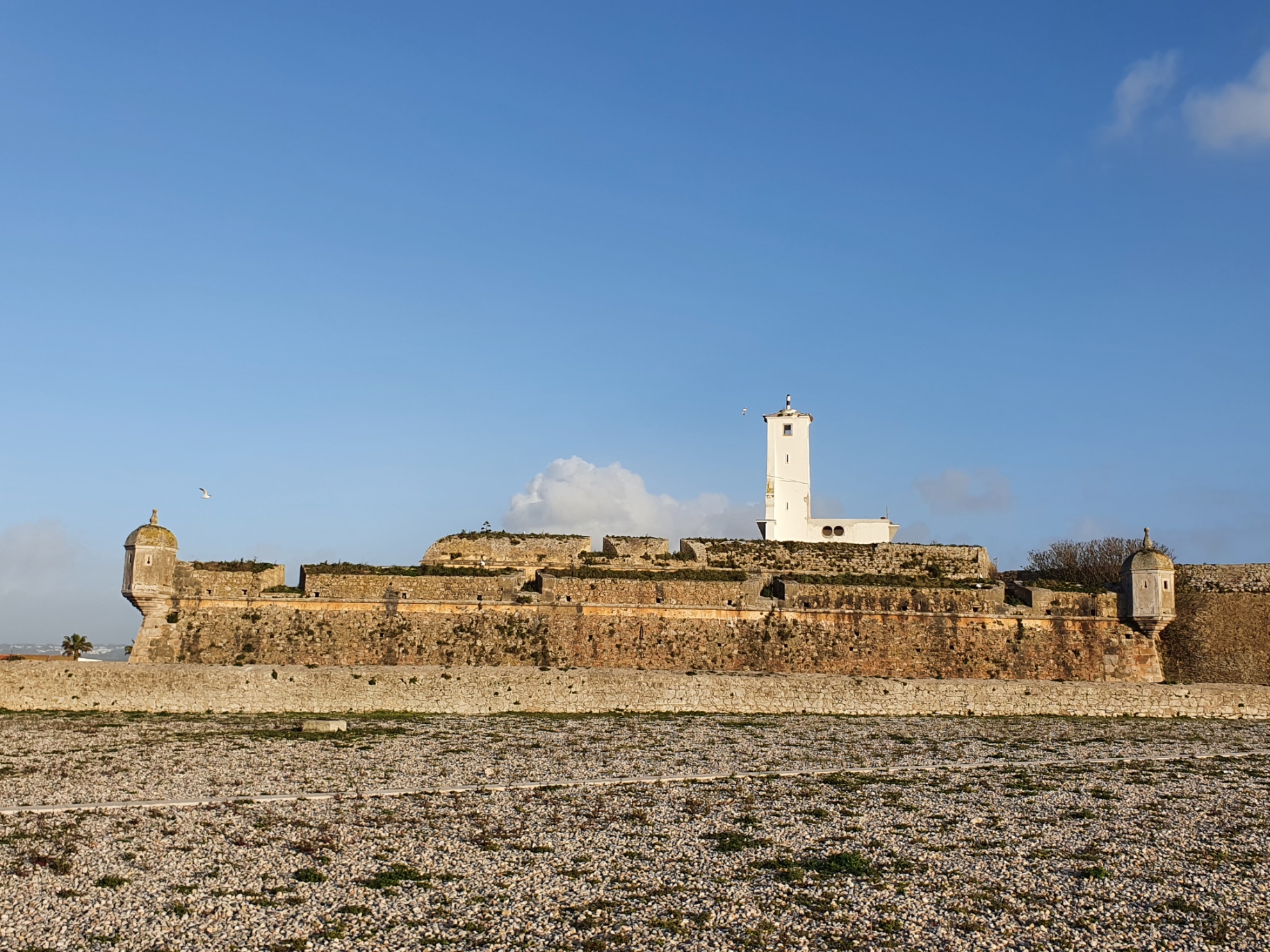 Photo: GualdimG / Wikimedia Commons (CC BY-SA 4.0)
 - Berlengas Islands Boat access generally June-early September, weather-dependent
A Natural Reserve since 1981 and UNESCO Biosphere Reserve since 2011, roughly 10-15km off Peniche. The main island's Forte de São João Baptista, built 1651 atop an abandoned monastery, is a genuine survivor — in June 1666 just twenty Portuguese soldiers held off a siege by 16 Spanish warships and over 2,000 men.
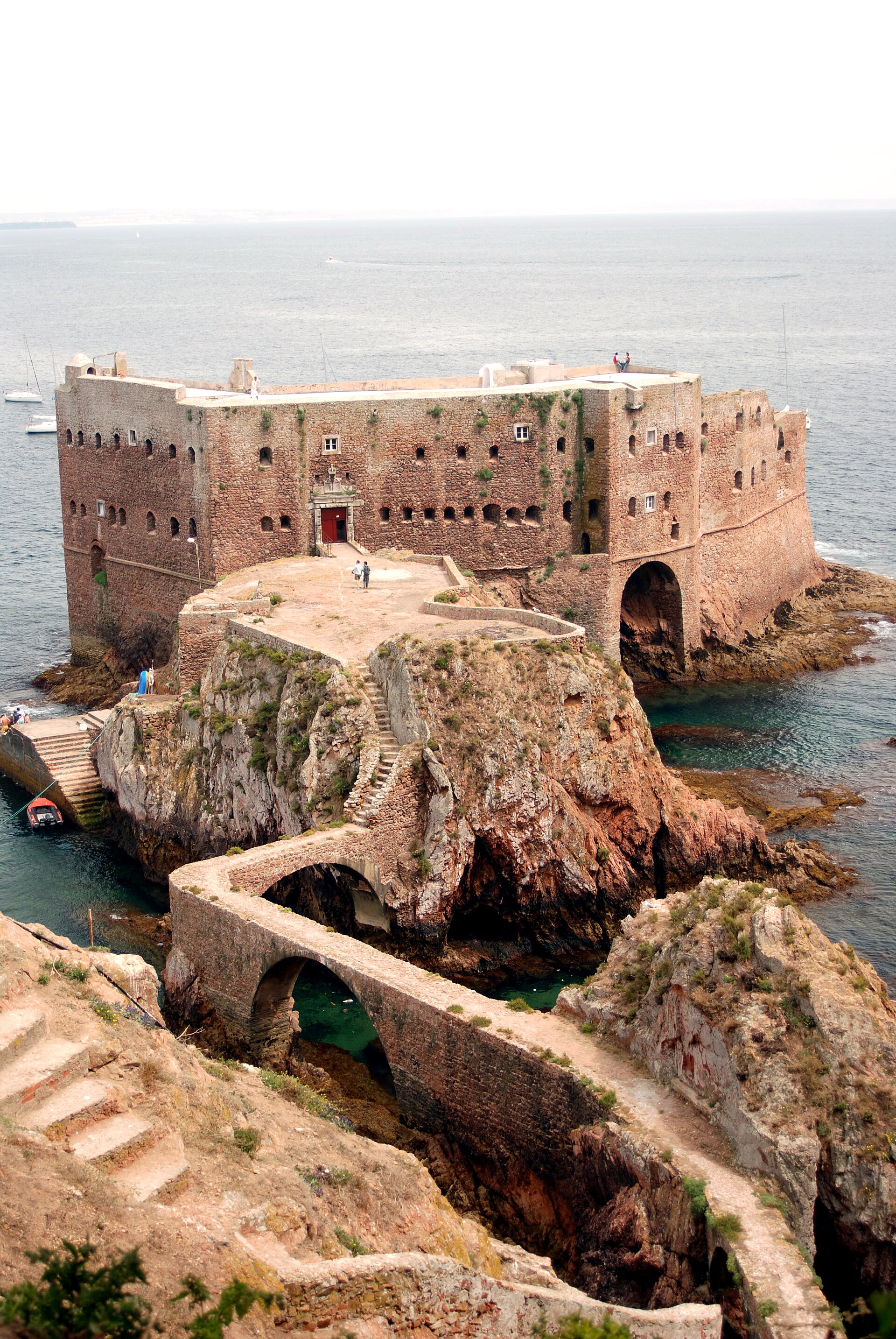 Photo: StaraBlazkova / Wikimedia Commons (Public Domain)
 - Rendas de Peniche — The Bobbin-Lace Tradition Year-round via the town's lace showcase; ask locally about lace-fair or open-workshop days
Bobbin lace-making is documented in Peniche from the 17th century. Around 1836 the wife of the fortress's governor pushed local lacemakers toward finer thread and more elaborate patterns, and the upgraded work won international recognition at the 1851 Paris exhibition and beyond — a real cottage industry that historically gave local families income independent of the sea.
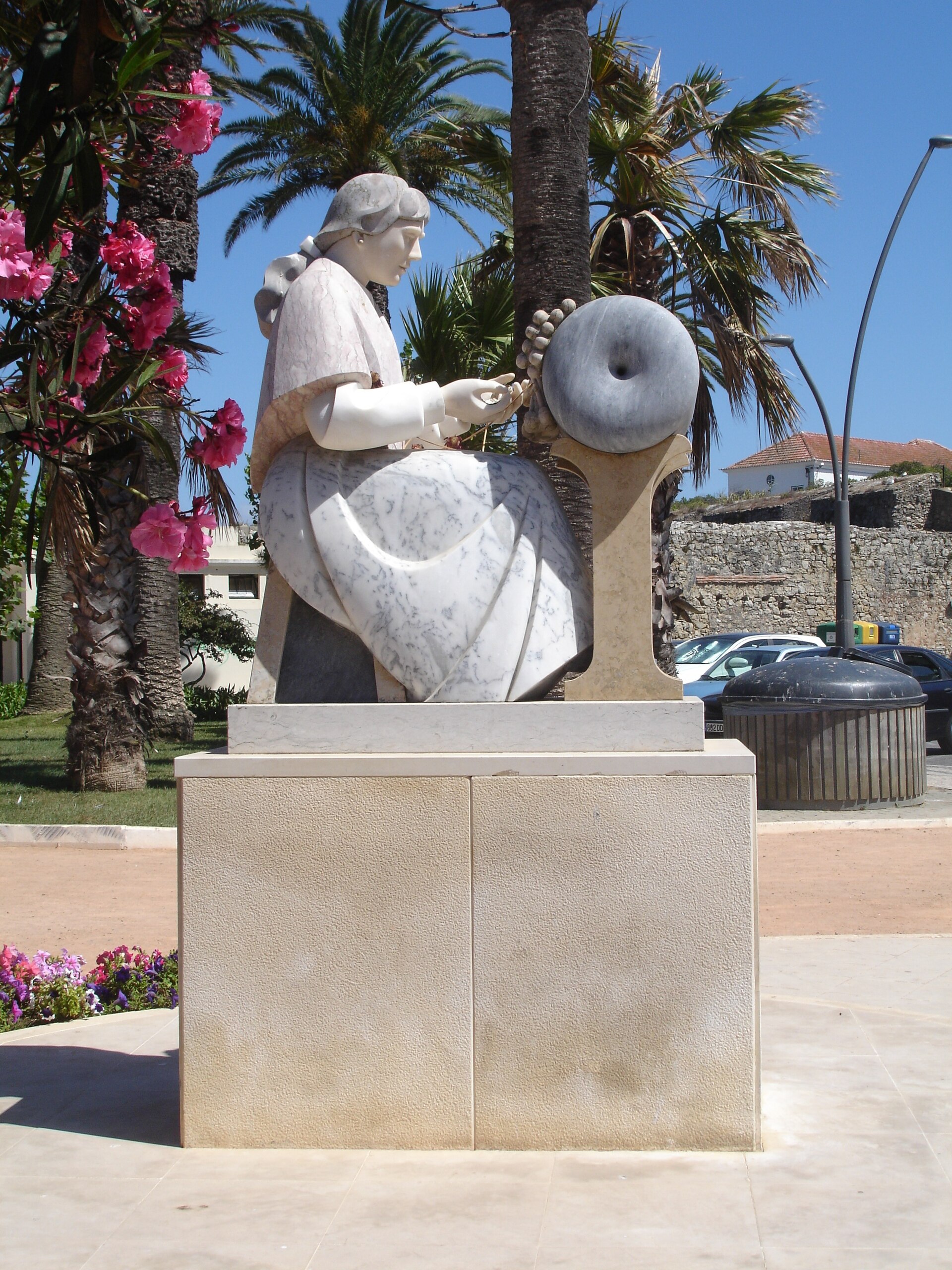 Photo: RitaMoreira2011 / Wikimedia Commons (CC BY-SA 3.0)
 - Baleal — The Island That Isn't Quite an Island Sunset; walk the sandy isthmus at low tide
Baleal sits about 3km north of Peniche, joined to the mainland by a natural sandbar rather than a bridge. The name comes from baleia (whale) — for centuries this headland was a whale-cutting site along a migratory route, before sediment gradually closed the channel that once let whaling boats through.
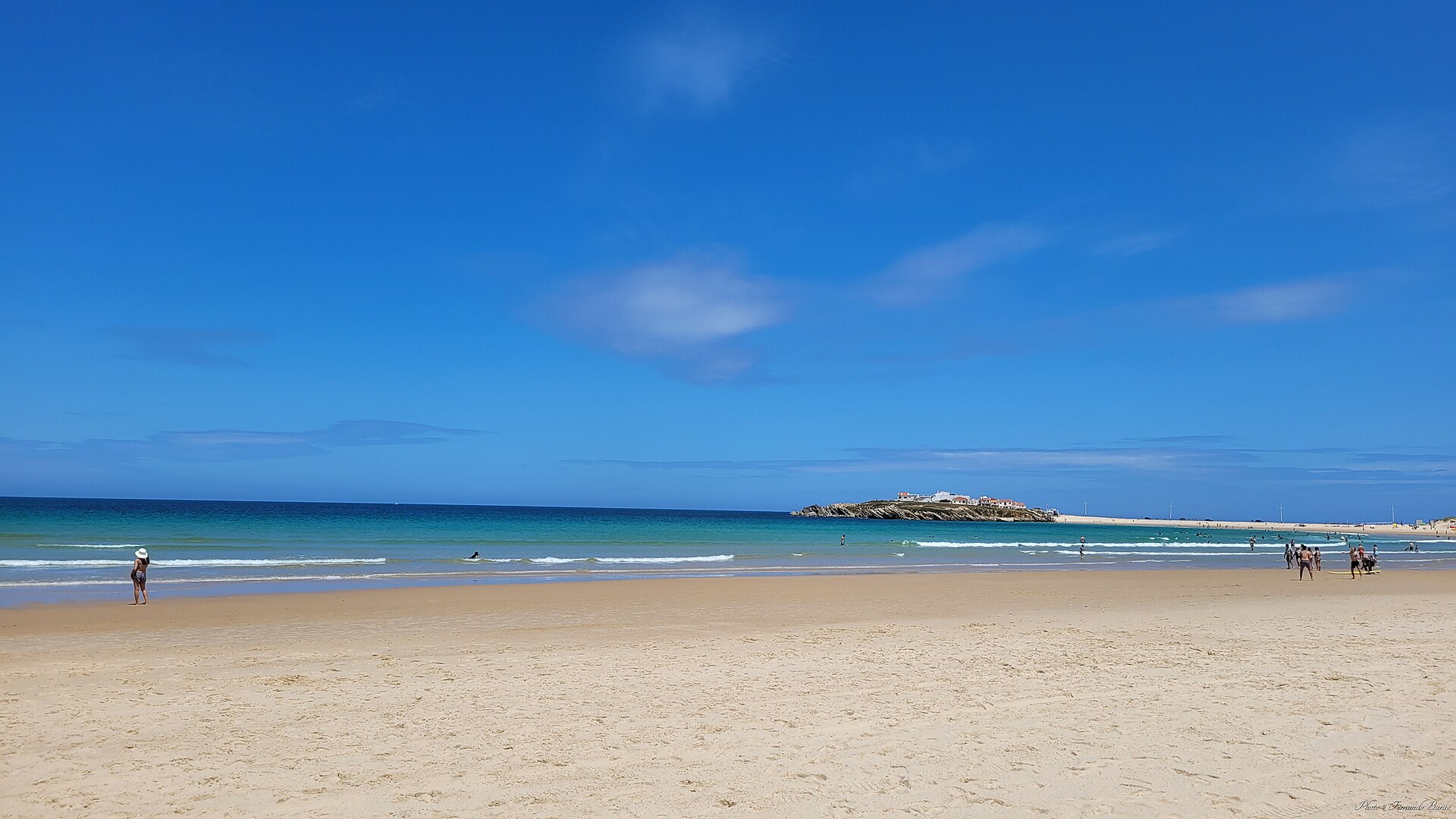 Photo: Fernando Barão / Wikimedia Commons (CC BY-SA 4.0)
 - Ascensor da Nazaré Early morning for the shortest queue and best light on the cliff
Inaugurated July 28, 1889 and designed by French engineer Raul Mesnier du Ponsard — a disciple of Gustave Eiffel who also built most of Lisbon's funiculars — this climbs 318 meters up a 110-meter cliff in about three minutes. Originally steam-powered, electrified in 1924, and still carrying over a million riders a year.
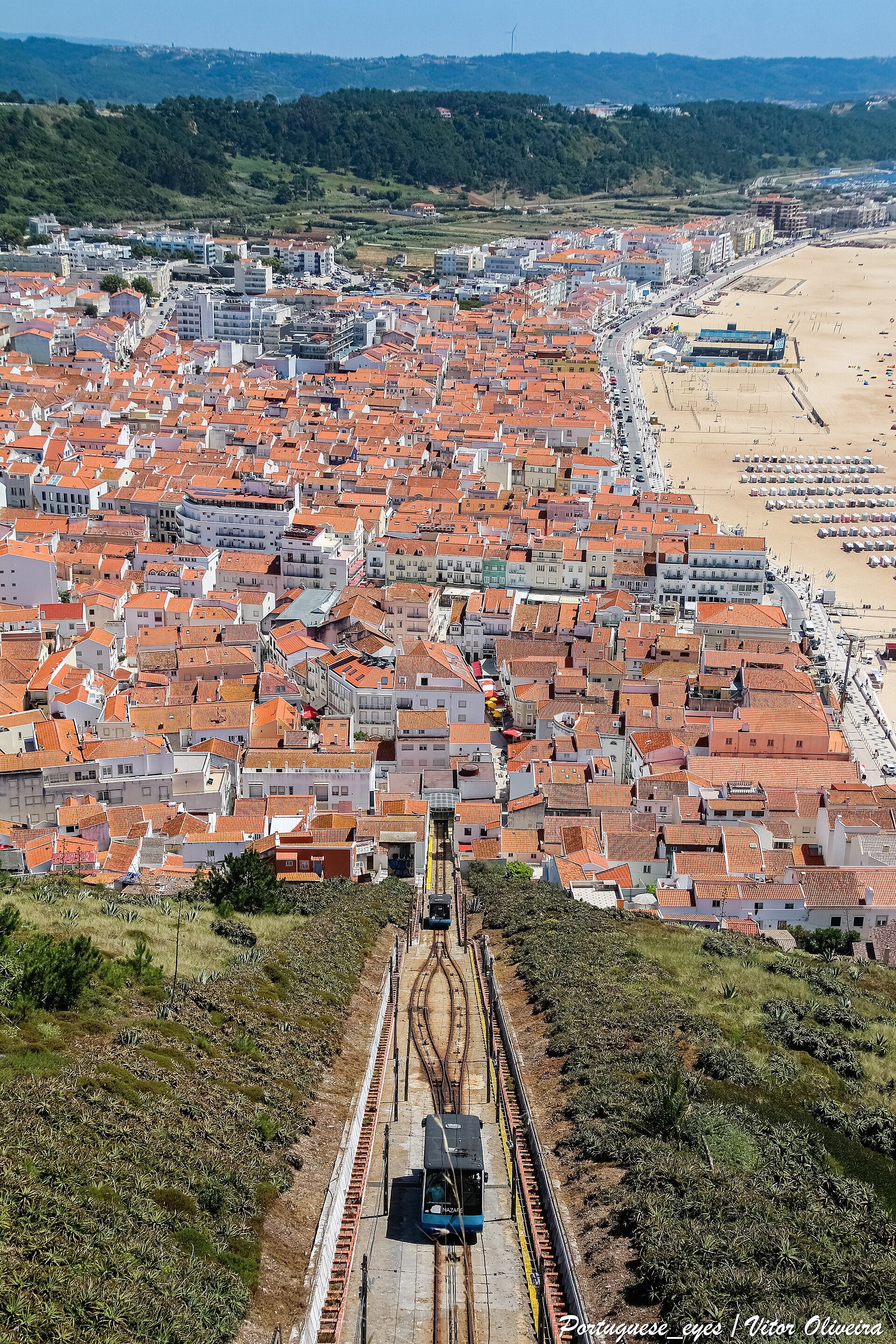 Photo: Vitor Oliveira / Wikimedia Commons (CC BY-SA 2.0)
 - Capela da Memória & the 1182 Nazaré Legend Year-round; the early-September Nossa Senhora da Nazaré festival is liveliest
According to medieval legend, in September 1182 the knight Dom Fuas Roupinho was hunting in dense fog when his horse chased a deer toward the cliff edge. He invoked the Virgin of Nazaré and the horse stopped just short of the drop — in thanksgiving he built this small chapel on the spot, which still stands today.
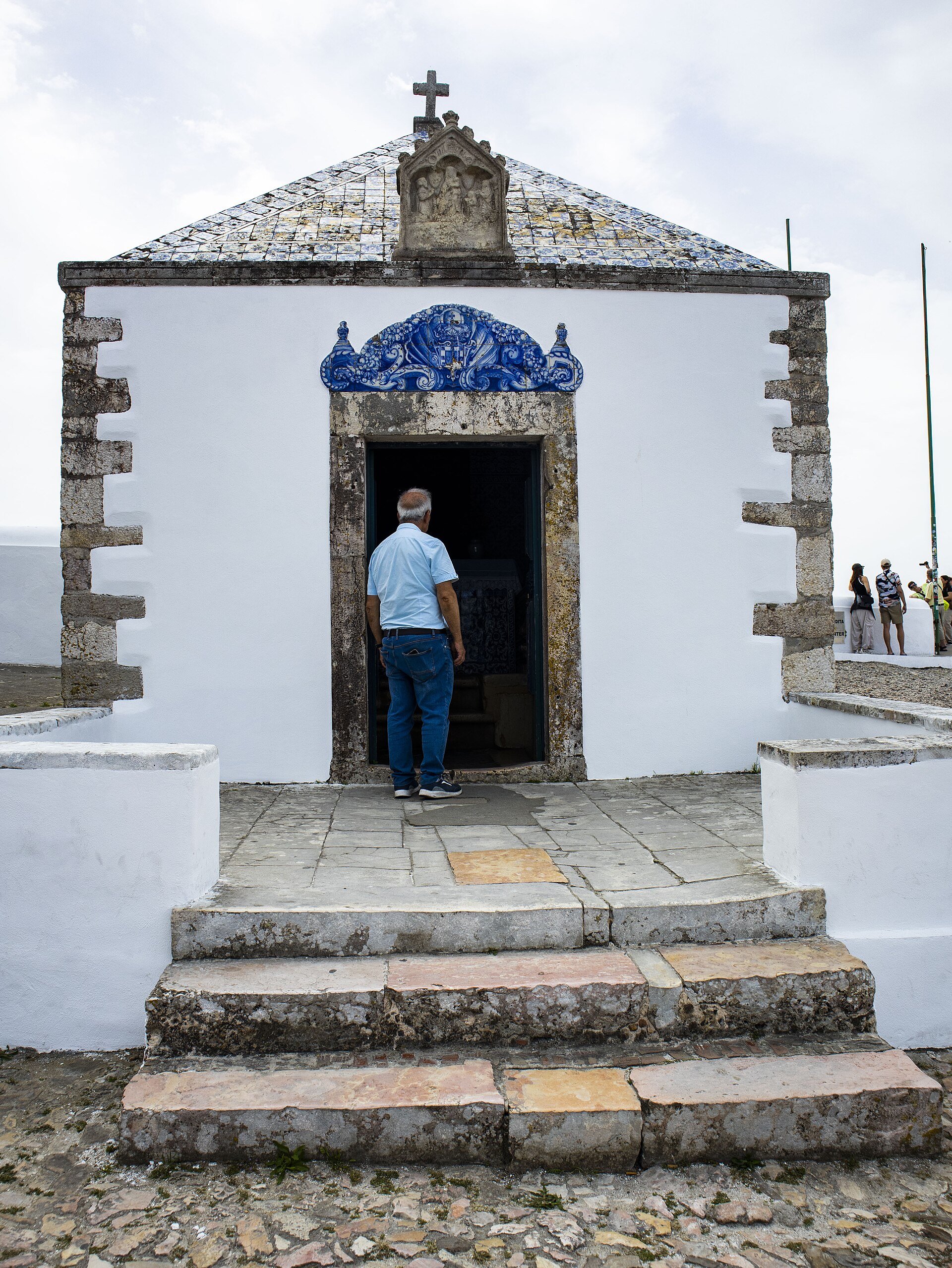 Photo: Cristina Morettini 95 / Wikimedia Commons (CC BY-SA 4.0)
 - Peixe Seco — Fish Still Sun-Dried on the Beach Visible much of the year, most actively worked in the cooler months
Rows of mackerel, sardine, and octopus laid out on wooden racks along Nazaré's waterfront are a genuine, still-living tradition rooted in the pre-refrigeration need to preserve the catch through hard winters. The town council formalized it as the Museu Vivo do Peixe Seco — the "Living Museum of Dried Fish" — keeping the practice visible while supporting the peixeiras who still do it today.
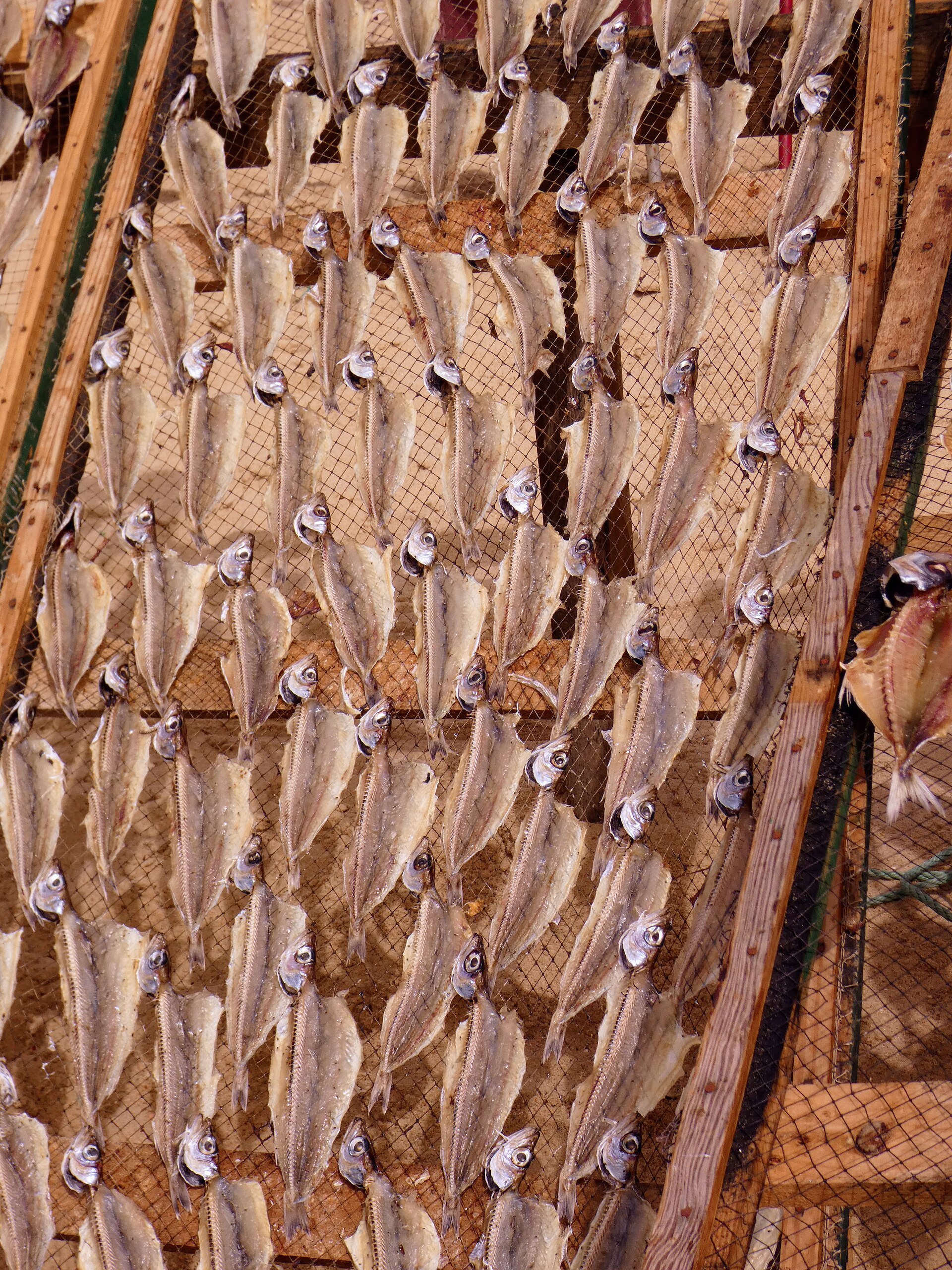 Photo: AJFAlmeida / Wikimedia Commons (CC BY-SA 4.0)
 - Forte de São Miguel Arcanjo Year-round; museum typically closed one day a week, confirm locally
Built in 1577 for coastal defense at the tip of the Sítio promontory, its dedication to the Archangel Michael came from a sculpted image added during a 1644 expansion. Converted to lighthouse duty in 1903, it's housed a small museum since 2014 covering the fort's own history and the oceanographic science behind Nazaré's wave phenomenon.
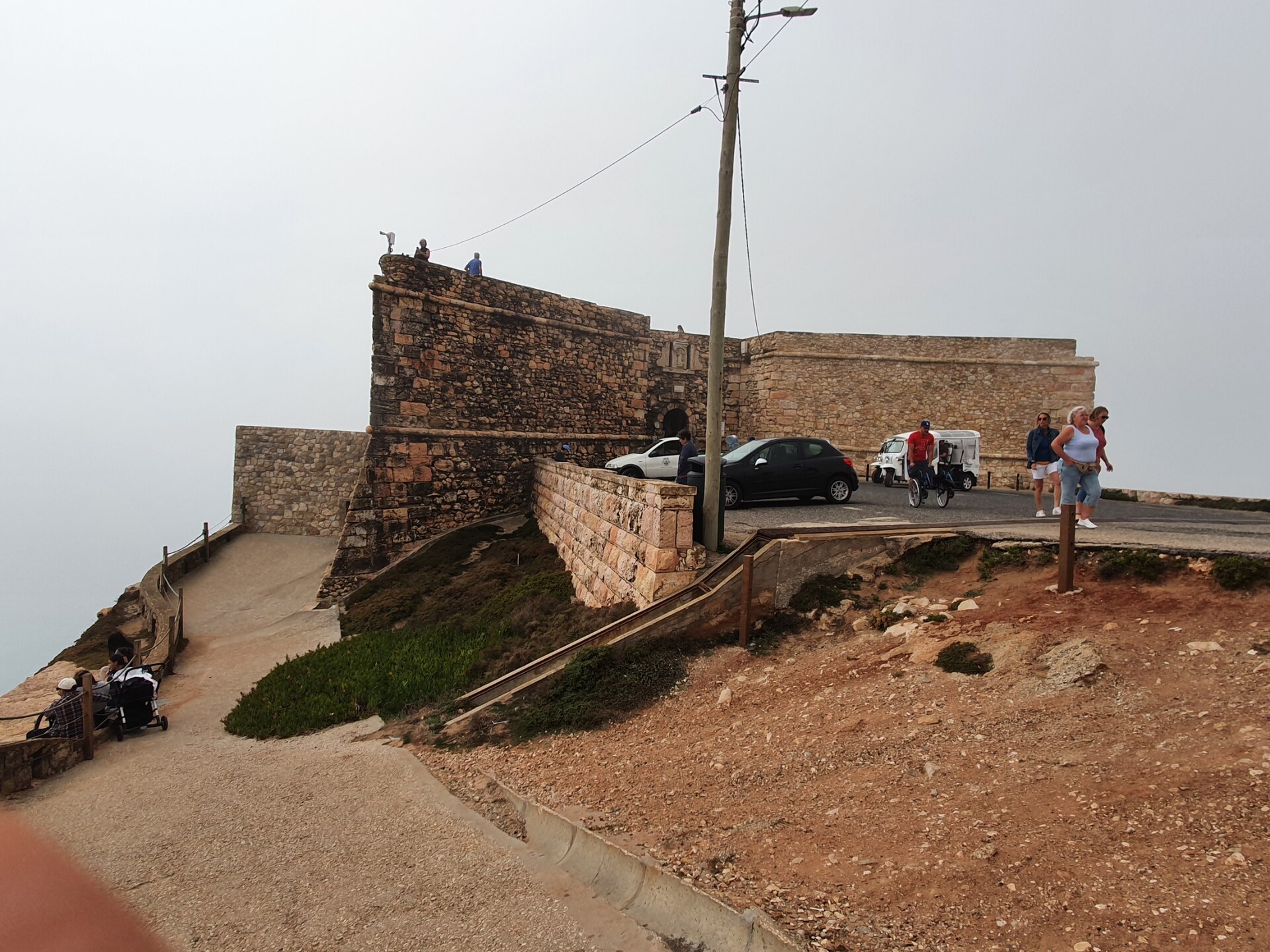 Photo: GualdimG / Wikimedia Commons (CC BY-SA 4.0)
Questions people actually ask.
Can I fly direct to this zone from the US?
Lisbon (LIS) is the gateway, roughly 30-80 minutes from each town in this zone by car. TAP Air Portugal flies nonstop from eight US cities as of 2026 — Boston, Chicago, Los Angeles, Miami, Newark, New York JFK, San Francisco, and Washington DC — with a ninth, Orlando, launching October 2026. This site did not independently confirm nonstop United or Delta service into Lisbon, so treat TAP as the confirmed direct option and check other carriers directly if that matters to your booking.
Is Nazaré's giant-wave season the same as regular surf season here?
No — they're genuinely different phenomena. Ericeira and Peniche have normal, mixed-season surf that's often best May through October. Nazaré's globally famous giant waves are a distinct, narrower winter phenomenon (roughly October through March, peaking November through February) driven by the Nazaré Canyon amplifying North Atlantic winter groundswells. Visiting for the big-wave spectacle means planning around winter storms, not summer surf season.
Is Supertubos beginner-friendly?
No, and this is worth knowing before you go — this is serious, advanced-level water, not a beginner beach — it hosts a WSL Championship Tour event and has a real, documented injury history for people who go in over their heads. Beginners are better served by Peniche's other, gentler beaches.
Is it safe to watch the big waves at Nazaré?
The clifftop viewpoint at the Nazaré lighthouse fort is the established safe vantage point, but the beach itself is unsupervised and genuinely dangerous during big swell — sneaker waves have swept spectators off rocks and the shoreline, and the sport itself carries real risk: big-wave surfer Márcio Freire died after a wipeout at Nazaré in January 2023. Stay well back from the water's edge during big swell and never treat a calm-looking lull as safe.
How crowded is Ericeira, really?
Genuinely one of the more crowded surf towns in Europe, especially in summer. It's a World Surfing Reserve and a major surf-camp hub, so lineups at the well-known breaks get packed July through August. November through April is quieter with still-good surf, if crowd levels matter more to you than warm water.
Disclosure & how this page works.
Straight talk: Some links on this page are affiliate links — if you book through them, Secrets of Surf Travel earns a small commission at no extra cost to you. We only link places and people we’d use ourselves, and coverage is never for sale. Those commissions are what keep this site running and fund the next trip.
Today, the “Search Vrbo rentals” and “Search Booking.com stays” links on this page are affiliate links — every vendor listing link is still a plain courtesy link. As partnerships with these local businesses come online, more links (and discount codes, where Secrets of Surf Travel benefits from their use) may earn us a commission, and this page will keep saying so plainly. Coverage is never for sale: nobody on this page paid to be here, and nobody can.
Every listing was researched in 2026 and is being verified in person. Prices, hours, and policies change — treat them as strong starting points and confirm directly with the business. And per the No-Reveal Code: you will find no surf spots on this page, ever.