
Pohnpei
A single-island zone in the Federated States of Micronesia, centered on Kolonia — real surf media ranks one of Pohnpei's boat-accessed reef passes among the world's best waves, and Pohnpei Surf Club, a genuine, currently-operating outfit, runs guided boat access to it and nearby passes. Getting here means United's unusual multi-stop Island Hopper flight, and once you're here, the island's real headline draw beyond the reef is Nan Madol — a mysterious megalithic ruin unlike anything else in the Pacific.
Straight talk: Some links on this page are affiliate links — if you book through them, Secrets of Surf Travel earns a small commission at no extra cost to you. We only link places and people we'd use ourselves, and coverage is never for sale. Those commissions are what keep this site running and fund the next trip.
Some vacation-rental search links on this page (marked "Search Vrbo rentals" or "Search Booking.com stays") are affiliate links. Every vendor link below is still a plain courtesy link. As more partnerships come online, more links may earn us a commission; the promise above holds either way.
Getting There
Pohnpei International Airport (PNI) sits about 10 minutes from Kolonia. There's genuinely one realistic way in: United's "Island Hopper" (flight UA154/155), a single Boeing 737 running Honolulu to Guam roughly 3x a week, touching down at Majuro, Kwajalein, Kosrae, Pohnpei, and Chuuk along the way — one continuous flight with short ground stops passengers can deplane for, total block time around 14.5 hours. This is one of the most unusual scheduled airline routes in the world, and it means real schedule inflexibility — build buffer days on both ends.
Documents: a genuinely distinctive advantage versus most of the rest of the Pacific covered on this site — under the Compact of Free Association (COFA), US citizens need only a valid passport (6+ months validity). No visa, 30 days on arrival with possible extension.
Ground Transport
- Driving is on the right, US convention.
- Sunset View Car Rental — Kolonia-based, locally operated 14+ years, also serves Chuuk. The clearest, most verifiable local rental option.
- Taxis are the common short-hop option — unmetered, negotiate fare in advance, roughly $3-5 for the ~11-minute run from town to the airport. Named local services: Waido Taxi, RM Taxi Service, NRY'S Taxi Service, MB3 Taxi, G-YO'S Taxi.
When to Go & What to Pack
- Surf season runs October-March, peaking January-February with the most consistent swell — swells come from North Pacific winter storms, a different generating system than Hawaii's.
- Water temperature stays warm year-round, roughly 82-84°F (28-29°C) — no wetsuit needed.
- Typhoon season runs roughly June-December, with August-November the highest-frequency, highest-intensity window — the correct regional term is "typhoon," not "cyclone." Pohnpei sits toward the lower-exposure southeastern edge of the Northwest Pacific typhoon belt compared to Guam, Chuuk, or Yap, but this still genuinely overlaps the surf season's shoulder months.
- Pohnpei is one of the wettest places on Earth, up to roughly 330 inches of rain a year — pack for daily rain regardless of season rather than treating it as unusual weather.
Good to Know
- Currency is the US Dollar — the FSM uses USD exclusively. Only 4 ATMs exist on the whole island; carry backup cash and notify your bank before travel.
- Emergency number: 911 (police and ambulance).
- Language: Pohnpeian is the indigenous language (~30,000 speakers on-island); English is the official/business language and appears on road signage.
- No dedicated surfboard or wetsuit repair shop exists on the island. Pohnpei Surf Club may be able to help informally given its own boat/board fleet, but this isn't a standing service — bring a full travel repair kit.
Respecting the Locals
Pohnpei is a small, single-island community with its own indigenous language, roughly 30,000 speakers strong, and its own living traditions — sakau ceremonies still carry real weight here, not just novelty for visitors. The island's whole surf scene runs through one small, genuine outfit and its boat fleet, guiding guests to reef passes rather than a lineup you can just paddle out to on your own. That access is a privilege extended by people who live here year-round, and it's worth treating it that way.
- Locals get first priority, always. Watch a session before you paddle out. Learn who's who before you learn the wave. Sit inside and catch what they let through — the leftovers are yours, not the set waves.
- Don't backpaddle. Ever. Being in position doesn't make the next wave yours, especially if you didn't wait your turn. If a local wants a wave, let them have it…even if it IS your turn. That older guy who may not be the best surfer out there has probably been surfing that wave before you even sat on a board. If you don't know someone, assume they're local.
- Don't snake. This shouldn't even need to be said, but…dropping in on someone, local or not, is the ultimate disrespect and the fastest way to be sent out of the water. Don't be that guy!
- Say hi. A “howzit,” “whatsup,” or “nice wave,” eye contact, or a nod in the channel — it costs nothing and it's the fastest way from stranger to welcome.
- This is somebody's home, not a resort amenity. The break you're surfing is where a local kid learned to swim, where someone's uncle has surfed for forty years. Act like a guest, because you are one.
- Spend where it actually helps. The food truck, the local shaper, the family-run rental, the local photographer — that's where a surf trip's money should land, not just the chain hotel gift shop. See The No-Reveal Code for why that's the whole premise of this site.
- Leave it better than you found it. Pick up trash that isn't yours. Don't touch reef, wildlife, or cultural sites.
Locals have watched hundreds, if not thousands, of people come and go — some for days, some for months or years — and almost all of them eventually go home. The locals are still there. It takes many, many years to actually become one. Keep that in mind the next time you feel entitled to the same waves they get.
None of this is a secret handshake. It's just how you'd want a guest to act in your own backyard.
Pohnpei / Kolonia
The entire zone is one volcanic island, with lodging, dining, and services clustered in and around Kolonia on the north coast — a genuine single-hub zone. Nan Madol and Kepirohi Falls sit 45-60 minutes away on the southeast side; Sokehs Rock is about 10 minutes west. All are day-trippable from a Kolonia base.
Surf Guides & Lodges
- Pohnpei Surf Club (Pohnpei Surf and Dive Club)Mangrove Bay Hotel, west edge of KoloniaMid/upperThe island's primary, longest-running surf operation — 8 lagoon-front rooms, a boat fleet guiding access to reef passes, plus diving, jet skis, SUP, kayak/mangrove trips, and land tours. Confirmed active in 2025-2026 through recent guest reviews. Get a current price quote directly rather than trusting older published rates. pohnpeisurfclub.com · Map
- Nihco Surf Camp / NIHCO Marine ParkPalikir areaBudget/midA real, smaller second surf-guide option — also runs kayak rental and Ahnd Atoll trips. p-pass.wixsite.com/nihcosurf · Facebook · Map
Stays
- Joy HotelOhmine St, KoloniaMid-rangeOne of the oldest hotels on the island, recently renovated, on-site restaurant. Facebook · Map
- Cliff Rainbow HotelElenieng St, central KoloniaBudget/midCentral location, own car rental desk, restaurant/bar. cliffrainbow.com · Facebook · Map
- Hideaway HotelSokehs harbor hillside, KoloniaMid-rangeCottage-style units, own restaurant (Hideaway Bar & Grill), harbor views. Instagram · Facebook · Map
Agoda's partner search returned no inventory for Pohnpei at all — a real platform gap for this remote a destination, deferred rather than forced.
Where to Eat
Massage & Wellness
Genuinely thin — the one lead found (Pono Wellness Spa) couldn't be independently confirmed as located on Pohnpei during research. Not listed here rather than published on unverified information.
Other Adventures
- Club PareoKoloniaMid-rangeJapanese-run dedicated SCUBA operation, experienced staff. Facebook · Map
- Manta Road divingVia Pohnpei Surf ClubMid-rangeA rare black-morph manta ray cleaning station, active year-round. pohnpeisurfclub.com · Map
- Nihco Marine ParkNear PalikirBudgetDay-use coral reef snorkeling, swimming, kayaking, paddleboarding — a legitimate non-surf-day option. p-pass.wixsite.com/nihcosurf · Facebook · Map
Local Secrets
Eight non-surf reasons this zone rewards the curious — a UNESCO-listed megalithic ruin unlike anything else in the Pacific, real WWII history in the hills above town, and a ceremonial drink tradition distinct from anywhere else in Oceania.
- Nan Madol Open year-round, Madolenihmw, southeast Pohnpei
A genuinely extraordinary UNESCO World Heritage Site (inscribed 2016) — a megalithic "city" of 100+ artificial islets built from massive columnar basalt and coral boulders off Pohnpei's coast, the ceremonial center of the Saudeleur dynasty roughly 1200-1500 CE, sometimes called the "Venice of the Pacific." Currently also on UNESCO's List of World Heritage in Danger, as mangrove overgrowth and siltation threaten the structures — a real, sobering detail worth knowing before visiting.
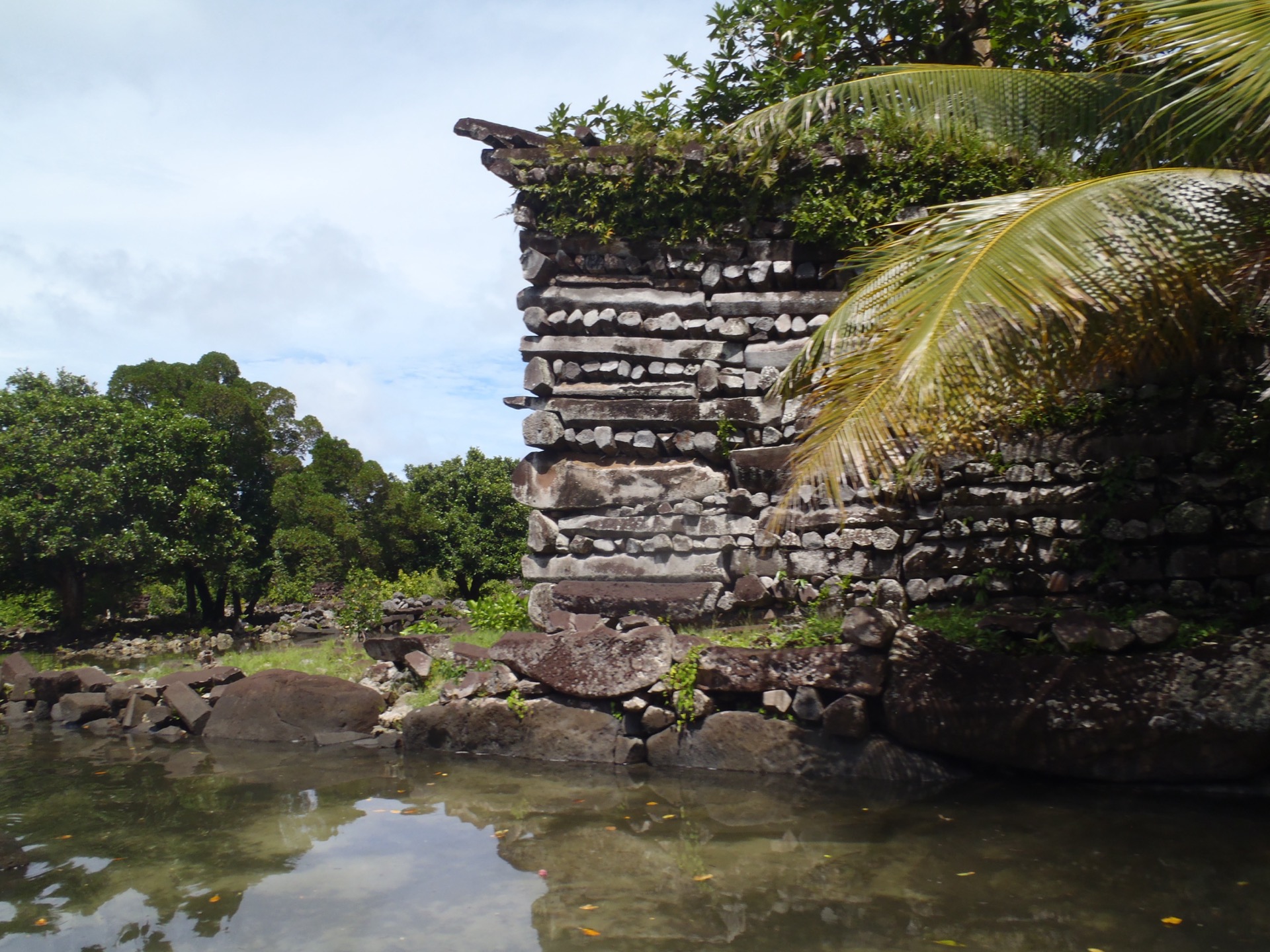 Wikimedia Commons (CC BY-SA 4.0)
 - Sokehs Rock & Ridge Trail Year-round, ~10 min west of Kolonia
A dramatic 328-foot basalt volcanic plug dominating the Kolonia skyline. The Sokehs Ridge trail, a 2.5-mile moderate out-and-back, leads past real WWII Japanese gun batteries, a radar platform, and foxholes to an observation point with harbor and airport views.
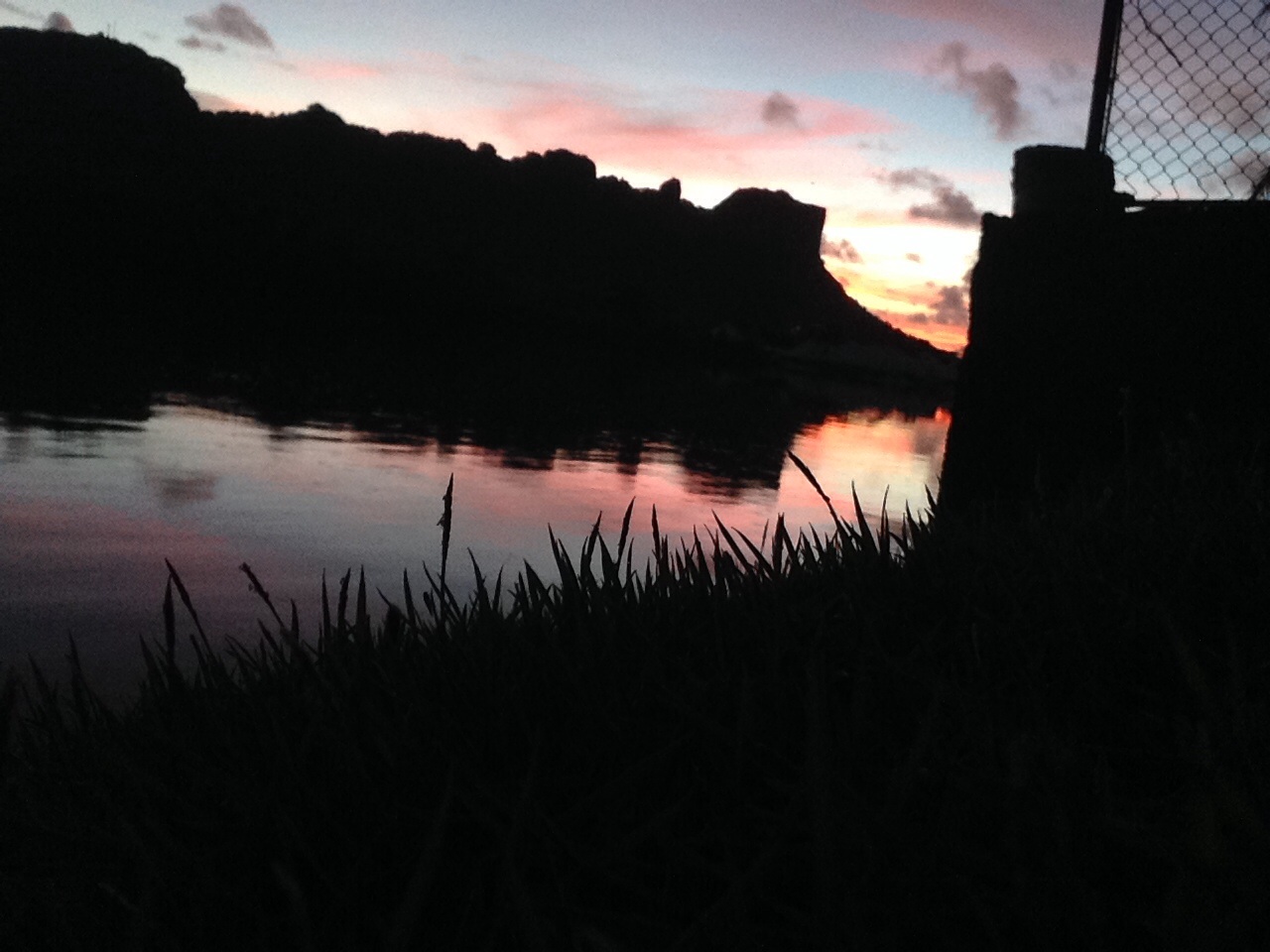 Wikimedia Commons (CC BY-SA 3.0)
 - WWII Japanese Occupation History Historical context, island-wide
Pohnpei was a significant Japanese administrative and military center in Micronesia during WWII. Beyond the Sokehs Rock gun batteries, a documented "Japanese WW2 Tank Graveyard" site and Japanese Artillery Road remain — a real, verifiable historical thread distinct from the hike itself.
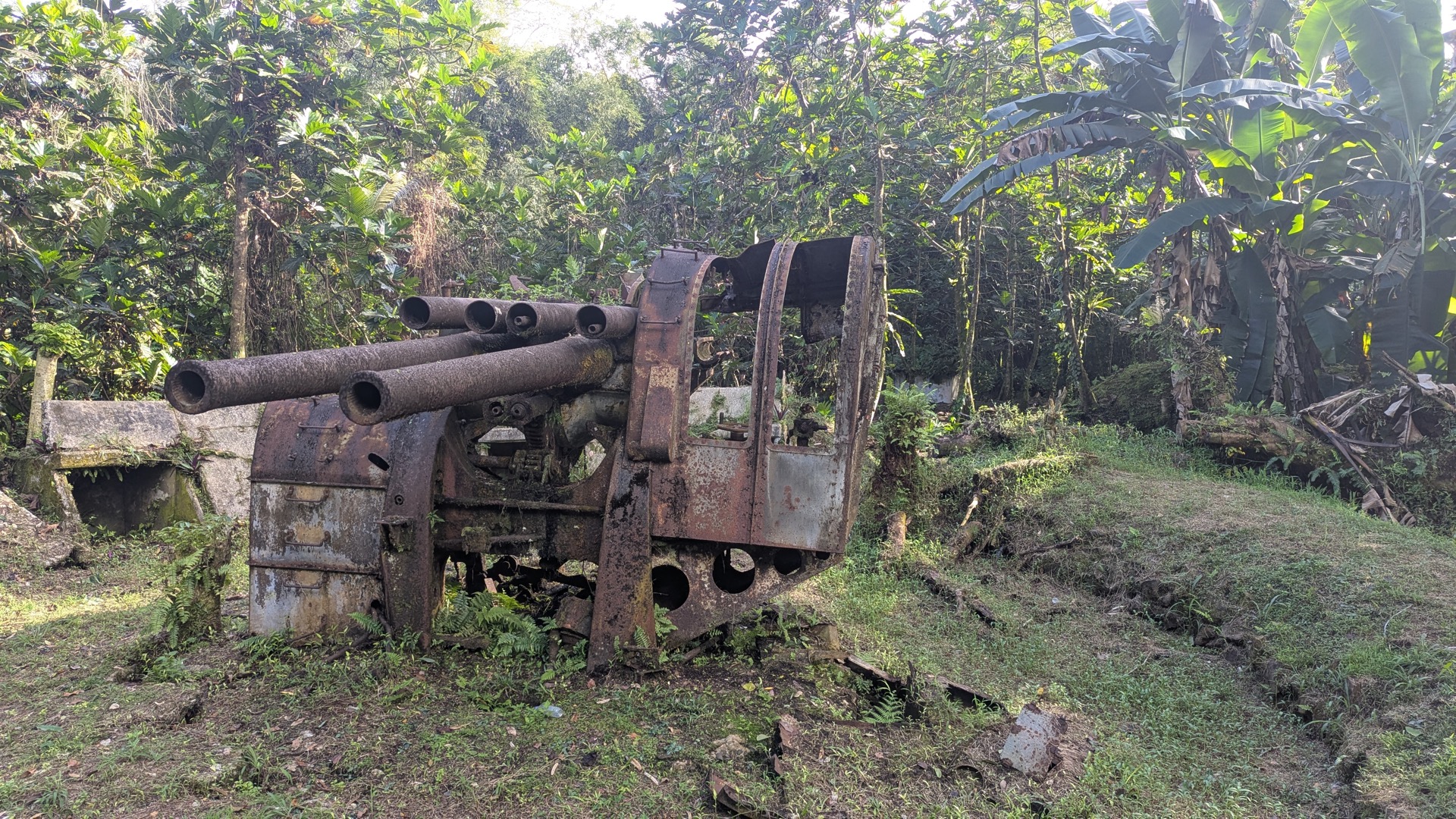 Wikimedia Commons (CC BY-SA 4.0)
 - Kepirohi Waterfall Open year-round, near Nan Madol, Madolenihmw; $10 entry
Pohnpei's most photographed waterfall — a wide, fan-shaped basalt cascade with easy walk-in access and a swimmable pool, plus picnic facilities. A natural pairing with a Nan Madol day trip since both sit in the same district.
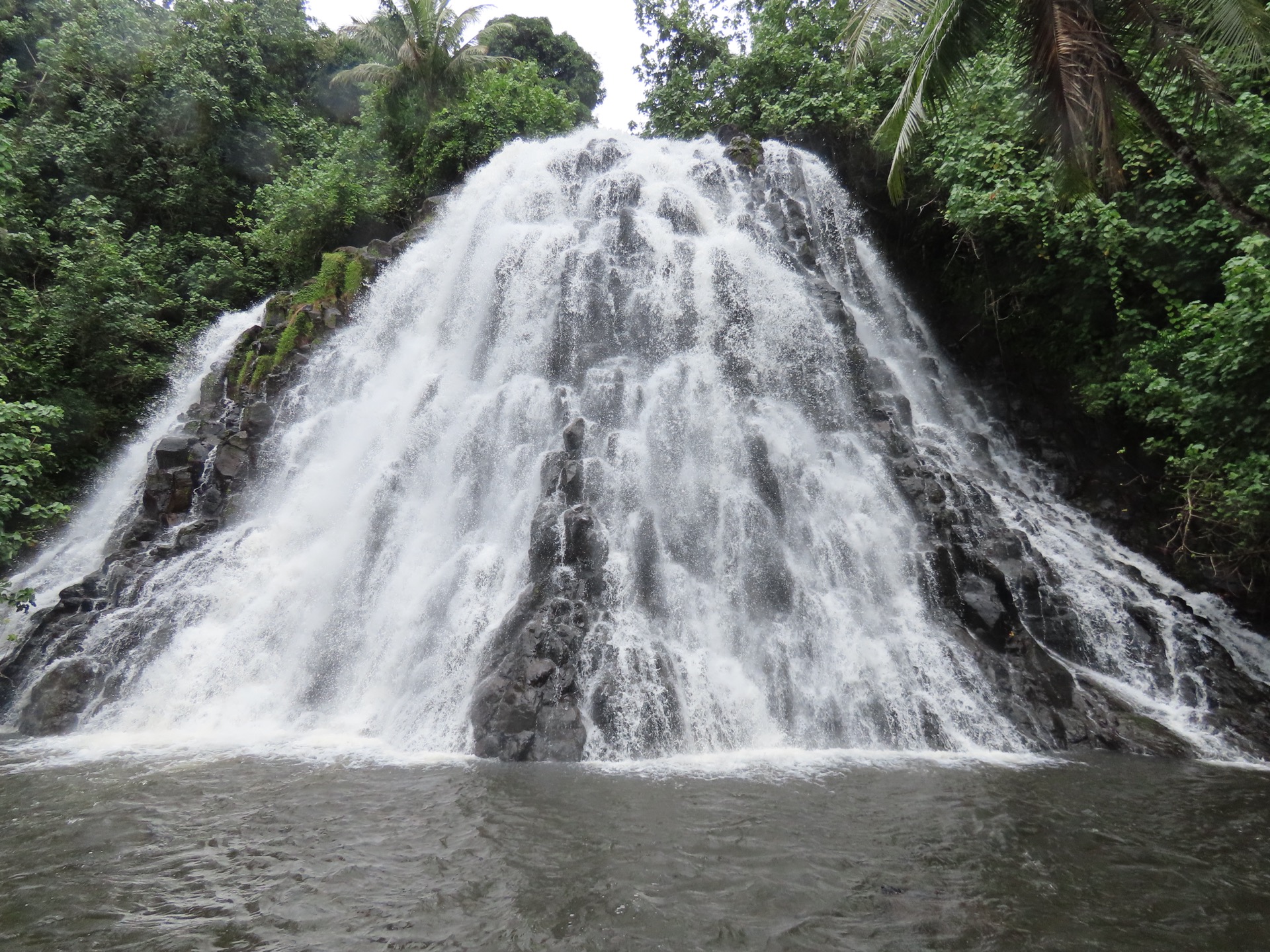 Wikimedia Commons (CC BY-SA 4.0)
 - Pohnpeian Sakau Culture Ongoing, living tradition
A ceremonial drink made from pounded Piper methysticum root — genuinely distinct in plant and preparation tradition from Fijian or Tongan kava. Historically reserved for high-ranking ceremonial occasions (birth, marriage, death) and pounded on stone slabs by men at a nakamal (gathering house); today also served more casually in bars around the island, giving visitors a real, accessible way to experience it.
- Liduduhniap Falls Open year-round, ~20 min from Kolonia
A twin-tier waterfall — an upper 13-foot drop and a lower roughly 26-foot drop into a larger pool — the closest major falls to Kolonia and a popular swimming spot with thatched-hut picnic areas. A real flash-flood safety note exists on-site (a memorial marker for past drownings); check conditions before swimming after heavy rain.
- Mangrove Bay Kayaking Year-round, permit required for the formal reserve
Pohnpei's coastline is ringed by mangrove forest up to 2 miles wide in places, forming tunnel-like paddling channels through the Dausokele estuary and Sokehs Bay area. Both Pohnpei Surf Club and Nihco run guided mangrove-to-reef paddle trips.
- Pohnpei Pepper Farming Ongoing agricultural export
A genuinely prized export, cultivated since 1960 and once marketed globally as a top-tier peppercorn. Production dipped for over a decade before recent revival efforts; current exporters include JADESA and Sei Enterprises, the island's largest pepper farm at over 250,000 square meters under cultivation.
Two of the eight — sakau culture and pepper farming — run without a photo here; both are living cultural/agricultural traditions rather than single visitable sites with strong Commons photo coverage, and this page prefers running them as text over forcing an unrelated stock image.
Questions people actually ask.
What is the Island Hopper flight, and is it really the only way in?
Yes — Pohnpei International Airport has no other realistic gateway. United's Island Hopper (flight UA154/155) is a single Boeing 737 running Honolulu to Guam roughly 3x a week, touching down at Majuro, Kwajalein, Kosrae, Pohnpei, and Chuuk along the way in one continuous flight, with short ground stops passengers can deplane for. It's genuinely one of the most unusual scheduled airline routes in the world, and total block time runs around 14.5 hours — build real flexibility into arrival and departure planning.
Do US citizens need a visa for Pohnpei?
No — and this is a real, distinctive difference from most of the rest of the Pacific covered on this site. The Federated States of Micronesia has a Compact of Free Association (COFA) with the United States: US citizens need only a valid passport, get 30 days on arrival with possible extension, and can technically stay far longer under COFA terms. No visa application, no advance paperwork.
Is Pohnpei Surf Club a real, currently-operating business?
Yes, confirmed active in 2025-2026 through recent guest reviews and named staff. It's the island's primary surf operation, based at Mangrove Bay Hotel, combining lodging with a boat fleet that guides guests to the island's reef passes — also the main dive operator, running trips to a rare black-morph manta cleaning station and outer atolls. Get a current price quote directly, since published rates online are dated.
What's the water like, and when should I go?
Warm year-round, roughly 82-84°F (28-29°C) — no wetsuit needed. Surf season runs October-March, peaking January-February with the most consistent swell. Typhoon season (the correct term in Micronesia, distinct from South Pacific "cyclone") runs roughly June-December, with August-November the highest-risk window — Pohnpei sits toward the lower-exposure southeastern edge of the typhoon belt compared to Guam or Chuuk, but it's a real overlap with the surf season's shoulder months worth planning around.
Disclosure & how this page works.
Straight talk: Some links on this page are affiliate links — if you book through them, Secrets of Surf Travel earns a small commission at no extra cost to you. We only link places and people we'd use ourselves, and coverage is never for sale. Those commissions are what keep this site running and fund the next trip.
Today, the "Search Vrbo rentals" and "Search Booking.com stays" links on this page are affiliate links — every vendor listing link is still a plain courtesy link. Agoda's partner search returned no inventory for this zone, a real platform gap deferred rather than forced. As partnerships with these local businesses come online, more links (and discount codes, where Secrets of Surf Travel benefits from their use) may earn us a commission, and this page will keep saying so plainly. Coverage is never for sale: nobody on this page paid to be here, and nobody can.
Every listing was researched in 2026 and is being verified in person. Prices, hours, and policies change — treat them as strong starting points and confirm directly with the business. And per the No-Reveal Code: you will find no surf spots on this page, ever.