
Papua New Guinea
Stated honestly up front: this is three real but genuinely different places, not three even hubs. Vanimo is the country's one purpose-built surf lodge, running its own village-managed surf access system. Kavieng runs on dive-and-fish lodges with real surf transfers and a liveaboard reaching remote reef breaks over confirmed WWII wreck sites. Wewak has no dedicated surf operator at all — it's the honest gateway to Sepik River culture and PNG's WWII surrender history instead, and this page builds it that way rather than forcing a surf-vendor table that doesn't exist.
Straight talk: Some links on this page are affiliate links — if you book through them, Secrets of Surf Travel earns a small commission at no extra cost to you. We only link places and people we'd use ourselves, and coverage is never for sale. Those commissions are what keep this site running and fund the next trip.
Some vacation-rental search links on this page (marked "Search Vrbo rentals" or "Search Booking.com stays") are affiliate links. Every vendor link below is still a plain courtesy link. As more partnerships come online, more links may earn us a commission; the promise above holds either way.
Current safety context — read this before booking: The US State Department currently rates Papua New Guinea Level 3, Reconsider Travel, citing crime, civil unrest, and piracy risk. That's a real advisory and this page isn't going to soften it. It's also geographically specific: the flagged hotspots are Bougainville, the Highlands region (excluding Mt. Hagen/Goroka), and Port Moresby's Waigani/Parliament area. Vanimo, Kavieng, and Wewak sit outside all three, and are consistently described in travel and surf-industry sources as PNG's safer, more remote coastal destinations. Medical infrastructure outside Port Moresby is genuinely thin, though — this is a lodge-and-guide trip, not an independent backpacker circuit, and that's as much a safety choice as a logistics one. Check the live travel.state.gov advisory close to your travel dates.
Getting There
There is no direct US service to Papua New Guinea — build real time into the itinerary. The realistic routing: a US gateway to Brisbane, Cairns, or Nadi (Fiji), connecting into Jacksons International Airport, Port Moresby (POM) on Air Niugini (which carries about 72% of PNG's international capacity), then a separate domestic leg to Vanimo, Kavieng, or Wewak's Boram Airport. Budget 2-3 days each way including a likely Port Moresby overnight.
Be honest with yourself about reliability: PNG's domestic flight network is genuinely inconsistent — routes get suspended or reduced with little notice. Build in flex days on both ends of the trip rather than a tight connection window.
Documents: US citizens don't need a visa for stays under 60 days; a tourist e-Visa is also available in advance (roughly $100 single entry / $150 multiple entry). Passports should be valid 6+ months beyond entry with a blank page, and immigration may ask for proof of an onward/return ticket and sufficient funds.
Ground Transport
- Driving is on the left.
- No meaningful international car-rental presence exists in Vanimo or Wewak. Kavieng Airport does list Avis and Hertz counters, but expect a limited fleet — don't count on walk-up availability.
- Local transport reality across all three hubs: PMVs (public motor vehicles, shared minibuses/trucks) run the coastal roads and cost 50 toea to a few Kina; lodge transfers handle most surf-specific movement; and banana boats (small dinghies) connect Kavieng to New Hanover and the outer islands.
- This is fundamentally a lodge-transfer zone, not a self-drive one — most visitors arrange ground transport as part of their lodge or charter booking.
When to Go & What to Pack
- The consistent surf season runs October/November through April, driven by Northern Hemisphere winter swell. Vanimo Surf Lodge closes May-October and runs peak season January-March — a real seasonal operation, worth building a booking calendar around rather than assuming year-round access.
- Water temperature sits consistently around 79-86°F (26-30°C) year-round at this equatorial latitude — no wetsuit needed. Reef booties are worth packing given the sand/rock/limestone reef bottoms typical of this region.
- Cyclones are uncommon here — PNG sits just below the main South Pacific cyclone belt, and most systems curve south before landfall. Peripheral wind and rain can still affect boat transfers roughly May-June and October-November, a secondary but real planning consideration.
Good to Know
- Currency is the Papua New Guinean Kina (PGK), divided into 100 toea. ATMs and banks exist in Vanimo and Kavieng town centers; carry cash for remote lodges and markets.
- Emergency numbers: Police 112, Fire 110 — but both are effectively limited to the National Capital District. St John Ambulance, 111, is the more broadly useful number, operating across nearly all provinces including the remote ones this zone covers.
- Language: English, Tok Pisin, and Hiri Motu are the official languages, alongside 800+ living local languages — PNG is the most linguistically diverse country on Earth. Tok Pisin is the most widely used language day-to-day; expect it, plus regional languages, more than English outside lodges and hotels.
- No dedicated surfboard or wetsuit repair shop exists anywhere in this zone. Bring a full travel repair kit (resin, fiberglass, sandpaper) — this is standard advice across all of PNG, not a gap specific to any one hub.
- Massage and wellness services are not present locally in Vanimo, Kavieng, or Wewak — PNG's spa industry is concentrated in Port Moresby hotels. Stated honestly rather than invented for this page.
Respecting the Locals
This zone carries a more literal version of respecting locals than almost anywhere else on this site: the breaks here sit on customary land, and the landowning community itself runs the access system, right down to a hard visitor cap and a daily fee that funds schools, water systems, and healthcare. Add in a country that's home to over 800 living languages, and Wewak's Sepik River villages and Kavieng's Malanggan carving tradition covered further down this page, and the underlying message is the same everywhere you land: you are a guest inside someone else's system, not a customer inside yours.
- Locals get first priority, always. Watch a session before you paddle out. Learn who's who before you learn the wave. Sit inside and catch what they let through — the leftovers are yours, not the set waves.
- Don't backpaddle. Ever. Being in position doesn't make the next wave yours, especially if you didn't wait your turn. If a local wants a wave, let them have it…even if it IS your turn. That older guy who may not be the best surfer out there has probably been surfing that wave before you even sat on a board. If you don't know someone, assume they're local.
- Don't snake. This shouldn't even need to be said, but…dropping in on someone, local or not, is the ultimate disrespect and the fastest way to be sent out of the water. Don't be that guy!
- Say hi. A “howzit,” “whatsup,” or “nice wave,” eye contact, or a nod in the channel — it costs nothing and it's the fastest way from stranger to welcome.
- This is somebody's home, not a resort amenity. The break you're surfing is where a local kid learned to swim, where someone's uncle has surfed for forty years. Act like a guest, because you are one.
- Spend where it actually helps. The food truck, the local shaper, the family-run rental, the local photographer — that's where a surf trip's money should land, not just the chain hotel gift shop. See The No-Reveal Code for why that's the whole premise of this site.
- Leave it better than you found it. Pick up trash that isn't yours. Don't touch reef, wildlife, or cultural sites.
Locals have watched hundreds, if not thousands, of people come and go — some for days, some for months or years — and almost all of them eventually go home. The locals are still there. It takes many, many years to actually become one. Keep that in mind the next time you feel entitled to the same waves they get.
None of this is a secret handshake. It's just how you'd want a guest to act in your own backyard.
The Surf Management Plan
Since around 2009, the Surfing Association of Papua New Guinea (SAPNG) has run a genuinely distinctive, community-based access model for the country's surf breaks. Each break with adjacent customary land has a local surf club, formed by the landowning community itself, that acts as custodian and manages visitor access. Visitors pay a one-time SAPNG membership fee (roughly AUD $50) plus a daily Surf Management Area fee — commonly cited in the AUD $15-30/day range, varying somewhat by area — and each area sets a hard visitor cap; Vanimo's is 20 surfers spread across its breaks, typically working out to 3-6 surfers per break on a given day. The fees are pooled and distributed to the local landowning community at season's end, funding schools, water systems, and healthcare. This system is why the destination runs almost entirely on booked lodges and charters rather than independent travel — the fees are built into package pricing, not paid informally on arrival.
Vanimo
Vanimo, on PNG's north coast near the Indonesian border, is the country's flagship surf hub — built almost entirely around one purpose-built lodge running its own named surf management plan.
Surf Lodges & Guides
- Vanimo Surf LodgeVanimo, on the sandMid/SplurgePNG's one purpose-built surf lodge — 6 beachfront bungalows sleeping 12-16 guests, locally sourced meals from its own market garden, surf fees for the Vanimo Surf Area Management Plan built into the stay. Runs a hard 20-surfer cap across 8 breaks. Closed May-October; peak season January-March. vanimosurflodge.com · Instagram · Map
Stays
- Church guesthouse (Vanimo town)BudgetRoughly K160/night — the realistic budget option for non-surf-lodge travelers passing through town. Map
- Vanimo Beach HotelVanimo townMid-rangeThe only real hotel-style option in town, with Deluxe, Superior, and family bungalow rooms — the practical choice for anyone not staying at the surf lodge itself. Facebook · Map
No Agoda inventory confirmed for Vanimo — a real, honest gap consistent with the town's minimal tourism infrastructure. Vrbo and Booking.com searches above may still surface listings.
Agoda's partner search returned no inventory for Vanimo — a real platform gap, not an oversight. Genuinely thin OTA coverage is typical of this whole zone; Vrbo and Booking.com are the more useful search tools here.
Where to Eat
- Vanimo Surf Lodge restaurant & barOverlooking the lodge's home breakMid-rangeThe genuine dining anchor of the zone — local Kina coffee, South Pacific lager, meals from the lodge's own market garden. vanimosurflodge.com · Map
- Vanimo town marketTown centerBudgetDaily produce and food stalls — the realistic non-lodge eating option in town; standalone restaurants are genuinely scarce here. Map
Other Adventures
- Waterfall hikesBudgetOrganized through Vanimo Surf Lodge, ranging 200m to 2km, medium-hard difficulty.
- GT and game-fishing chartersMid-rangeRun alongside the lodge's surf operation.
- Wutung border day tripBudgetSee Local Secrets.
Kavieng
Kavieng, capital of New Ireland Province, runs on a real but different model than Vanimo — dive-and-fish resorts with surf transfers, plus one dedicated liveaboard, rather than a single beachfront surf lodge. Diving is genuinely the stronger draw here: 20+ recognized sites and confirmed WWII aircraft wrecks sit right in the harbor.
Surf Lodges & Guides
- Lissenung Island ResortPrivate island, 10 min by boat from KaviengMid/SplurgeMax 14 guests, 3 boats, exclusive-access agreements to several reef breaks other operators don't reach. Surf transfers around PGK 480/person/day including guide and snacks, plus a PGK 30/day local community surf fee. lissenung.com · Instagram · Map
- Nusa Island RetreatNusa Island, 10 min by boat from KaviengMid-range11 bungalows across Standard and Premium tiers, airport pickup included, the broadest activity mix (surf, dive, snorkel, fish) at a lower bar to entry than Lissenung. nusaislandretreat.com · Instagram · Map
- PNG SurfarisKavieng-based liveaboardSplurge9-day charters aboard the 23m PNG Explorer (8-10 guests), reaching remote New Hanover/New Ireland reef breaks land-based lodges can't access, with an onboard dive compressor and fishing gear. pngsurfaris.com · Instagram · Map
Stays
- Kavieng Niu LodgeBudgetBackpacker-style shared rooms up to premier rooms. Map
- Kavieng HotelMid-rangeSelf-contained, deluxe, and premier rooms, air-con, balconies. Map
No Agoda inventory confirmed for Kavieng — a real, honest gap. Vrbo and Booking.com searches above may still surface listings.
Where to Eat
- Kavieng Main MarketForeshore, town centerBudgetDaily produce, fresh and smoked fish, mud crab, and local specialties like sago slice and tapioca coconut slice — the real, daily food scene here. Map
Beyond the market, dining runs through hotel restaurants rather than standalone establishments — no independently confirmed non-hotel restaurant names turned up in research, so this page doesn't invent any.
Other Adventures
- Kavieng harbor divingMid-range20+ recognized dive sites, coral walls, and drift channels with 15-30m visibility — see Local Secrets for the WWII wreck history.
- Village and land toursBudgetRun through Lissenung Island Resort. lissenung.com
Wewak
Stated plainly: Wewak has no dedicated surf lodge or guide operation that turned up in research, despite general references calling it "up and coming" for surf. Rather than force a surf-vendor table that doesn't exist, this page builds Wewak as what it genuinely is — the real gateway to East Sepik River culture and a direct piece of PNG's WWII surrender history, worth including in this zone for travelers extending a Vanimo or Kavieng trip inland.
Stays
- In Wewak Boutique HotelWewak Hill, overlooking the Bismarck SeaMid-rangePrivate facilities, A/C, two on-site restaurants, and local East Sepik artefacts displayed on-property. inwewak.com · Map
- Wewak Guest House / Wewak BackpackersBudgetThe realistic budget tier for town. Map
- Ambunti LodgeUpriver, Sepik RiverMid-rangeThe practical base for Sepik River trips and the annual Crocodile & Arts Festival. Map
No Agoda inventory confirmed for Wewak — a real, honest gap. Vrbo and Booking.com searches above may still surface listings.
Where to Eat
- Cocoa Café & Vanilla RoomIn Wewak Boutique HotelMid-rangeBreakfast/lunch at Cocoa Café, dinner at Vanilla Room — the town's real sit-down dining option. inwewak.com · Map
- Taun MarketEnd of Wewak's main streetBudgetLocal produce, bilums, and baskets. Map
Other Adventures
- Sepik River cultural toursAngoram, Pagwi, Tambanum, Kopar villagesMid-rangeSee Local Secrets.
- Muschu & Kairiru Island tripsShort boat rides from Wewak's pierBudgetReef snorkeling, hiking, and scattered WWII relics — no dedicated dive shop confirmed on either island, arrange through a Wewak lodge.
Local Secrets
Eight non-surf reasons this zone rewards the curious, spanning all three hubs — a UNESCO-recognized carving tradition, WWII wrecks resting in a working harbor, and the actual site of Japan's formal surrender in New Guinea.
- Malanggan Carving Tradition Year-round, New Ireland Province; village festivals typically in May
A UNESCO-recognized funerary carving and ceremony tradition unique to New Ireland, viewable via Kavieng-area markets and occasional village festivals. The carvings are made for specific memorial ceremonies and traditionally destroyed or left to decay afterward rather than kept as permanent art — worth understanding before treating any example as a simple souvenir.
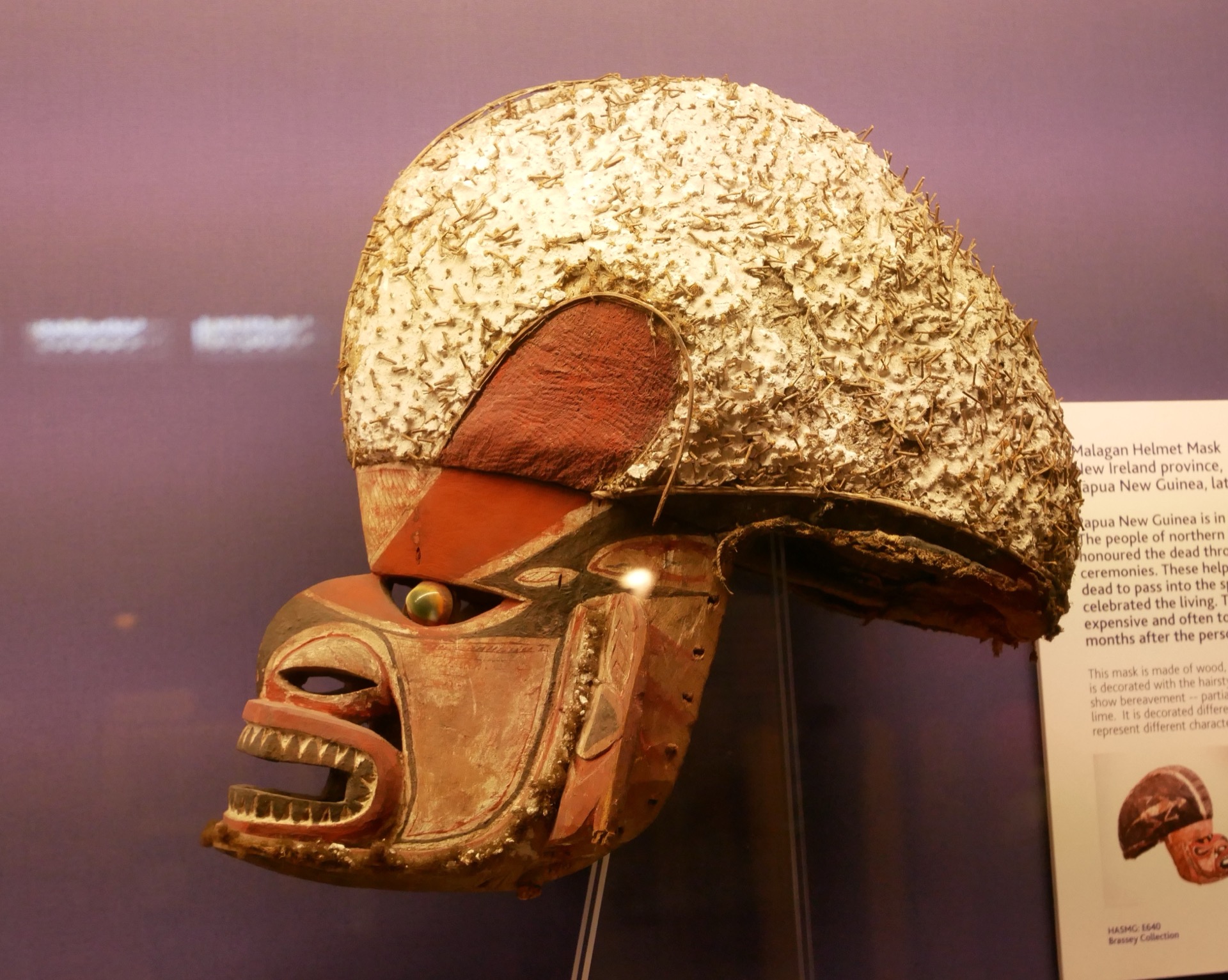 Wikimedia Commons (CC BY-SA 4.0)
 - Kavieng Harbor WWII Wrecks Year-round, weather permitting
Six confirmed WWII aircraft wrecks rest in and around Kavieng harbor, including Japanese "Jake" seaplane and "Pete" floatplane wrecks and a RAAF PBY Catalina — reachable through the harbor's dive operators alongside 20+ recognized reef and wall dive sites. Walkable foreshore relics (gun emplacements, memorial plaques) sit right in town.
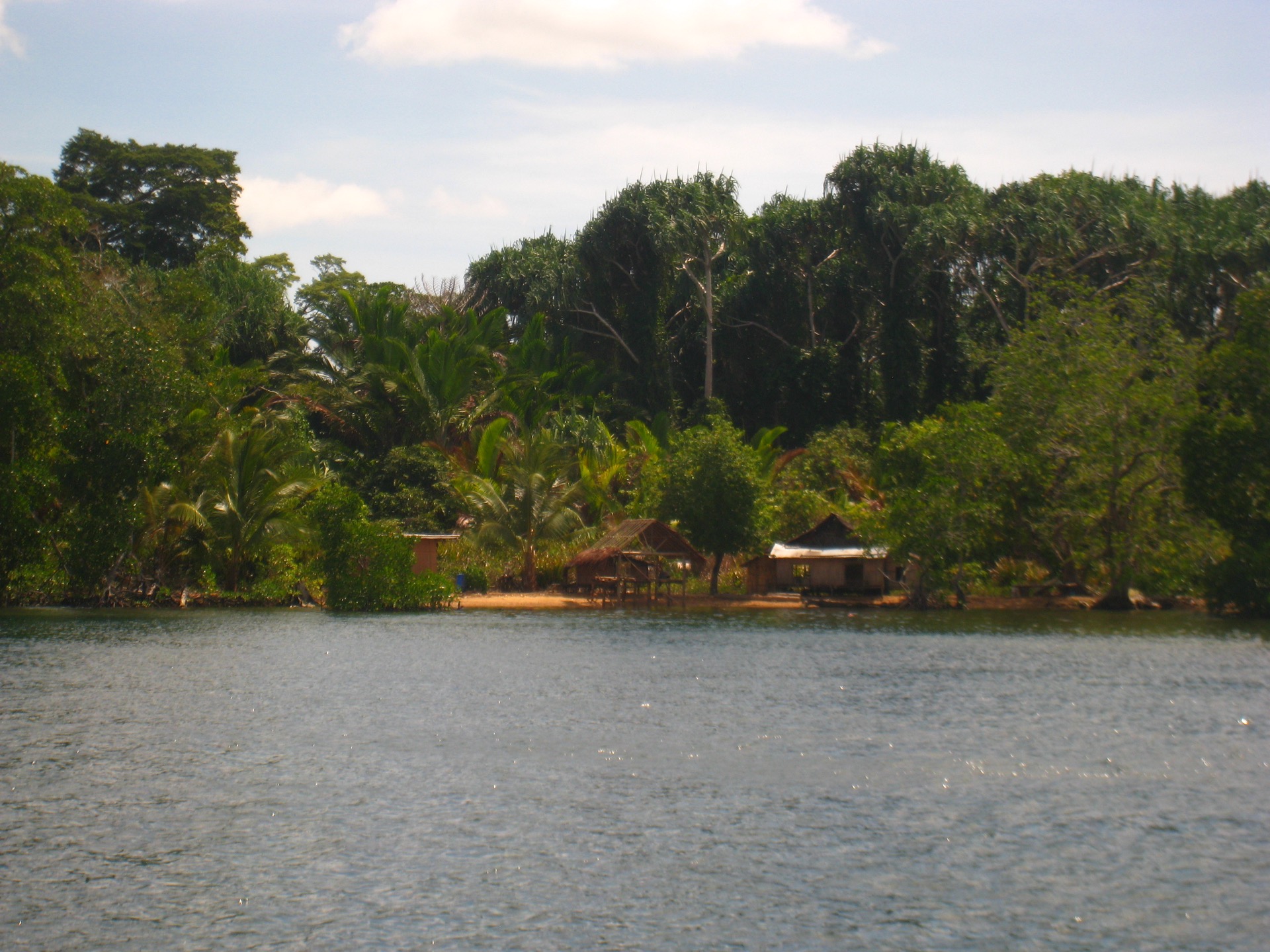 Wikimedia Commons (CC BY-SA 2.0)
 - Cape Wom International Memorial Park Open year-round, 14km west of Wewak
The actual site of Japan's formal surrender in New Guinea — on September 13, 1945, Lieutenant General Hatazo Adachi surrendered to Major General Horace Robertson of Australia's 6th Division here. A pyramidal cairn memorial marks the spot today, with additional commemorative plaques nearby.
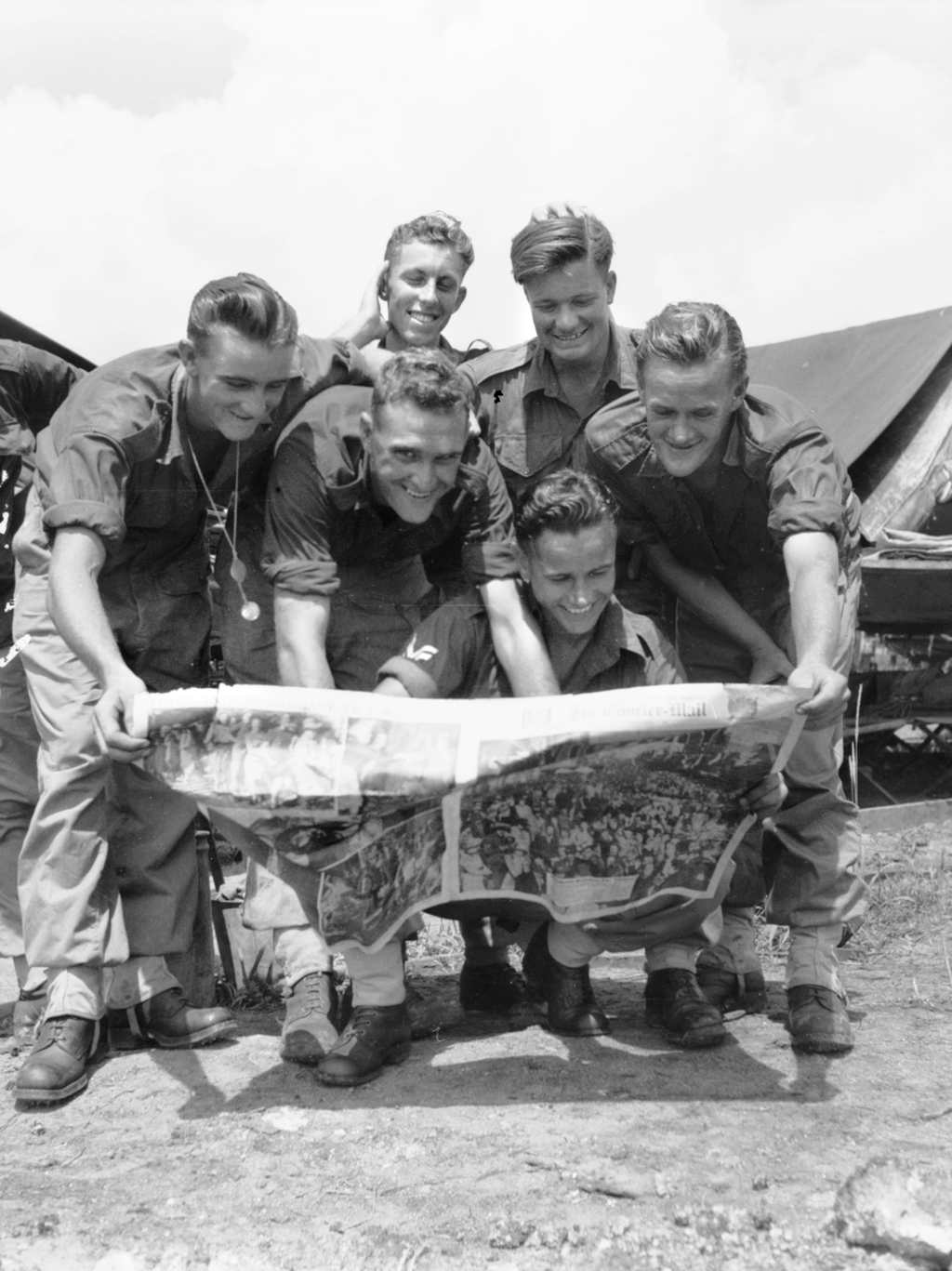 Australian War Memorial via Wikimedia Commons (Public Domain)
 - Sepik River Village Life Year-round, day trips and multi-day tours from Wewak
Pagwi, the main access point to the Middle Sepik, is where motor-canoe fuel and goods move through daily — a real working river-commerce scene, not a staged one. Tours from here reach Angoram, Tambanum, and Kopar villages, home to some of the Pacific's most architecturally distinctive traditional spirit houses (haus tambaran).
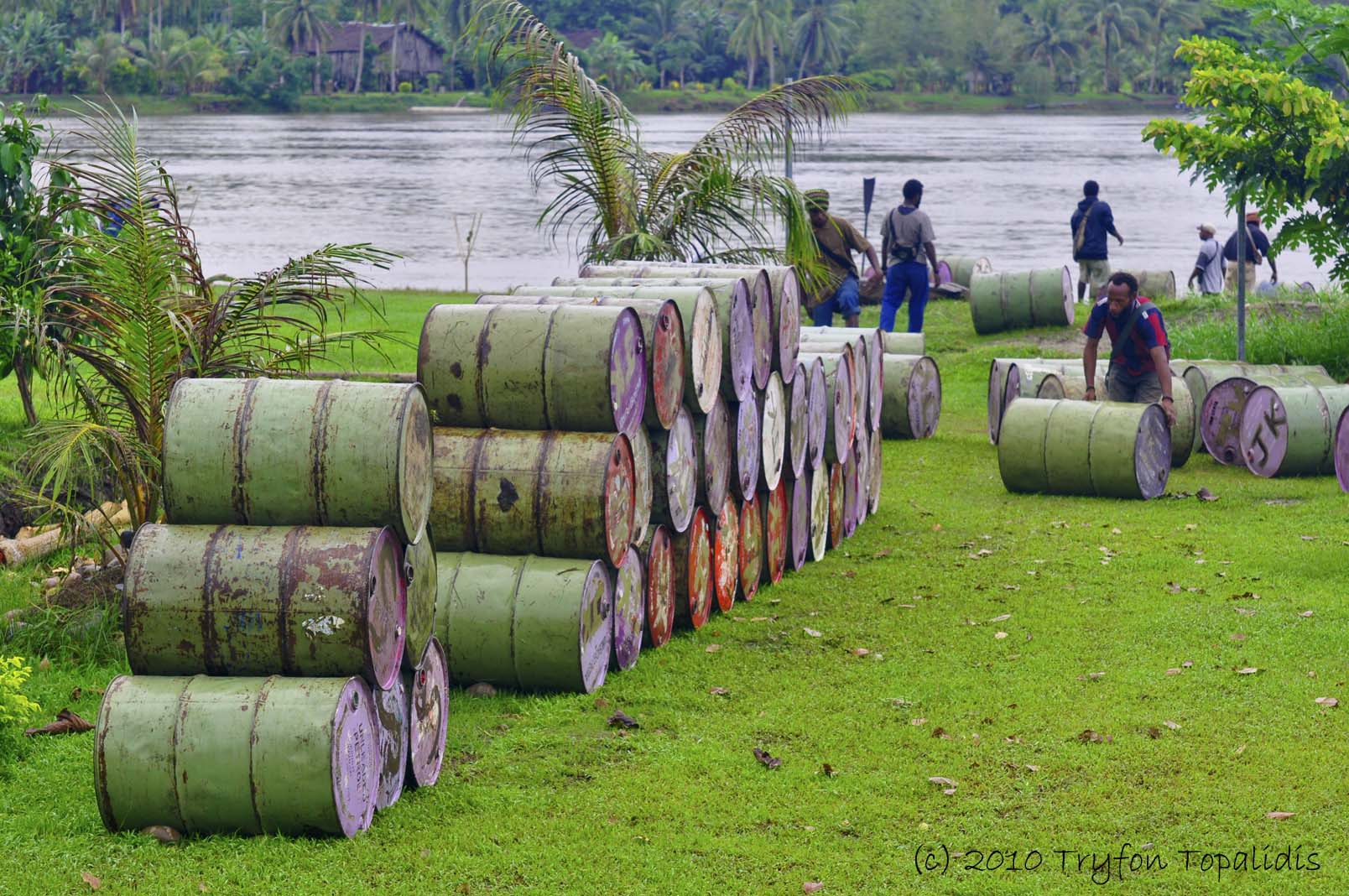 Wikimedia Commons (CC BY-SA 3.0)
 - Maprik & Abelam Yam Culture Yam-harvest sing-sings typically July-August
About 70km inland from Wewak, the Abelam people are renowned for towering, intricately painted haus tambaran facades and a cultivation tradition built around giant yams. A notable connective fact: PNG's own national Parliament House in Port Moresby drew its architectural inspiration directly from haus tambaran design.
- Sepik River Crocodile & Arts Festival Historically held early August, Ambunti
An annual three-day festival honoring the crocodile's central place in Sepik cultural identity, with dance, spirit-house visits, and — handled here factually rather than as spectacle — the region's still-practiced crocodile-scarification rite of passage for Sepik men.
- Wutung Border Crossing & Market Border post staffed 8am-4pm weekdays; market on Indonesian side runs on set market days
PNG's only international land border, with Indonesian Papua, sits about 1.5 hours from Vanimo by taxi. The Indonesian side's Pasar Skouw market draws cross-border trade on its market days — a genuinely unusual "edge of the map" day trip unlike anything at the other two hubs. Crossing over requires an Indonesian visa in addition to the PNG entry already in hand.
- Muschu & Kairiru Islands Year-round, short boat trip from Wewak's pier
Muschu carries real WWII relics — aircraft parts and bunkers from a 1945 Australian commando raid — alongside reef snorkeling and hiking; Kairiru offers similar reef access with no dedicated dive shop on-island. Both are genuine, lightly visited day or overnight trips from Wewak.
Three of the eight — Maprik/Abelam culture, the Crocodile & Arts Festival, and the Wutung border crossing — run without a photo here. Wikimedia Commons coverage of this zone is thin across the board (single digits to low dozens of files in every category checked); rather than force a marginal or wrongly licensed image through, these entries run as text, consistent with how this site handles genuine photo gaps elsewhere.
Questions people actually ask.
Is Papua New Guinea safe to visit for a surf trip?
This needs a direct answer, not a soft one: the US State Department currently rates PNG Level 3, Reconsider Travel, citing crime, civil unrest, and piracy. That advisory is real and shouldn't be waved off. It's also concentrated geographically — the specific flagged hotspots are Bougainville, the Highlands region, and Port Moresby's Waigani/Parliament area, none of which this zone's three hubs sit in or route through in the way a Port Moresby stopover might suggest. Vanimo, Kavieng, and Wewak are repeatedly described in travel and surf-industry sources as PNG's genuinely safer, more remote destinations, precisely because they're outside those hotspots. That said, this is a lodge-and-guide trip, not a walk-up backpacker circuit — medical infrastructure outside Port Moresby is thin, and independent solo travel isn't advised. Check the live travel.state.gov advisory close to your dates.
How does PNG's surf management system actually work?
Genuinely distinctive, and worth understanding before booking. The Surfing Association of Papua New Guinea (SAPNG) has run a community-based access model since around 2009: each surf break with adjacent customary land has a local surf club, formed by the landowning community, that manages access. Visitors pay a one-time SAPNG membership fee (roughly AUD $50) plus a daily Surf Management Area fee (commonly cited around AUD $15-30/day, varying by area) — money that's pooled and distributed to the local landowning community at season's end, funding schools, water systems, and healthcare. Each area also caps visitor numbers; Vanimo's cap is 20 surfers spread across its breaks. These fees are built into lodge and charter packages, not paid informally — which is the real reason this destination runs on booked lodges and guides rather than independent travel.
How do I actually get to Vanimo, Kavieng, or Wewak from the US?
Be honest with yourself about the time commitment: there's no direct US service. Realistic routing is a US gateway to Brisbane, Cairns, or Nadi, connecting to Port Moresby (POM) on Air Niugini, then a separate domestic leg to Vanimo, Kavieng, or Wewak's Boram Airport. Budget 2-3 days each way including a likely Port Moresby overnight, and build in flex days — PNG's domestic schedules are genuinely unreliable and routes get suspended or reduced with little notice.
What's the water like, and when should I go?
Warm year-round at this equatorial latitude, roughly 79-86°F (26-30°C) — no wetsuit needed, though reef booties are worth packing given the sand/rock/limestone reef bottoms in this region. The consistent surf season runs October/November through April, driven by Northern Hemisphere winter swell. Vanimo Surf Lodge itself closes May-October and runs peak season January-March — a real seasonal operation, not a year-round one, worth building a booking calendar around. PNG sits just below the main South Pacific cyclone belt, so direct hits are uncommon, though peripheral wind and rain can affect boat transfers roughly May-June and October-November.
Disclosure & how this page works.
Straight talk: Some links on this page are affiliate links — if you book through them, Secrets of Surf Travel earns a small commission at no extra cost to you. We only link places and people we'd use ourselves, and coverage is never for sale. Those commissions are what keep this site running and fund the next trip.
Today, the "Search Vrbo rentals" and "Search Booking.com stays" links on this page are affiliate links — every vendor listing link is still a plain courtesy link. Agoda's partner search returned no bookable inventory for this zone's three towns, a real platform gap deferred rather than forced; it may be added if that changes. As partnerships with these local businesses come online, more links (and discount codes, where Secrets of Surf Travel benefits from their use) may earn us a commission, and this page will keep saying so plainly. Coverage is never for sale: nobody on this page paid to be here, and nobody can.
Every listing was researched in 2026 and is being verified in person. Prices, hours, and policies change — treat them as strong starting points and confirm directly with the business. And per the No-Reveal Code: you will find no surf spots on this page, ever.