
Okinawa
Okinawa was its own kingdom, and it still feels like it. This is a Ryukyuan place with extraordinary reefs, a distinct kitchen, a castle it has rebuilt five times, and a history it has not finished arguing about — and it is a reef-and-culture zone before it is a surf zone. We're stating that up front because the evidence is countable rather than impressionistic, and because forcing a surf-town template onto this island would read as dishonest to anyone who has been.
Straight talk: Some links on this page are affiliate links — if you book through them, Secrets of Surf Travel earns a small commission at no extra cost to you. We only link places and people we'd use ourselves, and coverage is never for sale. Those commissions are what keep this site running and fund the next trip.
Some vacation-rental search links on this page (marked "Search Vrbo rentals," "Search Booking.com stays," or "Search Agoda stays") are affiliate links. Every vendor link below is still a plain courtesy link. As more partnerships come online, more links may earn us a commission; the promise above holds either way.
Why this page leads with reef instead of surf — the countable version. Okinawa Prefecture runs an official marine-operator safety certification scheme called Maru-yu, with a public directory of certified businesses. Across roughly 45 certified marine operators covering the whole prefecture, the activity tags are diving, snorkelling, pleasure boat, SUP, kayak, parasailing and fishing. Surfing appears in exactly one entry — Kariyushi Beach in Motobu, where it's the eighth item on a resort's activity list. One in forty-five. Corroborating it: the official tourism site maintains a "Dive Sites of Okinawa" page organising the entire prefecture into six diving regions and has no equivalent surf page; Kerama Shotō National Park was designated in 2014 explicitly for its marine values, holding 248 coral species; and the single headline attraction of the whole prefecture is an aquarium. That's the strongest pattern evidence this site has ever had for a reef-first zone. Surf does exist here and we cover it properly below — but the visitor economy, the regulated operator base and the safety infrastructure are all built around reef, coral and diving.
Getting There
Naha Airport (OKA) is the gateway and one of Japan's busiest — the Haneda–Naha route is the third-busiest in the country. Domestic service is extensive, with direct flights to Osaka-Kansai, Fukuoka, Nagoya and many others; Naha is a hub for Japan Transocean Air and Ryukyu Air Commuter with bases for Peach and Solaseed Air. International service runs across Asia — Taiwan, Hong Kong, South Korea, Thailand, Malaysia, Singapore and mainland China. Note for the American or Australian reader: there is no direct long-haul from North America or Europe. You connect, usually via Tokyo, Osaka or Taipei. A separate LCC terminal serves budget carriers, which is a real budget lever on this route.
To the outer islands: flights from Naha to Miyako, Ishigaki, Kume and the Daitō Islands. Ferries from Tomari wharf in Naha reach the Kerama Islands — Tokashiki, Aka and Zamami — plus a daily long-haul sailing to Kagoshima on the mainland. From Ishigaki, daily ferries run to Iriomote, Taketomi, Kohama and Hateruma. The official line is that ferries are often cheaper than flights, which matters on a budget — but they're slower and weather-dependent.
Ground Transport
- Is a car essential? It depends where you're going, and the tourism board says so too. For Naha alone, no. For anything involving Motobu, Onna, Yanbaru or the southern historical sites, yes — buses reach all of them but eat your day. On the outer islands, taxi and bus availability is officially described as limited.
- Yui Rail (the Okinawa Urban Monorail) runs 19 stations over 17km from Naha Airport to Tedako-Uranishi via central Naha and Shuri — 37 minutes end to end, 06:00 to 23:30 daily, every 4–15 minutes. It takes OKICA plus all the major Japanese IC cards. Unlimited-ride day passes are the sensible buy for a Naha day.
- The Okinawa Expressway is a toll road running Naha to Nago, which is what makes a north-coast day trip feasible at all.
- Driving side: left.
Board transport — an honest gap. We could not verify a single Okinawa rental-car company's board policy, roof-rack availability, or any airline's Japan-domestic surfboard fee. Rather than publish a figure we'd be guessing at: confirm directly with your carrier and your rental agency before you fly.
When to Go & What to Pack
- Rainy season runs mid-May to late June — officially characterised as sudden showers rather than all-day rain.
- Typhoon season is June through September, and Okinawa takes direct hits. This is not theoretical: the official practical-information page lists typhoons alongside earthquakes as things to plan for. A typhoon can close the airport, cancel ferries and confine you indoors for two to three days. The tourism board explicitly recommends travel insurance, and so do we.
- Rainfall: Naha averages over 2,000mm a year. The wettest month is September at around 275mm — that's the typhoon signature. Driest is December, around 110mm.
- Air temperature: July–August highs above 31°C; January–February highs around 19–20°C with lows of 14–15°C. Record high 36.0°C, record low 4.9°C.
- Water temperature, officially published: about 21°C in February and nearly 30°C in August. Marine activities run year-round.
- Honest thermal call: June–October, a rash guard or light long-sleeve top — no wetsuit needed, and the official jellyfish advisory independently recommends covering exposed skin, so a long-sleeve rash guard is the right call for two reasons at once. April–May and November–December, a shorty or 2mm spring suit for longer sessions. January–March, a 3/2mm full suit is comfortable — 21°C is warm by most standards but it chills you over two hours, and the tourism board specifically warns that winter northerlies make it feel colder than it is.
- Reef boots, year-round — our advice, not an official recommendation. This is a shallow, sharp limestone-and-coral environment. Kerama alone holds 248 coral species. Boots protect your feet and they protect the reef.
- Also pack: vinegar for the beach (the official jellyfish advisory literally tells you to carry it), high-SPF reef-conscious sunscreen, a light layer for winter, and a waterproof phone case — the prefecture's safety portal recommends carrying a waterproof phone with location services on.
Two hazards here are more consequential than on most reef pages, and both are officially documented.
Habu jellyfish. The prefecture publishes an annual advisory — the current one runs 1 June to 30 September. The species, Chironex yamaguchii, is officially described as highly venomous; stings cause severe pain and have caused several deaths in Japanese waters, with documented severe effects including cardiac arrest and respiratory failure. In official 2025 data it accounted for roughly 41% of dangerous-marine-creature incidents — 81 of 199 cases. Official prevention: minimise exposed skin, stay inside the jellyfish safety nets at netted beaches, carry vinegar. Official first aid: exit the water calmly, pour vinegar liberally on the sting, remove tentacles, cool the area with ice or cold water, then get to a hospital. The netting is real infrastructure — many managed beaches enclose their swimming area — but the official message is precisely that you cannot assume it's there.
Reef currents. The prefecture's marine safety portal treats rīfu karento as a headline hazard and publishes dedicated instructional video on recognising and responding to it. Their guidance in short: wear a life jacket, never swim alone, and choose a beach that actually has lifeguards. Their most sobering published statistic: about 90% of ocean accidents in Okinawa occur at unmonitored beaches — and popular does not mean supervised. Prefecture-run beach-picker tools exist for exactly this reason.
And on land, briefly: the habu pit viper is endemic to the Ryukyus, inhabits the larger islands including Okinawa main island but avoids the smaller coral islands, favours the transition zone between forest and cultivated fields, and shelters in rock walls, tombs and caves. Mostly nocturnal. The honest proportion is this: fatality is under 1% with prompt medical care, but 6–8% of bite victims suffer permanent disability — that second figure is the reason to take it seriously rather than the first. For Yanbaru hikers and anyone poking around old stone walls: stay on paths, don't reach into crevices, use a light after dark, and get to a hospital immediately if bitten.
Emergency numbers, because they matter here: 118 is the Coast Guard — free, and the one that counts in this zone. 119 ambulance and fire, 110 police. AEDs are available at most convenience stores across Okinawa.
Good to Know
- Currency: Japanese yen. Electricity: Type A plugs, 100V, 60Hz. Tipping: not customary.
- Cash: officially, cards and contactless are widely accepted in urban areas, but many small shops and businesses in rural areas and on small islands are cash only. Draw yen before heading north or out to the islands.
- Language: Japanese is what's spoken day to day, though Ryukyuan is a separate language rather than a dialect — see Local Secrets. The prefecture runs a multilingual contact centre plus tourist information centres with English support. English gets you through Naha, the airport, major hotels and established dive operators; beyond that, translation apps earn their keep.
- English availability is the weakest dimension in this whole page, and we've marked it honestly rather than optimistically. Of everything we verified, nine businesses affirmatively advertise English: OTS Rent-a-Car, Source Surf & Import, Surf Side Service Hi-Suy, North Ocean Blue, SEAWALL HOSTEL, Almont Hotel Naha Kenchomae, Ryukyu Glass Village, Ya-Chai Chura in Onna, and Minshuku Rakutenya on Ishigaki. Zuisen Distillery gets partial credit for English subtitles on its tour film. Everything else is marked unconfirmed, which in practice usually means Japanese-only. For a reef-and-culture zone aimed at foreign visitors, those nine are the spine of a genuinely usable itinerary.
- Tattoo policies here are unverified. Japan-wide, many bathhouses and hotel pools restrict visible tattoos, but we could not confirm Okinawa-specific onsen, pool or beach rules from any source and won't state a practice we haven't evidenced. Ask ahead.
Respecting the Locals
Okinawa was its own kingdom, and Ryukyuan is a genuinely separate language from Japanese, not a dialect — a distinct culture and history this island hasn't finished arguing about, with a castle it has rebuilt five times because that history keeps mattering. This is a reef-and-culture zone before it's a surf zone, and the reef itself — 248 coral species in the Kerama Islands alone — is as much a part of what deserves respect here as any lineup. Treat the culture and the coral with the same seriousness this page treats the water hazards.
- Locals get first priority, always. Watch a session before you paddle out. Learn who's who before you learn the wave. Sit inside and catch what they let through — the leftovers are yours, not the set waves.
- Don't backpaddle. Ever. Being in position doesn't make the next wave yours, especially if you didn't wait your turn. If a local wants a wave, let them have it…even if it IS your turn. That older guy who may not be the best surfer out there has probably been surfing that wave before you even sat on a board. If you don't know someone, assume they're local.
- Don't snake. This shouldn't even need to be said, but…dropping in on someone, local or not, is the ultimate disrespect and the fastest way to be sent out of the water. Don't be that guy!
- Say hi. A “howzit,” “whatsup,” or “nice wave,” eye contact, or a nod in the channel — it costs nothing and it's the fastest way from stranger to welcome.
- This is somebody's home, not a resort amenity. The break you're surfing is where a local kid learned to swim, where someone's uncle has surfed for forty years. Act like a guest, because you are one.
- Spend where it actually helps. The food truck, the local shaper, the family-run rental, the local photographer — that's where a surf trip's money should land, not just the chain hotel gift shop. See The No-Reveal Code for why that's the whole premise of this site.
- Leave it better than you found it. Pick up trash that isn't yours. Don't touch reef, wildlife, or cultural sites.
Locals have watched hundreds, if not thousands, of people come and go — some for days, some for months or years — and almost all of them eventually go home. The locals are still there. It takes many, many years to actually become one. Keep that in mind the next time you feel entitled to the same waves they get.
None of this is a secret handshake. It's just how you'd want a guest to act in your own backyard.
The Reef — Dive & Snorkel Operators
Every operator in this section is prefecturally certified under the Maru-yu scheme, meaning they've met a government safety standard — an unusually strong provenance, better than any review-site listing. One honest caveat: the official directory's detail pages are JavaScript-rendered and mostly wouldn't yield contact details to us, so for most of these we have a verified name, verified area and verified activity type, but no verified phone or website. We're not going to guess at domains. The directory itself is a legitimate and checkable contact path, and arguably a better one, since it also shows you the safety certification. Price tiers: confirm on the ground — no pricing was published and we won't estimate.
Officially, Okinawa's diving is organised into six regions: main island, Kerama, Kume, Miyako, Yaeyama and Yonaguni. The marine life the prefecture highlights: sea turtles, manta rays, hammerhead sharks, and humpback whales on the Kerama watching season. The underwater terrain runs to arches, crevasses, tunnels, caves, coral gardens, submarine thermal springs, and the disputed "underwater ruins" off Yonaguni.
Central — Chatan, Ginowan & Naha
- Alpha Dive OkinawaChatanDiving. Maru-yu certified.
- DUNK DIVING ENTERTAINMENTNahaDiving and snorkelling. Maru-yu certified.
- BlueOriginsGinowan MarinaSnorkelling and boat. Maru-yu certified.
- Marine Club Berry — Naha branchNaha, also running to KeramaDiving, snorkelling, boat, parasailing. Maru-yu certified.
- Marine StarNaha, also KeramaDiving and snorkelling. Maru-yu certified.
- PMC / Pirates Marine ClubNaha, also KeramaThe widest activity list of the Naha operators — diving, snorkelling, boat, SUP, kayak and water ski. Maru-yu certified.
- D's Pulse OkinawaNaha / Kerama / north / centralDiving and snorkelling across four areas. Maru-yu certified.
- Paradise ClubNaha / Kerama / northDiving and snorkelling. Maru-yu certified.
- Chatan Umibito no KaiCentralBoat, snorkelling, fishing, parasailing. Maru-yu certified.
- Okinawa Kanko Sea Cruise Co.CentralBoat and snorkelling. Maru-yu certified.
- Muto SensuiCentralDiving and snorkelling. Maru-yu certified.
- NALUKOA Okinawa Marine ServiceCentral, also KeramaSnorkelling, boat, SUP, fishing. Maru-yu certified.
North — Onna, Motobu, Nago & Kouri
- Okinawa Diving CenterOnnaDiving and snorkelling. Maru-yu certified.
- Okinawa Blue Co.OnnaDiving and snorkelling. Maru-yu certified.
- Blue Ocean Co.OnnaDiving, snorkelling, boat, kayak. Maru-yu certified.
- X-TRIPMotobuDiving, snorkelling, boat, parasailing. Maru-yu certified.
- ZanmarineKouri IslandDiving, snorkelling, boat, SUP. Maru-yu certified.
- Alguide OkinawaMotobuSnorkelling, boat, SUP, kayak. Maru-yu certified.
- Ocean Style Co.MotobuBoat, snorkelling, SUP, parasailing. Maru-yu certified.
- Seven Oceans ClubNorthDiving and snorkelling. Maru-yu certified.
- Marine Club UMINorthDiving and snorkelling. Maru-yu certified.
- Marine Club NagiNorthDiving, snorkelling, boat. Maru-yu certified.
- Marine Club Berry — Kise branchNorthDiving, snorkelling, boat, SUP, parasailing. Maru-yu certified.
- Marine Club Berry — Kanucha branchCentral/northDiving, snorkelling, boat, kayak. Maru-yu certified.
- Pink Marlin ClubNorthDiving and snorkelling. Maru-yu certified.
- MalDiveNorthDiving and snorkelling. Maru-yu certified.
- BlueQuest.OKINAWANorthern and central, multiple basesSnorkelling, boat, diving, SUP, parasailing. Maru-yu certified.
- Sea World Ltd.Naha / north / southSnorkelling, boat, parasailing. Maru-yu certified.
- Eco Tour PukapukaHigashi VillageBoat. Maru-yu certified — and one of the very few certified operators in the far-north Yanbaru area.
Resort-Based Marine Operations
- The Busena TerraceNorthLuxuryDiving, snorkelling, boat, beach, SUP. Maru-yu certified.
- Kariyushi BeachMotobuMid–LuxuryDiving, snorkelling, boat, beach, SUP, kayak, surfing, parasailing. Maru-yu certified — and notable as the single entry in the entire certified directory that lists surfing at all, where it sits eighth on the activity list.
- Manza BeachOnnaLuxuryBeach and fishing. Maru-yu certified.
Surfing Here
Okinawa surfs in one place. That's the finding, and it's more interesting than an absence. We verified nine surf businesses across the whole prefecture — and seven of them sit inside a roughly three-kilometre stretch of the Chatan and Sunabe coast, most on or within two minutes of the seawall that shore divers use as their main entry. The other two are both in Itoman, in the south. Yomitan and Ginowan returned nothing despite being searched directly in Japanese. There is no surf business anywhere in Onna, in the north, or on Ishigaki.
Two details make the shape of it clearer. Ding repair is a stronger category here than surf schools — there's a dedicated repair factory with a published price list, and three of the other shops repair as well. A place with four repair benches and one dedicated school is a place with a resident surfing population, not a visiting one. And most usefully, one operator states the constraint on their own site: rideable windows are typically only two to three hours around high tide, because the whole coast is reef. That's a first-party admission that surfing here is tide-gated and technical, and it's the single most useful sentence we found for this zone.
Chatan & Sunabe — where it all is
- Source Surf & ImportMiyagi 1-56, Chatan — on the Sunabe seawallMid-rangeEnglish: yes — genuinely bilingual site. For an English-speaking visitor this is the single most useful surf contact in Okinawa. Operating since 1994, doing ding repair, custom board orders (VJ Australia, Rock Dance, Kazuma Hawaii), SUP sales and rental, gear and apparel — sitting directly on the seawall. 12:00–20:30 daily, closed Wednesdays. Phone 098-936-6466.
- North Ocean BlueKitamae 251-6, ChatanMid-rangeEnglish: yes. The most complete surf operation on the island — instruction from beginner through experienced, custom shaping and board repair, guiding across all of Okinawa, custom wetsuit orders, SUP, and its own guesthouse. 60-minute private instruction ¥8,500, group ¥7,500 per person, all inclusive of gear, insurance and instruction. Reservation only. They're also the operator honest enough to publish the two-to-three-hour tidal window on their own site. Phone 098-989-7579.
- Surf Side Service Hi-SuyHamagawa 176-S288, ChatanMid-rangeEnglish: yes — English site and English booking system. Instructors hold ISA, NSA and SUPA certifications, the only operator in the zone publishing coaching credentials. Small-group surf instruction ¥9,800, SUP ¥9,800, board rental ¥5,000, plus snorkelling, whale watching and private boat charter, and accommodation. Online booking calendar. Phone 098-926-1030.
- Island Break OkinawaMiyagi 1-541, ChatanMid-rangeOver 40 years in Chatan — the oldest surf business in the zone. Owner-operated: Mr. Maeshiro works the counter with his two sons. Shop plus school, with beginner instruction including instruction and wetsuit. Cards, PayPay, parking. Phone 098-926-0717. English unconfirmed.
- DRIVE SURFBOARD — Okinawa FactoryHamagawa 158, ChatanBudget–MidThe zone's dedicated ding-repair factory, working factory-direct at flat rates regardless of board brand: small resin damage from ¥800, nose cracks from ¥4,000, snapped boards from ¥6,000, fin replacement ¥8,000–10,000, with epoxy 1.5–2× more. Typical turnaround 5–8 days, faster negotiable. 10% off orders over ¥25,000. No English advertised — phone or DM in Japanese. Phone 080-2791-3397.
- Haibi Surfing SchoolHamagawa 158-S279, ChatanMid-rangeListed as a surf shop and school. Note honestly: this shares a phone number and street address with Drive Surfboard above, so these are almost certainly one operator running a school and a repair bench under two names. Treat them as one business with two functions.
- Snoopy's Surf Shop — ChatanMihama 9-7, inside American VillageMid-rangeOpened 1 April 2025. Be clear on what this is: a Hawaii-originated surf-lifestyle retail brand — surf gear alongside apparel, homeware, Hawaiian snacks and Peanuts merchandise — not a core surf shop or school. Good for a leash or a souvenir; not where you go for a board or a instruction. 11:00–20:00 daily, year-round.
Naha & the South
- Snoopy's Surf Shop — NahaMatsuo 2-3-13, NahaMid-rangeThe Naha branch of the same lifestyle retail brand. Weekdays 12:00–20:00, weekends from 11:00, year-round. Phone 098-860-8181.
- OKINAWA SURF MONKEYShiohira 773-7, ItomanMid-rangeSeven minutes by car from the Naha Airport expressway, and one of only two surf operators in the south. Beginner courses and level-up instruction with video analysis, guided SUP cruising, long and short board rental, and board repair from minor dings to major breaks. 10:00–17:00, irregular closing days, three parking spaces. Phone 090-1179-6281. Japanese-only site.
- YES SURF OkinawaShiozaki-cho 2-1-14, ItomanMid-rangeCurrent status flag: as of 2026 the shop's own site states that surf and bodyboard instruction and board rental are suspended for the time being — only SUP and Wing Foil remain bookable. Treat it as a retail and gear shop, not a school, until that changes. Stocks NSP, Rich Pavel, Mandala, Furrow Surf Craft, Michael Miller, Seea, Softech and Tyler Warren, sells repair consumables, and offers board storage. English site option. 11:00–18:00, closed Wednesdays. Phone 098-994-5633.
Stays
Chatan & Sunabe — the water corridor
- SEAWALL HOSTELMiyagi 1-24, ChatanBudgetEnglish: yes. The single best-placed budget bed in the zone for anyone getting in the water — two minutes' walk to the seawall, which is both the main shore-dive entry and the main surf break of central Okinawa. Mixed and female dorms using custom pod beds with privacy partitions, plus compact private rooms. 45 minutes from Naha Airport, three minutes from American Village. Phone 098-988-5725.
- AIEN COFFEE & HOSTELMinato 6-9, ChatanBudgetHostel-and-coffee-roastery hybrid, open until 23:00, within walking distance of the seawall strip. Cards and PayPay. Phone 098-989-1430.
Naha
- Okinawa Guesthouse Little AsiaTsuboya 1-7-1, NahaBudgetDorms ¥800–1,200 and private rooms ¥2,000–2,500 — the cheapest verified beds in Naha. Sits inside the covered Heiwa-dori arcade, so you reach it dry in the rain; five minutes' walk to Kokusai-dori, ten from Makishi monorail. Rooftop bar, monthly long-stay rates. Reception 09:00–22:00. Phone 098-862-3446.
- Guesthouse FUKUTOMIMakishi 3-2-46, NahaBudgetMinshuku-classified, 218 metres from Kokusai-dori, inside the same covered arcade as Little Asia. Cards accepted. Phone 098-861-8896.
- Lohas VillaMakishi 2-1-6, NahaBudget24-hour reception, 128 metres from Kokusai-dori, and repeatedly cited as among the very cheapest beds in Naha. The guest rating is modest — treat it as rock-bottom price rather than comfort. Phone 098-867-7757.
- THE KITCHEN HOSTEL AOKumoji 1-4-1, NahaBudgetNon-smoking, about a kilometre from Kokusai-dori, cards and PayPay. Phone 098-863-8156.
- Naha West InnNishi 1-16-7, NahaBudget–Mid150 rooms across a residence-type main building and a hotel-type new wing. About 10 minutes by car from the airport, eight minutes' walk from Asahibashi Station, 15 minutes to Kokusai-dori and close to Naminoue Beach. Eleven-time TripAdvisor Travellers' Choice winner. Phone 098-862-0048.
- Almont Hotel Naha KenchomaeKumoji 1-3-5, NahaMid-rangeEnglish: yes — plus Chinese and Korean. Has a large public bath using artificial hot-spring water, a rarity in central Naha and a genuinely good post-water-day soak. All non-smoking, three minutes from Kenchomae Station. Roughly ¥7,450 per person room-only up to ¥21,640 with breakfast. Phone 098-866-3811.
An honest coverage gap: the ¥12,000–25,000 mid-range band in Chatan and Onna is still thin here. We verified budget hostels in Chatan and mid-range business hotels in Naha, but that middle tier on the resort coast is carried mostly by names we couldn't reach a first-party source for. The affiliate searches above will surface more of it than we can vouch for individually.
Eat & Drink
Okinawan food is meaningfully distinct from mainland Japanese and worth real page space. Champuru is the defining local cooking method, with clear Southeast Asian influence — goya champuru, built on bitter melon, is the signature. Okinawa soba is a noodle soup closer to udon than to mainland soba; soki soba is the version topped with stewed pork ribs. Rafute is stewed pork belly, and pork's prominence traces to 17th-century Chinese envoys' influence on local cooking. Umibudō, "sea grapes," is a seaweed served as salad or tempura. Taco rice is a genuine post-war American-influence dish — American burger shops reached Okinawa before they reached the mainland.
And the counter-intuitive fact worth leading with: despite being an island chain, Okinawans eat relatively little seafood compared to other maritime cultures, because heat made preservation hard. Sashimi is not a course-meal staple the way it is on the mainland. The cuisine leans on roots — sweet potato and taro — plus turmeric and Southeast Asian herbs.
Naha
- Makishi Public MarketMatsuo 2-10-1, NahaBudget–MidRebuilt and reopened in its new building in March 2023. The thing to do here is the mochiage system: buy fish or meat from a ground-floor stall, carry it upstairs, and a second-floor shokudō cooks it for you for roughly ¥550 a head — the whole process takes 60–90 minutes. Ground-floor cooking last order 19:45, second-floor food last order 20:00. Closed the fourth Sunday monthly (open daily in December), New Year, Lunar New Year and Obon. No on-site parking. Nine minutes' walk from Makishi monorail. Phone 098-867-6560.
- UrizunAsato 388-5, NahaMid-rangeFounded 1972 inside the Sakaemachi Market warren, three to five minutes from Asato monorail. The reference awamori izakaya of Okinawa and one of the prefecture's officially certified Ryukyu cuisine restaurants, and home of dōru-ten, mashed-bean tempura. 17:30–24:00, open year-round. Cash and major cards. Phone 098-885-2178.
- YunangiiKumoji 3-3-3, just off Kokusai-doriBudget–MidOver 50 years old, on a lane off the main tourist street, doing classic home-style Okinawan set meals rather than tourist-facing izakaya food. Does not take reservations — expect to queue, and go at opening. 12:00–14:30 and 17:00–21:30. Phone 098-867-3765.
- Dachibin Naha KumojiKumoji, Naha — 3 min from Miebashi monorailMid-rangeLong-running izakaya with an Okinawan menu, well rated locally. Opens 17:00, PayPay accepted.
- Kame Kame SobaWakasa 1-3-6, NahaBudgetFounded 1997, started as a yatai, and famous for nankotsu soba — soft-bone rib — at around ¥550. No reservations, and it closes when the pot is empty, typically mid-to-late afternoon, so go before noon. Opens 10:30, closed Sundays. Note it moved from Nishimachi, so old addresses still circulate — Wakasa is current. Ten minutes' walk from Kenchomae. Phone 098-869-5253.
- Shuri SobaShuri, Naha — 4 min walk from Shuri monorailBudgetCarries the noodle-making lineage of the vanished Sakuraya, and rates very highly by Okinawa soba standards across more than a thousand reviews. Sells out and closes early. 11:00–14:00, closed Thursdays and Sundays — the obvious lunch pairing with a Shuri Castle morning. Phone 098-884-0556.
- Sobe SobaSobe 2-37-40, NahaBudgetOpened 2009 in a converted post-war house, with an interior that's a deliberate chanpurū of styles. Tebichi (trotter) soba and soki. 80 tatami seats plus tables, and 40 free parking spaces, which matters enormously in Naha. 11:30–21:00, open all year except New Year and Obon. No reservations. Phone 098-853-7224.
- Kūkō ShokudōNaha Airport, domestic terminalBudgetOkinawan home cooking inside the airport using local ingredients — the standard last-meal-before-flying pick for Japanese travellers, and far cheaper than the airport's tourist restaurants.
- SuumanumēNahaBudgetOn the official prefectural gourmet directory, under the tagline "Okinawa soba you won't tire of eating daily."
Central — Okinawa City & Koza
- Charlie's TacosChūō 4-11-5, Okinawa City — Park Avenue, KozaBudgetFounded March 1956 — the oldest taco shop in Okinawa, trading on Koza's Park Avenue since the era when the island ran on US dollars. This is the most historically load-bearing food listing on the page: American-occupation food culture is the direct ancestor of taco rice, and this is where it starts. Tacos sell out and the shop sometimes shuts before 17:30. 11:00–19:00, closed Thursdays and New Year's Day. Phone 098-937-4627.
One conspicuous hole we'd rather name than paper over: King Tacos in Kin Town — widely described as the birthplace of taco rice — belongs on this page and we could not reach a first-party source to confirm it. Multiple independent Japanese sources describe it as currently operating, and there's a branch in Ginowan near the university. Treat it as very likely real and worth asking a local about, but we haven't verified it ourselves. Restaurant coverage outside Naha is genuinely thin here: one verified venue in Okinawa City and none in Onna, Nago, Motobu or Ishigaki.
Car Rental, Wellness & Photographers
Car Rental
- OTS Rent-a-Car — Rinkū ToyosakiToyosaki 3-37, TomigusukuMid-rangeThe one to lead with for a foreign visitor. Explicitly advertises English-speaking staff across reservation, counter registration and roadside trouble — which is not a small thing when something goes wrong on a Yanbaru road. Free shuttle from Naha Airport, about 20 minutes; free one-way drops between branches; a new fleet with collision-avoidance equipment. 08:00–19:00. Phone 098-856-8877.
- Okinawa Tourist ServiceMatsuo 1-2-3, NahaMid-rangeThe parent travel agency behind OTS Rent-a-Car — the downtown office for bookings, tours and rental arrangements if you'd rather deal with a person than a counter. To 17:30. Phone 098-862-1111.
- Toyota Rent-a-Lease Okinawa — Naha AirportAkamine 2-13-1, NahaMid-rangeThe prefectural Toyota franchise; their separate Naha Airport Seaside branch is the most-recommended airport pickup in Japanese comparison guides.
- Times Car Rental — Naha AirportKagamizu 457-1, NahaMid-rangePhone 0570-00-1536.
- Nippon Rent-A-Car — Naha Airport ToyosakiToyosaki, TomigusukuMid-rangeAlso runs Naminoue and Kenchomae branches, with an airport shuttle pickup point published on their Okinawa page.
- Fuji Rent-a-Car — NahaŌnoyama 26-7, NahaBudgetIndependent local operator 2.8km from the airport that usually undercuts the national chains. To 20:00, PayPay accepted. Phone 098-858-9330.
- Quattro Co., Ltd. — OkinawaNakachi 315, TomigusukuBudgetSmall independent 3km from the airport. To 18:00, PayPay. Phone 098-851-2525.
- Ekichika Rent-a-Car — Naha AirportTabaru 4-3-13, NahaBudgetVery small operator — the registered address is an apartment unit, so treat it as a lean local outfit rather than a counter operation. 09:00–21:00 daily. Phone 080-1741-4135.
- Naha Airport Rental Car Information DeskNaha Airport, 1F arrivalsNot a vendor, but the practical on-arrival fallback — the airport's own desk directs walk-ups to whichever operator has stock. 09:00–19:00. Phone 098-852-0725.
Massage, Spa & Wellness
- Asian Relaxation Ya-Chai Chura — OnnaSeragaki 706-5-403, OnnaMid-rangeEnglish: yes — English menu and booking pages. That makes it the wellness listing to lead with for a non-Japanese-speaking reader. Traditional Thai massage and aromatherapy oil work with ocean views from the treatment space, in the middle of the Onna resort strip — so it's the practical after-dive or after-drive stop if you're staying at Busena, Manza or Kariyushi. Phone 098-966-2775.
- Iyashika — Yomitan (outcall)Namihira 845-4-103, YomitanBudget–MidComes to your accommodation — the useful option if you're in a Chatan hostel or an Onna condo with no in-house spa. All-hand kneading rather than oil work. 60 min ¥5,800, 90 min ¥7,700, 120 min ¥9,300. Travel surcharge ¥500 in Yomitan, ¥1,500 to Chatan or parts of Onna. Phone booking only for outcalls, and same-day cancellation costs the full treatment price. Phone 098-800-2883.
- THE SPA by TIMeSCAPE tanchaTancha 159-2, OnnaMid–LuxuryA spa attached to a three-room hidden-away inn on the Tancha Bay stretch — a very small stay with a full spa is an unusual combination on this coast. Book through their listing or feed; phone and full price list not published.
- Relaxation & Massage GettouAt Rizzan Sea-Park Hotel, Tancha, OnnaMid-rangeIn-hotel spa on the Onna coast, listed on the official prefectural tourism site, with an ocean-view treatment setting. Open to the public as well as hotel guests.
- Spa Mermaid's NapOnnaMid-rangeAmong the top-listed relaxation salons for the Onna area. Note the rebrand — it was formerly Relaxation ALO, so older guides and reviews split across two names. Address and prices not published.
Photographers
- ShimatabistIsland-wide, including Kerama, Kume, Miyako and the YaeyamasMid-rangeA marketplace connecting travellers with local Okinawan photographers rather than a single studio, which is the right structure for a prefecture spread across this many islands. Indicative rate around ¥10,000 an hour, splittable across a group. Couple, family, starry-sky and location work — plus ryūsō portraits in traditional Ryukyu costume, which is the culturally distinctive product here. Primarily Japanese-language booking.
- Keita Tokunaga — Okinawa Family PhotoMain island, island-wideBudget–MidStandard session ¥16,000 for 40 minutes and 80+ delivered photos; wedding ¥20,000; travel fee ¥0–5,000+ by location. 700+ shoots with a 5.0 average across 200+ reviews. Regular locations are Araha Beach in Chatan, Bibi Beach in Itoman, Manza Beach in Onna and Naminoue Shrine in Naha — useful if you want to pick a backdrop before enquiring. Phone 070-5413-1089. Japanese-language.
- Mihara Yū Location Photo StudioMain island, Miyako, IshigakiMid-rangePre-wedding and beach location photography with no travel surcharge to Miyako or Ishigaki, which is genuinely unusual given those are separate flights. Heavy colour retouching is the house style, so look at the portfolio first.
- Ryukyu Gensō Shashin — Shinji KibeMain islandMid-rangeFamily and children's beach location photography, marketed specifically on keeping small children entertained through a shoot.
Culture, Craft & Distilleries
Shuri Castle
- Shurijō Castle ParkShuri Kinjō-cho 1-2, NahaBudgetTime-sensitive and confirmed on the official site: the reconstructed Seiden (main hall) opens to the public on 23 November 2026, following a completion ceremony on the 22nd. Two operational consequences matter more to a traveller than the date itself — entry to the main hall will require advance reservation, and admission prices are being revised at the same time. If you're planning around late November 2026, book the moment reservations open. Until then the park is open and walkable, free and paid zones both operating, but the Seiden is not yet enterable. Free zone 08:00–19:30, paid zone 08:30–19:00 with last tickets 18:30. Management centre 098-886-2020.
Awamori Distilleries
- Zuisen DistilleryShuri Sakiyama 1-35, NahaFreeOne of the two surviving distilleries in Shuri Sanka — the three neighbourhoods below the castle that held the Ryukyu court's exclusive awamori licence. Walking distance from Shuri monorail. The free tour includes a documentary on distillation and kōji technique with English subtitles, plus free tastings of aged kūsu and local-fruit liqueurs. Walk-ins under five people welcome; groups of five or more must book two business days ahead. Mornings are least crowded. Phone 098-884-1968.
- Kūsu-no-Mori ChukoguraIraha 556-2, TomigusukuFreeTen minutes by car from Naha Airport — the easiest distillery to bolt onto an arrival or departure day. The one-hour tour covers a film, the hand-production distillery, their own pottery kiln — they fire the arayaki vessels the awamori ages in, so the craft and the drink sit under one roof — then the wooden ageing warehouse and underground store, ending in a tasting. 09:00–17:30 with guided tours at 10:00 and 14:00, closed Thursdays and 1 January. Booking recommended; same-day by phone only.
- Helios Distillery — NagoKyoda 405, NagoBudgetA 45-minute tour of the second warehouse holding 2,000+ casks, the kūsu gallery and shop renovated in 2023, and a tasting across awamori, whisky, rum and liqueurs — which makes this the most interesting distillery visit for someone who doesn't drink awamori. ¥500 including a souvenir. Tours 11:00 and 15:00 daily, closed Wednesdays though the shop stays open. Reservation required. Phone 0980-50-9686.
- Sakimoto Shuzo at Ryukyu MuraYamada 1347-1, OnnaMid-rangeA Shuri distillery credited with the post-war revival of awamori, now running a visitor site inside the Ryukyu Mura cultural park. The programme bundles a guided walk of the grounds and the distillery, then an awamori blending session in a traditional kominka with brewery staff assisting, and — timing permitting — an eisā performance. Roughly 110 minutes, Monday to Saturday, reservation required. The strongest single culture-plus-drink experience in the zone. Phone 098-963-0208.
Textiles, Glass & Pottery
- Shuri Senshokukan suikaraShuri Tōnokura-cho 2-16, NahaMid-rangePurpose-built as the successor-training home of the Ryukyu Bingata Cooperative and the Naha Traditional Textile Cooperative — because it's the trade bodies' own facility rather than a tourist attraction, this is the most authentic textile experience available to a visitor. Dye-and-weave taster programmes, full bingata courses, full Shuri-ori weaving instruction, plus a gallery and shop. 10:30–18:00, closed Tuesdays. Book through the site; no phone published.
- Ryukyu Glass VillageFukuchi 169, ItomanBudget–MidEnglish: yes. The largest glass workshop in the prefecture, about 25 minutes south of the airport — watch blowers at the furnace, then do it yourself. Glass-blowing from ¥4,400 (reservation needed), accessory-making from ¥4,300, photo frames from ¥3,600, most walk-in with same-day takeaway. Also kintsugi, engraving and painting. On-site museum and restaurant. 09:30–17:30 daily, year-round, admission free, 100 free parking spaces.
- Tōshin-gamaYachimun no Sato, YomitanBudget–MidThe most-documented kiln of the Yomitan pottery village, with a hands-on workshop: you roll clay into a slab, cut to a mould, then decorate freely. Gallery, shop and parking.
- Tsunehide KōbōYachimun no Sato, YomitanBudget–MidKnown for cobalt glazes and decorative technique. Gallery, shop, parking, hands-on experience.
- Yomitanzan-yaki · Yamada ShinmanYachimun no Sato, YomitanBudget–MidDynamic, vividly coloured designs. Gallery, shop, parking, hands-on experience.
- Kinjō Toshio-gama Hiro KōbōYachimun no Sato, YomitanBudget–MidGallery, shop, parking, hands-on experience.
- Nakama TōbōYachimun no Sato, YomitanBudget–MidGallery, shop, parking, hands-on experience.
- Ōmine KōbōYachimun no Sato, YomitanBudget–MidGallery, shop, parking, hands-on experience.
- Issui-gamaYachimun no Sato, YomitanBudget–MidGallery, shop, parking, hands-on experience.
- Takumi-gamaYachimun no Sato, YomitanBudget–MidTraditional yachimun technique, everyday ware.
- Yamamoto KōbōYachimun no Sato, YomitanBudget–MidWorks locally blended clay with particular attention to texture and colour.
- Yomitan Tourism AssociationYomitanCall them to book any of the kilns above — the individual potters largely don't publish phone numbers or hours, and the association is the working route in. Phone 098-958-6494.
History — how we're handling it
The Battle of Okinawa. From 1 April to 22 June 1945, 82 days. The Cornerstone of Peace records 149,634 Okinawan deaths; local authorities put it at at least 149,425 Okinawan people killed, died by coerced suicide, or went missing. Around one in four residents of Okinawa died. We're going to state that and move on rather than narrate a battle on a travel page.
What makes it possible to convey honestly is the memorial itself. The Cornerstone of Peace, at the Okinawa Prefectural Peace Memorial Park on Mabuni Hill in Itoman, is a semicircular stone avenue inscribed with the name of every person who died in the battle — 242,046 names — grouped by nationality and ethnicity, including separate groupings for Chinese, Taiwanese, Korean and Okinawan victims. A memorial that names American and Korean and Taiwanese dead alongside Okinawan and Japanese dead is making a deliberate and generous argument, and describing what the monument does carries the scale of the loss without performing grief on your behalf. The wider park includes a 32-monument Memorial Path, the Okinawa Peace Hall, and individual memorials from every Japanese prefecture. The museum opened in 1975 — three years after Okinawa's return to Japanese sovereignty following 27 years of American administration. That single fact explains a great deal about the island, including taco rice.
The US bases, stated once and not adjudicated. Roughly 26,000 US military personnel are stationed across 31 areas, 13 bases and 48 training sites; base land covers somewhere between about 18% and 25% of the main island depending on the measure, concentrated in central Okinawa, and generates an estimated 4–5% of the island economy. The plan to relocate MCAS Futenma to Camp Schwab at Henoko has been in process since 2005. In the prefectural referendum of 24 February 2019, on the specific question of landfill work at Henoko, 72.15% voted against on 52.48% turnout; the central government stated it respected the result and continued construction, the referendum not being legally binding.
That is a live and contested political issue in Okinawa rather than settled history, and a travel site has no standing to referee it — so we won't. We're also not publishing current construction status or timelines, because we couldn't verify them and getting that wrong in either direction reads as taking a side. What we will say, because it's practical and non-partisan: the base presence shapes central Okinawa's landscape, road layout, aircraft noise and food culture. The American-influenced dining around Chatan and Ginowan is genuinely part of Okinawan food history — taco rice exists because of it. And one thing we won't do is send you to base fence-lines, protest sites or Henoko as sightseeing. Protest camps are not attractions.
The Kerama Islands
Thirty-two kilometres southwest of the main island, reached by regular ferry from Naha's Tomari wharf — day trips and overnights are the normal pattern, which makes Kerama a genuine part of a main-island trip rather than a separate one. Thirty-six islands, four inhabited: Tokashiki, Zamami, Aka and Geruma. Protected as Kerama Shotō National Park since 5 March 2014, specifically for marine values — 248 coral species, heavily Acropora. Also home to the endangered Kerama deer, found only on Aka, Fukaji, Geruma and Yakabi. Humpback whale-watching runs here in season. This is the single best day-or-overnight addition to a Naha-based trip.
Certified Operators
- Acoustic LifeTokashikiSnorkelling and boat. Maru-yu certified.
- Marine House Seasir — Aka IslandAkaDiving and snorkelling. Maru-yu certified.
Several main-island operators listed above also run Kerama trips — Marine Club Berry, Marine Star, PMC, D's Pulse, Paradise Club and NALUKOA all work these waters, which is often the simpler way to dive Kerama if you're based in Naha.
Miyako & the Yaeyamas
These are not part of an Okinawa main-island trip, and blending them into one is the planning mistake to avoid. Ishigaki sits about 411km southwest of the main island; Miyako about 300km. Both need their own flight from Naha. Miyako is geologically different — pure coral limestone, no rivers, drought-prone, and officially described as frequently struck by typhoons. Ishigaki is the transport hub for a separate archipelago with its own ferry network to Iriomote, Taketomi, Kohama and Hateruma, and its own national park. We're covering them here for now with a hard break, and flagging that the Yaeyamas have enough certified operators, their own airport, their own national park and their own culture to deserve their own zone page later.
Certified Operators & Stays
- ISHIGAKI ADVENTURE PiPiIshigaki 144-1, Ishigaki CitySnorkelling, boat, SUP, canoe and night tours, including a seasonal Sagari Bana night-blooming tour and a Yaeyama firefly tour. Maru-yu certified. Note the phone number in the official directory looks like a formatting artifact — Ishigaki numbers use the 0980 area code — so take contact details from the operator's own site.
- IRIOMOTE ADVENTURE PiPiIriomoteSnorkelling and boat. Maru-yu certified.
- Pushii nu Shima Ltd.IshigakiDiving, snorkelling, boat. Maru-yu certified.
- Pushii nu Shima — Kohama branchKohamaDiving, snorkelling, boat, fishing. Maru-yu certified.
- Fusaki Beach ResortIshigakiLuxuryBoat, beach, snorkelling, SUP, kayak, all Maru-yu certified in-house.
- Miyakojima ADVENTURE PiPiMiyakoSnorkelling and boat. Maru-yu certified.
- MARE Leisure Development / JET CRUISEMiyakoBoat and snorkelling. Maru-yu certified.
- Minshuku RakutenyaŌkawa 291, Ishigaki CityBudgetEnglish: yes — the official tourism association listing explicitly states English-speaking staff, which makes it the one budget Ishigaki bed we can affirmatively recommend to a non-Japanese-speaking reader. Central-town minshuku. Phone 0980-83-8713.
- Guesthouse Churayado IshigakijimaŌkawa 204 2F, Ishigaki CityBudgetDorm beds advertised from ¥2,000 — the cheapest verified bed in the Yaeyamas. Free A/C and Wi-Fi, self-catering kitchen, long-stay discounts, and walkable to the ferry terminal for the Taketomi and Iriomote day boats.
- Guesthouse Chura Kukuru IshigakijimaArakawa 23, Ishigaki CityBudgetConsistently the top-ranked Ishigaki guesthouse on both Japanese and international lists. Phone 0980-87-5558.
- Wattaa-ya Aparagi-kanIshigaki City centreBudgetWhole-second-floor private rental, one group only, supermarket a minute's walk away — suits a small crew travelling together.
Coverage on the outer islands is thinner than on the main island and we'd rather say so: Ishigaki has budget beds verified through the official Yaeyama tourism association but no verified mid-range property, and no verified restaurants at all.
Local Secrets
Eight real reasons this zone rewards the curious — a castle rebuilt five times, six endangered languages, and a longevity story whose honest version is better than the marketing.
- Shuri Castle, and the fact that this is the fifth rebuild Shuri, Naha — main hall opens to the public 23 November 2026
The castle burned on 31 October 2019, destroying four main structures. Reconstruction began in February 2020, roof-tile restoration in July 2024, and the main hall's exterior was restored through 2025. But the deeper story is the one worth carrying: this is the fifth destruction and rebuild — 1453, 1660, 1709, 1945, and 2019. A building Okinawans keep rebuilding is a far more interesting thing than a building that burned.
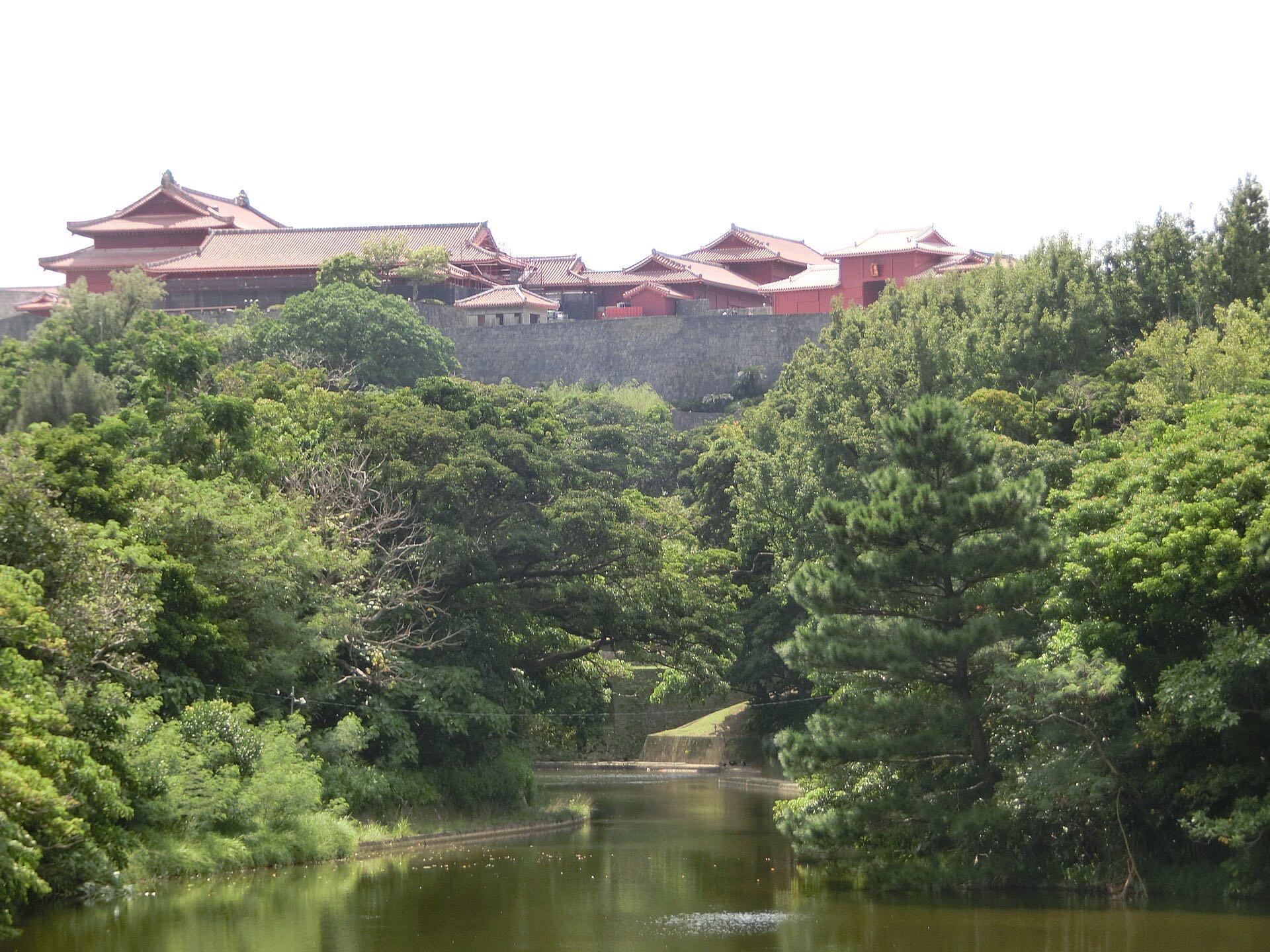 Wikimedia Commons (public domain)
 - The Ryukyuan languages — six of them, all endangered Prefecture-wide, year-round
Okinawa is not southern Japan with better beaches, and the cultural distinctness is documented rather than decorative. The Ryukyuan languages are separate languages, not dialects — there are six, in Northern and Southern groups, and they are not mutually intelligible with Japanese; Okinawan shares only about 71% lexical similarity with it. UNESCO classifies all six as endangered, four definitely and two severely, and warns they could be extinct by 2050 without intervention. They were actively suppressed: from the 1890s, students caught speaking Ryukyuan were made to wear a "dialect card" as public humiliation, with corporal punishment for offenders, and during the war speaking Ryukyuan was officially illegal — some speakers were killed during the Battle of Okinawa for using their own language. Revitalisation is active and worth naming: 18 September is designated Island Languages Day, radio news is broadcast in native dialects, and there are government-supported preservation programmes. Most Okinawan children today are monolingual in Japanese.
- Okinawa Churaumi Aquarium Ocean Expo Park, Motobu Peninsula — hours shift seasonally, so check
The prefecture's headline attraction and a legitimate world-class institution. Four floors descend from coral reef to deep sea; the Kuroshio tank holds whale sharks and manta rays, with claimed world-first captive breeding successes for both. Outdoor areas cover dolphins, sea turtles and manatees. It runs genuine rescue and rehabilitation programmes, which is worth knowing — it isn't only a spectacle. Recent published hours ran 08:30–21:00 with last admission at 20:00.
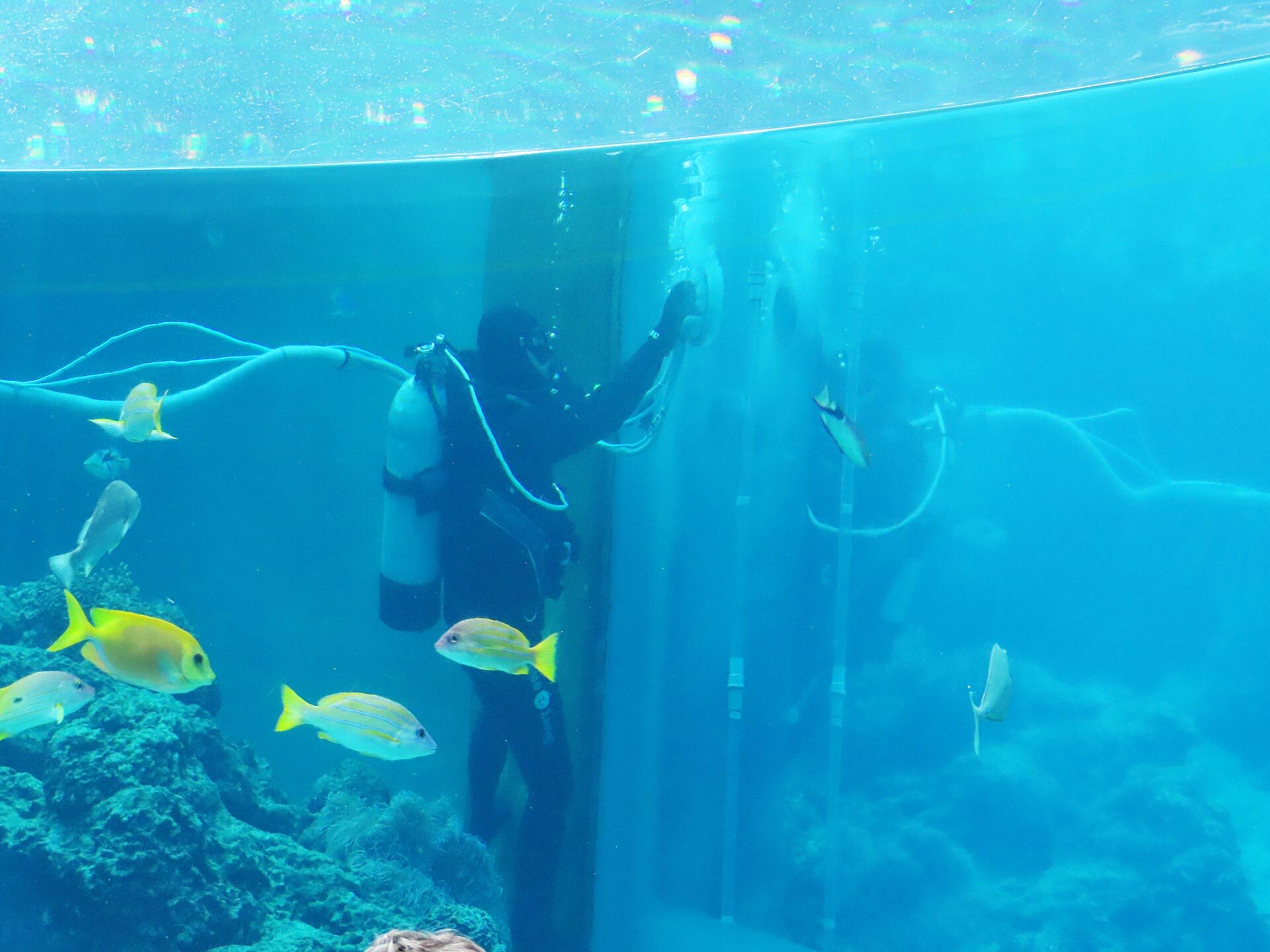 Wikimedia Commons (CC BY-SA 4.0)
 - The Kerama Islands and their 248 coral species 32km southwest of the main island; ferries from Tomari wharf, Naha
Thirty-six islands, four inhabited, protected as a national park since March 2014 specifically for marine values. The coral count — 248 species, heavily Acropora — is the reason for the designation, and it's the number that explains why this prefecture organises itself around reef. Also home to the endangered Kerama deer, found on only four islands, with humpback whale-watching in season.
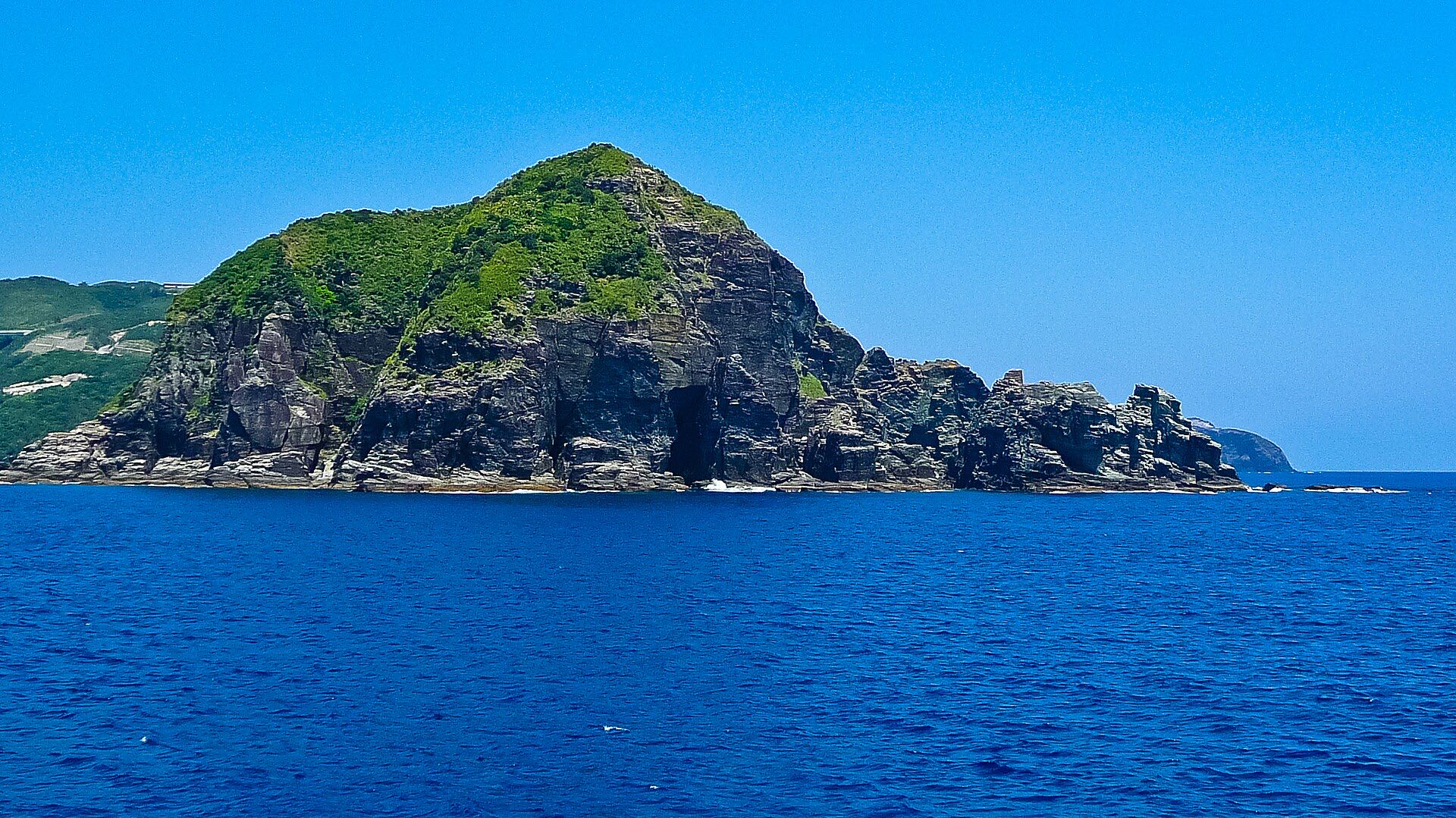 Wikimedia Commons (CC BY 2.0)
 - Yanbaru — the forest with 23 species found nowhere else Kunigami, Ōgimi and Higashi villages, far north of the main island
Yanbaru National Park was established in 2016 as Japan's 33rd, and the area forms part of a World Heritage property covering Amami-Ōshima, Tokunoshima, northern Okinawa Island and Iriomote, inscribed for endemic biodiversity. Over 4,000 species live here and 23 are found nowhere else on Earth: the flightless Okinawa rail, the critically endangered Okinawa woodpecker, the Ryukyu long-tailed giant rat, Ishikawa's frog, Anderson's crocodile newt, and the critically endangered Yanbaru whiskered bat. This is also habu country — stay on the paths.
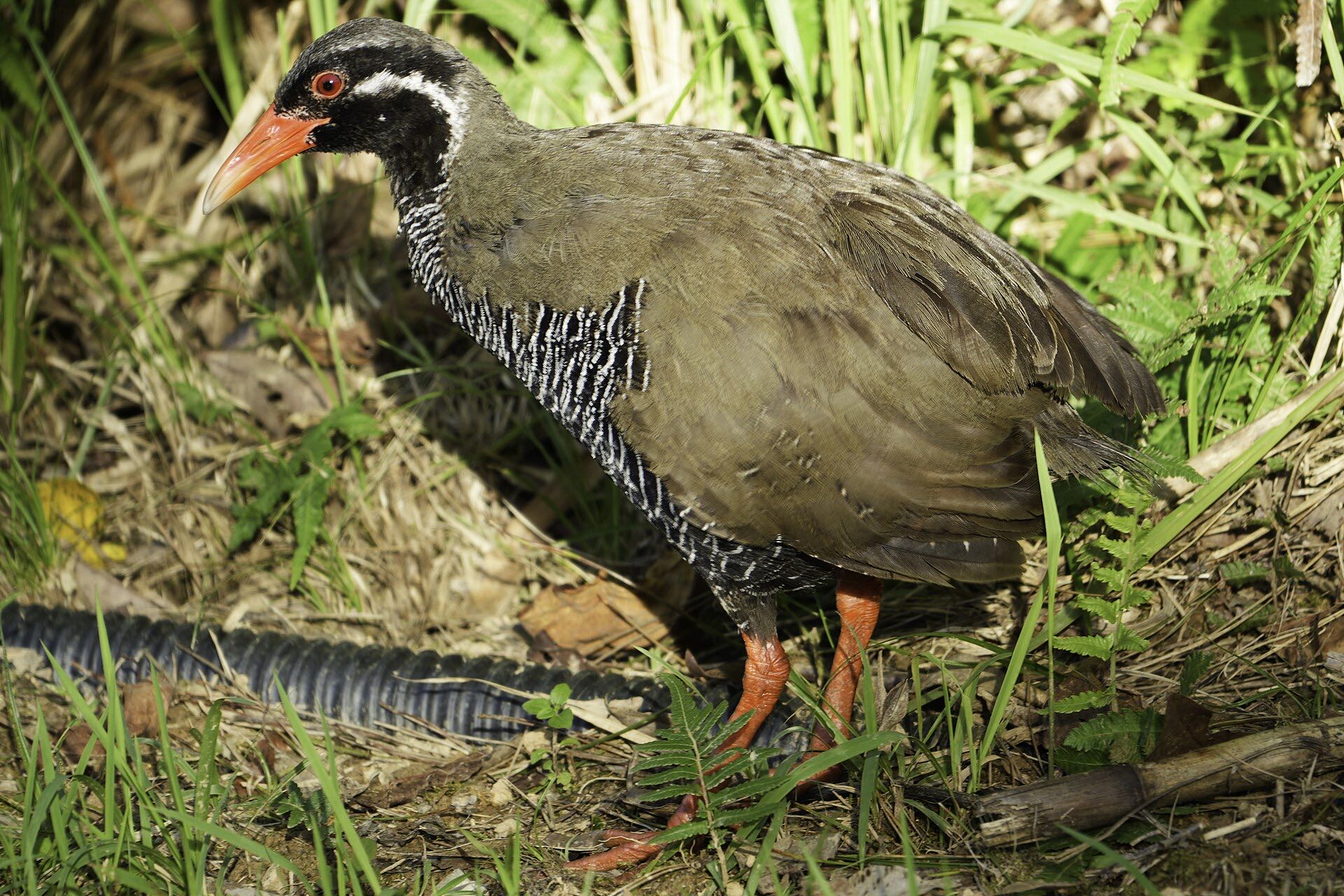 Wikimedia Commons (CC BY-SA 4.0)
 - Sefa-utaki, where the king wore women's clothing Chinen Peninsula, Nanjō City — check access before going
A complex of caves and rock formations that was the holiest place in the Ryukyuan religion, and by tradition where Amamikyu, the creation goddess, made landfall. It was the kingdom's supreme sacred site, administered by the highest state priestess. Two details worth carrying: even the king had to wear women's clothing to enter certain areas, and commoners were barred from passing specific points. Inscribed by UNESCO in 2000 as part of the Gusuku Sites of the Kingdom of Ryukyu. It overlooks Kudaka Island, itself sacred. Access caveat: the innermost worship area, Sangui, is closed to the public due to structural damage, which also removes the Kudaka viewing point historically offered there — verify before you go. This is an active sacred site, not a ruin: quiet, no climbing, stay on the marked paths.
- Awamori, and the kūsū that was destroyed in 1945 Prefecture-wide; Shuri is the historic heart
Okinawa's indigenous distilled spirit, and genuinely unlike anything on the mainland: made from rice by single fermentation with black koji mould indigenous to Okinawa — not the mould used for mainland shochu — and traditionally using Thai long-grain indica rice rather than Japanese short-grain. That combination is what makes it Ryukyuan rather than Japanese. Typically 30–43% ABV; the Yonaguni specialty hanazake hits 60%. Aged three years or more it becomes kūsū. A distillery in Shuri holds surviving 100- and 150-year-old bottles — and pre-war kūsū reached 200 to 300 years old, and was destroyed in the Battle of Okinawa. That single fact ties the drink to the island's history better than any tasting note.
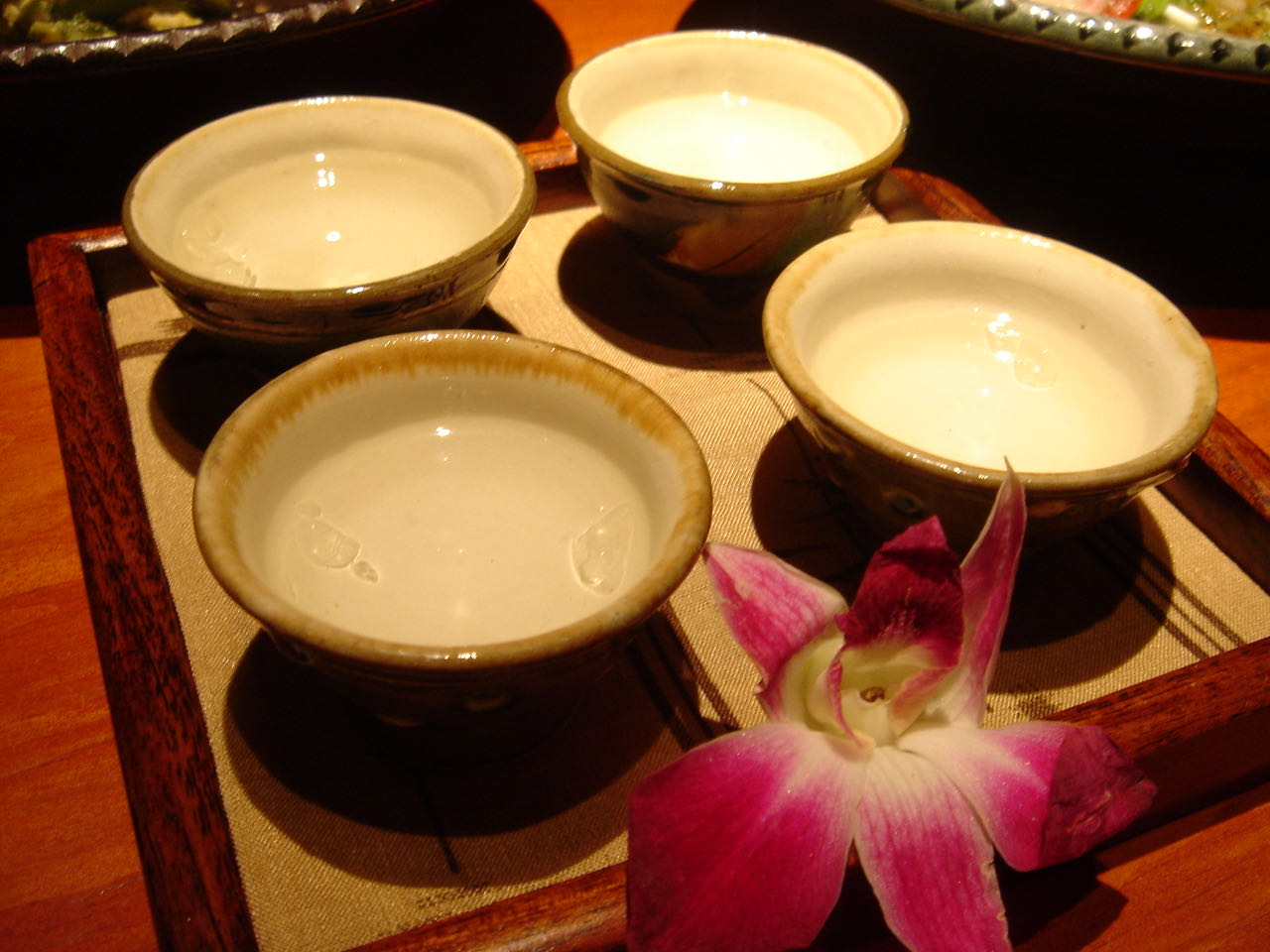 yajico via Wikimedia Commons (CC BY 2.0)
 - The longevity story — and why the honest version is better Prefecture-wide, cultural
Okinawa is one of the original "Blue Zones," credited with exceptional longevity attributed to a plant-forward diet, physical activity, low stress and strong social ties. Research has substantially undercut that, and the real version is a better story. A 2008 study found that people born before WWII produced many centenarians, while those born after 1945 showed no evidence of longevity — in fact higher mortality than most other Japanese prefectures. And the data foundation is compromised: Okinawa's family registries were largely destroyed in the 1945 battle and later reconstructed by American occupation authorities, which introduces real doubt about the original centenarian counts. Life expectancy has declined notably this century. So what you actually have is a wartime records gap, a dietary shift after American occupation, and a longevity advantage that appears to have belonged to one specific generation — which ties directly to taco rice and the American food influence, and is far more interesting than the marketing.
Questions people actually ask.
Is Okinawa a surf destination?
Honestly, not primarily. The prefecture's own certified marine-operator directory lists roughly 45 businesses and surfing appears on exactly one of them. If you're building a trip around waves, Okinawa isn't the obvious pick. But the more precise finding is that Okinawa surfs in one place: we verified nine surf businesses, seven of them inside a roughly three-kilometre stretch of the Chatan and Sunabe coast, with two more in Itoman. One operator states the constraint on their own site — rideable windows are typically only two to three hours around high tide, because the whole coast is reef. If you're coming for reef, coral, wildlife and one of the most distinctive cultures in Japan, and you'd surf if conditions cooperated, it's outstanding.
Do I need to rent a car?
For Naha alone, no — the Yui Rail monorail covers the airport, city centre and Shuri in 37 minutes end to end, with unlimited day passes. For the Motobu Peninsula, Onna, Yanbaru or the southern historical sites, yes. Buses reach all of them, but a car turns a full day into a half day. On the outer islands, taxis and buses are officially described as limited. Japan drives on the left.
When should I go, and how bad is typhoon season really?
Typhoon season officially runs June through September and Okinawa takes direct hits — a storm can close the airport and cancel ferries for several days. September is the wettest month. The trade-off is that summer also has the warmest water, near 30°C in August, and full beach operations. Spring before the mid-May rainy season, and October to November, are the safer weather bets. Winter is quiet, with water still around 21°C in February and diving running year-round, but cold northerly winds that feel sharper than the thermometer suggests. Buy travel insurance if you're going in typhoon season — the tourism board recommends it and so do we.
Do I need a wetsuit? What about reef boots?
June through October, a rash guard is enough — water runs 26–30°C, and covering up doubles as jellyfish and sun protection during the official June–September advisory. Shoulder seasons, a shorty is comfortable. January to March the water drops to about 21°C and a 3/2mm full suit makes longer sessions pleasant. Reef boots: strongly recommended year-round, and that's our own call rather than an official recommendation. This is shallow, sharp limestone and living coral — boots protect your feet and they protect the reef.
Can I get by without Japanese, and do I need cash?
English gets you through Naha, the airport, major hotels and established dive operators, and the prefecture runs a multilingual contact centre plus tourist information centres. Beyond that, translation apps earn their keep — and see the short list of nine businesses in Good to Know that affirmatively advertise English, which is a usable spine for an itinerary. On cash: cards and contactless are widely accepted in urban areas, but the tourism board is explicit that many small businesses in rural areas and on the small islands are cash only. Draw yen before heading north or out to the islands.
Are Miyako and Ishigaki part of the same trip?
No — and this is the planning mistake to avoid. Ishigaki is about 411km southwest of the main island and Miyako about 300km; both need their own flight from Naha. The Kerama Islands are different: they're a genuine part of a main-island trip, reached by regular ferry from Tomari wharf as a day trip or overnight.
Disclosure & how this page works.
Straight talk: Some links on this page are affiliate links — if you book through them, Secrets of Surf Travel earns a small commission at no extra cost to you. We only link places and people we'd use ourselves, and coverage is never for sale. Those commissions are what keep this site running and fund the next trip.
Today, the "Search Vrbo rentals" and "Search Booking.com stays" links on this page are affiliate links — every vendor listing link is still a plain courtesy link. As partnerships with these local businesses come online, more links (and discount codes, where Secrets of Surf Travel benefits from their use) may earn us a commission, and this page will keep saying so plainly. Coverage is never for sale: nobody on this page paid to be here, and nobody can.
Every listing was researched in 2026 and is being verified in person. The dive and marine operators listed here come from the prefecture's own Maru-yu safety-certification directory, which is a stronger provenance than a review-site listing — but the directory's detail pages wouldn't yield phone numbers or websites to us, so most of those entries carry a verified name, area and activity type and nothing more. We'd rather say that than invent a contact. Prices, hours, and policies change; confirm directly with the business. And per the No-Reveal Code: you will find no surf spots on this page, ever — hubs and towns by name is where it stops.