
Oʻahu — West Side, Hawaiʻi
This page covers the Waiʻanae Coast — Kapolei, Waiʻanae, Mākaha, Ko Olina, Nānākuli and Māʻili — Oʻahu's leeward, western shore. Read Respecting the Locals before you read anything else on this page. This coast is home to more Native Hawaiians living in one place than anywhere else on Earth, and it carries real surf history, real hardship, and a community that has spent decades protecting what's left of both. Towns and hubs only, every time — you will find no named surf breaks on this page.

A Different Kind of Zone
Every other coast on this site is a real cultural shift for the person reading it — somewhere tourism hasn't already flooded, an economy that still runs on its own terms. Hawaiʻi is the exception, and we're not going to pretend otherwise. It's one of the most visited destinations on Earth, and decades of tourism have already reshaped its coastlines, its economy, and its culture — often at real cost to the people who were there first.
We're not including Hawaiʻi to send more people to a place that is already inundated with tourism, waters that are already crowded, or to further burden a culture that has paid a heavy cost for that tourism. We're including Hawaiʻi because it's the birthplace of surfing and still the sport's most important location on Earth. Hawaiʻi has been and always will be the absolute proving ground of a surfer's skill. Leaving it off a site built around surf travel would be its own kind of disrespect. Including Hawaiʻi on our site not only acknowledges it as the pinnacle of surfing, but also pays homage to the culture that brought us the most glorious sport on the planet.
Our purpose here is the same as it is everywhere else on this site: point you toward the local and Native Hawaiian-owned businesses, the real culture, and the sense of adventure — away from the version of Hawaiʻi a resort brochure already sells you. Read Respecting the Locals below before you do anything else on this page.
Straight talk: Some links on this page are affiliate links — if you book through them, Secrets of Surf Travel earns a small commission at no extra cost to you. We only link places and people we’d use ourselves, and coverage is never for sale. Those commissions are what keep this site running and fund the next trip.
Some vacation-rental search links on this page (marked “Search Vrbo rentals” or “Search Booking.com stays”) are affiliate links. Every vendor link below is still a plain courtesy link. As more partnerships come online, more links may earn us a commission; the promise above holds either way.
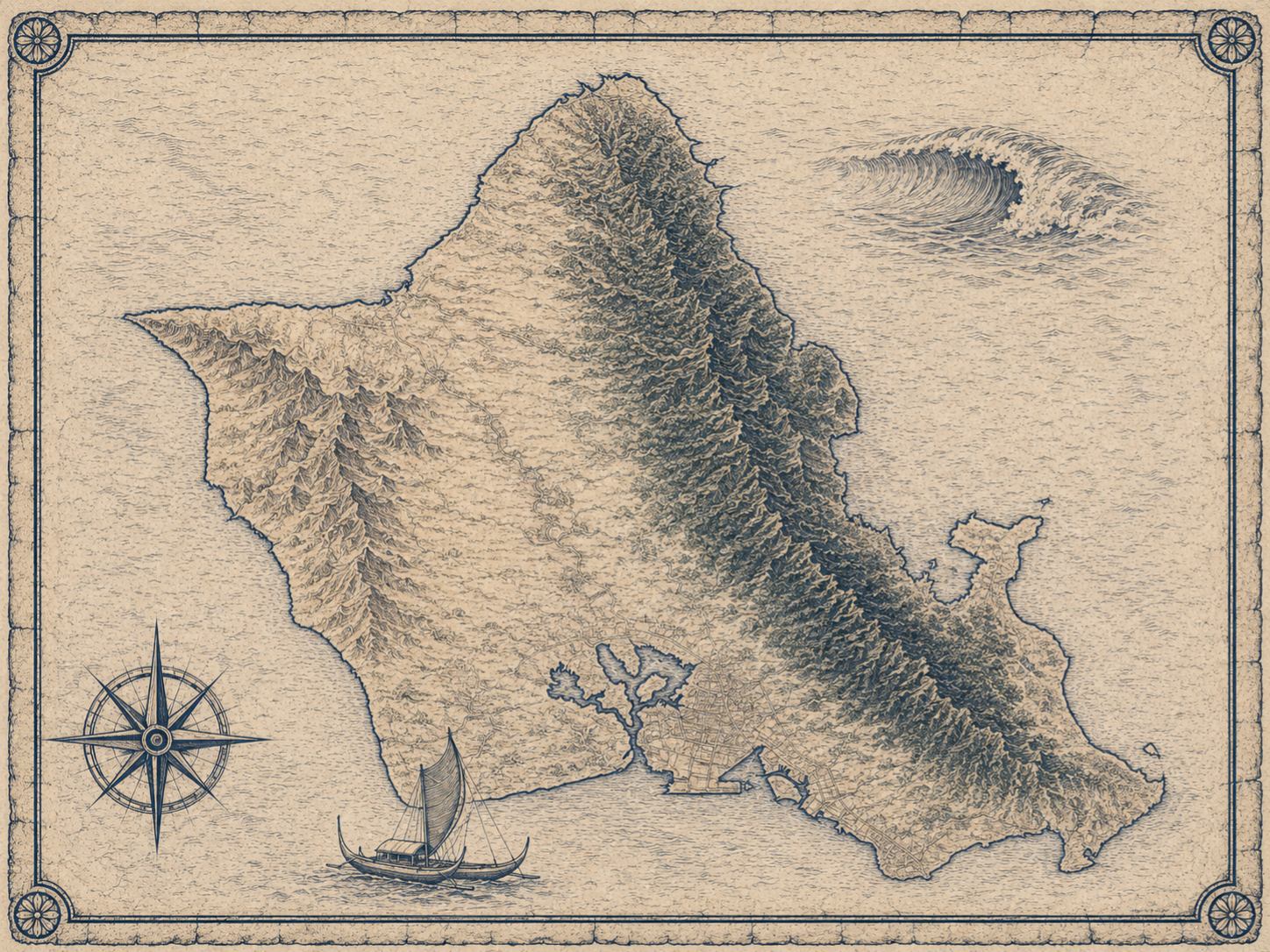
One coast, one highway, six towns. Kapolei is the zone's commercial center — shopping, surf retail, the closest thing to a "town center" on this coast, and the gateway from H-1. Ko Olina, just past Kapolei, is a master-planned resort district of large international hotel chains — a real, bookable place to stay, but not where this page's local-business recommendations live. Nānākuli, Māʻili and Waiʻanae are the heart of the coast — residential communities, plate-lunch counters, the coast's main grocery and health-center anchors. Mākaha, at the coast's far end, carries deep surf history and a quieter, more remote feel. Past Mākaha, the road ends at Kaʻena Point, a protected natural reserve. Farrington Highway is the only road connecting all of it — there's no freeway shortcut and no alternate route once you're past Kapolei.
Getting There & Ground Transport
Honolulu International Airport (HNL) to Waiʻanae is about 27.4 miles, roughly 39 minutes under normal conditions via H-1 West and Farrington Highway (HI-93 West). Kapolei and Ko Olina are considerably closer — roughly 20–25 minutes from HNL. Past Kapolei, Farrington Highway is the coast's only road in or out. There's no freeway shortcut and no alternate route to Nānākuli, Māʻili, Waiʻanae or Mākaha — a closure anywhere along that stretch (construction, an accident, a rockfall) can cut the whole coast off from the rest of the island. Build in buffer time, especially heading to or from the airport.
Honolulu's Skyline rail currently terminates at East Kapolei, connecting to the airport and downtown Honolulu — genuinely useful if you're staying in Kapolei itself, but it does not reach Ko Olina, Nānākuli, Waiʻanae or Mākaha. A planned westward extension toward West Kapolei/Kalaeloa has been discussed but was not funded or under construction as of this page's research pass. For anywhere past Kapolei, plan on a car.
Honest gap: no dedicated shuttle service between Waikīkī/the airport and the West Side was found this pass, unlike the North Shore's small shuttle-operator cluster. A rental car or rideshare is the practical way to reach this coast.
When to Go
The Waiʻanae Coast is Oʻahu's leeward side — it sits in the rain shadow of the Waiʻanae Range, making it the driest and sunniest stretch of coastline on the island, in almost any season. That's the single biggest practical difference between this zone and a windward or North Shore trip.
- Winter (roughly November–March): the same North Pacific swells that light up the North Shore wrap into this coast too, pushing surf up and water conditions toward more experienced-only territory in spots. This is not the season to assume any day is a beginner day.
- Summer (roughly April–October): conditions turn calmer and more consistent, generally the more forgiving season for instruction — though as with anywhere on Oʻahu, let a local school read the actual day rather than the calendar.
- Packing note specific to this coast: it's hot, dry and sunny here more often than almost anywhere else on Oʻahu — sun protection matters even on days that look overcast elsewhere on the island. Reef-safe sunscreen is a state law point (see Good to Know below), so bring zinc-oxide/titanium-dioxide sunscreen from home.
Good to Know
The wildlife-approach and sunscreen laws below apply statewide, the same as any Oʻahu zone on this site. What's specific to this coast is stated in Respecting the Locals just below — read that section, not just this one.
Wildlife approach distances.
- Humpback whales — 100 yards, ACTUAL FEDERAL LAW, not a guideline. 50 CFR §216.19 makes it unlawful to approach within 100 yards “by any means” — swimming, surfing, SUP, kayak, or drone — year-round, anywhere in Hawaiian waters. Whale season itself runs roughly November–April.
- Spinner dolphins — 50 yards, ACTUAL FEDERAL LAW. 50 CFR §216.20 applies within 2 nautical miles of the main Hawaiian Islands. Never swim with them — they're resting during the day.
- Hawaiian monk seals — 50 ft (150 ft with a pup) is NOAA/DLNR GUIDANCE, not a numeric statute. Hawaiʻi's actual law (HRS §195D-4) prohibits “take”/harassment generally.
- Sea turtles (honu) — 10 ft is NOAA GUIDANCE, not law, under the same take/harassment framework. Never touch or lift a turtle.
Reef-safe sunscreen — state law. HRS §342D-21 (Act 104, 2018) makes it unlawful to sell sunscreen containing oxybenzone or octinoxate in Hawaiʻi. It bans sale, not use, and excludes face cosmetics.
Rock stacking / cultural sites: don't build new rock stacks or “ahu.” Real ahu and heiau are protected structures, not photo props — Hawaiʻi state law (HRS §6E-11) makes altering or damaging a historic property a civil violation carrying penalties up to US$20,000 per violation, with each day counted separately. Several heiau on this coast sit on private land and require advance permission to visit — if you can't confirm a site is open to the public, don't go looking for it.
Respecting the Locals
The Waiʻanae Coast is home to more Native Hawaiians living in one place than anywhere else on Earth — not a statistic to note in passing, but the single most important fact about where you're standing. Families were pushed out here over the last century as Honolulu grew and land got commodified out from under them; this coast became one of the last places a Native Hawaiian family could still afford to live on their own island. Mākaha carries real surf history because of that same resilience — it hosted the world's first organized surf contest in the 1950s and was once considered surfing's unofficial world championship, and the community here has spent decades since fiercely protecting what's left of a culture that had almost everything else taken from it. A local waterman put it plainly to National Geographic: “You respect, you're welcome, then you come surf our place anytime you want.” That's not a threat. It's an invitation, with one condition attached. Here's the same code that applies to every zone on this site, and it applies here with zero exceptions:
- Locals get first priority, always. Watch a session before you paddle out. Learn who's who before you learn the wave. Sit inside and catch what they let through — the leftovers are yours, not the set waves.
- Don't backpaddle. Ever. Being in position doesn't make the next wave yours, especially if you didn't wait your turn. If a local wants a wave, let them have it…even if it IS your turn. That older guy who may not be the best surfer out there has probably been surfing that wave before you even sat on a board. If you don't know someone, assume they're local.
- Don't snake. This shouldn't even need to be said, but…dropping in on someone, local or not, is the ultimate disrespect and the fastest way to be sent out of the water. Don't be that guy!
- Say hi. A “howzit,” “whatsup,” or “nice wave,” eye contact, or a nod in the channel — it costs nothing and it's the fastest way from stranger to welcome.
- This is somebody's home, not a resort amenity. The break you're surfing is where a local kid learned to swim, where someone's uncle has surfed for forty years. Act like a guest, because you are one.
- Spend where it actually helps. The food truck, the local shaper, the family-run rental, the local photographer — that's where a surf trip's money should land, not just the chain hotel gift shop. See The No-Reveal Code for why that's the whole premise of this site.
- Leave it better than you found it. Pick up trash that isn't yours. Don't touch reef, wildlife, or cultural sites.
Locals have watched hundreds, if not thousands, of people come and go — some for days, some for months or years — and almost all of them eventually go home. The locals are still there. It takes many, many years to actually become one. Keep that in mind the next time you feel entitled to the same waves they get.
None of this is a secret handshake. It's just how you'd want a guest to act in your own backyard.
Three things specific to this coast
This isn't a backdrop. The Waiʻanae Coast has a real, documented poverty rate well above the state average, and Oʻahu's largest houseless community lives near Waiʻanae Boat Harbor — a community that organized itself, raised its own money, and bought its own land to build permanent housing rather than wait to be saved. That's a story worth respecting, not a curiosity worth photographing. Treat everyone you meet here with the same ordinary decency you'd want in your own neighborhood, and keep your camera pointed at the waves, not at people's homes or hardship.
Some places are sacred, not scenic. Kaʻena Point, the westernmost tip of the island, is a protected natural reserve and, in Hawaiian tradition, the leina a ka ʻuhane — the point where souls departed the islands after death. Stick to the marked trail, leave dogs at home (they're prohibited to protect nesting seabirds), and don't treat it as just another hike with a view. Heiau (traditional temple sites) on this coast are not open tourist attractions — several sit on private land and require advance permission to visit. If you can't confirm a site is open to the public, don't go looking for it.
Ko Olina's resorts are large international hotel chains, not local businesses. That's just a fact of this coast, not a workaround — if you're staying there, stay there. But make sure everything else about your trip — food, tours, coaching, gear — goes to the independent and Native Hawaiian-owned businesses on this page instead of resort add-ons. That's where a trip to this coast should actually leave its money.
Surf Schools & Guides
Surf Guides & Tours, honestly stated: no guide- or boat-based operation distinct from the instruction-based schools below was verified for this coast this pass — both schools listed also handle small groups and private sessions, which covers most of what a "guide" would offer here.
Surf Schools
- Westside Surf LessonsWaiʻanaeNative Hawaiian-ownedFounded and run by Danny Boro, a Native Hawaiian local to Waiʻanae, a surfer of 20+ years and a longtime certified lifeguard. Private, private-group and group instruction, plus board/SUP/boogie-board/kayak rental and an evening light-up SUP paddle. 5.0★ (209 reviews) on Google. westsidesurflessons.com @westsidesurflessons.hi Google Maps listing
- Let's Surf HIKapoleiFamily-friendlyA Kapolei-based school built around family and small-group instruction, run by a local instructor team. 5.0★ (38 reviews) on Google. letssurfhi.com @letssurfhi Google Maps listing
Surf Shops, Board Rentals & Ding Repair
Ding Repair, honestly stated: no dedicated stand-alone ding-repair shop was verified by name this pass. Repair happens informally through the surf shops below — a Surfboard Factory Hawaii review specifically mentions staff checking a board for dings on the spot — call ahead before sending anyone for a repair specifically.
- Kainalu Surf ShopNānākuli / WaiʻanaeNative Hawaiian-ownedFounded by friends born and raised in the Nānākuli Hawaiian Homestead, built around a service-first, affordable model for the local community. Kayak, SUP and snorkel rentals, plus Hawaiian shave ice on site. Located at Nānākuli Village Center. 4.6★ (52 reviews) on Google. kainalusurfshop.com @kainalusurfshop Google Maps listing
- Surfboard Factory HawaiiKapoleiLocally owned, 30+ yearsA longtime, independently owned surf shop with a wide board selection and its own custom shapes, plus board-check help. 4.9★ (155 reviews) on Google. surfboardfactoryhawaii.com @surfboardfactoryhawaii Google Maps listing
T&C Surf Designs (Kapolei), excluded by design: T&C has a Kapolei retail location, but it's a larger statewide/international chain rather than an independent local business, so it's deliberately left off this page in favor of the two shops above. That's consistent with this coast's whole premise — see Respecting the Locals.
Stays
Honest framing up top: nearly every hotel-style bed on this coast is a large international resort brand in Ko Olina — Four Seasons, Disney, Marriott, and one condo-hotel building. That's simply what this coast is; the Respecting the Locals section above already covers why, and none of those chain properties are listed below as a result — see the field-note in their place. If you stay at one of them anyway, that's fine — just make sure everything else about your trip (food, gear, tours, instruction) routes to the independent and Native Hawaiian-owned businesses elsewhere on this page instead of resort add-ons.
Vacation-rental note: individually named Airbnb/Vrbo listings churn constantly and aren't stable enough to cite as fixed vendors the way a shop or restaurant is. Treat Kapolei, Waiʻanae and Mākaha as the search areas below rather than expecting specific named rental units.
Ko Olina, deliberately left off this page: every named hotel bench at Ko Olina — the Four Seasons Resort Oʻahu at Ko Olina, Aulani (A Disney Resort & Spa), Marriott's Ko Olina Beach Club, and Beach Villas at Ko Olina — is a large international hotel chain, by design of how this resort district was master-planned. There is no independent hotel alternative sitting inside Ko Olina itself. This site's purpose on Hawaiʻi pages is pointing readers toward local and Native Hawaiian-owned stays, not the corporate chains that already dominate this coast, so none of them are listed here. If you want to stay in Ko Olina specifically, search a vacation rental below; otherwise see Kapolei, just up the road, or Waiʻanae and Mākaha further down the coast for this zone's independent lodging search areas.
Camping & Extended Stay
This site's usual Stays section is built for a one-to-two-week visitor. A real share of surf travelers stay a season instead — here's what's genuinely available for that reader, stated honestly rather than padded.
Camping
- Lualualei Beach ParkWaiʻanaeBudget, permit requiredA legitimate City & County of Honolulu permitted campground on this coast, with restrooms and showers. Status, verified this pass: City & County camping had been suspended and officially resumed at all Honolulu campgrounds effective August 21, 2026 — confirm current status before planning around it, since park camping schedules and closures do shift with weather and maintenance. Permits are released weekly (Fridays, 2 weeks out) via the county's own booking system. camping.honolulu.gov · Google Maps listing
Kaʻena Point / Mākua, honestly stated: Kaʻena Point is a protected natural area reserve with no camping permitted — see Respecting the Locals above. No current, legitimate camping option was verified further out toward Mākua this pass; don't assume informal camping there is sanctioned.
Room shares & sublets
- Craigslist Honolulu — Rooms & Shares / Sublets & TemporaryIslandwide, incl. West SideReal, activeAn active category with real month-to-month rooms and multi-month sublets. Scam risk is real and locally documented — never wire money or pay before an in-person viewing. honolulu.craigslist.org/search/roo
- Oahu Roommates and Apartments (Facebook group)IslandwideReal, activeA general Oʻahu housing group; West Side listings do appear. Facebook
Work-trade, honestly stated: Kaʻala Farm and MAʻO Organic Farms (see Beyond the Surf below) are genuine, deeply-rooted community institutions on this coast — but neither is a visitor work-trade or lodging arrangement. Kaʻala Farm's community work days are open volunteer days for anyone, not a stay-for-work program, and MAʻO's internships are built specifically for local youth education and career pathways, not visiting surfers. Engage with both through their actual public programs (a work day, a scheduled tour, a CSA box), not by asking either one to host you.
Where to Eat
Plate lunch, poke, shave ice and a working farm café — this is where a West Side trip's food budget should actually go.
- Aloha PokeWaiʻanaeBudgetMade-to-order poke bowls and plate lunches, a genuine local favorite. 4.7★ (744 reviews) on Google. @alohapoke1 Google Maps listing
- Pokai Bay RestaurantWaiʻanaeBudgetA sit-down local restaurant near Pōkaʻī Bay — plate lunch, saimin, breakfast. 4.6★ (184 reviews) on Google. pokaibayrestaurant.com @pokaibayrestaurant_llc · Google Maps listing
- Barbecue KaiWaiʻanaeBudget, cash onlyA local plate-lunch and burger counter — cash only, no website. 4.5★ (513 reviews) on Google. Google Maps listing
- The Beach House by 604Waiʻanae (Pōkaʻī Bay)Mid-rangeOceanfront sit-down dining and live music at the Pōkaʻī Bay recreation area — genuinely popular with a big local following, not just a visitor spot. 4.4★ (1,841 reviews) on Google. beachhouse604.com @beach604house · Google Maps listing
- Kaʻahaʻaina CaféWaiʻanaeBudgetA café inside Waiʻanae Coast Comprehensive Health Center with an ocean view — plate lunch, bread pudding, a genuine community fixture. 4.5★ (224 reviews) on Google. Google Maps listing
- Countryside Cafe (Waiʻanae)WaiʻanaeBudgetA breakfast/brunch spot with an ocean view, a genuine neighborhood staple by its own reviews. 4.6★ (943 reviews) on Google. countrysidecafe808.net Google Maps listing
- Dan's Maʻili Shave IceWaiʻanae / MāʻiliBudget, cash onlyA family-owned shave ice and ice cream counter, a genuine neighborhood spot. 4.7★ (347 reviews) on Google. Google Maps listing
- Mountain Magic Shave IceMākahaBudgetShave ice, ice cream and a small surf-apparel corner at Mākaha Marketplace. 4.7★ (226 reviews) on Google. mountainmagicshaveice.com @mountainmagicshaveice · Google Maps listing
- Kainalu Surf Shop (shave ice)NānākuliBudgetYes, the surf shop above also sells Hawaiian shave ice — see the Surf Shops section for full listing. kainalusurfshop.com · Google Maps listing
- Kahumana Farm-to-Table CaféWaiʻanae (Lualualei Valley)Farm-to-tableThe café arm of Kahumana Organic Farms, a long-running Waiʻanae nonprofit — prepared meals and produce from its own certified-organic farm. See Beyond the Surf below for the full picture of what Kahumana is. 4.8★ (150 reviews) on Google. kahumana.org @kahumanaorganicfarms · Google Maps listing
Grocery anchor: Waianae Store, an independent local supermarket in Waiʻanae, is the coast's real day-to-day grocery stop — 4.5★ (1,040 reviews) on Google. waianaestore.com
Car & Scooter Rentals
Honestly stated, this category is thin for the West Side specifically. No independently based car, scooter, moped or e-bike rental operation was verified as based on this coast itself this pass — the shops found (an e-bike retailer in Kapolei, a mobility-scooter supplier) turned out to be sales or medical-equipment businesses, not visitor rentals. The practical path is the same one most visitors already use: rent at Honolulu International Airport or in Waikīkī and drive out via H-1 and Farrington Highway. Budget the extra 25–40 minutes each way in your plans.
Massage & Wellness
- Magnolia Massage & SpaKapoleiMid-rangeA well-reviewed spa offering massage, couples sessions and body treatments. 4.7★ (270 reviews) on Google. magnoliamassagespa.com @magnolia_massage_spa · Google Maps listing
Honest gap: no traditional lomilomi practitioner based specifically on the Waiʻanae Coast (as opposed to elsewhere on Oʻahu) was verified this pass.
Surf Photography & Media
Honestly stated, this category is genuinely thin for the West Side. No surf photographer or videographer verifiably based on this coast (as opposed to Honolulu or the North Shore) was found this pass. Readers looking for water photography here should ask the surf schools above directly — several similar Oʻahu operations shoot photo/video packages as an add-on to instruction, though none was confirmed to do so for this coast specifically.
Beyond the Surf
This is where the Waiʻanae Coast is genuinely different from a resort zone: working farms and cultural institutions that have been here for decades, not manufactured attractions.
- Kaʻala Farm & the Cultural Learning Center at KaʻalaWaiʻanae ValleyCommunity work days & scheduled toursA nearly 50-year-old Native Hawaiian cultural learning center built around loʻi kalo (taro pondfield) restoration and traditional agriculture education. Visit through a public Community Work Day (every second Saturday, open to all ages) or a scheduled educational tour — not a drop-in attraction. Book at least three weeks ahead. kaalafarm.org @kaala_farm Facebook · Google Maps listing
- MAʻO Organic FarmsLualualei Valley, WaiʻanaeCSA & farmers market, not open toursOne of the largest certified-organic farms in Hawaiʻi, structured as a nonprofit social enterprise that pairs farm work with education and career pathways for local youth. This is not a visitor attraction with drop-in tours — the way to connect is a CSA box or its farmers-market stand, which supports the same youth-education mission directly. maoorganicfarms.org @maoorganicfarms · Google Maps listing
- Kahumana Organic FarmsLualualei Valley, WaiʻanaeFarm, café & CSAA community nonprofit founded in 1974, growing produce on 25 certified-organic acres while also running housing and services for homeless families and adults with developmental disabilities. Visitors engage through its farm-to-table café, CSA boxes, or its Saturday farmers-market stand — a working mission-driven organization, not a manufactured attraction. kahumana.org @kahumanaorganicfarms · Google Maps listing
- Kaula Luʻau at Ocean's EdgeKo OlinaNative Hawaiian-ledA Native Hawaiian-led luau and cultural production, opened February 2026 as the first project in a Hawaiian Council–Ko Olina partnership specifically built to anchor a culture-driven entertainment district on this coast, reportedly creating 166 local jobs. Worth calling out specifically among Ko Olina's otherwise all-chain offerings. 4.7★ (85 reviews) on Google. luaukaula.com @kaulaluau · Google Maps listing
- Waianae Farmers MarketWaiʻanae (Waiʻanae Mall)Budget, Saturdays 8am–12pmA genuine community Saturday market hosted by Waiʻanae Coast Comprehensive Health Center — local produce, prepared food and crafts. 4.7★ (183 reviews) on Google. Google Maps listing
Excluded, and why: Puʻuhonua o Waiʻanae is a houseless community and grassroots nonprofit, not a visitor destination or business — it's addressed with the respect it deserves in Respecting the Locals above, and this page does not turn it into a "thing to visit."
Errands & Services
- Sun's LaundromatWaiʻanaeBudgetA straightforward neighborhood laundromat, useful for anyone on an extended stay or a vacation rental without in-unit laundry. 3.3★ (61 reviews) on Google. Google Maps listing
- Waianae StoreWaiʻanaeBudgetThe coast's real day-to-day independent grocery anchor — also listed under Where to Eat above for its poke and prepared food. 4.5★ (1,040 reviews) on Google. waianaestore.com · Google Maps listing
Honest gap: no dedicated coworking space was verified on this coast this pass.
Medical & Practicalities
Waiʻanae Coast Comprehensive Health Center is this coast's main healthcare anchor — worth stating plainly given how far this coast sits from Honolulu's larger hospitals, and given that Farrington Highway is the only road out.
Medical / health
- Waianae Coast Comprehensive Health CenterWaiʻanae24-hr Emergency DepartmentA community health center running a 24-hour Emergency Department, serving the whole Leeward Coast from Kapolei to Mākaha. Also home to Kaʻahaʻaina Café and the Saturday Waianae Farmers Market on the same campus. wcchc.com · Google Maps listing
Honest gap: no separate urgent-care clinic based on the Waiʻanae Coast itself (as opposed to Kunia or Honolulu) was verified this pass — WCCHC's Emergency Department is the coast's actual answer for anything beyond routine care.
Local Secrets
Four things about this coast that reward the curious — genuine local businesses, food and public events, nothing that points at a hidden natural spot.
- Kainalu Surf Shop's shave ice Nānākuli Village Center
A Hawaiian-owned surf shop that also happens to serve genuinely good shave ice — founded by friends from the Nānākuli Hawaiian Homestead, built as an affordable, service-first spot for the local community first.
- The Waianae Farmers Market Saturdays, 8am–12pm, Waiʻanae Mall
Hosted by the coast's own health center, not a manufactured tourist market — local produce, prepared food, live Hawaiian music some weeks, and a real read on the community's own rhythm.
- Kaʻahaʻaina Café's bread pudding Inside Waiʻanae Coast Comprehensive Health Center
An ocean-view café tucked inside the coast's own health center — locals actually eat here, not just people picking up prescriptions.
- Kaʻala Farm's Community Work Day Every second Saturday, Waiʻanae Valley
An open, all-ages volunteer day at a nearly 50-year-old cultural learning center — clean a loʻi, learn the moʻolelo of kalo, and leave having actually contributed something instead of just consumed a photo op.
Questions people actually ask.
What's the single most important thing to know before visiting the West Side?
Read the Respecting the Locals section on this page before anything else. The Waiʻanae Coast is home to more Native Hawaiians living in one place than anywhere else on Earth, and the water-etiquette and community-respect expectations here are not optional extras — they're the actual price of admission.
Is there emergency medical care on the West Side?
Yes — Waiʻanae Coast Comprehensive Health Center in Waiʻanae runs a 24-hour Emergency Department and is the coast's main healthcare hub, serving the whole Leeward Coast from Kapolei to Mākaha.
How far is the West Side from the airport?
Honolulu International Airport (HNL) to Waiʻanae is about 27.4 miles, roughly 39 minutes under normal conditions via H-1 West and Farrington Highway (HI-93 West). Kapolei and Ko Olina are closer, roughly 20–25 minutes. Farrington Highway is the coast's only road in or out past Kapolei — there's no alternate route, and closures do happen.
Can I bring my own sunscreen?
Bring reef-safe (zinc oxide/titanium dioxide) sunscreen from home. Hawaiʻi law (HRS §342D-21) bans the sale, not the use, of sunscreen containing oxybenzone or octinoxate statewide, so don't count on finding your usual brand in local stores.
Can beginners take surf instruction on the West Side?
Yes — the schools listed on this page teach visitors regularly and are based right on this coast, including at least one Native Hawaiian-owned outfit local to Waiʻanae. As with any Oʻahu coast, book with a real local operator and let them read the day's conditions rather than assuming any day is a beginner day.
Disclosure & how this page works.
Straight talk: Some links on this page are affiliate links — if you book through them, Secrets of Surf Travel earns a small commission at no extra cost to you. We only link places and people we’d use ourselves, and coverage is never for sale. Those commissions are what keep this site running and fund the next trip.
Today, the “Search Vrbo rentals” and “Search Booking.com stays” links on this page are affiliate links — every vendor listing link is still a plain courtesy link. No Agoda search link is included for this zone: this page's research pass could not confirm a real, specific Agoda hotel ID for these towns, and this site does not guess at affiliate IDs. As partnerships come online, more links may earn us a commission, and this page will keep saying so plainly.
Where this page is deliberately hedged. Surf Guides & Tours as a category distinct from instruction-based schools was not found for this coast. Car, scooter, moped and e-bike rentals based on this coast itself are genuinely thin — the practical path is renting at the airport or in Waikīkī. No dedicated ding-repair shop, lomilomi practitioner, dedicated surf photographer/videographer, or coworking space based on this coast was verified this pass. Camping status (Lualualei Beach Park) reflects an August 21, 2026 county-wide resumption notice — confirm current status before planning around it. T&C Surf Designs' Kapolei location was deliberately excluded from Surf Shops as a non-independent chain, consistent with this page's whole premise.
Every listing on this page was verified in 2026 by navigating directly to each business's own website, a live Google Maps search, and Instagram/Facebook where an account exists — not by search-snippet guessing. And per the No-Reveal Code: you will find no named surf breaks on this page, ever, even though Mākaha carries real, documented surf history. Towns and hubs by name is where it stops.
A note on the Respecting the Locals section: that section was written deliberately and specifically for this coast, at the site owner's direction, and appears on this page unedited from that draft.