
Norway
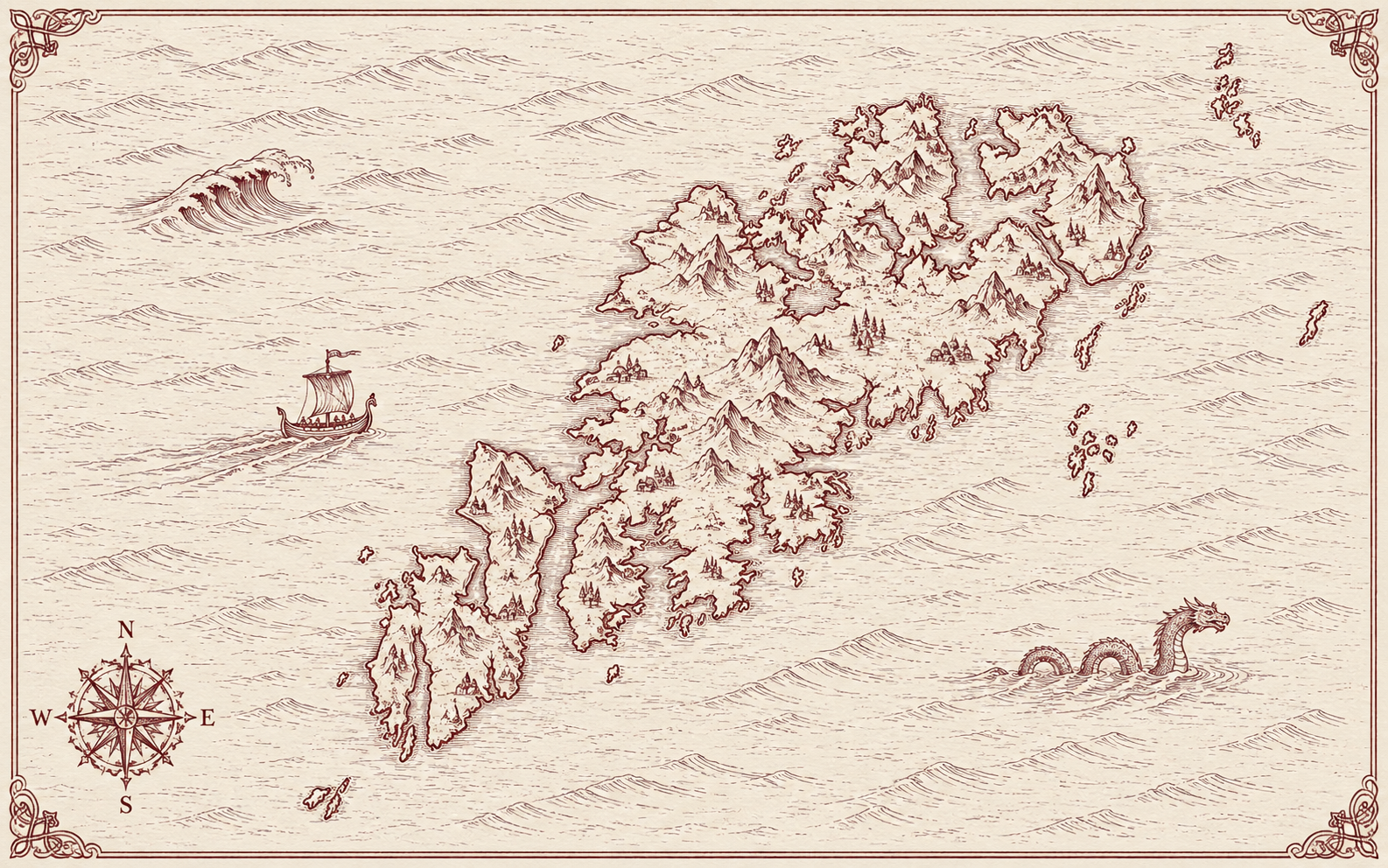
Unstad sits at 68°N in the Lofoten Islands, a fishing hamlet that also happens to be one of the world's most northern real surf resorts — Arctic peaks dropping straight into the water, a reconstructed Viking longhouse next door, and genuinely the coldest water on this entire site. This isn't a novelty stop; it's a small, real, well-built surf town that just happens to sit inside the Arctic Circle.

Straight talk: Some links on this page are affiliate links — if you book through them, Secrets of Surf Travel earns a small commission at no extra cost to you. We only link places and people we'd use ourselves, and coverage is never for sale. Those commissions are what keep this site running and fund the next trip.
Some vacation-rental search links on this page (marked "Search Vrbo rentals," "Search Booking.com stays," or "Search Agoda stays") are affiliate links. Every vendor link below is still a plain courtesy link. As more partnerships come online, more links may earn us a commission; the promise above holds either way.
Getting There
Oslo Gardermoen (OSL) is the realistic US gateway — SAS flies it direct to New York JFK, a roughly 7-hour-37-minute flight. From Oslo, this becomes a two-leg trip north: Evenes/Harstad-Narvik Airport (EVE) is the most realistic regional gateway, connected from Oslo by Widerøe, SAS, and Norwegian, and sits about 3.5-4 hours' drive (≈256km) from Unstad via the Lofoten Fixed Link — a ferry-free road connection completed in December 2007, so no car ferry is required on this leg anymore. Bodø Airport (BOO), recently rebuilt, carries seasonal direct international routes for the 2026 season to Munich, Copenhagen, Stockholm, and Helsinki, but no direct US service; Widerøe connects Bodø onward to Leknes or Svolvær in about 20 minutes. Leknes (LKN) and Svolvær (SVJ) are the small regional airports actually closest to Unstad, but both are domestic-only.
Realistically: budget a full day of travel for the transatlantic flight, a domestic connection, and a drive or short hop to reach Unstad.
Documents: Norway is not an EU member (Norwegians voted against joining in 1972 and 1994) but is a full Schengen and EEA member — the standard 90-day-in-180 visa-free stay for US citizens applies. The EU-wide ETIAS pre-travel authorization is expected to begin rolling out in the second half of 2026 — check the current status before you book, since these EU-wide start dates have shifted before.
Ground Transport
- Norway drives on the right, wheel on the left — the same convention as the US, a smaller adjustment than most zones on this site.
- A car is effectively essential. Unstad has no real public transit backbone — local bus routes 741/764 connect Leknes to Unstad, but run on a sparse, locals-oriented schedule, not built around surfboard luggage or odd-hour surf checks.
- Leknes (about 21 minutes / 21km from Unstad) is the real service town — supermarket, pharmacy, bakeries — worth treating as the "stock up here" stop.
- Winter tires are legally required whenever road conditions call for them, broadly November through April; studded tires are permitted.
When to Go & What to Pack
- Genuinely the coldest water on this site. Sea temperature runs roughly 3-6°C (37-43°F) at the coldest, in early April, up to about 11-15°C (52-59°F) at the warmest, in early-to-mid August. Summer sessions call for a 4/3mm suit with 3mm boots (5/3mm on longer or windier days); the coldest spring window needs a 6/5/4mm suit, or a well-fitted 5/4mm with a hood, gloves, and 5mm boots. Locally, hood, gloves, and boots are treated as standard gear year-round, not seasonal extras — Unstad Arctic Surf's own rental fleet runs 7-8mm boots and 5mm gloves regardless of suit thickness.
- Light is a real trip-planning variable this far north. Midnight sun runs roughly late May through late July (24-hour daylight); Northern Lights season runs roughly September through April.
Good to Know
- Currency is the Norwegian Krone (NOK), not the Euro — Norway isn't an EU member. It's one of the most cashless societies anywhere; cards are accepted almost everywhere.
- Emergency numbers: 112 general/police, 113 medical.
Respecting the Locals
This is a small fishing hamlet first, a surf destination second, with a reconstructed Viking longhouse right next door as a reminder of how much history sits under this one tiny Arctic Circle village. There's no anonymity here — a place this small and this far north runs on the same handful of people building and running its surf town, season after season, in some of the coldest water on this entire site. That kind of small-scale, cold-water hospitality deserves the same respect as anywhere else on this site, arguably more given how little margin a place this remote has for bad behavior.
- Locals get first priority, always. Watch a session before you paddle out. Learn who's who before you learn the wave. Sit inside and catch what they let through — the leftovers are yours, not the set waves.
- Don't backpaddle. Ever. Being in position doesn't make the next wave yours, especially if you didn't wait your turn. If a local wants a wave, let them have it…even if it IS your turn. That older guy who may not be the best surfer out there has probably been surfing that wave before you even sat on a board. If you don't know someone, assume they're local.
- Don't snake. This shouldn't even need to be said, but…dropping in on someone, local or not, is the ultimate disrespect and the fastest way to be sent out of the water. Don't be that guy!
- Say hi. A “howzit,” “whatsup,” or “nice wave,” eye contact, or a nod in the channel — it costs nothing and it's the fastest way from stranger to welcome.
- This is somebody's home, not a resort amenity. The break you're surfing is where a local kid learned to swim, where someone's uncle has surfed for forty years. Act like a guest, because you are one.
- Spend where it actually helps. The food truck, the local shaper, the family-run rental, the local photographer — that's where a surf trip's money should land, not just the chain hotel gift shop. See The No-Reveal Code for why that's the whole premise of this site.
- Leave it better than you found it. Pick up trash that isn't yours. Don't touch reef, wildlife, or cultural sites.
Locals have watched hundreds, if not thousands, of people come and go — some for days, some for months or years — and almost all of them eventually go home. The locals are still there. It takes many, many years to actually become one. Keep that in mind the next time you feel entitled to the same waves they get.
None of this is a secret handshake. It's just how you'd want a guest to act in your own backyard.
Unstad, Lofoten
Unstad is the real, built-out surf hub in Norway — a small resort community at the beach, with the larger service town Leknes and the fishing-village-turned-art-town Henningsvær nearby. Two other real Norwegian surf scenes exist, Jæren near Stavanger (arguably where Norwegian surfing itself started, in 1982) and Stad on the west coast, but both are a thousand-plus kilometers from Lofoten and too thin on local infrastructure to function as a built trip hub the way Unstad does.
Surf Schools & Board Rental
- Unstad Arctic SurfUnstadConfirm on the groundFamily-run surf resort operating since 2003, right at the beach — group, private, and family instruction, board and wetsuit rental, on-site restaurant and sauna. unstadarcticsurf.com · Instagram · Map
- Lofoten SurfsenterUnstadConfirm on the groundScandinavia's first ISA-registered surf school, billed as the world's northernmost surf shop; runs its own board brand alongside Firewire. lofotensurfsenter.no · Instagram · Facebook · Map
Unstad Arctic Surf runs on the pricier end for what it offers — reviewers consistently praise the staff, food, and facilities, but flag the cost. Worth budgeting for rather than a reason to skip it.
Stays
- Unstad Surfpacker HostelUnstad, ~450m from the beachBudgetDorms and private rooms, shared kitchen and bath. Map
- Unstad Arctic Surf — cabins & shared housesUnstadMid-rangeTraditional fisherman's cabins and shared houses on-site at the break. unstadarcticsurf.com · Instagram · Map
- Unstad Arctic Surf — penthouse suiteUnstadLuxuryPrivate rooftop terrace over the bay — the top tier actually at Unstad itself. unstadarcticsurf.com · Instagram · Map
For a true standalone luxury property, Henningsvær Bryggehotell — a 5-star boutique hotel across eight historic harbor buildings — is the real option, but it's a genuine drive, roughly 45-50 minutes from Unstad, not a walk.
Where to Eat
- Unstad Arctic Surf restaurant/caféUnstad, on-siteMid-rangeReviewers repeatedly cite it among the best food in the islands — fresh, organic ingredients, notable cinnamon rolls. unstadarcticsurf.com · Instagram · Map
- Lofoten SurfsenterUnstad, on-siteBudgetCoffee and snacks at the shop. lofotensurfsenter.no · Instagram · Facebook · Map
- FiskekrogenHenningsvær, ~45 min driveMid-range/upscaleFamily-owned seafood restaurant since 1989, reservations essential — a genuine drive, not an Unstad walk. fiskekrogen.no · Map
- KlatrekafeenHenningsvær, ~45 min driveBudgetCasual harbor-view café known for fish soup and cinnamon buns. klatrekafeen.com · Instagram · Facebook · Map
Wheels
- Lofoten Car HireFixed pickup at Leknes AirportConfirm on the groundAlso arranges delivery to Evenes. lofotencarhire.no · Map
- Rentacar LofotenPickup points in Svolvær, Leknes, Stamsund, MoskenesOperating since 2003Widest coverage across the islands. rentacar-lofoten.com · Map
- Lofoten Rentals ASLeknesConfirm on the groundE-bike rental. lofotenrent.no · Map
Some smaller independent Lofoten car-rental operators have scattered complaints about slow email response and unclear pricing — not severe enough to flag as an outright avoid, but confirm total price in writing before arrival, or default to a major chain (Avis, Sixt, Budget) at Evenes or Bodø for guaranteed service.
Surfboard & Wetsuit Repair
No standalone dedicated repair shop found at or near Unstad — a real infrastructure gap worth planning around, not a research miss. Unstad Arctic Surf and Lofoten Surfsenter, as full-service surf shops, are the practical fallback, but pack a repair kit and a spare leash. This is the Arctic, not a surf town with a glasser on every corner.
Massage & Wellness
- Unstad Arctic Surf sauna & hot tubUnstad, on-siteConfirm on the groundWood-fired sauna and hot tub — free for overnight guests September-May, a paid session otherwise. unstadarcticsurf.com · Instagram · Map
- Skårungen Seaside SpaKabelvåg, near SvolværRenovated May 2024Private hot tub and sauna sessions. skaarungen.no · Instagram · Facebook · Map
Skårungen is a genuine 1.5-2 hour drive from Unstad — worth it if you're already headed toward Svolvær, not a casual add-on.
Other Adventures
- Lofotr Viking MuseumBorg, next to UnstadMid-rangeGuided experiences at the reconstructed Viking longhouse — see Local Secrets. museumnord.no · Facebook · Map
- Whale watching & Northern Lights toursDeparting Svolvær areaMid-rangeRIB boat tours and aurora chases — a real extra leg of driving to reach the departure port. Map
Local Secrets
Eight non-surf reasons this zone rewards the curious — a reconstructed Viking longhouse next door to the break, a stockfish trade that's fed Italy for six centuries, and the real maelstrom that inspired Poe and Jules Verne.
- Lofotr Viking Museum Open seasonally; Viking Festival first weekend of August
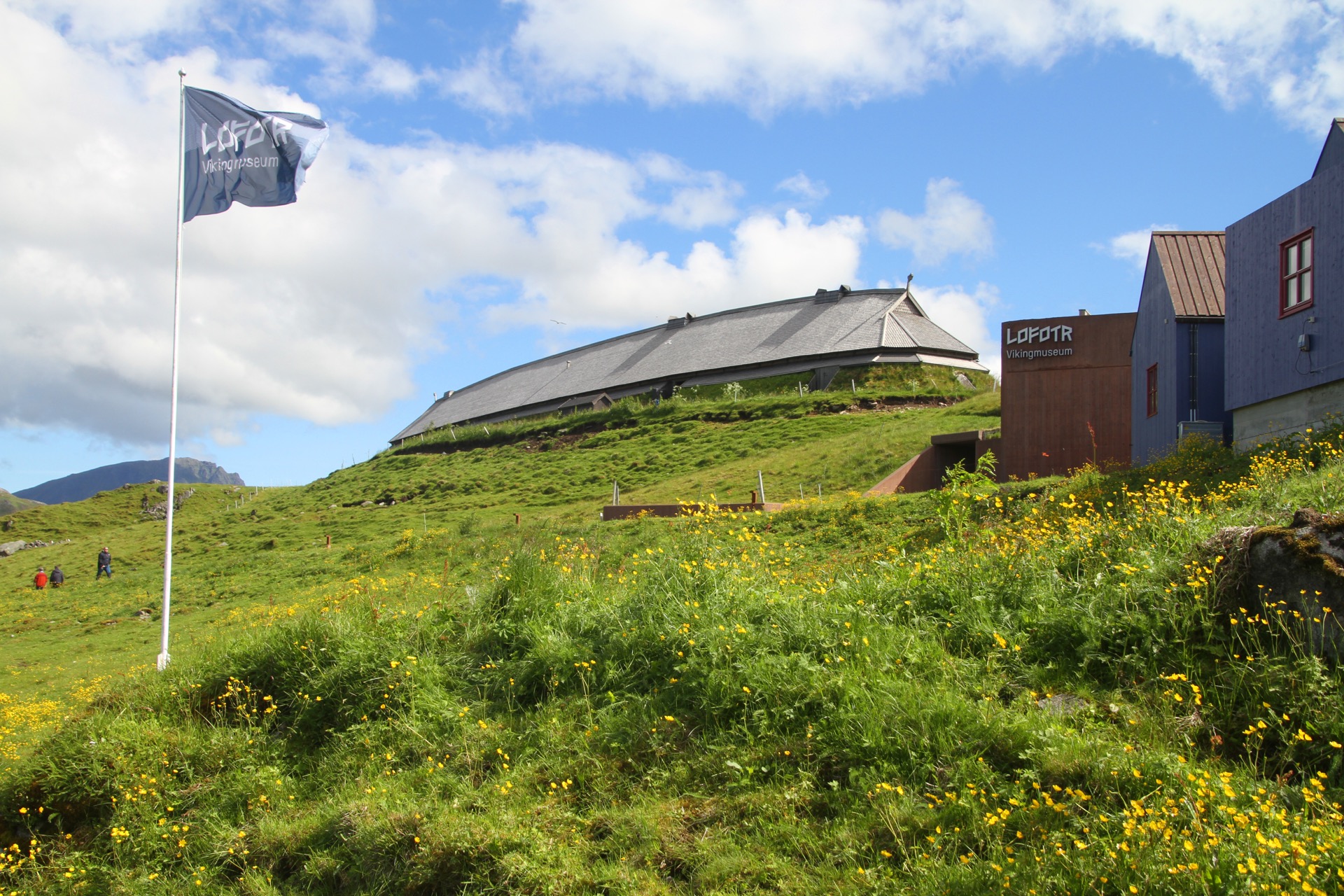
Built around a reconstructed 83-meter Viking chieftain's longhouse in Borg, essentially next door to Unstad — the largest Viking-age longhouse ever discovered. The museum hosts the annual Lofotr Viking Festival, drawing reenactors, markets, and feasts inside the longhouse itself.
 Wikimedia Commons (CC BY-SA 4.0)
 - The Stockfish Trade Skrei (Arctic cod) season runs January-April
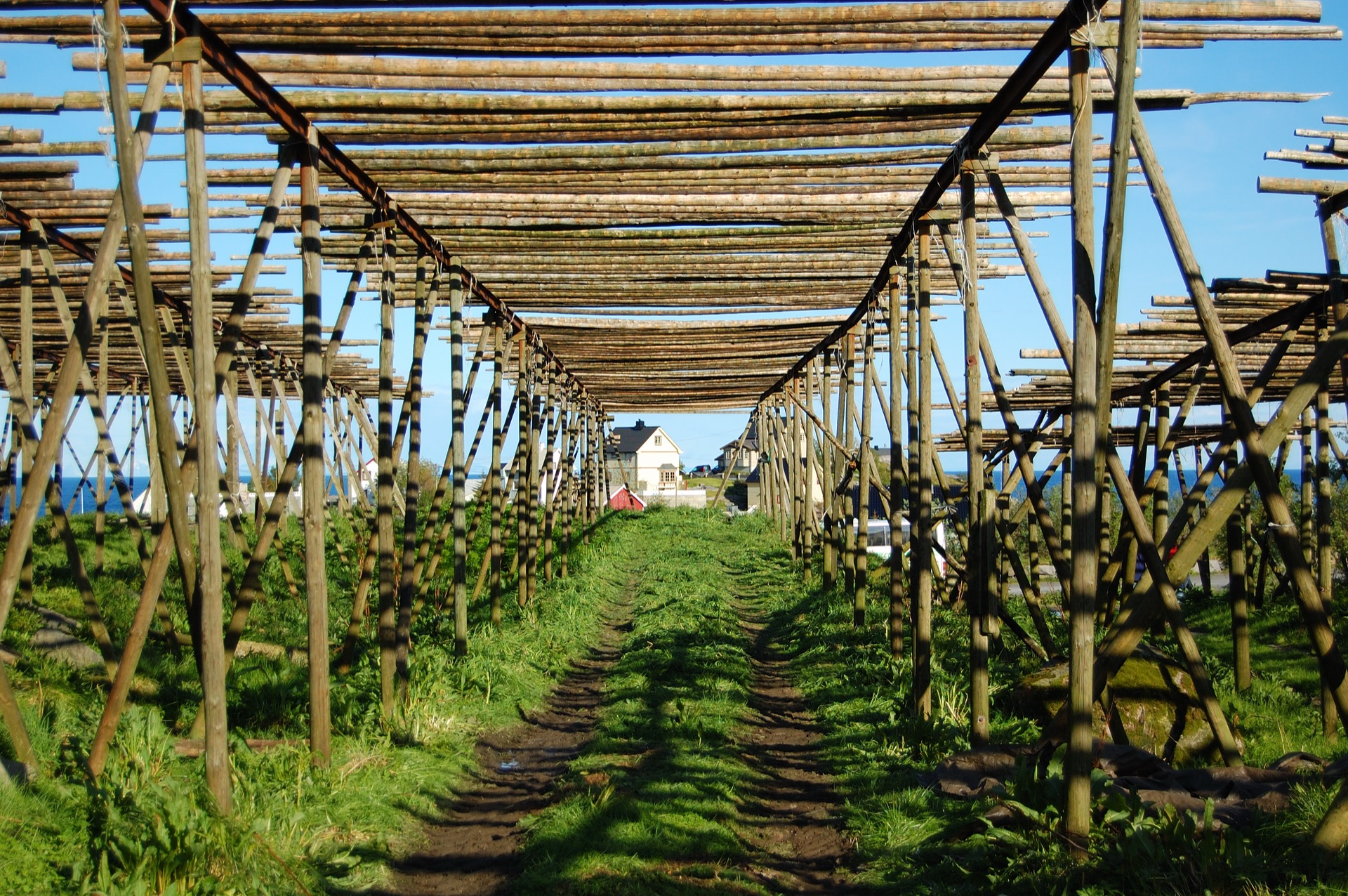
Norway's stockfish trade traces to the 13th century, anchored by the annual skrei migration — Arctic cod swimming down from the Barents Sea to spawn in Lofoten, still driving the island economy after a thousand years. A defining legend: Venetian merchant Pietro Querini, shipwrecked on the Lofoten island of Røst in 1432, carried stockfish home to Venice — Italy still consumes over 90% of Norway's stockfish exports today.
 Wikimedia Commons (CC BY-SA 3.0)
 - Moskstraumen — the Great Maelstrom Visible from the southern Lofoten islands year-round
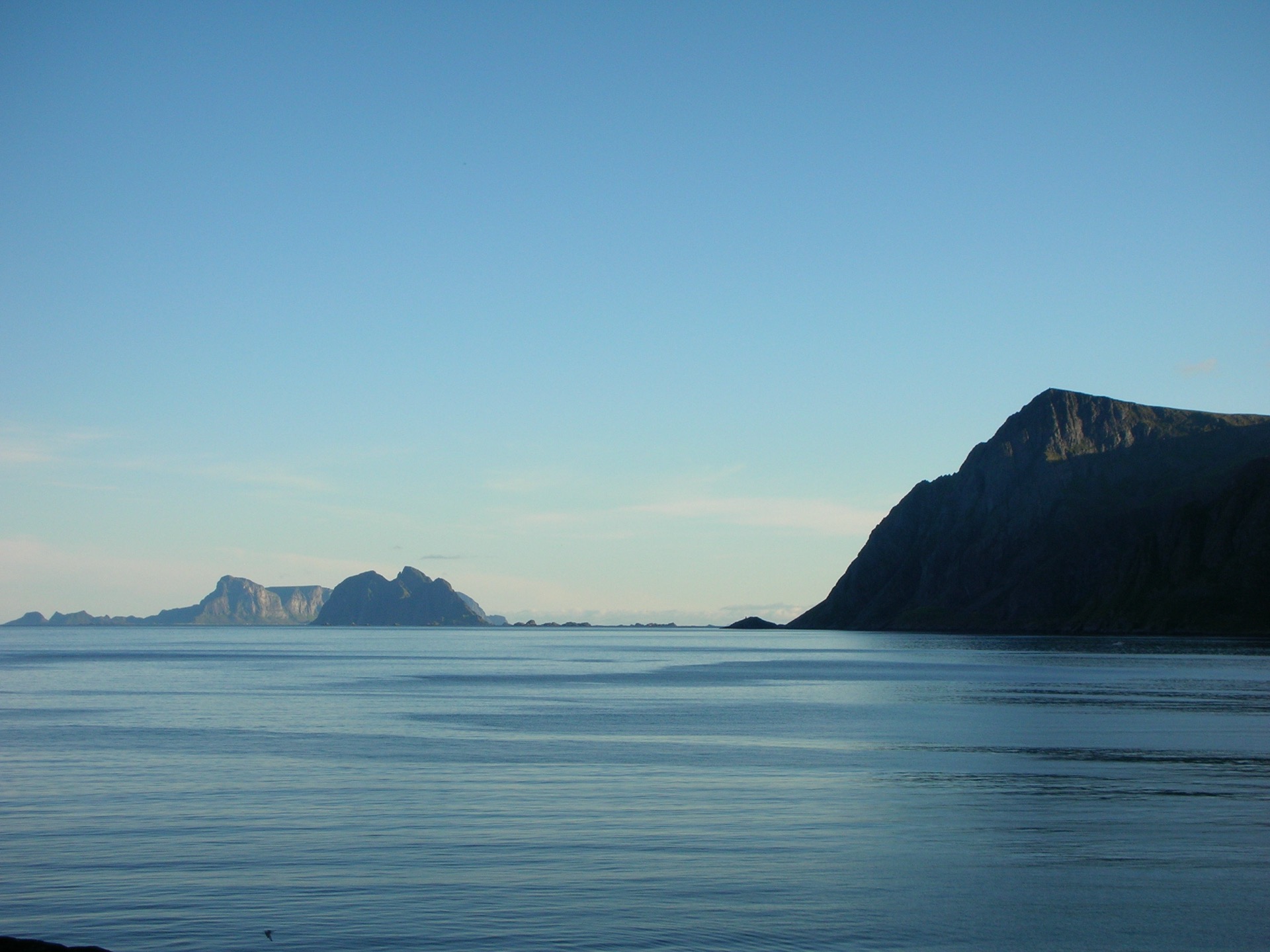
A 4-5km-wide tidal maelstrom between the southern Lofoten islands, described more than 2,000 years ago by the Greek historian Pytheas — and the direct inspiration for Edgar Allan Poe's "A Descent into the Maelström" and a scene in Jules Verne's "Twenty Thousand Leagues Under the Sea."
 Wikimedia Commons (CC BY-SA 3.0)
 - Nusfjord Year-round; a real, still-fishing village
One of Norway's oldest and best-preserved fishing villages, with fishing recorded there since the mid-1800s — during its "golden age" it was home to over 1,500 fishermen with 600,000 fish drying at once. One of three Norwegian villages chosen for UNESCO's 1975 Architectural Heritage Year preservation pilot. Around 25 permanent residents remain today, alongside 80,000-90,000 visitors a year and five of Lofoten's protected rorbuer (traditional fishing cabins).
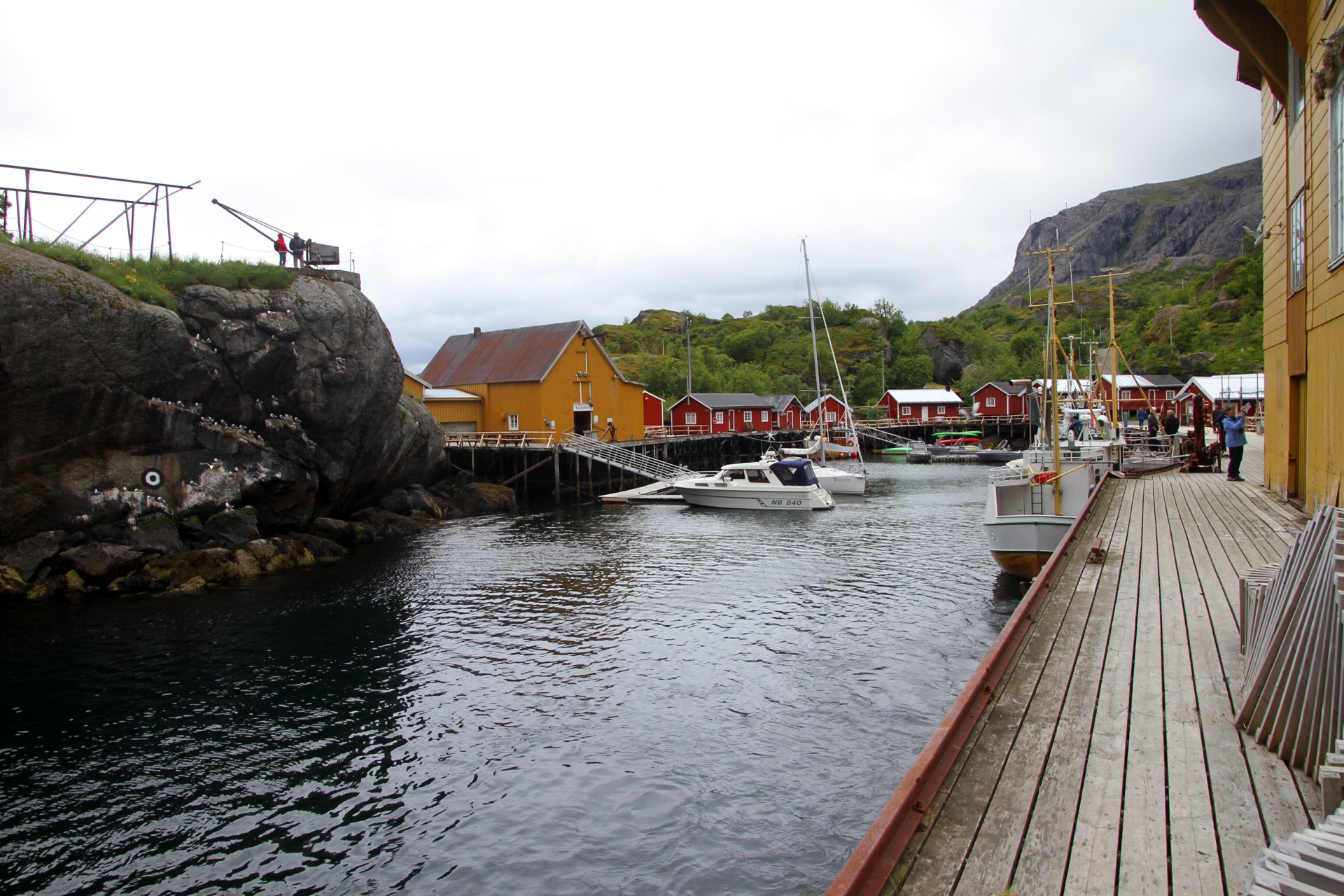 Wikimedia Commons (CC BY-SA 4.0)
 - Reine Year-round; the Reinebringen viewpoint hike above town
Widely called Lofoten's most photographed village — red-and-yellow rorbuer set against sheer peaks dropping straight into the fjord, with the Reinebringen trail climbing the ridge directly above town for the classic aerial-style view.
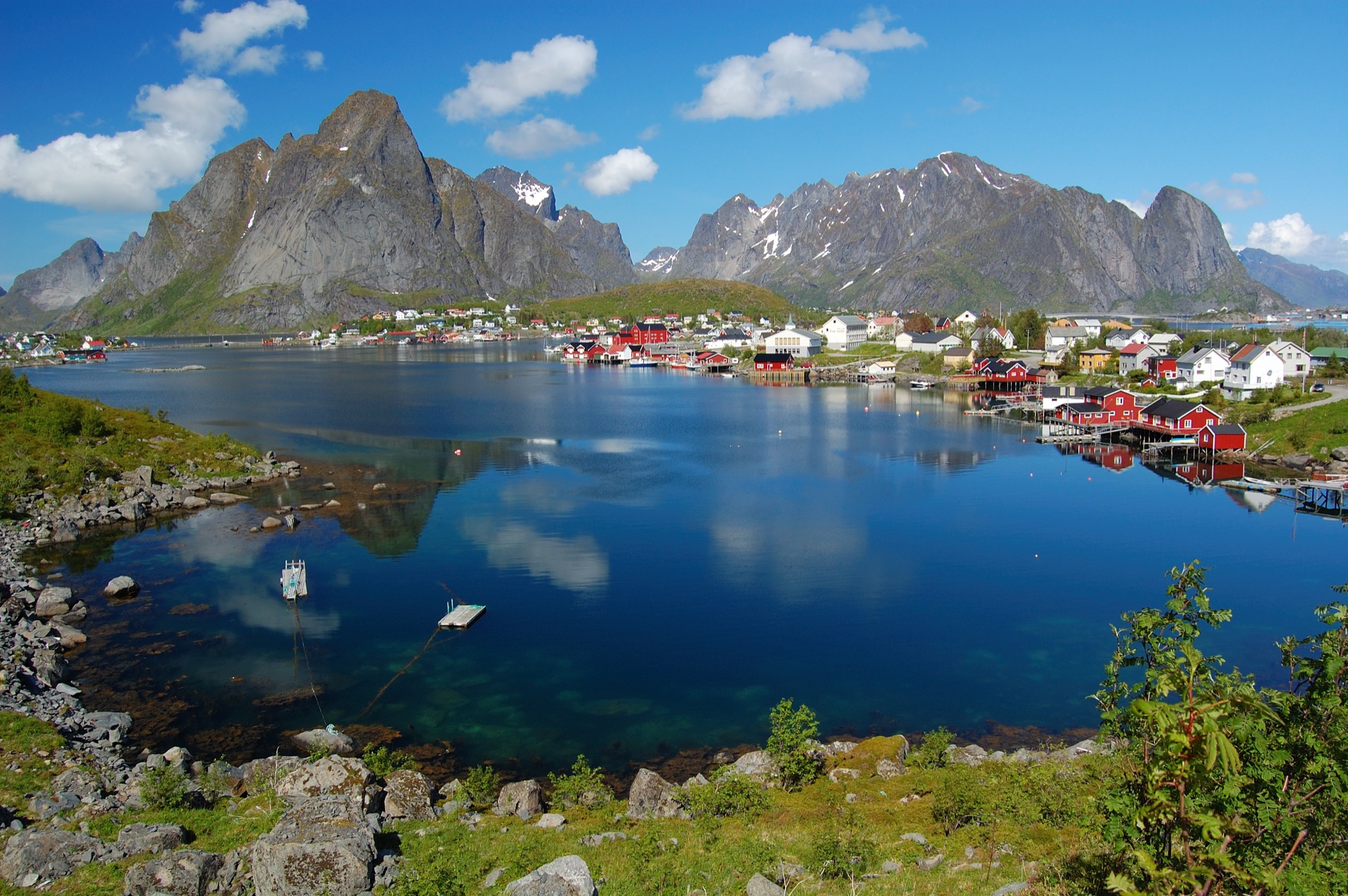 Wikimedia Commons (CC BY-SA 3.0)
 - Henningsvær Year-round; galleries and cafés open seasonally
An art-gallery-and-café fishing village built across a small island cluster, sometimes called "Lofoten's Little Venice" — home to Fiskekrogen and Klatrekafeen (see Where to Eat above), plus a working harbor still very much a fishing town underneath the gallery scene.
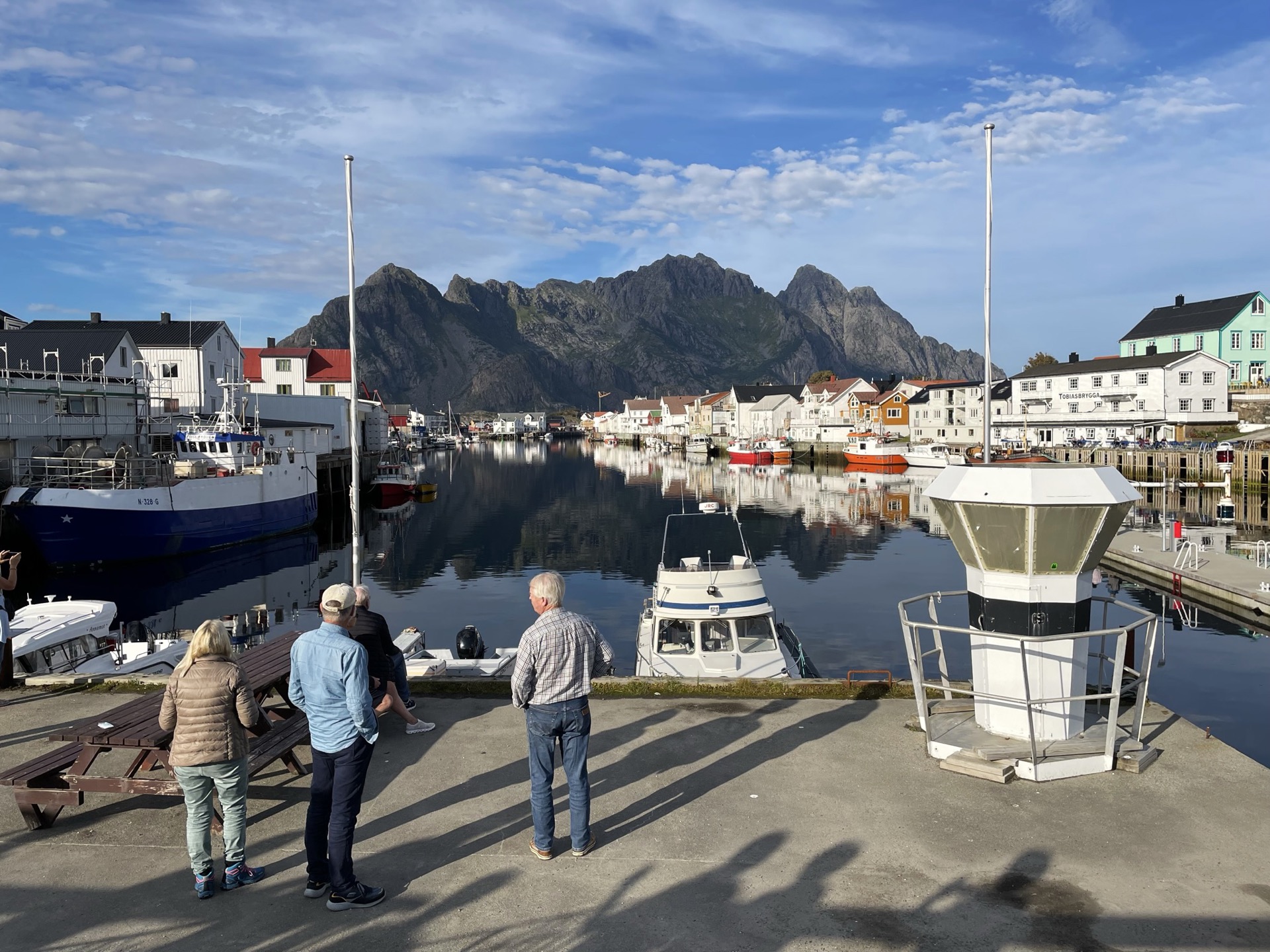 Wikimedia Commons (CC0)
 - Haukland & Uttakleiv Beaches Year-round; Uttakleiv is a strong Northern Lights spot
A pair of white-sand beaches connected by a coastal trail, just 7km from Unstad Arctic Surf and 10 minutes from Leknes. Uttakleiv is frequently cited as the most-photographed beach in Lofoten, and with its open, north-facing horizon, it's also a strong aurora-viewing location.
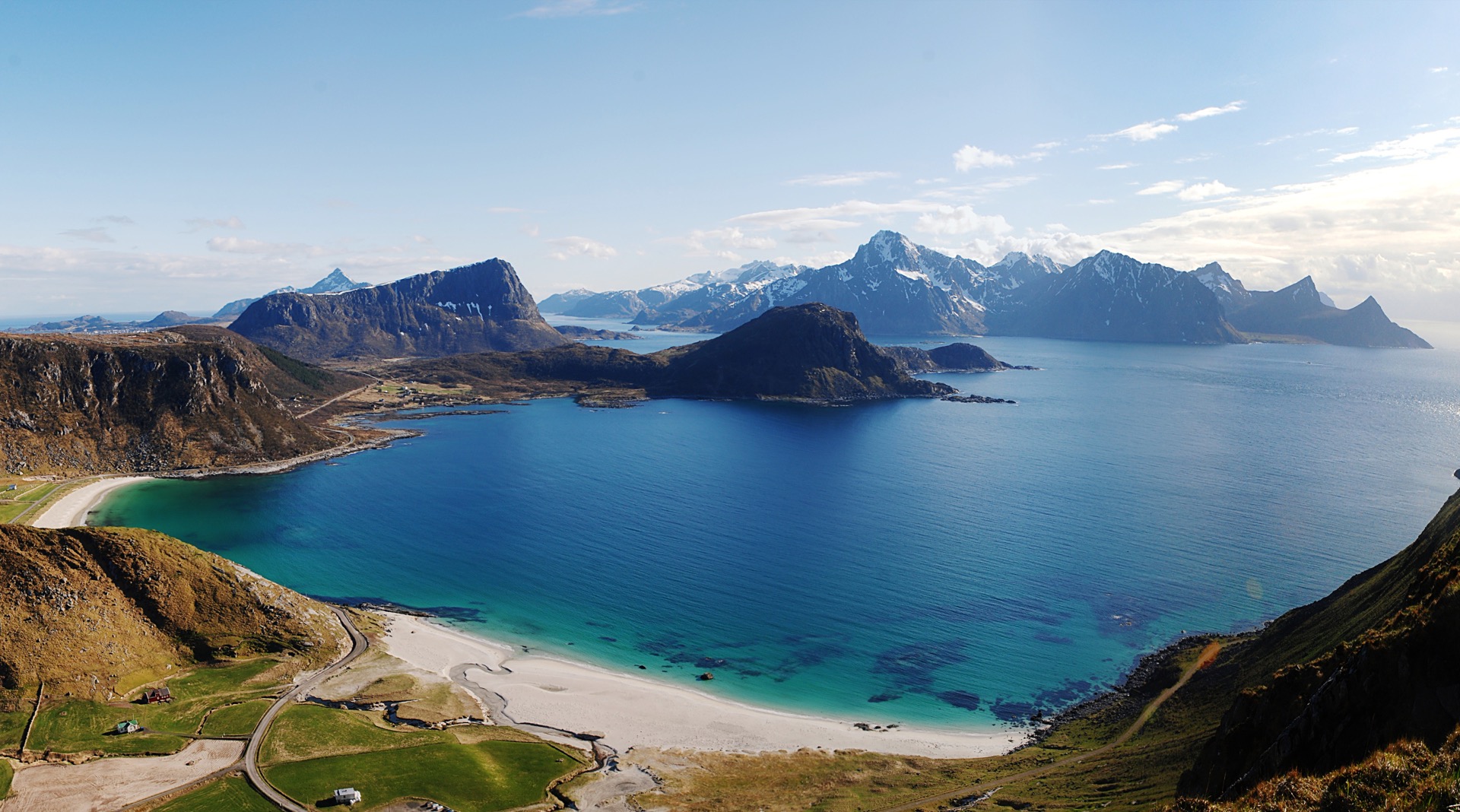 Wikimedia Commons (CC BY-SA 2.0)
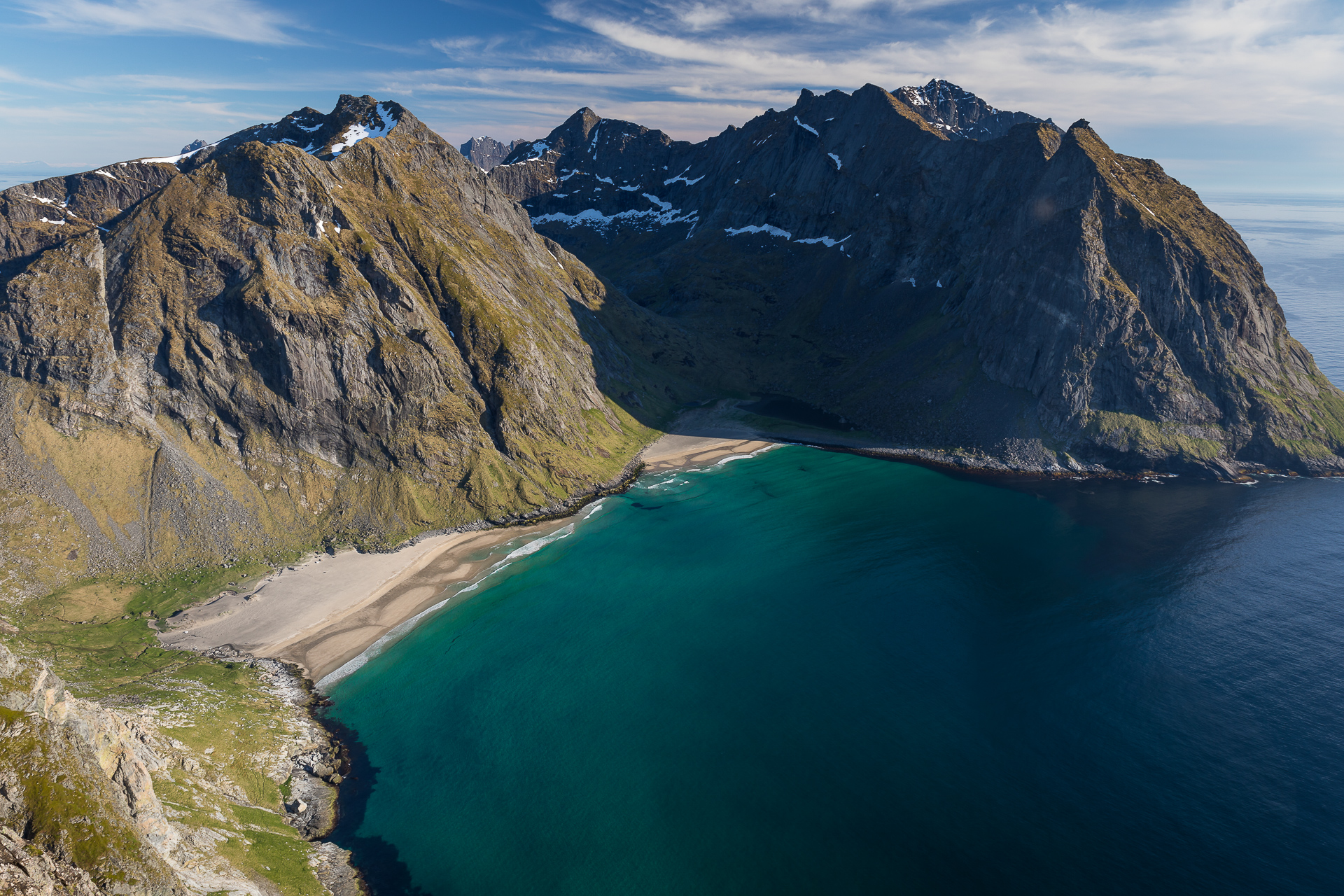
 - Kvalvika Beach & Mount Ryten A trail hike, not a road — plan a half-day
A beach reachable only on foot, roughly 1.5 hours one-way from the Fredvang trailhead, with the trail continuing another 30 minutes up to the 543m summit of Mount Ryten for the classic aerial-looking view straight down over the bay.
 Wikimedia Commons (CC BY-SA 4.0)
Questions people actually ask.
Is Unstad really the best surf hub in Norway?
It's the most built-out one, genuinely — a dedicated surf resort with tiered accommodation, two full-service surf schools, on-site food and wellness, and real international recognition as one of the world's northernmost surf schools. Norway has two other real, historically legitimate surf communities — Jæren near Stavanger (arguably the actual birthplace of Norwegian surfing, dating to 1982) and Stad/Hoddevik on the west coast — but both are thin on the cross-category local infrastructure (lodging, food, repair, wellness) this site tracks, and neither is anywhere near Lofoten geographically. Unstad is where the trip works.
Which airport should I fly into?
Oslo Gardermoen (OSL) is the realistic US gateway — SAS flies it direct to New York JFK. From Oslo, plan on a domestic connection north: Widerøe, SAS, or Norwegian fly into Evenes (EVE), the most realistic regional gateway, about 3.5-4 hours' drive from Unstad via the ferry-free Lofoten Fixed Link road. Bodø (BOO) and the small regional airports at Leknes (LKN) and Svolvær (SVJ) are closer to Unstad but carry no direct US service — Leknes and Svolvær are domestic-only. Budget a full day of travel.
Does Norway use the Euro?
No. Norway isn't an EU member at all — Norwegians voted against joining in referendums in both 1972 and 1994 — but it is a full member of the Schengen Area and the EEA, so entry rules for US citizens are the same standard 90-day-in-180 visa-free stay as EU Schengen countries. Currency is the Norwegian Krone (NOK). One planning note: the EU-wide ETIAS pre-travel authorization is expected to start rolling out in the second half of 2026 — worth checking the current status before you book.
How cold is the water, really?
This is genuinely the coldest water on this site. Sea temperature at Unstad runs roughly 3-6°C (37-43°F) at the coldest, in early April, up to about 11-15°C (52-59°F) at the warmest, in early-to-mid August. Summer sessions call for a 4/3mm suit with 3mm boots; the coldest spring window needs a 6/5/4mm suit, or a well-fitted 5/4mm with a hood, gloves, and 5mm boots. Locally, hood, gloves, and boots are treated as standard gear year-round.
Disclosure & how this page works.
Straight talk: Some links on this page are affiliate links — if you book through them, Secrets of Surf Travel earns a small commission at no extra cost to you. We only link places and people we'd use ourselves, and coverage is never for sale. Those commissions are what keep this site running and fund the next trip.
Today, the "Search Vrbo rentals," "Search Booking.com stays," and "Search Agoda stays" links on this page are affiliate links — every vendor listing link is still a plain courtesy link. As partnerships with these local businesses come online, more links (and discount codes, where Secrets of Surf Travel benefits from their use) may earn us a commission, and this page will keep saying so plainly. Coverage is never for sale: nobody on this page paid to be here, and nobody can.
Every listing was researched in 2026 and is being verified in person. Prices, hours, and policies change — treat them as strong starting points and confirm directly with the business. And per the No-Reveal Code: you will find no surf spots on this page, ever.