
Northland & Auckland
This site's first New Zealand zone, and a genuinely different kind of place than every Pacific Islands zone built so far — full commercial infrastructure, real board-repair shops, no "bring your own everything" caveats. Ahipara sits remote at the Far North's edge, a small town built around one iconic point break. Piha and Muriwai sit 40 minutes from Auckland's 1.7 million people, with competing surf schools and a wine region down the road. Two real, different trips, stated honestly as such.
Straight talk: Some links on this page are affiliate links — if you book through them, Secrets of Surf Travel earns a small commission at no extra cost to you. We only link places and people we'd use ourselves, and coverage is never for sale. Those commissions are what keep this site running and fund the next trip.
Some vacation-rental search links on this page (marked "Search Vrbo rentals," "Search Booking.com stays," or "Search Agoda stays") are affiliate links. Every vendor link below is still a plain courtesy link. As more partnerships come online, more links may earn us a commission; the promise above holds either way.
Real safety context: New Zealand ranks among the safest countries on Earth for crime — the real hazard here is water, not people. Over the past decade, 38% of New Zealand's fatal beach and coastal drownings happened at surf beaches, and the country's west coast beaches — which include both Piha and Muriwai — are specifically flagged as higher-risk than the east coast due to open-ocean exposure and rip currents. Surf Life Saving NZ logged 79 rescues and 55 people assisted to safety on west coast beaches in just an 8-month stretch (July 2024-February 2025). Swim between the flags at Piha and Muriwai's patrolled surf lifesaving clubs in summer, and respect posted conditions at Ahipara.
Getting There
Auckland Airport (AKL) is the gateway — Air New Zealand flies direct from LAX, SFO, and Houston, plus Honolulu, more direct US routes than any other carrier on this corridor. Flight time from LAX runs roughly 12 hours.
Documents: US citizens need a New Zealand Electronic Travel Authority (NZeTA) before travel, applied online or via app — this is not optional, and it's genuinely different from most Pacific zones on this site where no advance paperwork is needed. As of 2026 it runs roughly NZD 17-23 processing fee plus a mandatory NZD 100 International Visitor Conservation and Tourism Levy, totaling around NZD 117-123. Valid 2 years or until passport expiry, up to 90 days per visit — apply well ahead of departure.
Ground Transport
- Driving is on the left — British/Australian convention.
- Auckland Airport is the real rental hub for this whole zone — Avis, Hertz, Europcar, SIXT, and Enterprise all operate there, plus local independents Kiwi Car Hire and Omega Rental Cars. Neither Ahipara nor Piha/Muriwai has its own rental desk — rent in Auckland and self-drive.
- Ahipara is roughly 4-4.5 hours' drive from Auckland (via Kaitaia, the nearest real service town, ~5km away). Piha and Muriwai are each about 40-45 minutes from central Auckland — genuinely day-trip range, and about 25 minutes apart from each other.
When to Go & What to Pack
- New Zealand is Southern Hemisphere — surf season runs opposite the US, roughly May through October, driven by Tasman Sea storm-generated southwest groundswells. Ahipara's clean, surfable conditions statistically peak in October, though the whole May-October window works. Piha and Muriwai are more consistent year-round, with autumn a standout for both and January-March also productive at Muriwai specifically.
- Water temperature is genuinely cooler than every Pacific Islands zone on this site — peaking around 66-72°F (19-22°C) in early February (NZ summer), dropping to 55-59°F (13-15°C) by late August. A 2mm shorty or 3/2mm covers summer if it's windy; winter needs a real 4/3mm suit plus boots. There is no boardshorts-only season here.
Good to Know
- Currency is the New Zealand Dollar (NZD) — the country is widely cashless, cards work almost everywhere including small cafés.
- Emergency number: 111 (police/fire/ambulance).
- Language: English is universal; Te Reo Māori is an official language, visible in place names and signage throughout — genuinely part of the texture, not a barrier.
- No dangerous land predators or venomous snakes — genuinely benign on land. The real hazard is water (see the safety callout above).
- Real board and wetsuit repair infrastructure exists here, unlike every Pacific Islands zone on this site — see the Piha/Muriwai hub below for Auckland-wide options.
Respecting the Locals
Te Reo Māori is an official language here, visible in place names and signage throughout this zone — genuinely part of the texture of this country, not a backdrop. Ahipara is a small town built around one iconic point, remote at the Far North's edge, a completely different scale than Piha and Muriwai's 40-minute drive from 1.7 million people in Auckland. That size difference matters: a small point-break town runs on a much tighter, more visible local community than a big-city surf beach with competing schools.
- Locals get first priority, always. Watch a session before you paddle out. Learn who's who before you learn the wave. Sit inside and catch what they let through — the leftovers are yours, not the set waves.
- Don't backpaddle. Ever. Being in position doesn't make the next wave yours, especially if you didn't wait your turn. If a local wants a wave, let them have it…even if it IS your turn. That older guy who may not be the best surfer out there has probably been surfing that wave before you even sat on a board. If you don't know someone, assume they're local.
- Don't snake. This shouldn't even need to be said, but…dropping in on someone, local or not, is the ultimate disrespect and the fastest way to be sent out of the water. Don't be that guy!
- Say hi. A “howzit,” “whatsup,” or “nice wave,” eye contact, or a nod in the channel — it costs nothing and it's the fastest way from stranger to welcome.
- This is somebody's home, not a resort amenity. The break you're surfing is where a local kid learned to swim, where someone's uncle has surfed for forty years. Act like a guest, because you are one.
- Spend where it actually helps. The food truck, the local shaper, the family-run rental, the local photographer — that's where a surf trip's money should land, not just the chain hotel gift shop. See The No-Reveal Code for why that's the whole premise of this site.
- Leave it better than you found it. Pick up trash that isn't yours. Don't touch reef, wildlife, or cultural sites.
Locals have watched hundreds, if not thousands, of people come and go — some for days, some for months or years — and almost all of them eventually go home. The locals are still there. It takes many, many years to actually become one. Keep that in mind the next time you feel entitled to the same waves they get.
None of this is a secret handshake. It's just how you'd want a guest to act in your own backyard.
Ahipara & the Far North
A small township (population roughly 1,200) at the southern end of a long stretch of beach, closer in character to a remote Pacific Islands hub than to Auckland's west coast — limited dining, holiday-park lodging, one dedicated surf operator.
Surf Schools
Stays
- Ahipara TOP 10 Holiday ParkAhiparaBudgetDorms through motel units on tropical-garden grounds, with a tour desk booking quad biking, horse treks, and surfing. ahiparaholidaypark.co.nz · Instagram · Map
- YHA Ahipara Backpackers & Holiday ParkAhiparaBudgetA 6-acre site with lodge, tent/power sites, and cabins, a 5-minute walk to the beach. Facebook · Map
- Ahipara Bay MotelAhiparaMid-rangeMotel-standard units, also a real activities-booking point. ahiparabaymotel.co.nz · Facebook · Map
Where to Eat
Wheels / Repair / Wellness
None locally — genuinely thin, stated honestly. Real guidance: rent a car in Auckland and self-drive north; handle board/wetsuit repair in Auckland before or after the Far North leg. The nearest verified massage/spa options are 1.5-2 hours away in Paihia (Bay of Islands), not walkable or local to Ahipara.
Other Adventures
- Ahipara Adventure CentreAhiparaMid-rangeQuad biking along Ninety Mile Beach, no special license required beyond a valid driver's license. ahiparaadventure.co.nz · Map
- Ahipara Horse TreksAhiparaMid-range1-3 hour treks along the beach, year-round. Facebook · Map
Piha & Muriwai (Auckland's West Coast)
Two distinct black-sand beaches, each about 40-45 minutes from central Auckland and roughly 25 minutes from each other — day-trip-able for a city of 1.7 million, with real competing surf schools and full Auckland commercial infrastructure just down the road.
Surf Schools
- Piha Surf School138 Seaview Road, PihaMid-rangeNZ Champion instructors, registered with Surfing NZ and Water Safe NZ. pihasurfschool.com · Instagram · Map
- Piha Surf AcademyPihaMid-rangeInstruction from NZ$70/person, gear included. pihasurfacademy.com · Instagram · Map
- Muriwai Surf SchoolMuriwaiMid-rangeNZ-owned family business operating since 2002, ISA/Surfing NZ/Water Safety NZ approved, daily group instruction plus private instruction and Rip Curl wetsuit hire. muriwaisurfschool.co.nz · Instagram · Map
Stays
- Piha Beachstay Accommodation38 Glenesk Road, PihaBudgetPrivate and shared rooms plus a 6-bed bunkroom, roughly a 14-minute walk to the beach and near Kitekite Falls. pihabeachstay.co.nz · Facebook · Map
- Muriwai LodgeMuriwaiMid-rangeAmong mature pōhutukawa trees with direct beach access. muriwailodge.com · Instagram · Map
Whole-house "bach" (vacation home) rentals through Bachcare NZ and similar platforms are the standard mid/upper-tier option at both beaches — a real, distinctly Kiwi lodging culture worth knowing about.
Where to Eat
- Piha StorePihaBudgetThe real village institution, open since 1945 — cabinet food, coffee, pies, and Nice Blocks ice cream. piha.co.nz · Instagram · Map
- Piha Surf Life Saving ClubPihaBudget/midClubhouse food with real beach and sunset views. pihaslsc.com · Instagram · Map
- Sand Dunz Beach Cafe455 Motutara Road, MuriwaiPermanently closed — verifyAll-day breakfast, fish and chips, coffee, open 7:30am-3pm daily. Map
Surfboard & Wetsuit Repair
- Ultimate Surf & SkateNorth Shore, AucklandConfirm on the groundDing repairs, competitive pricing, quick turnaround. ultimatesurfnskate.co.nz · Facebook · Map
- Ding King Surfcraft RepairAucklandConfirm on the groundLaminating/repair specialist. Facebook · Map
- Bodyline WetsuitsWairau Valley, AucklandConfirm on the ground1-2 week wetsuit repair turnaround. bodyline.co.nz · Facebook · Map
A genuine departure from every Pacific Islands zone on this site — real, established repair infrastructure exists here, centered in Auckland rather than in either beach village itself.
Other Adventures
- Kitekite Falls WalkPihaBudgetSee Local Secrets. Map
- Lion Rock climbPihaBudgetSee Local Secrets. Map
- Muriwai Gannet ColonyOtakamiro Point, MuriwaiBudgetSee Local Secrets. Map
- Muriwai Golf LinksMuriwaiMid-rangeLinks-style championship course opened 1960, ranked roughly 12th in NZ, routed along the dunes adjoining the gannet reserve. muriwaigolfclub.co.nz · Facebook · Map
- Kumeu wine region~15 min from MuriwaiMid-rangeReal, established wine country since the 1930s-40s Croatian-Dalmatian settler era — Kumeu River Winery's Chardonnay is internationally regarded. kumeuriver.co.nz · Facebook · Map
Local Secrets
Eight non-surf reasons this zone rewards the curious — New Zealand's largest living kauri tree, the actual site where the Treaty of Waitangi was signed, and one of the world's few mainland-accessible seabird colonies.
- Tāne Mahuta, Waipoua Forest Open year-round, guided night tours available
New Zealand's largest known living kauri tree — 51 meters tall, roughly 13.8 meters in girth, estimated at 1,250-2,500 years old. The name means "Lord of the Forest." Māori-owned Footprints Waipoua runs a real guided "Twilight Encounter" tour that opens with a karakia asking the tree's permission to enter.
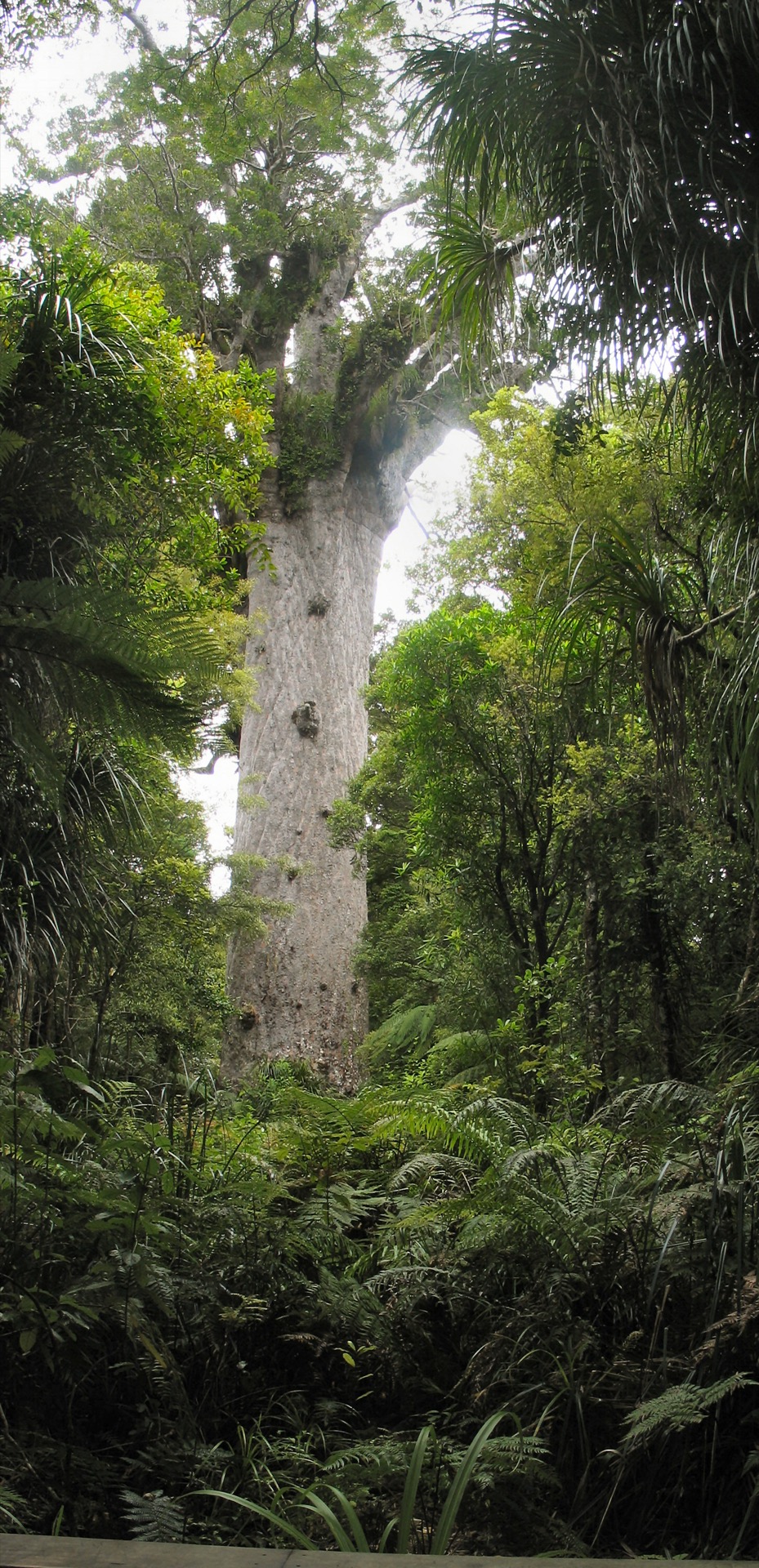 Wikimedia Commons (Public Domain)
 - Waitangi Treaty Grounds Open year-round, Bay of Islands, ~1.5-2 hrs from Ahipara
The actual site where the Treaty of Waitangi was signed on February 6, 1840, between Māori rangatira and the British Crown — often described as the birthplace of the nation. The historic Treaty House itself dates to 1834.
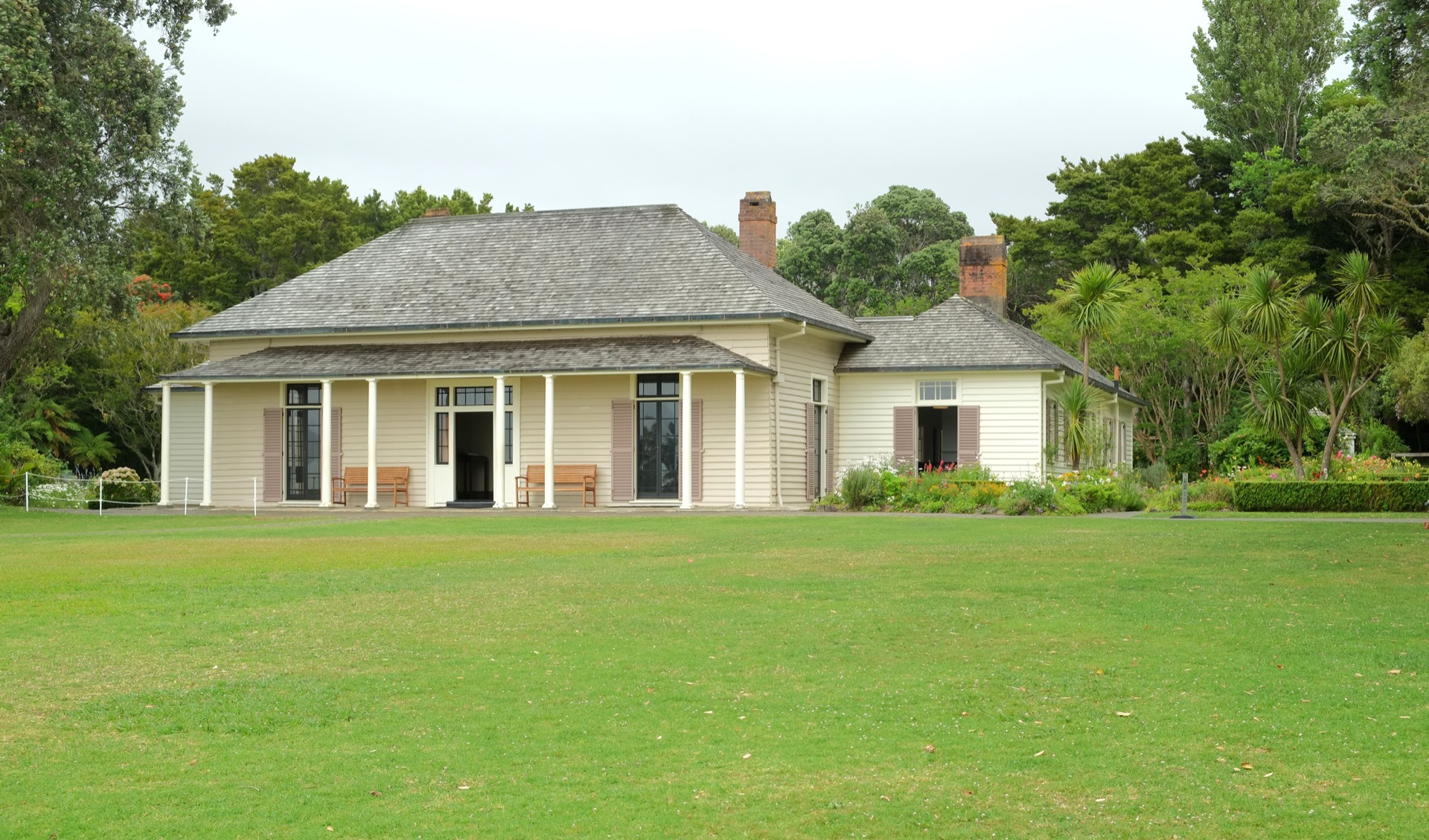 Wikimedia Commons (Public Domain)
 - Cape Reinga / Te Rerenga Wairua Open year-round, northernmost tip of the North Island
In Māori tradition, this headland is where the spirits of the dead leap from and depart for Hawaiki, the ancestral homeland — described by both DOC and Māori sources as the most spiritually significant site in the country. Worth visiting with real respect, not as a casual photo stop.
- Ninety Mile Beach Year-round, Ahipara sits at the southern end
Actually closer to 88km/55 miles, a DOC-designated highway with real sand-dune sandboarding at Te Paki — the long beach Ahipara anchors.
- Lion Rock (Te Piha) Open year-round, Piha
A 101-meter volcanic remnant dominating Piha beach, climbable via a roughly 30-minute return walk to a viewing platform.
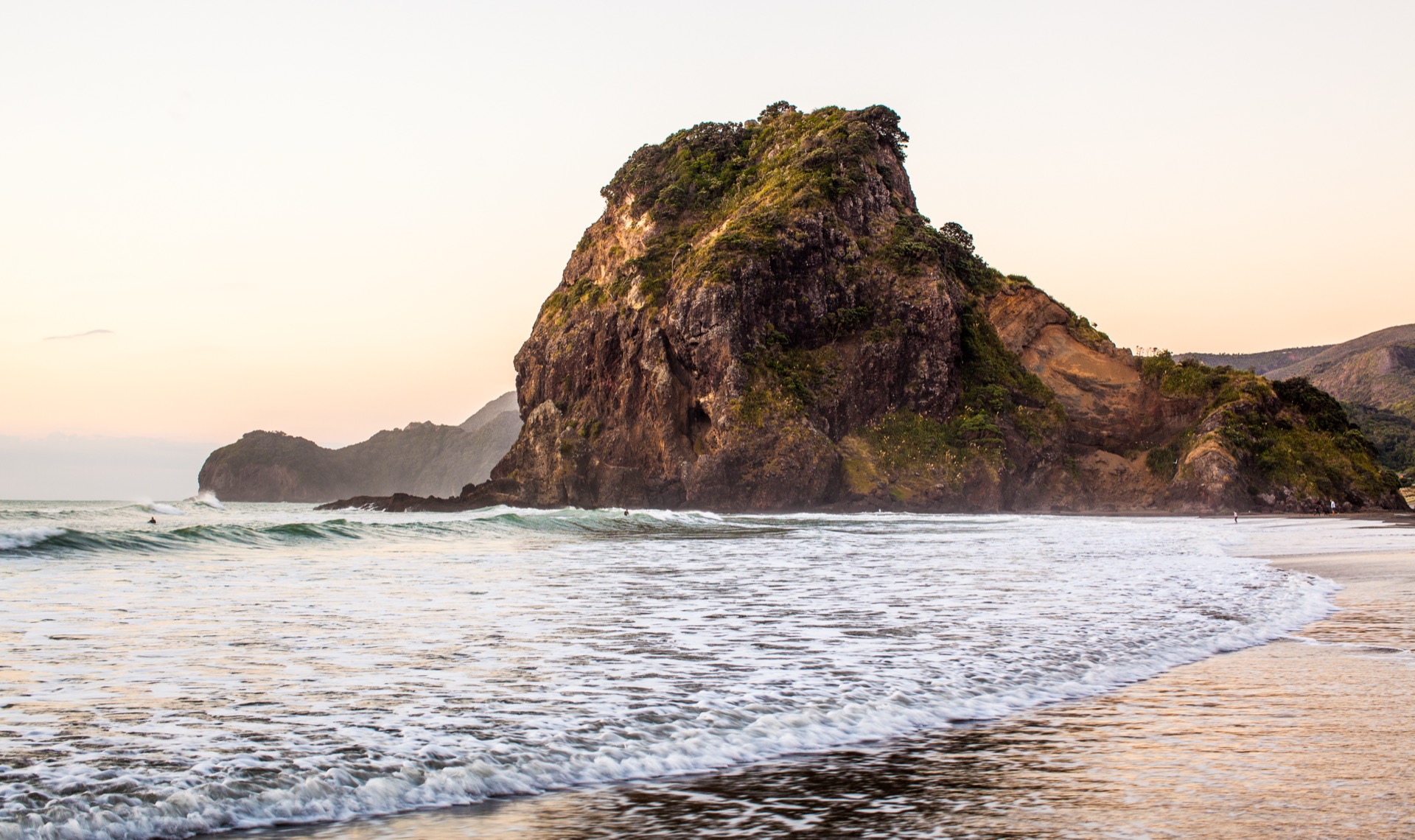 Wikimedia Commons (CC BY-SA 2.0)
 - Kitekite Falls Open year-round, Piha, trailhead at Glen Esk Road
A 40-meter three-tiered waterfall and swimming hole reached by a 2.4km return walk through native bush — roughly 40 minutes to an hour round trip.
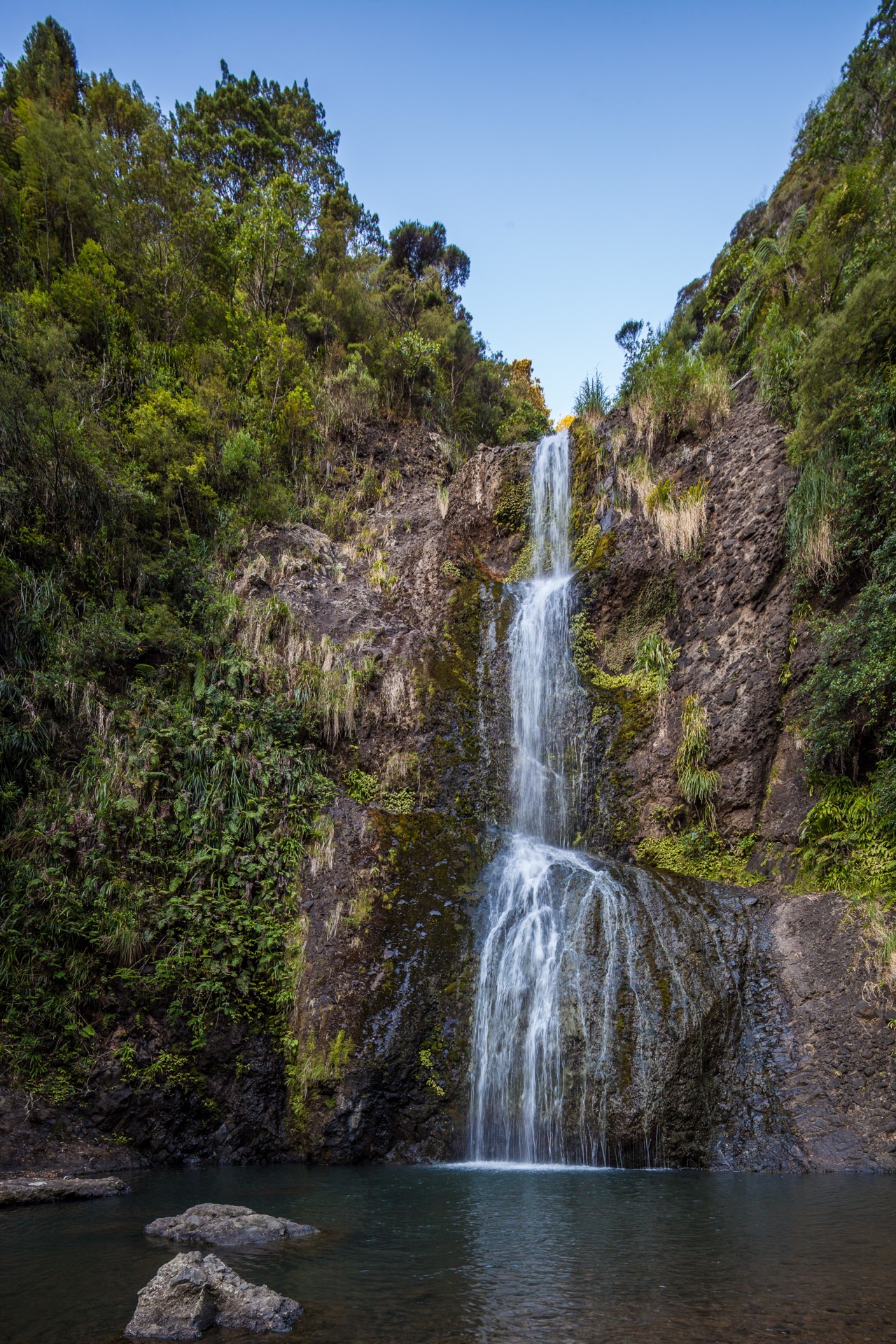 Wikimedia Commons (CC BY-SA 2.0)
 - Muriwai Gannet Colony Active roughly September-April, Otakamiro Point
One of the very few mainland-accessible Australasian gannet nesting colonies in the world — most gannet colonies exist only on islands. Roughly 1,200 breeding pairs nest here, with viewing platforms close enough to watch nesting behavior directly from the car park.
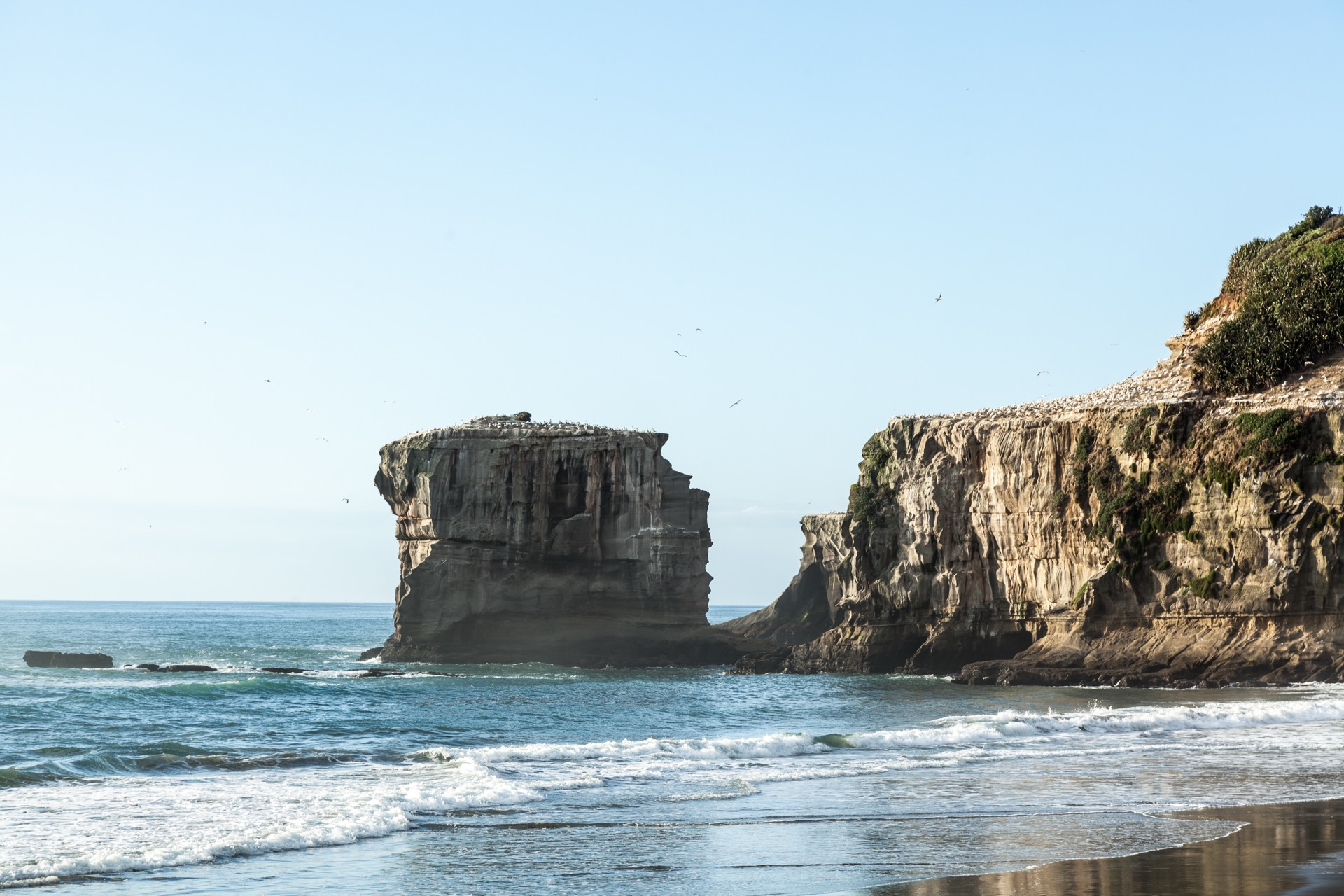 Wikimedia Commons (CC BY-SA 2.0)
 - Waitākere Ranges Bush Walks Year-round, gateway at Arataki Visitor Centre, Oratia
Over 250km of native-bush track connecting Piha, Karekare, Bethells/Te Henga, and Whatipu. Karekare Beach, 10 minutes from Piha, was the filming location for The Piano (1993) and has its own 30-meter waterfall.
Questions people actually ask.
Do I need a visa to visit New Zealand?
US citizens need a New Zealand Electronic Travel Authority (NZeTA), applied online or via app before travel — introduced in 2019, it's not optional. As of 2026 it runs roughly NZD 17 (mobile app) or NZD 23 (website) processing fee, plus a mandatory NZD 100 International Visitor Conservation and Tourism Levy, for a total around NZD 117-123. It's valid 2 years or until passport expiry, multiple entries, up to 90 days per visit — apply well before departure.
How do Ahipara and Piha/Muriwai actually compare?
Genuinely two different trips. Ahipara is remote — about 4-4.5 hours' drive from Auckland, small-town, one dedicated surf operator, limited dining, holiday-park lodging. Piha and Muriwai are 40-45 minutes from central Auckland, day-trippable for a city of 1.7 million, with multiple competing surf schools, real board/wetsuit repair shops, and a wine region 15 minutes from Muriwai. This page treats them as two distinct hubs rather than implying one uniform "Northland" experience.
Do I need a wetsuit here?
Yes, genuinely — a real departure from every warm-water Pacific Islands zone on this site. Water temperature peaks around 66-72°F (19-22°C) in February (NZ summer) and drops to 55-59°F (13-15°C) by late August. Summer still generally calls for a 2mm shorty or 3/2mm spring suit if it's windy; winter needs a real 4/3mm suit plus boots. There's no boardshorts-only season here.
Is New Zealand actually dangerous for swimming?
Crime-wise, New Zealand is one of the safest countries on Earth — the real risk here is water, not people. Over the past decade, 38% of New Zealand's fatal beach and coastal drownings happened at surf beaches, and the west coast beaches this zone covers are specifically flagged as higher-risk than the east coast due to open-ocean exposure. Surf Life Saving NZ logged 79 rescues and 55 people assisted on west coast beaches in just an 8-month stretch (Jul 2024-Feb 2025). Swim between the flags at Piha and Muriwai's patrolled surf lifesaving clubs in summer.
Disclosure & how this page works.
Straight talk: Some links on this page are affiliate links — if you book through them, Secrets of Surf Travel earns a small commission at no extra cost to you. We only link places and people we'd use ourselves, and coverage is never for sale. Those commissions are what keep this site running and fund the next trip.
Today, the "Search Vrbo rentals," "Search Booking.com stays," and "Search Agoda stays" links on this page are affiliate links — every vendor listing link is still a plain courtesy link. As partnerships with these local businesses come online, more links (and discount codes, where Secrets of Surf Travel benefits from their use) may earn us a commission, and this page will keep saying so plainly. Coverage is never for sale: nobody on this page paid to be here, and nobody can.
Every listing was researched in 2026 and is being verified in person. Prices, hours, and policies change — treat them as strong starting points and confirm directly with the business. And per the No-Reveal Code: you will find no surf spots on this page, ever.