
North Peru
Máncora's warm-water beach-party-to-upscale scene, Cabo Blanco's real Hemingway and world-record-marlin history, Chicama's global surf fame, and Pacasmayo's quieter alternative — Peru's desert coast at its most consistent, and this site's first Peru zone.
Straight talk: Some links on this page are affiliate links — if you book through them, Secrets of Surf Travel earns a small commission at no extra cost to you. We only link places and people we’d use ourselves, and coverage is never for sale. Those commissions are what keep this site running and fund the next trip.
Some vacation-rental search links on this page (marked “Search Vrbo rentals” or “Search Booking.com stays”) are affiliate links. Every vendor link below is still a plain courtesy link. As more partnerships come online, more links may earn us a commission; the promise above holds either way.
Getting There
Fly into Lima (LIM) — Peru's main international gateway with real direct US service: American from Miami, Delta from Atlanta (plus seasonal Salt Lake City), United from Houston, and LATAM's broad US network. Roughly 37 direct US flights land at LIM daily across around 7 gateway cities.
From Lima, connect domestically — no international flights land directly at either regional airport in this zone. Piura (PIU) is the practical gateway for Máncora and Cabo Blanco: LATAM, Sky Airline, and JetSmart all fly Lima-Piura, roughly 1h35-1h47, multiple daily departures. Talara (TYL) is smaller and thinner-served (LATAM/Sky Airline, only around 18 flights/week) — Piura is the better bet. Trujillo (TRU) serves Chicama and Pacasmayo, with LATAM and Sky Airline running roughly 62-63 weekly departures each direction, flight time 1h10-1h20.
Documents: No visa needed for US citizens — visa-free tourism with stays up to 183 days possible within a 365-day period at immigration officer discretion (90 days is the most commonly granted stamp, not guaranteed). Passport must be valid at least 6 months beyond arrival with blank pages. Entry is fully digital (TAM system) — no paper arrival card.
Ground Transport
- Piura airport to Máncora: roughly 2.5-3 hours by car/taxi, north on the Pan-American Highway (PE-1N) — well-paved and generally in solid condition on this stretch.
- Trujillo airport to Chicama: roughly 30 minutes. Trujillo airport to Pacasmayo: roughly 1h30. Chicama to Pacasmayo: roughly 1 hour — close enough to combine easily on one trip.
- The classic overland route: Lima to Chicama — a real, commonly-done surf-trip drive, roughly 634km/9h11 via the Pan-American Highway, with Trujillo as the natural stopover. Long-distance buses (Cruz del Sur, Oltursa) run the Lima-Trujillo leg overnight, roughly 8-10 hours, then a short taxi on to Chicama.
- Long-distance bus is a real, workable option throughout this zone — Cruz del Sur and Oltursa both serve the northern corridor generally, though exact current schedules and fares are worth pulling fresh closer to your trip since they shift.
When to Go & What to Pack
- Máncora works essentially year-round, with no sharp off-season — best/most consistent windows commonly cited as March-July and October-April depending on swell direction.
- Chicama and Pacasmayo are most consistent April-October, peak conditions often cited around May-September, though both can still deliver on north swells into December-January.
- Water temperature is the real differentiator within this single zone — Máncora runs a warm 21-27°C essentially year-round thanks to the Ecuatorial Counter Current, often no wetsuit needed. Chicama and Pacasmayo, despite being on the same coast, run noticeably cooler — warmest January-March, dropping to around 16°C by July-August as the Humboldt Current's influence strengthens. Pack a shortie-to-full wetsuit if your trip covers the whole zone.
- This is a warm desert climate — Máncora sits in subtropical desert (26-30°C air temp, ~322mm rain/year); Trujillo's coastal desert climate is similarly dry with some cloud cover certain months. The Humboldt Current suppresses rain cloud formation along this whole coast.
Good to Know
- The advisory: Peru overall sits at US State Department Level 2, Exercise Increased Caution — the specific higher-risk areas flagged (the Colombia border/Loreto, and the VRAEM region spanning parts of Ayacucho/Cusco/Huancavelica/Junín) are nowhere near this coast.
- Worth a live check before you travel: Piura department saw a weather-driven regional state of emergency declared in February 2026 due to heavy rain and landslides — a seasonal, El Niño-adjacent risk distinct from the national crime advisory. Confirm current status closer to your trip since this region is genuinely rain-sensitive in bad years.
- Currency: Peruvian Sol (S/). Emergency: National Police 105.
- Connectivity: local SIM cards are widely available and cheap, roughly $4-10 for tourist data packages — Peru's mobile network is comparatively stable for the region.
- Cost of travel: genuinely more affordable than Brazil — budget travelers commonly cite $40-80/day depending on style, hostel dorms around $8-15/night, a menú del día set lunch $2-5.
Respecting the Locals
This zone runs four genuinely different towns under one coastline. Máncora is a warm-water beach-party-to-upscale scene that's used to visitors; Cabo Blanco carries a real Hemingway and world-record-marlin fishing history that predates any surfer showing up; Chicama has real global surf fame and a fishing-village identity underneath that reputation; and Pacasmayo is the quieter alternative, further off the tourist radar. Each of these places has its own working economy and its own reason for being on the map that has nothing to do with visiting surfers.
- Locals get first priority, always. Watch a session before you paddle out. Learn who's who before you learn the wave. Sit inside and catch what they let through — the leftovers are yours, not the set waves.
- Don't backpaddle. Ever. Being in position doesn't make the next wave yours, especially if you didn't wait your turn. If a local wants a wave, let them have it…even if it IS your turn. That older guy who may not be the best surfer out there has probably been surfing that wave before you even sat on a board. If you don't know someone, assume they're local.
- Don't snake. This shouldn't even need to be said, but…dropping in on someone, local or not, is the ultimate disrespect and the fastest way to be sent out of the water. Don't be that guy!
- Say hi. A “howzit,” “whatsup,” or “nice wave,” eye contact, or a nod in the channel — it costs nothing and it's the fastest way from stranger to welcome.
- This is somebody's home, not a resort amenity. The break you're surfing is where a local kid learned to swim, where someone's uncle has surfed for forty years. Act like a guest, because you are one.
- Spend where it actually helps. The food truck, the local shaper, the family-run rental, the local photographer — that's where a surf trip's money should land, not just the chain hotel gift shop. See The No-Reveal Code for why that's the whole premise of this site.
- Leave it better than you found it. Pick up trash that isn't yours. Don't touch reef, wildlife, or cultural sites.
Locals have watched hundreds, if not thousands, of people come and go — some for days, some for months or years — and almost all of them eventually go home. The locals are still there. It takes many, many years to actually become one. Keep that in mind the next time you feel entitled to the same waves they get.
None of this is a secret handshake. It's just how you'd want a guest to act in your own backyard.
Máncora
Peru's most developed north-coast beach town — genuinely spanning backpacker-party energy through upscale, with a compact, walkable center where mototaxis (not car rental) are the real default way to get around.
Bungalows, boutique guesthouses, and oceanfront rentals cluster along Máncora's beachfront strip — the independent-lodging bench behind the town's bigger-name hotels.
Search Vrbo rentals in Máncora →
Surf Guides & Tours
- Pilar's / Laguna Surf School — Pilar IrigoyenDel Wawa Hotel, Máncora beachfrontMid-rangeA well-known local instructor, board rental included with instruction.WhatsApp
- Inka Warriors Mancora — Esaú & GenaroBeachfront, MáncoraMid-rangeOne of the three main established schools in town.
Stays
- Kimbas BungalowsJr. Ind. 101, MáncoraBudgetBalinese-style bungalows, roughly 300m from the beach, from ~$50/night.
- Punta Ballenas InnOceanfront, 200m from town centerMid-rangeFrom ~$75/night — mixed recent reviews on upkeep, real location praised.
- DCO Suites, Lounge & SpaOceanfront, MáncoraUpperBoutique oceanfront, from ~$195/night.@hoteldco
Where to Eat
- La Sirena d'JuanAv. Panamericana N, MáncoraMid-rangeWidely regarded as Máncora's top restaurant — Peruvian-Mediterranean-Nikkei fusion, 4.5/5 from 4,100+ reviews."A diamond in the wall" — recurring TripAdvisor sentiment
- El Ají Grill & BarAv. Piura interior, MáncoraMid-rangeGrilled tuna repeatedly cited as a standout.@elajigrillandbar
- Las GemelitasMáncoraBudgetCevicheria, ceviche de mero repeatedly praised as the town's best — some reviews flag slow service.
Wheels
No standout named car-rental brand is based in Máncora itself — the town is walkable and mototaxis (roughly $1/ride) are the real default. Car rentals are booked through Piura/Tumbes/Talara airport counters instead.
Surfboard & Ding Repair / Surf Shops
- Mancora Surf ShopMáncoraRental, sales, trade-in, instruction, and repair/manufacturing all in one shop.@mancora.surf.shopWhatsApp
- Soledad Surf ShopAv. Piura, MáncoraBoard rental and instruction.
Massage & Wellness
- DCO Suites SpaDCO Suites, MáncoraUpper2.5-hour ritual — steam room, massage, hydromassage.
- Sol Yoga MancoraHotel Punta BallenasMid-rangeDaily yoga plus alternative therapies and retreats.
Other Adventures
- Sechura Desert dune buggy + sandboardingMédano Blanco dune, near Sechura, ~50km from PiuraRoughly 4-hour tours including a mangrove stop.
- Pacífico AdventuresDeparts Los Órganos, 20 min from Máncora Whale watching, July-October, roughly 98% sighting probability claimed. pacificoadventures.com @pacificoadventures
Cabo Blanco
A genuinely tiny fishing village with real Hollywood-and-world-record fishing history — honestly, almost no commercial infrastructure exists here beyond a couple of stays and restaurants, and that's stated plainly rather than padded.
Lodging here is genuinely thin — a lodge and a resort — but worth a quick search before you assume there's nothing beyond the two listed below.
Search Vrbo rentals in Cabo Blanco →
Surf Guides & Tours
None found operating in Cabo Blanco itself — the wave here is genuinely advanced-only with a real, tense local lineup. Visiting surfers arrange guiding out of Máncora or Los Órganos instead.
Stays
- Black Marlin Restaurant & Lodge15m from Cabo Blanco beachMid-range3-star, Hemingway memorabilia on the walls.
- Inkaterra Cabo BlancoCabo BlancoLuxury11-room resort with plunge pools, from ~$258/night — part of the Inkaterra sustainability/marine-conservation group.
Where to Eat
- Black Marlin Restaurant & LodgeCabo BlancoMid-rangeSeafood-focused, Hemingway memorabilia, open 7am-8pm.
- Restaurant Cabo BlancoBeachfront, Cabo BlancoBudgetCane-and-concrete open-air design.
Wheels / Ding Repair / Surf Shops
None found based in Cabo Blanco itself — visitors arrange a driver from Máncora or Talara, and surfers use Máncora's shops for repairs and gear. Genuine, honest gaps in a town this small.
Massage & Wellness
Only found at Inkaterra Cabo Blanco's resort amenities — no standalone spa in the village.
Other Adventures — The Hemingway/Big-Game Fishing Thread
- "Miss Texas" — Captain Norm IsaacsVia Inkaterra Cabo BlancoUpperThe historic sportfishing yacht behind the 1953 all-tackle world-record 1,560lb black marlin catch, restored by the Inkaterra group and re-launched under a big-game fisherman with Fox/ESPN credits — striped marlin season Dec-May (peak Feb-Mar), black marlin peaks Nov and Mar. Booking runs through Inkaterra Cabo Blanco directly, not a separate walk-up charter.
The original Cabo Blanco Fishing Club that hosted Hemingway, Marilyn Monroe, and John Wayne in the 1950s-60s is now abandoned and not bookable — the site and its history remain a real, verifiable draw, just not a functioning club anymore.
Chicama (Puerto Malabrigo)
Home to the world's longest left-hand wave by reputation — real, established surf-camp infrastructure has grown up around that fame, including a genuinely distinctive local feature: zodiac boat shuttles that tow surfers back up the point.
Independent surf hostels and small boutique stays cluster right on the point in Puerto Malabrigo — the local alternative to booking a chain hotel in Trujillo.
Search Vrbo rentals in Chicama →
Surf Guides & Tours
- My Surf Camp Peru / Chicama Surf CampMz 86 Lote 12, Puerto MalabrigoMid-rangeEnglish-speaking guides, board/wetsuit rental — ranked #1 specialty lodging in Puerto Malabrigo on TripAdvisor.@chicamasurfcampWhatsApp
Multiple local operators run zodiac boat shuttles back to the top of the point — a real, distinctive feature of this hub, sparing surfers a long walk or paddle back after a ride.
Stays
- Chicama Hostel — El HombrePuerto MalabrigoBudgetFrom ~20 soles/pp, rooms with wave-view balconies.
- Chicama Boutique Hotel & SpaBeachfront, 10-min walk from townMid-rangeDirect access to the Malecón section — garden view from $150, premium $180 with breakfast.chicamaboutiquehotel.com
Where to Eat
- Restaurante MochicaPuerto MalabrigoBudgetRanked #4 of 98 in town — perfectly cooked fish and good soup.
- Chicama Resto BarPuerto MalabrigoMid-rangeEvening-only — burgers, pizza, sushi, daily Peruvian dishes, vegan options.
Wheels
No standalone named local rental company found — most visitors hire a driver from Trujillo airport for the day rather than self-drive.
Surfboard & Ding Repair / Surf Shops
- Chicama Boards GaragePuerto MalabrigoBoards and wetsuits, custom orders with advance notice.@chicamaboardsgarage
Dedicated ding repair as a standalone service isn't confirmed here — likely handled informally through the surf camps.
Massage & Wellness
- Chicama Boutique Hotel & SpaPuerto MalabrigoMid-rangeSauna, hot tub, massage, yoga studio — the only real dedicated wellness facility found in this hub.
Pacasmayo
A quieter alternative to Chicama with the same swell window, home to a genuinely famous kiteable point and a historic pier that once ranked among Peru's longest.
Hospedaje-style surf hostels and small guesthouses run this stretch of coast — the low-key, independent counterpart to Chicama's busier camp scene.
Search Vrbo rentals in Pacasmayo →
Surf Guides & Tours
- El Faro Adventure ResortUrbanización La Perla s/n, Ribera del MarMid-rangeThe only hotel directly overlooking the point, with an on-site surf school.elfaropacasmayo.org@elfaroresortpacasmayoWhatsApp
Pacasmayo markets itself as home to one of the longest kiteable waves in the world — seasonal international kite clinics run camps here in-season, but these are visiting operators rather than year-round local businesses.
Stays
- Los Faroles Pacasmayo HostelAurelio Herrera, PacasmayoBudgetHospedaje-style surf camp.
- Village Surf HotelJorge Desmaison, PacasmayoMid-rangeShared/private rooms, sea-view terrace, staff speak English/Portuguese/Japanese — books surf/kite/windsurf.
Where to Eat
Genuinely the thinnest-documented category on this page — general searches didn't surface a distinct, independently verifiable restaurant scene beyond the hotel restaurants at El Faro Adventure Resort and Village Surf Hotel's communal kitchen. Worth a direct on-the-ground check before publishing a fuller list.
Wheels / Ding Repair / Surf Shops
Same pattern as Chicama — mototaxis are the default, no named branded car-rental operator; board rental and repair run through the surf hotels rather than an independent shop.
Other Adventures
Kitesurfing is the standout secondary activity here — wind typically builds around 2pm, and Pacasmayo is genuinely known internationally in the kite community for its point-break-plus-wind combination.
Local Secrets
Ten reasons this desert coast rewards the curious — the world's largest adobe city, an ancient reed-boat fishing tradition older than surfing itself, and a genuine desert oasis hidden among the dunes.
- Chan Chan Morning, dry season (Apr-Nov, no rain risk to the adobe)
The world's largest adobe city, capital of the pre-Inca Chimú empire, a UNESCO World Heritage Site roughly 5km from Trujillo — a legitimate day-trip anchor from either Chicama or Pacasmayo.
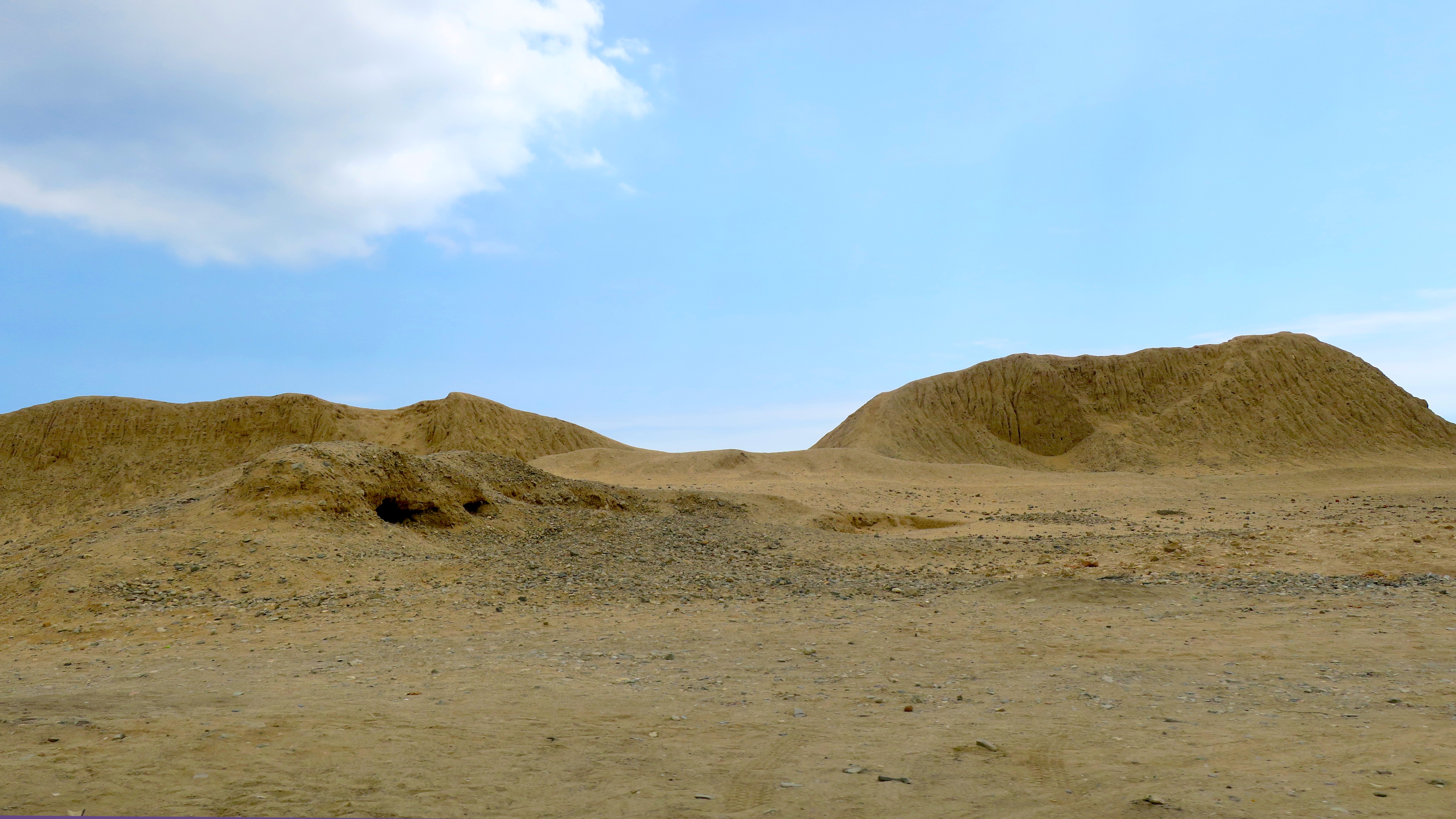 Photo: AlisonRuthHughes / Wikimedia Commons (CC BY-SA 4.0)
 - Huaca de la Luna Tue-Sun, 9am-4pm
A monumental Moche-culture temple (1st-8th century AD) roughly 5-6km from Trujillo, with vivid polychrome bas-reliefs of the Moche deity Ai-apaec — better preserved than its sister site, Huaca del Sol, which is closed to visitors.
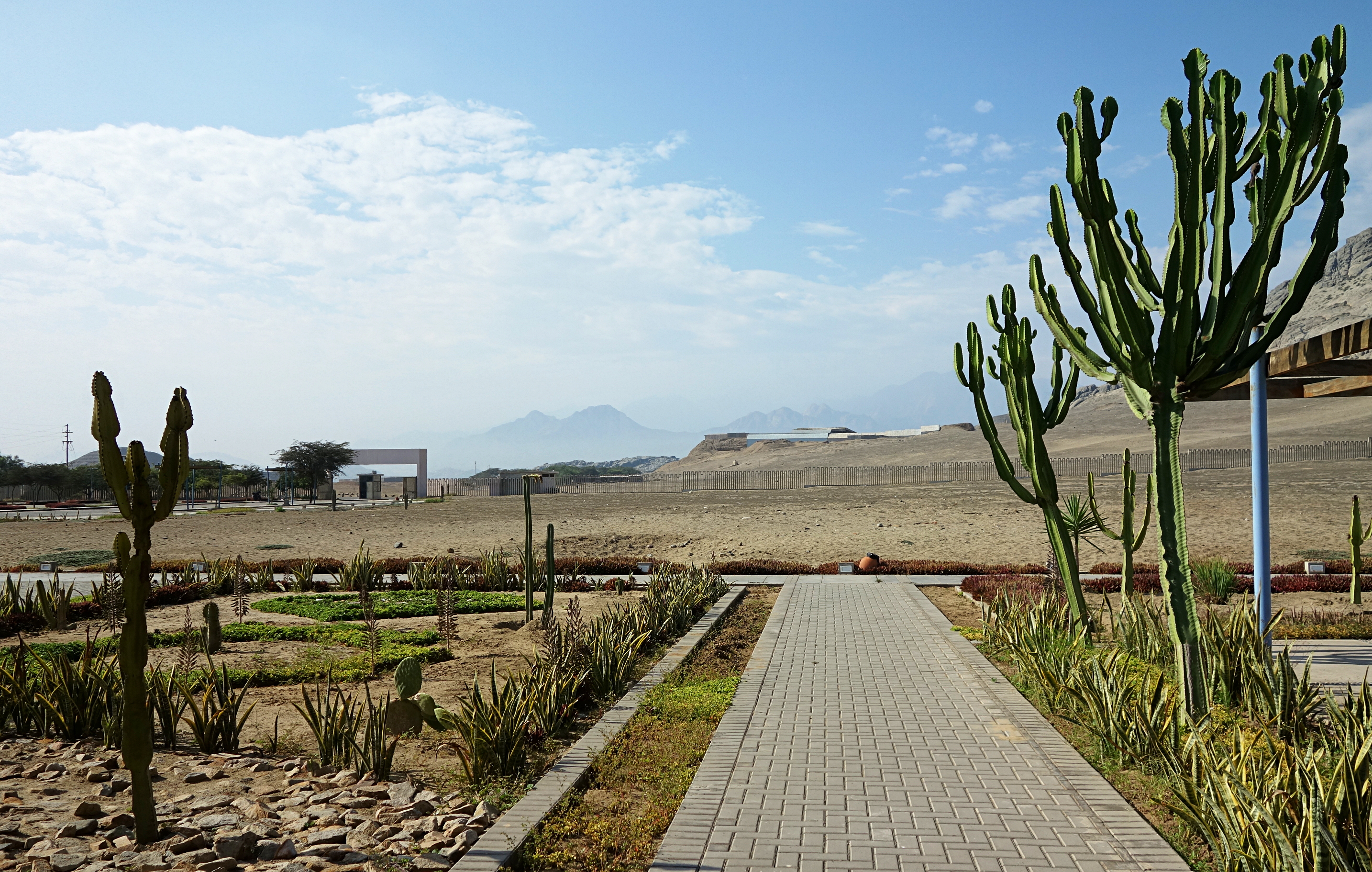 Photo: Velvet / Wikimedia Commons (CC BY-SA 4.0)
 - Máncora's Village & Waterfront Year-round
Beyond the beach, Máncora is also a jumping-off point for the Poza de Barro mineral mud baths in nearby Quebrada Fernández, reachable by mototaxi, horseback, or a half-day hike.
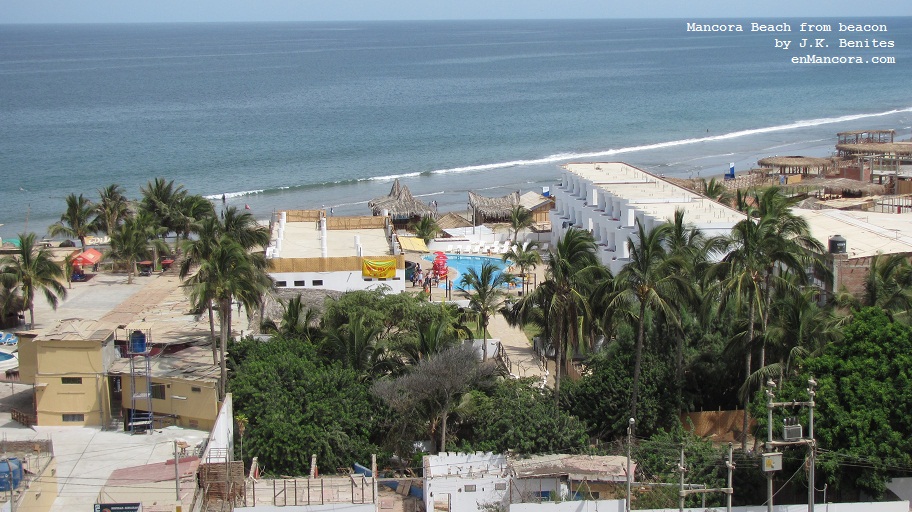 Photo: Jkbenites / Wikimedia Commons (CC BY-SA 3.0)
 - Cabo Blanco's Fishing History Any time — the story, not a season
Ernest Hemingway stayed roughly a month here in 1956 during filming of The Old Man and the Sea; in 1953 Alfred Glassell Jr. landed a then-world-record 1,560lb black marlin off this coast, an IGFA record that still stands.
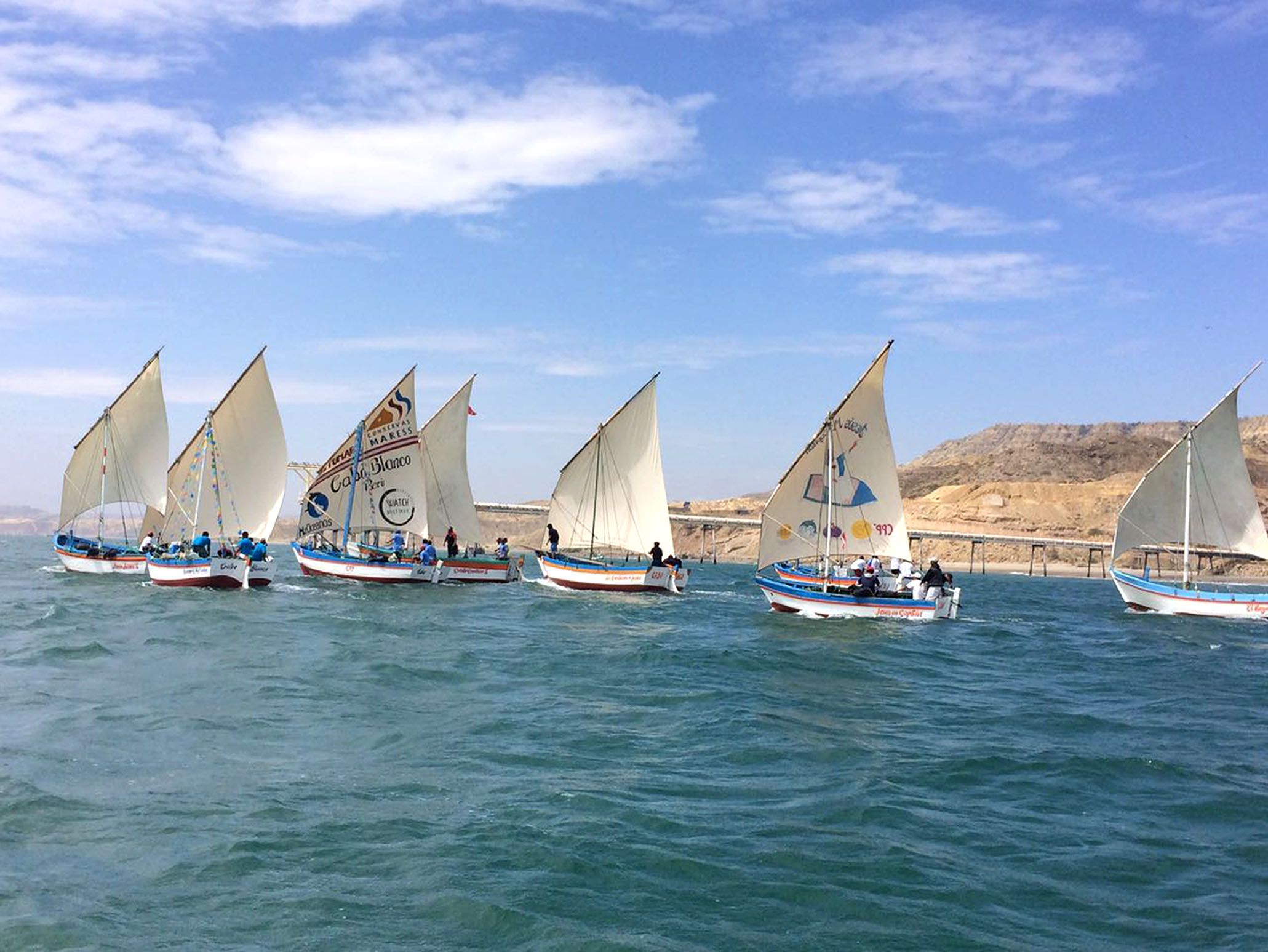 Photo: Ministerio de la Producción del Perú / Wikimedia Commons (Public Domain)
 - Huanchaco & Caballitos de Totora Sunset, for the fishermen returning
An ancient fishing town roughly 12-14km from Trujillo using reed boats (caballitos de totora) dating back 3,000-4,000 years — among the oldest wave-riding watercraft in the world, and a real, living tradition, not a museum piece. Named a World Surfing Reserve in 2013.
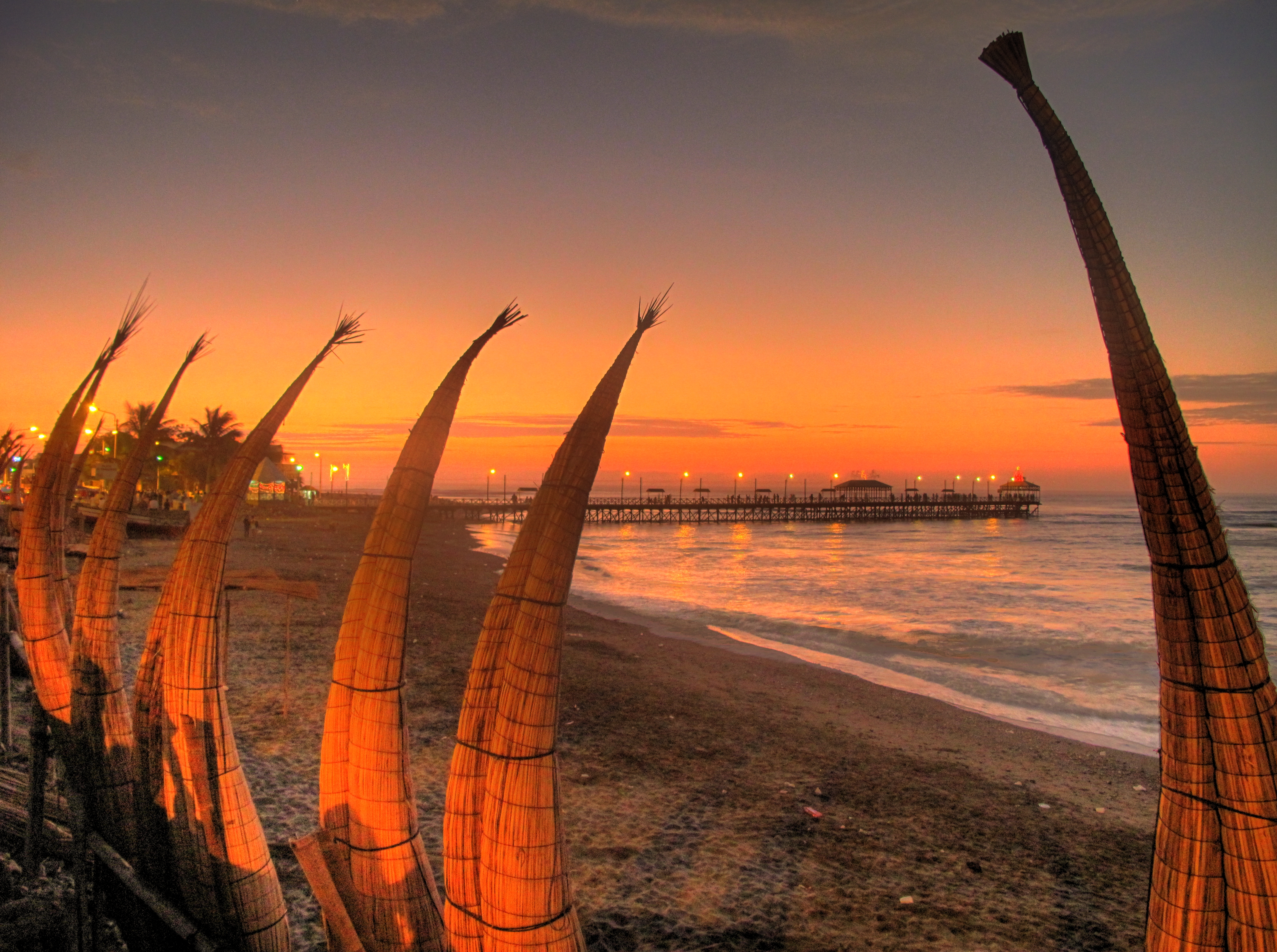 Photo: Melissa Thereliz / Wikimedia Commons (CC BY-SA 2.0)
 - Muelle de Pacasmayo Any time — a photo/history stop, not a walk-out pier
Built 1870-1874, once Peru's longest pier at 743m, now reduced to roughly 500m after storm and erosion damage — currently closed to foot access, but a genuine piece of the town's history right at the hub.
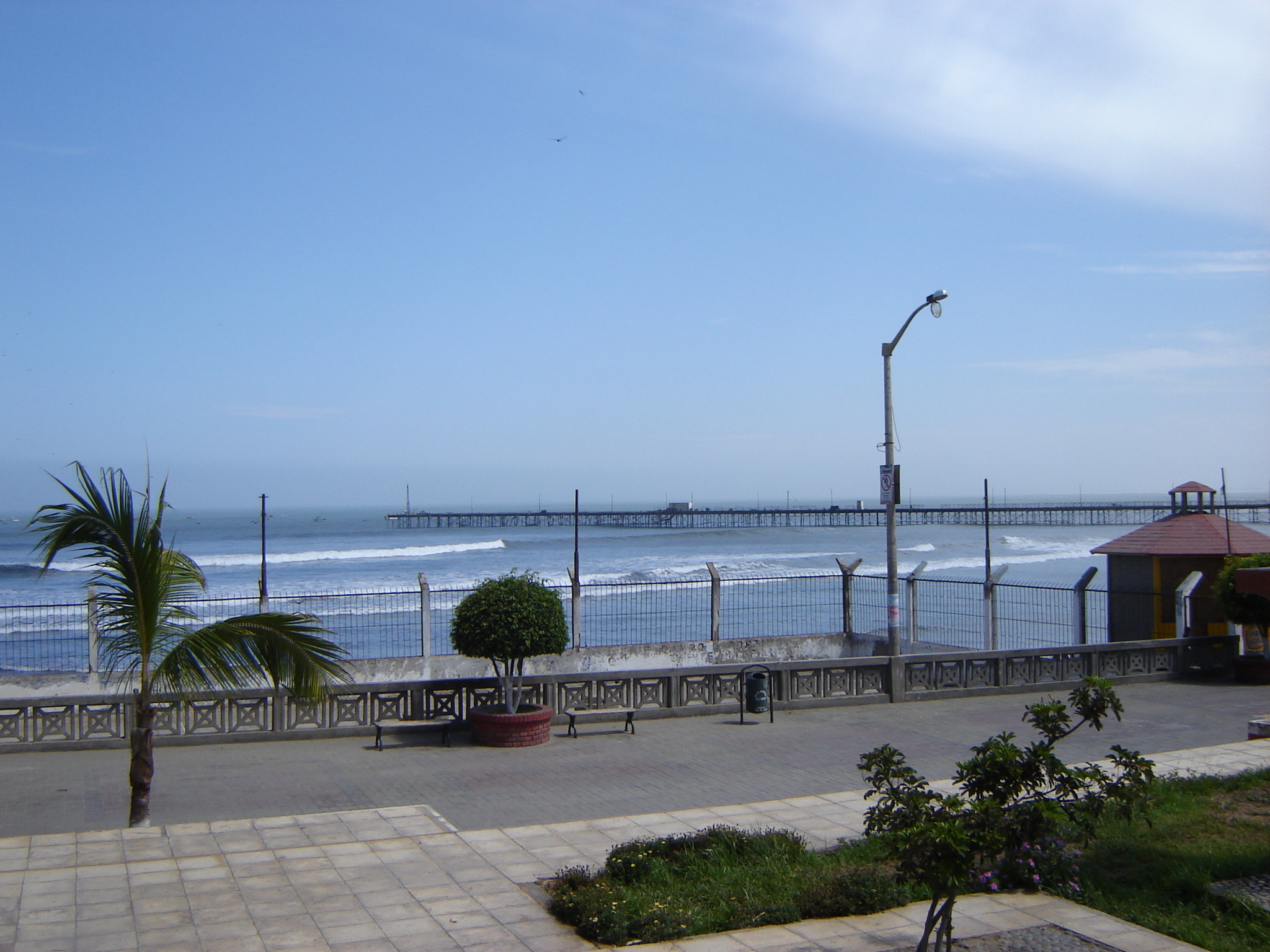 Photo: Guillermo Arévalo Aucahuasi / Wikimedia Commons (CC BY-SA 4.0)
 - Bosque/Laguna de Cañoncillo Any time, sandboarding available on the surrounding dunes
A genuine desert oasis in San Pedro de Lloc, roughly midway between Trujillo and Chiclayo — a ~1,300-hectare relict algarrobo forest with three lagoons, declared a Private Conservation Area in 2004.
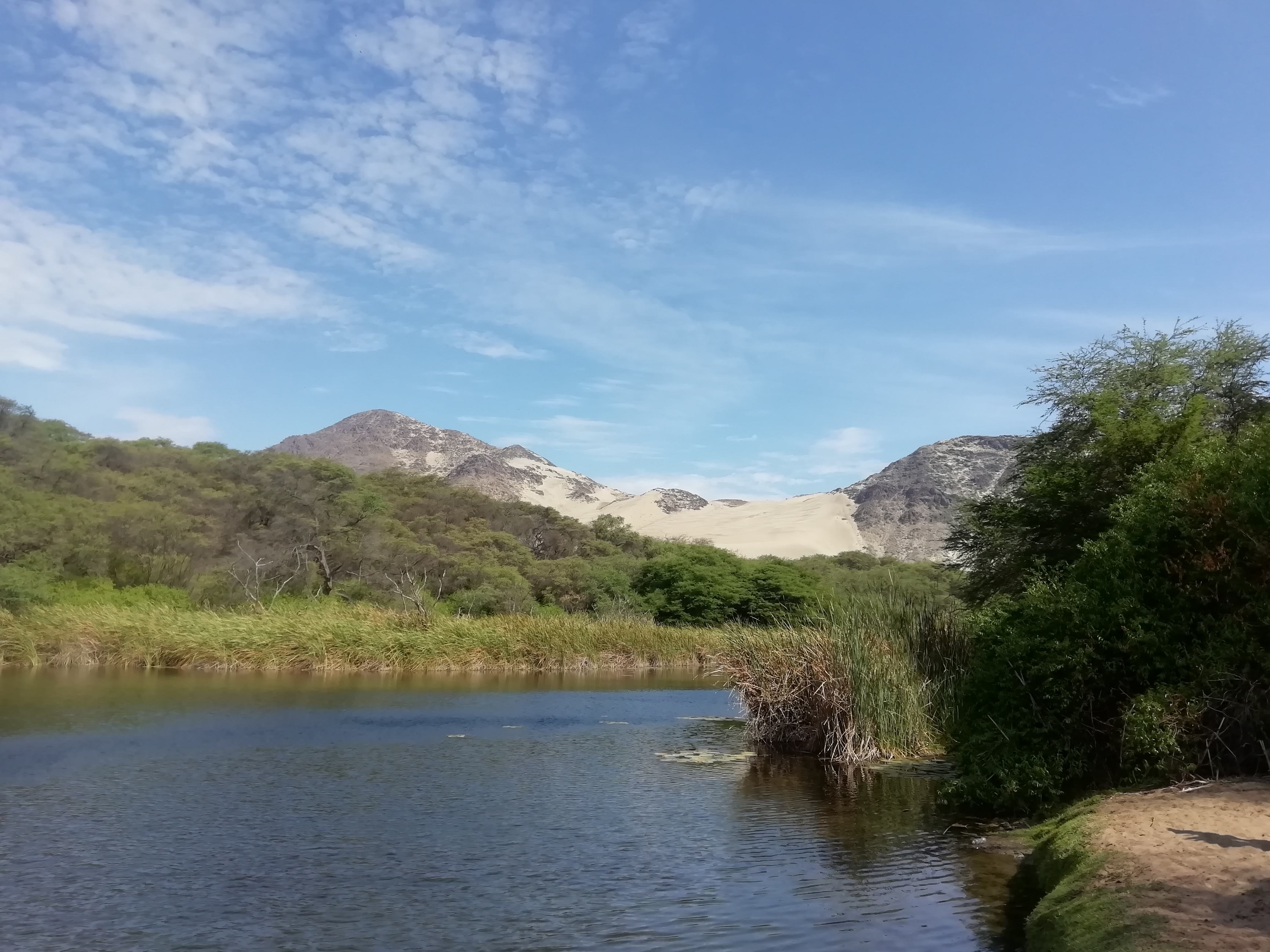 Photo: Melissa Guadalupe / Wikimedia Commons (CC BY-SA 4.0)
 - Punta Sal Any time — a calm counterpoint to Máncora
A long, calm, crescent-shaped beach roughly 29km north of Máncora, often cited as Peru's longest north-coast beach — popular with Lima weekenders, a quiet half-day or overnight escape from Máncora's livelier scene.
 Photo: Uwebart / Wikimedia Commons (CC BY-SA 3.0)
 - Northern Peruvian Ceviche Lunch, the traditional time to eat it
This coast's ceviche traces to the Moche culture, who marinated fish in fermented tumbo juice before citrus arrived with colonization — the Moche used the same caballitos de totora reed boats to gather the catch. Declared Peruvian Cultural Heritage in 2004.
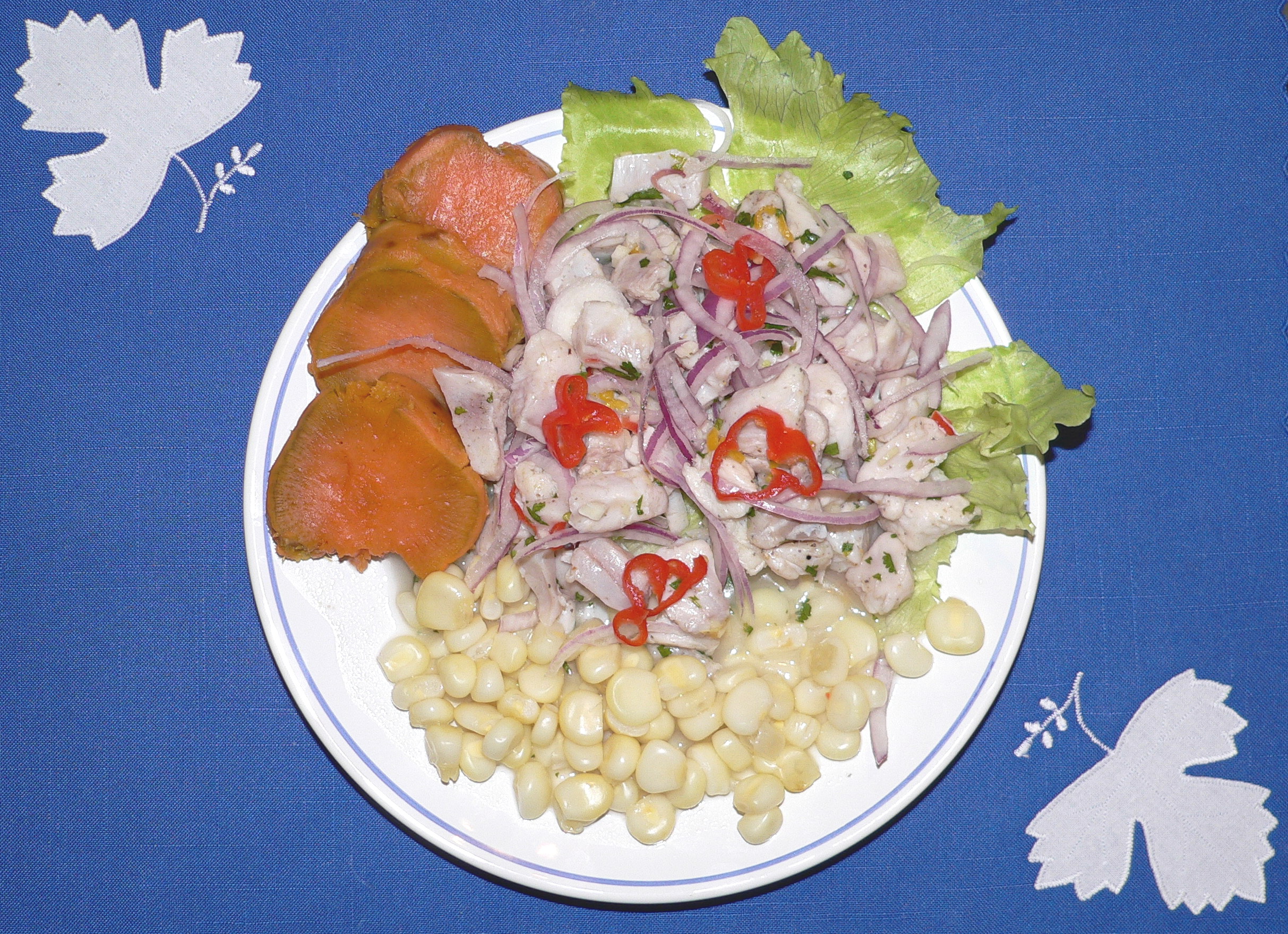 Photo: Manuel González Olaechea y Franco / Wikimedia Commons (CC BY 3.0)
 - Cerros de Amotape National Park After the rainy season (Dec-Apr) for best access
Peru's northernmost tropical dry forest, inland from Máncora and Punta Sal near the Tumbes border — American crocodile, green iguana, Andean condor, and Peruvian thick-knee, part of a UNESCO biosphere reserve.
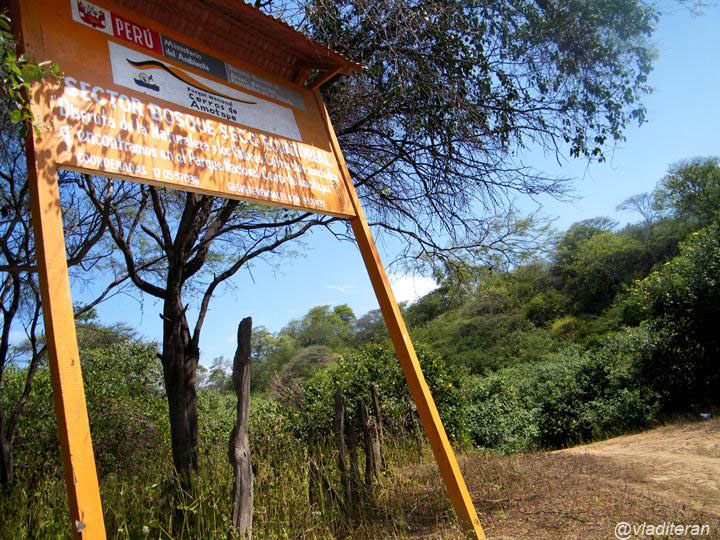 Photo: Vladimir Terán Altamirano / Wikimedia Commons (CC BY 2.0)
Questions people actually ask.
How do I get to North Peru?
Fly into Lima (LIM) — Peru's main international gateway, with real direct US flights (American, Delta, United, LATAM from Miami/Houston/Atlanta) — then connect domestically. Piura (PIU) is the practical airport for Máncora and Cabo Blanco, with frequent LATAM/Sky/JetSmart service from Lima. Trujillo (TRU) serves Chicama and Pacasmayo. No international flights land directly at either regional airport.
Do US citizens need a visa for Peru?
No — Peru is visa-free for US tourism, with stays up to 183 days possible within a 365-day period at immigration officer discretion (90 days is the most commonly granted stamp). Passport must be valid at least 6 months beyond arrival with blank pages.
Is the water really warmer here than the rest of Peru?
Yes, and it's a real, meaningful difference within this coast, not just marketing. Máncora runs 21-27°C essentially year-round, warmed by the Ecuatorial Counter Current — often no wetsuit needed. Chicama and Pacasmayo, though on the same stretch of coast, run noticeably cooler, dropping to around 16°C by July-August as the Humboldt Current's influence strengthens further south. Pack for both if your trip covers the whole zone.
Is this part of Peru safe to visit?
Peru overall sits at US State Department Level 2, Exercise Increased Caution, but the specific higher-risk areas flagged (the Colombia border/Loreto region, and the VRAEM area spanning parts of Ayacucho/Cusco/Huancavelica/Junín) are nowhere near this coast. Worth a live check before you travel: Piura department saw a weather-driven regional state of emergency in February 2026 due to heavy rain and landslides — a seasonal, El Niño-adjacent risk distinct from the national crime advisory, worth confirming current status closer to your trip.
What's the real history behind Cabo Blanco?
Genuinely real, not folklore. Ernest Hemingway stayed roughly a month in 1956 while the film adaptation of The Old Man and the Sea was shooting nearby, and personally landed a large marlin there. In 1953, Alfred Glassell Jr. caught a then-world-record 1,560-lb black marlin off Cabo Blanco — an IGFA all-tackle record that still stands today. The original Cabo Blanco Fishing Club that hosted Hollywood's elite in the 1950s-60s is now abandoned, but the Inkaterra hospitality group has restored the era's historic sportfishing yacht and revived big-game charters from the same waters.
Disclosure & how this page works.
Straight talk: Some links on this page are affiliate links — if you book through them, Secrets of Surf Travel earns a small commission at no extra cost to you. We only link places and people we’d use ourselves, and coverage is never for sale. Those commissions are what keep this site running and fund the next trip.
Today, the “Search Vrbo rentals” and “Search Booking.com stays” links on this page are affiliate links — every vendor listing link is still a plain courtesy link. As partnerships with these local businesses come online, more links (and discount codes, where Secrets of Surf Travel benefits from their use) may earn us a commission, and this page will keep saying so plainly. Coverage is never for sale: nobody on this page paid to be here, and nobody can.
Every listing was researched in 2026 and is being verified in person. Prices, hours, and policies change — treat them as strong starting points and confirm directly with the business. And per the No-Reveal Code: you will find no surf spots on this page, ever.