
North Chile
The Atacama Desert meets the Pacific — Chile's warmest, driest, most consistent surf coast. Arica's "eternal spring" climate and 20-year surf-school scene, Iquique's giant dune and duty-free-zone energy, and Pisagua, a near-ghost nitrate-boom port with a history worth knowing before you go.
Straight talk: Some links on this page are affiliate links — if you book through them, Secrets of Surf Travel earns a small commission at no extra cost to you. We only link places and people we’d use ourselves, and coverage is never for sale. Those commissions are what keep this site running and fund the next trip.
Some vacation-rental search links on this page (marked “Search Vrbo rentals” or “Search Booking.com stays”) are affiliate links. Every vendor link below is still a plain courtesy link. As more partnerships come online, more links may earn us a commission; the promise above holds either way.
Getting There
Santiago (SCL) is Chile's real international gateway — no US carrier flies direct to either regional airport in this zone. From SCL, Iquique's Diego Aracena Airport (IQQ) is the better-served connection: roughly 51 flights a week across three airlines (JetSmart, LATAM, Sky), ~2h15m flight time. Arica's Chacalluta Airport (ARI) runs fewer flights on two airlines, ~2h36m from SCL.
Documents: Chile is visa-free for US citizens — a 90-day entry permit granted on arrival at no cost, extendable toward 180 days a year for a fee if needed. Just a valid US passport.
Ground Transport
- Arica to Iquique: ~315 km, ~3h45m-4h15m driving through Huara, Pozo Almonte, and Alto Hospicio. Bus is genuinely excellent on this leg — Pullman Bus alone runs it 5x/day, fully direct, ~3h35m, roughly $16-35, with reclining Semi Cama/Salón Cama service classes.
- Iquique to Pisagua: ~160-164 km, roughly 2h30m. No scheduled public bus was found on this leg — Pisagua appears reachable only by rental car or arranged taxi/transfer.
- Car vs. bus: the Arica-Iquique hub link doesn't need a car — bus is cheap, frequent, and comfortable. A rental car (or a booked transfer) becomes genuinely necessary for Pisagua and for chasing any remote stretches of this desert coast flexibly.
When to Go & What to Pack
- The warmest, most consistent water on this site's South America roster. Arica runs roughly 17-22°C (63-72°F) year-round, warmest in February, coldest around August. Iquique runs a couple degrees cooler (16.6-19.8°C / 62-68°F), reflecting slightly stronger Humboldt Current exposure further south. This coast's near-Peru latitude genuinely softens the Current's chill compared to central and southern Chile.
- Wetsuit: a 2mm top or shorty covers summer dawn patrols; winter (August) tops out around 3/2mm-4/3mm with boots — meaningfully lighter than the 4/3mm-5/4mm-plus-hood gear this site's Uruguay and Argentina zones require.
- Climate: genuine Atacama Desert coastline — among the driest places on Earth, with a coastal marine layer that keeps Arica's air mild and stable enough to earn its "eternal spring" nickname.
Good to Know
- The advisory: US State Dept Level 2, Exercise Increased Caution, citing crime and sporadic civil unrest concentrated mainly in Santiago and other major cities. Northern cities including Arica and Iquique consistently run below the national crime picture, and economic protests in the mining regions further south (Antofagasta/Calama) haven't significantly affected tourist routes here. Standard urban precautions apply in city centers.
- Tap water: generally treated and safe in Arica and Iquique, drawn from desalination/deep-well sources common across the desert north — some travelers note a mineral taste.
- Currency: Chilean Peso (CLP). Emergency: Ambulance (SAMU) 131, Fire 132, Police (Carabineros) 133 — all toll-free nationwide.
- Connectivity: eSIM is the easier path for tourists in 2026 — physical prepaid SIM purchase has gotten more paperwork-heavy. Coverage is solid 4G along the coastal corridor through both hub cities, but gets spotty once you leave populated areas into the desert interior — worth knowing before a Pisagua or remote-break mission.
- Cost of living: Chile runs pricier than Bolivia and Peru, but regional cities like Arica and Iquique are consistently 20-30% cheaper than Santiago, especially on lodging — a real, useful positioning for this zone versus the capital.
Respecting the Locals
Arica has a real, 20-year surf-school scene behind it — a genuine local surf culture, not something built overnight for visitors. Iquique runs on its own duty-free-zone economy and desert-dune energy, and Pisagua is a near-ghost nitrate-boom port whose history is worth knowing before you go — a place that carries the weight of a boom-and-bust past rather than a resort veneer. This whole coast sits inside the Atacama, one of the driest places on Earth, which makes the towns and the people who've built a life here worth treating with real care.
- Locals get first priority, always. Watch a session before you paddle out. Learn who's who before you learn the wave. Sit inside and catch what they let through — the leftovers are yours, not the set waves.
- Don't backpaddle. Ever. Being in position doesn't make the next wave yours, especially if you didn't wait your turn. If a local wants a wave, let them have it…even if it IS your turn. That older guy who may not be the best surfer out there has probably been surfing that wave before you even sat on a board. If you don't know someone, assume they're local.
- Don't snake. This shouldn't even need to be said, but…dropping in on someone, local or not, is the ultimate disrespect and the fastest way to be sent out of the water. Don't be that guy!
- Say hi. A “howzit,” “whatsup,” or “nice wave,” eye contact, or a nod in the channel — it costs nothing and it's the fastest way from stranger to welcome.
- This is somebody's home, not a resort amenity. The break you're surfing is where a local kid learned to swim, where someone's uncle has surfed for forty years. Act like a guest, because you are one.
- Spend where it actually helps. The food truck, the local shaper, the family-run rental, the local photographer — that's where a surf trip's money should land, not just the chain hotel gift shop. See The No-Reveal Code for why that's the whole premise of this site.
- Leave it better than you found it. Pick up trash that isn't yours. Don't touch reef, wildlife, or cultural sites.
Locals have watched hundreds, if not thousands, of people come and go — some for days, some for months or years — and almost all of them eventually go home. The locals are still there. It takes many, many years to actually become one. Keep that in mind the next time you feel entitled to the same waves they get.
None of this is a secret handshake. It's just how you'd want a guest to act in your own backyard.
Arica
Chile's northernmost city, 18 km from the Peru border, nicknamed "the city of eternal spring" for its mild, stable, near-daily-sun climate. Home to the world's oldest known mummified human remains and a 20-year-established multi-discipline surf-school scene.
Surf hostels and boutique guesthouses cluster around Chinchorro and the bus-terminal district — the independent-lodging alternative to Arica's larger hotels.
Search Vrbo rentals in Arica →
Surf Guides & Tours
- Escuela de Surf AkuaAricaMid-rangeFounded 2005 by Renée Voldman — surf, SUP, kitesurf, bodyboard, and slackline, including a "SUP with turtles" offering. Arica's most established multi-discipline school.akuasurfarica.clWhatsApp
Stays
- Sunny Days HostelPoblación Chinchorro, 2 blocks from the bus terminalBudgetOwned and run for 12 years by Ross, a New Zealander — a genuine English-forward exception in an otherwise Spanish-dominant zone.
- Mirador El Buey Surf HostelOverlooking the coastBudget/midRoof BBQ deck, kitchens, bike rental, free parking.
- Hotel Puerto ChinchorroFronts Chinchorro BeachMid-range3-minute walk to the local green sea turtle habitat.
- Antay Hotel & SpaAv. Chile #1108Upper-mid/luxuryArica's top-rated stay, 9.1/10 on Booking.com — houses the Alborada restaurant and Wellness Antay spa below.
Where to Eat
- AlboradaInside Antay Hotel & SpaUpper-midA TripAdvisor Travellers' Choice "Best of the Best" honoree.
- A La LimeñaNear BolognesiBudget/midPeruvian food, shares space with a sushi bar/café — reflects Arica's Peru-border proximity.
- MaracuyáOceanfrontMid-rangeSeafood/fish focus with a water view.
Wheels: Car Rentals
- EconoautosPasaje Toconao N°4438Local independent — hotel pickup/drop-off, 10% discount for advance/4+ day bookings.
National chains also present: Salfa Rent, MITTA Rent a Car, Sixt, Econorent.
Surfboard & Ding Repair / Surf Shops
- Huntington Surfshop21 de Mayo 493Local surf-retail storefront.
Honest note: no dedicated ding-repair shop found — most surf schools, including Akua, can point travelers to informal local fixers.
Massage & Wellness
- Wellness AntayInside Antay Hotel, 5th floorUpper-midHeated indoor pool with underwater massage jets, ocean-view outdoor pool, sauna, hydromassage chairs.
- Masajisimo Centro TerapéuticoAricaRanked #1 of Arica's Spas & Wellness category on TripAdvisor.
Other Adventures
- Altiplano & Lauca National Park day tripsDeparts Arica, multiple operatorsFull-day and multi-day trips to Lake Chungará, Parinacota, and the 3,500m mountain town of Putre — a genuine high-altitude contrast to the desert coast.
Iquique
Home to South America's largest duty-free zone and Cerro Dragón, a 150-500m urban sand dune that's a genuine world-class paragliding and sandboarding launch. A well-established surf-school scene runs off Playa Cavancha, right in the city.
Backpacker hostels and independent boutique stays cluster near Playa Cavancha, alongside Iquique's hotel scene.
Search Vrbo rentals in Iquique →
Surf Guides & Tours
- Uma JaqiPlaya CavanchaMid-range16 years running, self-described as the city's longest-tenured school, instructor team with 25+ combined years — published, transparent pricing.@umajaqisurfWhatsApp
- Ecoriders Surf SchoolPlaya CavanchaMid-rangeSurf and paddleboard instruction.
Stays
- Aotea Backpacker Hostel0.82km from city centerBudget9.6/10 "Superb" on Hostelworld — privates from $14, dorms from $17.
- Ocean Boulevard / Hotel Terranort / Vistara SuitesIquiqueUpper-midThe city's top-rated stays, all 9.0-9.1/10 on Booking.com.
Where to Eat
- Caleta VerdeIquiqueMid-rangeA genuine fishing-cove seafood spot, in keeping with Iquique's caleta dining tradition.
- Otaku Sushi & CevicheriaIquiqueMid-rangePart of a real sushi/ceviche cluster in the city.
Wheels: Car Rentals
- JR Rent a CarIquiqueLocal independent, specializes in 4x4 pickups and minibuses — useful for desert-coast trips toward Pisagua.
National chains also present: Avis (airport and city), Budget, MITTA, Econorent.
Surfboard & Ding Repair / Surf Shops
- Erizos StoreAv. Arturo Prat 440Rentals for surf, bodyboard, and SUP.
Honest note: no dedicated ding-repair shop found here either — ask a surf school for an informal local fixer.
Massage & Wellness
- Maitri Spa & BeautyLuis Emilio Recabarren 2516Massage, facials, rejuvenation treatments.
Other Adventures
- FlightParkIquiqueAv. Salitrera Victoria #3255The operator tied to Iquique's famous dune-launch paragliding scene — also runs sandboarding, scuba diving, and guided tours.
- Desierto Verde ExpedicionesIquique, founded 2000Mid-rangeTandem paragliding, Cerro Dragón sandboarding, and desert day trips (Pica oasis, Salar del Huasco, Pintados geoglyphs) — also runs a dedicated Pisagua history tour.@desiertoverdexpediciones_chileWhatsApp
Pisagua
A near-ghost town of roughly 100-260 residents, once a nitrate-boom port of 8,000. Genuinely limited tourism infrastructure — this hub is honestly thin, and we're not padding it.
Pisagua's lodging is genuinely thin — a single verified hostal — but worth a quick search before you assume there's nothing here.
Search Vrbo rentals in Pisagua →
Stays
- Hostal La RocaManuel Rodríguez streetMid-rangeThe only verified lodging business in Pisagua — 8.6/10, 45 reviews. Owners Tamara and Marcos; Marcos is a certified diving instructor who runs dive excursions and guided archaeological-site hikes for guests, and keeps a small library of local historical materials.
Everything else
Genuinely honest gap: no restaurants, car rental, ding repair, surf shop, or massage/wellness businesses were found in Pisagua — the town's economy today is a modest fishing fleet and occasional tourists. Desierto Verde Expediciones (listed under Iquique) runs a 12-hour Pisagua Historic Town & Cove day trip from Iquique, which is how most visitors actually see the town.
Local Secrets
Ten non-surf reasons this zone rewards the curious — the world's largest urban sand dune, mummies 2,000 years older than Egypt's, and a nitrate-boom ghost town preserved as a UNESCO World Heritage Site.
- Cerro Dragón Year-round; spring (Sept-Nov) for the best paragliding wind
The world's largest urban sand dune, rising 150-500m directly over Iquique — believed to date to the last Ice Age, when the shoreline sat roughly 100m further out. Declared a Nature Sanctuary in 2005; an active paragliding launch and sandboarding site, with 300+ flyable days a year.
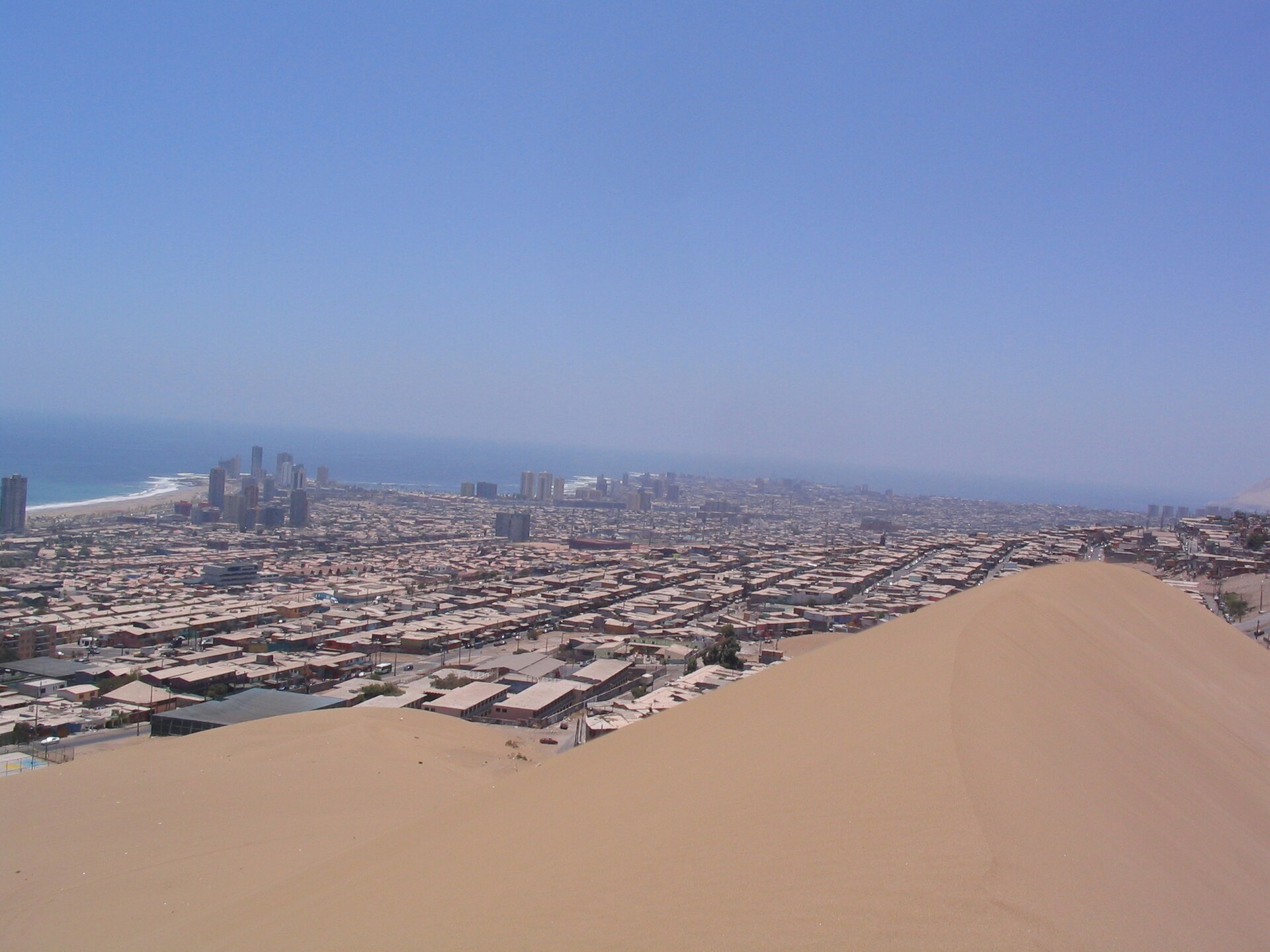 Photo: Robin Fernandes / Wikimedia Commons (CC BY-SA 2.0)
 - Humberstone & Santa Laura Saltpeter Works Year-round, mornings; avoid January peak crowds
A pair of nitrate-boom ghost towns 45km from Iquique — Humberstone housed 3,000+ workers at its peak, complete with an abandoned hotel, theater, and swimming pool. Both were inscribed together on the UNESCO World Heritage List in 2005, the best-preserved of more than 200 former saltpeter works.
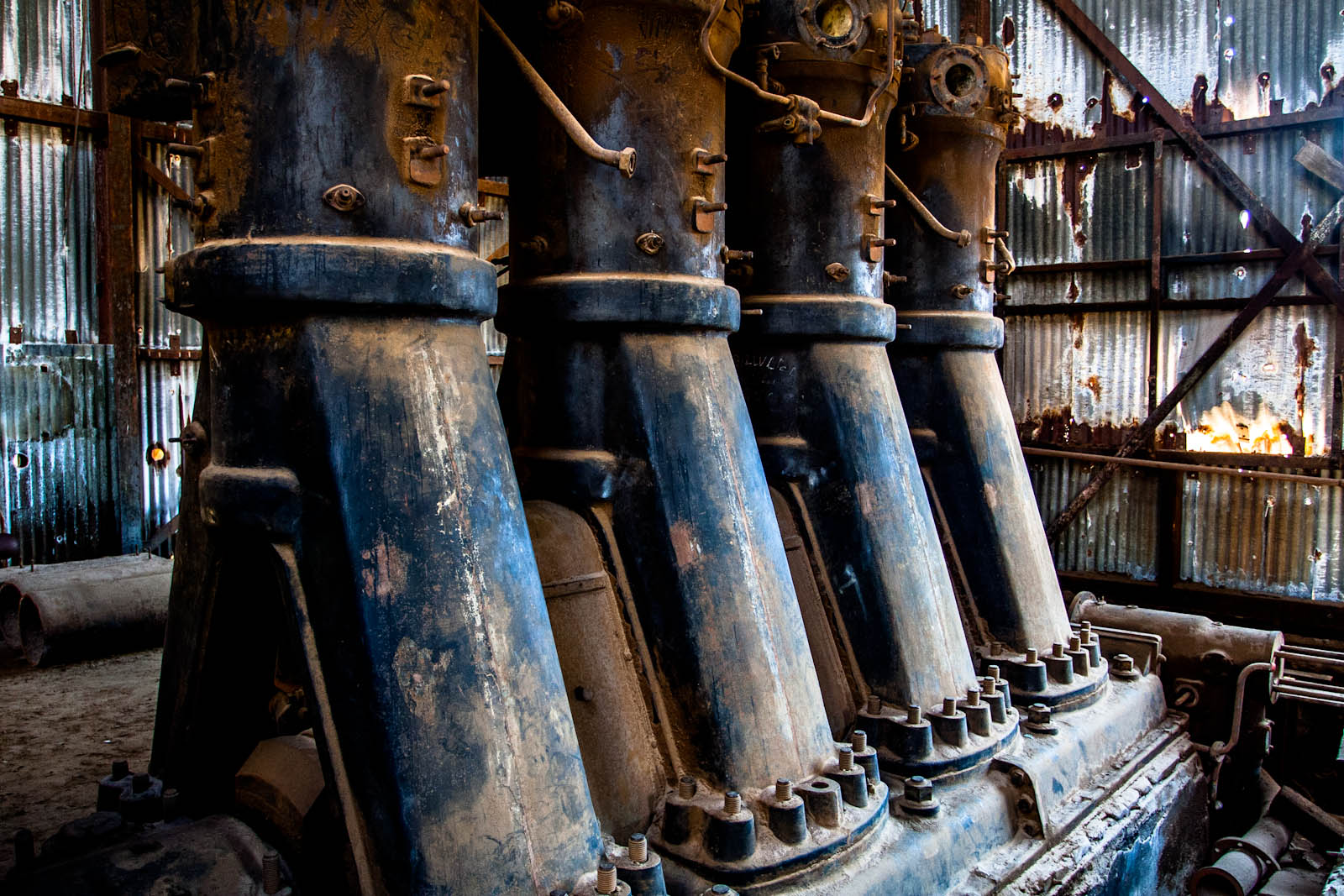 Photo: Davide guallini / Wikimedia Commons (CC BY-SA 3.0)
 - Torre Reloj, Plaza Prat Early evening, when the plaza is lively
A neo-Gothic wooden clock tower built of Oregon pine in 1877-78 on Iquique's main square, its clock mechanism shipped from England — declared a national historical monument in 1987, anchoring a block of surviving nitrate-era buildings.
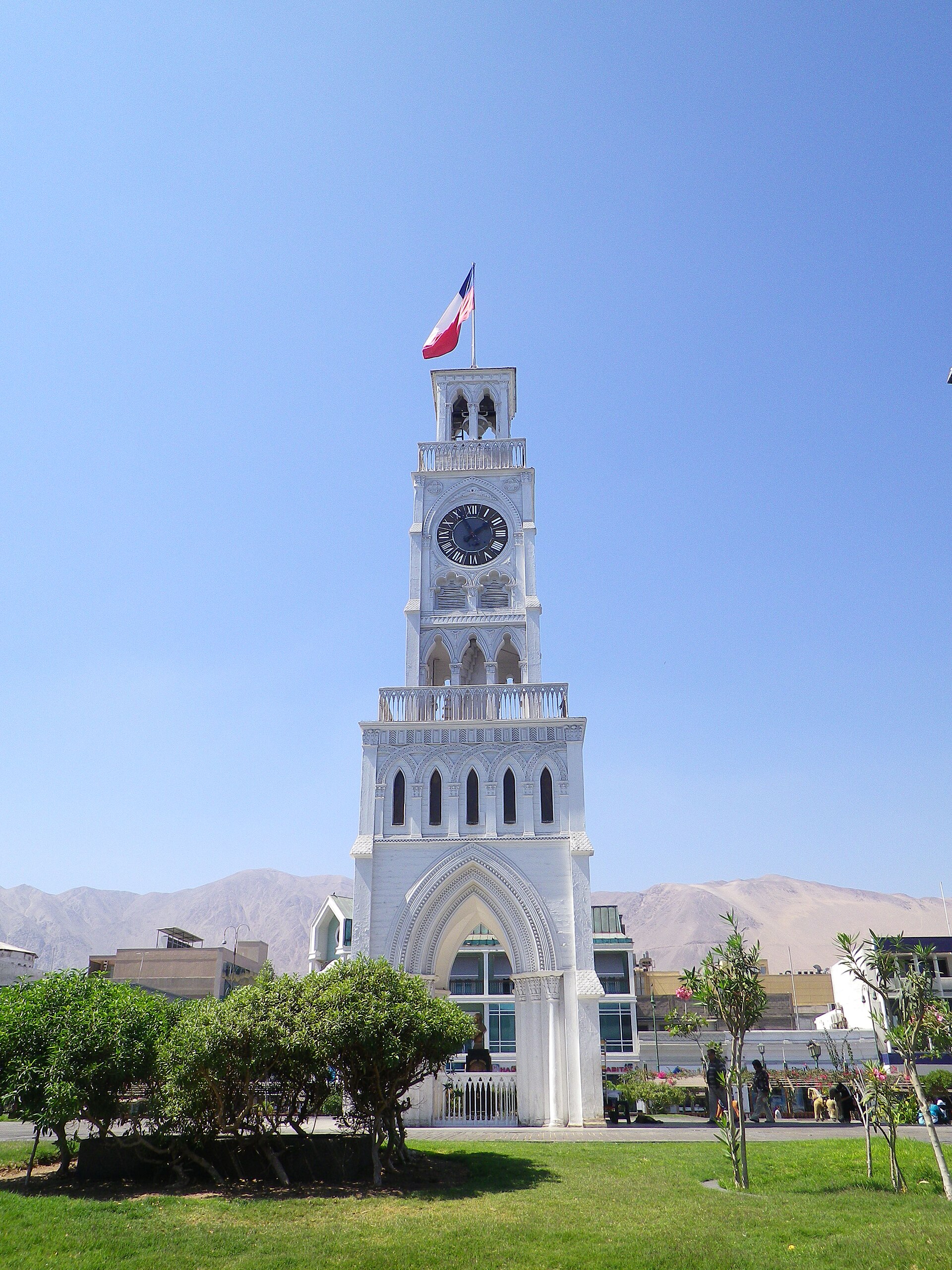 Photo: Alex Mazaira / Wikimedia Commons (CC BY-SA 3.0)
 - Palacio Astoreca Daytime, cultural-center hours
A 1903-04 Georgian-style mansion built in Oregon pine for nitrate magnate Juan Higinio Astoreca — 1,100 sq m, 27 rooms, a national historical monument since 1994, now a period museum and cultural center.
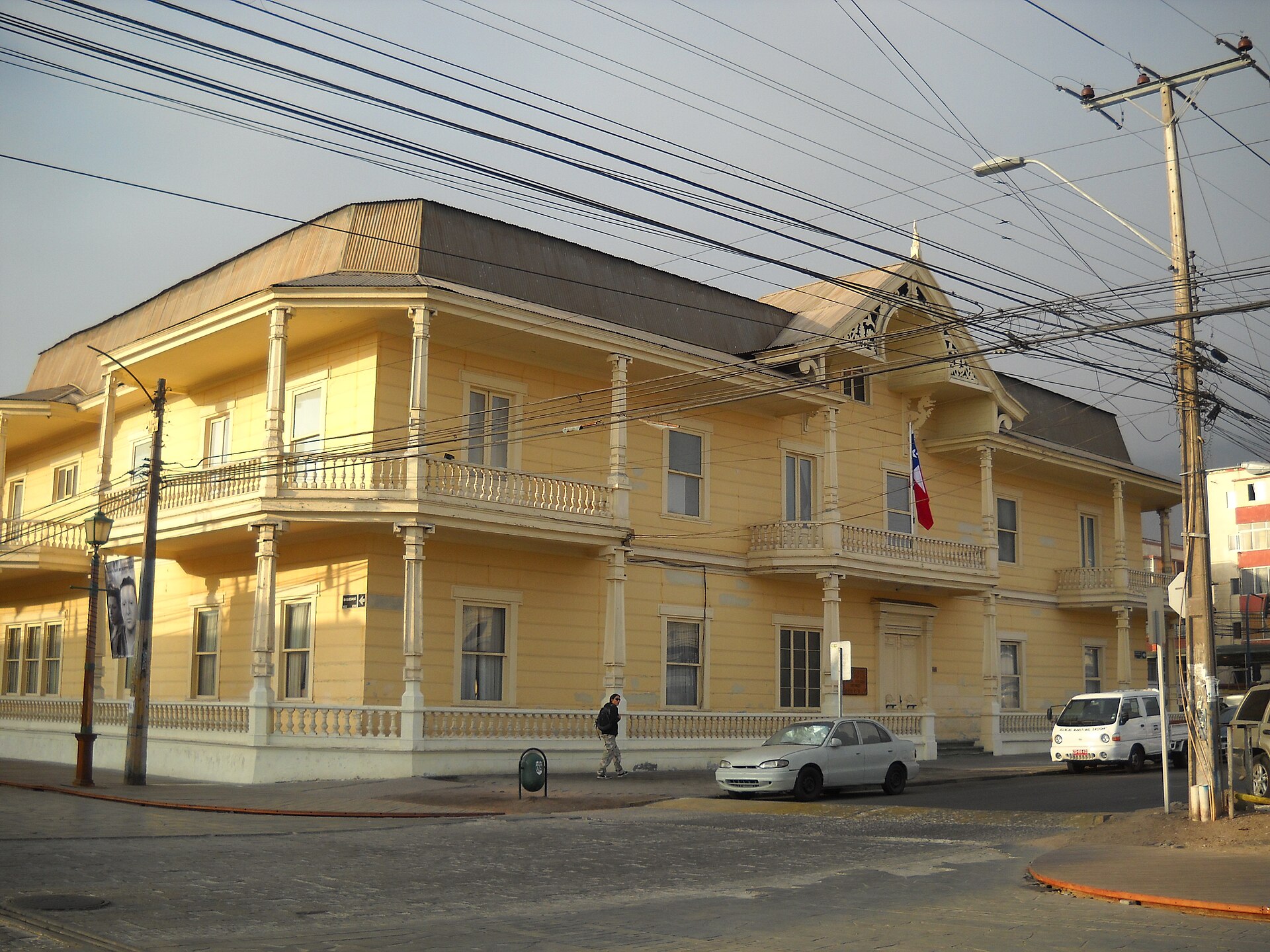 Photo: Mircalla22 / Wikimedia Commons (CC BY-SA 3.0)
 - El Morro de Arica Late afternoon/sunset
A 139m coastal headland where Chilean forces stormed the last Peruvian defensive position on June 7, 1880 — the decisive Battle of Arica during the War of the Pacific. Declared a Historic Monument in 1971, now home to a war museum with panoramic views over the city and Pacific.
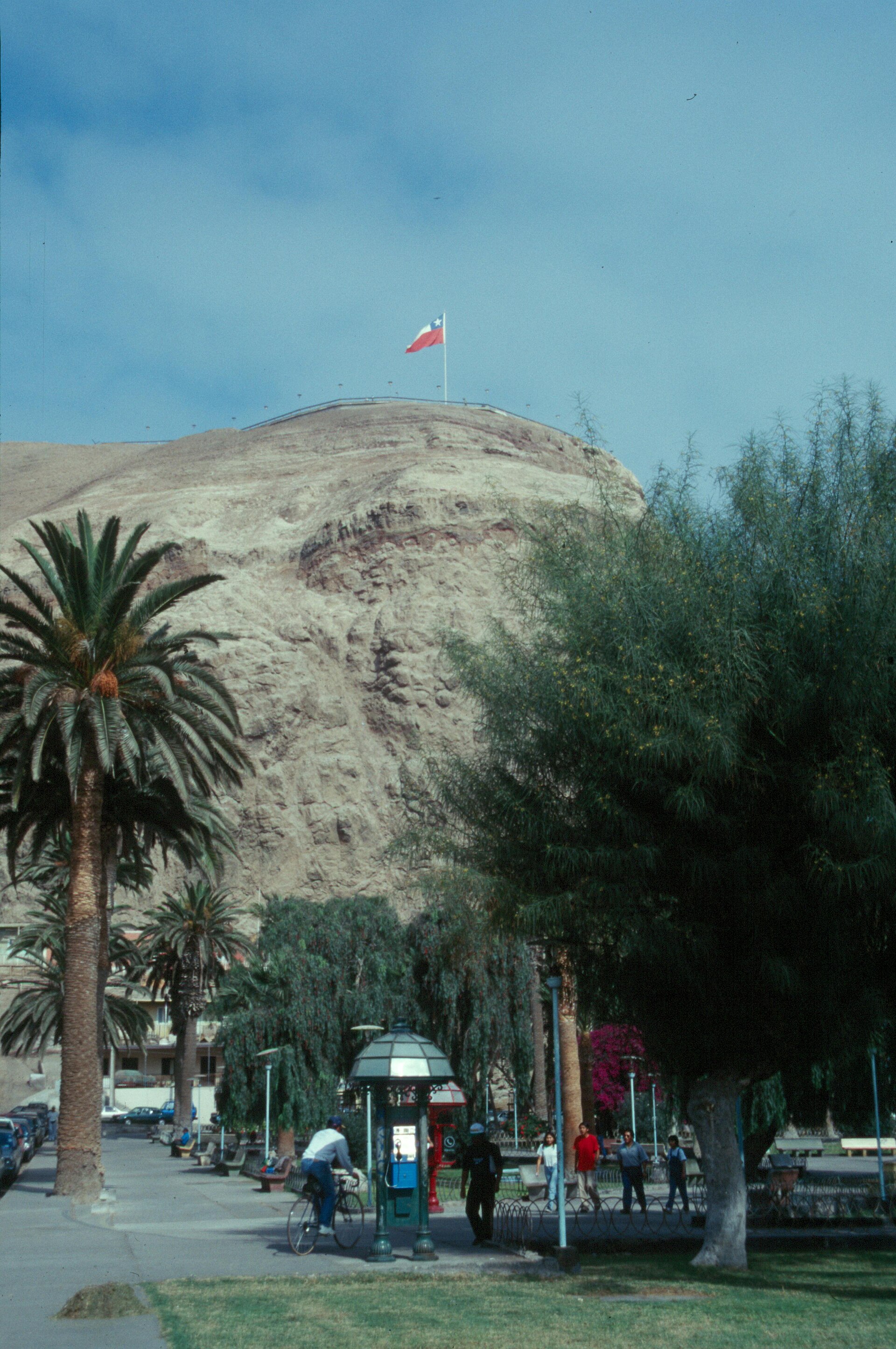 Photo: Stefan Bauer / Wikimedia Commons (CC BY-SA 3.0)
 - Catedral San Marcos Daytime, mid-morning to afternoon for interior light
An all-cast-iron prefabricated cathedral, shipped from Europe and assembled in 1875-76 after an 1868 earthquake destroyed the original church — long attributed to Gustave Eiffel's Paris workshops, though some scholarship disputes his direct design involvement.
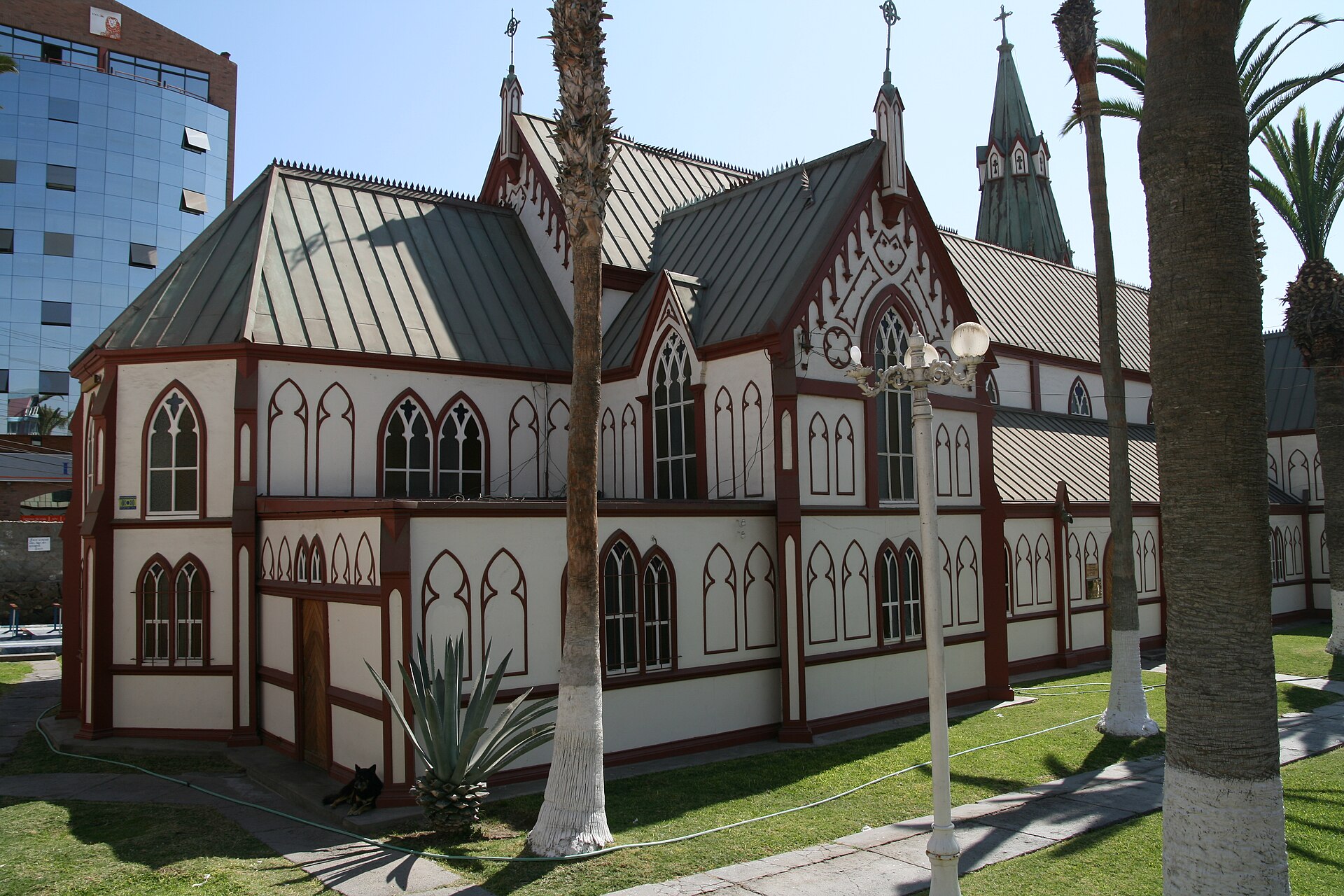 Photo: Till Niermann / Wikimedia Commons (CC BY-SA 3.0)
 - Chinchorro Mummies, San Miguel de Azapa Museum Daytime museum hours, 12km from Arica
The Chinchorro culture mummified its dead starting roughly 5000 BC — about 2,000 years before Egyptian mummification began — making these the oldest known deliberately preserved human remains on Earth. UNESCO inscribed the Chinchorro sites of the Arica region as World Heritage in 2021.
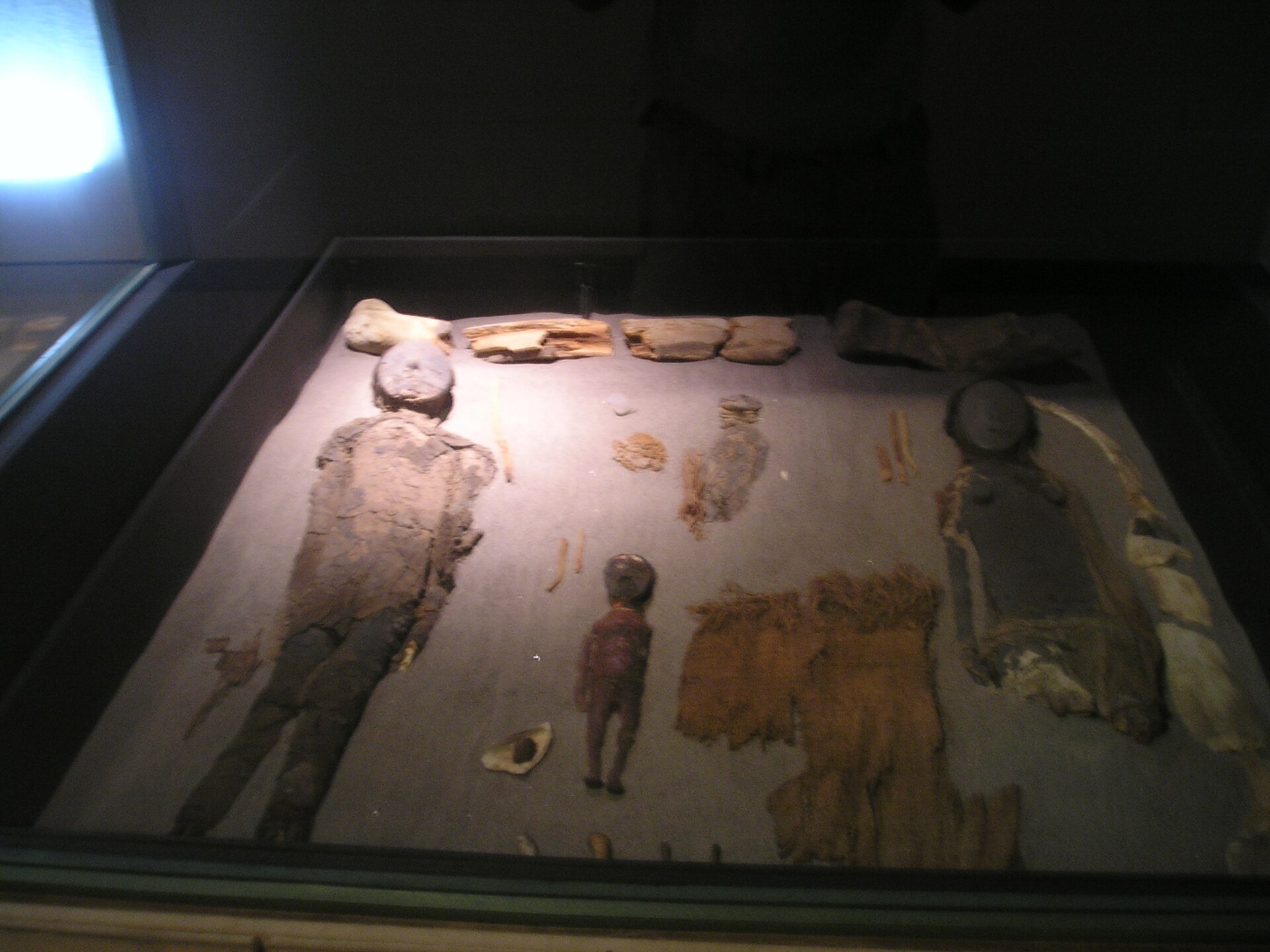 Photo: Heretiq / Wikimedia Commons (CC BY-SA 2.5)
 - Geoglifos de Pintados Early morning or late afternoon, for raking light
A concentration of roughly 450 human, animal, and geometric figures cut into hillsides over more than 3km near Pozo Almonte, created by pre-Hispanic Andean peoples between 700-1500 AD with some Tiwanaku influence. A declared national monument, though currently facing conservation threats from off-road vehicle damage.
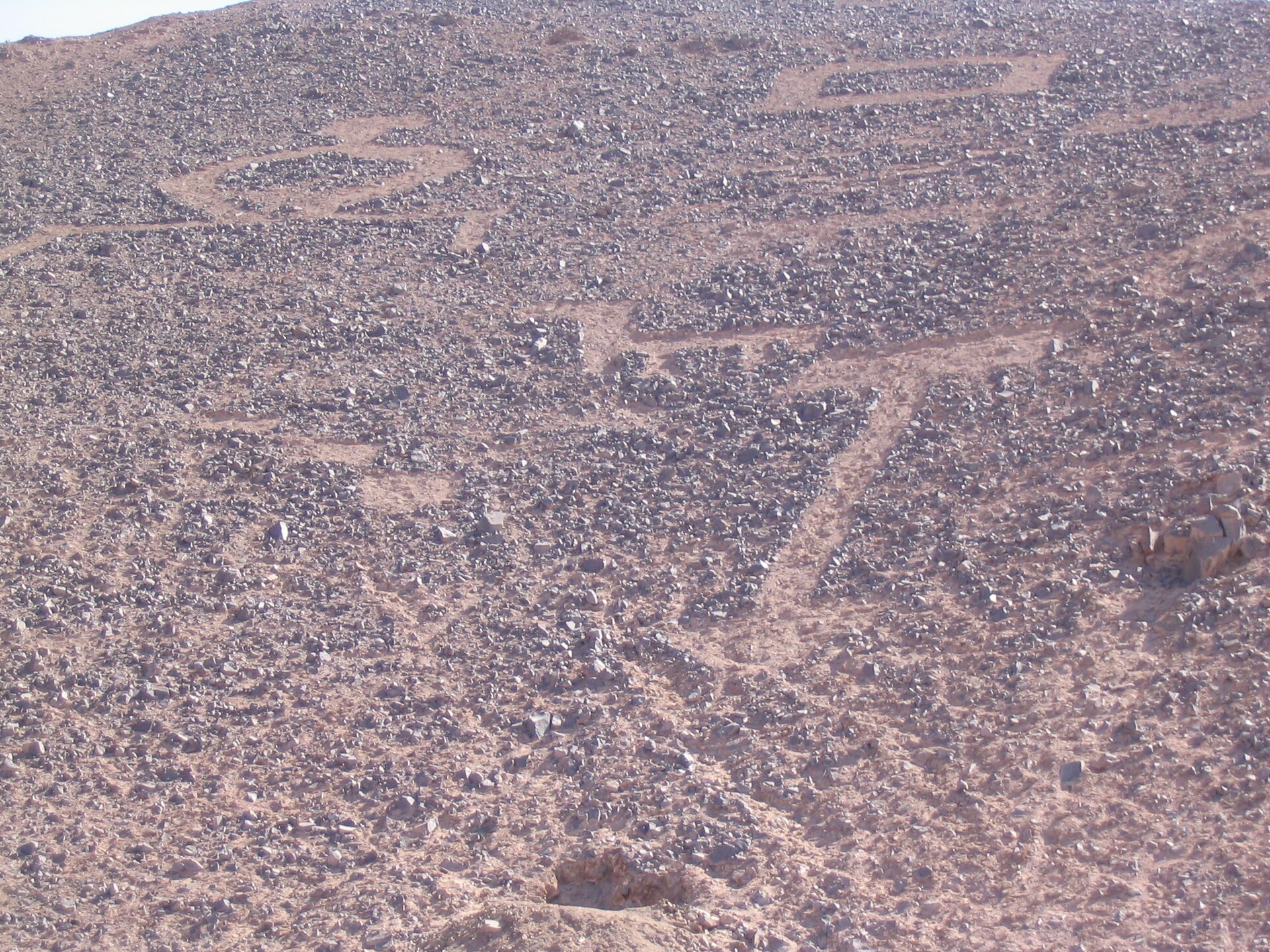 Photo: Christian Córdova / Wikimedia Commons (CC BY 2.0)
 - Pisagua's Clock Tower & Municipal Theater Daylight hours only
A former nitrate port that once held 8,000-plus people preserves a wooden clock tower and Municipal Theater from its boom era alongside crumbling mansions — now a near-ghost town of roughly 100-260 residents.
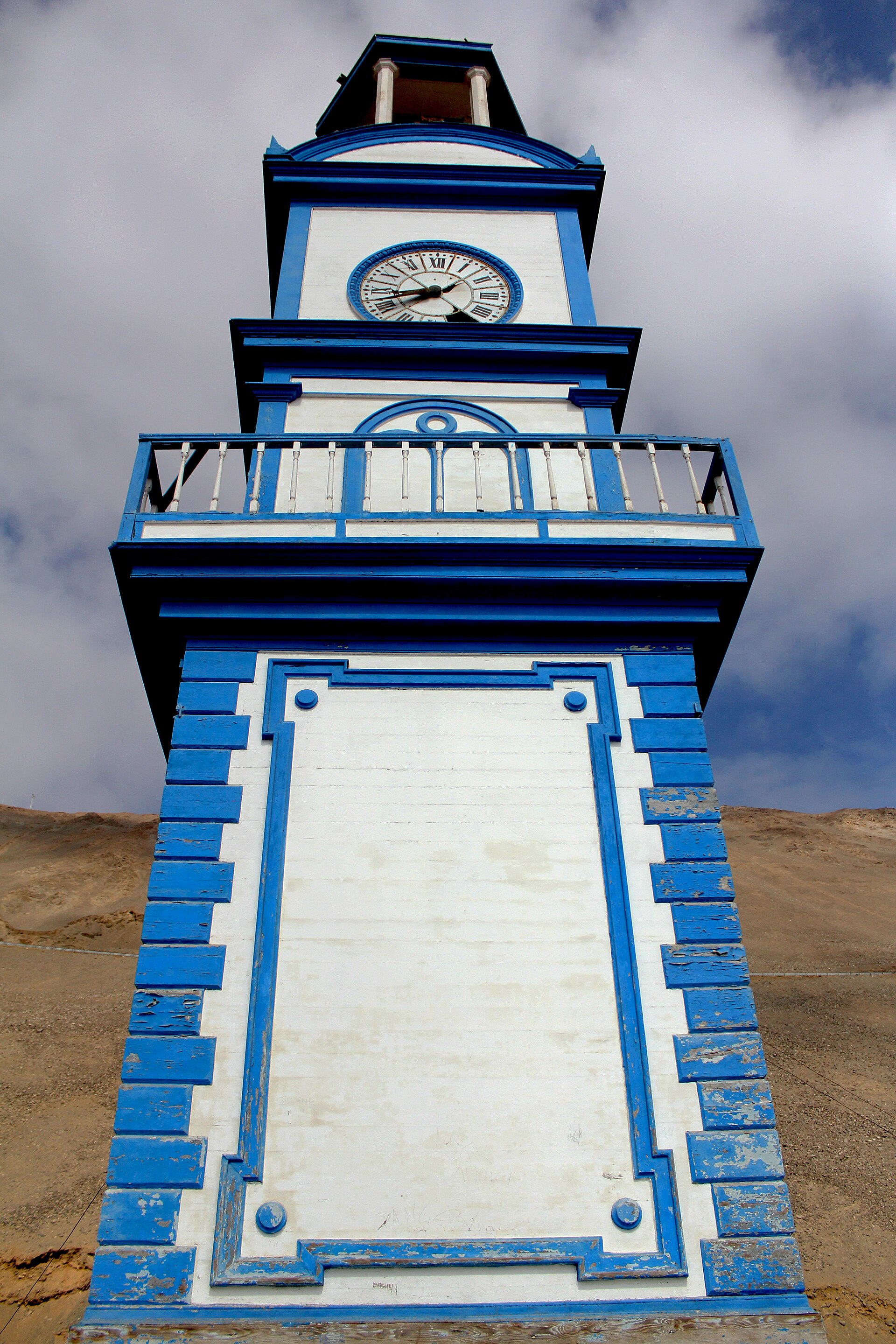 Photo: Claudiorodriguez / Wikimedia Commons (CC BY-SA 3.0)
Questions people actually ask.
How do I get to North Chile?
Santiago (SCL) is Chile's real international gateway — no US carrier flies direct to Arica or Iquique. From SCL, Iquique (IQQ) is the better-served domestic connection: ~51 flights/week across three airlines (JetSmart, LATAM, Sky), ~2h15m flight time. Arica (ARI) runs fewer flights on two airlines, ~2h36m. Arica-Iquique is a solid ~3h35m direct bus (Pullman Bus runs it 5x/day). Pisagua has no scheduled bus service at all — it's reachable only by rental car or arranged taxi.
Do I need a visa?
No. Chile is visa-free for US citizens — a 90-day entry permit is granted on arrival at no cost, extendable toward 180 days/year for a fee if needed. Just a valid US passport.
Is North Chile safe?
The US State Dept rates Chile Level 2, Exercise Increased Caution, citing crime and sporadic civil unrest concentrated mainly in Santiago and other major cities. Northern cities including Arica and Iquique are consistently described as running below the national crime picture, and mining-region economic protests further south (Antofagasta/Calama) haven't significantly affected tourist routes on this coast. Standard urban precautions apply in Arica and Iquique's city centers.
When should I go?
This coast runs warmer and more consistent than Chile further south — its near-Peru latitude softens the Humboldt Current's chill considerably. Water holds in the mid-to-high teens Celsius year-round, warmest in February, coldest around August. A dedicated Chile-specific swell almanac wasn't available to fully pin exact peak months — treat spring through winter as the general consistency window and verify current conditions before locking dates.
What's the water like, and what wetsuit do I need?
Meaningfully warmer than this site's other South America zones. Arica runs roughly 17-22°C (63-72°F) year-round; Iquique a couple degrees cooler at 16.6-19.8°C (62-68°F). A 2mm top or shorty covers summer dawn patrols; winter (August) tops out around 3/2mm-4/3mm with boots — much lighter than the 4/3mm-5/4mm-plus-hood gear this site's Uruguay and Argentina zones require.
Disclosure & how this page works.
Straight talk: Some links on this page are affiliate links — if you book through them, Secrets of Surf Travel earns a small commission at no extra cost to you. We only link places and people we’d use ourselves, and coverage is never for sale. Those commissions are what keep this site running and fund the next trip.
Today, the “Search Vrbo rentals” and “Search Booking.com stays” links on this page are affiliate links — every vendor listing link is still a plain courtesy link. As partnerships with these local businesses come online, more links (and discount codes, where Secrets of Surf Travel benefits from their use) may earn us a commission, and this page will keep saying so plainly. Coverage is never for sale: nobody on this page paid to be here, and nobody can.
Every listing was researched in 2026 and is being verified in person. Prices, hours, and policies change — treat them as strong starting points and confirm directly with the business. And per the No-Reveal Code: you will find no surf spots on this page, ever.