
Jamaica
Port Antonio was Jamaica's original jet-set town — an 1880s banana-port boom, then Errol Flynn's arrival in 1946 — genuinely distinct from Montego Bay's all-inclusive resort strip. Boston Bay, a short drive away, is widely credited as the real birthplace of both Jamaican surfing and commercial jerk cooking. Portland Parish also happens to carry the lowest crime rate of any parish on the island.
Straight talk: Some links on this page are affiliate links — if you book through them, Secrets of Surf Travel earns a small commission at no extra cost to you. We only link places and people we’d use ourselves, and coverage is never for sale. Those commissions are what keep this site running and fund the next trip.
Some vacation-rental search links on this page (marked “Search Vrbo rentals” or “Search Booking.com stays”) are affiliate links. Every vendor link below is still a plain courtesy link. As more partnerships come online, more links may earn us a commission; the promise above holds either way.
Getting There
Fly into Kingston (KIN), not Montego Bay (MBJ) — a real routing correction worth knowing before you book. KIN to Port Antonio is ~107km, roughly 2-2.5 hours via the coast road. MBJ to Port Antonio is ~197km and materially worse: 3.5-5 hours on a traffic-clogged, pothole-heavy road, despite MBJ having far more flight options. JetBlue flies direct from New York-JFK and Fort Lauderdale, American from Miami, and Delta from Atlanta, all to Kingston — only 4 US cities connect nonstop, meaningfully thinner than Montego Bay's network, but still the right call for this zone. Southwest flies to MBJ, not KIN.
Documents: no visa needed for US citizens. Sources genuinely conflict on the allowed stay length (90 vs. 180 days) — 90 days is the State Department-sourced figure and the safer one to plan around; confirm at entry. Passport valid 6+ months beyond travel dates.
Ground Transport
- Port Antonio to Boston Bay: ~11.8 miles (19km), a short local hop — roughly 20 minutes by car or public bus.
- Jamaica drives on the LEFT, British-style. Most visitors adapt within 15-20 minutes, but real hazards are worth knowing: narrow winding roads, potholes, and genuinely poor rural lighting — avoid night driving, especially on rural roads.
- Route taxis are a real, distinct system — shared taxis on fixed routes, identifiable by red license plates and the route printed on the door, cash-only, fare confirmed before boarding. Don't confuse the rate with a private taxi's.
When to Go & What to Pack
- The surf pattern here is genuinely more nuanced than simple winter groundswell. This coast is primarily driven by NE trade-wind windswell, which produces the best rideable surf in the shoulder seasons — spring and September — when the wind is strong enough to build swell but not so strong it blows the surf out. True groundswell is rarer, arriving via infrequent NW winter pushes roughly November-April.
- Water temperature: warm nearly year-round, roughly 79-86°F (26-30°C), coolest around February. No wetsuit needed — a rashguard for sun protection is the real gear consideration.
- Hurricane season runs June 1-November 30, peak August-September. Worth knowing plainly: Hurricane Melissa, a Category 5 storm, hit Jamaica hard on October 28, 2025 — but damage concentrated in western and southern parishes; Port Antonio was largely spared. Confirm current infrastructure status before travel regardless, since recovery is ongoing island-wide.
Good to Know
- Safety, stated specifically: the US State Department downgraded Jamaica from Level 3 to Level 2, Exercise Increased Caution, effective January 2026. Real risk concentrates specifically in Kingston and parts of Montego Bay, with several named Level 4 "Do Not Travel" zones inside those cities — Portland Parish, where Port Antonio and Boston Bay sit, does not appear on that list and is independently described as having the lowest crime rate of any Jamaican parish. This is a genuine, verifiable safety differentiator for this zone, not spin.
- Currency: Jamaican Dollar (JMD), roughly 157-159 to $1 USD. USD is widely accepted in tourist areas, but JMD gets better value for local spending (route taxis, jerk stands, markets).
- Language: English, official; Jamaican Patois is the widely spoken vernacular.
- Tap water: treated and monitored in Kingston, Montego Bay, Negril, and Ocho Rios — but Port Antonio's smaller, more rural profile means bottled or filtered water is the safer default here.
- Emergency: 119 police, 110 fire/ambulance (both free from any Jamaican mobile network, even without credit) — 112 and 911 also work.
- Connectivity: Digicel (stronger rural/island-wide coverage) and Flow (solid in towns/resort areas) are the main carriers — a local SIM is more reliable than hotel wifi for a rural-leaning zone like Portland.
- Cost of living: budget travelers run roughly $45-110/day, mid-range $210-400/day. Local "cook shop" meals run JMD 300-700 (~$2-5); street jerk chicken runs roughly JMD 500-1,000 (~$3-6).
Respecting the Locals
Boston Bay is widely credited as the real birthplace of both Jamaican surfing and commercial jerk cooking — two things this parish gave the rest of the world, not the other way around. Portland Parish also carries the lowest crime rate on the island, a real, earned reputation, not a marketing line. English is the official language, but Jamaican Patois is what you'll actually hear on the street and in the water — learn a greeting in it and it goes a long way.
- Locals get first priority, always. Watch a session before you paddle out. Learn who's who before you learn the wave. Sit inside and catch what they let through — the leftovers are yours, not the set waves.
- Don't backpaddle. Ever. Being in position doesn't make the next wave yours, especially if you didn't wait your turn. If a local wants a wave, let them have it…even if it IS your turn. That older guy who may not be the best surfer out there has probably been surfing that wave before you even sat on a board. If you don't know someone, assume they're local.
- Don't snake. This shouldn't even need to be said, but…dropping in on someone, local or not, is the ultimate disrespect and the fastest way to be sent out of the water. Don't be that guy!
- Say hi. A “howzit,” “whatsup,” or “nice wave,” eye contact, or a nod in the channel — it costs nothing and it's the fastest way from stranger to welcome.
- This is somebody's home, not a resort amenity. The break you're surfing is where a local kid learned to swim, where someone's uncle has surfed for forty years. Act like a guest, because you are one.
- Spend where it actually helps. The food truck, the local shaper, the family-run rental, the local photographer — that's where a surf trip's money should land, not just the chain hotel gift shop. See The No-Reveal Code for why that's the whole premise of this site.
- Leave it better than you found it. Pick up trash that isn't yours. Don't touch reef, wildlife, or cultural sites.
Locals have watched hundreds, if not thousands, of people come and go — some for days, some for months or years — and almost all of them eventually go home. The locals are still there. It takes many, many years to actually become one. Keep that in mind the next time you feel entitled to the same waves they get.
None of this is a secret handshake. It's just how you'd want a guest to act in your own backyard.
Port Antonio
Jamaica's original jet-set town — an 1880s banana-export boom (weekly sailings reportedly once exceeded Liverpool's) gave way to a second life when Errol Flynn's yacht washed ashore in 1946. Genuinely distinct from the all-inclusive resort strips of Montego Bay, Negril, and Ocho Rios.
Port Antonio's high end runs to all-villa boutique stays and eco-lodges, with an independent guesthouse anchoring the budget end — real range for a small town.
Search Vrbo rentals in Port Antonio →
Surf Guides & Tours
No dedicated surf school in Port Antonio town itself — the real surf scene is 20-30 minutes away at Boston Bay. Most visitors arrange transport through their accommodation.
Stays
- Trident HotelAnglers Road, private beachLuxuryOnly 13 all-villa units, part of the Geejam Collection, each with a private plunge pool — live jazz supper club on-site."My villa was spacious and amazing. I loved my outdoor tub and my private pool." — guest review
- Geejam Hotel & StudiosRainforest setting above Port AntonioLuxuryA boutique hotel built around a working recording studio — Drake, Rihanna, Amy Winehouse, and Sean Paul have all recorded there.
- Hotel Mockingbird HillHilltop, between the Blue Mountains and the seaUpper-mid10-room eco-boutique founded 1992, deliberately no TVs/AC — includes shuttle and entry to Frenchman's Cove.
- All Nations GuesthousePort AntonioBudget8.8/10 rating, from ~$86/night.
Where to Eat
- Anna BananaWaterfront, near Folly OvalMid-rangeThe town's classic waterfront seafood institution — lobster, conch, and fish cooked to order.
- Woody's Low Bridge PlaceDrapers, ~4 miles east near San SanBudgetFamily-run by Charles "Woody" Cousins and wife Cherry since 1986 — Woody occasionally performs live reggae for guests.
- Roots 21 Bar & Kitchen19 W Palm AveMid-rangeJamaican/Indian/international menu — curry goat, oxtail, steamed snapper.
Wheels: Car Rentals
- Island Car RentalsPort Antonio (island-wide network)The largest rental company in Jamaica — fleet from economy to SUV.
- Dhana Car Rental & ToursPort AntonioGeared toward self-drive touring to Blue Lagoon and Rio Grande.
Surfboard & Ding Repair / Surf Shops
Genuinely nonexistent — no dedicated repair shop or standalone surf shop found in either hub; this tracks with the area's small, informal surf economy.
Massage & Wellness
- Trident Hotel SpaInside Trident HotelUpperSothys (Paris)-based treatments, beachfront cabanas, ocean-facing treatment rooms.
- Beale's Spa Consulting & ServicesPort AntonioMid-rangeIndependent operator — "Best massage in Jamaica" per TripAdvisor reviews.
Other Adventures
- Rio Grande Tours LtdDeparts Port AntonioMid-rangeBilled as the birthplace-operator of Jamaican river rafting — 2.5-3 hour, 6-mile bamboo-raft trips poled by a local raftsman."Captain Pablo was outgoing, helpful, and full of information." — review
- Lady G'DiverOyster Bay, Alligator Head FoundationMid-rangePADI 5-Star family-run dive facility, 30+ years operating locally — small-group boats, max 6 divers.
Boston Bay
Widely credited as the birthplace of Jamaican surfing — in the 1960s, young local surfers rode homemade boards built from refrigerator foam, boat resin, and fiberglass drapery cloth. Also, separately and just as genuinely, the birthplace of commercial jerk cooking.
Boston Bay's beds run from cliffside eco-villa huts down to a beachfront guesthouse — genuine independent lodging right where Jamaican surfing started.
Search Vrbo rentals in Boston Bay →
Surf Guides & Tours
- Surf Boston BayBoston Bay BeachBudgetBoard and SUP rental plus instruction directly on the sand — Jamaica's real learn-to-surf hub.@surfbostonbay
Stays
- Great Huts Eco ResortCliffs above Boston Bay Beach, Fairy HillBudget/midRustic-to-tiered lodging from "glamping" huts to a private villa, African-heritage-inspired design — direct beach access. 8.3/10 from 330+ reviews."Quaint, quiet, and charming... super friendly staff and delicious food." — TripAdvisor review
- Boston Beach GuesthouseSteps from the beachBudgetPrivate beach access, near Frenchman's Cove and the Blue Lagoon — cash-only, from ~$123/night.
Where to Eat — the jerk cluster
- Mickey's Jerk CentreBoston Bay jerk clusterBudgetRun today by Adam Palmer, nephew of founder "Mickey" — traditional open-pit style over uncured pimento wood, covered with corrugated zinc.
- I&R Boston Jerk CenterFairy Hill, near the former Errol Flynn estateBudgetSold by the quarter/half/full pound, bottled jerk sauce available."Jerk chicken straight off the grill, warm fried bread, ice cold Red Stripe beer." — reviewer account
- Gurley Aston Jerk CenterBoston Bay jerk clusterBudgetStarted by Miss Gurley and Maas Aston — featured on BBC One with Clive Myrie covering Boston Bay as the epicenter of jerk.
Wheels: Car Rentals
None based in Boston Bay itself — rent from the Port Antonio operators above and drive the short 20-30 minutes in.
Massage & Wellness
Genuinely thin — nearest confirmed option is Oneness Wellness Farm in adjacent Long Bay, or the Port Antonio hotel spas listed above.
Other Adventures
Reach Falls, the Blue Lagoon, Frenchman's Cove, and Rio Grande rafting (all covered under Port Antonio and Local Secrets) are commonly done as day trips from Boston Bay, given the short drive.
Local Secrets
Seven non-surf reasons this zone rewards the curious — a spring-fed lagoon shifting jade to sapphire, a banana-transport tradition turned tourism by Errol Flynn, and the historic capital of Jamaica's Windward Maroons.
- Blue Lagoon Year-round; late morning for the clearest color
A roughly 180-foot-deep spring-fed lagoon where cold freshwater springs mix with warm Caribbean seawater, creating shifting jade-to-sapphire coloring — popularly (if inaccurately) tied to the 1980 film "The Blue Lagoon," which was actually shot in Fiji.
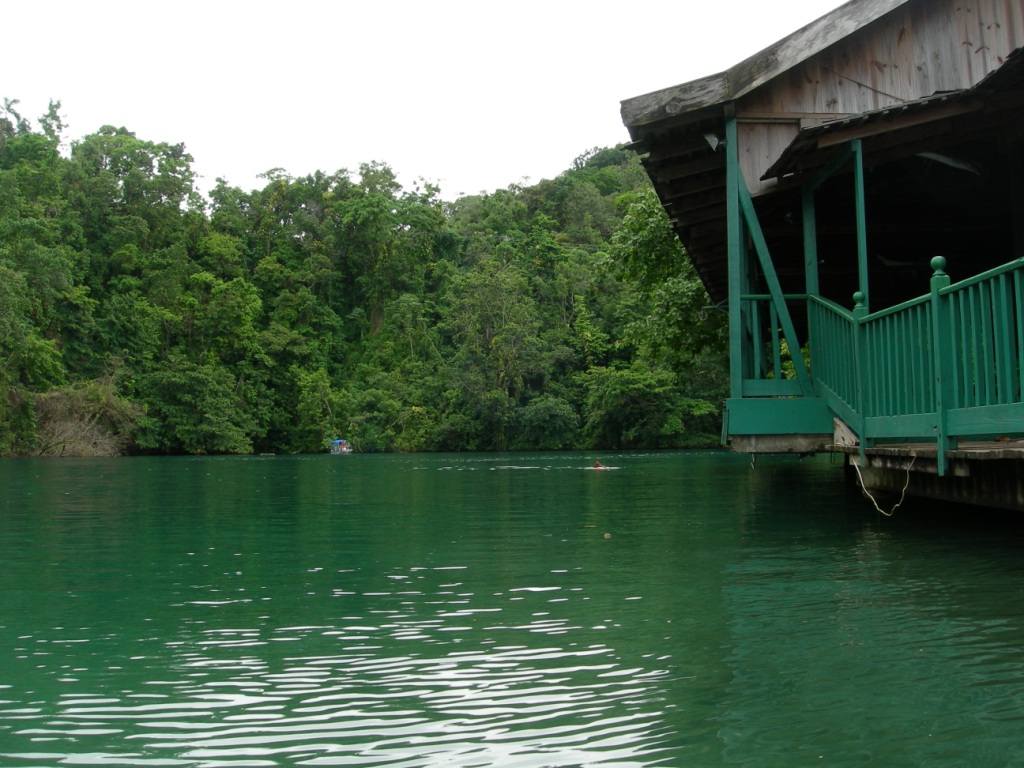 Photo: Chaoleonard / Wikimedia Commons (CC BY-SA)
 - Rio Grande Bamboo Rafting Dry season (Dec-Apr) for calmer water; mornings
A 6-mile, 2-3 hour bamboo-raft trip poled by a local raftsman down Jamaica's longest river. Rafts were originally used to float bananas downriver for export; Errol Flynn is widely credited with turning it into a paid tourist activity in the 1950s.
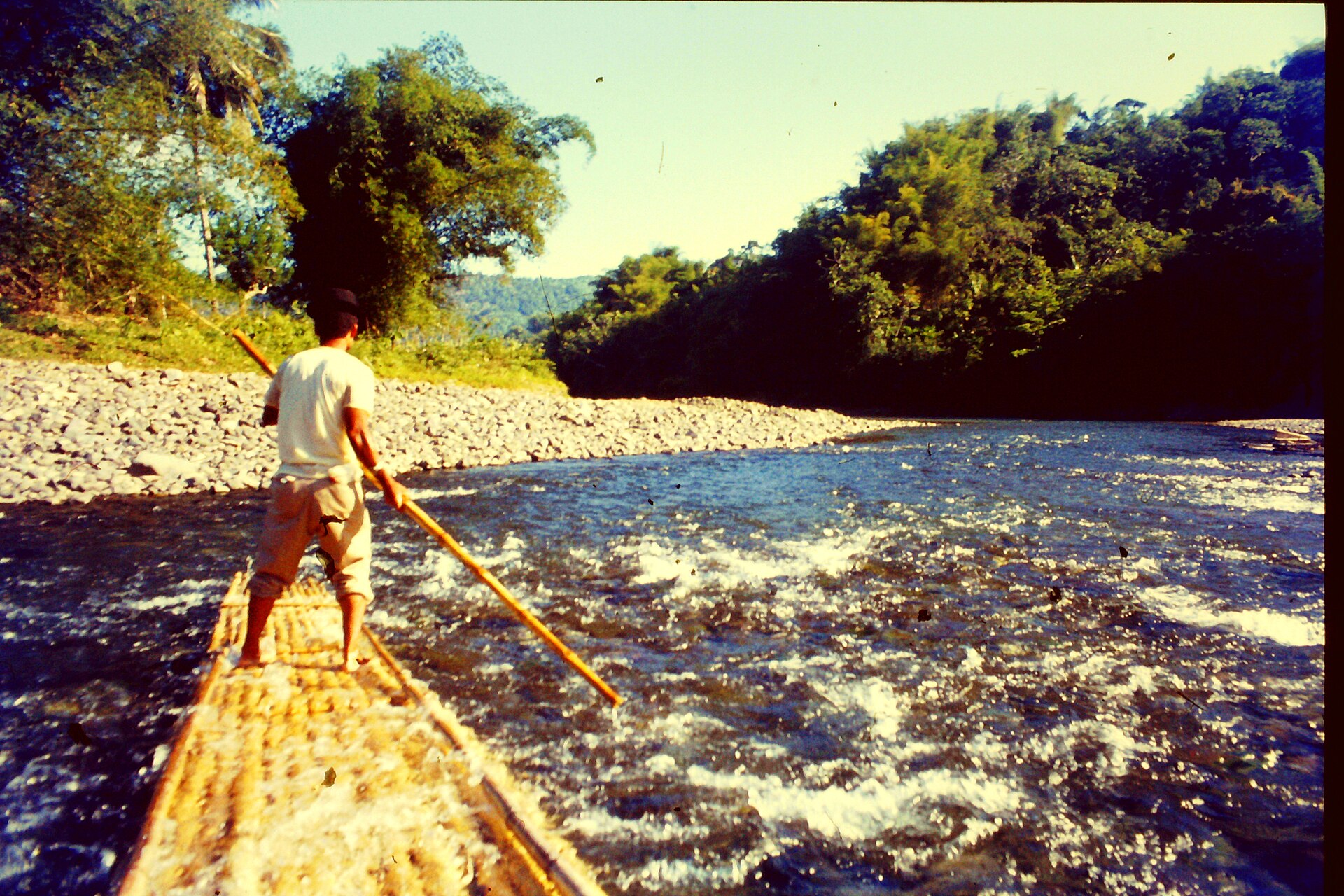 Photo: Fritz Rudolf Loewa / Wikimedia Commons (CC BY-SA 3.0)
 - Reach Falls Wednesday-Sunday only; wet season for fuller flow
A multi-tiered waterfall in the John Crow Mountains about 45 minutes east of Port Antonio, with jade natural pools to wade upstream through and a cave behind one cascade.
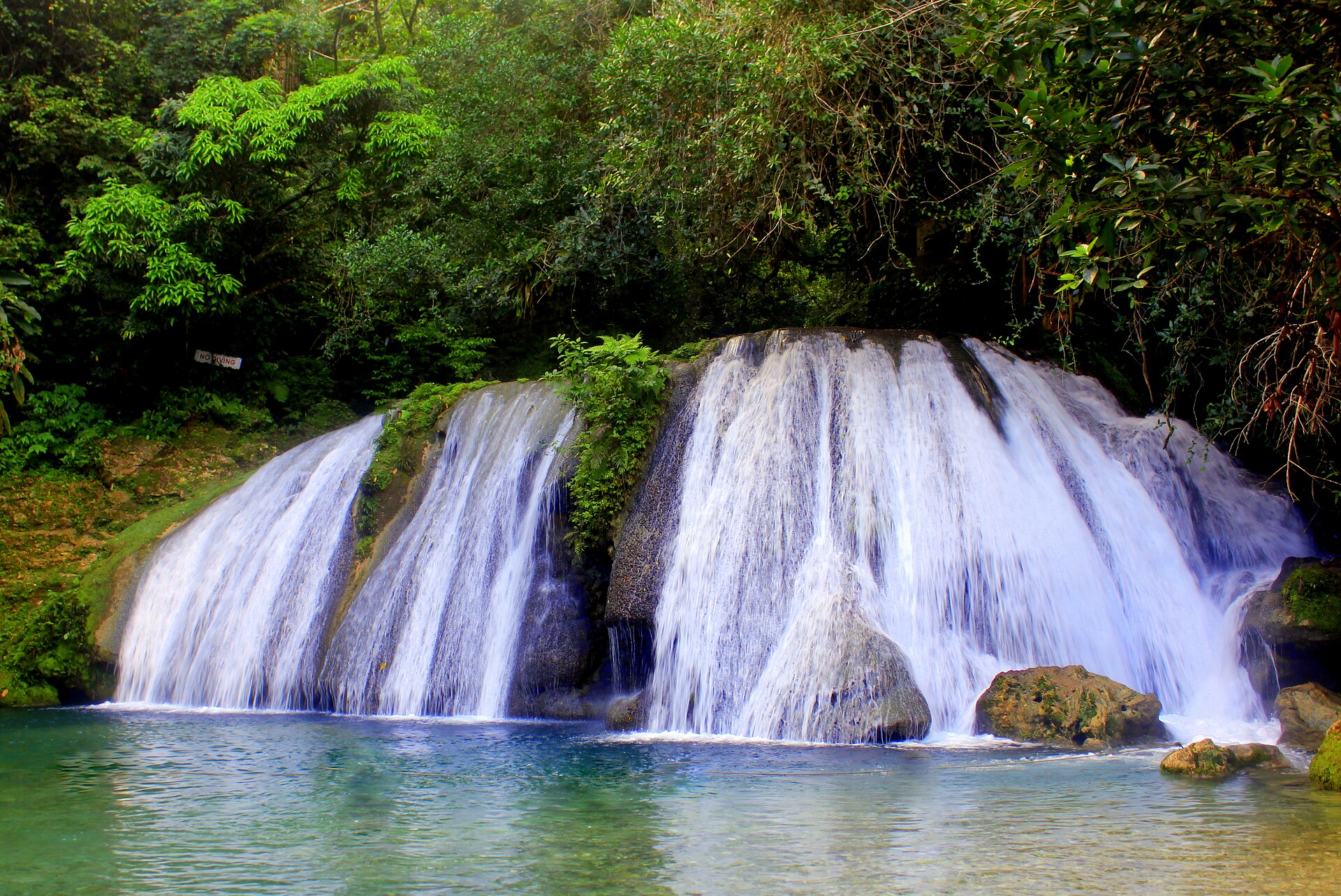 Photo: Wikimedia Commons (CC BY-SA 3.0)
 - Frenchman's Cove Year-round; weekday mornings for fewer crowds
A 48-acre property where a freshwater river winds through a valley and empties directly across the white-sand beach into the Caribbean, giving the water a distinctive luminous green cast.
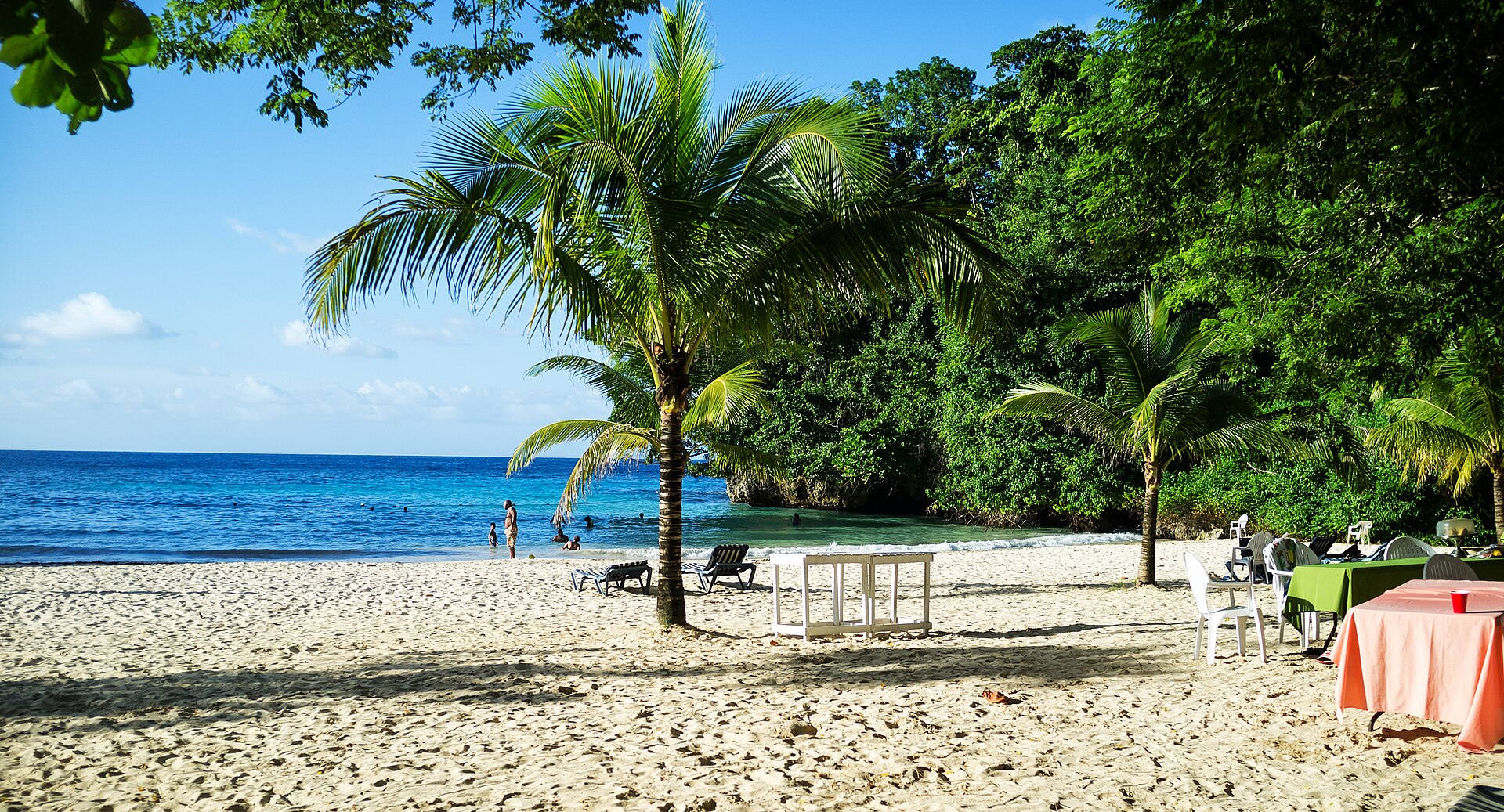 Photo: Nigel Burgher / Wikimedia Commons (CC BY 2.0)
 - Blue Mountain Coffee Country Full-day trip; dry season for easier roads
Blue Mountain coffee grows at roughly 3,000-plus feet in the range visible from Port Antonio — small-farm tours in villages like Section, Portland Parish, show roasting and processing firsthand.
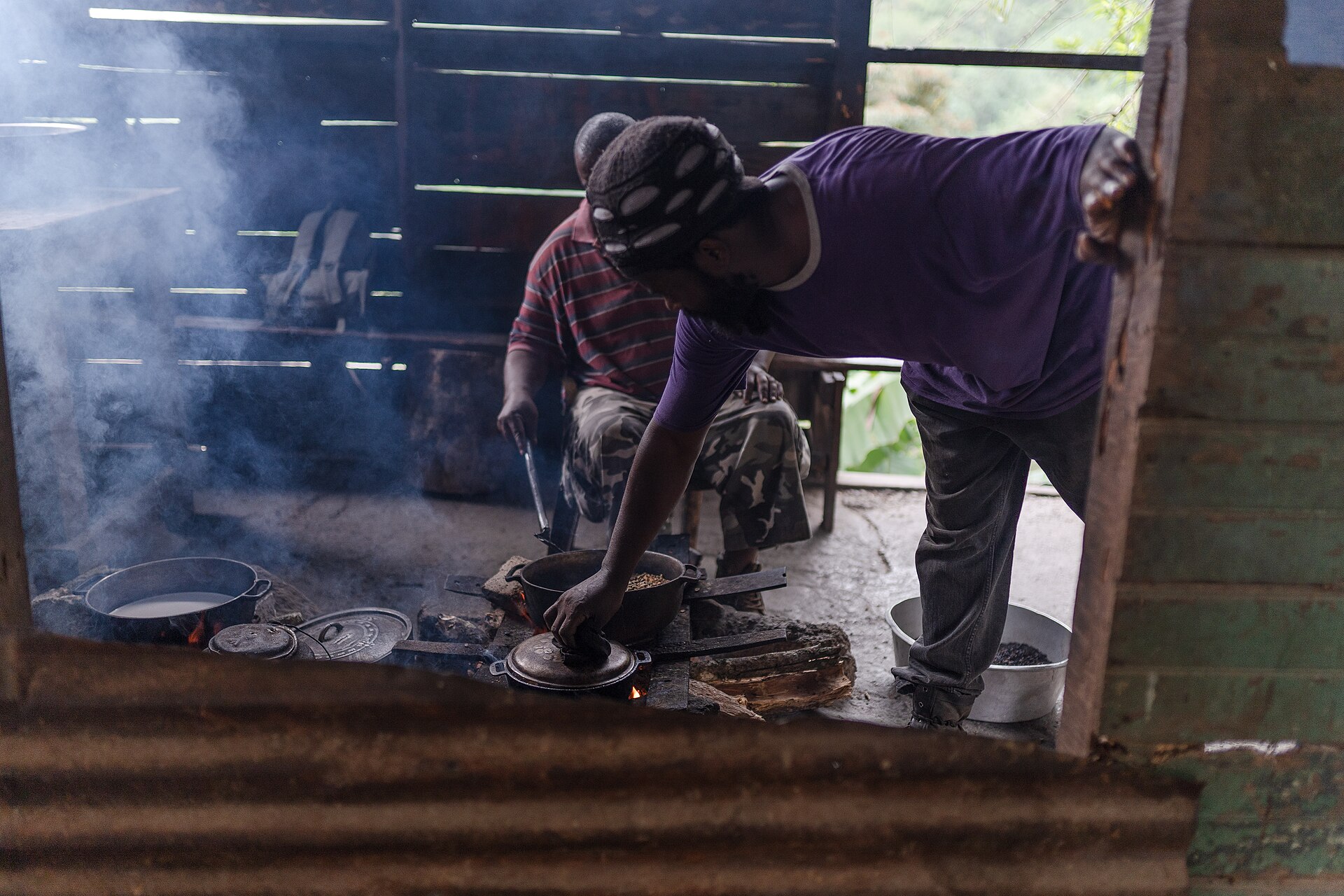 Photo: Matthew Kowal / Wikimedia Commons (CC BY-SA 4.0)
 - Moore Town Year-round; arrange in advance through a local guide
Founded in the Rio Grande Valley by Queen Nanny in 1740-41 — Jamaica's only female National Hero — Moore Town is the historic capital of the Windward Maroons. Its music tradition was declared a UNESCO Masterpiece of Oral and Intangible Heritage in 2005.
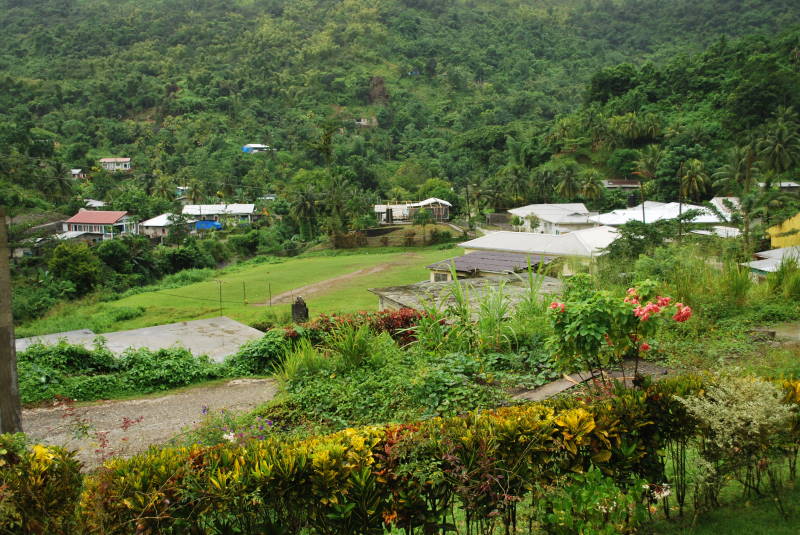 Photo: Diego Tirira / Wikimedia Commons (CC BY-SA 2.0)
 - Boston Bay — Home of Jerk Any day; weekend afternoons have the most pits active
Widely regarded as the birthplace of commercial jerk cooking — a fusion of Taíno smoking methods and Maroon spice technique using pimento wood, Scotch bonnet peppers, and allspice. A cluster of open-air jerk pits, some dating to the 1940s, still operates here.
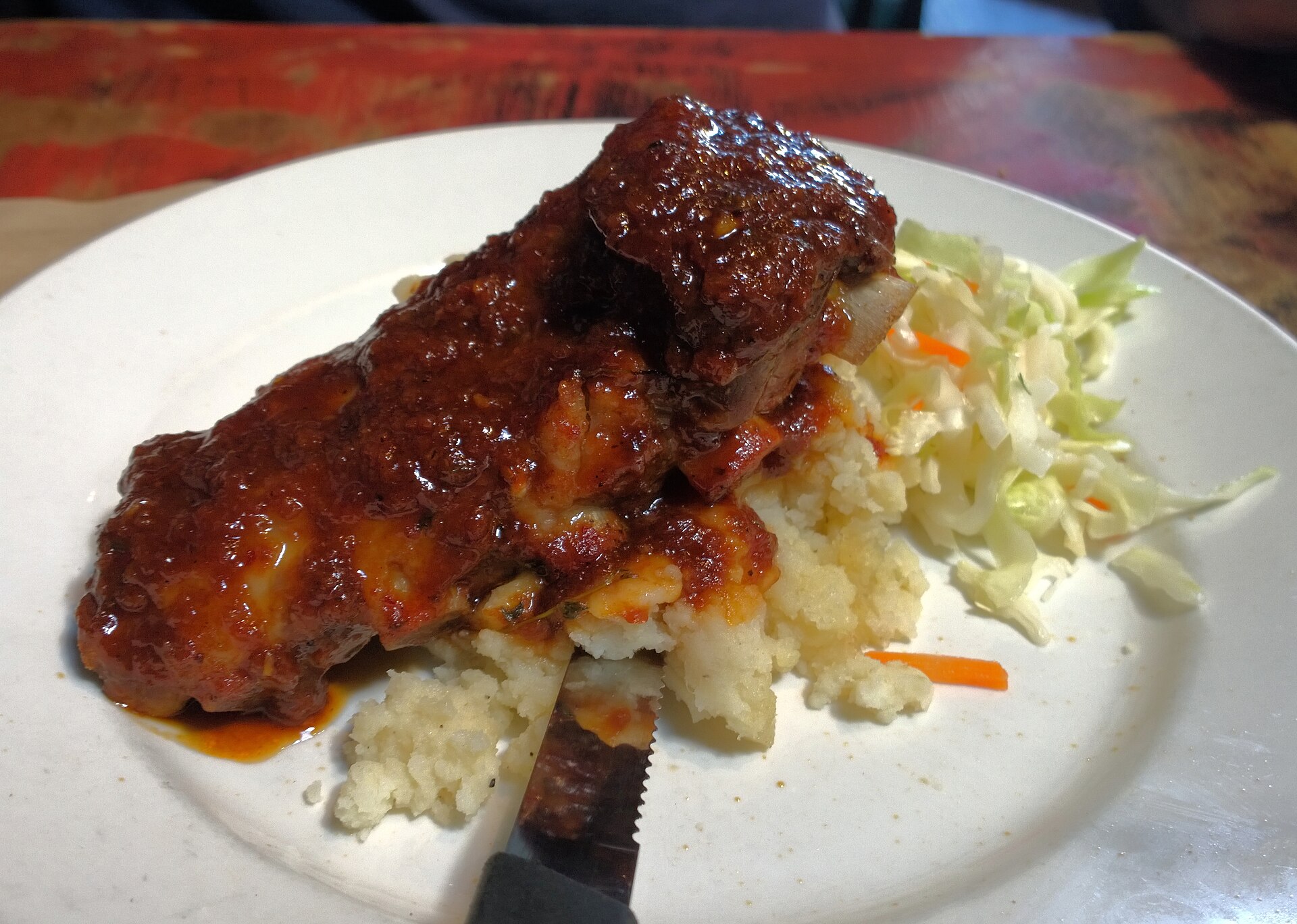 Photo: Ruth Hartnup / Wikimedia Commons (CC BY 2.0)
Questions people actually ask.
Which airport should I fly into for Port Antonio?
Kingston (KIN), not Montego Bay (MBJ) — even though MBJ has far more US flights. KIN to Port Antonio is ~107km, roughly 2-2.5 hours via the coast road. MBJ to Port Antonio is ~197km and materially worse, 3.5-5 hours on a traffic-clogged, pothole-heavy road. JetBlue (JFK, Fort Lauderdale), American (Miami), and Delta (Atlanta) all fly direct to Kingston.
Do I need a visa?
No visa needed for US citizens. Sources genuinely conflict on the allowed stay length (90 vs. 180 days) — 90 days is the State Department-sourced figure and the safer one to plan around; confirm at entry.
Is Jamaica safe, especially Port Antonio?
The US State Department downgraded Jamaica from Level 3 to Level 2, Exercise Increased Caution, effective January 2026. Real risk is concentrated specifically in Kingston and parts of Montego Bay, with several named Level 4 no-go zones inside those cities — Portland Parish, where Port Antonio and Boston Bay sit, does not appear on that list and is independently described as having the lowest crime rate of any Jamaican parish. On weather: Hurricane Melissa (Category 5) hit Jamaica hard on October 28, 2025, but damage was concentrated in western and southern parishes — Port Antonio was largely spared. Confirm current status before travel regardless.
When should I go?
This coast's surf pattern is genuinely more nuanced than simple winter groundswell — it's primarily driven by NE trade-wind windswell, which produces the best rideable surf in the shoulder seasons (spring and September), when the wind is strong enough to build swell but not so strong it blows it out. True groundswell is rarer, arriving via infrequent NW winter pushes roughly November-April.
What's the water like, and do I need a wetsuit?
Warm nearly year-round, roughly 79-86°F (26-30°C), coolest around February. No wetsuit needed — a rashguard for sun protection is the real gear consideration here, not cold water.
Disclosure & how this page works.
Straight talk: Some links on this page are affiliate links — if you book through them, Secrets of Surf Travel earns a small commission at no extra cost to you. We only link places and people we’d use ourselves, and coverage is never for sale. Those commissions are what keep this site running and fund the next trip.
Today, the “Search Vrbo rentals” and “Search Booking.com stays” links on this page are affiliate links — every vendor listing link is still a plain courtesy link. As partnerships with these local businesses come online, more links (and discount codes, where Secrets of Surf Travel benefits from their use) may earn us a commission, and this page will keep saying so plainly. Coverage is never for sale: nobody on this page paid to be here, and nobody can.
Every listing was researched in 2026 and is being verified in person. Prices, hours, and policies change — treat them as strong starting points and confirm directly with the business. And per the No-Reveal Code: you will find no surf spots on this page, ever.