
Ireland — Northwest
A refreshing change of pace: this genuinely is one coherent trip. Bundoran and neighboring Rossnowlagh, County Donegal, are where organized Irish surfing itself was born. Strandhill, County Sligo, is Ireland's most visitor-oriented surf town, built around the National Surf Centre. And Mullaghmore, a harbor village of barely 170 people, carries one of the most famous big-wave reputations on Earth — real history, not a spot reveal, since it's already mainstream news. All three sit within about 45 minutes of each other.

Straight talk: Some links on this page are affiliate links — if you book through them, Secrets of Surf Travel earns a small commission at no extra cost to you. We only link places and people we'd use ourselves, and coverage is never for sale. Those commissions are what keep this site running and fund the next trip.
Some vacation-rental search links on this page (marked "Search Vrbo rentals," "Search Booking.com stays," or "Search Agoda stays") are affiliate links. Every vendor link below is still a plain courtesy link. As more partnerships come online, more links may earn us a commission; the promise above holds either way.
Getting There
No direct US flight lands close to this zone. The two real transatlantic gateways are Dublin Airport (about 3 hours 11 minutes / 252km drive to the Bundoran area) and Shannon Airport (about 2 hours 47 minutes / 147 miles) — Shannon is arguably the more relevant gateway for this zone, with a genuine US Preclearance facility and year-round Aer Lingus service to Boston and New York JFK, plus seasonal United and Delta routes.
Ireland West Airport Knock (NOC) is genuinely the closest airport with any real scheduled service to Strandhill — about 45-58 minutes' drive — though its network is regional UK/Europe flights, not transatlantic. Donegal Airport (CFN) sits closer to Bundoran but only flies to Dublin and Glasgow — no US service. Sligo Airport (SXL), despite being physically right next to Strandhill, has had no scheduled commercial routes since 2011 — don't plan around it.
Documents: a genuine, important difference from every UK zone on this site — Ireland is not part of the United Kingdom. US citizens need no visa and no ETA for tourist stays up to 90 days, just a valid passport. Currency is the Euro.
Ground Transport
- This genuinely is one coherent trip — the first on this site's UK/Ireland cluster where every hub sits within about 45 minutes of the others. Sligo town → Bundoran: 23 miles / ~30 minutes. Bundoran → Mullaghmore: about 9 miles / ~14 minutes. Strandhill → Mullaghmore: roughly 30-40 minutes / ~34km. Strandhill itself sits about 10-15 minutes from Sligo town, the zone's natural center.
- Ireland still drives on the left, same as this site's UK zones.
- Rail coverage is thin — only Sligo town has a station, connecting to Dublin via Irish Rail. None of the three hubs is directly served.
- A car is essential for this zone, same as every zone on this site so far.
When to Go & What to Pack
- Water temperature runs roughly 8-10°C in winter up to 15-16°C in summer. A 5/4mm wetsuit covers most of the year; step up to 6/5mm hooded with boots and gloves for the coldest stretch (December-February), which is also this zone's biggest-swell window.
- Mullaghmore's famous wave is a different animal entirely — tow-in-assisted, 30-40 foot range, expert/pro-only, and it doesn't work in summer, peaking December-March. This isn't a place a visiting surfer paddles out; treat it as a spectator and history destination unless you're genuinely at that level (see the Mullaghmore hub below).
Good to Know
- Currency is the Euro — the first zone in this site's UK/Ireland cluster not using GBP.
- No UK ETA needed here — Ireland isn't the UK. Just a passport, 90-day visa-free stay for US citizens. Worth flagging precisely if a trip also crosses into Northern Ireland, which is UK territory again and does require the ETA, even without a physical border checkpoint marking the change.
- Emergency number: 999 or 112, both work, same pattern as the UK zones on this site.
Respecting the Locals
Bundoran and Rossnowlagh are where organized Irish surfing itself was born — this coast has a real claim to being the country's founding surf ground, not just another stop. Mullaghmore is a harbor village of barely 170 people carrying one of the most famous big-wave reputations on Earth; that fame belongs to the wave and the tow-in surfers who ride it, not to visitors treating the village as a photo op. Strandhill is the most visitor-built of the three, but it still sits inside the same small, close-knit Northwest coast community.
- Locals get first priority, always. Watch a session before you paddle out. Learn who's who before you learn the wave. Sit inside and catch what they let through — the leftovers are yours, not the set waves.
- Don't backpaddle. Ever. Being in position doesn't make the next wave yours, especially if you didn't wait your turn. If a local wants a wave, let them have it…even if it IS your turn. That older guy who may not be the best surfer out there has probably been surfing that wave before you even sat on a board. If you don't know someone, assume they're local.
- Don't snake. This shouldn't even need to be said, but…dropping in on someone, local or not, is the ultimate disrespect and the fastest way to be sent out of the water. Don't be that guy!
- Say hi. A “howzit,” “whatsup,” or “nice wave,” eye contact, or a nod in the channel — it costs nothing and it's the fastest way from stranger to welcome.
- This is somebody's home, not a resort amenity. The break you're surfing is where a local kid learned to swim, where someone's uncle has surfed for forty years. Act like a guest, because you are one.
- Spend where it actually helps. The food truck, the local shaper, the family-run rental, the local photographer — that's where a surf trip's money should land, not just the chain hotel gift shop. See The No-Reveal Code for why that's the whole premise of this site.
- Leave it better than you found it. Pick up trash that isn't yours. Don't touch reef, wildlife, or cultural sites.
Locals have watched hundreds, if not thousands, of people come and go — some for days, some for months or years — and almost all of them eventually go home. The locals are still there. It takes many, many years to actually become one. Keep that in mind the next time you feel entitled to the same waves they get.
None of this is a secret handshake. It's just how you'd want a guest to act in your own backyard.
Bundoran & Rossnowlagh
County Donegal's original Irish surf towns, a few minutes apart on Donegal Bay. Rossnowlagh is where organized Irish surfing itself was born — see Local Secrets. Neighboring Bundoran built the country's deepest surf-industry bench: multiple schools and shops, a water park, and genuine cold-water infrastructure that's grown continuously since the 1990s.
Surf Schools & Board Rental
- Bundoran Surf Co.Main Street, BundoranConfirm on the groundOperating since March 2005, one of the oldest schools in the country, ISA approved. bundoransurfco.com · Instagram · Map
- Surfworld BundoranMain Street, BundoranConfirm on the groundFamily-run since 1990 by the Fitzgeralds — started as a wax-and-leash shop, now a full retailer. surfworld.ie · Instagram · Map
- Murf's Surf SchoolTullan Strand, BundoranConfirm on the groundEstablished 2016 — the only at-the-beach rental operator in Bundoran; also rents bikes. murfssurfschool.com · Instagram · Map
- Rossnowlagh Surf SchoolRossnowlagh BeachConfirm on the groundFounded 2014 by James Garvey, a multiple Irish Junior surfing champion. rossnowlaghsurfschool.com · Instagram · Map
- Fin McCool Surf School & ShopRossnowlagh BeachConfirm on the groundFounded 2006 by Neil Britton, from a family that's surfed Rossnowlagh since 1965 — one of Irish surfing's founding families. finmccoolsurfschool.com · Instagram · Map
Stays
- Rougey Lodge HostelBundoranBudgetSimple hostel rooms from roughly £21/night. rougeylodge.com · Map
- Holyrood HotelBundoranMid-rangeLeisure centre plus a Japanese-inspired spa, "The Spa at Orchids." holyroodhotel.com · Map
- Allingham Arms HotelBundoranMid-rangeHome to the Oceans Restaurant, with Donegal Bay views. allinghamarmshotel.ie · Map
- Abelone Luxury LodgeBundoranLuxuryWalking distance to Waterworld and the Adventure Park. Map
- Sandhouse Hotel & Marine TherapiesRossnowlaghLuxuryOverlooks Blue Flag Rossnowlagh Beach, ranked #1 of Rossnowlagh's B&Bs/inns on Tripadvisor. sandhouse.ie · Instagram · Map
Where to Eat
- Maddens Bridge Bar & RestaurantMain Street, BundoranConfirm on the groundFamily-run, listed in Lucinda O'Sullivan's "Great Places to Stay & Eat." maddensbridgebar.ie · Instagram · Map
- Buoys & Gulls Coffee ShopWest End, BundoranBudgetFeatured in John & Sally McKenna's "100 Best Places in Ireland." buoysandgulls.ie · Instagram · Map
- Smugglers Creek InnCliff Road, RossnowlaghMid-rangeCliff-edge, award-recognized restaurant/bar with rooms above Donegal Bay. smugglerscreekinn.com · Map
- Seashell & Glassroom RestaurantSandhouse Hotel, RossnowlaghUpperAward-winning, beach views, local meat and seafood focus. sandhouse.ie/dining · Map
Wheels
- The Bike StopMain Street, BundoranConfirm on the groundHiring bikes since 1985 — electric, road, hybrid and touring, free helmets and locks. thebikestop.ie · Instagram · Map
No dedicated car-rental agency sits in Bundoran or Rossnowlagh itself — the nearest is Enterprise Rent-A-Car at Donegal Airport, about 30-35 minutes away.
Surfboard & Wetsuit Repair
No dedicated, standalone repair business confirmed in Bundoran or Rossnowlagh — a genuine gap.
Massage & Wellness
- ZentuaryWindsor Arcade, BundoranConfirm on the groundHot stone massage, cupping, acupressure. Map
- The Spa @ OrchidsHolyrood Hotel, BundoranConfirm on the groundJapanese-inspired spa — hot tub, sauna, Yon-Ka Paris products. holyroodhotel.com · Map
- Marine SpaSandhouse Hotel, RossnowlaghConfirm on the groundFace, body and massage treatments as part of the hotel's Marine Therapies branding. sandhouse.ie · Map
Other Adventures
- Waterworld BundoranBundoran seafrontMid-rangeWater park with "the Whizzer," billed as Ireland's fastest water slide. waterworldbundoran.com · Instagram · Map
- Bundoran Golf ClubBundoranMid-rangeHistoric seaside links course along the Rougey headland. bundorangolfclub.com · Map
- Donegal CastleDonegal town, ~18 miles / 21 minMid-rangeA real 15th-century Gaelic-lord fortress — see Local Secrets. heritageireland.ie · Instagram · Map
Strandhill
Ireland's most visitor-oriented surf town, built around the country's National Surf Centre and a beach break that holds most tides and swell directions. A walkable, hotel-free village of lodges, hostels, and B&Bs rather than resort-style stays, layered with a genuine century-old seaweed-bathing wellness tradition.
Surf Schools & Board Rental
- Rebelle SurfNational Surf Centre, StrandhillConfirm on the groundFemale-owned and run; named to Condé Nast Traveller's "World's Top 10 Surf Experiences 2025." rebellesurf.com · Map
- Atlantic Surf SchoolStrandhill beachfrontConfirm on the groundEstablished local operator running instruction and surf camps. atlanticsurfschoolstrandhill.ie · Instagram · Map
- Sligo Surf ExperienceNational Surf Centre, StrandhillConfirm on the groundSupplies wetsuits and boots sized to each guest. sligosurfexperience.com · Instagram · Map
Standalone board or gear rental outside a instruction generally isn't available in Strandhill village itself — the nearest option is 7th Wave Surf School in Enniscrone, about 45 minutes away.
Stays
- Ocean Wave LodgeStrandhillBudgetRanked #1 of 3 specialty lodging in Strandhill on Tripadvisor. oceanwavelodge.com · Map
- The Nest Hostel StrandhillStrandhillBudgetSecond hostel option in the village. Map
- Gala House StrandhillStrandhillMid-rangeAdults-only homestay, short walk to beach and village center. Map
- Strandhill Lodge & SuitesStrandhillMid-range/UpperFamily-run, sea-view rooms and suites. strandhilllodgeandsuites.ie · Map
There are genuinely no full-service hotels in Strandhill — lodges, hostels and B&Bs are the top of the local market.
Where to Eat
- StokedAbove The Strand Bar, StrandhillConfirm on the groundTapas-style shareable plates, open since 2018. stokedstrandhill.ie · Instagram · Map"Great food! Cooked with passion!!" — reviewer
- The Strand BarStrandhill seafrontBudgetEst. 1913, run today by the Byrne brothers — themselves competitive surfers; weekly trad-music sessions. thestrandbar.ie · Map
- Shell's CaféStrandhill seafrontBudgetKnown for brunch and lunch classics like fish and chips. shellscafe.com · Instagram · Map
- Mammy JohnstonsStrandhill beachfrontBudgetFamily-owned, award-winning gelato and crepes. mammyjohnstons.net · Instagram · Map
Wheels
- Sligo Bike HireDelivery to StrandhillConfirm on the groundDrop-and-collect bike delivery service, pre-book a day ahead. Facebook · Map
No in-village car rental — nearest options are Sligo Airport, Dublin, or Ireland West Airport Knock.
Surfboard & Wetsuit Repair
- The Wetsuit CompanyNational Surf Centre, StrandhillConfirm on the groundHandles wetsuit repair specifically. thewetsuitcompany.ie · Instagram · Map
No standalone surfboard ding-repair shop was found — wetsuit repair is covered, board repair is a real gap.
Massage & Wellness
- VOYA Seaweed BathsStrandhill villageConfirm on the groundA modern revival of Ireland's indigenous seaweed-bathing therapy, opened 2000 — see Local Secrets for the tradition's real history. voyaseaweedbaths.com · Instagram · Map
- Kindred StudiosAbove Strandhill Golf ClubConfirm on the groundYoga, meditation, and holistic treatments with real sea views. kindredstudios.ie · Map"Best yoga experience ever." — reviewer
Other Adventures
- Strandhill Golf ClubStrandhillMid-rangeLinks course overlooking the surf. strandhillgolfclub.com · Map
- Knocknarea & Queen Maeve's CairnOverlooking StrandhillBudgetA real Neolithic hike — see Local Secrets. heritageireland.ie · Map
- Coney Island tidal causewaySligo Bay, near StrandhillBudgetA real low-tide walking crossing — see Local Secrets. Tide times · Map
Mullaghmore
A tiny harbor village — population 172 at the 2022 census — carrying an outsized global reputation, thanks to one of the most famous big-wave breaks on Earth. Genuinely not a beginner surf town: real instruction and board hire live back in Bundoran and Strandhill. Mullaghmore's own draw is its harbor, its real and significant history, and, in the right winter swell, watching some of the biggest rideable waves in the world from a safe distance.
Surf Schools & Board Rental
- SUP DudeMullaghmore villageConfirm on the groundISA-approved SUP school run by Emmet O'Doherty, a former Irish SUP Champion. Instagram · Map"Really good value and a perfect way to see beautiful Mullaghmore." — reviewer
No traditional surf instruction or board-rental operator is based in the village — Mullaghmore Head's main break is expert/tow-in-only, not a learn-to-surf spot. Real beginner instruction live in Bundoran and Strandhill, both covered above.
Stays
- Ard Na MaraMullaghmoreBudget/midSelf-catering one-bed apartment, 7-minute walk to the beach. Map
- Seacrest GuesthouseMullaghmoreMid-rangeB&B directly across from the local sailing club, sea/harbour views. seacrestguesthouse.ie · Map
- The Beach HotelMullaghmore seafrontMid-range"The hub of Mullaghmore since the 1950s," 3-minute walk to the beach. beachhotelmullaghmore.com · Map
- Pier Head Hotel, Spa & Leisure CentreMullaghmore harbourMid-rangeWelcoming visitors for over 100 years; Leonard Cohen and his band once stayed a full week. pierheadhotel.ie · Map
No luxury-tier property exists in the village itself.
Where to Eat
- Harbour CaféMullaghmore harbourPermanently closed — confirm statusFrench-inflected seasonal seafood, #1 of 5 Mullaghmore restaurants on Tripadvisor. Map"The ambiance, the food, the staff and the location all amazing." — reviewer
- Eithna's by the SeaMullaghmorePermanently closed — confirm statusWon the Georgina Campbell Ireland Guide and BIM 2014 seafood award. Map
- The Quay BarPier Head Hotel, MullaghmoreBudgetRelaxed harbour-view pub, local seafood plus pub classics. pierheadhotel.ie · Map
- Ahoy Coffee CartOverlooking Mullaghmore beachBudgetFresh homemade bakes, TripAdvisor-noted as an essential village stop. Instagram · Map
Wheels
No rental counter in the village — nearest is Sligo town, about 35-40 minutes.
Surfboard & Wetsuit Repair
No repair shop in the village — nearest is Surfworld Bundoran, about 13 minutes away.
Massage & Wellness
- Pier PerfectionPier Head Hotel, Mullaghmore HarbourConfirm on the groundSpa and beauty salon; guests get complimentary access to the hotel's pool, gym, steam room and sauna. pierheadhotel.ie · Map
Other Adventures
- Mullaghmore Head Loop walkMullaghmoreBudgetA real 4.8km, ~1.5-hour easy coastal loop with views across Donegal Bay to Slieve League. sligowalks.ie · Map
- Gleniff Horseshoe~15 min driveMid-rangeA real glacial valley scenic drive/hike — see Local Secrets. sligowalks.ie · Map
- Inishmurray Island boat tripsDeparting MullaghmoreMid-rangeDay trips to an uninhabited monastic island — see Local Secrets. Kiwi Girl Mullaghmore is a well-reviewed, 25+ year operator running this route. kiwigirlmullaghmore.com · Map
Local Secrets
Eleven non-surf reasons this zone rewards the curious — a fairy-named sea arch, the beach where organized Irish surfing began, a Neolithic cairn older than any king buried inside it, and a castle whose real history includes a Prime Minister and a 1979 assassination.
- The Rougey Walk — Fairy Bridges, a Wishing Chair, and a WWII Secret Any time; the coastal path is exposed, dress for wind
Two natural sea arches on Bundoran's Rougey headland, sculpted by the Atlantic over centuries and the town's original 1800s tourist attraction — an 1834 account already warned visitors that "troops of fairies are constantly heard, and sometimes seen" there, the source of the name. Nearby, the stone "Wishing Chair" carries a real local roster of past sitters, including golfer Christy O'Connor and, by local claim, Kelly Slater. The same walk holds a genuinely documented piece of WWII history: on January 23, 1944, a Royal Air Force Halifax bomber crashed into these cliffs in poor weather, killing all 8 crew — a memorial marks the spot today, tied to the real "Donegal Corridor," a narrow strip of neutral Irish airspace that wartime Ireland quietly allowed British aircraft to cross from 1941.
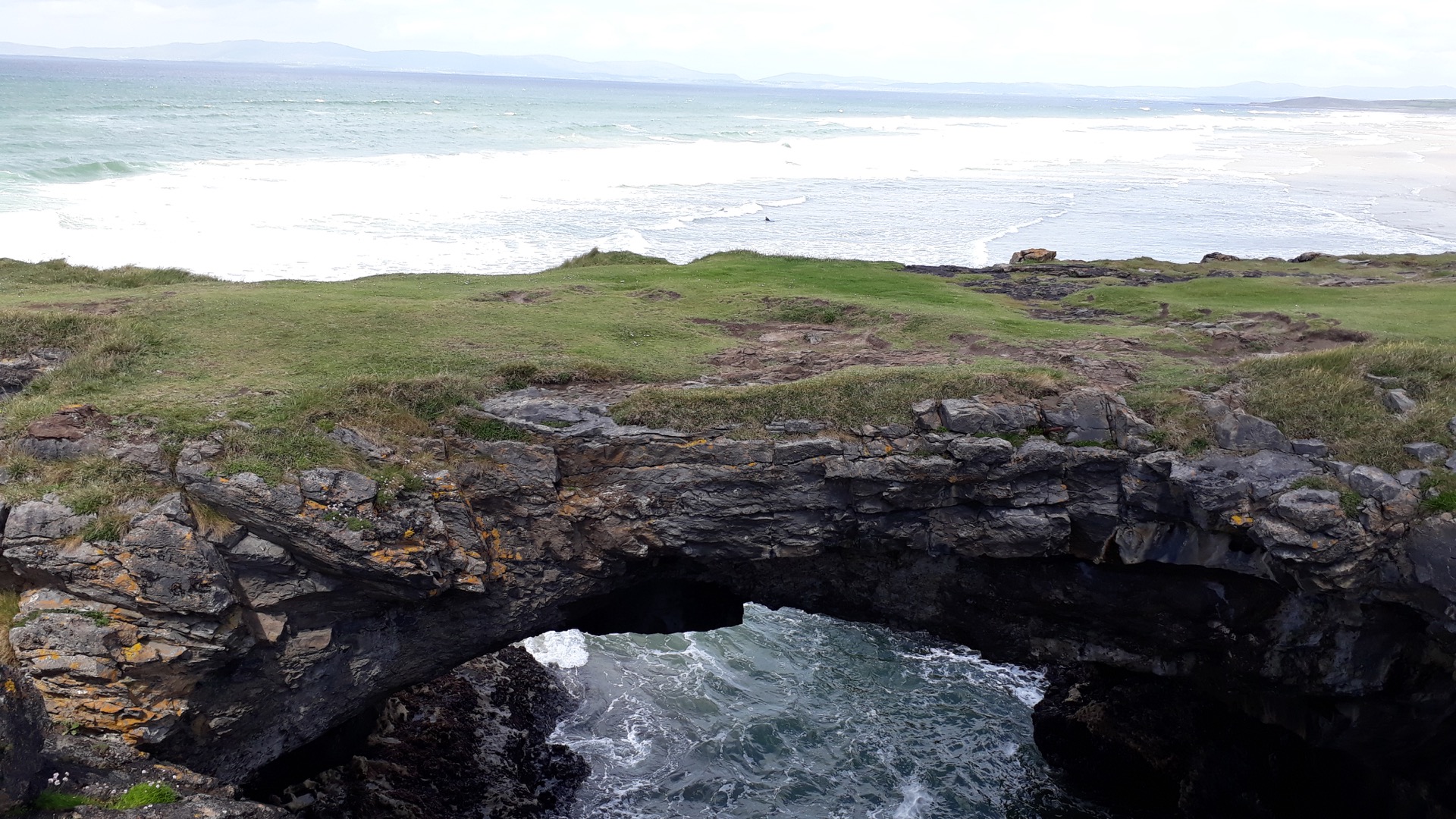 Photo: Joli Rumi / Wikimedia Commons (CC BY-SA 4.0)
 - Rossnowlagh — Where Irish Surfing Was Born Any time; the surf club's own history is on display year-round
Organized Irish surfing traces directly to this beach. On an Easter 1966 "Surfari," Ireland's earliest surfers stopped at Rossnowlagh and met Vinnie and Mary Britton, owners of the Sandhouse hotel, who placed an order for two surfboards — laying the real foundations of surfing here. Ireland's first Intercounties Championships followed in 1968 (Down beat Wicklow in the final), and in 1988 Rossnowlagh Surf Club opened the first purpose-built surf clubhouse in the country. By 1985, Rossnowlagh and Bundoran together hosted the European Surfing Championships.
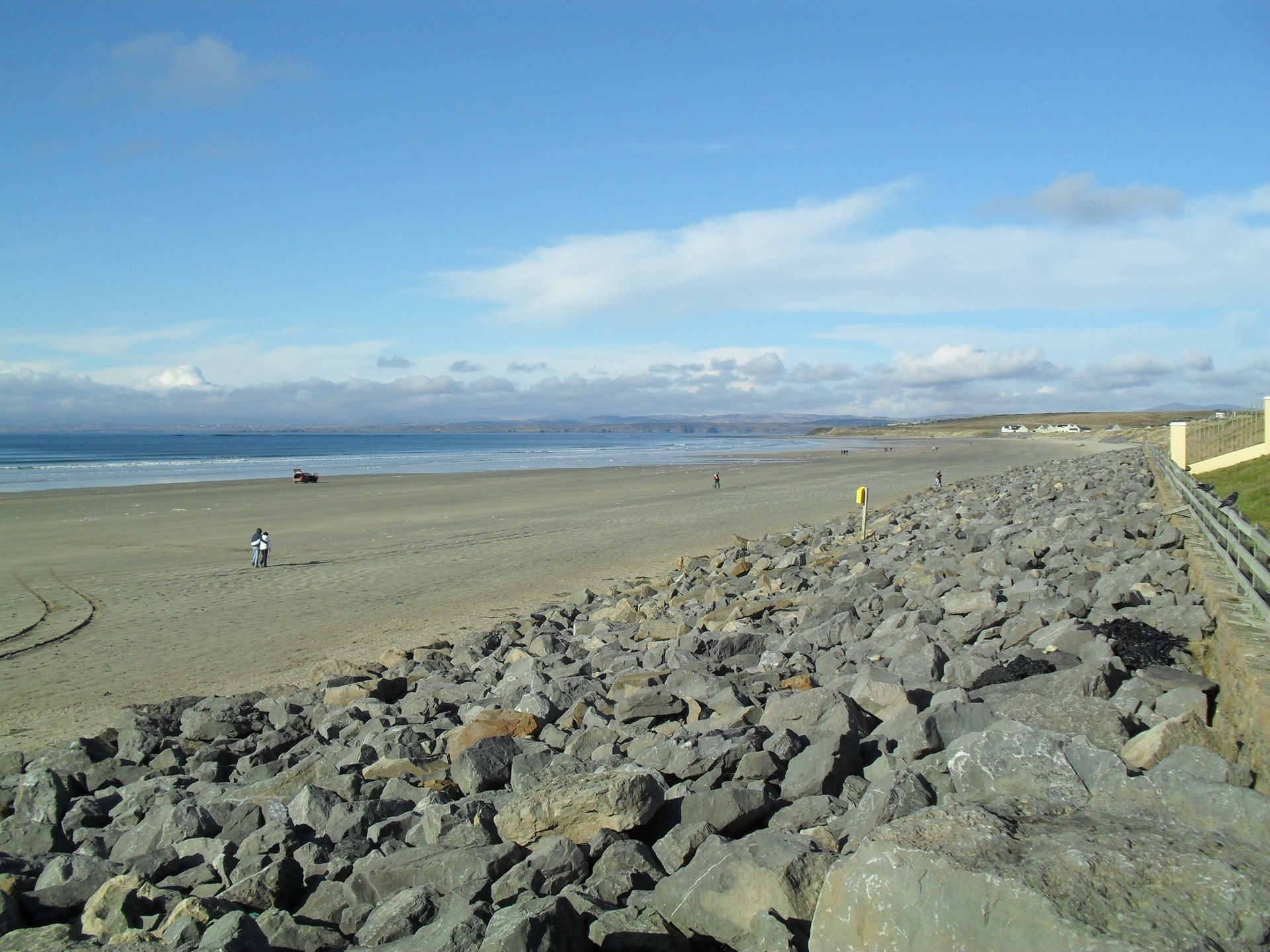 Photo: Dean Molyneaux / Wikimedia Commons (CC BY-SA 2.0)
 - Donegal Castle Year-round; check current opening hours before visiting
Built in 1474 by Hugh Roe I O'Donnell as the seat of the O'Donnell lords of Tyrconnell, then one of Gaelic Ireland's largest and wealthiest territories. The O'Donnells held it for roughly 140 years until the 1607 Flight of the Earls; in 1611, during the Plantation of Ulster, English captain Basil Brooke restored the damaged tower house and added Jacobean features. It passed to State care in 1898 and was restored to its current form in the early 1990s.
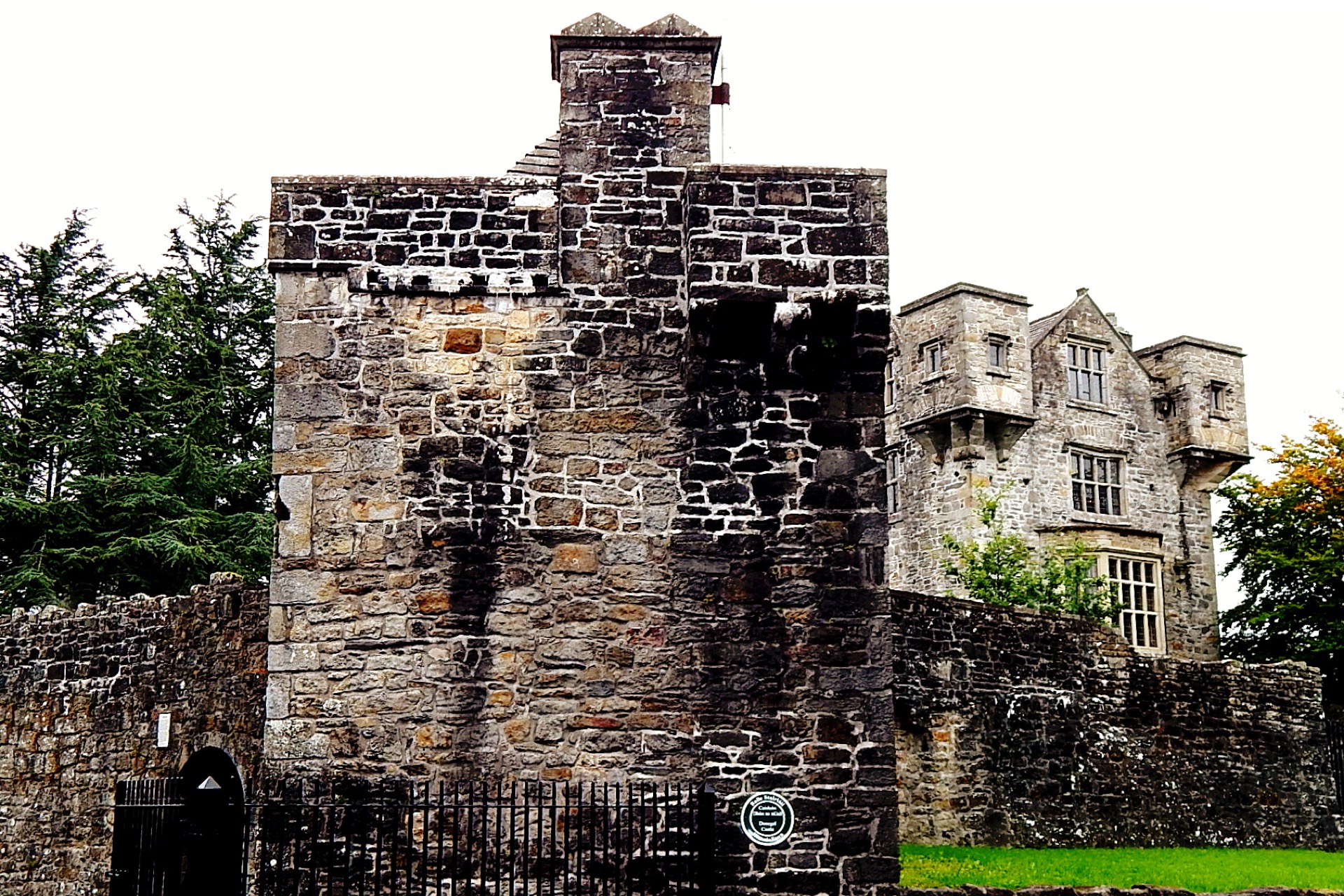 Photo: Suzanne Mischyshyn / Wikimedia Commons (CC BY-SA 2.0)
 - Queen Maeve's Cairn, Knocknarea Clear days for the summit views; the hike is exposed, dress for wind
This summit cairn overlooking Strandhill was built in the Neolithic period, roughly 3500-3200 BC, part of a passage-grave tradition that reached Sligo from Brittany a millennium earlier. Containing an estimated 30,000 tons of stone, it's the largest cairn in Ireland outside Brú na Bóinne — and remains entirely unexcavated, the largest unopened cairn in the country. Its popular association with the legendary Iron Age queen Medb (Maeve) is folklore layered on stone roughly 2,500 years older than she is; the story that she's buried standing upright, facing her enemies, has never been verified, because no one has ever opened it.
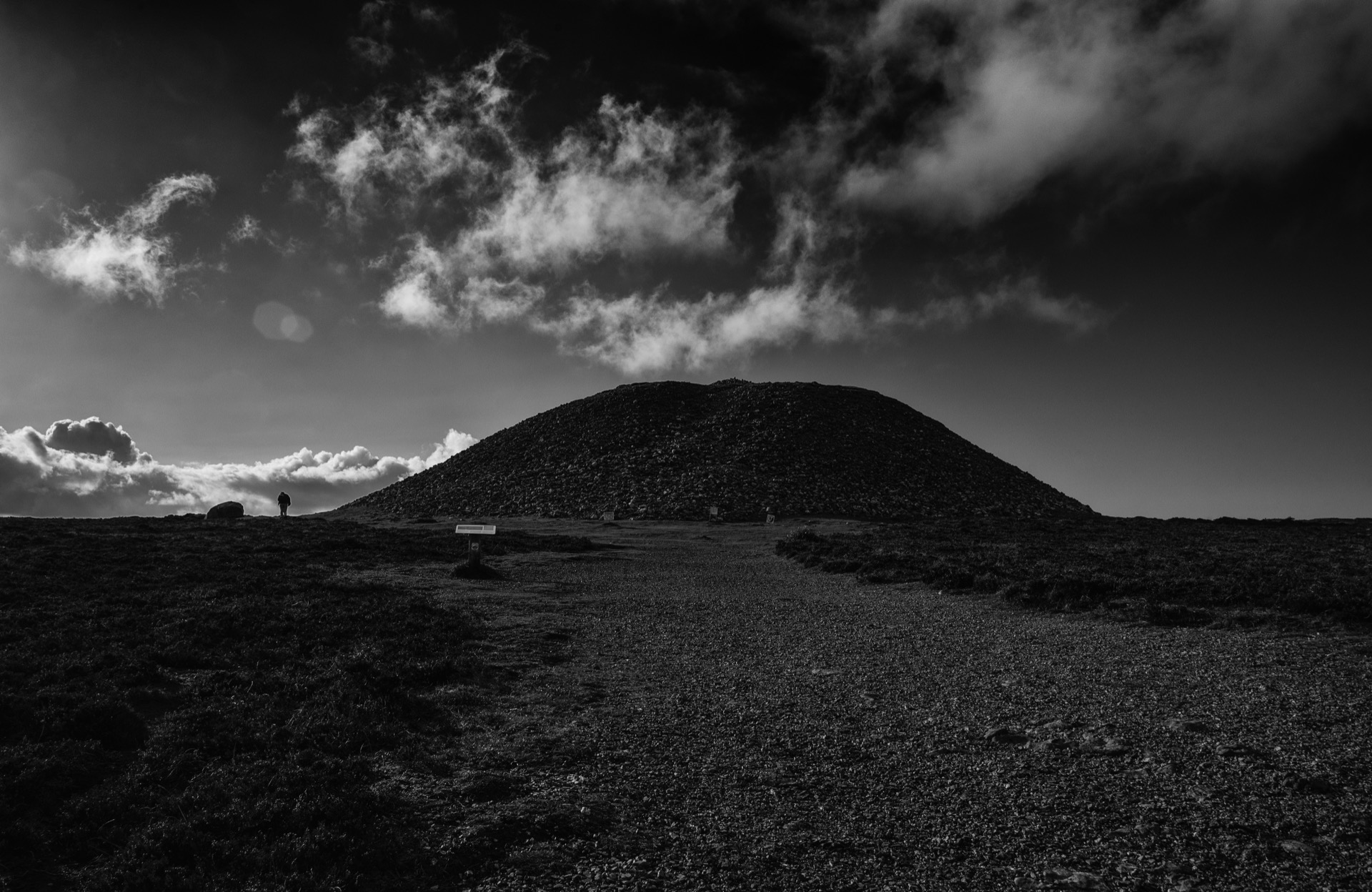 Photo: Wikimedia Commons (CC BY-SA 4.0)
 - Coney Island's Tidal Causeway Low tide only — check tide times before attempting the crossing
At low tide, a roughly 5km path across Cummeen Strand opens between Strandhill and this island in Sligo Bay, marked since 1845 by 14 stone pillars erected specifically after several fatal crossings. A persistent local legend holds that New York's Coney Island was named after this one, by a Sligo-born sea captain who found both places "teeming with rabbits" — a widely repeated story, worth stating as folklore rather than settled history. Today just one family remains on the island, tracing their presence back to the 1750s.
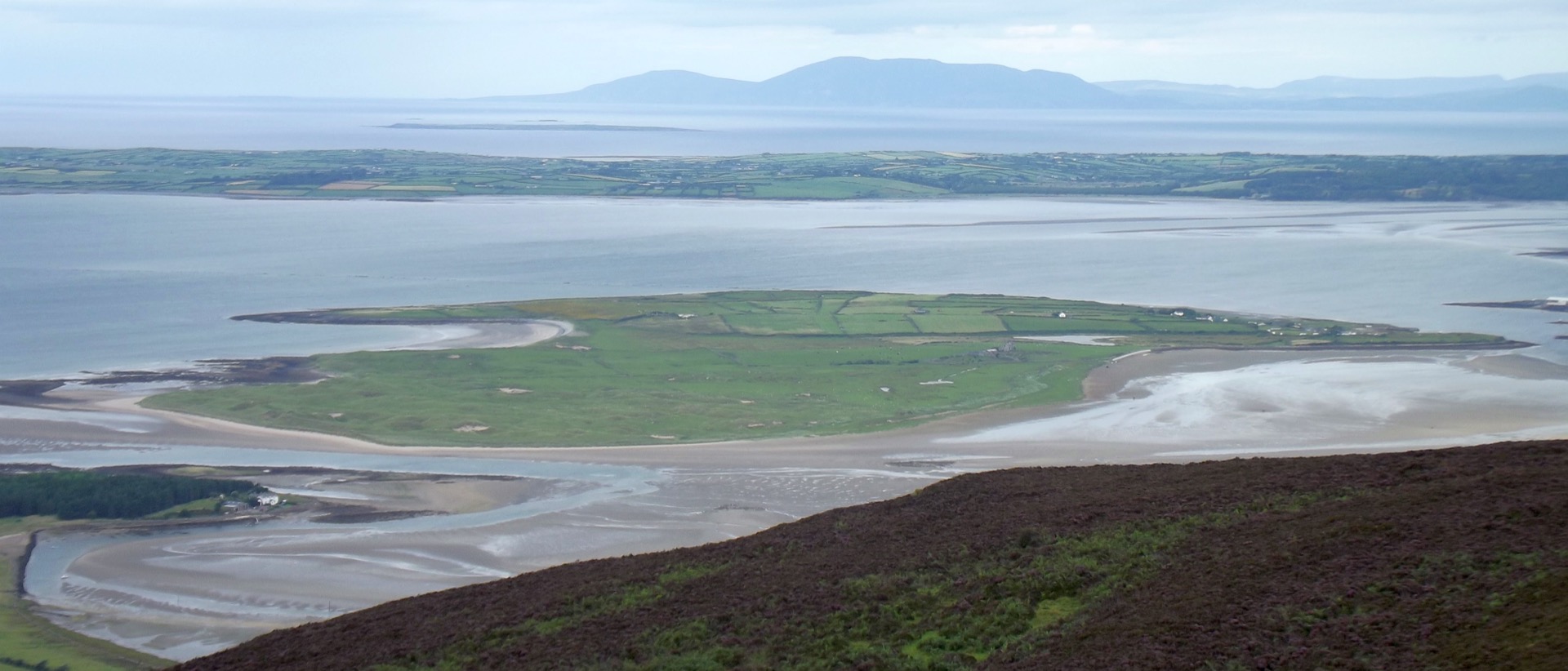 Photo: Pampuco / Wikimedia Commons (CC BY-SA 4.0)
 - Killaspugbrone Church Ruin Golden hour for the coastal setting; the ruin sits on open ground near the airfield
This early Christian church ruin near Strandhill takes its name from Bishop Brón mac Icni, a contemporary of St. Patrick who died in 512 AD — though the surviving stone structure dates to roughly 1150-1220. In 1376 a relic reputedly linked to St. Patrick's own tooth was enshrined in an ornate silver-and-gold casket for a medieval lord; the tooth-loss origin story itself is standard early-Christian hagiography, folklore rather than documented fact, while the relic's later medieval ownership is real, sourced history.
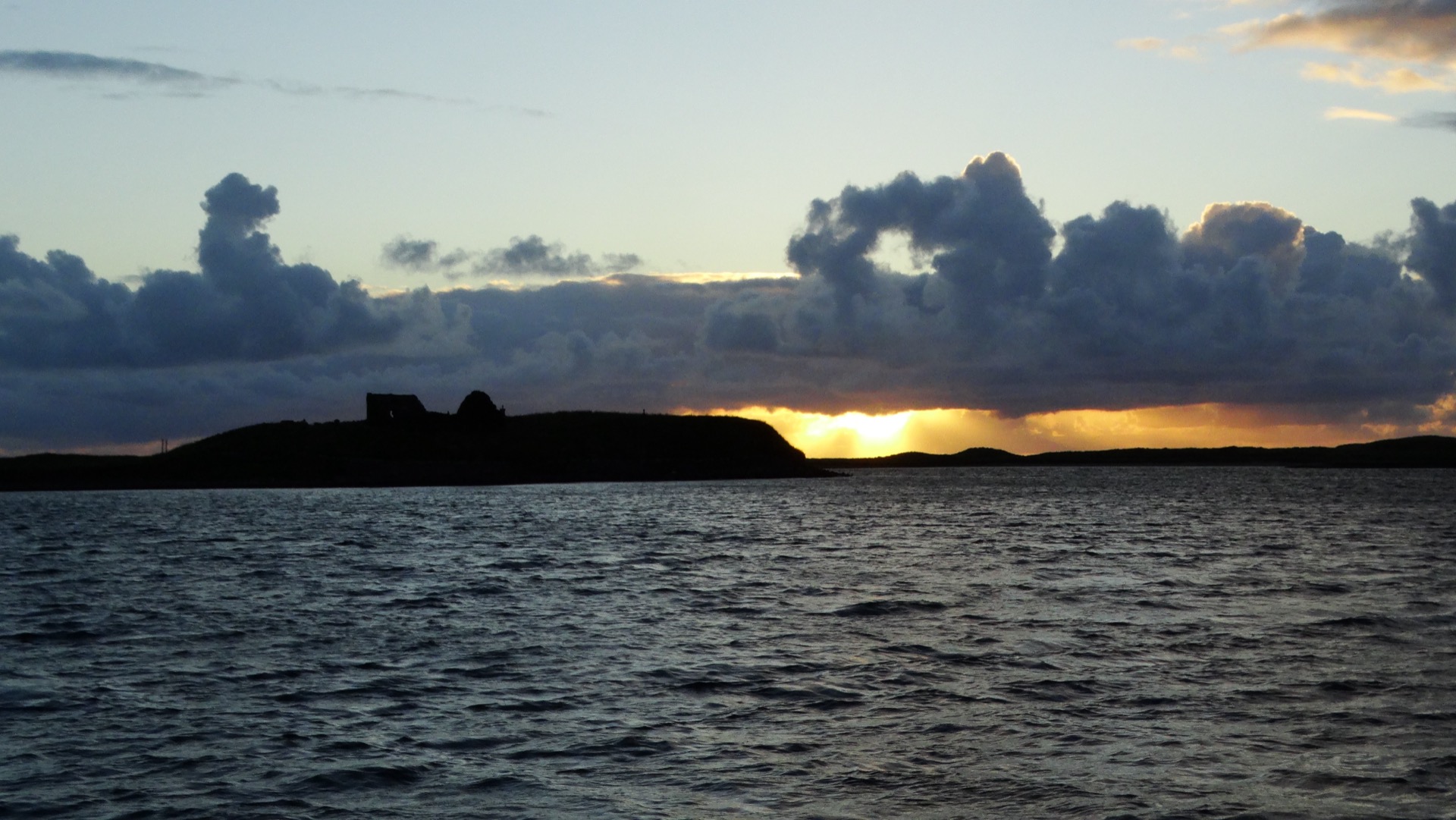 Photo: Wikimedia Commons (CC BY-SA 2.0)
 - W.B. Yeats's Grave, Drumcliffe Year-round, roughly 15-20 minutes from Strandhill
Yeats died in 1939 in Menton, France, with a stated wish to be reburied in Sligo once the newspapers had forgotten him; his remains were repatriated to St. Columba's Church, Drumcliffe, in 1948, a parish where his own ancestor had once served as rector. His headstone carries his self-written epitaph — "Cast a cold eye / On life, on death. / Horseman, pass by!" — drawn from his poem "Under Ben Bulben," which names this exact churchyard.
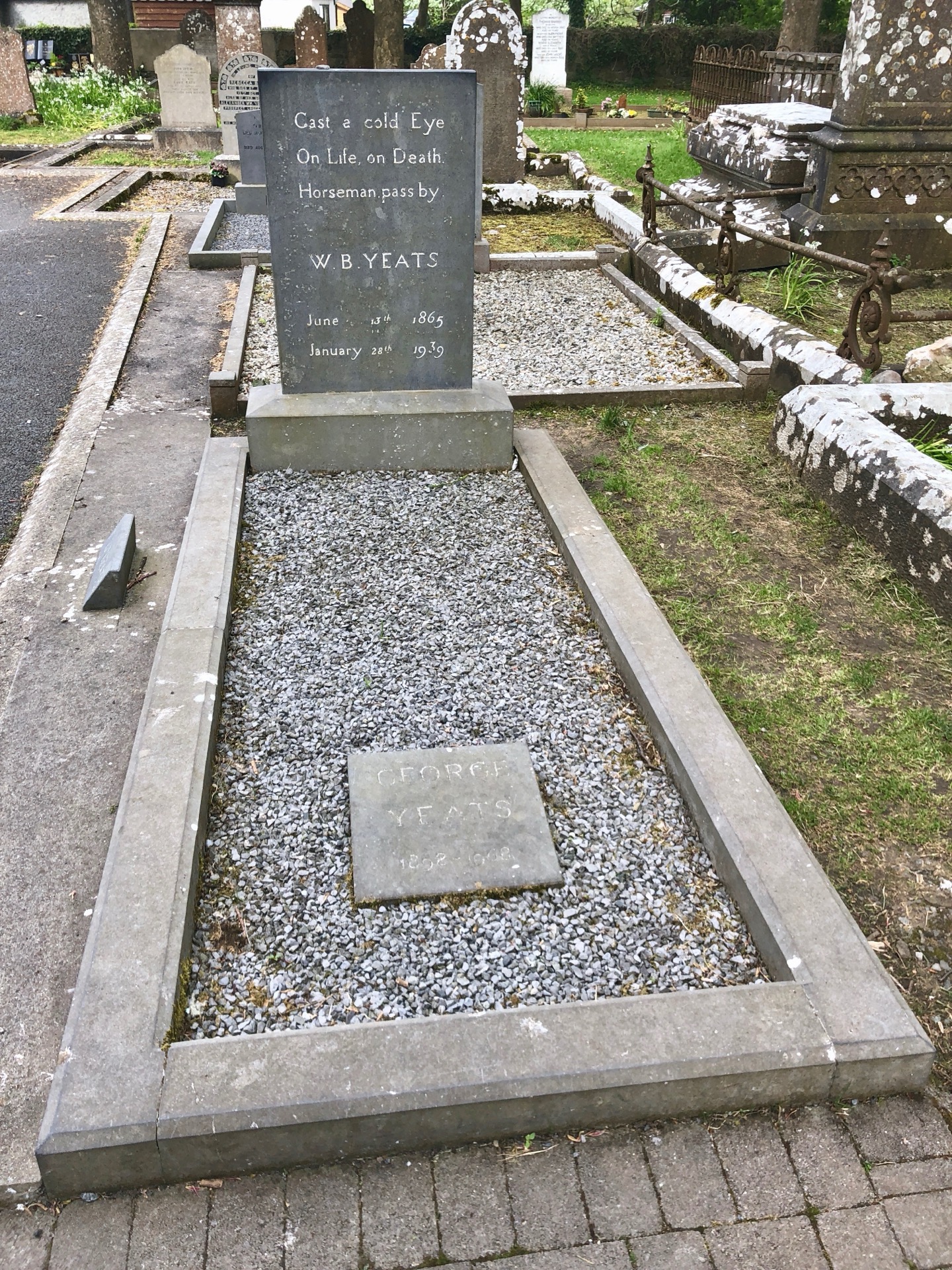 Photo: Wikimedia Commons (CC BY 2.0)
 - Mullaghmore Head's Real Big-Wave History December-March for any chance of seeing it break; watch from the headland, never the water, unless you're a genuine expert
Local surfers Richie Fitzgerald and Gabe Davies quietly surfed here through the late 1990s before pioneering tow-surfing the wave in the early 2000s, joined by Al Mennie, who brought experience from California's Mavericks. A December 2007 session — Mennie and Fitzgerald riding what was then Ireland's largest recorded swell — closed out the 2008 documentary "Waveriders," putting Mullaghmore on the international big-wave map. Real recorded milestones followed: a 2014 "Black Swell," 60-foot waves during Hurricane Epsilon in October 2020, and on December 18, 2025, local surfer Conor Maguire reportedly rode the biggest wave ever surfed here, widely covered in international surf and mainstream press.
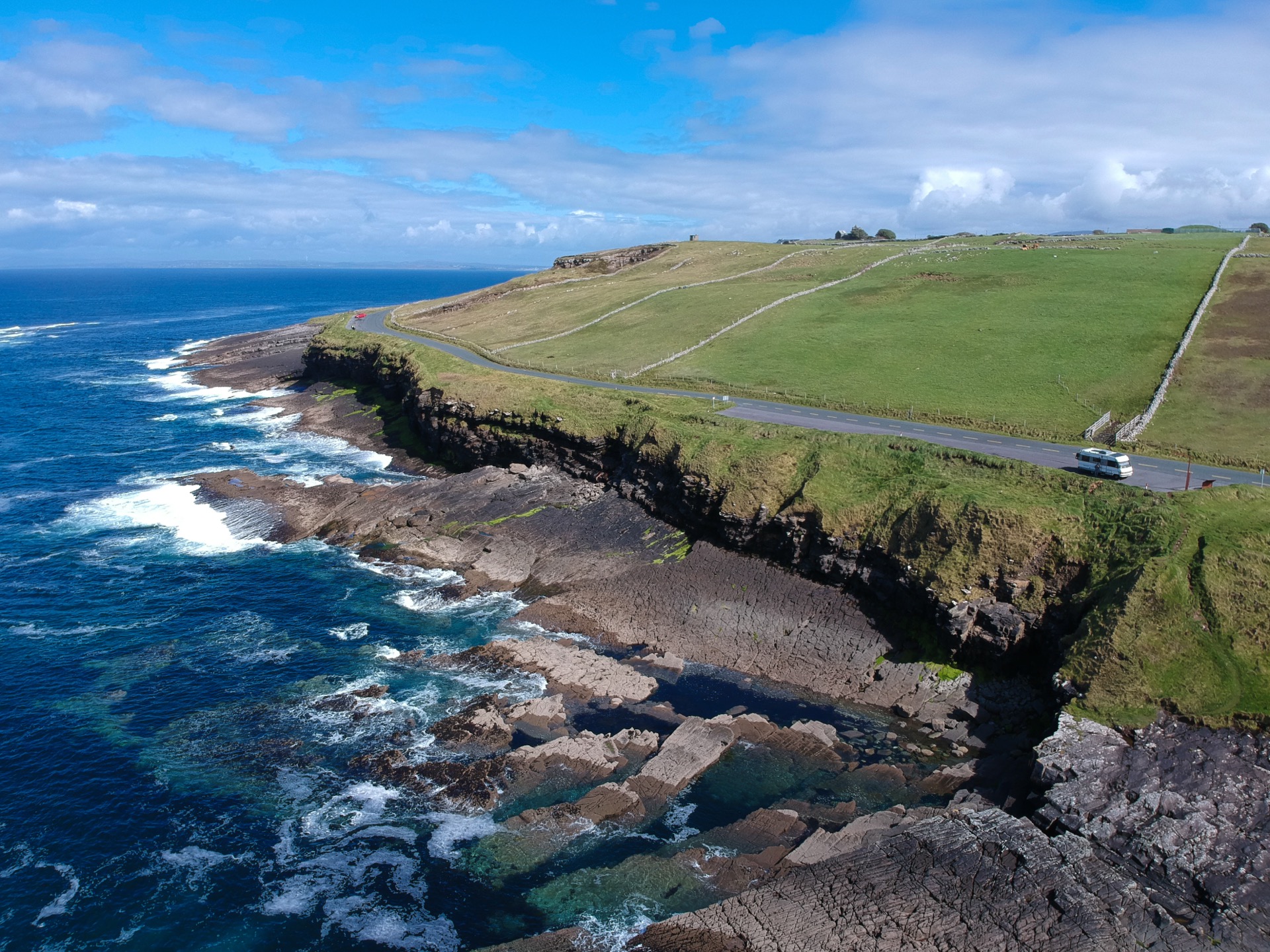 Photo: Kent Wang / Wikimedia Commons (CC BY-SA 2.0)
 - Classiebawn Castle — Built for a Prime Minister, Marked by an Assassination Exterior viewing year-round; the castle itself is a private residence
Built for Henry John Temple, 3rd Viscount Palmerston — twice British Prime Minister — and completed in 1874 by his stepson after Palmerston's death, using sandstone shipped by sea from Donegal. It later passed to Lord Louis Mountbatten, who used it as a summer home. On August 27, 1979, the Provisional IRA assassinated Mountbatten with a bomb planted aboard his boat minutes after it left Mullaghmore harbour, also killing his 14-year-old grandson and a 15-year-old local boatman — a real, well-documented act of the Troubles, not folklore. Palmerston also personally funded the harbour itself, built 1822-1841 by engineer Alexander Nimmo as an export point for his roughly 12,000-acre estate.
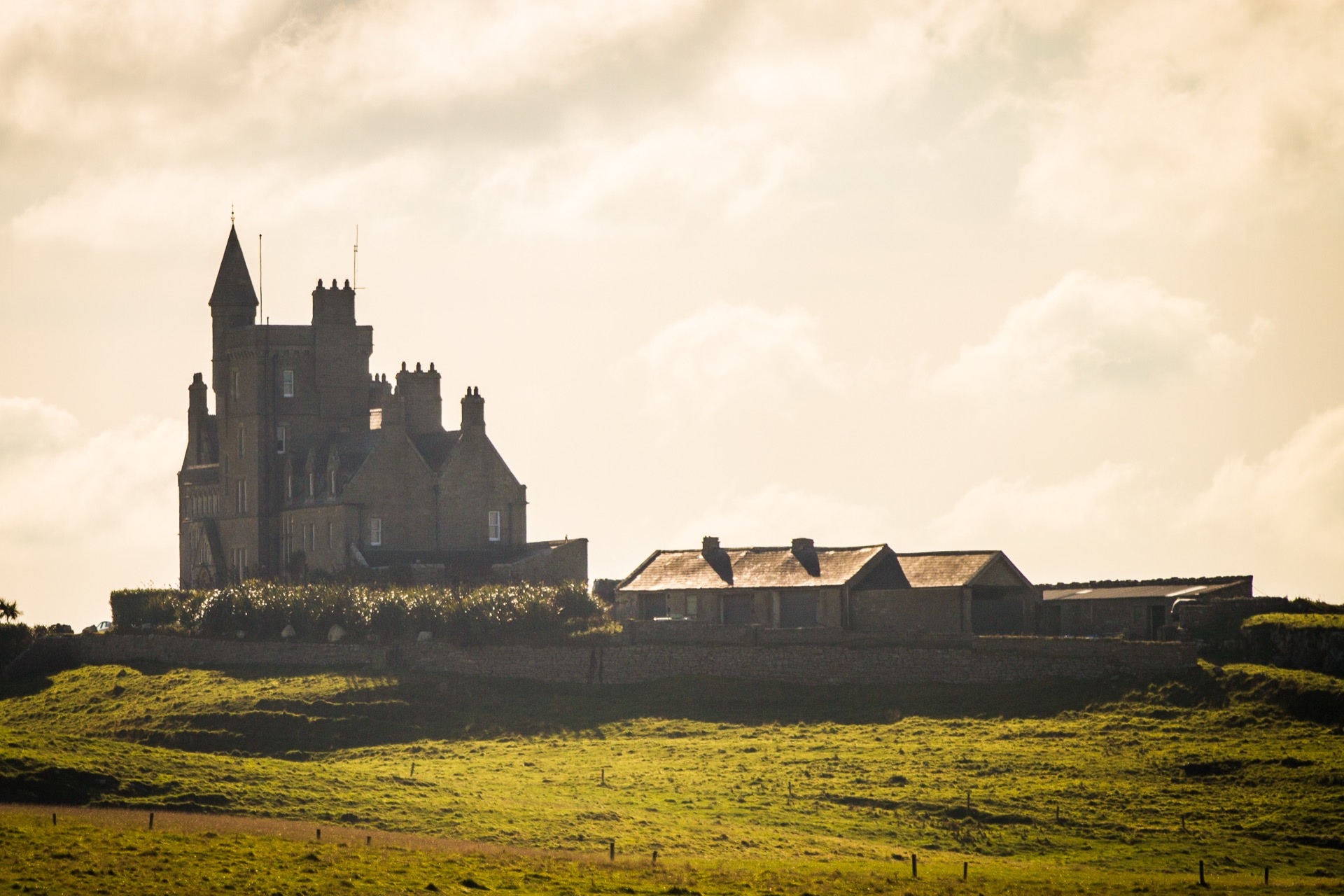 Photo: Tony Webster / Wikimedia Commons (CC BY 2.0)
 - The Gleniff Horseshoe Spring/summer for the clearest mountain views
A glacial valley loop roughly 15 minutes from Mullaghmore, cut into the Dartry Mountains with views over Donegal Bay — a real geological formation, drivable as a scenic 10km loop or hiked as a moderate 9-13km, 3-4 hour route.
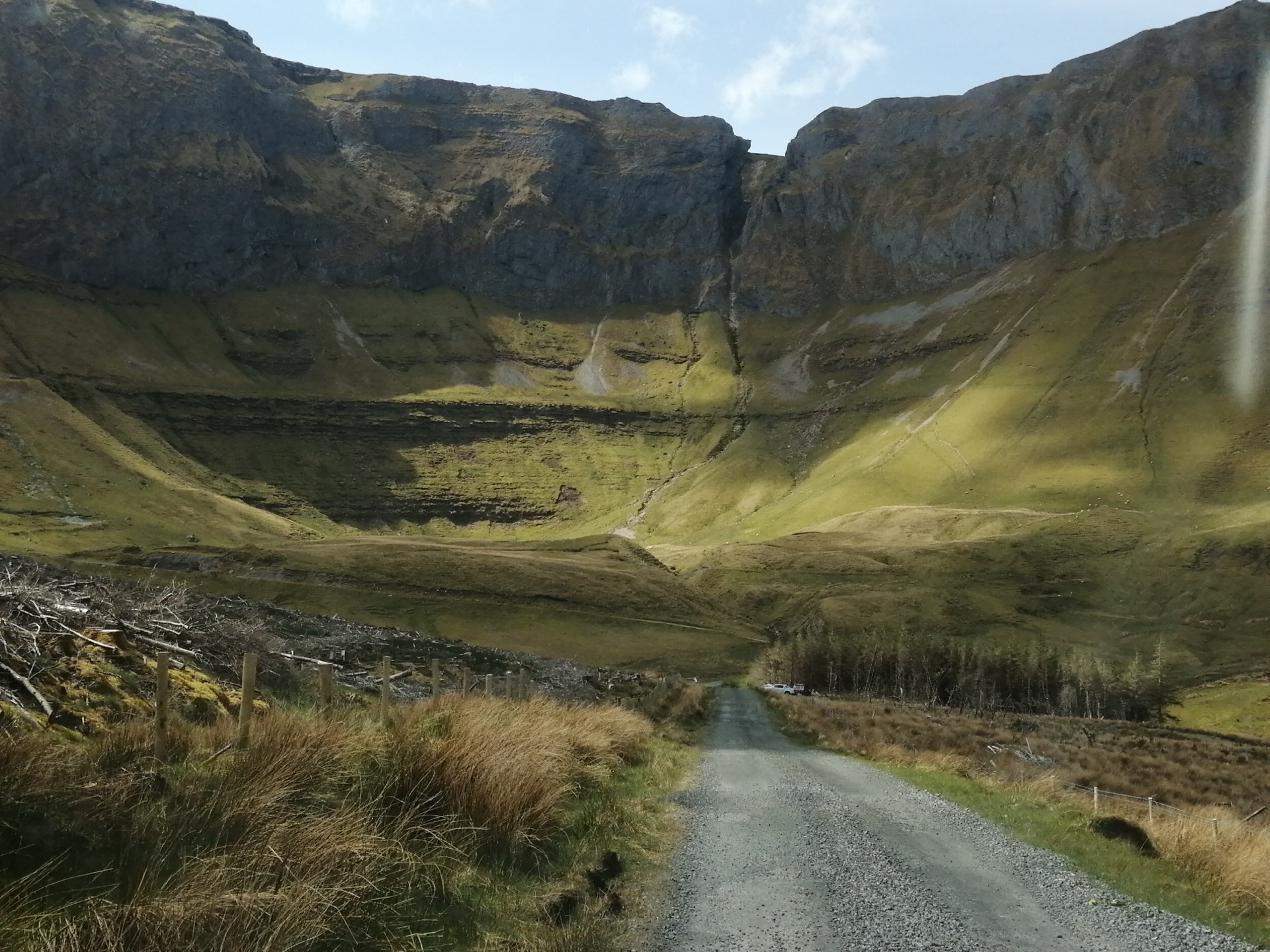 Photo: Cabrehony / Wikimedia Commons (CC BY-SA 4.0)
 - Inishmurray Island's Ancient Monastery Charter boats run seasonally, weather-dependent — book ahead
An uninhabited island roughly 6-7km off the coast, reachable by charter boat from Mullaghmore, holding one of Western Europe's best-preserved early medieval monastic sites — founded by St. Molaise around 500-520 AD and still enclosed by parts of an original 3-metre-thick stone cashel wall, with surviving oratory, churches, and beehive cells. Vikings destroyed the original settlement in 807 AD; the island was later resettled as a fishing community and remained inhabited until its evacuation in the late 1940s — a separate, later chapter of history from the monastery itself.
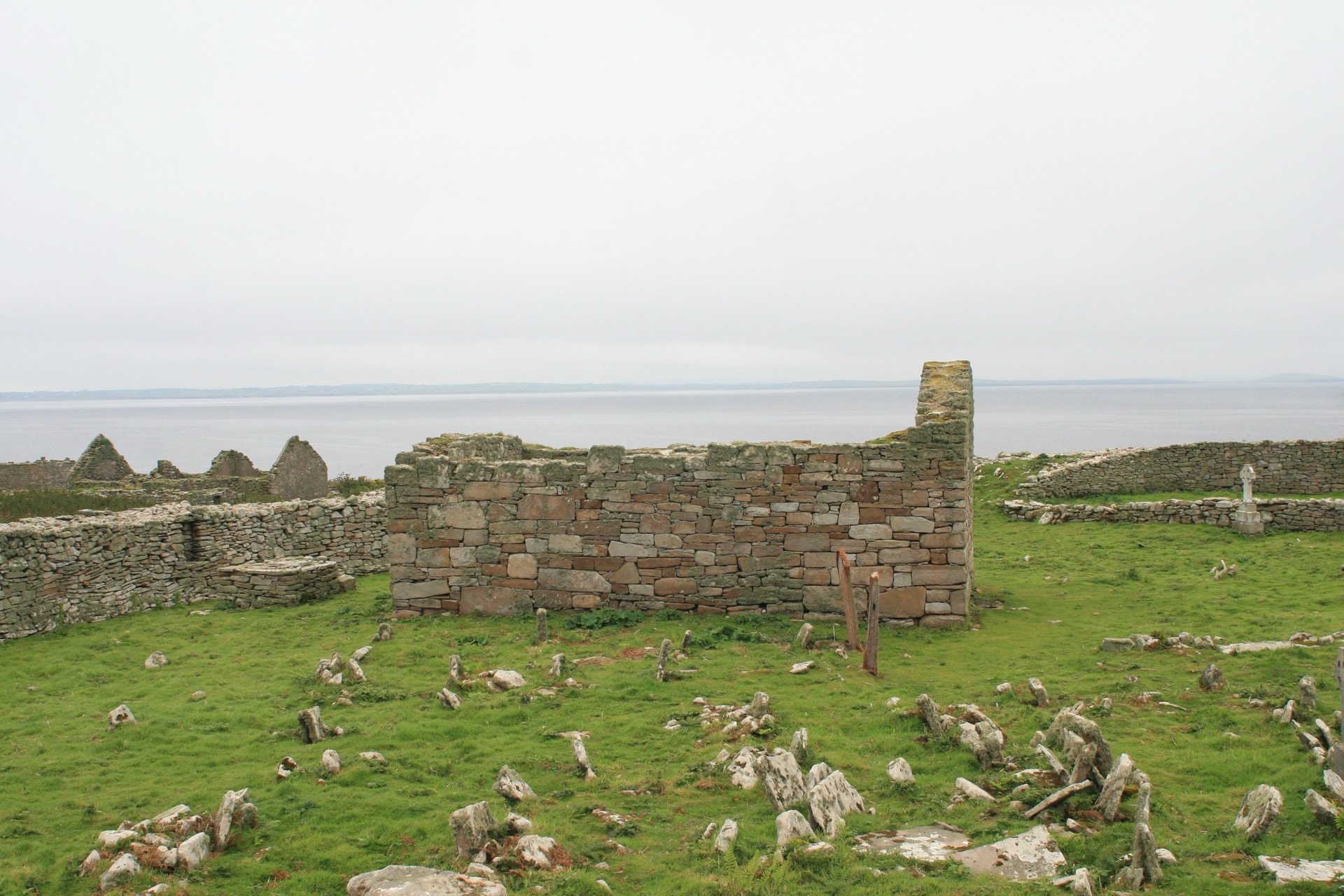 Photo: Andreas F. Borchert / Wikimedia Commons (CC BY-SA 3.0)
Questions people actually ask.
Is this genuinely one coherent trip?
Yes — refreshingly, unlike this site's UK zones, all three hubs here sit within about 45 minutes of each other. Sligo town to Bundoran is 23 miles/30 minutes, Bundoran to Mullaghmore is about 9 miles/14 minutes, and Strandhill to Mullaghmore is roughly 30-40 minutes. This is the most tightly clustered zone on this site so far.
Which airport should I fly into?
There's no direct US flight landing close to this zone. The two real transatlantic gateways are Dublin (about 3 hours 11 minutes/252km drive) and Shannon (about 2 hours 47 minutes/147 miles), the latter arguably more relevant given its US Preclearance facility and year-round Aer Lingus routes to Boston and New York JFK. Ireland West Airport Knock is genuinely the closest airport with any real scheduled service (about 45-58 minutes from Strandhill), though its network is regional UK/Europe only. Donegal Airport is closer to Bundoran but only flies to Dublin and Glasgow. Sligo Airport, despite sitting right next to Strandhill, has had no scheduled commercial routes since 2011 — don't plan around it.
Can I actually surf at Mullaghmore?
Not the famous wave, no. Mullaghmore Head's big wave is tow-in-assisted, 30-40 foot range, expert-and-pro-only terrain that doesn't work in summer — not a place a visiting surfer paddles out. No traditional surf school or board rental operator is even based in the village. Real, genuinely beginner-friendly surf instruction live in Bundoran, Rossnowlagh, and Strandhill, all covered above. Mullaghmore itself is worth visiting for its harbor, its real history, and — from a safe distance in the right winter swell — watching some of the biggest rideable waves in the world.
Do I need a UK ETA to visit this zone?
No — this is a genuine, important difference from this site's UK zones. Ireland is not part of the United Kingdom. US citizens need no visa and no ETA for tourist stays up to 90 days, just a valid passport. Currency is the Euro, not GBP. The one real exception: if a trip also crosses into Northern Ireland, that's UK territory again and does require the UK ETA, even though there's no physical border checkpoint to mark the change.
Disclosure & how this page works.
Straight talk: Some links on this page are affiliate links — if you book through them, Secrets of Surf Travel earns a small commission at no extra cost to you. We only link places and people we'd use ourselves, and coverage is never for sale. Those commissions are what keep this site running and fund the next trip.
Today, the "Search Vrbo rentals," "Search Booking.com stays," and "Search Agoda stays" links on this page are affiliate links — every vendor listing link is still a plain courtesy link. As partnerships with these local businesses come online, more links (and discount codes, where Secrets of Surf Travel benefits from their use) may earn us a commission, and this page will keep saying so plainly. Coverage is never for sale: nobody on this page paid to be here, and nobody can.
Every listing was researched in 2026 and is being verified in person. Prices, hours, and policies change — treat them as strong starting points and confirm directly with the business. And per the No-Reveal Code: you will find no surf spots on this page, ever.