
Iceland
A genuine gear-shift from every zone on this site so far — the Reykjanes Peninsula is Iceland's real surf hub, and it happens to sit inside a UNESCO Global Geopark of active volcanoes, boiling mud pools, and a footbridge between two continents. It's also, by a wide margin, the coldest water this site covers. Keflavík International Airport sits inside the zone itself, making this one of the best-connected trips here despite the cold. Stated honestly up front: Grindavík, home to several vendors below, has faced real volcanic evacuations since 2023 — check current status before you go.

Straight talk: Some links on this page are affiliate links — if you book through them, Secrets of Surf Travel earns a small commission at no extra cost to you. We only link places and people we'd use ourselves, and coverage is never for sale. Those commissions are what keep this site running and fund the next trip.
Some vacation-rental search links on this page (marked "Search Vrbo rentals," "Search Booking.com stays," or "Search Agoda stays") are affiliate links. Every vendor link below is still a plain courtesy link. As more partnerships come online, more links may earn us a commission; the promise above holds either way.
Getting There
Keflavík International Airport (KEF) sits inside the surf zone itself — genuinely rare for this site. The main breaks near Sandvík are about 15 minutes from arrivals, and the whole peninsula is within roughly 45 minutes. This is likely the best-connected zone on the site: Icelandair flies real, current nonstop routes from Boston, New York, Denver, Chicago, Seattle, Miami, Nashville, and Pittsburgh directly into Keflavík. (PLAY Airlines, a budget carrier that also flew several US routes, ceased US operations by 2025/2026 — don't plan around it as a current option.)
Documents: Iceland is in the Schengen Area — the same 90-day-in-180 visa-free stay for US citizens as this site's other Schengen zones. But it's genuinely not in the European Union, which creates no practical entry difference, only a currency one: Iceland uses the Icelandic Króna (ISK), not the Euro.
Ground Transport
- This is one of the most geographically coherent zones on the site — Reykjavík, Grindavík, the Sandgerði/Garður area, and Reykjanesbær are all genuinely close, 15-50 minutes of each other and the airport.
- Iceland drives on the right, same as this site's Italy zones — worth stating plainly since it's easy to assume otherwise for an island nation.
- A car is essential for this zone.
When to Go & What to Pack
- This is the coldest water on this site by a wide margin. Reykjanes water runs roughly 2-4°C in winter up to 8-11°C in summer. A 5/4mm to 6/5mm sealed-seam wetsuit is standard, with 5-7mm boots, 3-5mm gloves, and a hood. Underestimating the cold is the single most commonly flagged visitor mistake here — this is genuinely serious gear territory, not a place to guess.
- Aurora viewing runs September through April — a real bonus for a winter trip, worth building into the itinerary alongside surf.
Good to Know
- Currency is the Icelandic Króna (ISK), not the Euro — the first non-Euro Schengen zone on this site. Iceland is also a highly cashless society; cards work almost everywhere, and cash is rarely needed.
- Emergency number: 112, the same standard number used across the EU/EEA, including Iceland.
- Check current volcanic-activity status before traveling — see the safety callout above.
Respecting the Locals
Grindavík has faced real volcanic evacuations since 2023 — many of its residents remain displaced long-term even as some businesses reopen between eruptive episodes. This is a small surf community on a genuinely active volcanic peninsula, not a resort scene, and the people running the shops and schools here are living through something most visitors will never fully understand. Show up with that in mind, and be extra patient if plans shift around current conditions.
- Locals get first priority, always. Watch a session before you paddle out. Learn who's who before you learn the wave. Sit inside and catch what they let through — the leftovers are yours, not the set waves.
- Don't backpaddle. Ever. Being in position doesn't make the next wave yours, especially if you didn't wait your turn. If a local wants a wave, let them have it…even if it IS your turn. That older guy who may not be the best surfer out there has probably been surfing that wave before you even sat on a board. If you don't know someone, assume they're local.
- Don't snake. This shouldn't even need to be said, but…dropping in on someone, local or not, is the ultimate disrespect and the fastest way to be sent out of the water. Don't be that guy!
- Say hi. A “howzit,” “whatsup,” or “nice wave,” eye contact, or a nod in the channel — it costs nothing and it's the fastest way from stranger to welcome.
- This is somebody's home, not a resort amenity. The break you're surfing is where a local kid learned to swim, where someone's uncle has surfed for forty years. Act like a guest, because you are one.
- Spend where it actually helps. The food truck, the local shaper, the family-run rental, the local photographer — that's where a surf trip's money should land, not just the chain hotel gift shop. See The No-Reveal Code for why that's the whole premise of this site.
- Leave it better than you found it. Pick up trash that isn't yours. Don't touch reef, wildlife, or cultural sites.
Locals have watched hundreds, if not thousands, of people come and go — some for days, some for months or years — and almost all of them eventually go home. The locals are still there. It takes many, many years to actually become one. Keep that in mind the next time you feel entitled to the same waves they get.
None of this is a secret handshake. It's just how you'd want a guest to act in your own backyard.
Reykjanes Peninsula
Iceland's real surf hub, centered on the towns of Grindavík, Sandgerði, Garður, and Reykjanesbær (Keflavík), with Reykjavík itself under an hour away. The whole peninsula carries UNESCO Global Geopark status — 55 recognized geological sites across roughly 825 square kilometres — a genuinely active volcanic landscape, not a marketing description.
Surf Schools & Board Rental
- Arctic SurfersÁrbær, ReykjavíkConfirm on the groundIceland's original surf tour operator — private tours and a 5-day Surf School Weekend combining instruction, yoga, and culture. arcticsurfers.com · Instagram · Map"Waves were excellent and the gear was top notch." — reviewer
- Adventure VikingsReykjavík, sessions at Þorlákshöfn (~50km away)Confirm on the groundEstablished 2010, full gear including 6/5/4mm suits; note their sessions run at Þorlákshöfn, technically just outside the Reykjanes Peninsula proper but part of the same surf-trip circuit. adventurevikings.is · Instagram · Facebook · Map
No dedicated surf shop or rental storefront independent of these two tour operators — Iceland's surf scene is small enough that gear rental is bundled with instruction/tours rather than sold standalone.
Stays
- Grindavík GuesthouseGrindavíkBudget/midFamily-run, 10 minutes from the Blue Lagoon, 25 minutes from KEF — check current Grindavík access status before booking, given the ongoing volcanic activity noted above. grindavikguesthouse.is · Instagram · Facebook · Map
- iStay CottagesSuðurnesjabær (Sandgerði/Garður area)Mid-range3-star guesthouse near the Garður Folk Museum and Old Garður Lighthouse. istay.is · Instagram · Facebook · Map
- Northern Light InnNext to the Blue LagoonMid-rangeFamily-run, 42 rooms, free scheduled Blue Lagoon shuttle, real aurora viewing September-April. nli.is · Instagram · Facebook · Map
- The Retreat at Blue LagoonBlue LagoonLuxuryIceland's first ultra-luxury hotel, opened 2018 — 60 suites, subterranean spa, Michelin-starred dining, its own private lagoon. bluelagoon.com · Instagram · Facebook · Map
Where to Eat
- SalthúsiðGrindavíkMid-rangeIceland's first restaurant specializing in bacalao/codfish, in a traditional log building. Its website currently shows a "reopening soon" page — confirm current operating status before relying on it, given the ongoing Grindavík volcanic activity noted above. salthusid.is · Facebook · Map
- SjávarsetriðSandgerði harbourMid-rangeA newer restaurant with a warm, cozy interior. Instagram · Facebook · Map
- Olsen OlsenReykjanesbærBudgetOpen since 1995, American-style burgers and sandwiches. olsenolsen.is · Facebook · Map
- Max's RestaurantNorthern Light Inn, near Blue LagoonMid-rangeNordic specialties. nli.is · Instagram · Facebook · Map
Wheels
- Blue Car RentalKEF and downtown ReykjavíkConfirm on the groundOffices at both the airport and the capital. bluecarrental.is · Instagram · Facebook · Map
- Reykjavík Bike ToursReykjavíkConfirm on the groundOperating since 2013 — city, mountain, and e-bike rentals and guided tours, a capital-city resource for pre/post-surf days. icelandbike.com · Instagram · Facebook · Map
Surfboard & Wetsuit Repair
No dedicated repair business exists in Iceland — the surf scene is too small to support one. Bring your own repair kit; issues get sorted informally through a tour operator if needed.
Massage & Wellness
- Blue LagoonGrindavíkConfirm on the groundThe genuinely famous geothermal spa itself, with in-water and treatment-room massage — see Local Secrets for its real origin story. bluelagoon.com · Instagram · Facebook · Map
- Hotel Keflavik SpaReykjanesbærConfirm on the groundFull-service spa with a couples' treatment room, sauna, and steam room. kef.is · Instagram · Facebook · Map
Other Adventures
- FagradalsfjallReykjanes PeninsulaBudgetIceland's newest volcano — a real ~45-minute hike to cooled lava fields — see Local Secrets. Check current access and eruption status before visiting. visitreykjanes.is · Map
- Víkingaheimar (Viking World Museum)ReykjanesbærMid-rangeOpened 2009; centerpiece is a full-scale Viking ship replica that actually sailed the North Atlantic to New York in 2000. vikingworld.is · Instagram · Map
- Duus SafnahúsReykjanesbærBudgetThe town's art and cultural center, rotating exhibitions. duushus.is · Instagram · Facebook · Map
Local Secrets
Seven non-surf reasons this zone rewards the curious — a footbridge between two tectonic plates, a spa that started as industrial runoff, a lighthouse that survived an earthquake only to be rebuilt grander, and a ghost trapped in a hot spring with a ball of yarn.
- The Bridge Between Continents Year-round; ~15 min from KEF
A 15-metre footbridge built in 2002 spanning a fissure near Sandvík, symbolically connecting the North American and Eurasian tectonic plates where the Mid-Atlantic Ridge rises above sea level — one of very few places on Earth this is visible on land. The plates drift apart at an average of about 2.5cm a year, though in reality through sudden seismic bursts, not continuous motion. The bridge doesn't literally connect the plates, which meet along a rift zone across the whole peninsula — a deliberate, acknowledged symbolic gesture, not a factual claim.
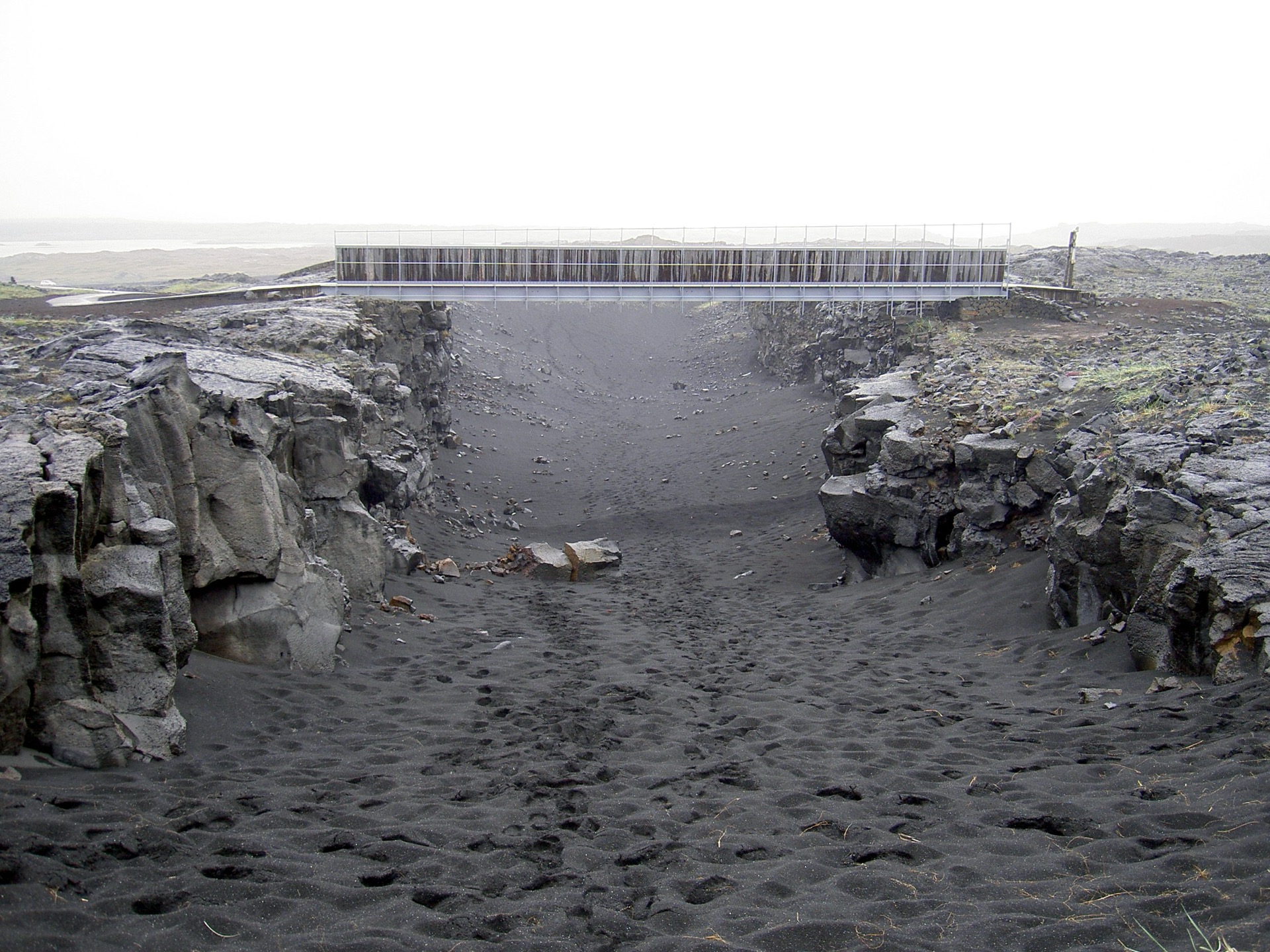 Wikimedia Commons (CC BY-SA 3.0)
 - The Blue Lagoon's Real Origin Story Year-round; book ahead, timed entry required
Formed accidentally in the 1970s as a byproduct of the Svartsengi Geothermal Power Station — boreholes drilled in 1971 struck 200°C+ geothermal water, and excess mineral-rich runoff pooled into the surrounding lava field. Locals began bathing there in the early 1980s after people with psoriasis reported skin improvement; the first official bathing facility opened in 1987. Widely assumed to be a natural wonder, it's actually industrial runoff that became a spa — a genuine, verified correction worth stating plainly.
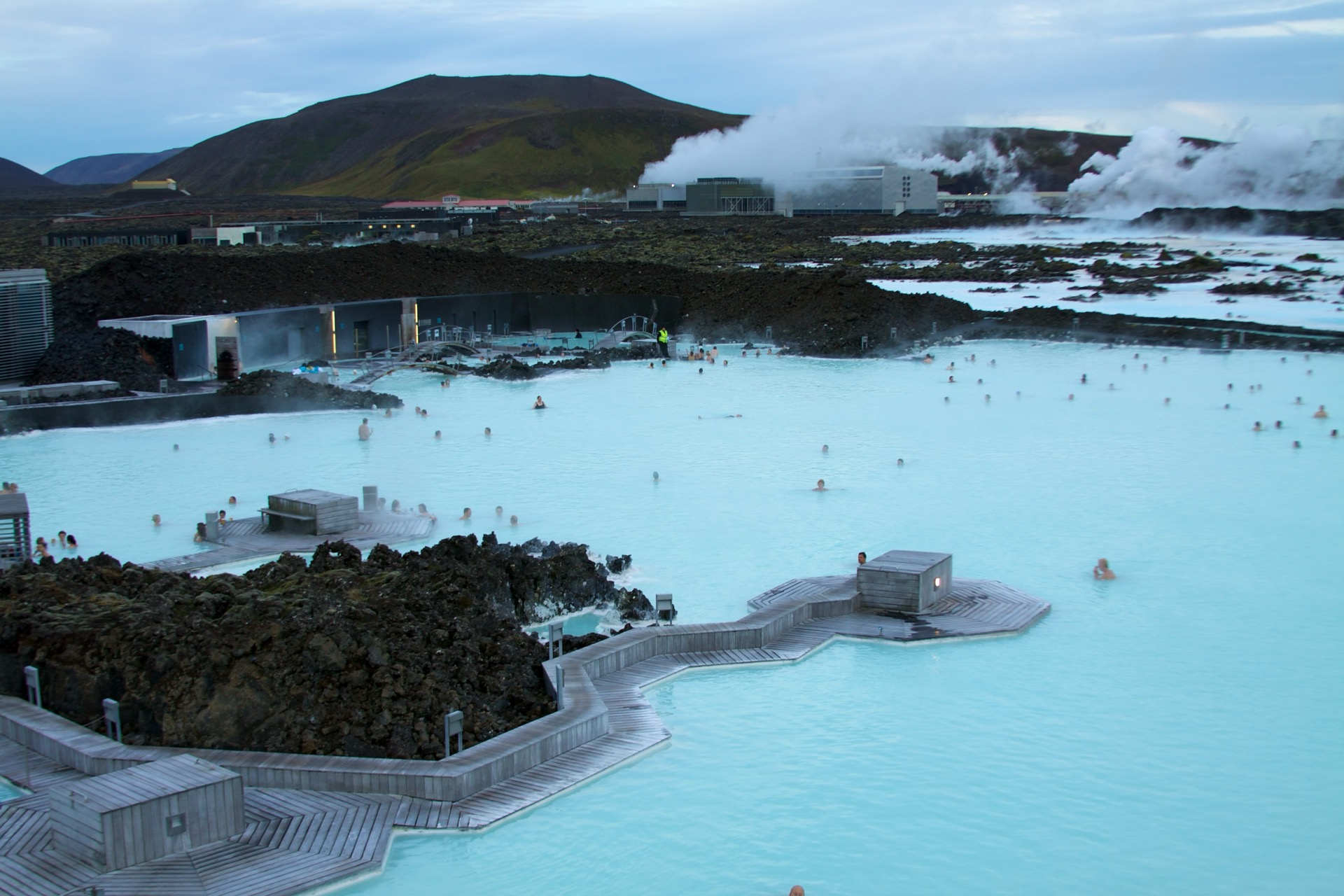 Photo: McKay Savage / Wikimedia Commons (CC BY 2.0)
 - The Ongoing Reykjanes Eruptions Check current activity status before visiting — see the safety callout above
Iceland's first eruption in roughly 800 years on the Reykjanes Peninsula began at Fagradalsfjall in March 2021, nicknamed the "tourist eruption" for its accessibility. Further eruptions followed at Meradalir (2022) and Litli-Hrútur (2023). A separate, more disruptive fissure system, Sundhnúkagígar, began erupting December 18, 2023, just north of Grindavík, with at least nine eruptions through 2025. This is real, current, ongoing geological activity — not history, not folklore — and needs a live status check before any trip.
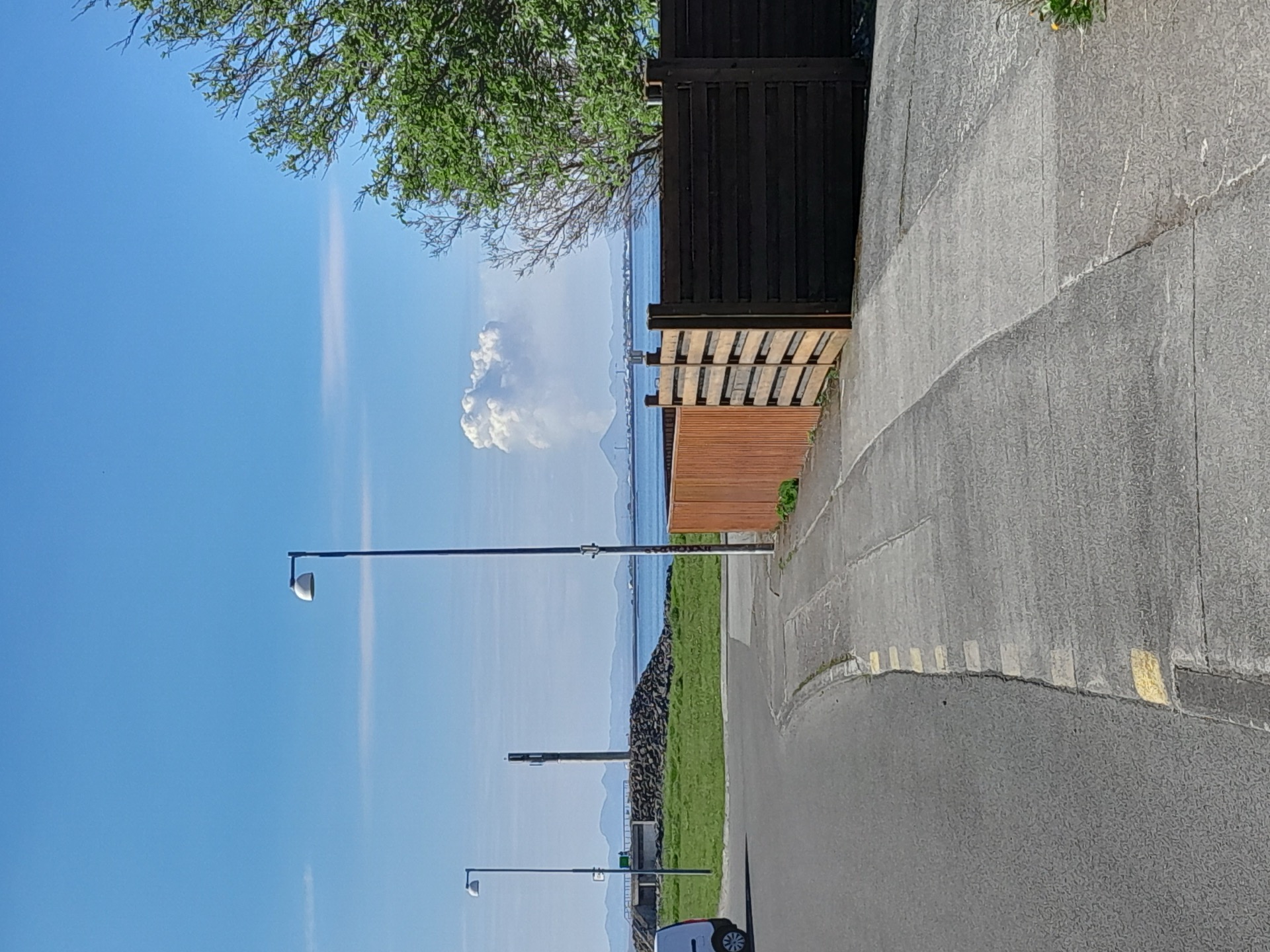 Photo: Hornstrandir1 / Wikimedia Commons (CC BY-SA 4.0)
 - Reykjanesviti — Iceland's Oldest Lighthouse Year-round; exterior viewing
The original lighthouse was built in 1878 but destroyed by an earthquake eight years later. The current 26.7-metre concrete structure was built 1907-1908 and illuminated in 1929, designed by Danish architect Frederik Kjørbo and engineer Thorvald Krabbe — at the time the most advanced and expensive structure ever built in Iceland. A lighthouse keeper and family lived on site until 1999.
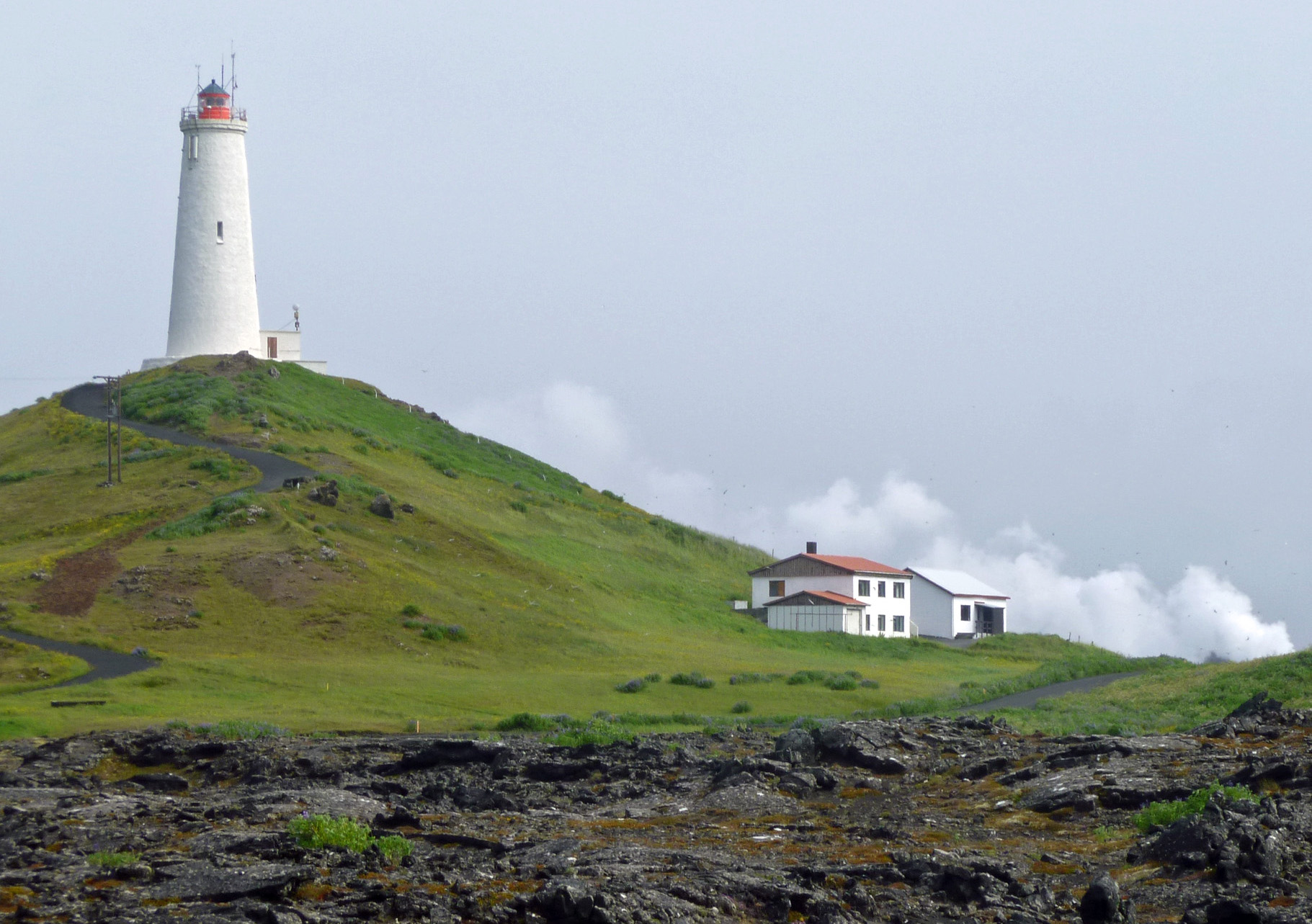 Photo: Wolfgang Fricke / Wikimedia Commons (CC BY 3.0)
 - Gunnuhver — the Hot Spring That Trapped a Ghost Year-round; wooden boardwalks for safe viewing
Iceland's largest mud pool, roughly 20 metres across, named for Guðrún Önundardóttir ("Gunna"), said to have lived on the peninsula around four centuries ago. Real, documented Icelandic folklore: after a landlord seized her cooking pot over unpaid rent, she died in the dispute, returned as a vengeful ghost, and was blamed for the landlord's own death. A local pastor is said to have lured her spirit into the hot spring using a ball of yarn she couldn't let go of, trapping her there — the spring has carried her name ever since. Presented here plainly as folklore, not history.
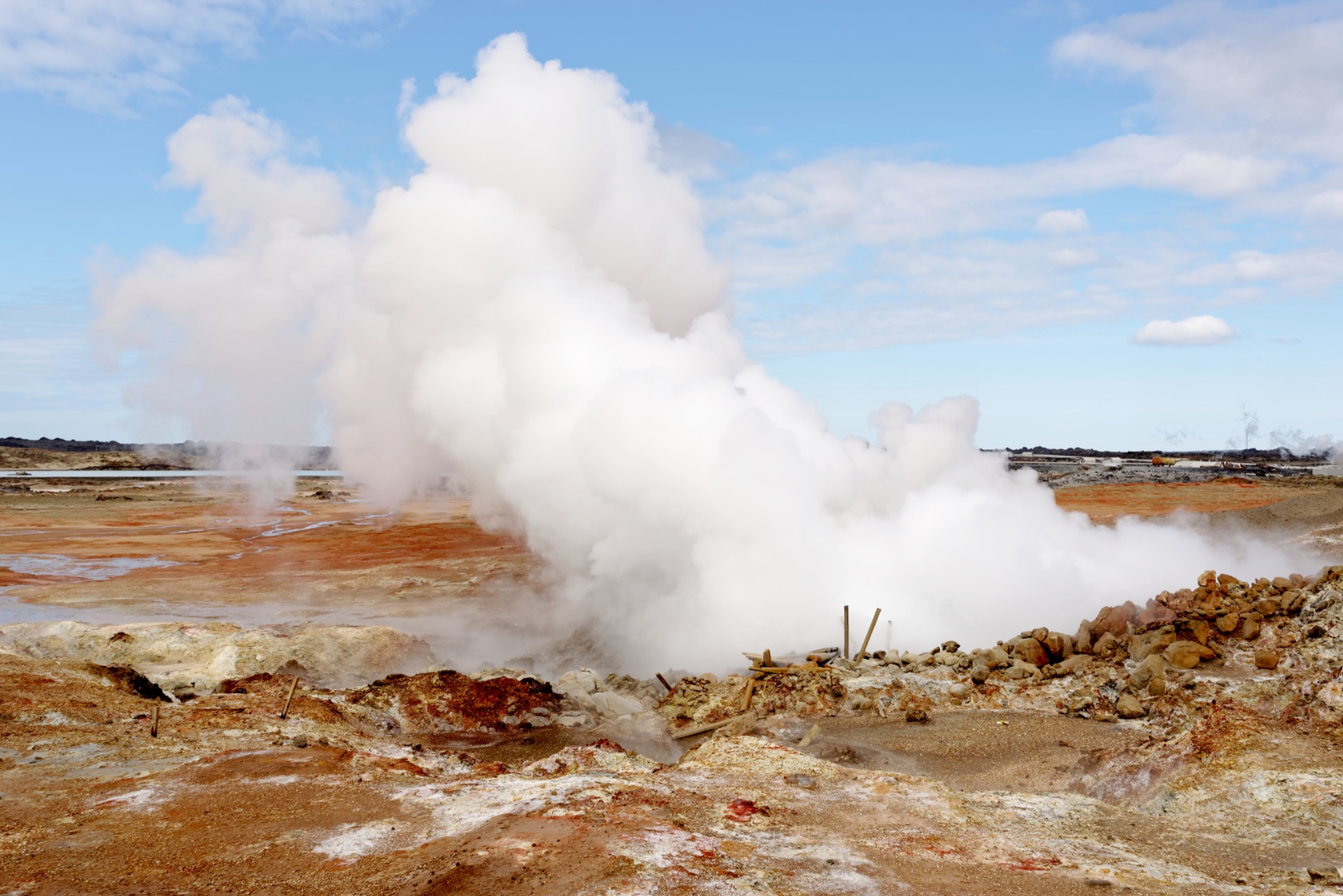 Photo: Jakub Hałun / Wikimedia Commons (CC BY-SA 4.0)
 - Reykjavík's 874 AD Norse Settlement Year-round; the statue stands at Arnarhóll in central Reykjavík
Per the Landnámabók (Book of Settlements), Ingólfur Arnarson — traveling with his wife Hallveig Fróðadóttir and foster-brother Hjörleifr Hróðmarsson — threw his high-seat pillars overboard as his ship neared Iceland, vowing to settle wherever they washed ashore. His slaves found them in a bay he named Reykjavík ("Smoky Bay") for its geothermal steam, and he founded his homestead there in 874 CE — the traditional founding date of Reykjavík and of Iceland's permanent settlement. The pillar-throwing detail is itself a saga-era legend embedded within the historical account; the 874 CE date is the accepted documented settlement date.
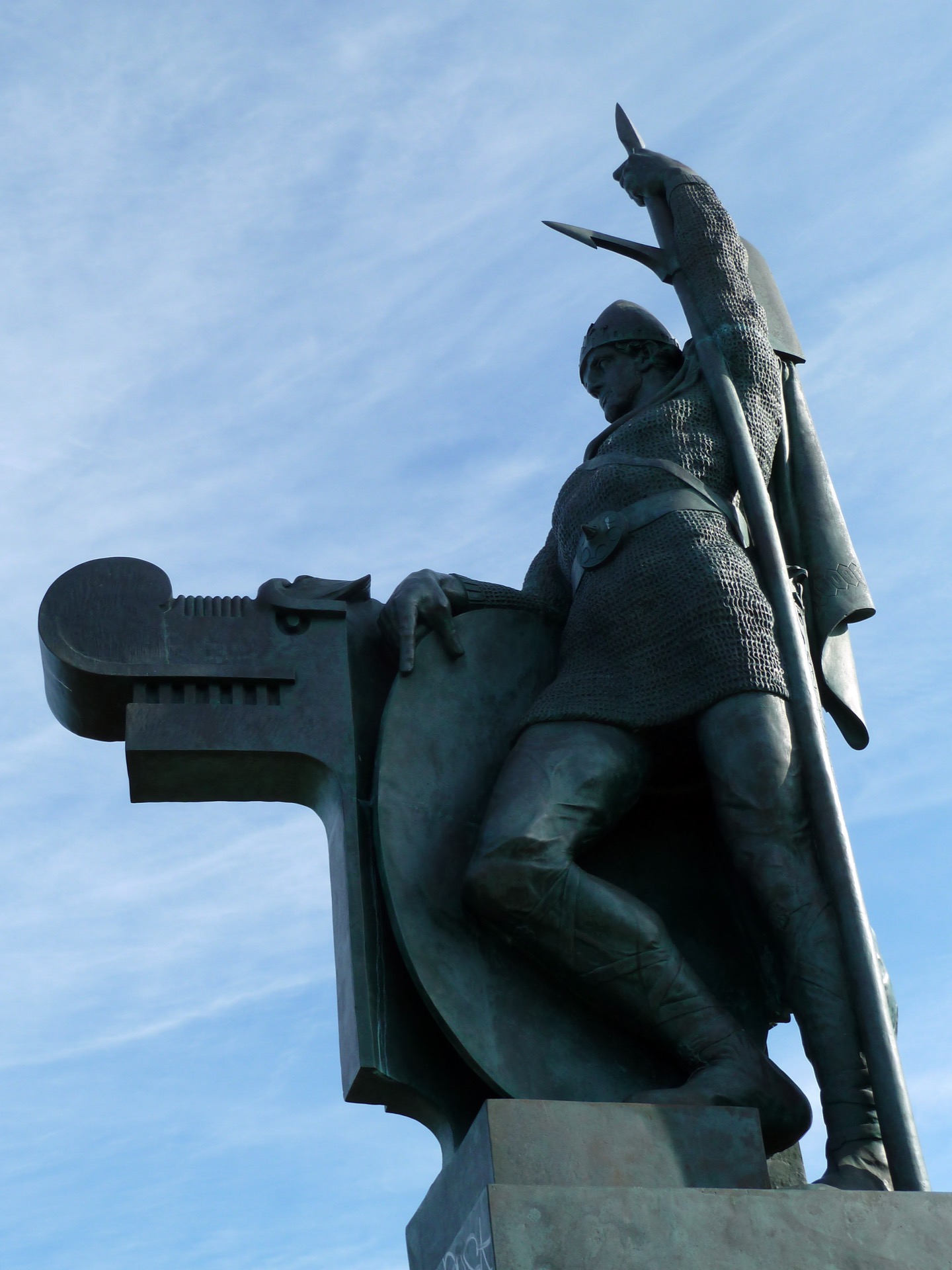 Photo: Rob Young / Wikimedia Commons (CC BY 2.0)
 - Seltún — a Living Geothermal Field Year-round; stay on the wooden boardwalks
An active geothermal field within the Reykjanes Geopark near Krýsuvík, with boiling mud pots, fumaroles, and vividly colored mineral deposits from sulfur and iron oxides. Wooden boardwalks let visitors walk safely through terrain that's genuinely still forming, not a static landscape — a real, currently active volcanic feature rather than a preserved historical site.
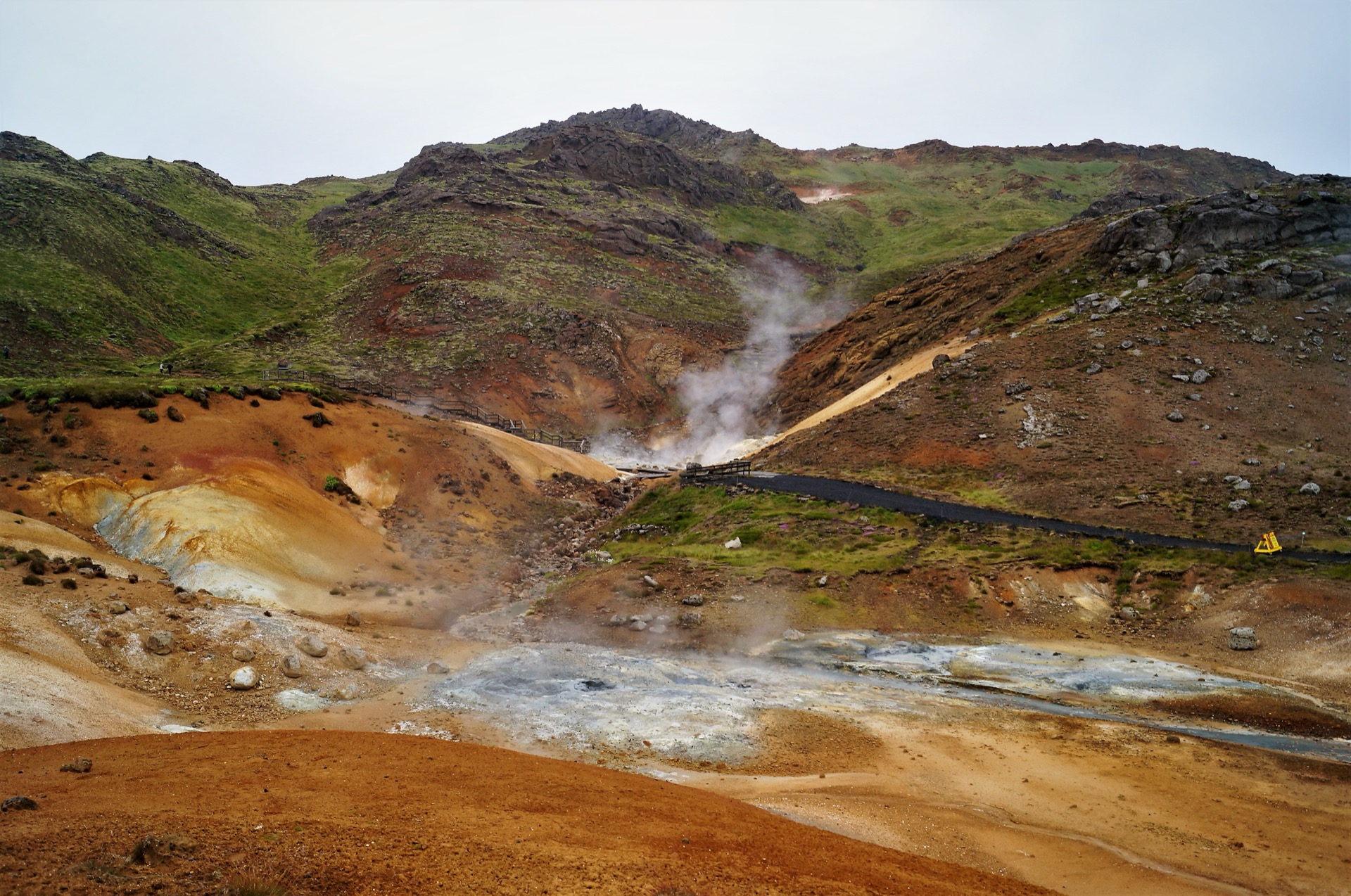 Wikimedia Commons (CC BY 3.0)
Questions people actually ask.
Is Grindavík safe to visit?
This needs a real, current check before you go, not a one-time answer. Grindavík was evacuated in November 2023 after volcanic fissures opened nearby, and the Sundhnúkagígar system has erupted at least nine times since, as recently as 2025. The town reopened to daytime access in October 2024 and many businesses have resumed operating between eruptive episodes, but most residents remain displaced long-term. Verify any Grindavík-based business is currently open before relying on it, and check Icelandic Met Office / Civil Protection advisories for current status before a trip.
Is this really the coldest water on this site?
Yes, by a wide margin. Reykjanes water runs roughly 2-4°C in winter up to 8-11°C in summer — compare that to Sardinia's 13-28°C or even the UK/Ireland zones' 7-12°C range. A 5/4mm to 6/5mm sealed-seam wetsuit is standard, with 5-7mm boots, 3-5mm gloves, and a hood. Underestimating the cold is the single most commonly flagged visitor mistake here.
Does Iceland use the Euro?
No — a genuine first among this site's Schengen zones. Iceland is in the Schengen Area (same 90-day-in-180 visa-free entry for US citizens as every other Schengen zone here) but is not in the European Union, and uses its own currency, the Icelandic Króna (ISK). In practice this creates no difference in entry paperwork, only in what's in your wallet — Iceland is also a highly cashless society, so cards work almost everywhere.
How well-connected is this zone?
Genuinely one of the best-connected zones on this site. Keflavík International Airport sits inside the surf zone itself — the main breaks are within about 15-45 minutes of arrivals. Icelandair flies real, current nonstop routes from Boston, New York, Denver, Chicago, Seattle, Miami, Nashville, and Pittsburgh directly into Keflavík.
Disclosure & how this page works.
Straight talk: Some links on this page are affiliate links — if you book through them, Secrets of Surf Travel earns a small commission at no extra cost to you. We only link places and people we'd use ourselves, and coverage is never for sale. Those commissions are what keep this site running and fund the next trip.
Today, the "Search Vrbo rentals," "Search Booking.com stays," and "Search Agoda stays" links on this page are affiliate links — every vendor listing link is still a plain courtesy link. As partnerships with these local businesses come online, more links (and discount codes, where Secrets of Surf Travel benefits from their use) may earn us a commission, and this page will keep saying so plainly. Coverage is never for sale: nobody on this page paid to be here, and nobody can.
Every listing was researched in 2026 and is being verified in person. Prices, hours, and policies change — treat them as strong starting points and confirm directly with the business. And per the No-Reveal Code: you will find no surf spots on this page, ever.