
Greece
Greece's famous water-sports islands — Naxos, Paros, Rhodes — are genuinely wind and kite country, not board-surf country, and this page doesn't pretend otherwise. But two coastlines catch real Mediterranean groundswell the enclosed Aegean rarely sees: West Crete around Chania, and the Messinia coast in the Western Peloponnese. Both have dedicated surf schools, real board rental, and a genuine winter surf season, set against some of the deepest ancient history anywhere on this site.

Straight talk: Some links on this page are affiliate links — if you book through them, Secrets of Surf Travel earns a small commission at no extra cost to you. We only link places and people we'd use ourselves, and coverage is never for sale. Those commissions are what keep this site running and fund the next trip.
Some vacation-rental search links on this page (marked "Search Vrbo rentals," "Search Booking.com stays," or "Search Agoda stays") are affiliate links. Every vendor link below is still a plain courtesy link. As more partnerships come online, more links may earn us a commission; the promise above holds either way.
Getting There
Athens (ATH) is the only Greek airport with direct US service — American (Charlotte, Chicago, Dallas-Fort Worth, JFK, Philadelphia), Delta (Atlanta, Boston, JFK), United (Chicago, Washington Dulles), and Norse Atlantic (JFK) all fly it, though these routes run seasonal rather than year-round — worth checking current schedules if traveling in winter, which happens to be the real surf season here.
For Chania/West Crete: Chania Airport (CHQ) has no direct US service, but is very well connected to Athens — Aegean and Sky Express run roughly 56 flights a week, a 50-60 minute hop — or a ferry from Piraeus. For the Messinia coast: Kalamata (KLX) has no direct US service and mostly European charter/seasonal flights (Condor, Jet2, Aegean, Eurowings); realistic routing is an Athens connection to a domestic flight, or about a 2.5-3 hour drive from Athens.
Documents: Greece is a full EU, Eurozone, and Schengen member — the standard 90-day-in-180 visa-free stay for US citizens. The EU's ETIAS pre-travel authorization (~€20) is expected to become mandatory from late 2026 — check current status before booking.
Ground Transport
- Greece drives on the right — standard, no adjustment needed.
- A car is essential at both hubs. Crete's surf spots and historical sites are spread along roughly an hour of west-coast road from Chania; Messinia's beaches and ruins are similarly spread along a coastal stretch with no meaningful public transit connecting them.
When to Go & What to Pack
The real surf season runs roughly November through March, driven by winter Mediterranean groundswell — summer is comparatively flat at both hubs.
- Cretan Sea (Chania hub): winter water runs cool enough that a wetsuit is needed for extended sessions; summer (June-August) climbs into the mid-20s°C, swimmable without a suit.
- Ionian Sea (Messinia hub): comfortable above about 20°C from late spring through early autumn; the real winter surf season (November-March) runs roughly 13-16°C — a genuine step colder than Cyprus's winter water. A 4/3mm to 5/3mm suit with boots and a hood covers a serious winter session; summer is essentially wetsuit-optional.
Direct comparison: Greece's winter surf-season water runs noticeably cooler than Cyprus's (13-16°C here versus Cyprus's 16-19°C) — a real, useful data point if choosing between this site's two Eastern Mediterranean zones.
Good to Know
- Currency is the Euro — Greece is a full EU, Eurozone, and Schengen member, no opt-outs to explain. The second zone on this site this straightforward, after Germany and the Netherlands.
- Emergency number: 112, EU-wide.
- Going further off the beaten path: Karpathos (specifically the village of Arkasa) has one genuinely real, well-reviewed dedicated surf school, Surfvival — a legitimate option for a committed surfer chasing something more remote, but it's a single-operator scene on a remote island reached only via Athens or Rhodes, not built out here as a full hub.
Respecting the Locals
Greece's surf scene is small on purpose — a handful of dedicated schools working West Crete and the Messinia coast, not a crowded lineup culture. That smallness means everyone in the water tends to know each other, and a visiting surfer stands out fast. The Venetian Old Town, the ruins, and the villages along these coasts carry centuries of history that long predate anyone's surf trip — treat the towns with the same respect you'd give the wave.
- Locals get first priority, always. Watch a session before you paddle out. Learn who's who before you learn the wave. Sit inside and catch what they let through — the leftovers are yours, not the set waves.
- Don't backpaddle. Ever. Being in position doesn't make the next wave yours, especially if you didn't wait your turn. If a local wants a wave, let them have it…even if it IS your turn. That older guy who may not be the best surfer out there has probably been surfing that wave before you even sat on a board. If you don't know someone, assume they're local.
- Don't snake. This shouldn't even need to be said, but…dropping in on someone, local or not, is the ultimate disrespect and the fastest way to be sent out of the water. Don't be that guy!
- Say hi. A “howzit,” “whatsup,” or “nice wave,” eye contact, or a nod in the channel — it costs nothing and it's the fastest way from stranger to welcome.
- This is somebody's home, not a resort amenity. The break you're surfing is where a local kid learned to swim, where someone's uncle has surfed for forty years. Act like a guest, because you are one.
- Spend where it actually helps. The food truck, the local shaper, the family-run rental, the local photographer — that's where a surf trip's money should land, not just the chain hotel gift shop. See The No-Reveal Code for why that's the whole premise of this site.
- Leave it better than you found it. Pick up trash that isn't yours. Don't touch reef, wildlife, or cultural sites.
Locals have watched hundreds, if not thousands, of people come and go — some for days, some for months or years — and almost all of them eventually go home. The locals are still there. It takes many, many years to actually become one. Keep that in mind the next time you feel entitled to the same waves they get.
None of this is a secret handshake. It's just how you'd want a guest to act in your own backyard.
Chania & West Crete
Chania's west coast — Stalos, Chrysi Akti, and up toward Falasarna — is described across surf-guide sources as the most consistent surfing in Greece, backed by a real cluster of dedicated schools and a Venetian Old Town's worth of stays, food, and history.
Surf Schools & Board Rental
- Surfing CreteKato StalosConfirm on the groundOfficial Chania surf school, certified by the Greek Ministry of Sports, ISA-certified instructors — based at what's widely called the most consistent surf spot on the island. surfingcrete.gr · Instagram · Facebook · Map
- Chania Surf ClubChrysi Akti (Golden Bay)Confirm on the groundCrete's first surf school — surf and SUP instruction. chaniasurfclub.com · Instagram · Facebook · Map
- Chania Surf ShopChaniaConfirm on the groundSelf-described only dedicated surf shop on Crete, established 2012 — surf, SUP, and kite gear sales and rental. Facebook · Map
Stays
- AzadeNear the port, Chania Old TownBudget/midStrong breakfast, well-located. azade-chania.com · Instagram · Facebook · Map
- Sette Venti Boutique HotelA quiet backstreet, ChaniaMid-rangeNeoclassical building, boutique feel. sette-venti.com · Instagram · Facebook · Map
- J&G SuitesOld Town centerLuxuryBoutique suites in the heart of Chania. jgsuites-crete.gr · Instagram · Map
Where to Eat
- ArismariWaterfrontMid-rangeHigh-end presentation, waterfront setting. arismarichania.gr · Instagram · Facebook · Map
- The Well of the TurkChania Old TownMid-rangeMiddle Eastern/Turkish/Greek fusion, atmospheric courtyard. Facebook · Map
- Monastiri TavernaWaterfrontMid-rangeFish and Cretan classics. monastiri-taverna.gr · Map
Wheels
- Rent4WheelsChaniaConfirm on the groundCrete's largest rental agency by review volume, multiple Chania locations including the airport, well-maintained fleet. rent4wheels.gr · Instagram · Facebook · Map
- Krasanos RentalsChaniaConfirm on the groundGood reviews, organized, fair pricing. krasanosrentals.com · Map
Avoid Mortoglou Chania Rent a Bike — alongside reports of reliable bikes, there's a documented complaint of a €700 damage charge for minor scooter scuffs with no itemized invoice, plus restrictive small-print on where you're allowed to ride outside Chania county. Lead with Rent4Wheels or Krasanos instead.
Surfboard & Wetsuit Repair
No dedicated shaper or repair specialist found on Crete — a genuine gap. Chania Surf Shop, as the island's only true surf shop, is the most likely point of contact for repair materials or informal help, but this isn't a serviceable category the way a mainland surf hub would have.
Massage & Wellness
- Kenshō Massage & SpaChania townConfirm on the groundSix-person jacuzzi, straightforward massage/spa menu. kenshospachania.gr · Instagram · Facebook · Map
- Chania Old Port Apivita SpaNear the harborConfirm on the groundHolistic spa treatments. chaniaoldportapivitaspa.com · Facebook · Map
Other Adventures
Chania & West Crete — Local Secrets
Eight non-surf reasons this hub rewards the curious — the longest gorge in Europe, an ancient harbor with a chain that could seal it shut, and a village reachable only by boat or foot.
- Venetian Harbor & Lighthouse Year-round, in-hub
Built in the 14th century by the Venetians to defend against pirates, with the lighthouse dating to around 1570 under Venetian rule. Today the harbor mixes Venetian, Ottoman, and Cretan architecture in one walkable stretch.
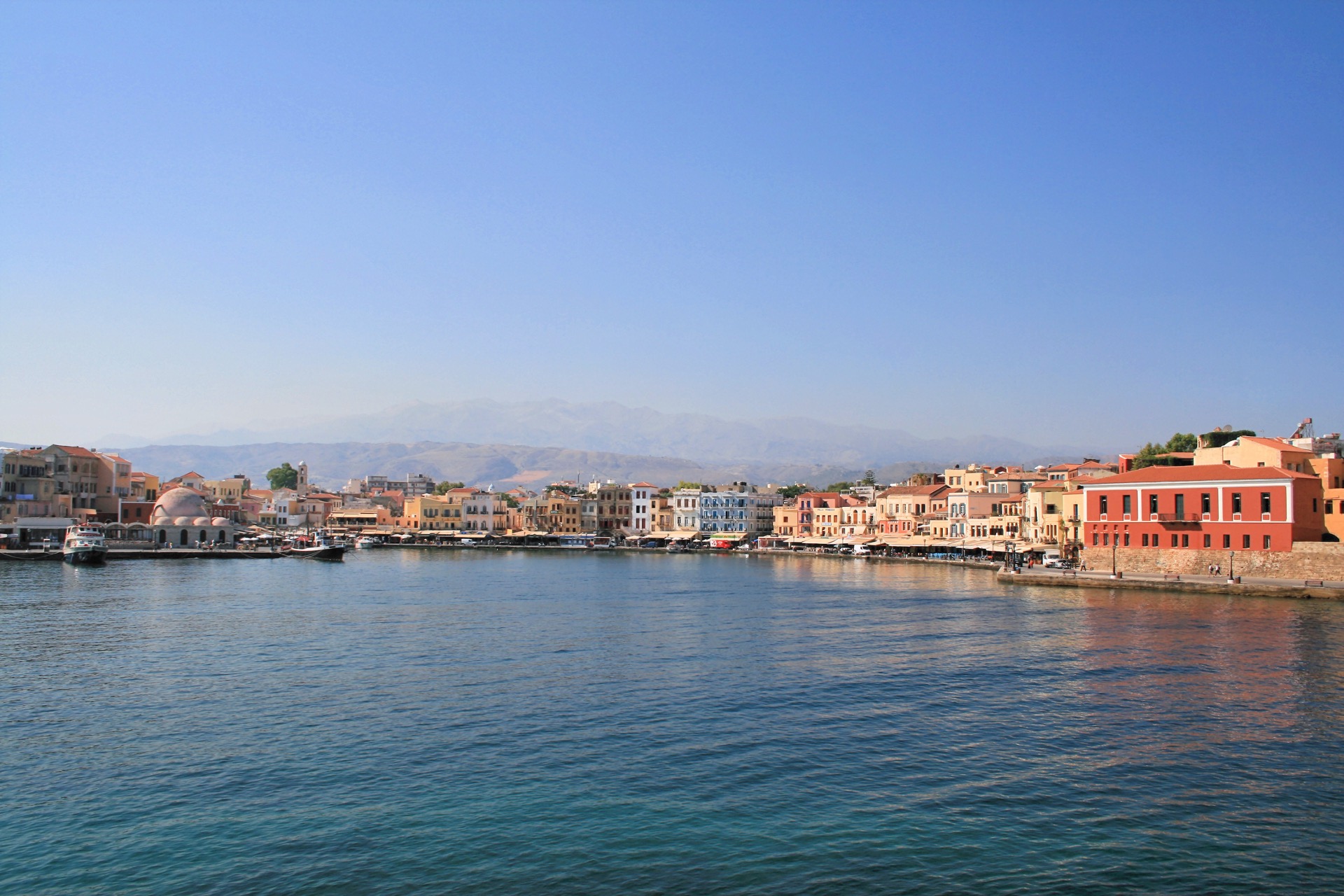 Wikimedia Commons (CC BY-SA 3.0 DE)
 - Samaria Gorge A full-day activity; ~1hr drive to the trailhead
The longest gorge in Europe — a 16km trail from Xyloskalo in the White Mountains down to the coastal village of Agia Roumeli, where a boat typically returns hikers to Chania.
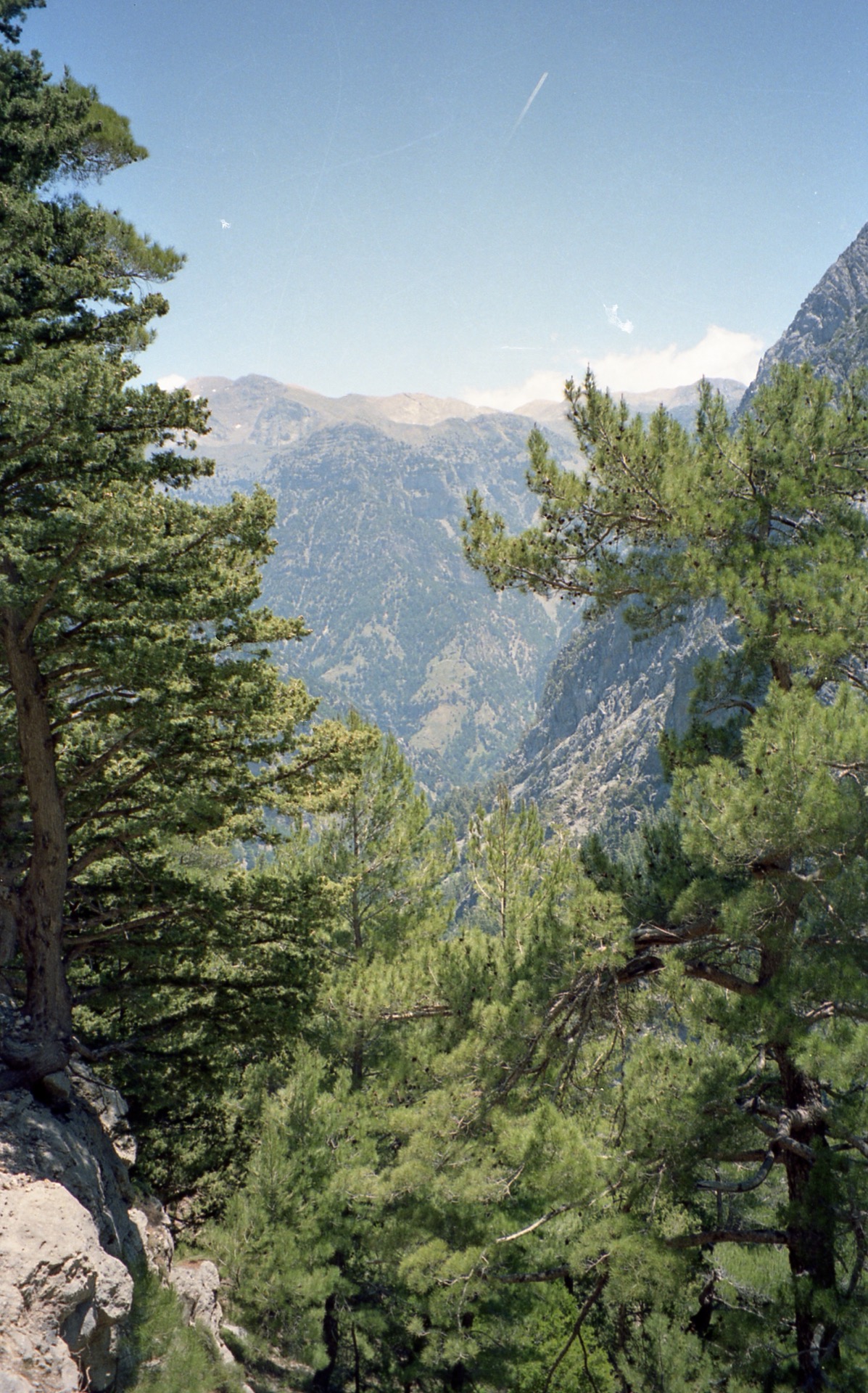 Wikimedia Commons (CC BY 2.0)
 - Balos Lagoon ~1hr drive plus boat or 4x4 track
A turquoise, shallow lagoon between Cape Tigani and the island of Gramvousa, reachable by boat trip or a rougher 4x4 track — a genuinely striking, much-photographed piece of coastline.
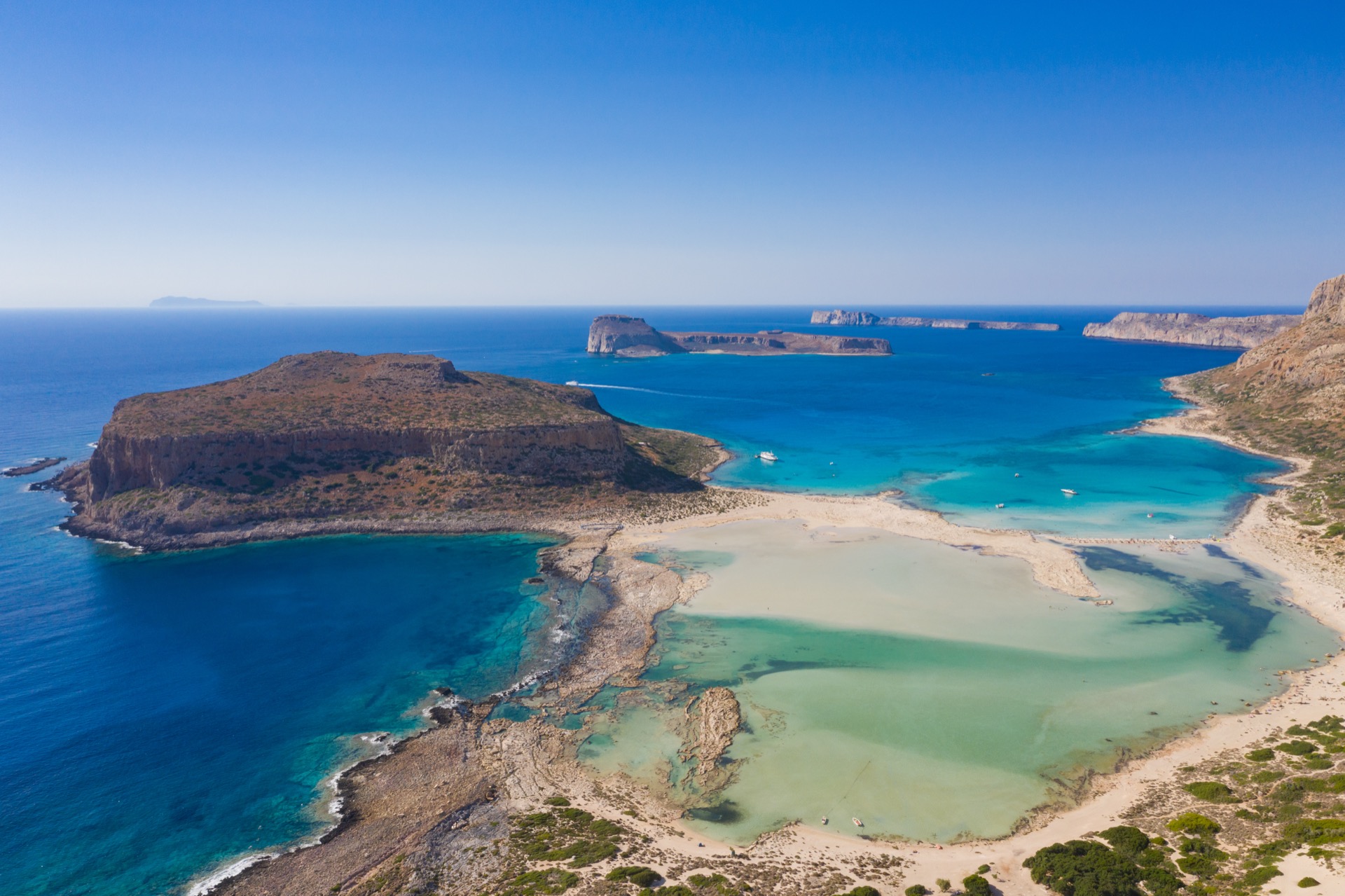 Wikimedia Commons (CC BY 2.0)
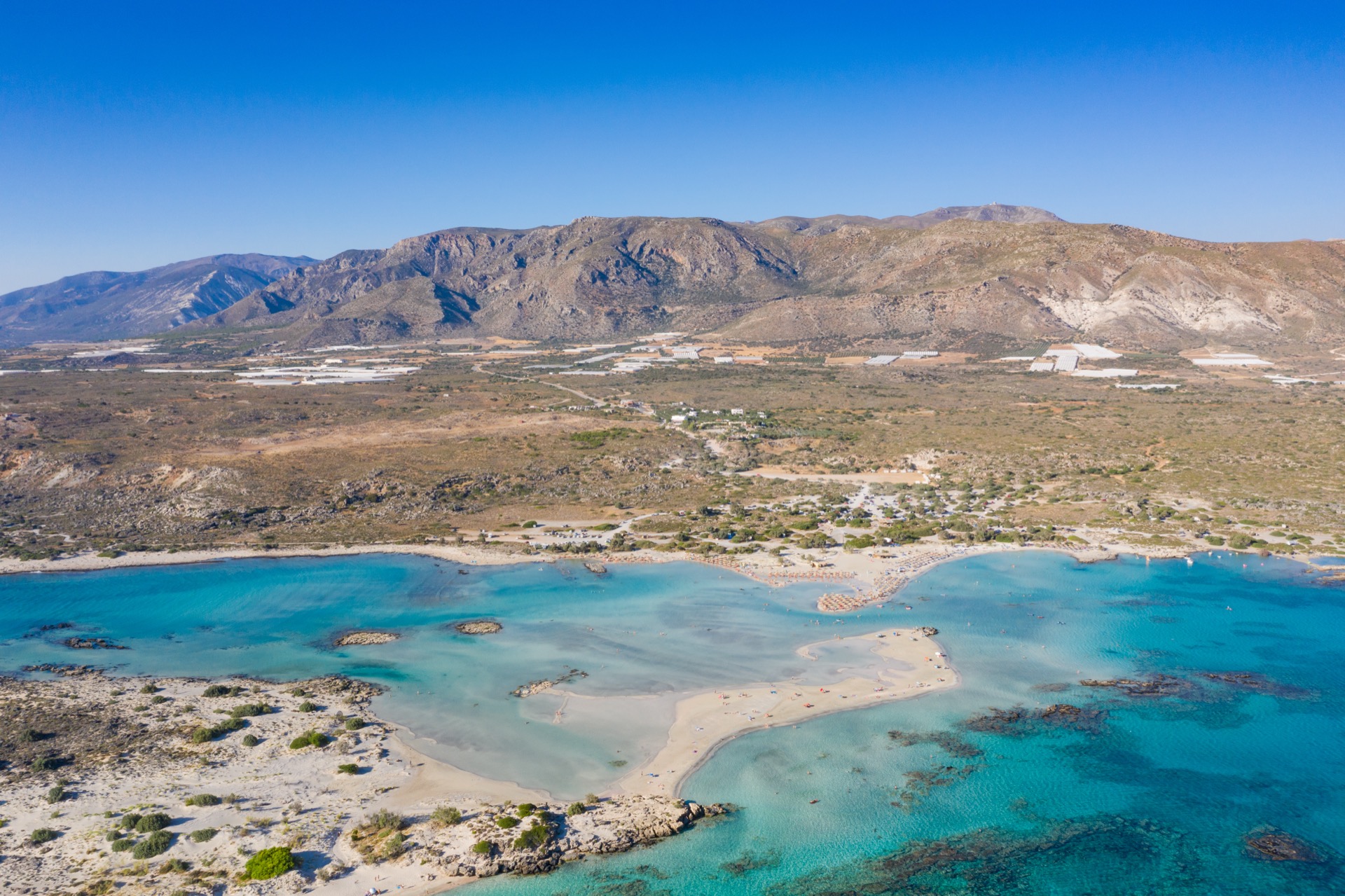
 - Elafonisi Beach ~1.5hr drive — a genuine day trip, not a quick add-on
A pink-sand nature reserve beach with a real pirate-base history, historically linked to the ancient "Mousagores Islands." Worth the distance, but plan the whole day around it.
 Wikimedia Commons (CC BY 2.0)
 - Ancient Falasarna ~1hr drive, same trip as the Falasarna surf beach
A city-state that flourished in the 4th-3rd century BC, with a harbor cut directly into rock, four defensive towers, and a submerged chain that could once seal the port shut against attackers.
 Wikimedia Commons (CC BY-SA 4.0)
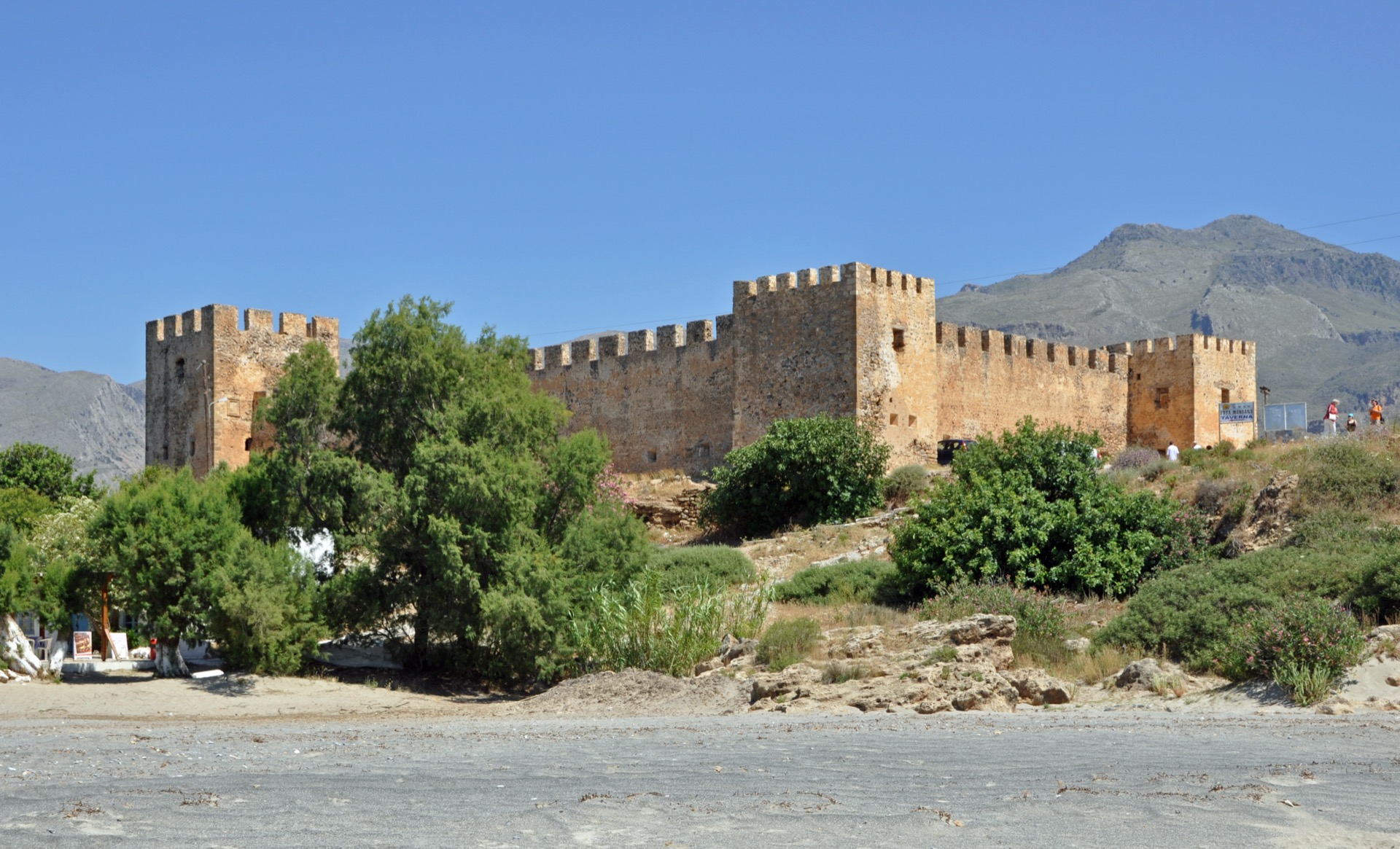
 - Frangokastello ~1hr drive
A Venetian fortress built 1371-1374 on the south coast, tied to local ghost legends — the "Drosoulites," said to appear as phantom soldiers marching near the fort on certain still mornings in May.
 Wikimedia Commons (CC BY 3.0)
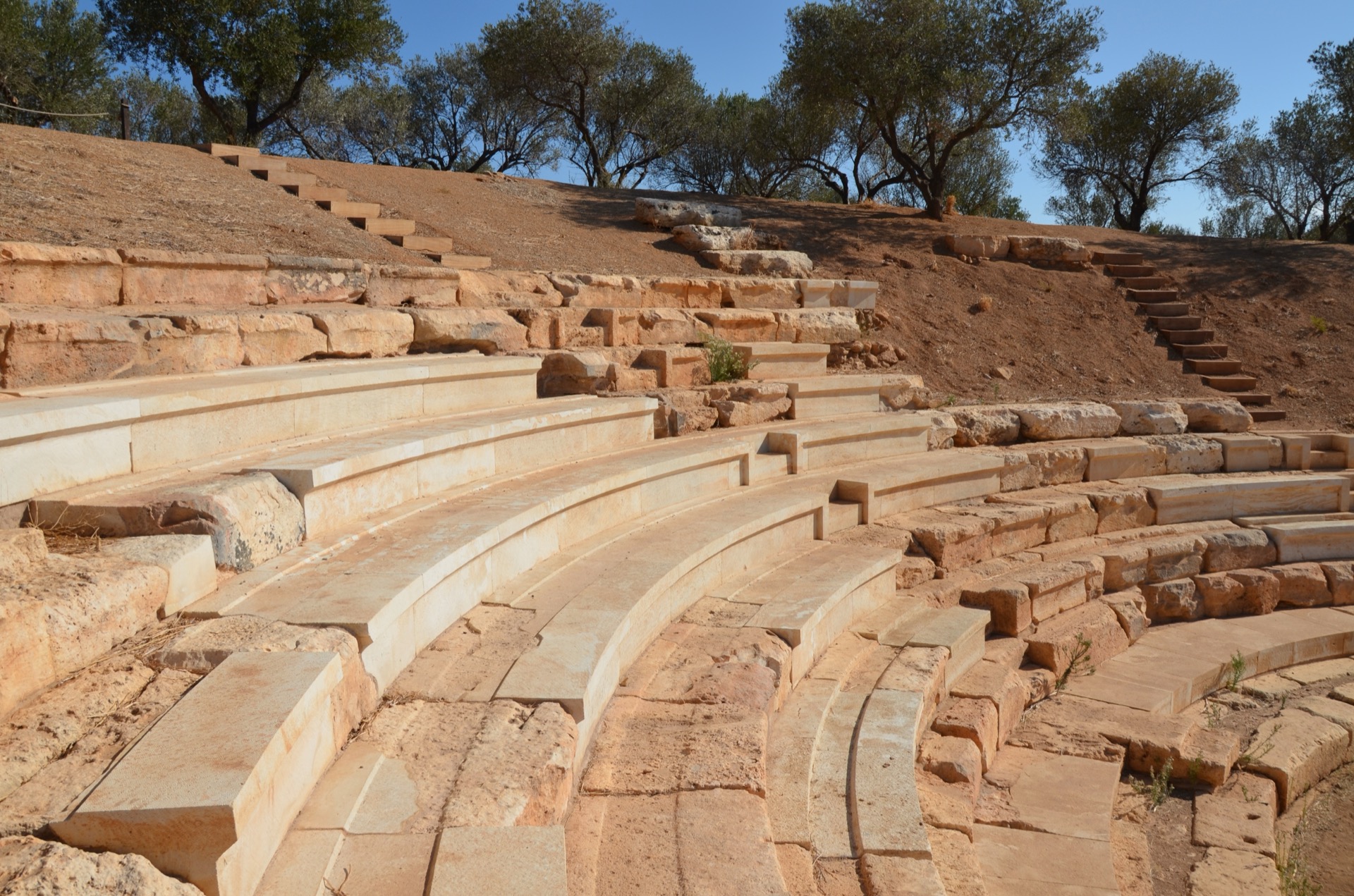
 - Aptera ~20 min from Chania — very close
An ancient city roughly 3,000 years old, once home to around 20,000 people. Its fortified islet at the mouth of Souda Bay was the last Venetian outpost before Crete fell to the Ottomans.
 Wikimedia Commons (CC BY-SA 2.0)
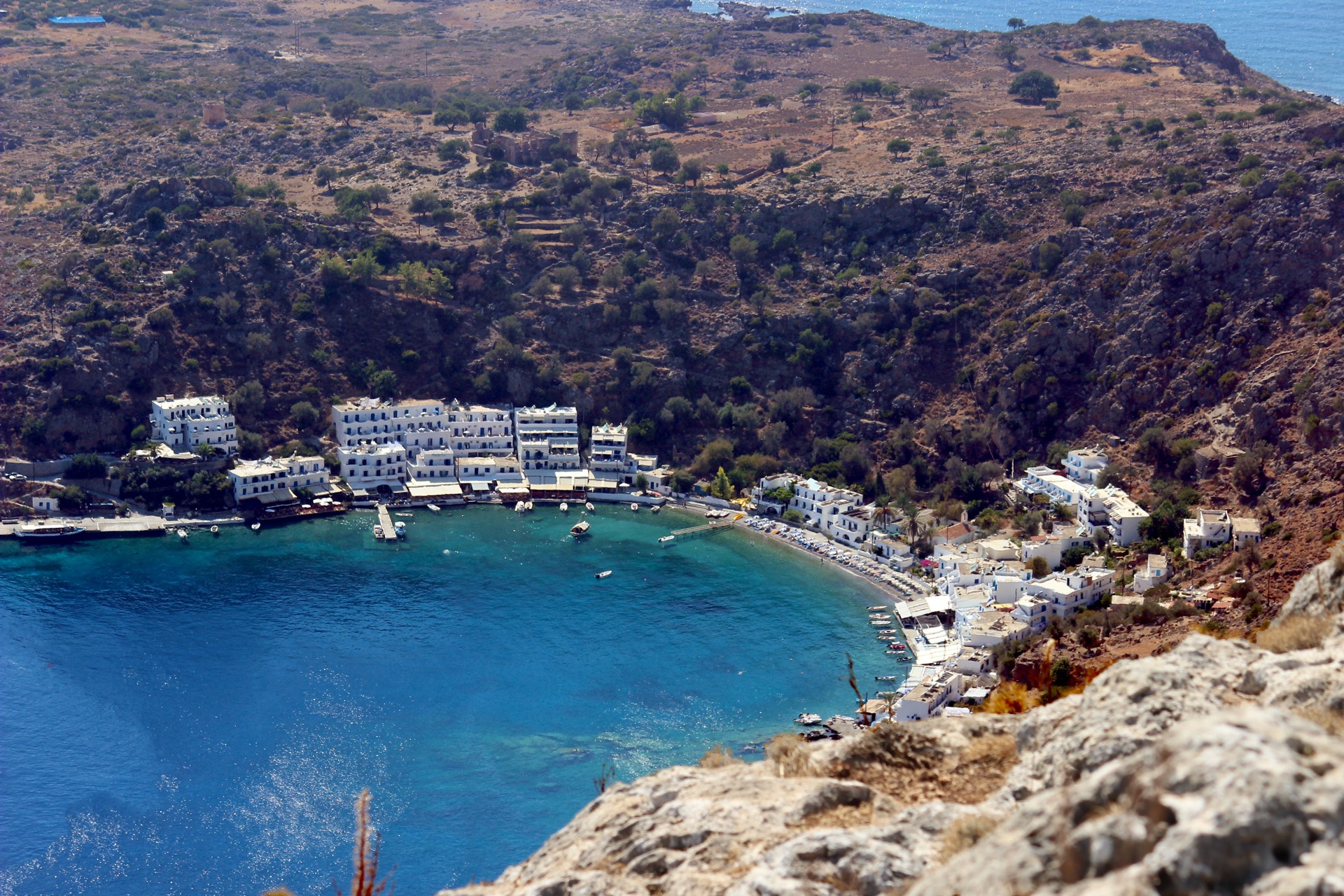
 - Loutro Year-round; reachable only by boat or foot
A genuinely car-free coastal village, commonly paired as a day trip with the Samaria Gorge via Agia Roumeli — no road reaches it at all.
 Wikimedia Commons (CC0)
Messinia Coast, Western Peloponnese
The WSW-facing Ionian coast around Lagouvardos, Romanos, and Gialova is repeatedly identified as the single most consistent groundswell zone in all of Greece — the only stretch that catches true winter groundswell rather than short-period Aegean wind-swell — anchored by Kalamata and the Costa Navarino resort development, and set against arguably Greece's single best cluster of ancient and modern history.
Surf Schools & Board Rental
- SurfsaladRomanos/Lagouvardos beachesConfirm on the groundOperating in the region 11+ years, running surf, kite, SUP, and windsurf instruction under a Natura 2000 eco-framework protecting local turtle and dolphin habitat. surfsalad.eu · Instagram · Facebook · Map
- Lagouvardos Surf ClubOn-beach at LagouvardosConfirm on the groundCourses for all levels. surfsalad.eu · Instagram · Facebook · Map
Stays
- Lagouvardos Village Hotel3-minute walk to the beachBudget/midPool and garden. lagouvardosvillage.gr · Instagram · Facebook · Map
- Zoe Seaside ResortGialovaMid-rangePool and restaurant on-site. zoeresort.com · Instagram · Facebook · Map
- Costa NavarinoNavarino Dunes/Bay areaLuxuryThe resort development that anchors the whole area's tourism infrastructure — multiple 5-star properties. costanavarino.com · Instagram · Facebook · Map
White Donkey Hotel is a real mid-tier option that also bundles car, scooter, and paddleboard rental for guests — a useful one-stop pick if simplifying logistics matters more than beachfront proximity.
Where to Eat
No standalone destination restaurants surfaced in this specific stretch beyond a beach bar directly at Lagouvardos — the honest picture is that Marathopoli, Gialova, and Kyparissia villages all have real, working taverna and café strips worth exploring on foot rather than one or two singled-out names.
Wheels
- Kalamata CarsKalamataConfirm on the groundFree pickup/dropoff across Messinia including the airport, delivers to hotels and villas. kalamatacars.gr · Map
- MessiniaCarKalamataConfirm on the groundStandard rental. messiniacar.gr · Facebook · Map
Surfboard & Wetsuit Repair
Same gap as Crete — no dedicated repair specialist identified anywhere in Messinia. Bring what you need.
Massage & Wellness
Thinner than Chania — the only wellness options found are Costa Navarino's resort spas, which are effectively guest-only. No independent standalone wellness business surfaced for this stretch of coast.
Other Adventures
Messinia Coast — Local Secrets
Eight non-surf reasons this hub rewards the curious — the best-preserved Mycenaean palace in Greece, a naval battle that helped win Greek independence, and a fortress town Venice called one of its "two eyes."
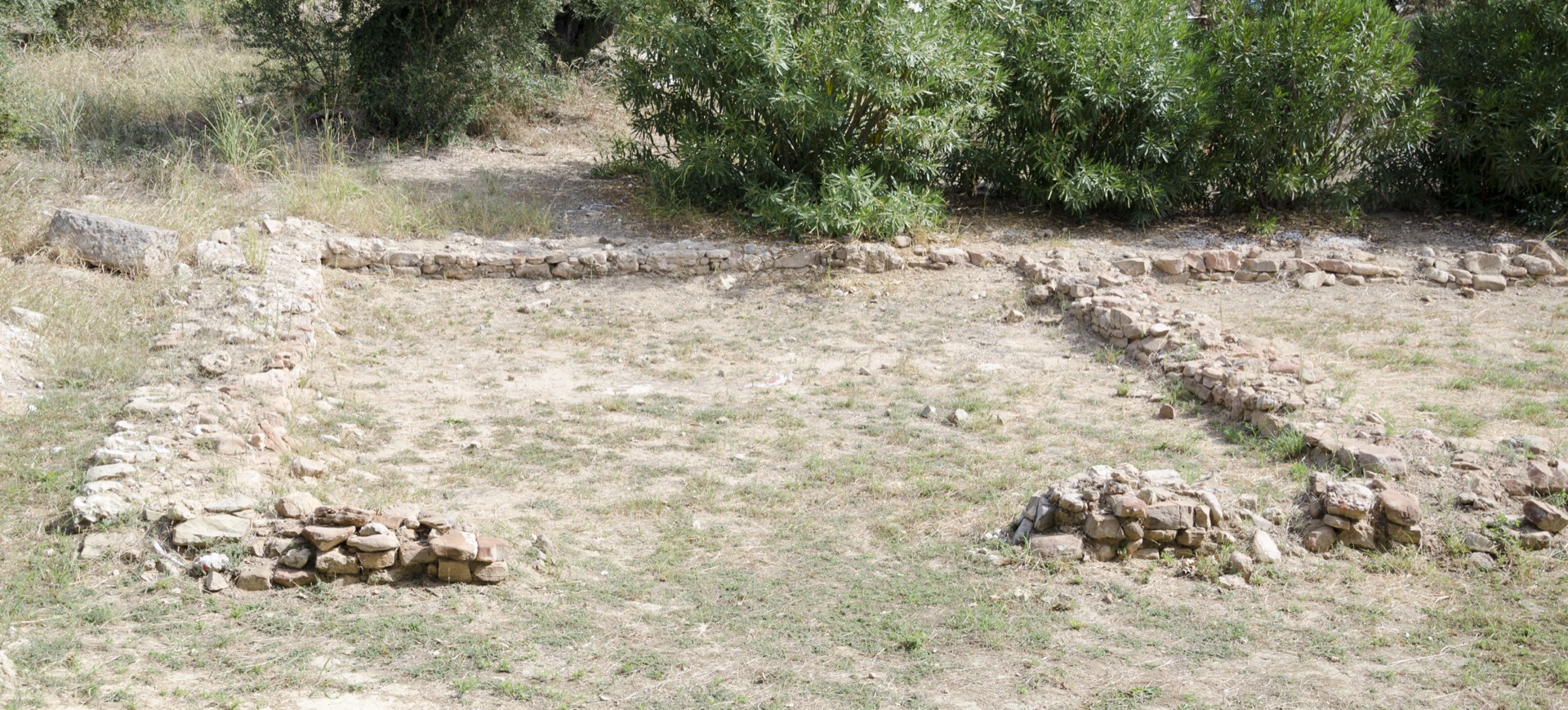
- Palace of Nestor ~30-40 min from the Lagouvardos hub
The best-preserved Mycenaean palace in Greece, built in the 13th century BC and burned and abandoned around the 12th century BC. Discovered in 1939 by Konstantinos Kourouniotis and Carl Blegen.
 Wikimedia Commons (CC BY-SA 4.0)
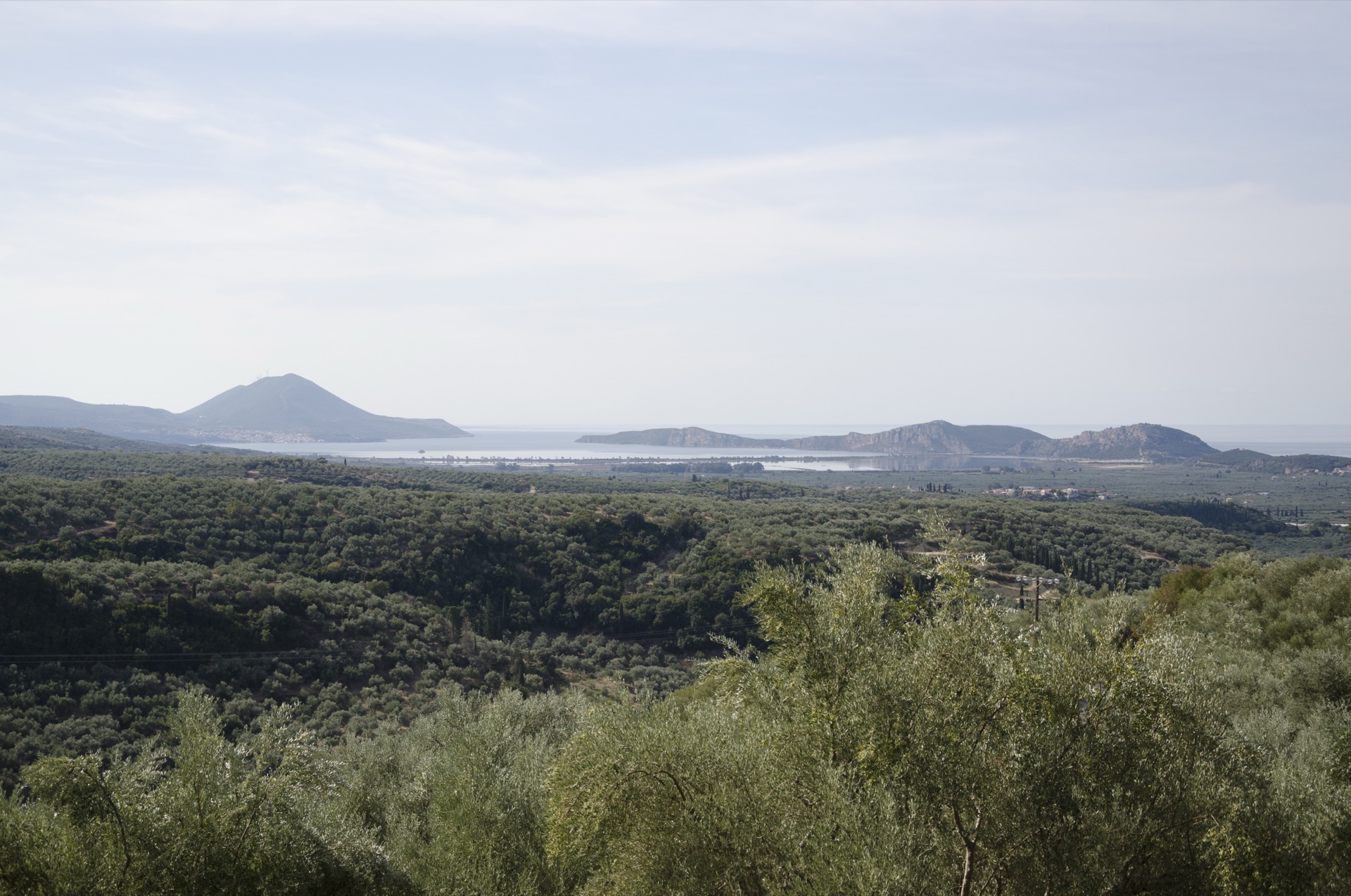
 - Battle of Navarino Site is Pylos harbor, ~20 min away
The decisive 1827 naval battle of the Greek War of Independence, fought right here in Navarino Bay — the combined fleets of Britain, France, and Russia destroyed the Ottoman-Egyptian fleet in what's considered the last major battle fought entirely under sail.
 Wikimedia Commons (CC BY-SA 4.0)
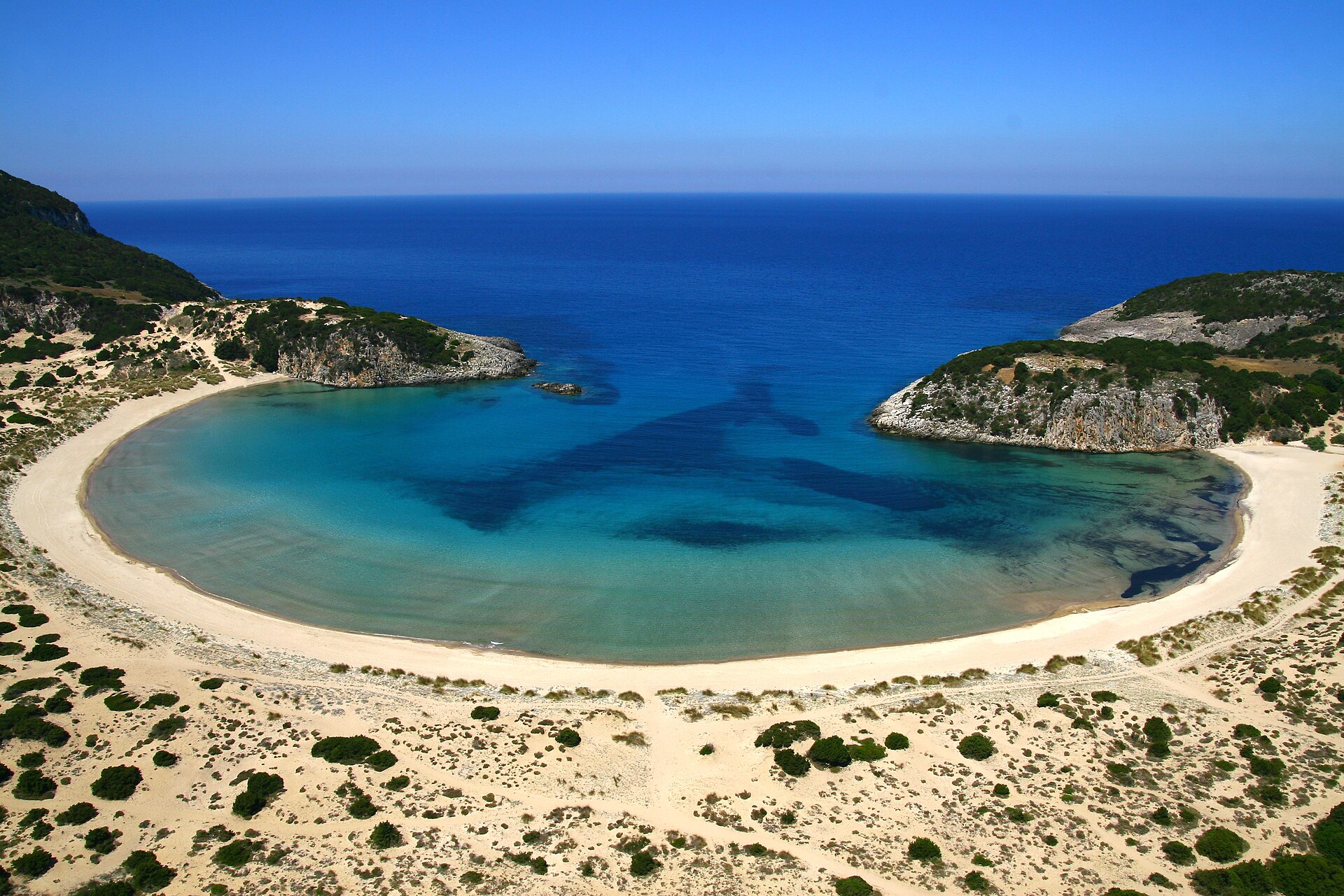
 - Voidokilia Beach ~20 min away
A horseshoe-shaped bay regularly named among Greece's most beautiful beaches, sitting right next to the ruins of Paleokastro, the old Navarino castle.
 Wikimedia Commons (CC BY-SA 3.0)
 - Methoni Castle ~45 min-1hr drive
A Venetian fortress town, one of the "two eyes of the Serenissima" that secured Venice's eastern trade route — fortified from the 1300s, with later Ottoman-era additions.
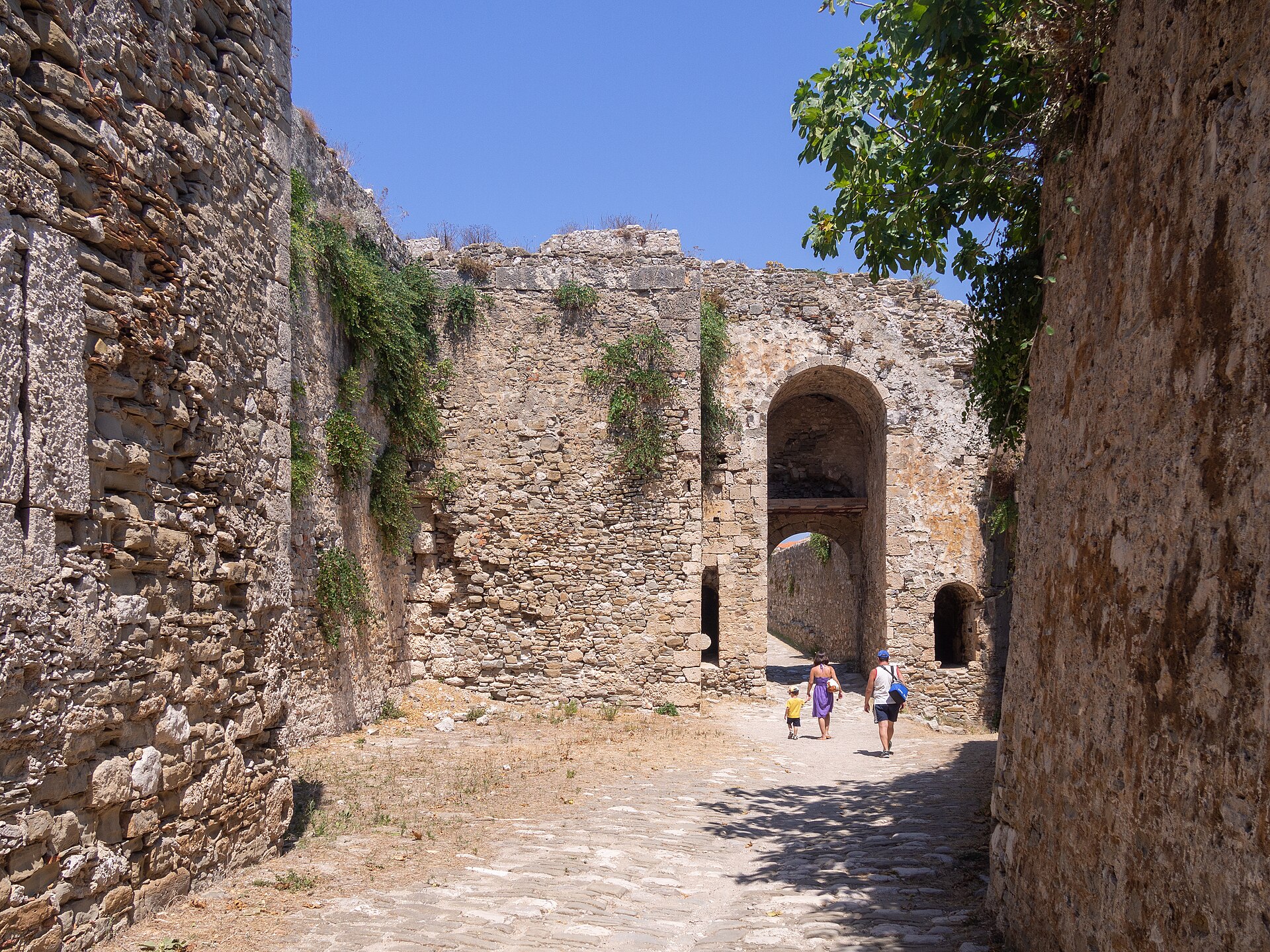 Wikimedia Commons (CC BY-SA 4.0)
 - Koroni Castle ~1hr drive — a half-day trip
Methoni's sister fortress, sharing the same Venetian trade-route history, in a distinct hilltop town of its own.
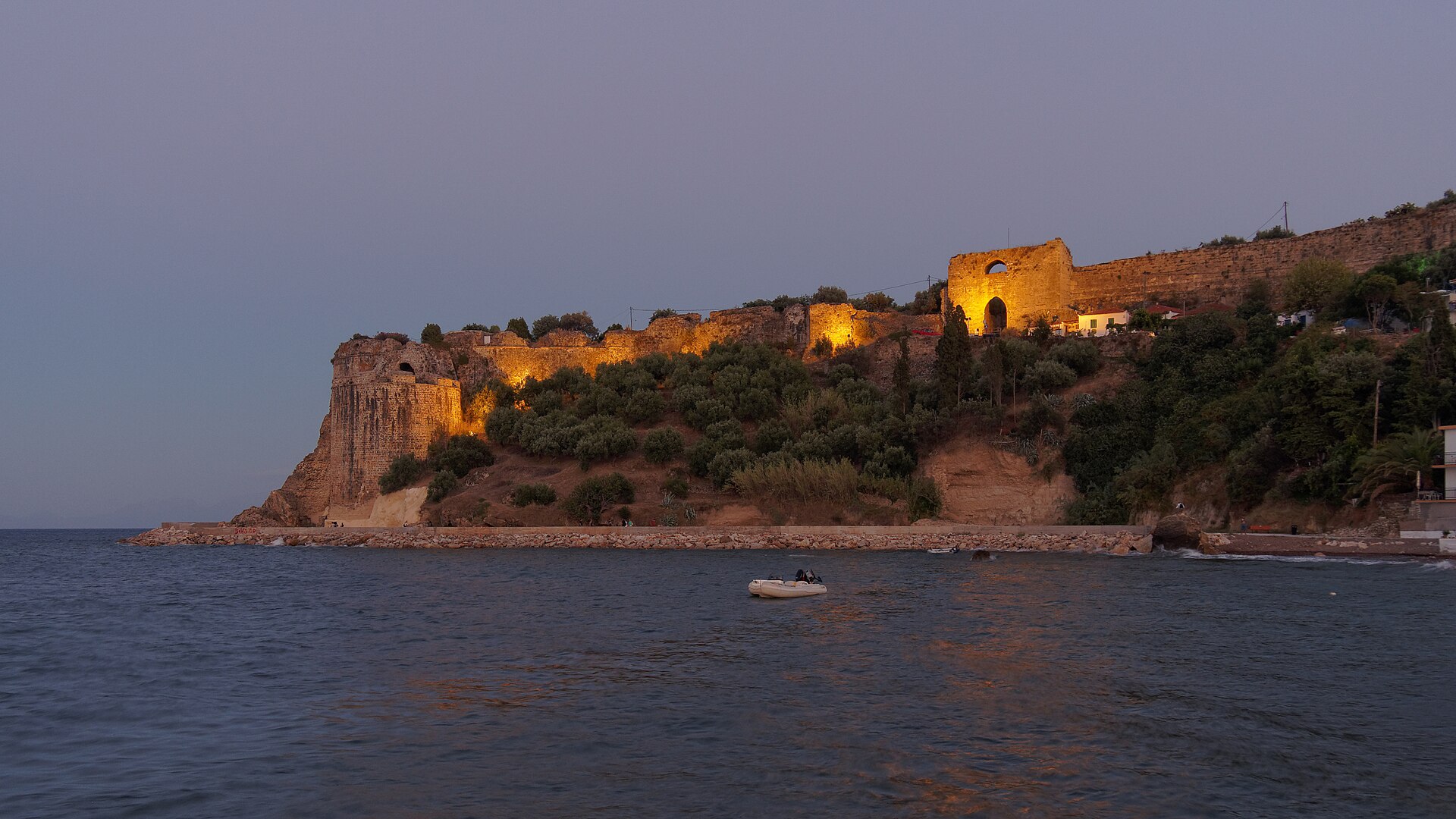 Wikimedia Commons (CC BY-SA 4.0)
 - Pylos Town Essentially adjacent to the hub
Inhabited since Neolithic times and historically called Navarino under Italian and Venetian rule, Pylos was also the site of a separate, earlier battle during the Peloponnesian War in 425 BC.
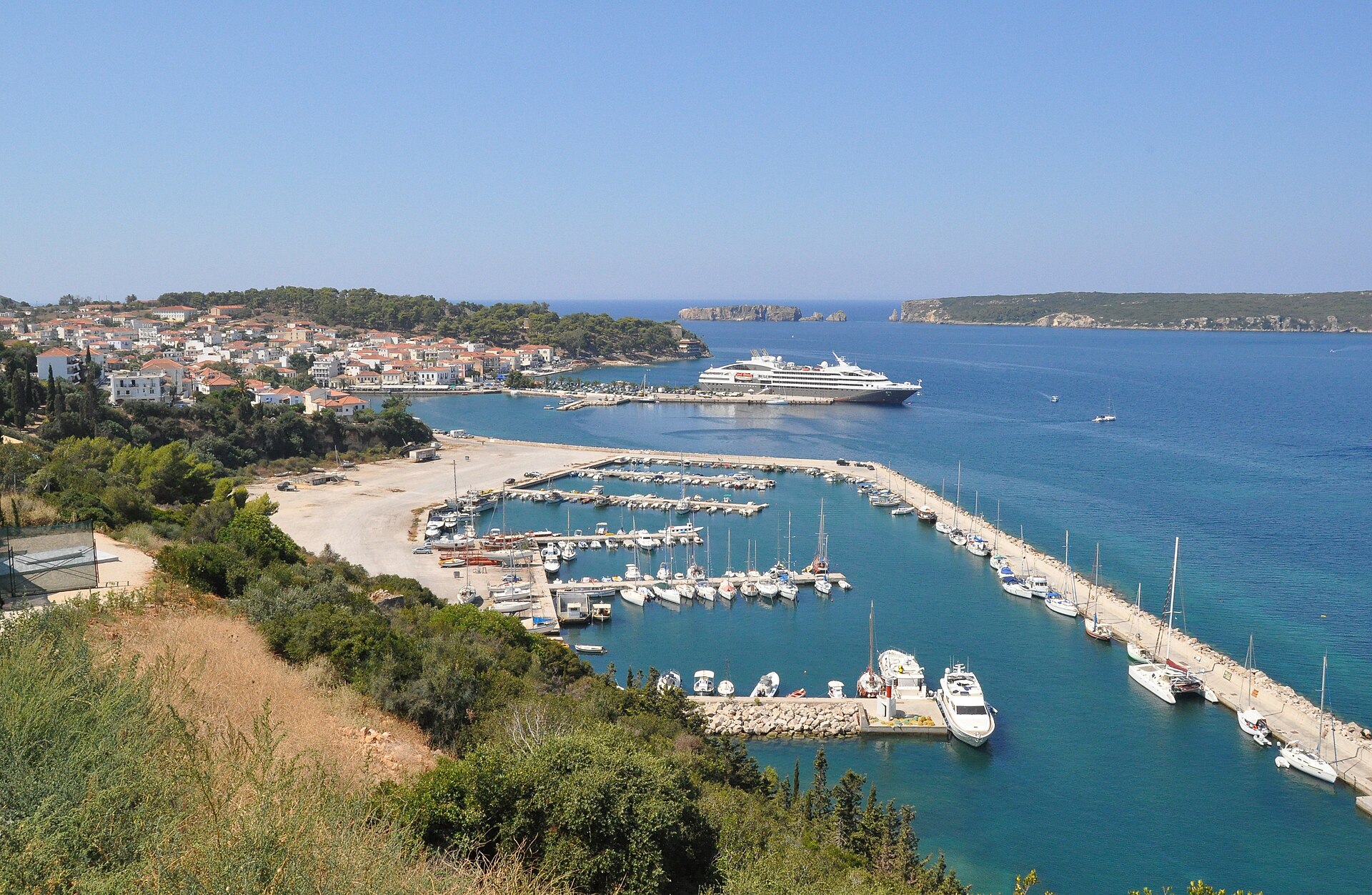 Wikimedia Commons (CC BY-SA 3.0 AT)
 - Ancient Messene ~45 min-1hr from the coast
A major classical-era fortified city founded in 369 BC by the Theban general Epaminondas after his victory at Leuctra freed the Messenians from centuries of Spartan domination — its extensive walls, theater, and stadium remain some of the best-preserved in Greece.
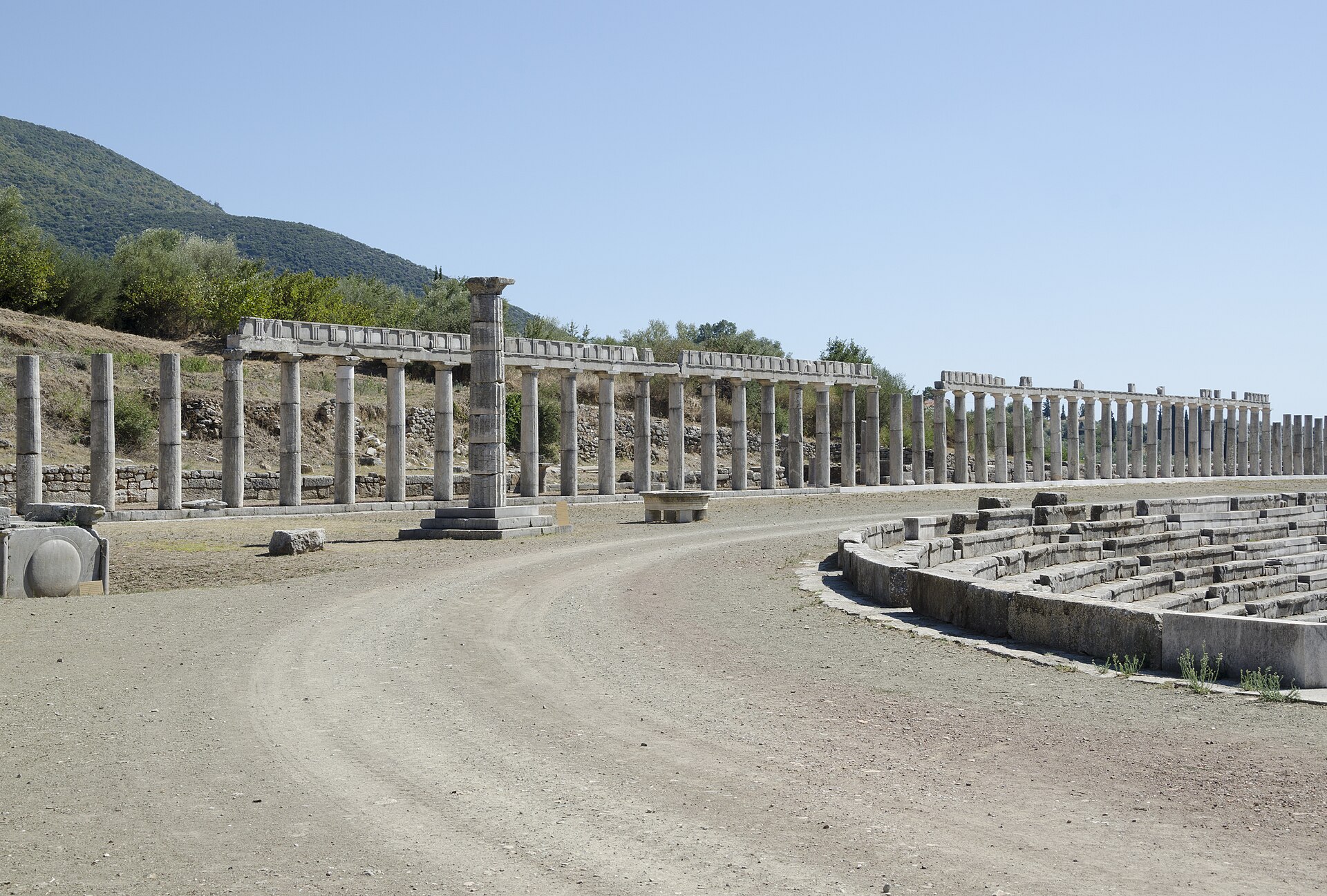 Wikimedia Commons (CC BY-SA 4.0)
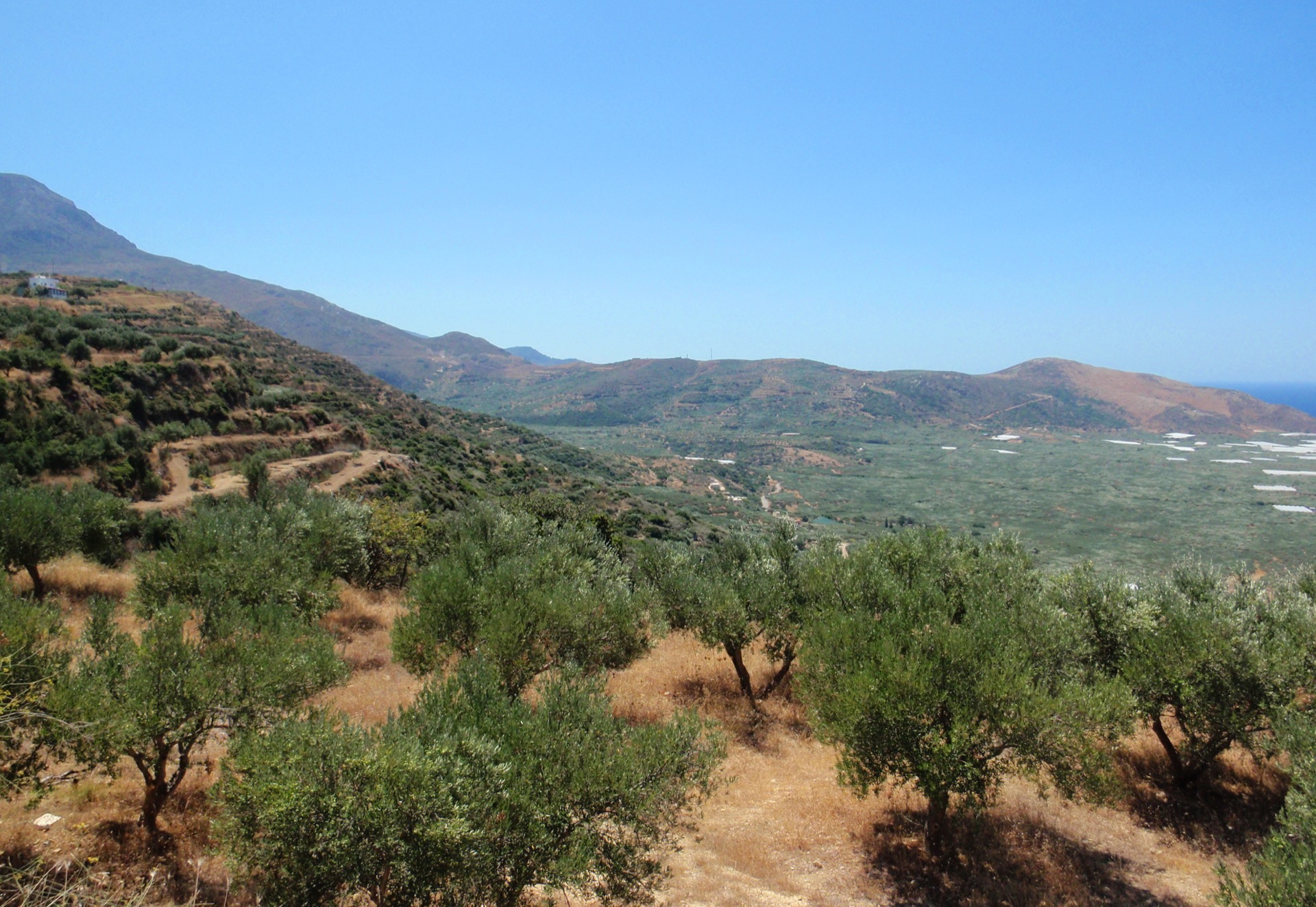
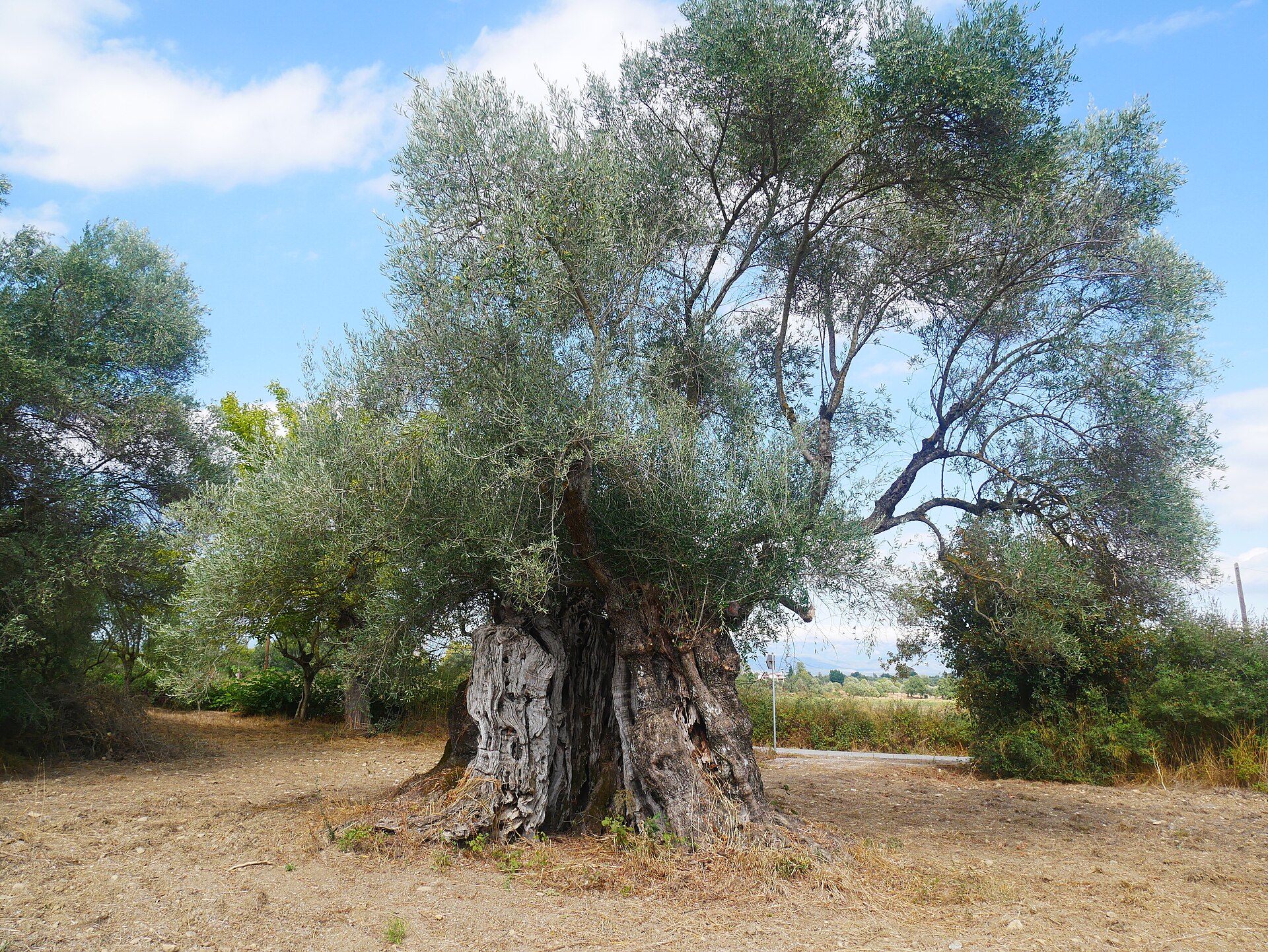
 - Messinia Olive Country Year-round; harvest runs autumn
Messinia is one of Greece's premier olive-oil-producing regions — some of the region's olive trees are documented at over a thousand years old, still bearing fruit, a genuine living link across the same centuries as the castles and ancient cities nearby.
 Wikimedia Commons (CC BY 4.0)
Questions people actually ask.
Isn't Greece known for windsurfing and kitesurfing, not surfing?
Mostly, yes — the famous Greek water-sports islands (Naxos, Paros, Rhodes, Kos) are genuinely wind/kite country, and this page doesn't pretend otherwise. But two coastlines catch real Mediterranean groundswell that the enclosed Aegean rarely sees: West Crete around Chania, and the Messinia coast in the Western Peloponnese. Both have dedicated, currently-operating surf schools, real board rental, and a genuine winter surf season. It's a real, honest surf scene — just concentrated in these two specific places rather than spread across the islands.
Which airport should I fly into?
Athens (ATH) is the only Greek airport with direct US service — American, Delta, United, and Norse Atlantic all fly it, though these routes are seasonal, not year-round. From Athens, Chania (CHQ) is a well-connected roughly 50-60 minute domestic hop (frequent Aegean and Sky Express flights) or a ferry; Kalamata (KLX), serving the Messinia coast, has no direct US service and mostly European charter/seasonal flights, so plan on an Athens connection or about a 2.5-3 hour drive from Athens.
Does Greece use the Euro?
Yes, straightforwardly — Greece is a full EU member (since 1981), full Eurozone member, and full Schengen member, with no opt-outs or exceptions to explain. This is the second zone on this site, after Germany and the Netherlands, with this simple a currency and entry story — a real contrast to Cyprus (EU but not Schengen), Denmark and Sweden (EU but not euro), and Norway (not EU at all). Standard Schengen rules apply: a 90-day-in-180 visa-free stay for US citizens.
How does the water compare to Cyprus?
Genuinely cooler in winter, when the real surf season happens. Greece's Ionian and Cretan Sea waters run roughly 13-16°C (55-61°F) during the November-March swell window, versus Cyprus's milder 17-19°C same-season water — worth a 4/3mm to 5/3mm suit plus boots and a hood for serious Greek winter sessions, a step up from Cyprus's 3/2mm. Both zones are essentially wetsuit-optional in peak summer, when the water in each place climbs into the mid-to-upper 20s°C — but summer is also the flattest, least surfable stretch of the year in both places.
Disclosure & how this page works.
Straight talk: Some links on this page are affiliate links — if you book through them, Secrets of Surf Travel earns a small commission at no extra cost to you. We only link places and people we'd use ourselves, and coverage is never for sale. Those commissions are what keep this site running and fund the next trip.
Today, the "Search Vrbo rentals," "Search Booking.com stays," and "Search Agoda stays" links on this page are affiliate links — every vendor listing link is still a plain courtesy link. As partnerships with these local businesses come online, more links (and discount codes, where Secrets of Surf Travel benefits from their use) may earn us a commission, and this page will keep saying so plainly. Coverage is never for sale: nobody on this page paid to be here, and nobody can.
Every listing was researched in 2026 and is being verified in person. Prices, hours, and policies change — treat them as strong starting points and confirm directly with the business. And per the No-Reveal Code: you will find no surf spots on this page, ever.