
Gisborne & Bay of Plenty
Stated honestly up front: this is a real, long East Coast North Island span, not a tight coastal loop. Gisborne (with its surf suburb Wainui Beach) is a developed, east-facing surf town in the Ngāti Porou heartland. Mount Maunganui, a genuine 3.5-hour drive north in an entirely different region, is a major beach town beneath the sacred, climbable Mauao. Mahia Peninsula, closer to Gisborne but genuinely thin on infrastructure, is home to one of the world's few privately-owned orbital rocket launch sites. Three real places, honestly far apart.
Straight talk: Some links on this page are affiliate links — if you book through them, Secrets of Surf Travel earns a small commission at no extra cost to you. We only link places and people we'd use ourselves, and coverage is never for sale. Those commissions are what keep this site running and fund the next trip.
Some vacation-rental search links on this page (marked "Search Vrbo rentals," "Search Booking.com stays," or "Search Agoda stays") are affiliate links. Every vendor link below is still a plain courtesy link. As more partnerships come online, more links may earn us a commission; the promise above holds either way.
Getting There
Gisborne Airport (GIS) and Tauranga Airport (TRG), serving Mount Maunganui, are both sole-served by Air New Zealand — no other carrier flies either route. Gisborne connects nonstop to Auckland (~1h05) and Wellington (~1h15); Tauranga connects nonstop to Auckland (~40 min), Wellington, and Christchurch (~2h05). Mahia Peninsula has no airport — reach it by road from Gisborne (~100km/1.5 hrs) or from Napier/Hawke's Bay further south.
Documents: same nationwide NZeTA rule as every other New Zealand zone on this site.
Ground Transport
- Driving is on the left, same as the rest of New Zealand.
- Gisborne to Mount Maunganui is a genuine 271km, roughly 3.5-hour drive — likely routed via Ōpōtiki and SH2 along the coast. Treat any single-trip itinerary combining all three hubs as a real multi-day road trip, not a loop.
- Avis, Hertz, and Ezi Car Rental operate at Gisborne Airport; Ezi Car Rental, Rite Price Rentals, and ABC Rentals serve Tauranga City and Airport. Mahia has no car rental of its own — visitors arrive by their own vehicle from Gisborne or Hawke's Bay.
When to Go & What to Pack
- This East Coast faces the open Pacific — a genuinely different swell exposure than every west-facing NZ zone on this site. The coast catches a wide swell window: long-period summer swells through Southern Ocean winter systems, plus real ex-tropical-cyclone groundswells November-March. Sources vary on the single "best" month — treat it broadly as May-October for size and November-March for warmth and cyclone-generated swell, rather than one narrow window.
- Water temperature runs warmer than the Tasman-facing zones — Gisborne averages around 68°F (20.1°C) in February (warmest) down to 57°F (13.8°C) in August (coldest). A 2mm-3/2mm wetsuit covers the warm months; 3/2mm with optional boots/hood/gloves covers winter — noticeably lighter gear than Raglan/Taranaki's colder water calls for.
Good to Know
- Currency, language, and emergency number (111) are the same nationwide rules as every other New Zealand zone on this site.
- The East Coast carries New Zealand's highest Māori population share — Ngāti Porou, the country's second-largest iwi, makes up the large majority of the region's Māori population. Te Reo Māori is genuinely part of daily life here more than in most other zones on this site.
- Mahia is honestly thin on services. No dedicated restaurant, car rental, repair shop, or wellness business was found operating on the peninsula — this is a self-catering, self-driving, bring-your-own-gear destination, stated plainly rather than padded.
Respecting the Locals
This stretch of the East Coast carries New Zealand's highest Māori population share, with Ngāti Porou — the country's second-largest iwi — as the dominant presence in the region; Te Reo Māori is a genuine part of daily life here, not a backdrop. Mount Maunganui sits beneath Mauao, a mountain sacred to Ngāi Te Rangi, Ngāti Ranginui, and Ngāti Pūkenga, with pā sites still on it today — treat the summit and surrounding area with the same respect as any other cultural site. Mahia Peninsula, by contrast, is thin on any kind of infrastructure or bench of local business — a quieter, self-sufficient stretch where the courtesy is simply not treating it like a resort.
- Locals get first priority, always. Watch a session before you paddle out. Learn who's who before you learn the wave. Sit inside and catch what they let through — the leftovers are yours, not the set waves.
- Don't backpaddle. Ever. Being in position doesn't make the next wave yours, especially if you didn't wait your turn. If a local wants a wave, let them have it…even if it IS your turn. That older guy who may not be the best surfer out there has probably been surfing that wave before you even sat on a board. If you don't know someone, assume they're local.
- Don't snake. This shouldn't even need to be said, but…dropping in on someone, local or not, is the ultimate disrespect and the fastest way to be sent out of the water. Don't be that guy!
- Say hi. A “howzit,” “whatsup,” or “nice wave,” eye contact, or a nod in the channel — it costs nothing and it's the fastest way from stranger to welcome.
- This is somebody's home, not a resort amenity. The break you're surfing is where a local kid learned to swim, where someone's uncle has surfed for forty years. Act like a guest, because you are one.
- Spend where it actually helps. The food truck, the local shaper, the family-run rental, the local photographer — that's where a surf trip's money should land, not just the chain hotel gift shop. See The No-Reveal Code for why that's the whole premise of this site.
- Leave it better than you found it. Pick up trash that isn't yours. Don't touch reef, wildlife, or cultural sites.
Locals have watched hundreds, if not thousands, of people come and go — some for days, some for months or years — and almost all of them eventually go home. The locals are still there. It takes many, many years to actually become one. Keep that in mind the next time you feel entitled to the same waves they get.
None of this is a secret handshake. It's just how you'd want a guest to act in your own backyard.
Gisborne & Wainui Beach
Wainui Beach, 5-10 minutes from the Gisborne CBD, is where most of the city's surf-school and boardriders-club activity concentrates — not a separate town, but Gisborne's surf suburb.
Surf Schools & Shops
- Salt Shack Surf SchoolWainui BeachMid-rangeRun by Holly and Jay Quinn, small-group instruction capped at 4 surfers per coach, gear included. saltshacksurfschool.com · Facebook · Map
- Surfing With FrankGisborneFrank has retired — coaching continues as Surfing With Sarah2-hour learn-to-surf instruction, boards and wetsuits provided. Frank has stepped back from running the business day-to-day; the same coaching lineage now operates as Surfing With Sarah. surfingwithsarah.co.nz · Map
- Blitz Surf Shop34 Wainui Rd, GisborneBudget/midNew Zealand's second-oldest surf shop, family-owned since 1983 — instruction, hire, and gear sales, and the zone's board-repair anchor. blitzsurf.co.nz · Instagram · Facebook · Map
Stays
- Ocean Beach MotelWainui BeachMid-range15 self-contained suites, 5 minutes from the Gisborne CBD — now trading as Ocean Beach Wainui. oceanbeach.co.nz · Facebook · Map
- Wainui Beach MotelWainui BeachConfirm on the ground — no independent website foundRoughly 100m from the sand, a separate property from Ocean Beach Wainui above. Tripadvisor · Map
Where to Eat
- ZephyrWainui BeachBudget/midA minute's walk from the beach — organic coffee and plant-based options, a genuine surfer hangout. zephyrwainui.co.nz · Facebook · Map
- The WorksFormer Freezing Works building, GisborneMid-rangeA local-product-driven menu in a notable adaptive-reuse building. theworksgisborne.co.nz · Facebook · Map
- Crawford Road KitchenGisborne Inner HarbourMid-rangeSunset views, breakfast-to-dinner menu — booked and run through the Gisborne Wine Centre site. gisbornewinecentre.co.nz · Instagram · Map
Massage & Wellness
- Driftwood Day SpaGisborneMid-rangeGisborne's first organic day spa, established 2017 — deep tissue and hot stone. driftwoodspa.wordpress.com · Instagram · Facebook · Map
- Rest Float Spa & Wellness CentreGisborneMid-rangeFloat pods, massage, and compression therapy. restfloatspa.co.nz · Facebook · Map
Other Adventures
- Dive Tatapouri Reef Ecology TourTatapouri Bay, ~15 min north of GisborneMid-rangeWade at low tide among wild, free-roaming stingrays and eagle rays, with a guide covering both marine ecology and Māori resource-management history — NZ$67 adult. divetatapouri.com · Facebook · Map
- Rere Rockslide & Rere FallsInland from GisborneBudgetA natural rock slide and waterfall, a popular family day trip.
Mount Maunganui
"The Mount" — a real, developed Bay of Plenty beach town beneath sacred Mauao, and home to New Zealand's busiest port. A genuinely separate region from Gisborne, with its own airport and identity.
Surf Schools & Shops
- Hibiscus Surf SchoolMount MaunganuiMid-range15+ years operating, multi-award-winning, private and group instruction. surfschool.co.nz · Facebook · Map
- Mount Surf SchoolOpposite 27 Marine ParadeMid-rangeDaily instruction plus 5-week programs and intensive courses. mountsurfschool.co.nz · Instagram · Facebook · Map
- South Pacific SurfBay of PlentyMid-rangeThe region's only mobile surf school — relocates to wherever conditions are best that day. southpacificsurf.co.nz · Instagram · Facebook · Map
Stays
- Aqua Beachfront Motel30 Marine Parade, Mount MaunganuiConfirm on the ground — own domain didn't resolve at verificationOcean-view balconies, beachfront. Tripadvisor · Map
- Blue Haven MotelMount MaunganuiMid-rangeWell-reviewed beachside motel. bluehaven.co.nz · Facebook · Map
Where to Eat
- Deckchair2 Marine Parade, at the foot of MauaoMid-rangeOpposite the main beach, vegan options — trading today as Beach Hut Cafe at the same address. beachhutcafe.co.nz · Instagram · Map
- Mixture Eatery436 Maunganui Road, Mount MaunganuiConfirm on the ground — no live official website at verificationKokako coffee, a family-recipe menu. Map
- Elizabeth Cafe & Larder154A Marine Parade, Mount MaunganuiMid-rangePart of a large weekend farmers-market food-stall scene. elizabethcafe.co.nz · Facebook · Map
Surfboard & Wetsuit Repair
- Solar SurfMount MaunganuiOperating since 197420+ years repairing dings, gouges, and punctures, same-day turnaround claimed. solarsurf.co.nz · Map
- T. Patterson SurfboardsUnit 17/38 Ashley Place, Papamoa, near Mount MaunganuiFamily shaping lineage since 1980Custom shaper who also handles full snapped-board rebuilds, roughly 48-hour turnaround. tpattersonsurfboards.co.nz · Facebook · Map
Massage & Wellness
- Mount Hot PoolsBase of MauaoCurrently closed — verify reopening before visitingGenuinely distinctive — geothermal-fed saltwater pools ranging 31-39°C, on-site massage therapists, roughly NZ$16 entry when open. Closed since the February 2026 Mauao landslides pending risk assessment of the maunga; confirm reopening status before planning around it. mounthotpools.co.nz · Facebook · Map
Other Adventures
- Mauao summit trackBudgetSee Local Secrets.
- WaimarinoBay of PlentyMid-rangeKayak tours including an evening glow-worm kayak trip on Lake McLaren. glowwormkayaking.com · Map
- Pilot BayMount MaunganuiBudgetA free, calm-water spot for kayaking, sailing, and fishing off the jetty — the harbour-side contrast to the surf beach.
Mahia Peninsula
Stated plainly: Mahia is genuinely thin. No surf school, no repair shop, no independent restaurant scene — a self-sufficient surfer's destination, and home to a genuinely remarkable non-surf fact: one of the world's few privately-owned orbital rocket launch sites.
Surf Schools & Repair
None on the peninsula. Mahia has real, internationally recognized surf breaks, but no instruction or rental infrastructure of any kind — surfers arrive fully self-sufficient, bringing gear from Gisborne (roughly 100km away).
Stays
- Mahia Beach Motel & Holiday Park43 Moana Drive, MahiaBudgetThe peninsula's main accommodation hub — motel units, cabins, and tent/powered sites, now trading as Mahia Beach Resort at the same address. mahiabeachresort.nz · Instagram · Map
Beyond the holiday park, Airbnb-style holiday homes are realistically the dominant lodging type here — roughly 50 listed properties from NZ$40/night up.
Where to Eat / Wheels / Wellness
No standout named restaurant, car rental, or wellness business was found on the peninsula. Dining is realistically the holiday park's own facilities, a general store, and self-catering — stated honestly rather than padded.
Other Adventures
- Rocket Lab launch viewingBudgetSee Local Secrets.
- Mahia Golf Course293 Ormond Drive, MahiaBudgetA real, low-key public course, formally Mahia Golf Club — a 9-hole seaside links course named one of the world's best 9-hole courses in 2020. mahiagolfclub.com · Map
- Surfcasting/fishingBudgetStrong local reputation, informal and self-guided rather than charter-based.
Local Secrets
Eight non-surf reasons this zone rewards the curious — one of the world's few privately-owned orbital rocket launch sites, a sacred climbable mountain, and a landing-site history handled with the real complexity it deserves.
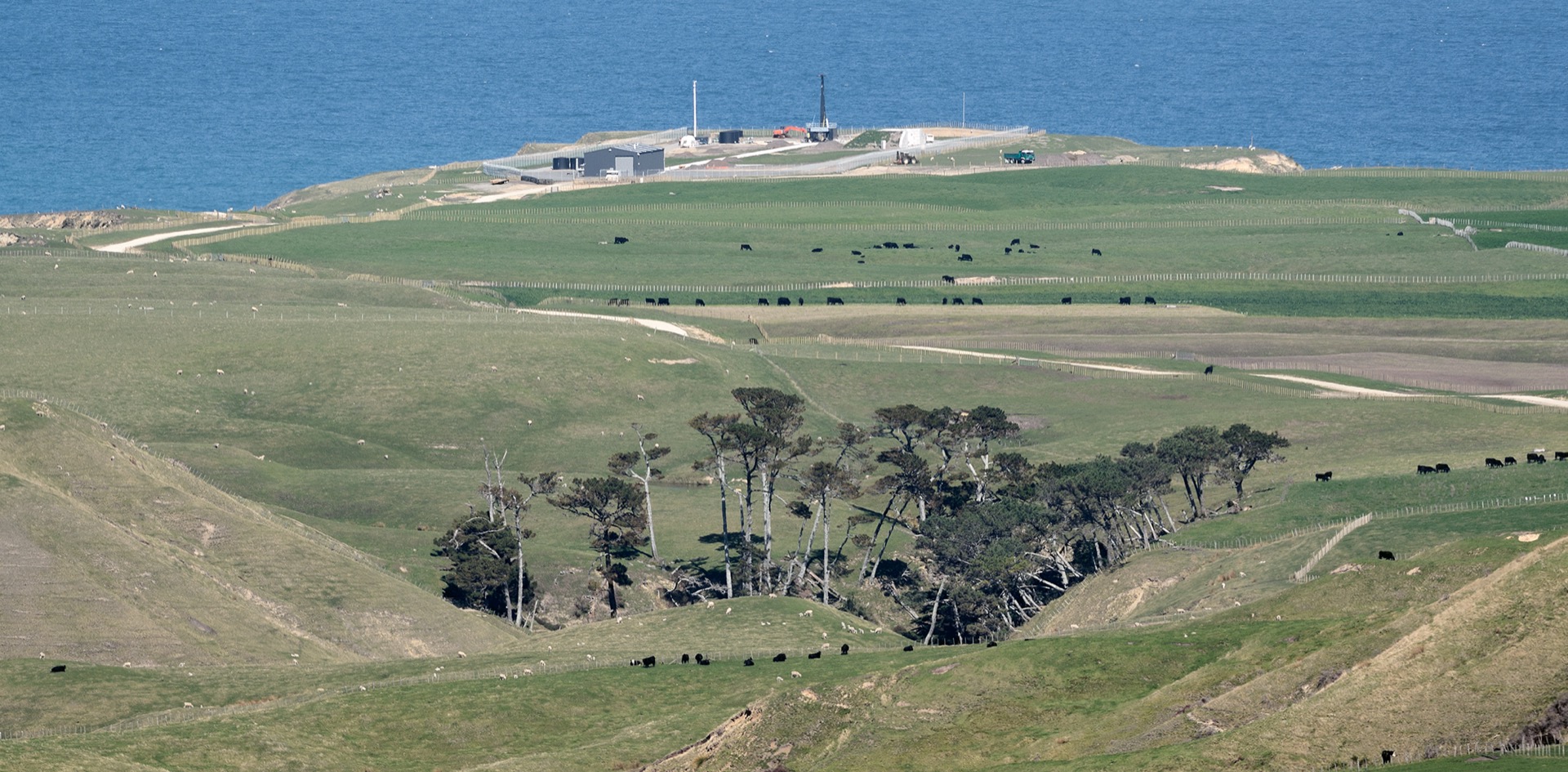
- Rocket Lab Launch Complex 1, Mahia Launch schedule varies; check Rocket Lab's public schedule
The world's first privately-owned orbital launch site, opened September 2016 at Ahuriri Point on the peninsula's southern tip — one of only a small handful of orbital launch sites on Earth. It's an active industrial facility, not a tour site, but informal public viewing points exist around the peninsula when a launch is scheduled.
 Wikimedia Commons (CC BY-SA 2.0)
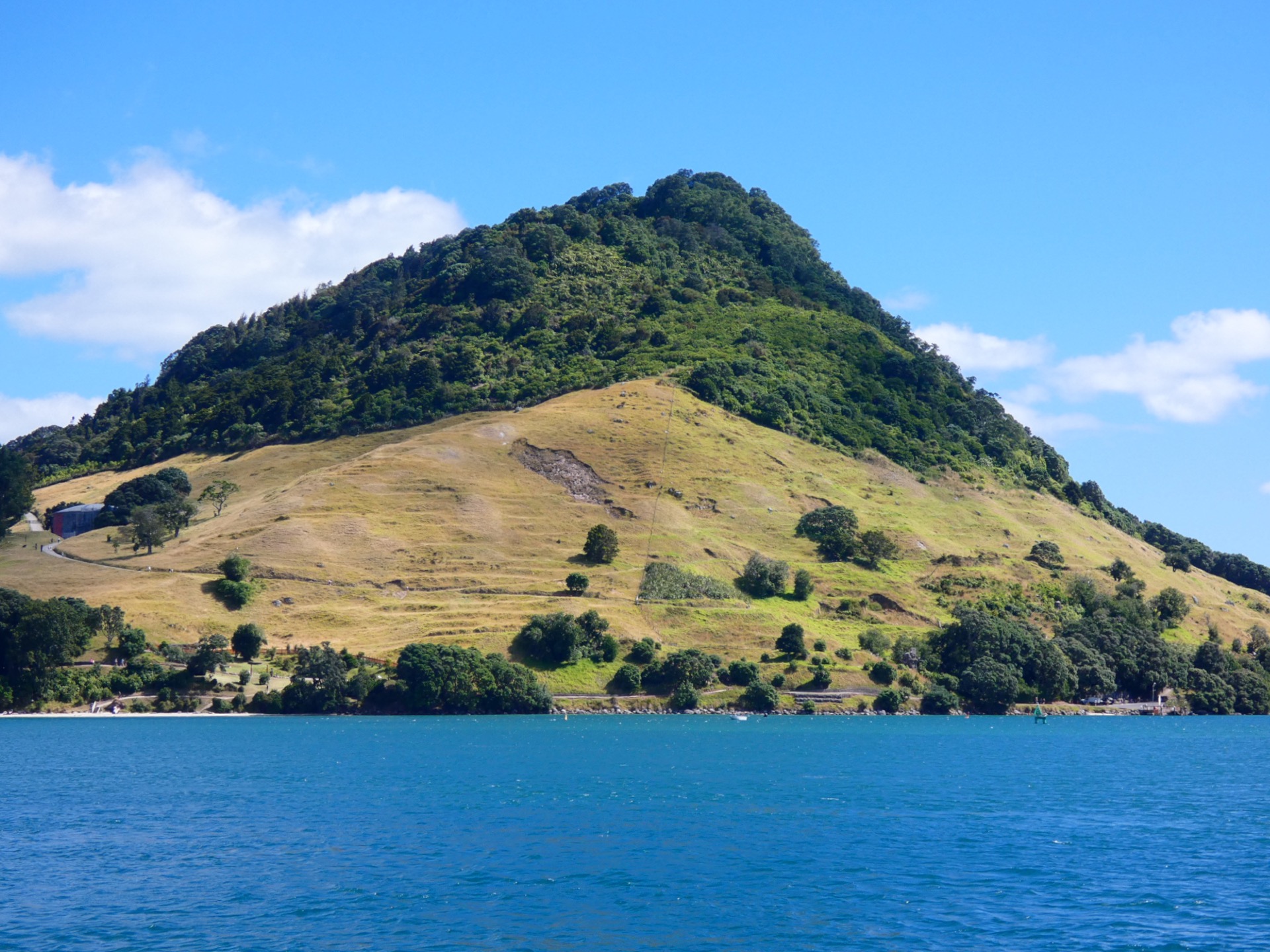
 - Mauao ("The Mount") Public summit track open year-round, Mount Maunganui
A 232m extinct volcanic cone at the entrance to Tauranga Harbour, sacred to Ngāi Te Rangi, Ngāti Ranginui, and Ngāti Pūkenga. The name means "caught in the light of day," from a legend of a spurned mountain that begged forest spirits to drag it to the sea and was frozen in place by the rising sun. Multiple pā (fortified) sites remain on the mountain.
 Wikimedia Commons (CC BY-SA 4.0)
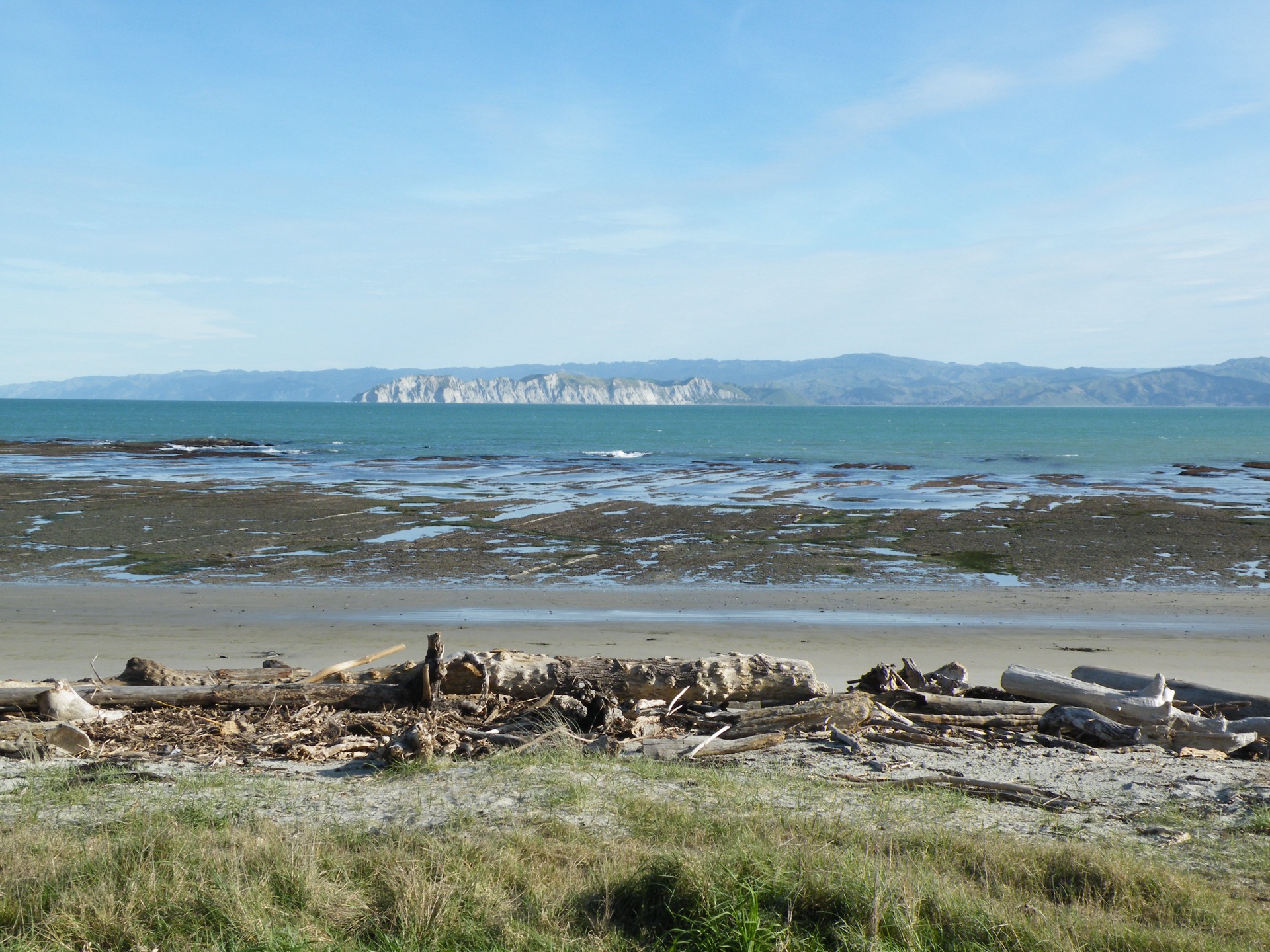
 - Tūranganui-a-Kiwa / Poverty Bay & the Cook Landing Site Historical context, Kaiti Beach, Gisborne
Captain Cook's first New Zealand landing came here in October 1769; the ship's boy Nicholas Young first sighted land, giving Young Nick's Head its name. This history includes real violence — at least eight or nine Māori were killed by Cook's crew in the encounters at this exact site, documented history, not a footnote. In 2019, following sustained opposition from local iwi Ngāti Oneone, a Cook statue was removed from Kaiti Hill (it turned out to have never actually been a likeness of Cook) and relocated to Tairāwhiti Museum with new context; the same year, the bay was officially dual-named Tūranganui-a-Kiwa / Poverty Bay, restoring the original name.
 Wikimedia Commons (CC BY-SA 3.0)
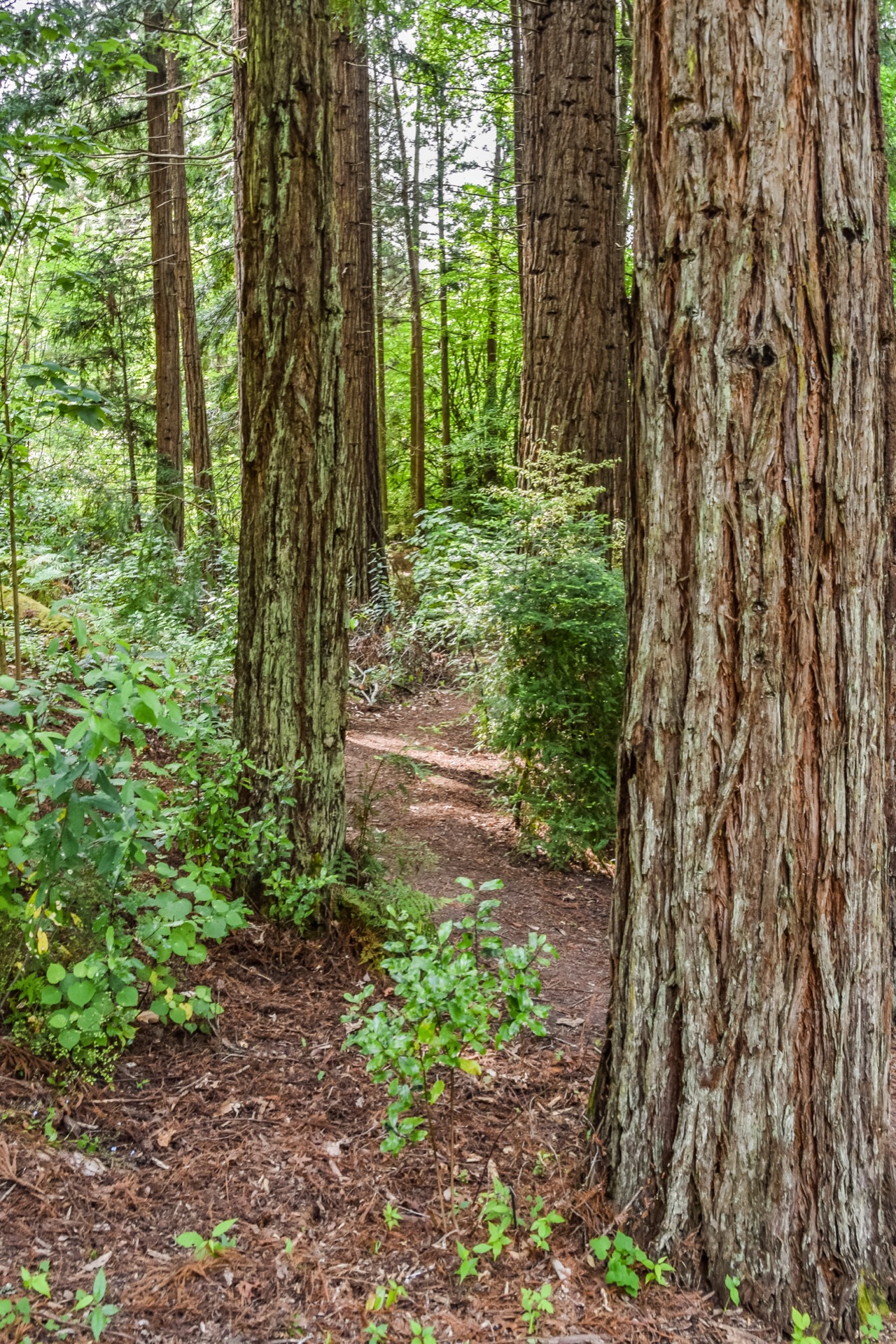
 - Eastwoodhill Arboretum Open daily, Ngatapa, ~35km northwest of Gisborne
The "National Arboretum of New Zealand" — 131 hectares founded in 1910 by William Douglas Cook, holding the largest, most comprehensive collection of Northern Hemisphere temperate-zone trees south of the equator. Won the International Dendrology Society's inaugural "Arboretum Distinguished for Merit" award in 1978. 25km of walking trails.
 Wikimedia Commons (CC BY-SA 4.0)
 - Port of Tauranga Viewable year-round, Mount Maunganui/Tauranga Harbour
New Zealand's largest and busiest port, handling roughly a third of all national cargo and around 40% of the country's exports and containers — the only NZ port able to take the largest container ships. Real infrastructure behind Mount Maunganui's beach-town reputation.
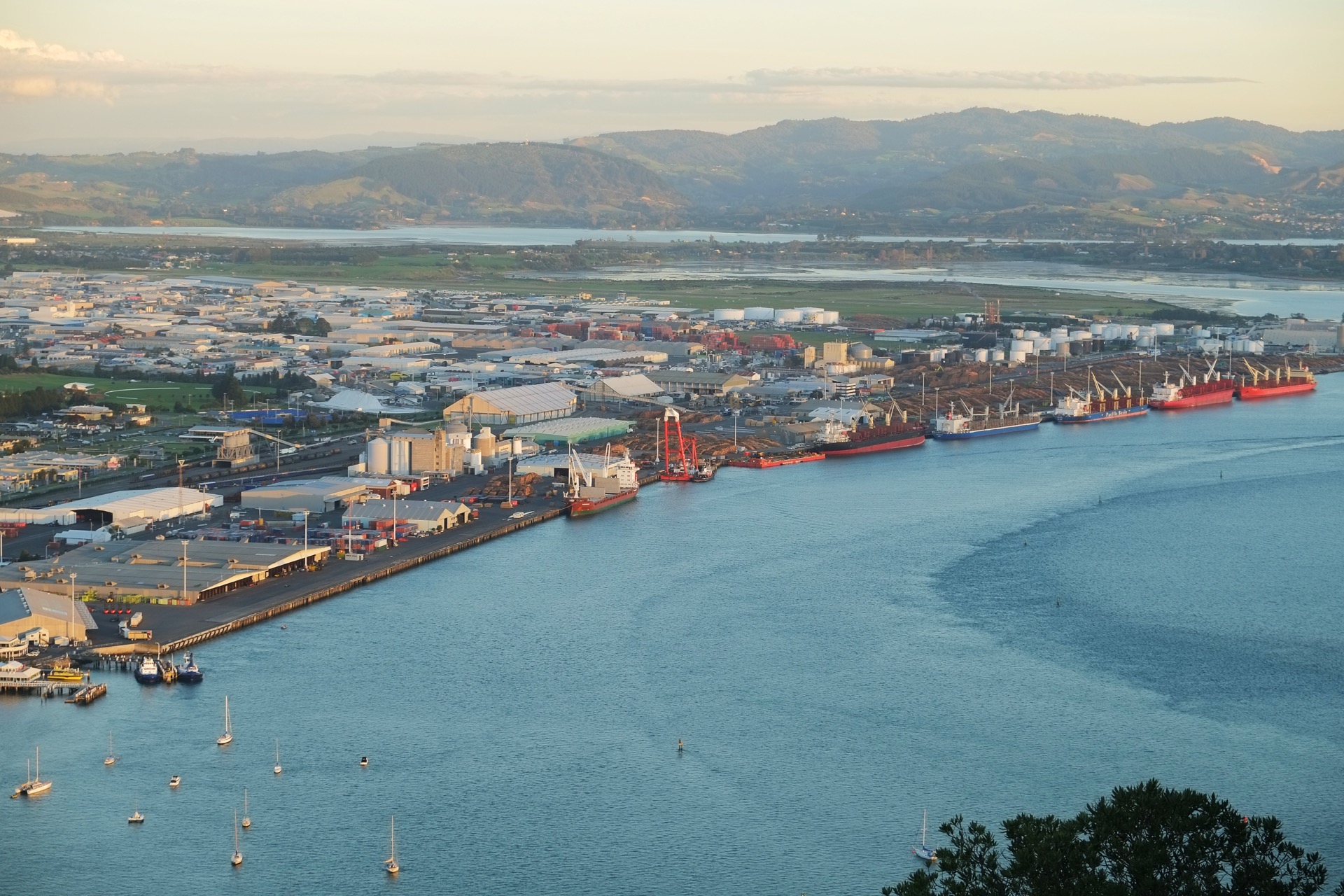 Wikimedia Commons (Public Domain)
 - Ngāti Porou & the East Coast Māori Heartland Living culture, region-wide
The East Coast carries New Zealand's highest Māori population share by region. Ngāti Porou is the country's second-largest iwi by affiliation, and Tairāwhiti Museum in Gisborne is explicitly built around Ngāti Porou taonga through a bicultural lens — a real, living culture rather than a historical footnote.
- "First City to See the Sunrise" — Stated Precisely Daily, year-round
The unqualified marketing claim overstates it — several Pacific nations see dawn earlier as countries. The honest, defensible version: Gisborne is the first city on mainland New Zealand, and one of the first cities anywhere, to see the sunrise each day.
- Gisborne's Chardonnay Country Wineries open seasonally, region-wide
Widely called the "Chardonnay Capital of New Zealand" — an industry designation, not an official one — Chardonnay covers roughly half the region's planted vineyard area, with warm, humid, alluvial-soil conditions also suited to aromatic Gewürztraminer.
Two of the eight — Ngāti Porou living culture and the Chardonnay-region designation — run without a photo here; both are ongoing regional characteristics rather than single visitable sites.
Questions people actually ask.
Is Gisborne really the first city in the world to see the sunrise?
Not quite, and it's worth stating precisely rather than repeating the marketing line unqualified — local fact-checkers have called out the unqualified claim as an overstatement, since Pacific nations further east see dawn earlier as countries. The defensible, honest version: Gisborne is the first city on mainland New Zealand, and one of the first cities anywhere, to see the sunrise each day.
How far apart are Gisborne, Mount Maunganui, and Mahia?
Genuinely far — this isn't a tight coastal drive. Gisborne to Mahia Peninsula is about 100km, roughly 1.5 hours. Gisborne to Mount Maunganui is about 271km, a real 3.5-hour drive. Mount Maunganui sits in a different region (Bay of Plenty) with its own airport, separate from Gisborne's Tairāwhiti region — treat this as either a multi-day road trip or two separate flight-in visits, not a single easy loop.
Can I visit the Rocket Lab launch site on Mahia Peninsula?
Not as a tour — Launch Complex 1 is an active industrial orbital launch facility, not a visitor attraction with an entrance. It's genuinely one of the very few privately-owned orbital rocket launch sites on Earth, and when a launch is scheduled, informal public viewing points exist around the peninsula. This is a real, singular reason to know Mahia exists, even without a formal tour program.
How does the surf season here differ from the west coast NZ zones?
Genuinely different, and worth planning around directly — this coast faces east into the open Pacific, the opposite orientation from Raglan and Northland's west-facing breaks. If the west coast is flat, the east coast may not be, and vice versa. Water also runs warmer here: Gisborne's sea temperature averages around 68°F (20.1°C) in February and 57°F (13.8°C) in August, lighter wetsuit needs than the Tasman-facing zones.
Disclosure & how this page works.
Straight talk: Some links on this page are affiliate links — if you book through them, Secrets of Surf Travel earns a small commission at no extra cost to you. We only link places and people we'd use ourselves, and coverage is never for sale. Those commissions are what keep this site running and fund the next trip.
Today, the "Search Vrbo rentals," "Search Booking.com stays," and "Search Agoda stays" links on this page are affiliate links — every vendor listing link is still a plain courtesy link. As partnerships with these local businesses come online, more links (and discount codes, where Secrets of Surf Travel benefits from their use) may earn us a commission, and this page will keep saying so plainly. Coverage is never for sale: nobody on this page paid to be here, and nobody can.
Every listing was researched in 2026 and is being verified in person. Prices, hours, and policies change — treat them as strong starting points and confirm directly with the business. And per the No-Reveal Code: you will find no surf spots on this page, ever.