
Germany
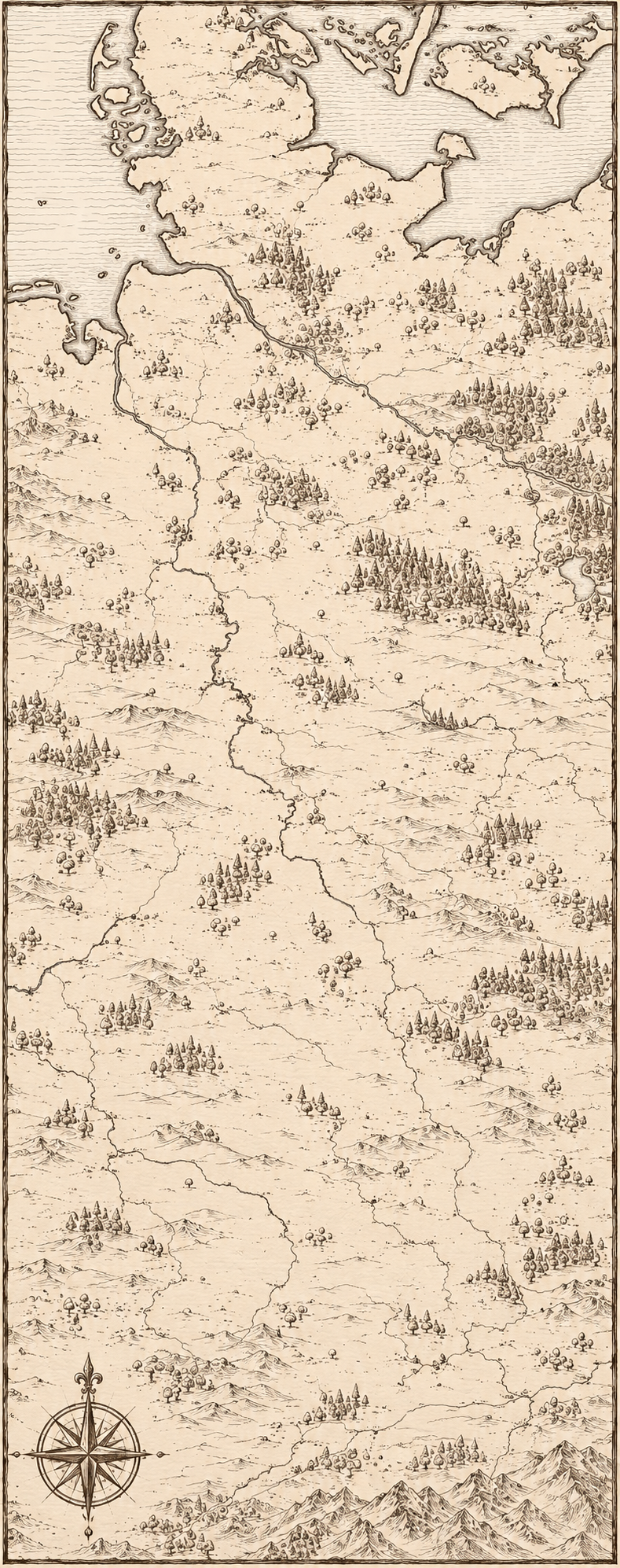
Germany's real surf identity genuinely splits in two, and this page says so plainly rather than picking a side. In Munich, a decades-old engineered river wave runs through the middle of the city — surfed illegally for years before it was legalized in 2010, now backed by a real surf shop, a purpose-built wave pool, and a dense city's worth of infrastructure. On the North Sea coast, Sylt and St. Peter-Ording offer real, cold, beginner-friendly ocean surf inside a bigger wind- and kitesurf culture. Two different trips, one country.

Straight talk: Some links on this page are affiliate links — if you book through them, Secrets of Surf Travel earns a small commission at no extra cost to you. We only link places and people we'd use ourselves, and coverage is never for sale. Those commissions are what keep this site running and fund the next trip.
Some vacation-rental search links on this page (marked "Search Vrbo rentals," "Search Booking.com stays," or "Search Agoda stays") are affiliate links. Every vendor link below is still a plain courtesy link. As more partnerships come online, more links may earn us a commission; the promise above holds either way.
Getting There
Munich Airport (MUC) is genuinely one of the best-connected airports on this whole site — Lufthansa runs year-round nonstop service from Boston, Charlotte, Chicago, Denver, Los Angeles, New York JFK, San Diego, San Francisco, Seattle, and Washington Dulles, plus seasonal Miami; United flies nonstop from Chicago, Denver, Houston, San Francisco, and Washington Dulles; Discover Airlines adds a nonstop from Orlando. Munich sits right at the hub — no domestic connection needed.
For Sylt/St. Peter-Ording, plan on a connection. Hamburg (HAM) is the realistic regional gateway but has no nonstop US service — the realistic path is one stop via Munich, Frankfurt, Zurich, Amsterdam, or Paris into Hamburg, then onward. Sylt's own small airport (Westerland, GWT) runs limited Lufthansa service to Frankfurt and summer-seasonal flights to Hamburg — never a direct-from-US option. From Hamburg or Frankfurt, reaching Sylt itself means either a short regional flight or driving to Niebüll for the car-train (see Ground Transport). St. Peter-Ording, on the mainland Eiderstedt Peninsula, is reachable by normal road/rail without that extra step.
Documents: Germany is a full EU and Schengen member — the standard 90-day-in-180 visa-free stay for US citizens. The EU's ETIAS pre-travel authorization has already slipped past its original 2026 target — check current status before booking. The EU's biometric Entry/Exit System (EES), replacing manual passport stamps at first entry, is also rolling out — worth knowing about before you land.
Ground Transport
- Munich: no car needed. MVV public transit (U-Bahn, S-Bahn, tram, bus) plus a strong bike network covers the wave, the shops, food, and stays. A car only becomes useful for a multi-day Alpine side trip where train service thins out.
- Sylt has no road bridge. Vehicles reach the island only via the Sylt Shuttle (Autozug) — a car train from Niebüll on the mainland, about 35-39km across the Wadden Sea on rail flatcars, roughly 35 minutes. Once on the island, bikes and the local bus network cover most needs; rental cars are available at the airport and in Westerland.
- St. Peter-Ording sits on the mainland (the Eiderstedt Peninsula) and is reachable by ordinary road and rail — a genuinely simpler logistics picture than Sylt.
- Germany drives on the right, standard EU road rules.
When to Go & What to Pack
These two hubs have genuinely different "water temperature" pictures — worth reading the right one.
- Munich/Eisbach: fed by alpine snowmelt via the Isar River, so it runs cold year-round regardless of air temperature or season — roughly 17°C (62°F) in summer, down to 1-6°C (34-43°F) in winter. Wetsuit guidance: 3/2mm in summer, 4/3mm in spring/fall, 5/4mm with boots, gloves, and a hood in winter — winter thickness isn't optional given near-freezing water.
- Sylt/St. Peter-Ording (North Sea): a more typical seasonal ocean pattern — winter average around 4.4°C, spring around 7.9°C, summer peak around 17.4-18°C in early August, autumn around 13°C, coldest near 0-6°C in mid-February. Cold-water gear is essentially a year-round requirement: 4/3mm to 6/5mm in colder months, with boots, gloves, and a hood recommended whenever water drops below about 15°C (60°F) — which is most of the year outside peak summer.
Good to Know
- Currency is the Euro (EUR) — Germany is the first zone on this site that's both a full EU member and uses the euro outright, no conversion friction. Contrast: Iceland uses its own Króna, Denmark is an EU member that opted out of the euro, and Norway isn't in the EU at all.
- Emergency number: 112, EU-wide.
Respecting the Locals
Munich's urban river-surf scene carries its own local culture worth knowing before you show up: a community that rode it illegally for decades before the city legalized it in 2010, and that still treats the wave as their own backyard, not a tourist photo-op — the same homegrown shop and instructors who built the scene are the same people you'll be sharing it with. On the North Sea coast, Sylt and St. Peter-Ording run on a different rhythm entirely, a wind- and kitesurf culture with its own local operators and Frisian coastal identity. Both hubs reward a visitor who shows up ready to learn the local rules first, not just ride the wave.
- Locals get first priority, always. Watch a session before you paddle out. Learn who's who before you learn the wave. Sit inside and catch what they let through — the leftovers are yours, not the set waves.
- Don't backpaddle. Ever. Being in position doesn't make the next wave yours, especially if you didn't wait your turn. If a local wants a wave, let them have it…even if it IS your turn. That older guy who may not be the best surfer out there has probably been surfing that wave before you even sat on a board. If you don't know someone, assume they're local.
- Don't snake. This shouldn't even need to be said, but…dropping in on someone, local or not, is the ultimate disrespect and the fastest way to be sent out of the water. Don't be that guy!
- Say hi. A “howzit,” “whatsup,” or “nice wave,” eye contact, or a nod in the channel — it costs nothing and it's the fastest way from stranger to welcome.
- This is somebody's home, not a resort amenity. The break you're surfing is where a local kid learned to swim, where someone's uncle has surfed for forty years. Act like a guest, because you are one.
- Spend where it actually helps. The food truck, the local shaper, the family-run rental, the local photographer — that's where a surf trip's money should land, not just the chain hotel gift shop. See The No-Reveal Code for why that's the whole premise of this site.
- Leave it better than you found it. Pick up trash that isn't yours. Don't touch reef, wildlife, or cultural sites.
Locals have watched hundreds, if not thousands, of people come and go — some for days, some for months or years — and almost all of them eventually go home. The locals are still there. It takes many, many years to actually become one. Keep that in mind the next time you feel entitled to the same waves they get.
None of this is a secret handshake. It's just how you'd want a guest to act in your own backyard.
Munich — Eisbach
Munich's real surf scene centers on the Eisbach, a man-made channel of the Isar River running through the Englischer Garten in the heart of the city. Surfers found the standing wave here in the early 1970s and rode it quietly, illegally, for decades before the city legalized surfing there in 2010. It's the more built-out of Germany's two real surf identities — a dedicated surf shop, a purpose-built wave pool nearby, and a city's worth of food, stays, and wellness within walking distance of the water.
Surf Schools & Board Rental
- SantoLocoEisenmannstraße 4, Munich700+ ratings, 4.71★Munich's anchor surf shop, founded 2007 by Brazilian brothers Ricardo and Ronaldo Friesen — shop, café, and in-house repair workshop in one, 700+ ratings averaging 4.71★. santoloco.com · Instagram · Map
- o2 SURFTOWN MUCHallbergmoos, ~30 min from downtown, adjacent to Munich AirportEurope's largest wave poolEurope's largest wave pool, opened summer 2024 — a genuine 180m Endless Surf pool with six difficulty levels from First Timer to Expert. surftown.de · Instagram · Map
- Munich Surf ExperienceEisbach areaBooked via tour aggregatorGuided instruction/tours, equipment included, available in English/German/Spanish — the easiest first booking for a visiting surfer. via GetYourGuide · Map
The main Eisbach wave (E1) is explicitly not a place to learn — strong current over a shallow, hard riverbed, with posted warning signage. First-timers should start at Floßlände (see Local Secrets) or book a guided instruction through Munich Surf Experience or o2 SURFTOWN. o2 SURFTOWN's cancellation policy runs strict — a missed session without enough notice can mean forfeiting payment; confirm the terms before booking.
Stays
- Wombat's City Hostel MunichWerksviertelBudgetWell-reviewed hostel, easy transit access to the Englischer Garten. wombats-hostels.com · Instagram · Map
- Eden Hotel WolffNear Hauptbahnhof, ~0.6mi from the Altstadt-Lehel side of the parkMid-range4-star, family-run, 9.2 guest rating. eden-hotel-wolff.de · Instagram · Map
- Gästehaus Englischer GartenDirectly adjacent to the parkLuxury9.8/10 rating and the best-positioned stay relative to the wave itself. hotelenglischergarten.de · Instagram · Map
Where to Eat
- MilchhäuslEnglischer Garten, on-siteBudgetOrganic kiosk and small beer garden, a local favorite inside the park. milchhaeusl.info · Map
- Seehaus im Englischen GartenEnglischer Garten, on-siteMid-rangeSit-down Bavarian restaurant on the park's lake. kuffler.de · Instagram · Map
- Hirschau im Englischen GartenEnglischer Garten, on-siteMid-rangeHoused in an 1840 building, renovated 2013 — Munich food tradition with modern cooking. die-hirschau.de · Instagram · Map
- OsterwaldgartenSchwabing, short walk from the waveBudget/midTraditional Schwabing beer garden — see the beer garden law in Local Secrets. schwabinger-osterwaldgarten.de · Instagram · Map
Wheels
- Radius BikesHauptbahnhofNow operates as Radius Tours4.9★ across 131 reviews, well-located. The old radius-munich.com bike-rental domain has lapsed — same operator now runs bike tours/rental under Radius Tours. radiustours.com · Instagram · Map
- Munich Bike RentalViktualienmarktConfirm on the groundCentral, straightforward daily rental. munichbikerental.com · Map
A car isn't needed for this hub — see Ground Transport above. Only worth renting one for a multi-day Alpine side trip.
Surfboard & Wetsuit Repair
- SantoLocoEisenmannstraße 4, MunichSame vendor as Surf Schools aboveIn-house repair workshop attached to the shop — the real anchor for this category, same vendor as Surf Schools above. santoloco.com · Instagram · Map
Massage & Wellness
- 5Elements Luxury Spa and MassageSchwabingConfirm on the groundLegitimate day spa near the hub. 5elements-spa.de · Map
- Shiatsu & Ayurveda MassageLehel, near IsartorSolo practitioner — Céline ColnotSmall specialist practice, quiet central location. shiatsu-celinecolnot.com · Facebook · Map
Other Adventures
- Isar-FloßfahrtWolfratshausen to Munich-ThalkirchenMid-range5-7 hour traditional log rafting, May-mid-September — see Local Secrets. isarflossfahrt.de · Facebook · Map
- Dachau Memorial Site21 min by S-Bahn from MunichFree admissionA serious, important day trip most visitors take — see Local Secrets. kz-gedenkstaette-dachau.de · Map
- BMW Welt & MuseumMunichMid-rangeSee Local Secrets. bmw-welt.com · Map
- Nymphenburg PalaceMunichMid-rangeSee Local Secrets. schloss-nymphenburg.de · Map
Munich — Local Secrets
Eight non-surf reasons this hub rewards the curious — an illegal river wave that became a legal city landmark, a 500-year rafting tradition, and a law that lets you bring your own picnic into a beer garden.
- The Eisbach's Origin Story The wave itself is open seasonally — see the safety callout above
Discovered by a small group of surfers in the early 1970s who found this man-made river channel could hold a standing wave, the Eisbach was ridden illegally and quietly for decades before Munich officially legalized surfing there in 2010. Named pioneers include Dieter "The Eater" Deventer, Wolfrik Fischer, Walter Strasser, Quirin Rohleder, Daniel Osswald, and Tao Schirrmacher. The wave itself is entirely engineered — ropes attached to the underside of the bridge shape the current into two U-shaped patterns, refining the break and increasing wave height over time.
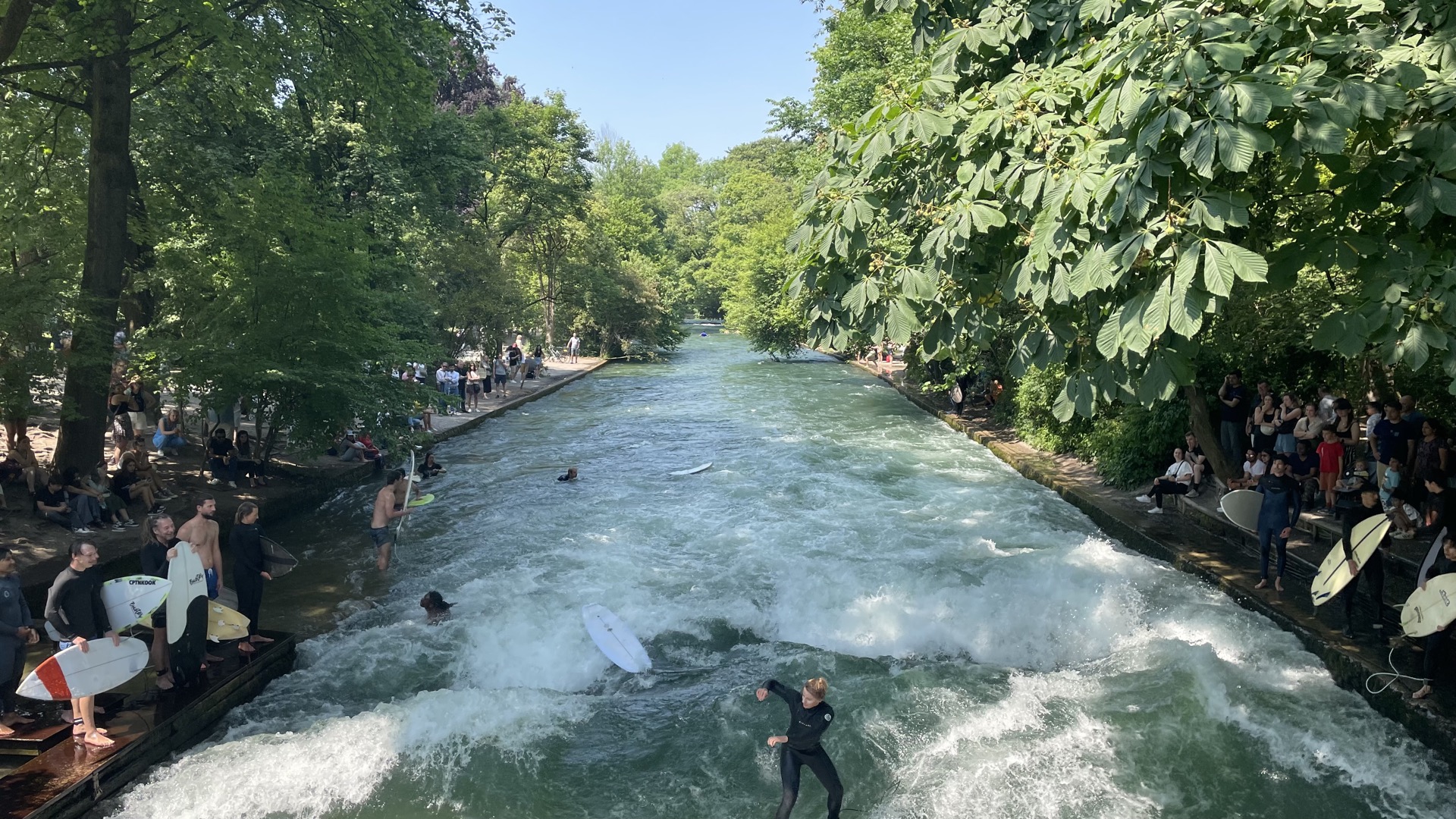 Wikimedia Commons (CC BY-SA 4.0)
 - Floßlände — Munich's Original River Wave Year-round; the real beginner spot
Tucked into Thalkirchen near the Munich Zoo, Floßlände is the city's oldest river wave and its designated beginner spot — 6 meters wide, half a meter high, genuinely learnable in a way E1 is not. Most tourists watching the famous wave in the Englischer Garten never learn this one exists just a few U-Bahn stops away.
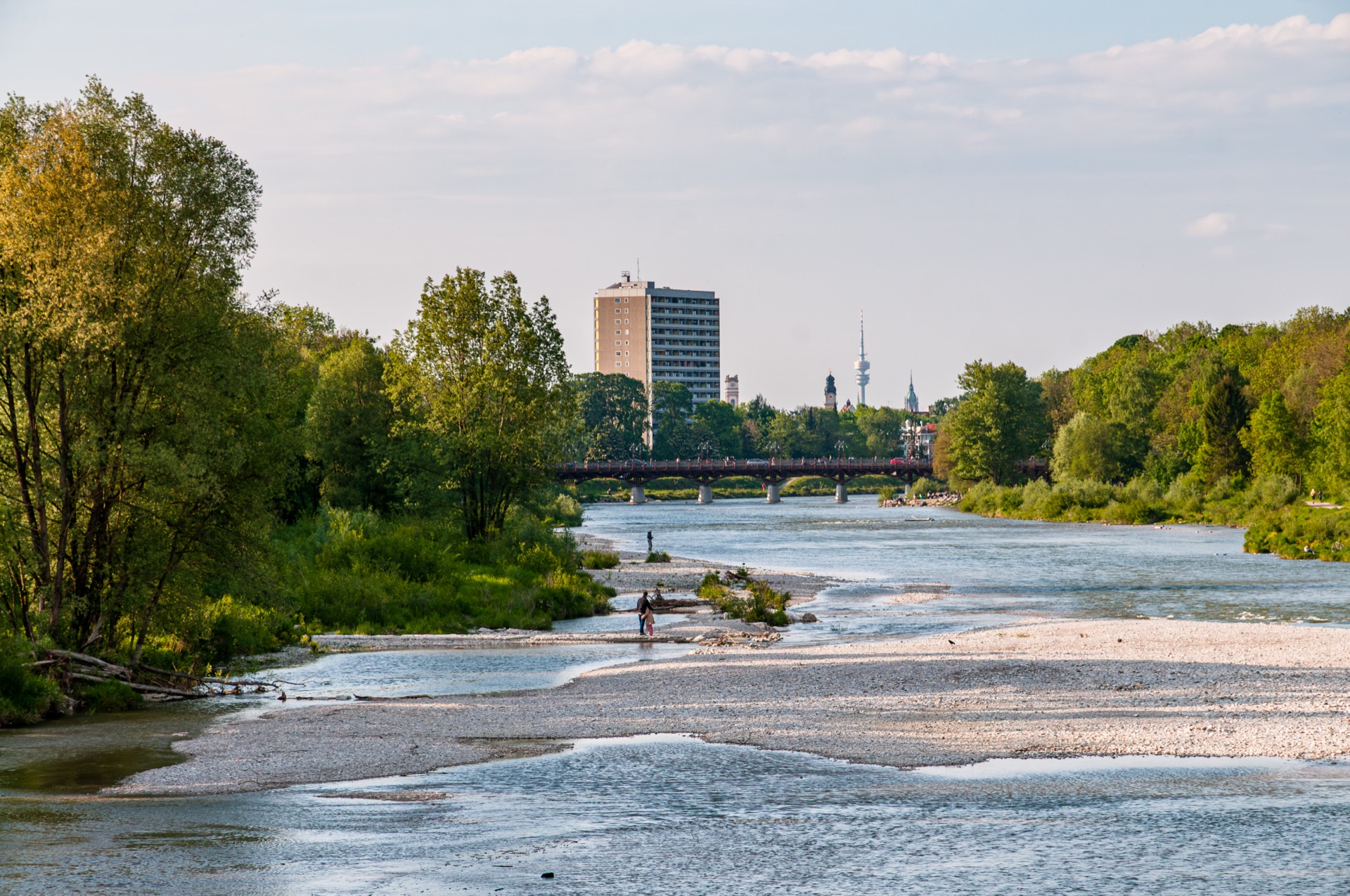 Wikimedia Commons (CC BY-SA 4.0)
 - Isar-Floßfahrt — Bavaria's UNESCO-Listed Rafting Tradition Runs May through mid-September
Traditional log rafting from Wolfratshausen to Munich-Thalkirchen, 5-7 hours with live music and Bavarian food served on board. The tradition dates to at least the 15th century — timber for the Frauenkirche was rafted this same way — and is recognized on Germany's UNESCO Intangible Cultural Heritage register.
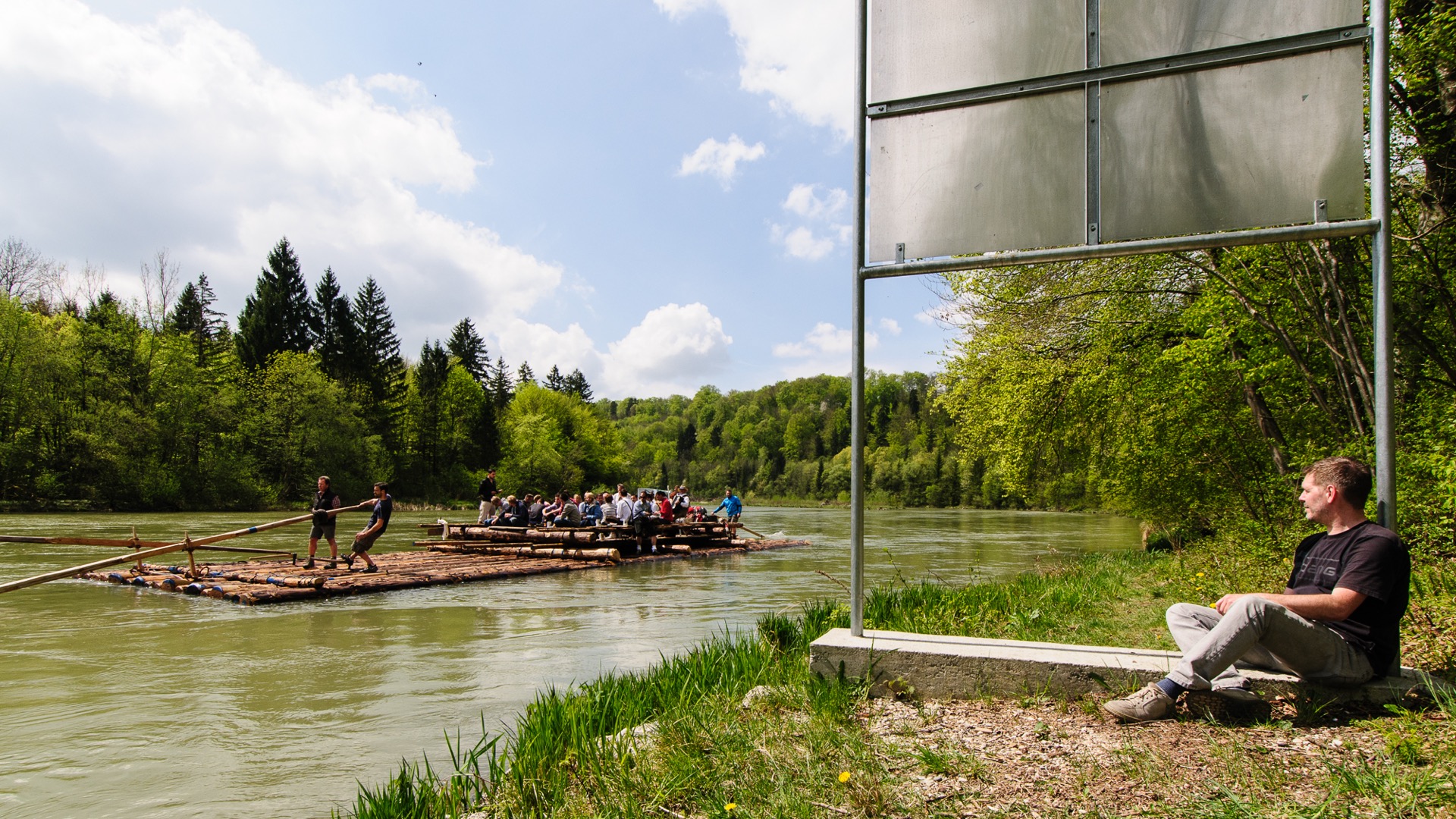 Wikimedia Commons (CC BY-SA 2.0)
 - The Englischer Garten Itself Year-round, dawn to dusk
Created in 1789, the Englischer Garten is one of the world's largest urban parks — bigger than Central Park — and it's the actual physical setting for the Eisbach, containing the wave, a lake, and the Chinese Tower beer garden all in one continuous green space in the middle of the city.
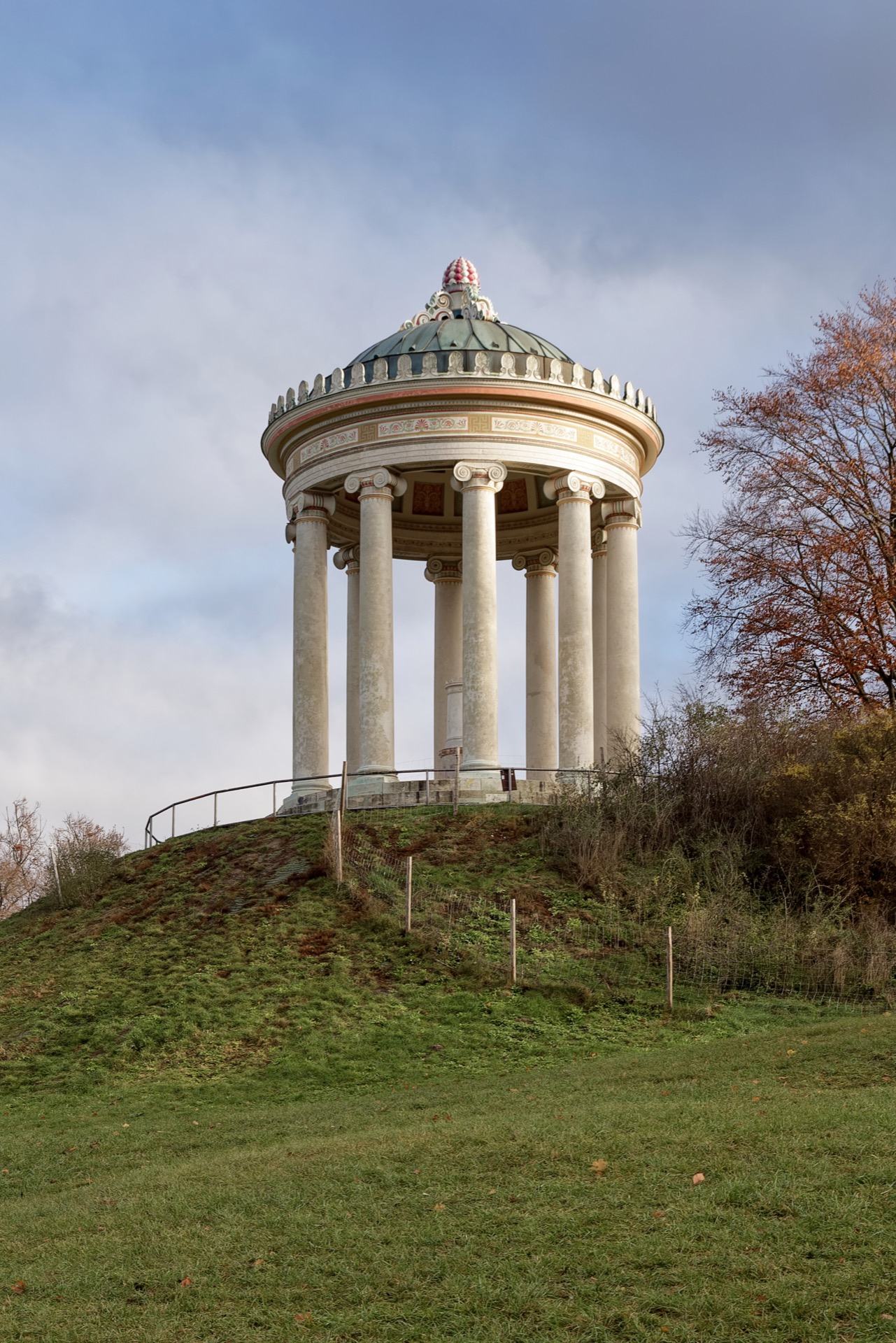 Wikimedia Commons (CC BY 4.0)
 - Munich's Beer Garden Law Applies at any traditional Bavarian beer garden, year-round
A genuinely distinctive local custom: Bavaria's beer gardens legally allow patrons to bring their own food, as long as they buy their drinks on-site — ties directly into Osterwaldgarten and the other beer gardens listed under Where to Eat above.
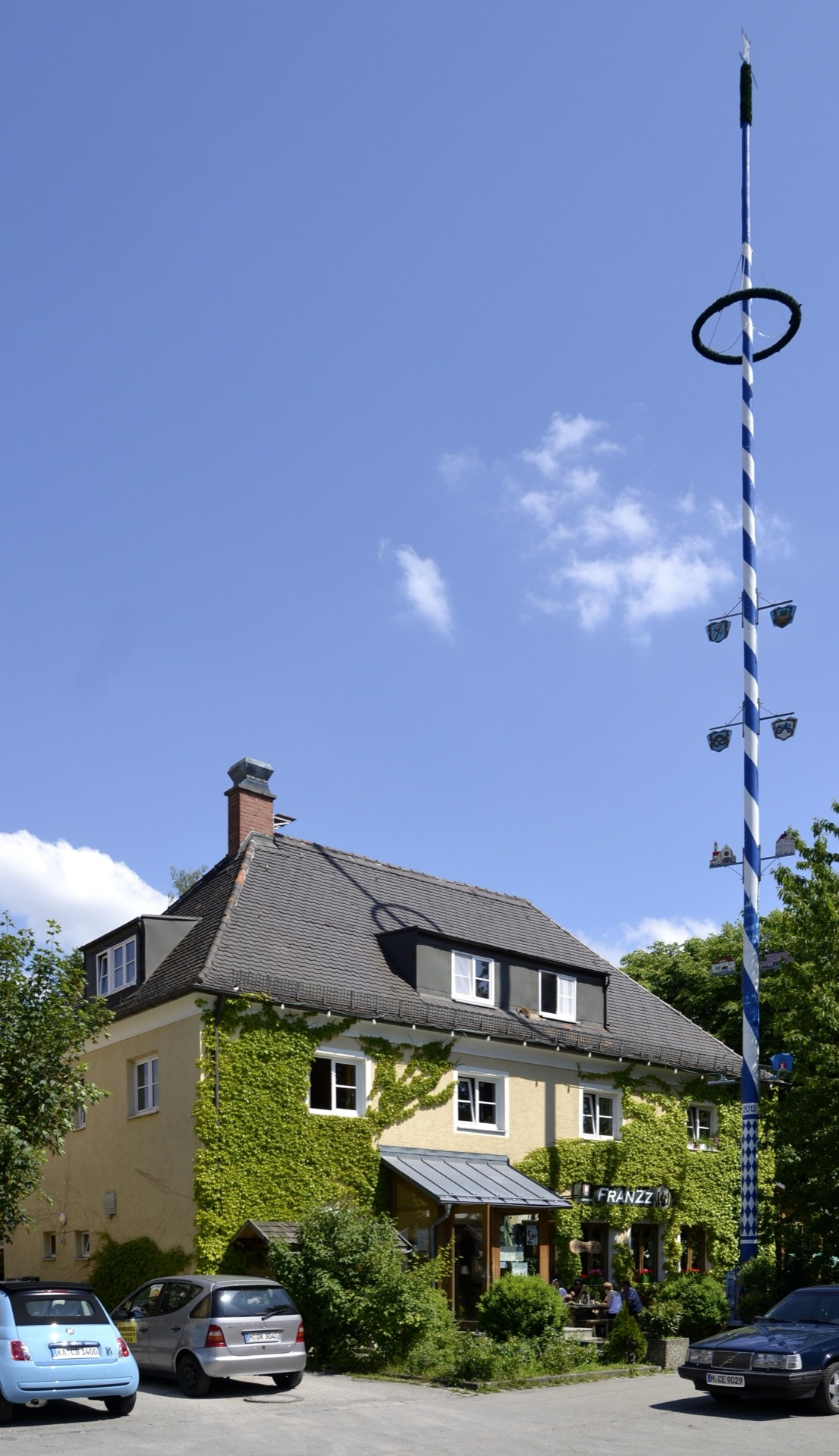 Wikimedia Commons (CC BY 3.0 DE)
 - BMW Welt & Museum Open year-round
Munich's automotive and industrial identity, a real contrast to the laid-back river-surf scene a few kilometers away — BMW Welt's striking architecture and the adjacent museum are both genuine, mainstream Munich landmarks.
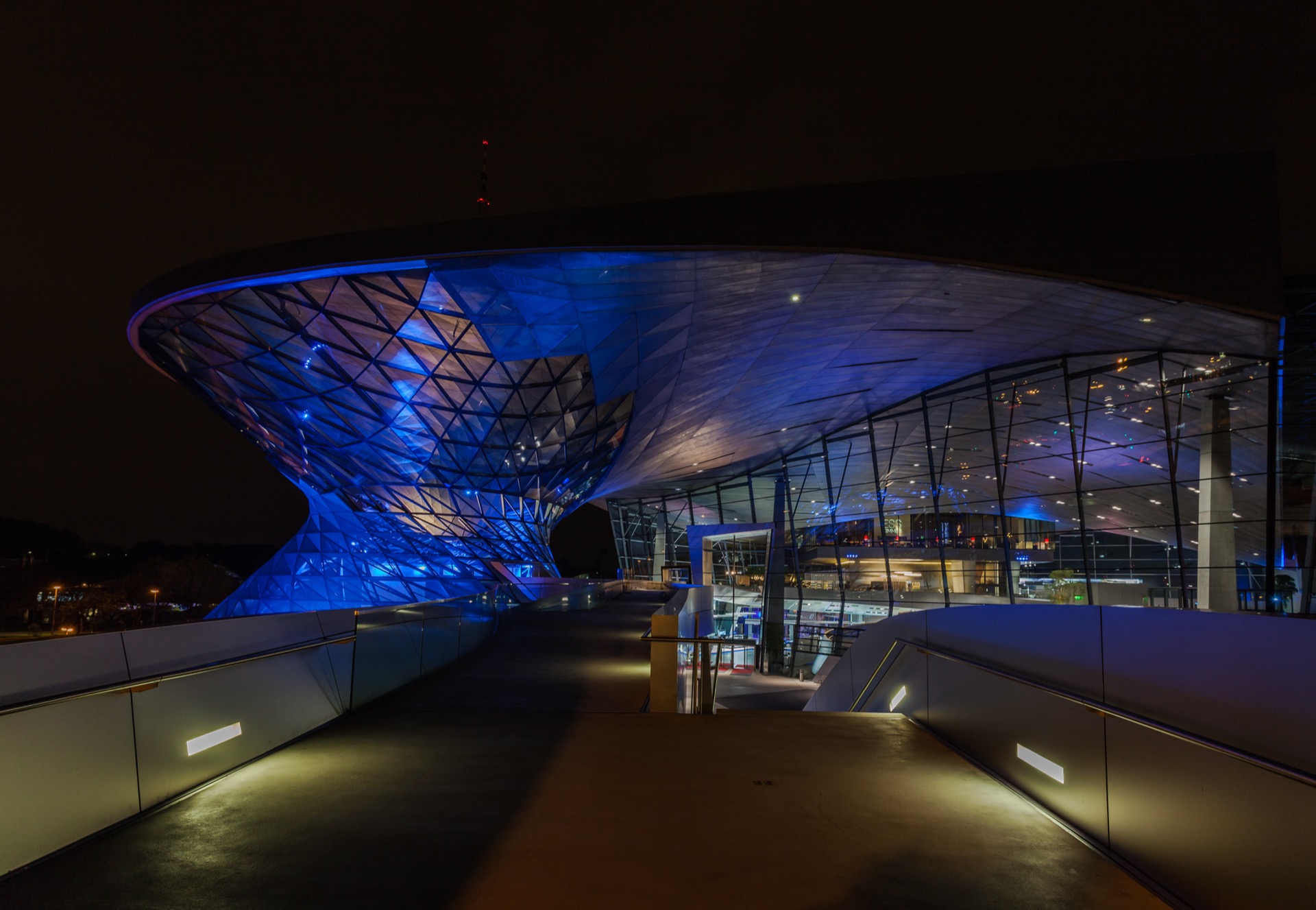 Wikimedia Commons (CC BY-SA 3.0)
 - Dachau Memorial Site Open year-round; English tours daily
About 21 minutes by S-Bahn from central Munich. Opened March 22, 1933 as the first Nazi concentration camp and later used as a model and training site for the camp system that followed; it has operated as a memorial and education site since 1965, with free admission. A serious, important stop most visitors to Munich make — not a casual add-on, but a real and common part of the trip.
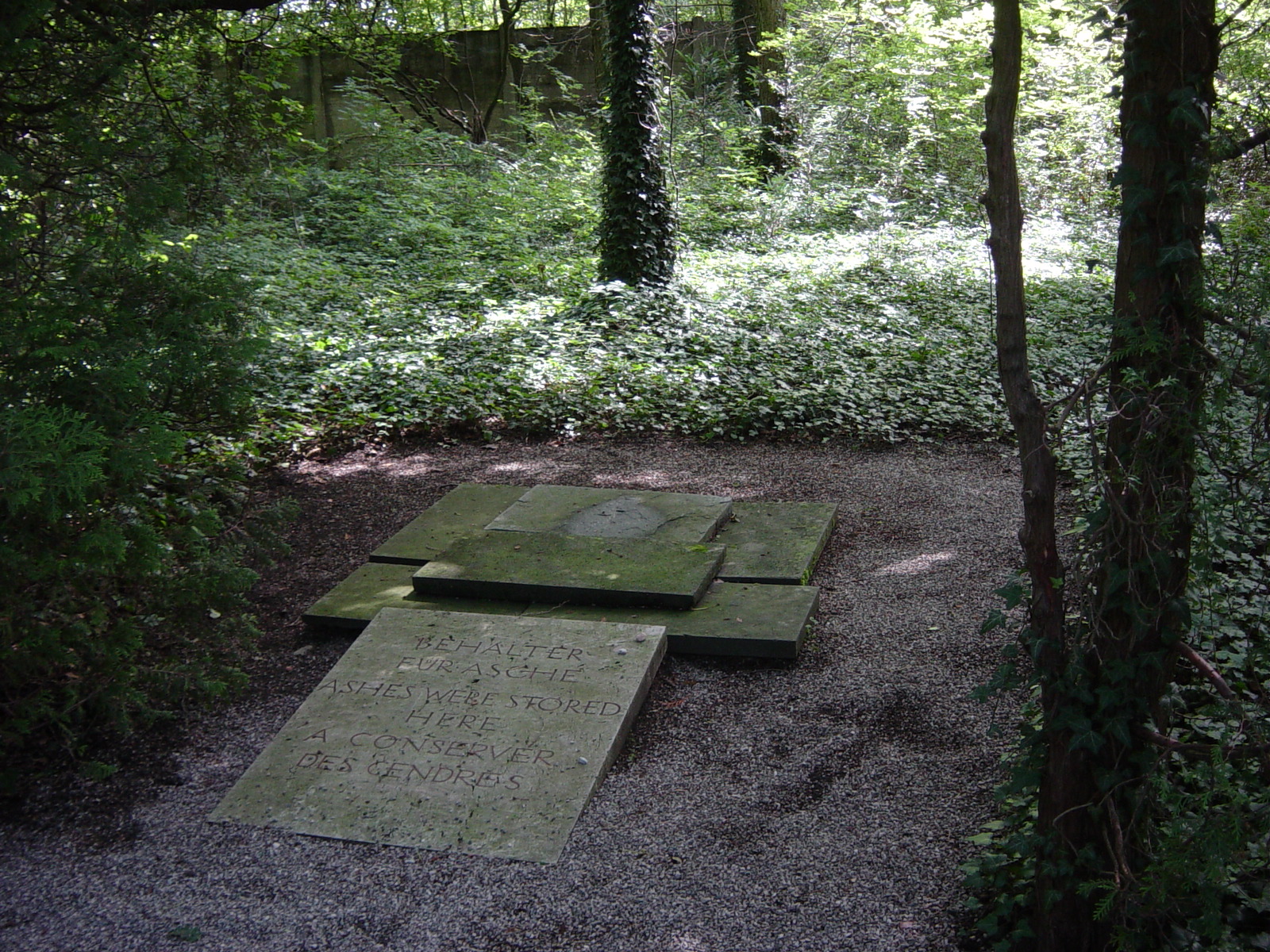 Wikimedia Commons (Public Domain)
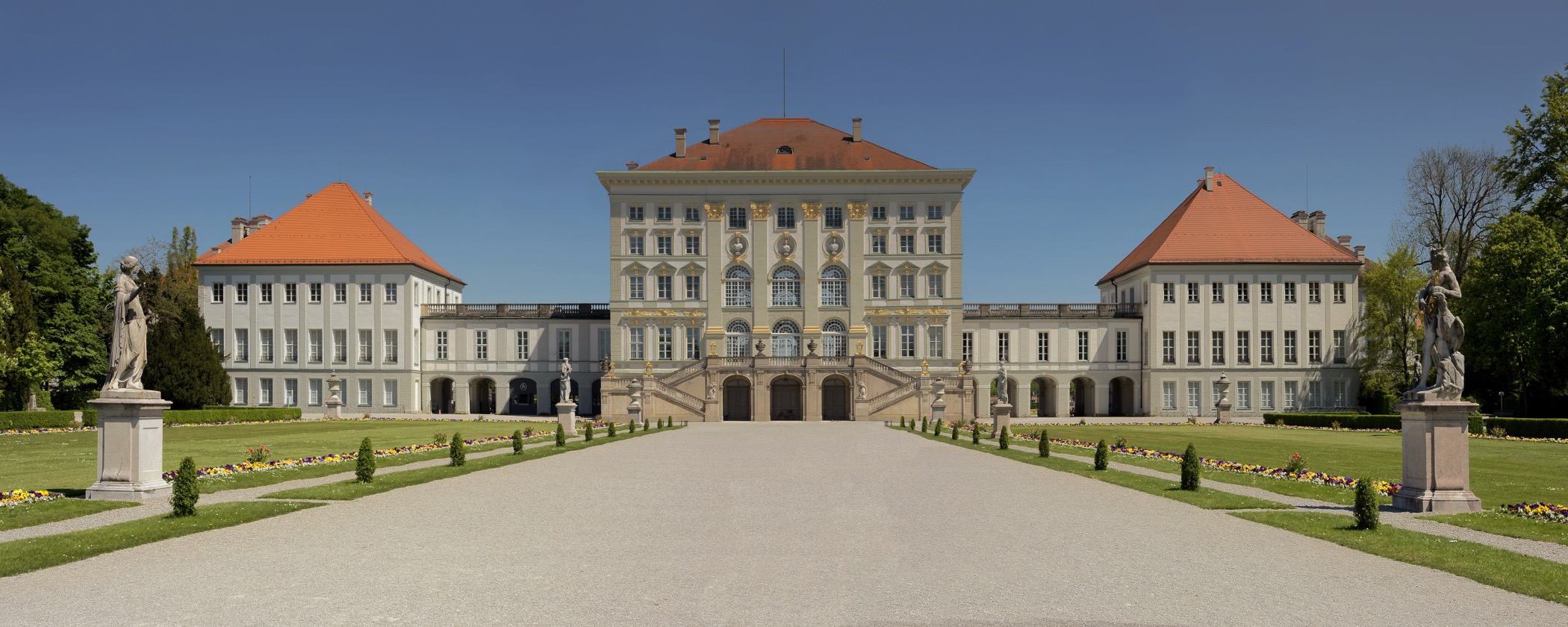
 - Nymphenburg Palace Open year-round; grounds free, palace interior ticketed
The former summer residence of Bavaria's rulers, a short tram ride from central Munich, with formal gardens and a palace complex that's one of the city's genuine architectural landmarks.
 Wikimedia Commons (CC BY-SA 2.5)
Sylt & St. Peter-Ording
Germany's other surf identity: a cold North Sea coast, seasonal and wind-driven, real but secondary to the bigger windsurf and kitesurf culture based here. Sylt is an island with no road bridge; St. Peter-Ording sits on the mainland Eiderstedt Peninsula, a genuinely simpler place to reach. Ocean conditions here run beginner-friendly beach-break rather than a performance wave — a real, worthwhile cold-water coast, just a different kind of trip than Munich.
Surf Schools & Board Rental
- Südkap SurfingWenningstedt Risgap & Hörnum East beaches, SyltASI-accredited, founded 2012ASI-accredited, founded 2012, small groups of 5-6 students — strong, specific reviews on equipment and teaching quality. suedkap-surfing.de · Facebook · Map
- Duotone Pro Center SyltWesterland, SyltFormerly Surfschule WesterlandFull-service kite/wind/wing/SUP/surf rental center. dpcsylt.com · Instagram · Map
- X-H2O WassersportcenterStrandpromenade 3, St. Peter-OrdingConfirm on the groundBeachfront taster courses and rental across surf, kite, sail, and SUP. x-h2o.eu · Map
All three are genuinely multi-discipline watersports centers rather than surf-exclusive schools — this coast's identity leans kite/windsurf-first, with stand-up surfing as a real but secondary offering. Ocean conditions at St. Peter-Ording specifically run beginner-only, generally soft beach-break.
Stays
- Sylt MotelSyltBudgetNo-frills, roughly €79/night. sylt-motel.de · Map
- Hotel RungholtKampen, SyltMid-rangeIndoor pool, three saunas, gym. hotel-rungholt.de · Map
Where to Eat
- FriesenstubeSt. Peter-OrdingMid-rangeLong-standing, seasonal local-ingredient menu — house-pickled salmon, herring, crab, braised salt-marsh lamb. Appears permanently closed as of this research pass — confirm before sending anyone. Map
- DeichkindInside StrandGut Resort, St. Peter-OrdingMid-rangeRegional meat and plant-based dishes. strandgut-resort.de · Instagram · Map
- Auntie ClaraSt. Peter-OrdingBudget/midInternational variety alongside the Frisian-focused options nearby. urban-nature.de · Instagram · Map
St. Peter-Ording's stilt-house Pfahlbau restaurants are a genuine architectural signature of this coast — see Local Secrets.
Wheels
- Sylt-Travel AutovermietungTrift 7, WesterlandLocal independent operatorLocal independent operator. sylt-travel.de · Map
Remember: a car only reaches the island via the Sylt Shuttle car train from Niebüll — see Ground Transport and Local Secrets.
Surfboard & Wetsuit Repair
No standalone repair-only vendor found — Südkap, Duotone Pro Center, and X-H2O all maintain their own rental fleets in-house. Treat repair as a school-bundled service on this coast rather than its own stop.
Massage & Wellness
- Söl'ring HofRantum, Sylt5-star hotel spaExclusive spa — sauna, steam, relaxation rooms, 30-minute massages. soelring-hof.de · Instagram · Map
- Day Spa KeitumKeitum, SyltConfirm on the groundDedicated massage offerings. syltnesscenter.de · Map
Other Adventures
- Seal-watching boat toursDeparting Hörnum and List, SyltMid-rangeOne of the largest harbor and grey seal populations on the North Sea coast. Real operator: Adler-Schiffe, running the Gret Palucca from List and the MS Adler VI from Hörnum. adler-schiffe.de · Instagram · Map
- Wadden Sea mudflat hikes (Wattwanderungen)National park east of KampenBudgetGuided walks across the exposed seabed — see Local Secrets. Real operator: Watt & Meer Sylt (Mansen & Krüger), a certified national-park partner. sylt-wattwanderungen.de · Instagram · Map
- Amrum ferry day tripDeparting HörnumMid-rangeA separate island with a 63m lighthouse — a full excursion, not a same-day walk. Real operator: Adler-Schiffe (MS Adler-Express). adler-schiffe.de · Instagram · Map
Sylt & St. Peter-Ording — Local Secrets
Eight non-surf reasons this coast rewards the curious — an island reachable only by rail car-ferry, a UNESCO-listed tidal wilderness, and restaurants built on stilts.
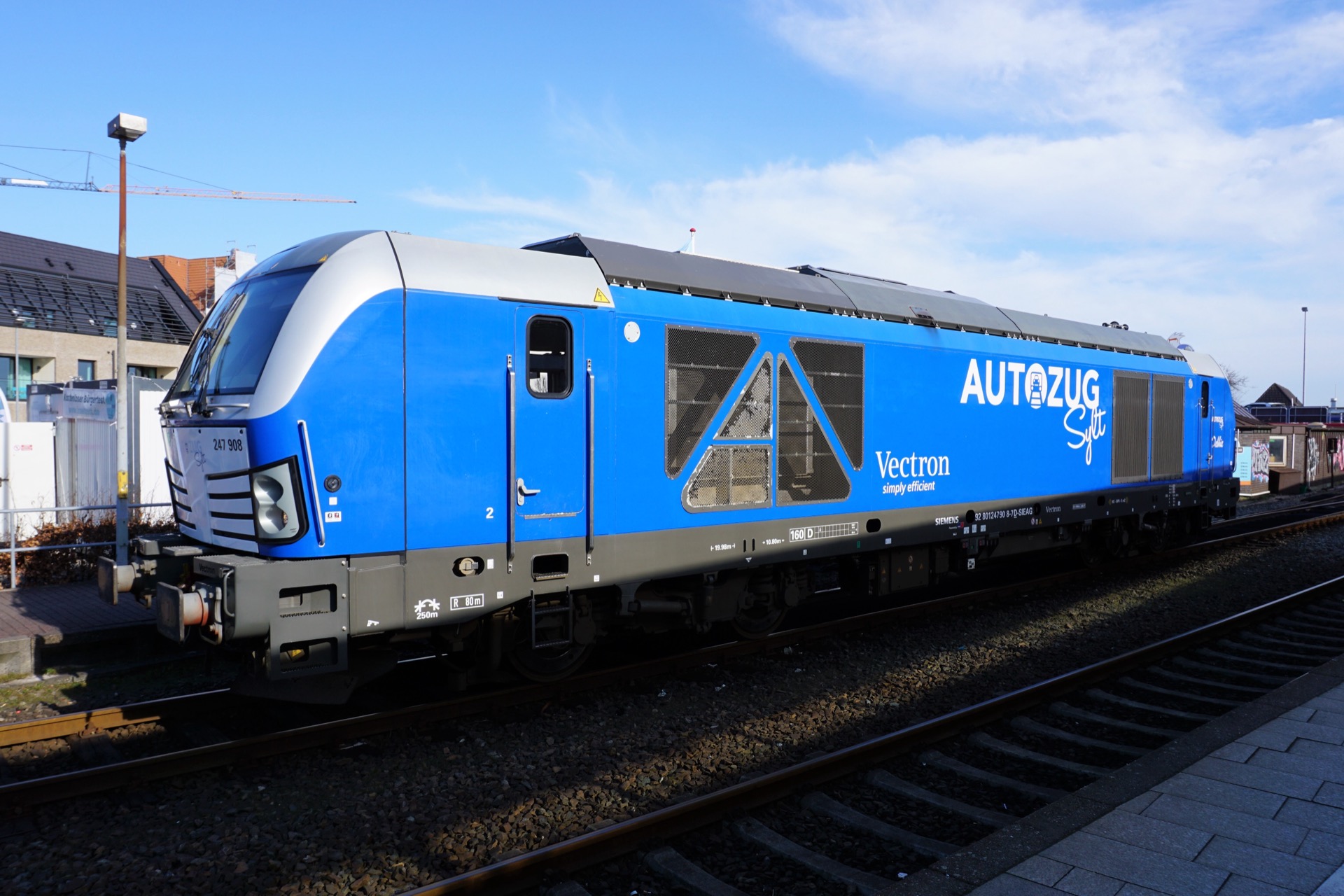
- The Sylt Shuttle Car Train Runs year-round, frequent departures
Sylt has no road bridge — the island's only vehicle link to the mainland is the Sylt Shuttle (Autozug), a car train from Niebüll that carries vehicles on rail flatcars roughly 35-39km across the Wadden Sea in about 35 minutes.
 Wikimedia Commons (CC BY-SA 4.0)
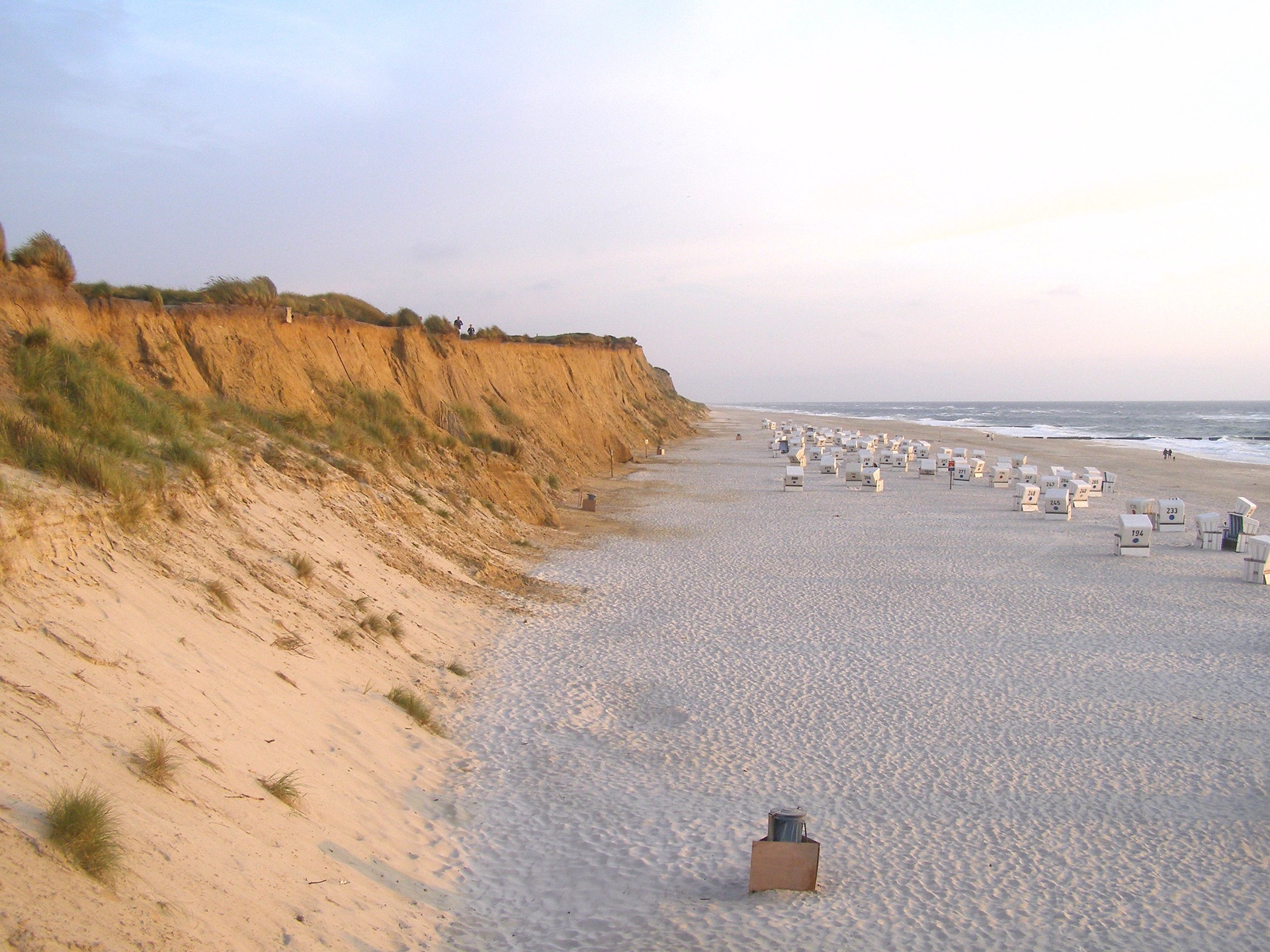
 - Rotes Kliff (Red Cliff) Year-round, between Kampen and Wenningstedt
A 52-meter cliff that's served as a landmark for seafarers for centuries — dramatic red-clay and white-dune contrast, carved by generations of North Sea storms.
 Wikimedia Commons (CC BY-SA 3.0)
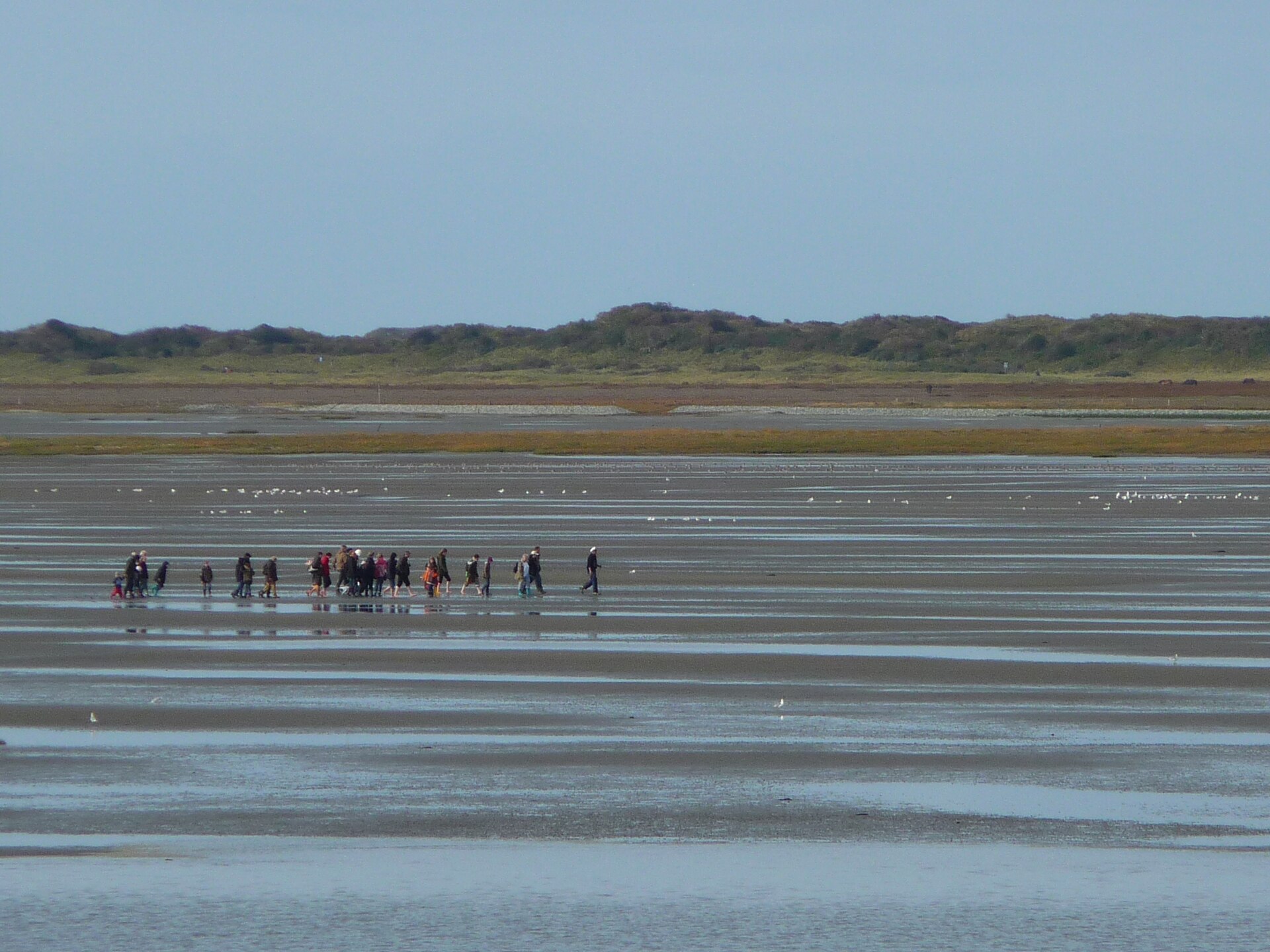
 - Wadden Sea UNESCO World Heritage Site Guided walks depend on tide schedule — book ahead
The national park east of Kampen protects tidal mudflats and salt marshes recognized as a UNESCO World Heritage Site. Guided Wattwanderungen let visitors walk the exposed seabed at low tide and find razor clams and fiddler crabs firsthand.
 Wikimedia Commons (CC BY-SA 3.0)
 - Westerhever Lighthouse Year-round; grounds always accessible
Arguably Germany's most-photographed lighthouse, on the Eiderstedt Peninsula near St. Peter-Ording — a 41-meter viewing platform overlooking salt marshes and every church spire on the peninsula.
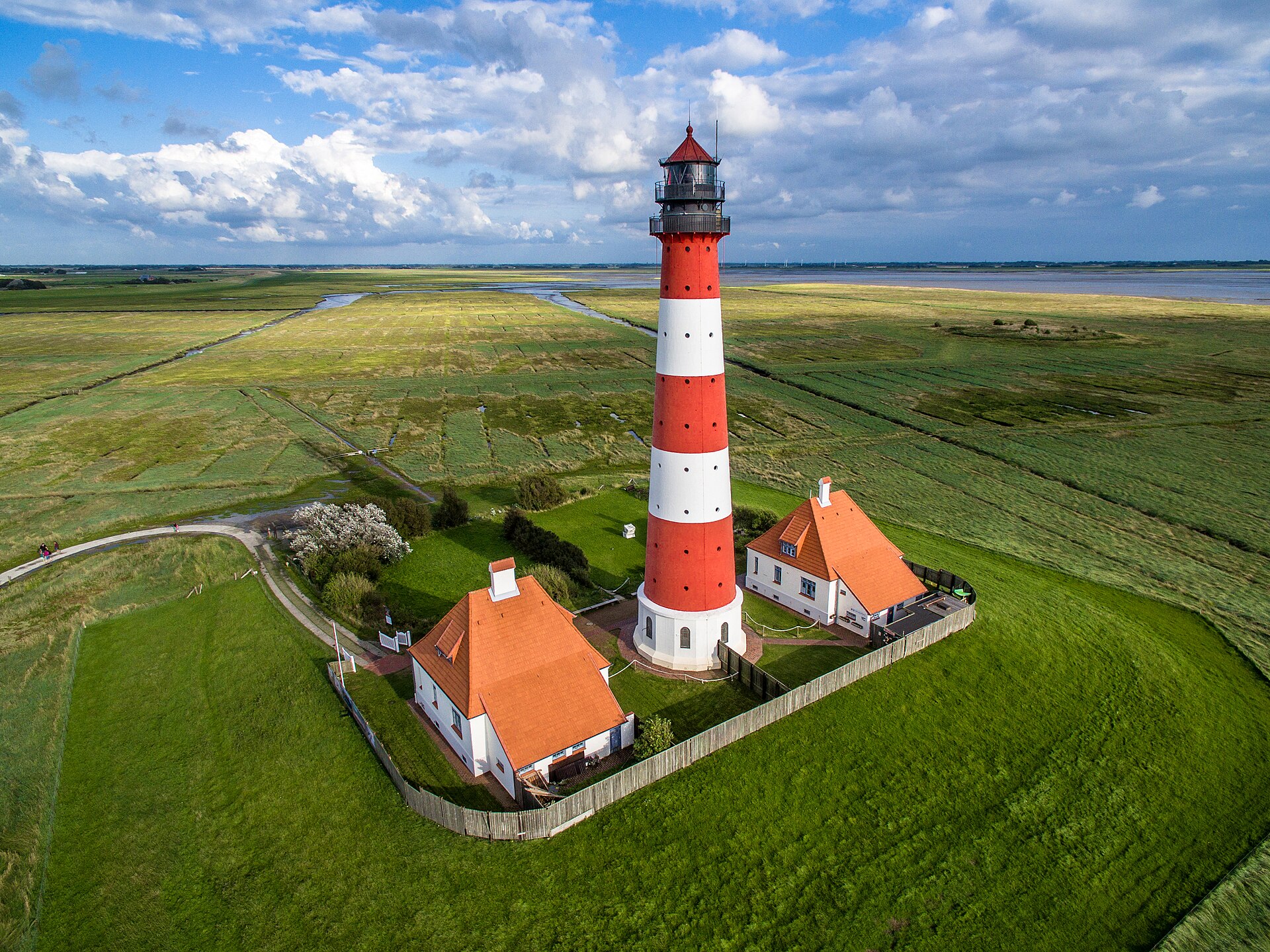 Wikimedia Commons (CC BY-SA 4.0)
 - St. Peter-Ording's Pfahlbauten Restaurants open seasonally
Stilt structures up to 7 meters high over the beach have defined this town's look for over 100 years. Five operate as restaurants today, serving local specialties with open sea views.
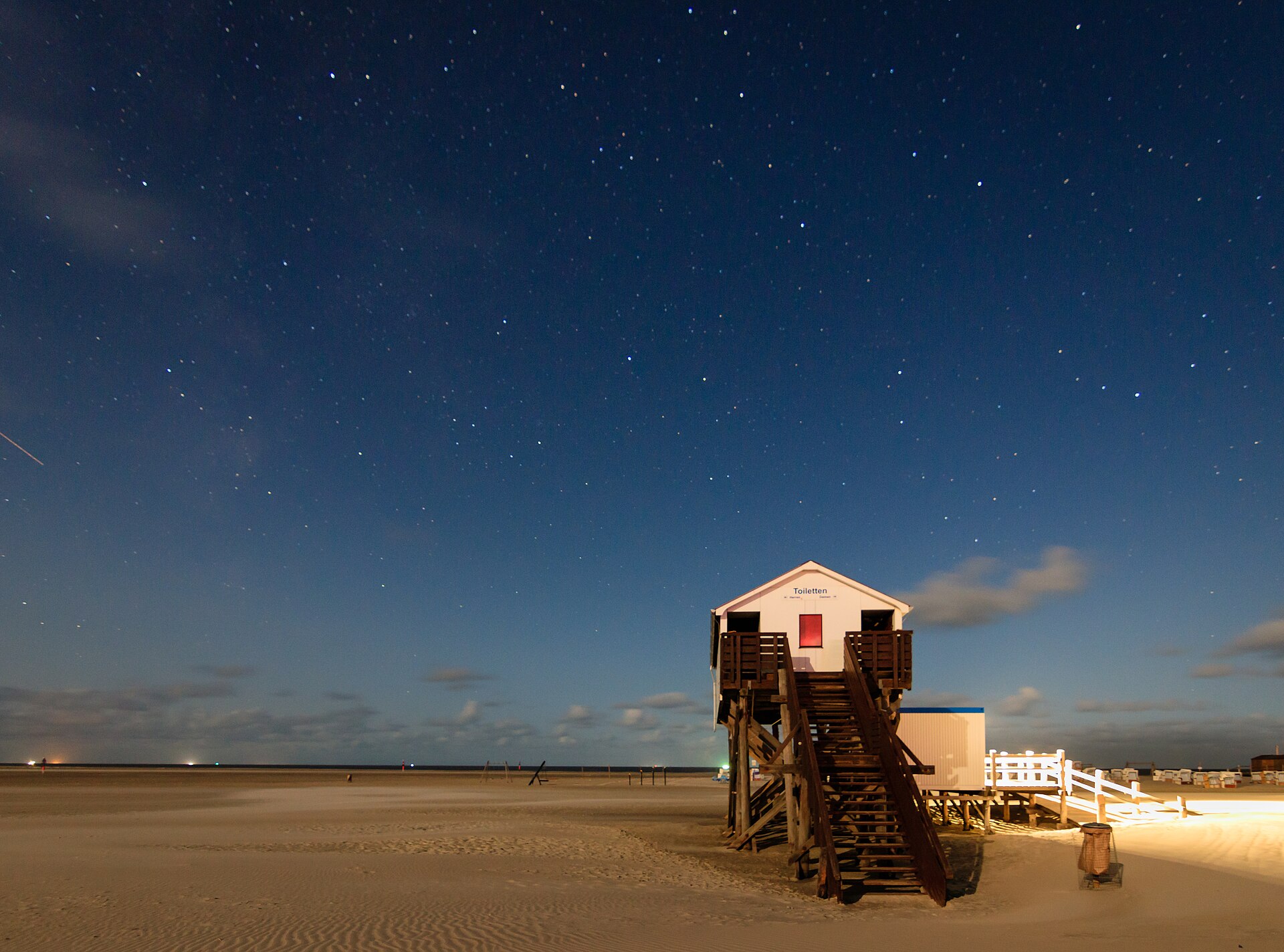 Wikimedia Commons (CC BY-SA 4.0)
 - The Eiderstedt Peninsula's Real History Year-round — the marshland setting itself
First documented in 1373 under the name "Ulstrup" before being renamed for St. Peter, with earlier Frisian and Viking-era settlement evidence in the region — the flat, marshy peninsula that St. Peter-Ording sits on today.
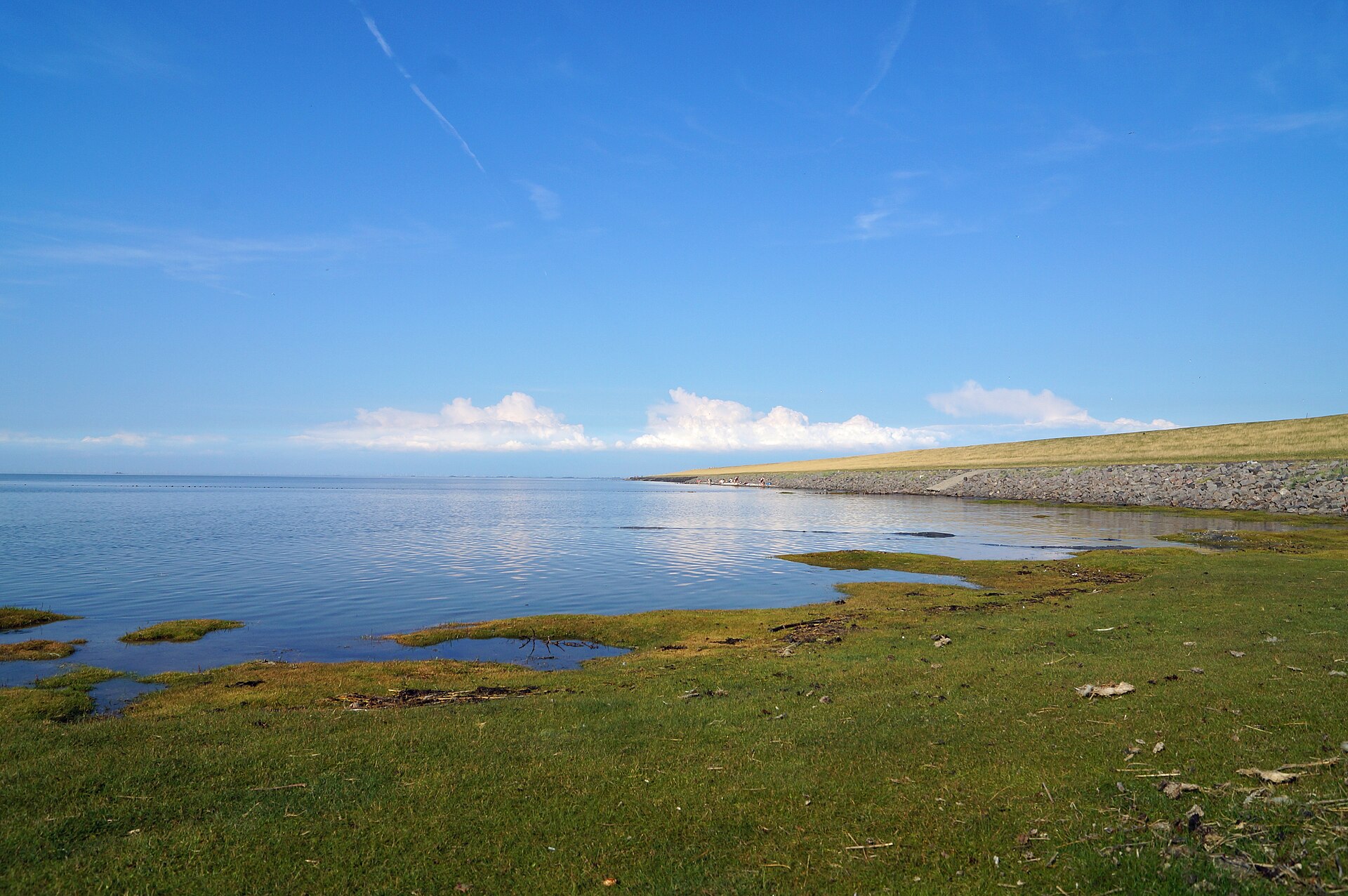 Wikimedia Commons (CC BY-SA 4.0)
 - Kampen's Art & Culture Trail Year-round; Kupferkanne café seasonal
32 bronze plaques around Kampen honor the artists and writers historically drawn to the island. The Kupferkanne café, a former artist's studio overlooking the Wadden Sea, is a specific, visitable anchor point on the trail.
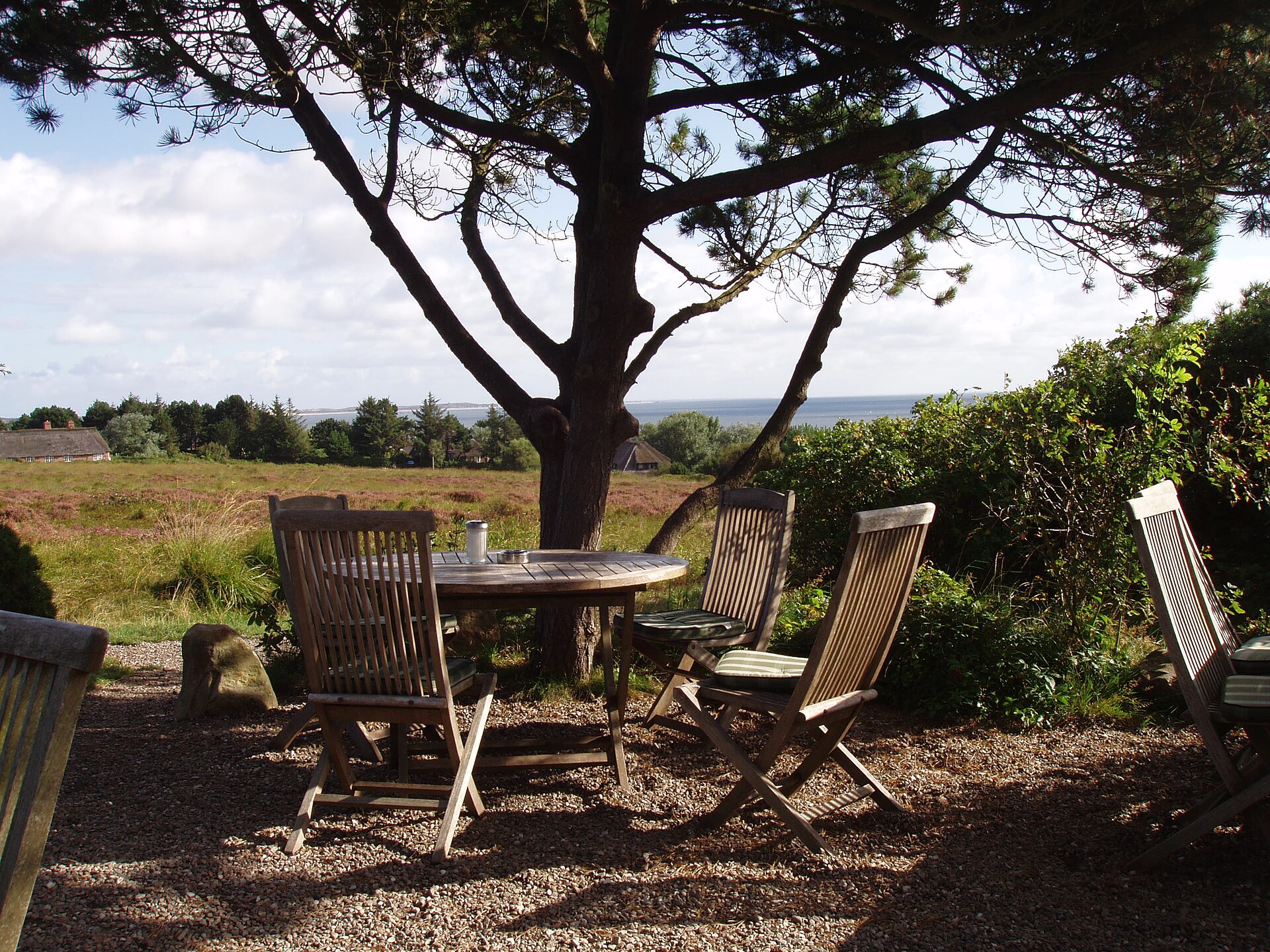 Wikimedia Commons (CC BY-SA 3.0)
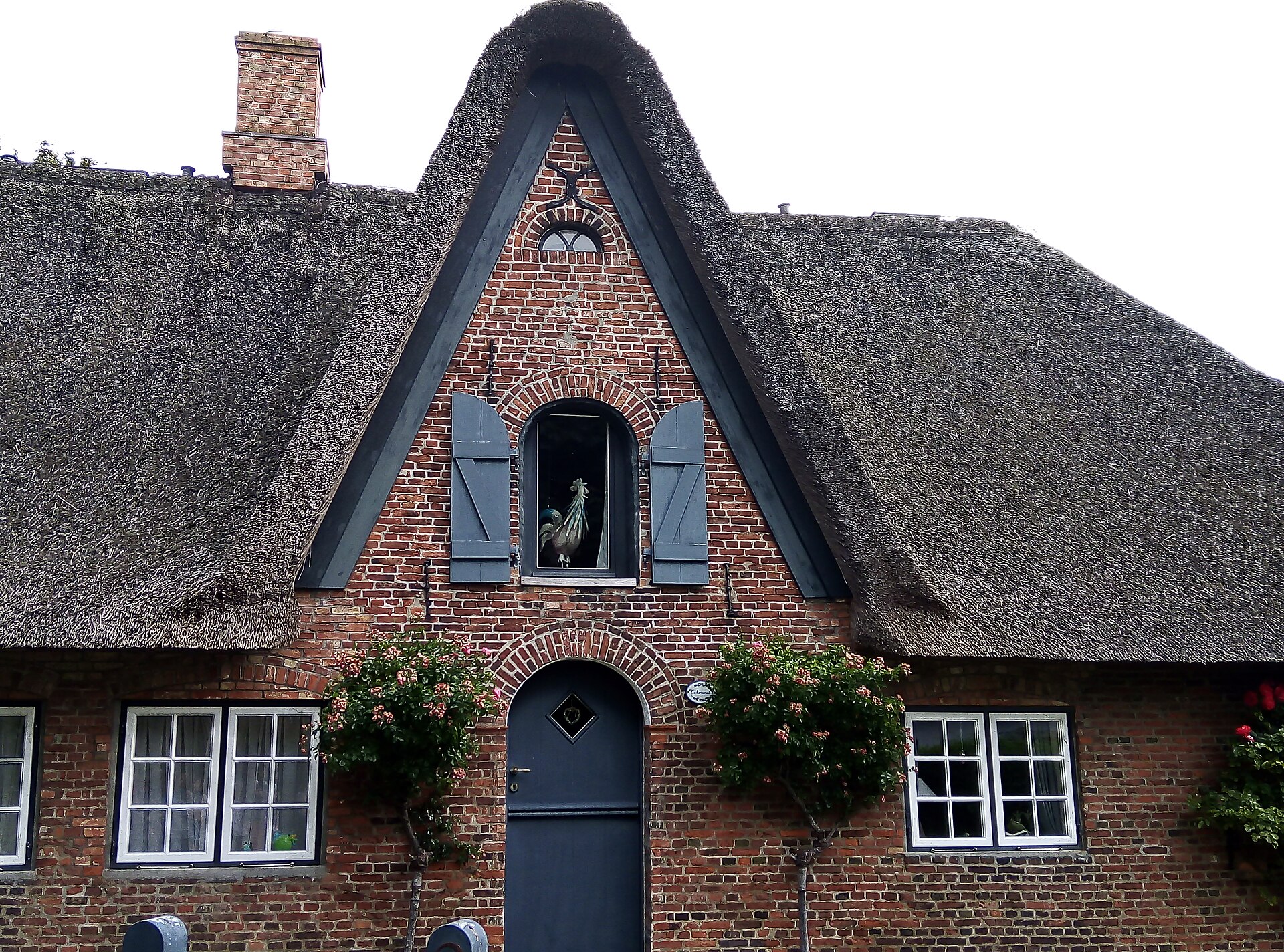
 - Keitum — Sylt's Oldest Village Year-round
Historic Frisian architecture and thatched roofs set Keitum apart from Westerland's more resort-developed feel — a real look at the island before the tourism boom.
 Wikimedia Commons (CC BY-SA 4.0)
Questions people actually ask.
Wait — you can actually surf in Munich? It's landlocked.
Yes, genuinely. The Eisbach is a real, engineered standing wave on a man-made channel of the Isar River, running through the Englischer Garten in the middle of the city. Surfers discovered it in the early 1970s and rode it illegally for decades before Munich officially legalized surfing there in 2010. It's a real, dense surf scene — a dedicated surf shop, a purpose-built wave-pool facility 30 minutes away, and a city's worth of infrastructure right at the wave — genuinely more built out than Germany's ocean coast. One important caveat: the main Eisbach wave (E1) is explicitly not for beginners — strong current, shallow hard riverbed, signage warns of injury risk. First-timers should start at Floßlände or book a guided instruction.
Is the Eisbach wave always open?
Not guaranteed — this is a real, sometimes-closed civic structure, not a fixed natural break, and it has a real safety history. See the safety callout on this page for the current situation. Munich's rules there (leash requirements, hours, minimum ages) also change, so check the city's current posted rules before you go, not just this page.
Which airport should I fly into?
For Munich: Munich Airport (MUC) itself — genuinely one of the best-connected airports on this whole site, with Lufthansa and United running direct year-round nonstops from Boston, Chicago, Denver, Los Angeles, New York JFK, San Francisco, Seattle, Washington Dulles, and several more US cities. For Sylt/St. Peter-Ording: Hamburg (HAM) is the realistic gateway, but it has no nonstop US service — plan on connecting through Munich, Frankfurt, or another European hub, then reaching Sylt via the car-train from Niebüll.
Does Germany use the Euro?
Yes — Germany is the first zone on this site that's both a full EU member and uses the Euro outright, no conversion friction. That's a real contrast to Iceland (Icelandic Króna), Denmark (EU member, opted out of the euro, uses Danish Krone), and Norway (not in the EU at all, uses Norwegian Krone). Entry is standard Schengen: US citizens get a 90-day-in-180 visa-free stay. Two things worth checking close to your travel date since both have shifted before: the EU's ETIAS pre-travel authorization, whose rollout has already slipped past its original 2026 target, and the EU's biometric Entry/Exit System (EES), which is replacing manual passport stamps at first entry.
Disclosure & how this page works.
Straight talk: Some links on this page are affiliate links — if you book through them, Secrets of Surf Travel earns a small commission at no extra cost to you. We only link places and people we'd use ourselves, and coverage is never for sale. Those commissions are what keep this site running and fund the next trip.
Today, the "Search Vrbo rentals," "Search Booking.com stays," and "Search Agoda stays" links on this page are affiliate links — every vendor listing link is still a plain courtesy link. As partnerships with these local businesses come online, more links (and discount codes, where Secrets of Surf Travel benefits from their use) may earn us a commission, and this page will keep saying so plainly. Coverage is never for sale: nobody on this page paid to be here, and nobody can.
Every listing was researched in 2026 and is being verified in person. Prices, hours, and policies change — treat them as strong starting points and confirm directly with the business. And per the No-Reveal Code: you will find no surf spots on this page, ever.