
Fernando de Noronha
A UNESCO World Heritage volcanic archipelago that deliberately limits its own tourism — a real daily environmental tax, a legally enforced visitor cap, and one of Brazil's most protected marine ecosystems. Genuinely expensive, genuinely remote, and worth understanding the access rules before you fall in love with the photos.
Straight talk: Some links on this page are affiliate links — if you book through them, Secrets of Surf Travel earns a small commission at no extra cost to you. We only link places and people we’d use ourselves, and coverage is never for sale. Those commissions are what keep this site running and fund the next trip.
Some vacation-rental search links on this page (marked “Search Vrbo rentals” or “Search Booking.com stays”) are affiliate links. Every vendor link below is still a plain courtesy link. As more partnerships come online, more links may earn us a commission; the promise above holds either way.
Getting There
No direct flights from anywhere outside Brazil's northeast. Governador Carlos Wilson Airport (FEN) is served only via connections through Recife (REC) or Natal (NAT) — GOL and Azul operate roughly 33 flights/week combined from Recife, flight time about 1h18m. Flights here are genuinely expensive and capacity-constrained given the island's visitor cap (see Good to Know) — one-way fares from Recife commonly run $135-220+, with round-trips from Natal sometimes exceeding $900. Book well ahead and expect real sticker shock relative to a typical Brazilian domestic hop.
Documents: Fernando de Noronha is Brazilian sovereign territory — no special exception to the national e-Visa requirement reinstated for US citizens on April 10, 2025. Apply online at the official portal, brazil.vfsevisa.com, roughly $81, most approvals in 48-72 hours, apply 2-3 weeks ahead. Valid 10 years multiple entry, capped at 90 days per visit.
The two mandatory fees on top of everything else: a daily Environmental Preservation Tax (TPA), progressive by length of stay — roughly R$106 for day one as of 2026, rising cumulatively (R$673 for 7 days, R$901 for 10 days) — payable online in advance at noronha.pe.gov.br or at the airport counter on arrival. Separately, a Marine National Park ticket (PARNAMAR), roughly R$384 for foreign visitors, valid 10 consecutive days, required for roughly 70% of the archipelago (Sancho, Sueste, the dolphin viewpoint, Leão, and the dive sites) — the beaches inside the separately-governed Environmental Protection Area (Cacimba do Padre, Boldró, Americano) don't require it. Buy at tickets.parnanoronha.com.br or the Boldró Visitor Center.
Ground Transport
- Rented buggy is the standard mode — roughly R$300-450/day plus fuel, requiring a Class B license. Genuinely the practical choice for reaching most of the island.
- A public bus runs the Vila dos Remédios-airport corridor, roughly R$5/ride, every 30-40 minutes, 7am-11pm.
- Fixed-rate taxis run R$20-45, and hitchhiking is genuinely common and culturally normal here.
- Some trails and beaches require an ICMBio-certified guide on top of the PARNAMAR ticket — Capim Açu, Pontinha/Caieira, Atalaia, and the Morro São José swim are the ones flagged for this. Factor guide arrangements into your planning rather than assuming self-guided access everywhere.
When to Go & What to Pack
- Surf/swell season runs roughly November/December through April, peaking February-March — driven by North Atlantic winter groundswell wrapping onto the island's north-facing beaches. This is the opposite of what you might assume from mainland Brazil's seasons.
- Calm-water, best-visibility diving and snorkeling season runs roughly August through December, peak clarity August-October — a genuinely different window from the surf season, not its exact opposite. Whale and turtle-nesting activity also peaks August-November, overlapping this window.
- Water stays warm year-round, roughly 28°C — no wetsuit needed regardless of which season you're chasing.
Good to Know
- The visitor cap is real and legally enforced, not marketing language — roughly 675 visitors/day and 11,000/month, ratified by Brazil's Supreme Court. The island actually exceeded this cap in 2025 (roughly 140,000 visitors against a ~132,000/year target), and as of August 2026 Pernambuco's government is working with the aviation authority to restructure flight scheduling to bring numbers back in line. Some individual trails and beaches (Atalaia especially, with a timed-entry system of roughly 16 people per 30-minute slot) carry their own separate limits on top of the island-wide cap.
- The advisory: Brazil overall sits at US State Department Level 2, Exercise Increased Caution, but Noronha itself is widely regarded as one of the safest places in Brazil — a small resident population and tightly controlled tourism keep violent crime very low, with petty theft in crowded spots the main practical concern.
- On sharks specifically: the island is genuinely celebrated for calm, protection-driven coexistence with reef species like lemon sharks. One real, specific restriction worth knowing: swimming at Baía do Sueste is currently prohibited due to tiger shark presence and a 2022 incident there — visitors can still walk the sand and view lemon sharks/rays/turtles from shore, with a mandatory orientation briefing at the visitor post.
- No malaria risk. Dengue has been present on the island since 2001 — standard mosquito precautions apply.
- Medical facilities are genuinely limited, as expected for a remote island — serious cases require evacuation to the mainland. Real travel insurance with medevac coverage is worth treating as essential here, more so than most zones on this site.
- Currency: Brazilian Real only — ATMs exist at the airport and at Caixa Econômica Federal, but availability is limited relative to mainland cities, so bring more cash than you think you'll need. Connectivity: 5G was recently activated (TIM), plus 14 free government Wi-Fi hotspots around the island (roughly 200m range) — real improvement, but still genuinely remote-island caliber, not blanket coverage. Emergency numbers: the national defaults apply — Police 190, Ambulance/SAMU 192, Fire 193.
- Cost reality: confirmed as one of Brazil's most expensive destinations given the capacity constraints and import-dependent economy — daily budgets commonly cited at $80-300/person beyond flights, buggy rental alone running roughly $75/day.
Respecting the Locals
Everything about how this island is run is built around keeping a very small resident population and a legally capped number of visitors in balance, and the local economy and culture answer to that fact every single day. The daily environmental tax, the visitor cap, and the requirement for a certified guide on several trails aren't bureaucratic hurdles — they're what keeps this UNESCO marine park and the tight-knit community living on it intact. Treat those same rules, and the people who enforce and live by them, with the respect this list asks for below.
- Locals get first priority, always. Watch a session before you paddle out. Learn who's who before you learn the wave. Sit inside and catch what they let through — the leftovers are yours, not the set waves.
- Don't backpaddle. Ever. Being in position doesn't make the next wave yours, especially if you didn't wait your turn. If a local wants a wave, let them have it…even if it IS your turn. That older guy who may not be the best surfer out there has probably been surfing that wave before you even sat on a board. If you don't know someone, assume they're local.
- Don't snake. This shouldn't even need to be said, but…dropping in on someone, local or not, is the ultimate disrespect and the fastest way to be sent out of the water. Don't be that guy!
- Say hi. A “howzit,” “whatsup,” or “nice wave,” eye contact, or a nod in the channel — it costs nothing and it's the fastest way from stranger to welcome.
- This is somebody's home, not a resort amenity. The break you're surfing is where a local kid learned to swim, where someone's uncle has surfed for forty years. Act like a guest, because you are one.
- Spend where it actually helps. The food truck, the local shaper, the family-run rental, the local photographer — that's where a surf trip's money should land, not just the chain hotel gift shop. See The No-Reveal Code for why that's the whole premise of this site.
- Leave it better than you found it. Pick up trash that isn't yours. Don't touch reef, wildlife, or cultural sites.
Locals have watched hundreds, if not thousands, of people come and go — some for days, some for months or years — and almost all of them eventually go home. The locals are still there. It takes many, many years to actually become one. Keep that in mind the next time you feel entitled to the same waves they get.
None of this is a secret handshake. It's just how you'd want a guest to act in your own backyard.
The Island
A single small archipelago, but genuinely rich in real, currently-operating businesses given its scale — spanning Vila dos Remédios, Praia da Conceição, and the Sueste/Boldró areas. Honest gaps exist too, most notably ding repair, which simply isn't a standalone trade here.
Boutique pousadas cluster around Vila dos Remédios, Praia da Conceição, and the Sueste/Boldró area — the closest thing to an independent-lodging bench this capacity-capped island has.
Surf Guides & Tours
- Escola de Surf NoronhaPraia da ConceiçãoMid-rangeDaily instruction, board/SUP rental, bookable ahead of arrival — one of several small operators running 2-hour instruction from Conceição beach in season.@escoladesurfnoronha
Stays
- Pousada Morena~850m from Conceição beach/Vila dos RemédiosMid-upperBoutique, infinity pool, on-site spa, sunset views of Morro do Pico.
- Pousada Maria BonitaRua das Amendoeiras, Floresta NovaUpperFamily-run boutique, praised for service — roughly $330-455/night.
- Pousada MaravilhaPraia do Boldró/Sueste Bay areaUltra-luxuryInfinity pool, panoramic sea views, some units with Japanese-style tubs — 9.8/10 on TripAdvisor, though some reviewers flag value-for-money as weak at this price point.
- NANNAI Noronha (Solar dos Ventos)Vila do SuesteUltra-luxuryFull resort tier, top of the market — houses the Tiatê restaurant.
Where to Eat
- Restaurante do JacaréPraça Presidente Eurico Dutra, Vila dos Remédios, next to SantanderBudgetAll-you-can-eat self-service homestyle (rice, beans, protein, sides) — the island's real budget option, open noon-2pm Mon-Sat.
- Bar Duda ReiPraia da ConceiçãoMid-rangeThe island's only true feet-in-the-sand beachfront restaurant/bar.
- Xica da SilvaUpper-mid4.5/5 on TripAdvisor, #18 of 94 restaurants, 5,580+ reviews — known for moqueca de peixe and camarão na moranga. Arrive before 7:30pm to beat the line.
- Cacimba BistrôRua Dom Juquinha I, Vila do TrintaUpperSeafood-forward, chef Auricélio Romão.@cacimbanoronha
Wheels: Buggy & Quad Rentals
- Ilha Buggy LocadoraRua São Miguel, Fernando de Noronha Environmental Protection Area10+ years operating.
- LocbuggyFernando de NoronhaHas expanded into tour packages (dolphin-watching dawn trips, island tours, hikes) beyond pure rental.locbuggy.com.br
- Locadora OceânicaFernando de Noronha20 years on the island.
Typical buggy rate runs roughly R$300/day, fuel not included.
Surfboard & Ding Repair
Genuinely nonexistent as a standalone trade here — no dedicated, independently-verifiable ding-repair shop was found anywhere on the island. Bring your own repair kit; the surf schools may handle minor fixes informally, but this isn't a documented, dedicated service.
Surf Shops & Board Rentals
- Escola de Surf NoronhaPraia da ConceiçãoInstruction plus board/SUP rental.
- Noronha 350Near Vila dos RemédiosSurf-club-affiliated pousada that doubles as a board-rental point.
Massage & Wellness
- Spa Noronha by Tati MianiRua Pescador Sérgio Lino, at Pousada do ValeMid-range Extremely well reviewed — 98% recommend on TripAdvisor. "A melhor massagem que já fiz na vida" (best massage I've ever had in my life) — TripAdvisor reviewer
- Naturiê Fernando de NoronhaMid-rangeNature-based massage experience, ocean-sound ambiance.
Other Adventures
- Noronha DiverPraia do Cachorro/Vila dos Remédios, founded 1995 One of the island's most-reviewed dive operators by volume of positive feedback. "They are for me the best diving company I have ever dived... a very charismatic group – cheerful – with a highly safe boat." — TripAdvisor
- Atlantis DiversPraça do Cruzeiro, Vila dos Remédios, operating since 1994Part of Brazil's largest dive operator network, PADI-certified.
- Boat/snorkel toursDepart Porto BeachStandard 3-hour tours past the secondary islands, snorkel stops at Sancho or the Porto shipwreck site, roughly R$175-200.
- Projeto Tamar visitor centerRua Eurico Cavalcante de Albuquerque, Alameda do BoldróFree admission, ~40,000 visitors/year, guided visits Mon-Sat 10am-5pm, daily lectures.
Local Secrets
Ten reasons this small island earns its UNESCO status — a beach that's spent years among the world's best, a real 35-year spinner-dolphin research program, and a genuine visible marine-protection success story.
- Baía do Sancho Descend early to beat the queue
Reached only by descending roughly 200 stone steps plus a metal ladder through a narrow cliff crevice (one-way traffic enforced) — currently ranked #33 in the World's 50 Best Beaches 2026 list, with a stronger historical pedigree (TripAdvisor #1 in 2014 and 2019). Best described as "consistently among the world's top beaches" rather than a fixed current ranking, since these lists shift year to year.
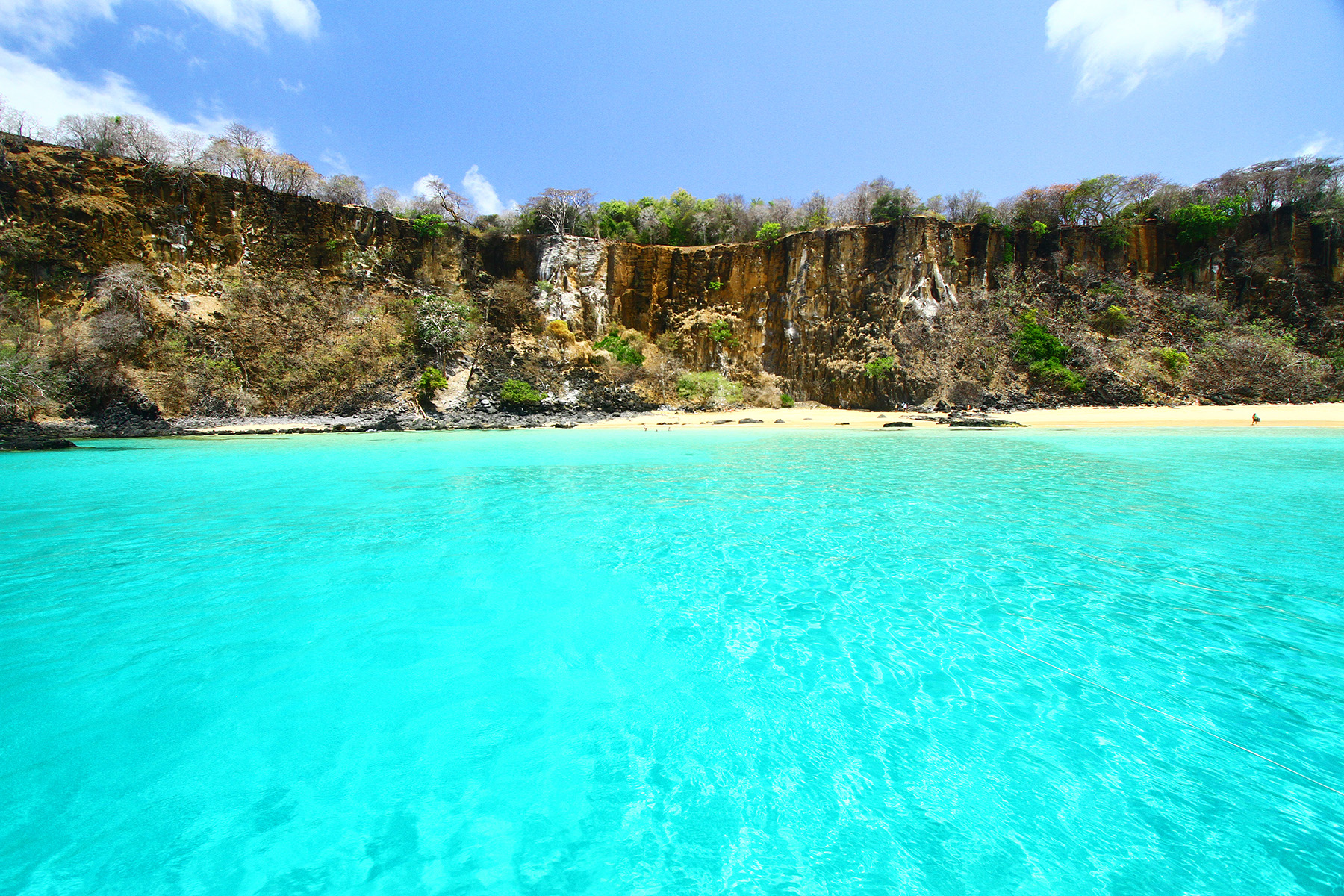 Photo: Rodrigo Mazzola / Wikimedia Commons (CC BY-SA 3.0)
 - Baía dos Porcos Low tide for the natural pools
A small bay formed by magmatic rock pools between Cacimba do Padre and Sancho — popular low-tide snorkeling, reached via a short trail from the Sancho park post.
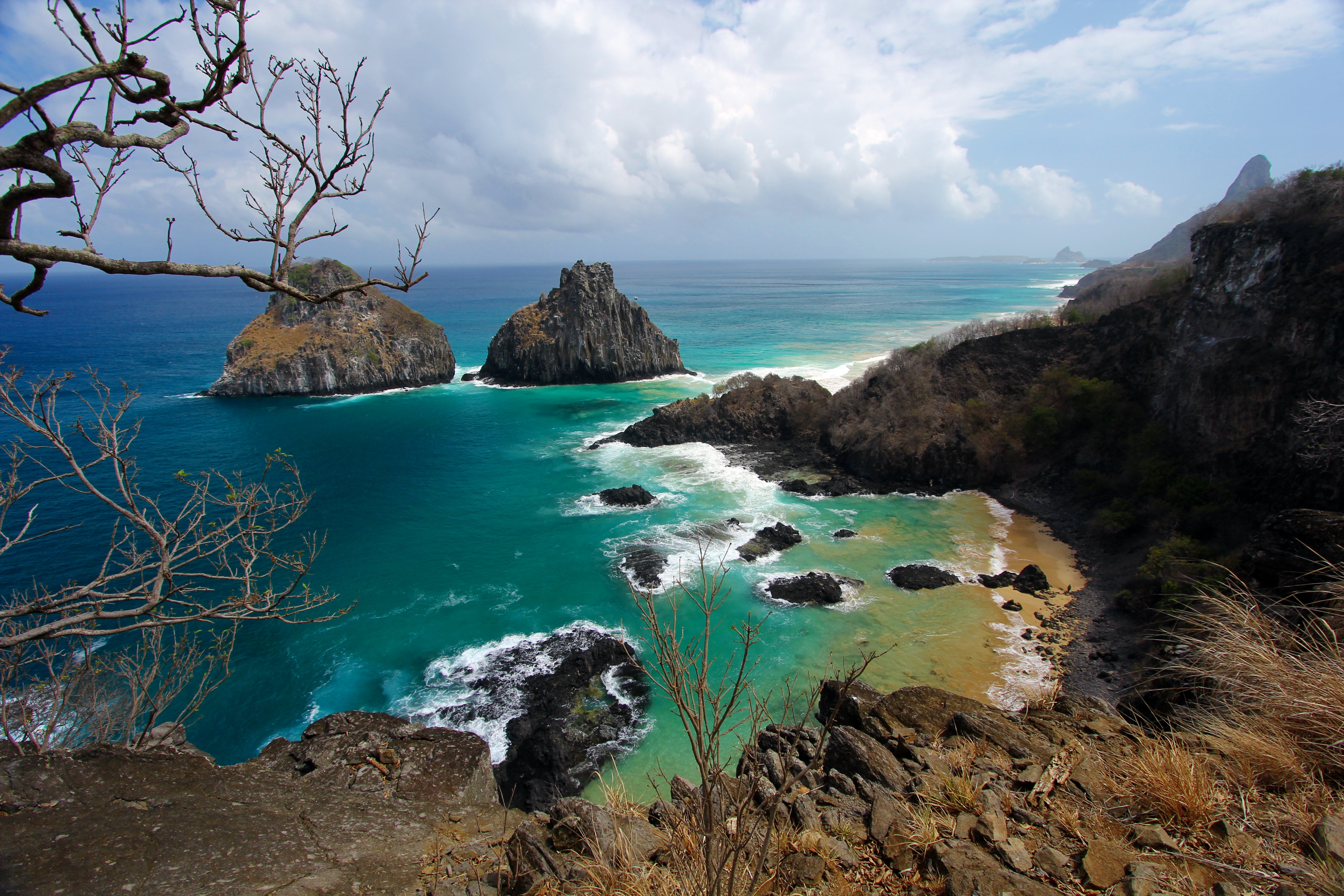 Photo: Adelano Lázaro / Wikimedia Commons (CC BY-SA 4.0)
 - Morro Dois Irmãos Golden hour for the classic postcard shot
The island's iconic twin-peaked rock formation, best viewed from the Baía dos Porcos cliff-top overlook near the Sancho park post.
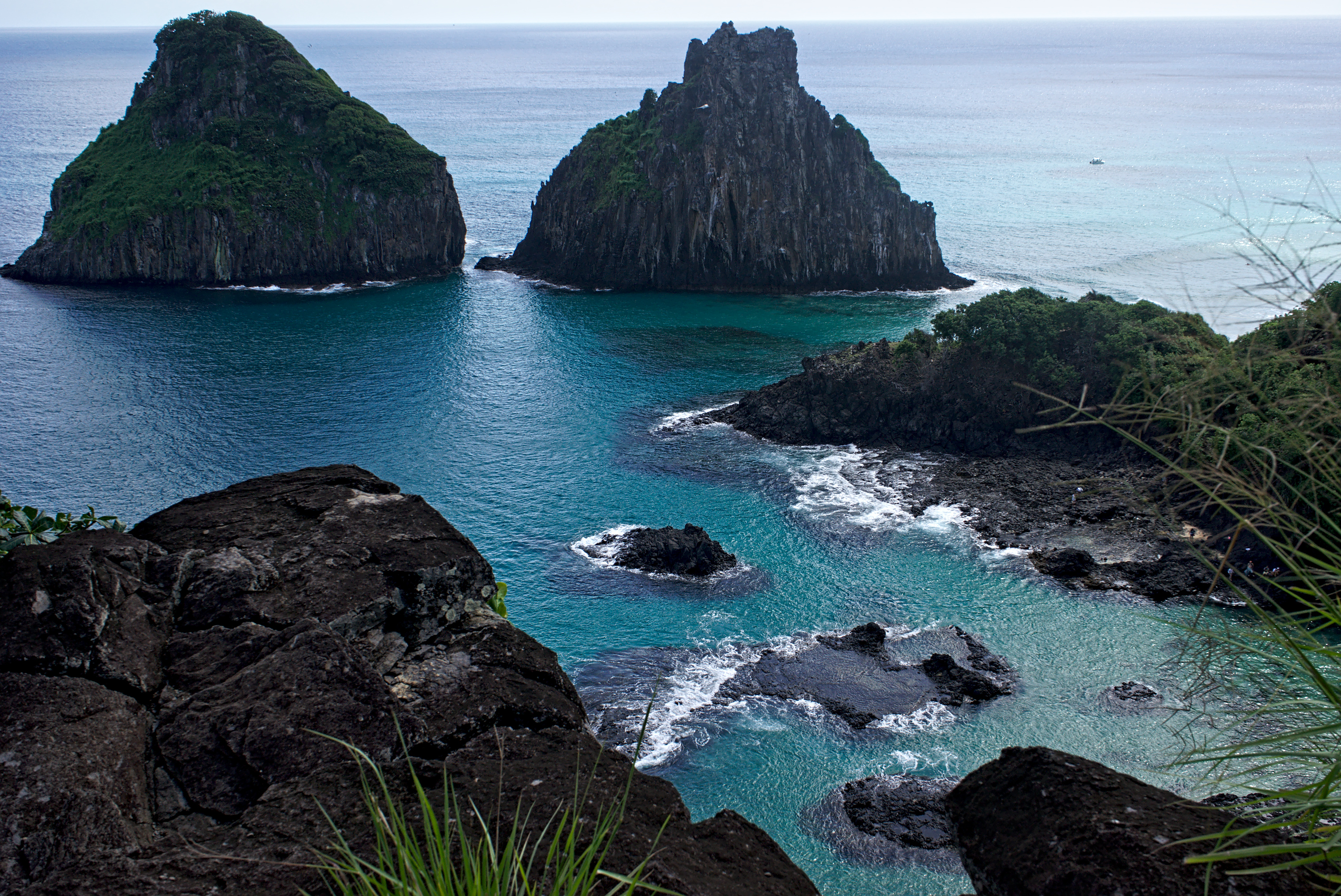 Photo: Paulo Fernandes de Souza Jr. / Wikimedia Commons (CC BY-SA 3.0)
 - Projeto Golfinho Rotador Early morning, roughly 5:30-8am, for peak activity
A real, ongoing spinner-dolphin research program founded in 1990 — hundreds of dolphins gather in Baía dos Golfinhos daily to feed and mate, studied continuously for over three decades.
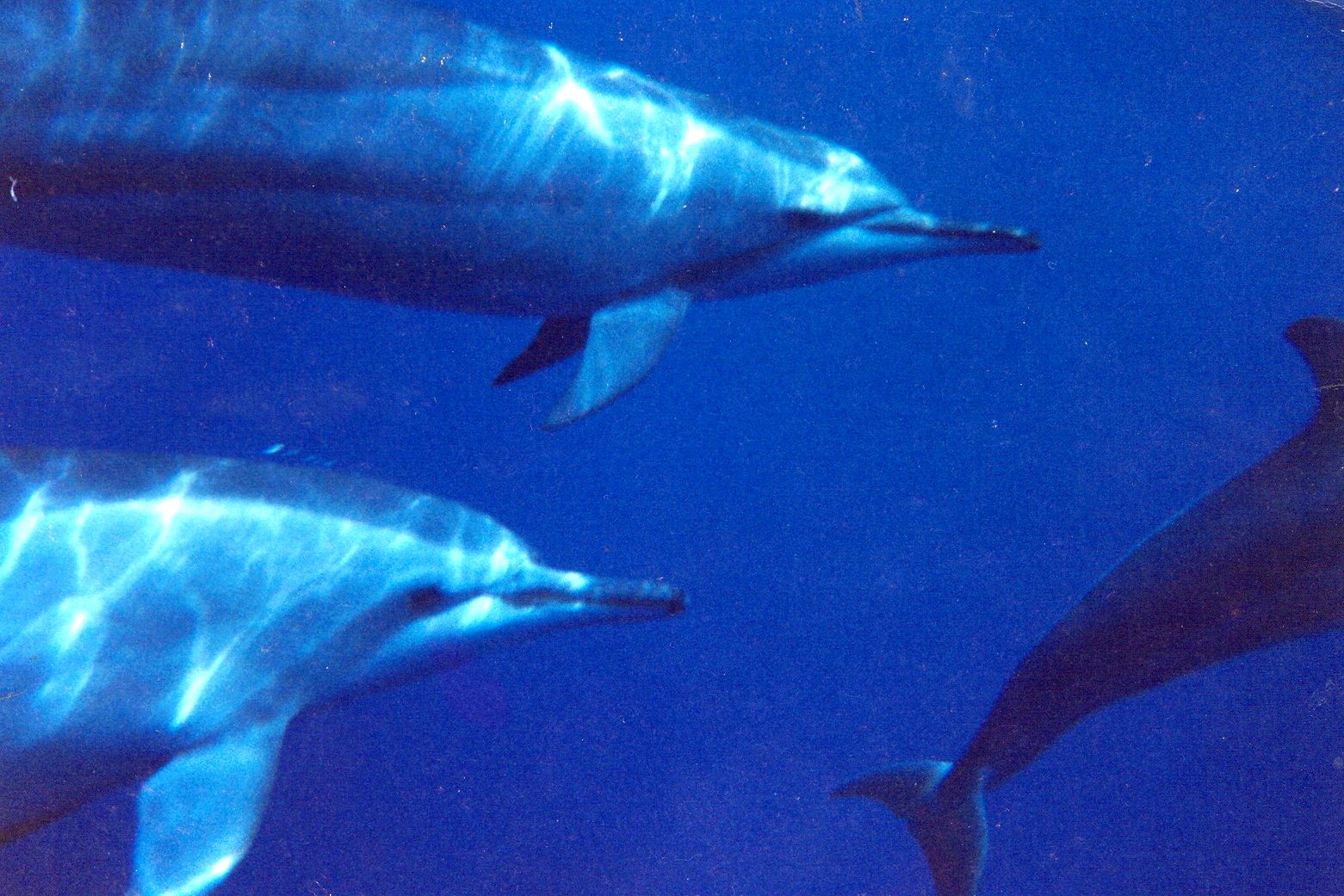 Photo: Beto Quissak / Wikimedia Commons (CC BY-SA 4.0)
 - Mirante dos Golfinhos Same early-morning window as the dolphin activity itself
The public viewpoint where biologists staff a live census with binoculars — visitors can watch real, ongoing marine research happening in front of them, not just a scenic overlook.
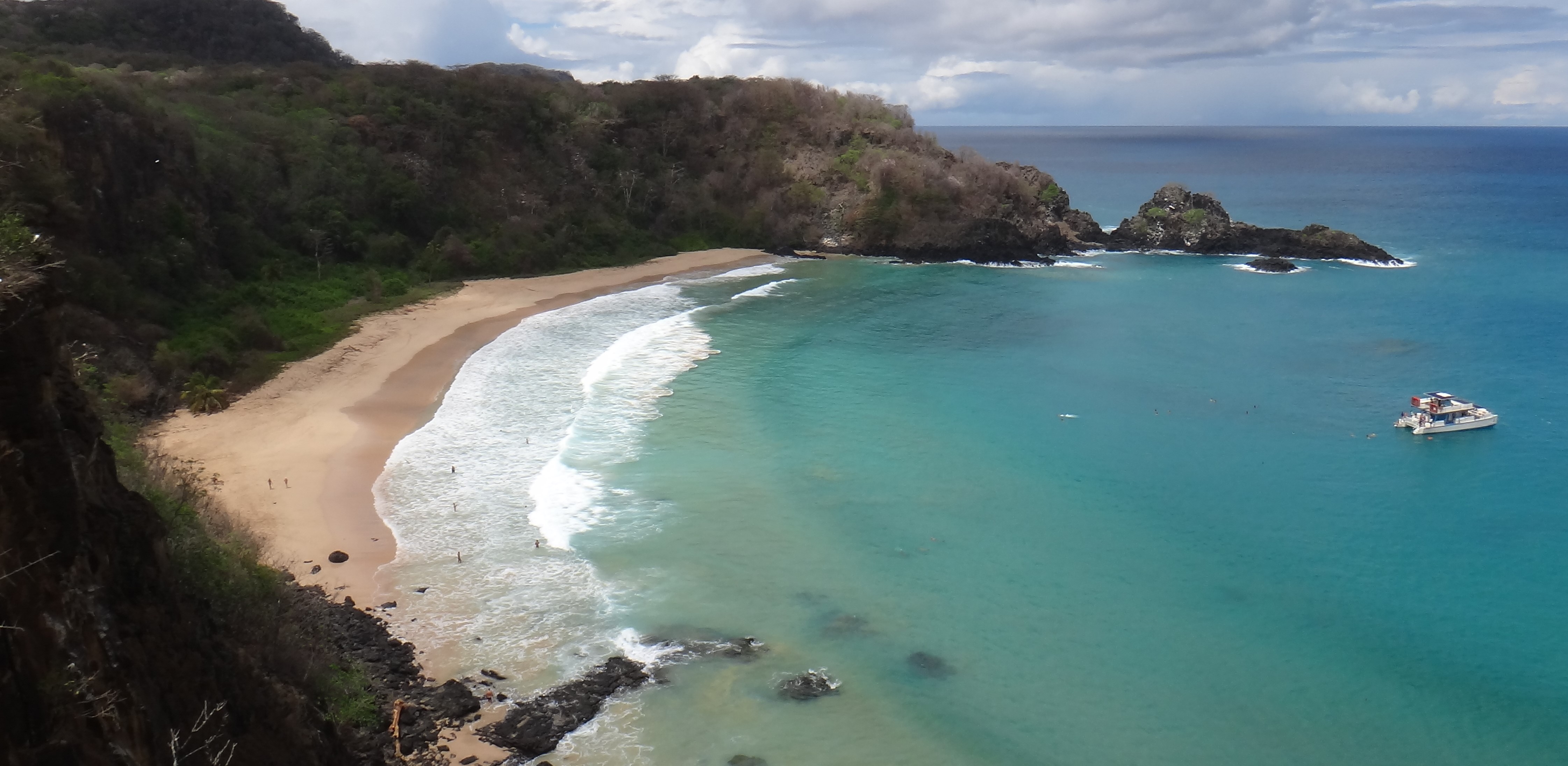 Photo: Emerson Fernandes da Cunha / Wikimedia Commons (CC BY-SA 3.0)
 - Projeto Tamar Noronha Nesting season December-June, concentrated at Praia do Leão
Operating on the island since 1984 — roughly 100 nests and 8,900 hatchlings a year on average, with researchers doing dawn patrols to mark new nests.
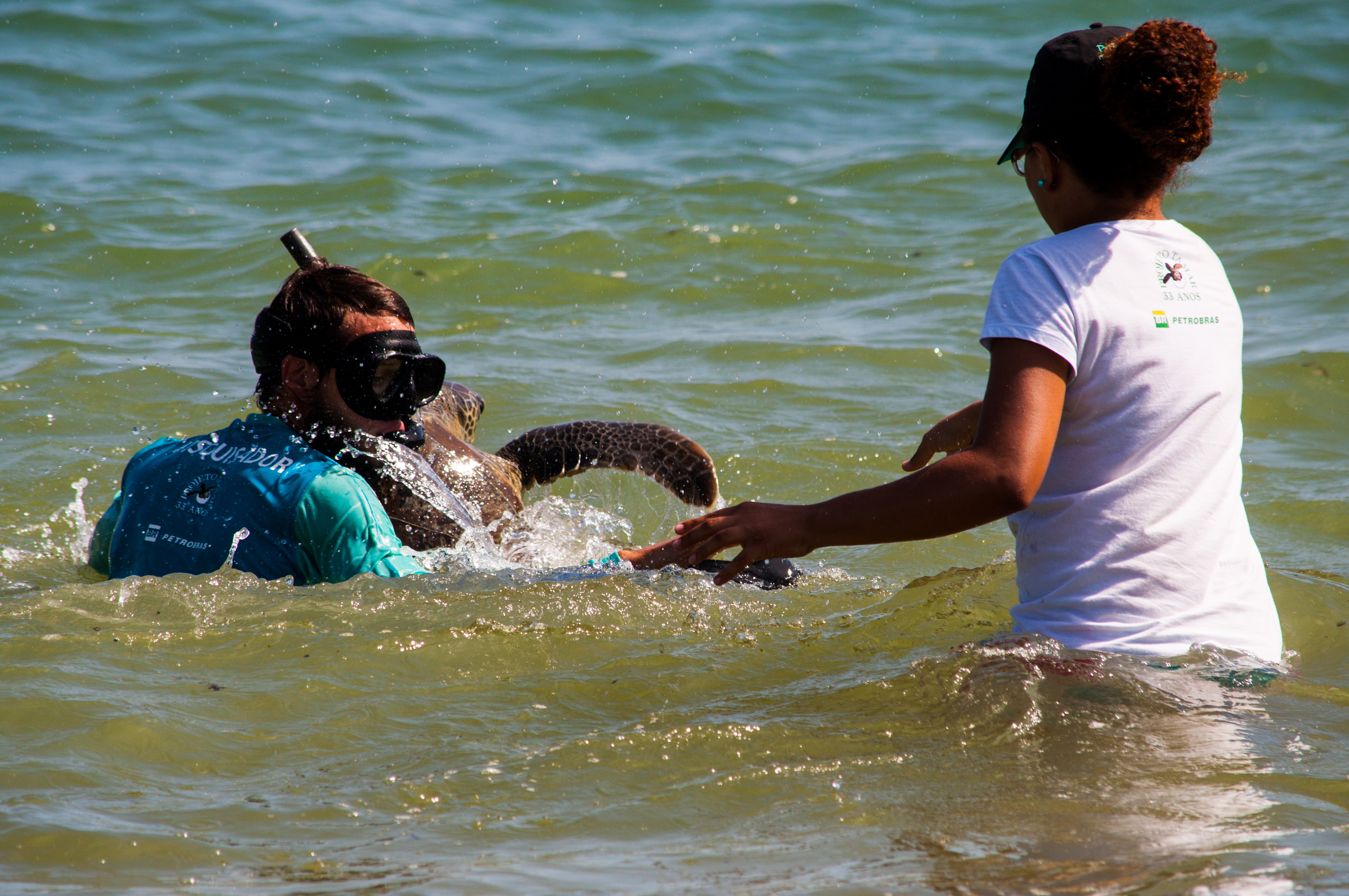 Photo: Leonardo de Morais Soares / Wikimedia Commons (CC BY-SA 3.0)
 - Forte dos Remédios Sunset — also a popular viewpoint
The main Portuguese fortification on the island, construction started 1737 and took 41 years to complete, with dry-stone walls up to 3.5m thick and many original cannons still on site.
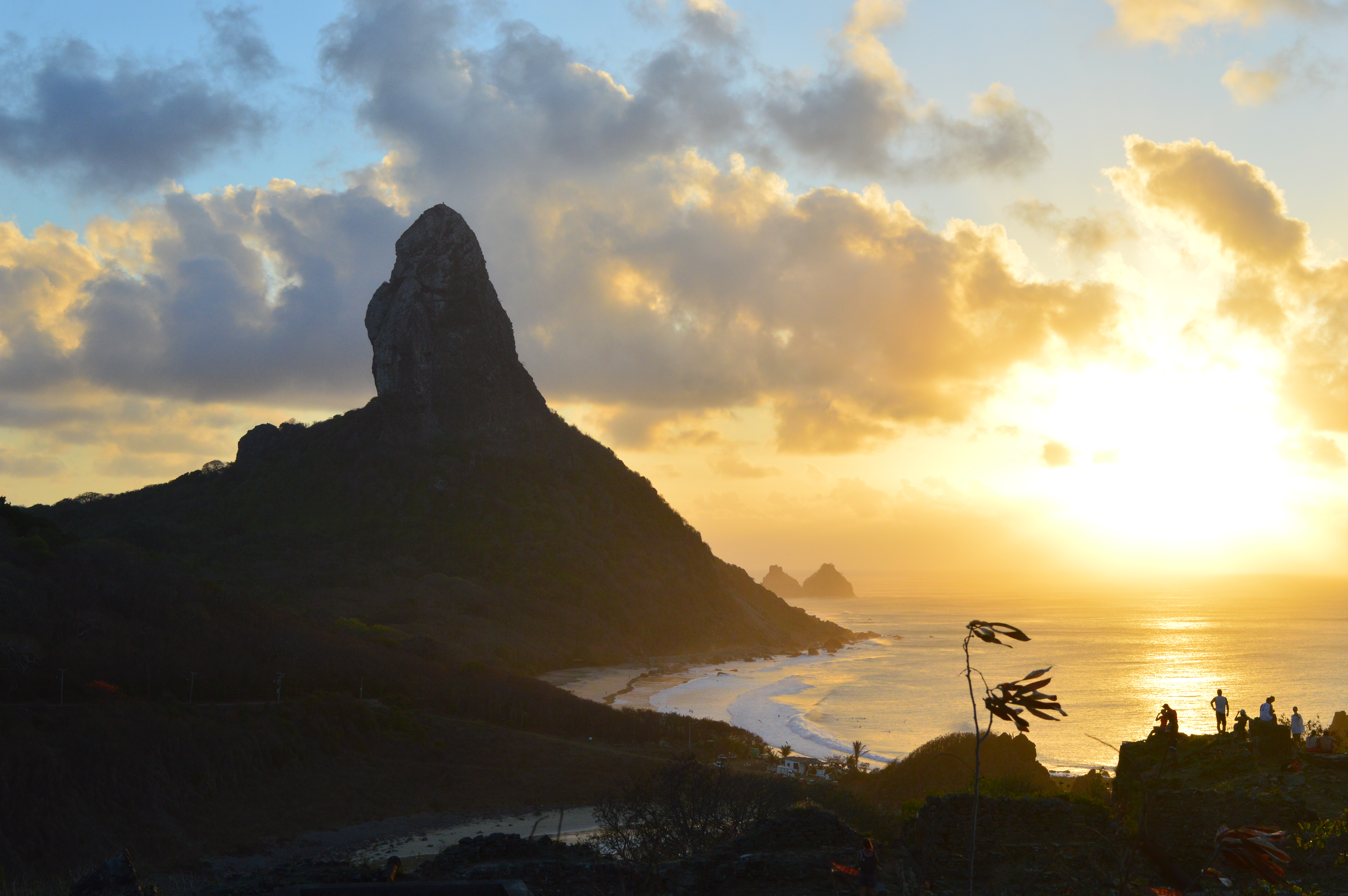 Photo: Emerson Fernandes da Cunha / Wikimedia Commons (CC BY-SA 3.0)
 - Shark Coexistence at Baía do Sueste Shore viewing only — swimming is currently prohibited here
A genuine, celebrated example of protection-driven marine life — juvenile lemon sharks, rays, and turtles visible from the shore, though swimming itself is currently restricted due to tiger shark presence and a 2022 incident. A mandatory orientation briefing is required at the park post.
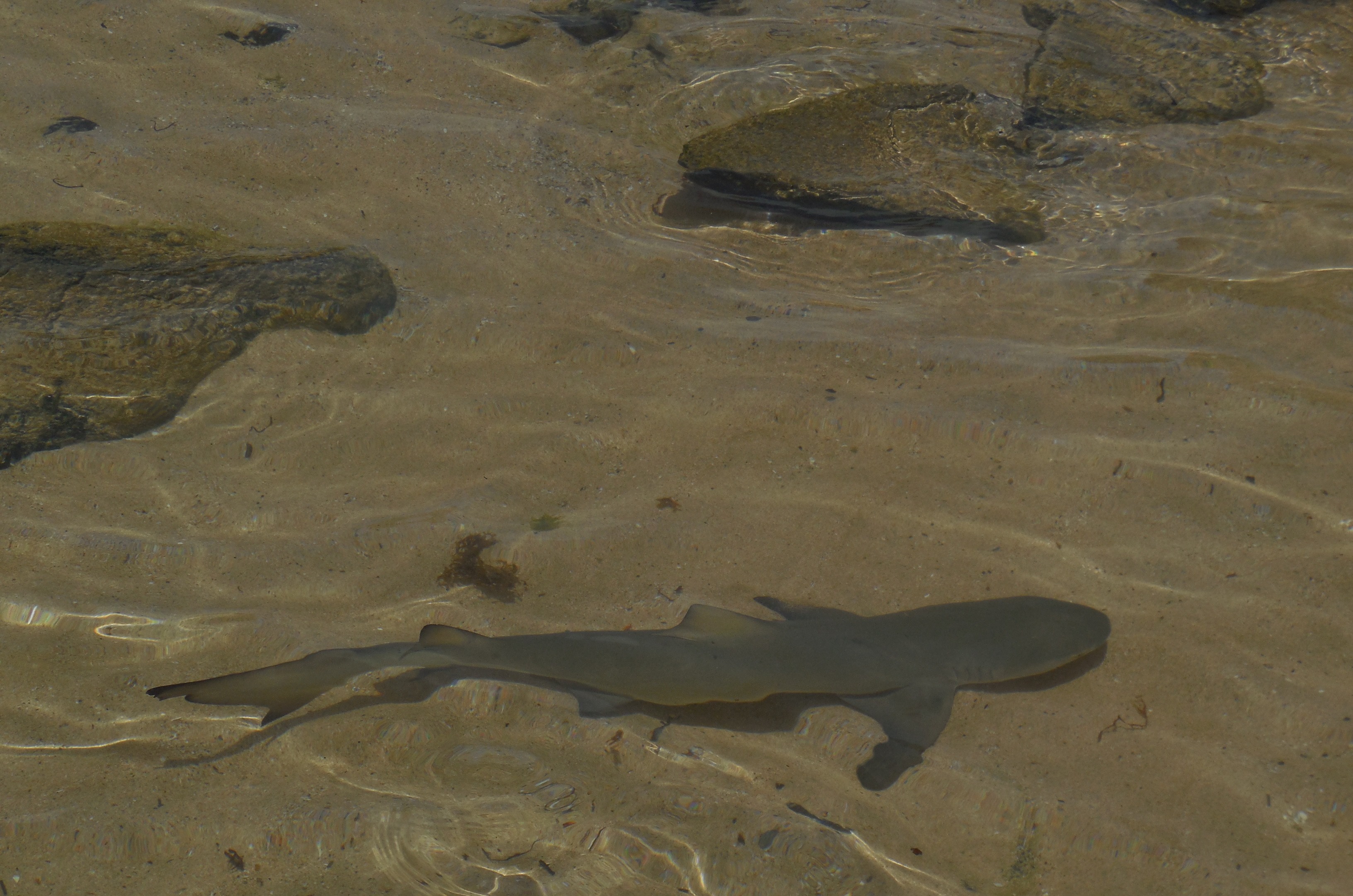 Photo: M. H. Mathias / Wikimedia Commons (CC BY 2.0)
 - Piscina Natural do Atalaia Timed entry, roughly 16 people per 30-minute slot — book ahead via ICMBio
A tide-pool "nursery" for octopus, small sharks, morays, and reef fish — visitors may only float (no walking on sand/coral), wear a life vest, and sunscreen is banned to protect the water chemistry.
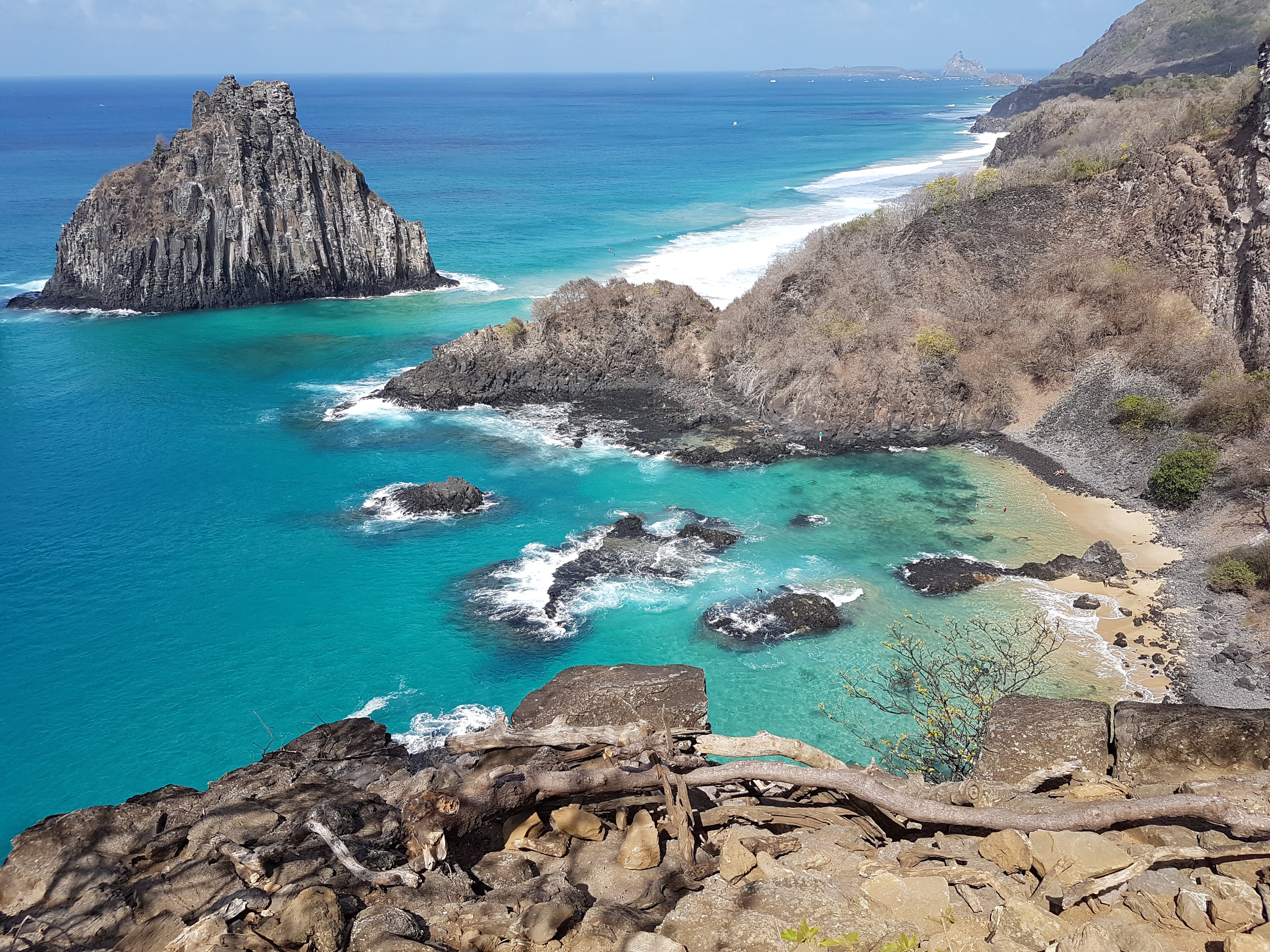 Photo: Lgjunior / Wikimedia Commons (CC BY-SA 4.0)
 - World-Class Diving Best visibility August-October
Visibility commonly runs 25-50m, among the best in the Atlantic, inside a Marine National Park that covers roughly 70% of the archipelago — the direct, visible result of the island's visitor cap and environmental fees.
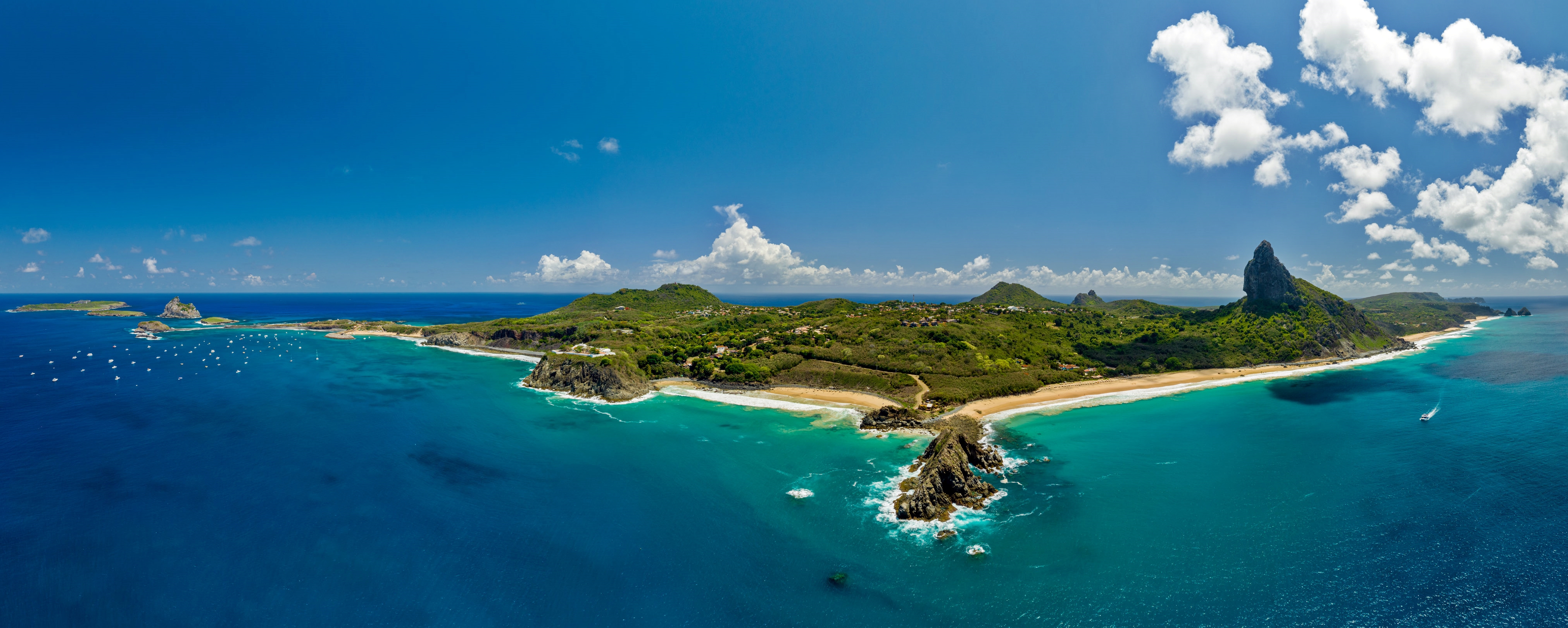 Photo: Fernandoantoniofotos / Wikimedia Commons (CC BY-SA 4.0)
Questions people actually ask.
What does it actually cost to visit Fernando de Noronha?
Two separate mandatory fees on top of your trip cost. The daily Environmental Preservation Tax (TPA) is progressive — roughly R$106 for day one, R$673 for 7 days, R$901 for 10 days as of 2026 — pay online in advance or at the airport counter. Separately, a Marine National Park ticket (PARNAMAR) costs around R$384 for foreign visitors, valid 10 days, required for roughly 70% of the archipelago including Sancho, Sueste, and the dolphin viewpoint. Together these make Noronha genuinely one of the most expensive destinations in Brazil — budget $80-300/day beyond flights.
How do I get to Fernando de Noronha?
No direct flights from anywhere outside Brazil's northeast. Connect through Recife (REC) or Natal (NAT) — GOL and Azul fly roughly 33 flights/week combined from Recife. Flights are genuinely expensive and capacity-constrained given the island's visitor cap, so book well ahead and expect fares well above a typical Brazilian domestic hop.
Is there really a visitor cap?
Yes, a real, legally enforced one — roughly 675 visitors/day and 11,000/month, ratified by Brazil's Supreme Court. The island actually exceeded this cap in 2025, and as of August 2026 Pernambuco's government is working with the aviation authority to restructure flight scheduling to bring numbers back in line. Some individual trails and beaches (Atalaia especially) have their own separate timed-entry limits on top of the island-wide cap.
When should I go — for surf or for diving?
These are two different windows, not opposites of a single season. Surf/swell season runs roughly November/December through April, peaking February-March, driven by North Atlantic winter groundswell. The calm-water, best-visibility diving and snorkeling season runs roughly August through December, with peak clarity August-October. Water stays warm year-round, no wetsuit needed either way.
Is Fernando de Noronha safe, and what about sharks?
Noronha is widely regarded as one of the safest places in Brazil — a small resident population and tightly controlled tourism keep violent crime very low, with petty theft in crowded spots the main practical concern. On sharks specifically: the island is genuinely celebrated for calm coexistence with reef species like lemon sharks, but swimming at Baía do Sueste is currently prohibited due to tiger shark presence and a 2022 incident there — a real, specific access restriction worth knowing rather than a blanket "sharks are dangerous" caution.
Disclosure & how this page works.
Straight talk: Some links on this page are affiliate links — if you book through them, Secrets of Surf Travel earns a small commission at no extra cost to you. We only link places and people we’d use ourselves, and coverage is never for sale. Those commissions are what keep this site running and fund the next trip.
Today, the “Search Vrbo rentals” and “Search Booking.com stays” links on this page are affiliate links — every vendor listing link is still a plain courtesy link. As partnerships with these local businesses come online, more links (and discount codes, where Secrets of Surf Travel benefits from their use) may earn us a commission, and this page will keep saying so plainly. Coverage is never for sale: nobody on this page paid to be here, and nobody can.
Every listing was researched in 2026 and is being verified in person. Prices, hours, and policies change — treat them as strong starting points and confirm directly with the business, especially the visitor-tax and permit fees on this page, which are reviewed periodically by the local government. And per the No-Reveal Code: you will find no surf spots on this page, ever.