
Cyprus
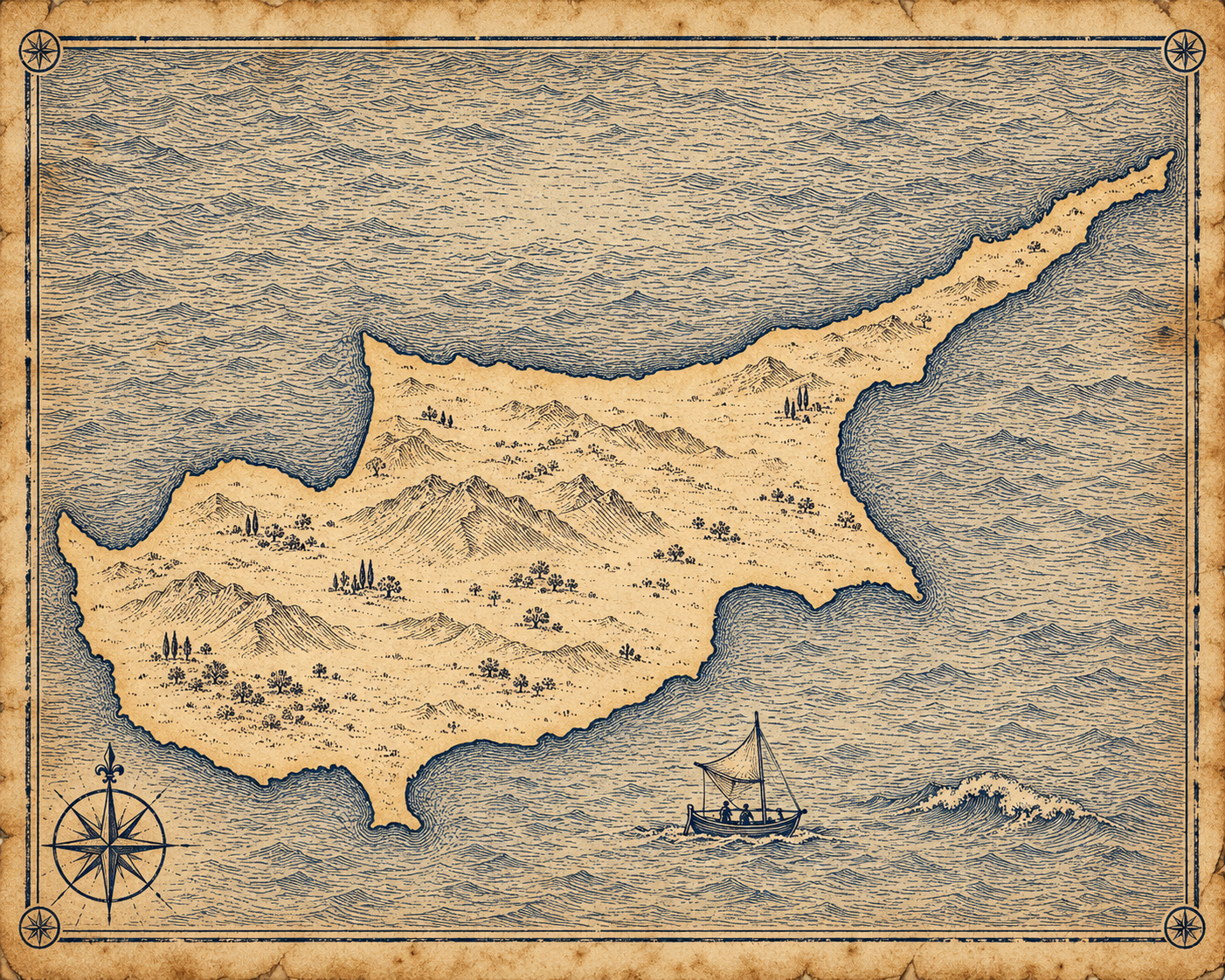
Cyprus's water-sports culture leans wind and kite first, and this page says so plainly. Surfing here is real but genuinely small — a winter-only niche concentrated along Limassol's south coast, with one dedicated surf school and a real, drivable spread of skill-level beaches. What Cyprus lacks in surf scale it makes up for in warm water and layers of ancient history — Greek, Roman, Crusader, Venetian, Ottoman — stacked along the same coastline.

Straight talk: Some links on this page are affiliate links — if you book through them, Secrets of Surf Travel earns a small commission at no extra cost to you. We only link places and people we'd use ourselves, and coverage is never for sale. Those commissions are what keep this site running and fund the next trip.
Some vacation-rental search links on this page (marked "Search Vrbo rentals," "Search Booking.com stays," or "Search Agoda stays") are affiliate links. Every vendor link below is still a plain courtesy link. As more partnerships come online, more links may earn us a commission; the promise above holds either way.
Getting There
There are no direct flights from the US to Cyprus — worth stating plainly, since it's a real contrast to most of this site's other zones. Larnaca (LCA) is the main gateway, about 42-50 minutes' drive from Limassol. Paphos (PFO) is slightly closer in drive time (about 40-44 minutes) but runs a smaller, mostly European charter and budget-carrier network (easyJet, Ryanair, Wizz, TUI, Jet2). The cleanest realistic routings: via Athens (frequent short Aegean hops into Larnaca after a US-to-Athens leg), via London Heathrow (British Airways flies both LCA and PFO direct, with heavy US-London transatlantic capacity), or via Frankfurt (Lufthansa hub). Door to door, budget 12-16+ hours including the connection.
Documents: the Republic of Cyprus is a full EU member but is not in the Schengen Area — a genuine difference from this site's other EU zones. Time spent in Cyprus doesn't count against a traveler's Schengen 90/180-day clock, a real upside if combining this trip with mainland Europe. (The EU advanced Cyprus's Schengen accession review in mid-2026, with a Council vote expected later in the year — check current status, as this could change.) US citizens get a standard 90-day-in-180 visa-free stay for tourism either way; the EU's ETIAS pre-travel authorization (~€20) is expected to apply from late 2026.
Ground Transport
- Cyprus drives on the left — a holdover from British colonial rule (Cyprus was British territory until 1960). This is the first zone on this site where that's the case; every other European zone built so far drives on the right. Rental cars come with the steering wheel on the right.
- A car is essential. Public transport between the surf beaches, Limassol, and the historical sites is weak — this isn't a walk-or-bike zone the way Munich or Scheveningen were.
- Road signage is bilingual Greek/English on motorways and in tourist areas, which eases the adjustment.
- Typical rental cost runs roughly €30-60/day plus about €0.80/liter for fuel.
When to Go & What to Pack
This is a genuine warm-water outlier — the only zone on this site so far where the water doesn't demand serious cold-water gear.
- The real surf season runs roughly November through March, peaking December-January — water sits around 17-19°C (63-66°F). A 3/2mm wetsuit covers a full session.
- Summer (June-September) water climbs to 26-28°C (79-82°F), board-shorts territory — but summer is also the flattest, least surfable stretch of the year. The Mediterranean's winter storm systems that generate swell go quiet in summer, when the island's dominant wind/kite culture takes over instead.
- The tension is worth planning around directly: the best waves come with the coolest (still mild) water, and the warmest water comes with the flattest ocean.
Good to Know
- Currency is the Euro — the Republic of Cyprus is a full EU member, euro since January 1, 2008.
- Emergency number: 112, EU-wide.
- On Northern Cyprus: the island has been divided since 1974 along a UN-monitored line, with the Turkish Republic of Northern Cyprus recognized only by Turkey. Crossing requires a valid passport (no photocopies) at designated checkpoints. Entering the north via Ercan Airport or Kyrenia Port instead of a Green Line checkpoint can cause re-entry complications with the Republic of Cyprus, since those entry points aren't internationally recognized — a real, practical detail if a trip includes the north for any reason. The north uses Turkish Lira. Surf infrastructure there is essentially nonexistent (one kite-first operation was the only thing found in research) — not built out on this page.
Respecting the Locals
Surfing is a young, small scene here — the island's dominant water culture is wind and kite, not waves, and the handful of surf schools along the coast west of Limassol are run by people who've put in real years on this stretch of the Mediterranean. Lodging clusters in low-key villages rather than resort strips, so the towns you're staying in are lived-in, not built for tourists. Treat the local instructors' knowledge and the quiet village character with the same respect you'd want shown in your own hometown.
- Locals get first priority, always. Watch a session before you paddle out. Learn who's who before you learn the wave. Sit inside and catch what they let through — the leftovers are yours, not the set waves.
- Don't backpaddle. Ever. Being in position doesn't make the next wave yours, especially if you didn't wait your turn. If a local wants a wave, let them have it…even if it IS your turn. That older guy who may not be the best surfer out there has probably been surfing that wave before you even sat on a board. If you don't know someone, assume they're local.
- Don't snake. This shouldn't even need to be said, but…dropping in on someone, local or not, is the ultimate disrespect and the fastest way to be sent out of the water. Don't be that guy!
- Say hi. A “howzit,” “whatsup,” or “nice wave,” eye contact, or a nod in the channel — it costs nothing and it's the fastest way from stranger to welcome.
- This is somebody's home, not a resort amenity. The break you're surfing is where a local kid learned to swim, where someone's uncle has surfed for forty years. Act like a guest, because you are one.
- Spend where it actually helps. The food truck, the local shaper, the family-run rental, the local photographer — that's where a surf trip's money should land, not just the chain hotel gift shop. See The No-Reveal Code for why that's the whole premise of this site.
- Leave it better than you found it. Pick up trash that isn't yours. Don't touch reef, wildlife, or cultural sites.
Locals have watched hundreds, if not thousands, of people come and go — some for days, some for months or years — and almost all of them eventually go home. The locals are still there. It takes many, many years to actually become one. Keep that in mind the next time you feel entitled to the same waves they get.
None of this is a secret handshake. It's just how you'd want a guest to act in your own backyard.
Limassol & South Coast
The real Cypriot surf scene lives along the coast west of Limassol — Governor's Beach, Kourion/Episkopi, Avdimou, and Paramali, roughly 20-35 minutes from the city — with lodging clustered a bit further along in Pissouri village. Two other areas turned up in research but didn't clear this site's bar for a full hub: Ayia Napa/Protaras on the east coast has real watersports businesses, but they're jet-ski-and-parasail operators with surf/SUP as an afterthought, not dedicated surf schools; Paphos has arguably the island's best wave, but no surf school actually based there — surfers drive over from Limassol.
Surf Schools & Board Rental
- Kima Surf School & BoardsKoumandarias 26, LimassolConfirm on the groundRun by an instructor with 35 years of surfing experience — genuinely surf-specific, not a windsurf shop with surf bolted on. Board rental around €35/day. Facebook · Map
- Vulcan Surf ClubPyla, with Limassol presenceConfirm on the ground4.9★ across 240 reviews, praised for patient instructors — though windsurf and wing-foil are the primary business, with surf/SUP rental secondary. vulcansurf.com · Instagram · Map
A couple of other names — Cyprus Surf School, Rides on Waves — come up repeatedly in secondary sources as Limassol surf schools, but we couldn't independently confirm current operating status (live website, recent reviews). Worth asking locally before counting on them.
Stays
- Pine Wood Guest HouseEpiskopi, closest lodging to Kourion/Governor's BeachBudgetSimple, well-located for the surf beaches specifically. Map
- Yialos ApartmentsPissouri, within 200m of Pissouri BeachMid-rangeA/C, private bath. Map
- Columbia Beach ResortPissouri BayLuxuryBeachfront, two pools including an 80m lagoon-style pool, three restaurants. columbiaresort.com · Instagram · Map
Where to Eat
- Melanda Beach RestaurantAvdimou BeachMid-rangeBeachfront fish taverna, longest-established of the two Avdimou options — fresh sea bass, bream, calamari. Instagram · Map
- Kyrenia Beach RestaurantAvdimou BeachMid-rangeThe second long-running Avdimou fish taverna, reliable grilled fish. Map
- O Vrakas TavernaPissouri villageMid-rangeTraditional Cypriot with a contemporary edge — owner Harry is a noted Cyprus sommelier, live Bouzouki on Wednesdays. ovrakastaverna.com · Instagram · Map
Wheels
- GC Car RentalsConfirm on the groundFamily-owned, operating since 1981. gcrentalscyprus.com · Map
- Sofronis Car RentalLimassol, also serves Larnaca airportConfirm on the ground20+ years in business. sofroniscarrentals.com · Map
- Chris Car HireConfirm on the groundEstablished in the late 1960s. chriscarhire.com · Map
Surfboard & Wetsuit Repair
A genuine gap — no dedicated ding-repair or wetsuit-repair shop found on the island. Cyprus-Wind Sailmakers does certified repair for kite and wing-foil gear, but not traditional fiberglass surfboard repair. Bring a travel ding-repair kit (Solarez-type); this isn't a serviceable category locally.
Massage & Wellness
- Natura SPA & WellnessLimassolConfirm on the groundTop-rated locally, 4.8★ across 500 reviews. Map
- Suenso SpaLimassolConfirm on the groundWell-regarded, praised for therapist quality. suensospa.com · Instagram · Map
Other Adventures
- Pissouri Bay DiversPissouriMid-range5-star PADI center, runs the local Limassol wreck dives — see Local Secrets. pissouribaydivers.com · Instagram · Map
- Crest DiveMid-rangeDive trips to the Zenobia wreck near Larnaca, plus Akrotiri and Cape Greco. crestdive.com · Instagram · Map
- Troodos/Omodos wine-route day tripsBudgetSee Local Secrets. Map
Local Secrets
Eight non-surf reasons this zone rewards the curious — a Crusader castle where one of the world's oldest named wines still traces its origin, the site where Richard the Lionheart married his queen, and the rock where Aphrodite was said to be born.
- Kourion & the Sanctuary of Apollo Hylates Open year-round; inside the Akrotiri Sovereign Base Area
Kourion, near Episkopi village about 19km west of Limassol, was founded in the 13th century BC by Argive settlers and became one of ancient Cyprus's most powerful city-states — its Greco-Roman theatre still seats 3,500 and hosts events today. Just 2.5km away, the Sanctuary of Apollo Hylates saw continuous worship from the 8th century BC to the 4th century AD across Archaic, Ptolemaic, and Roman building phases, before a mid-4th-century earthquake destroyed it.
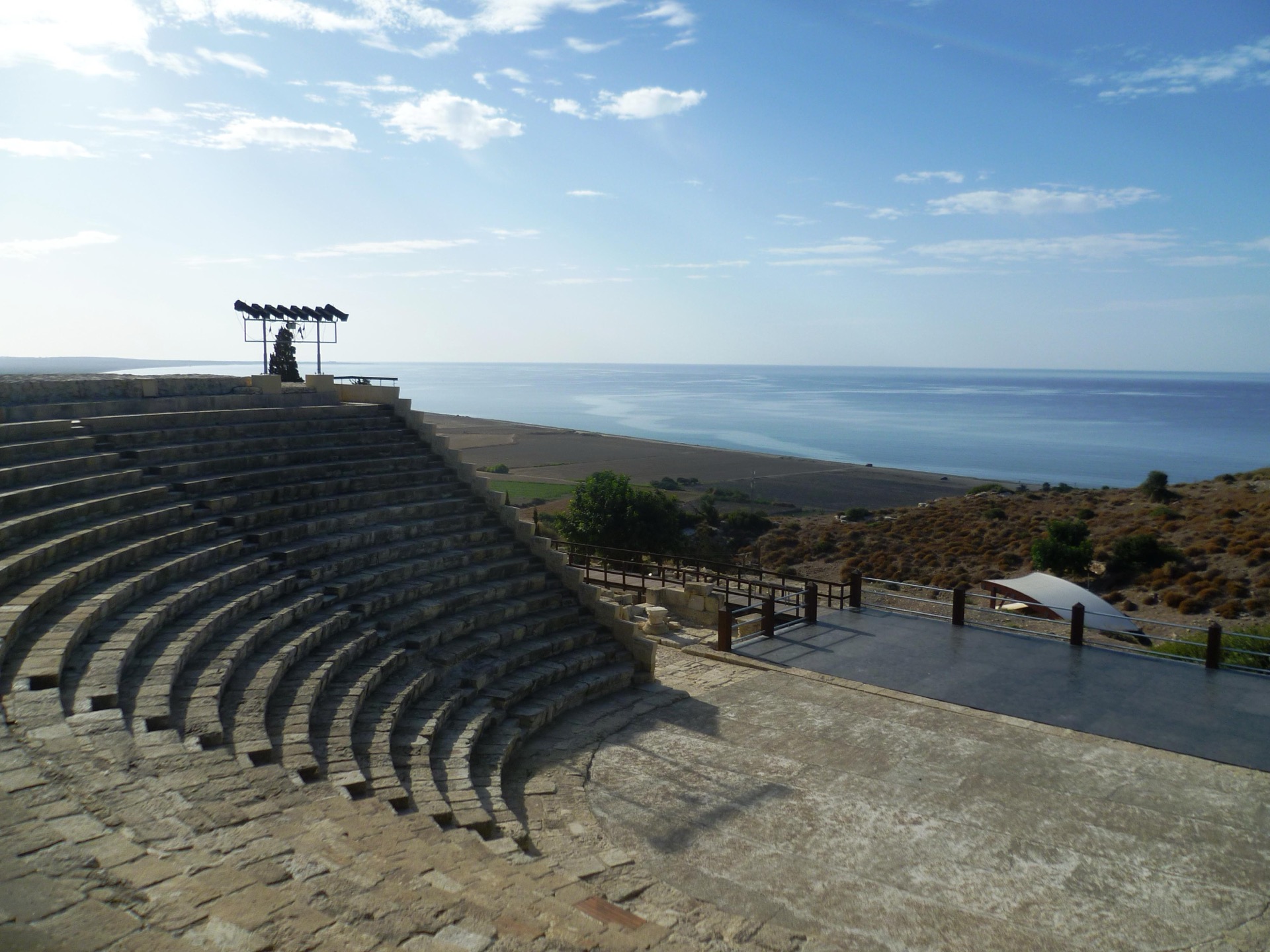 Wikimedia Commons (CC BY 3.0)
 - Kolossi Castle & Commandaria Wine Open year-round, 14km west of Limassol
Built around 1210 by the Crusader Knights Hospitaller under King Hugh I, briefly held by the Knights Templar, and rebuilt in 1454. Historic seat of Commandaria — one of the world's oldest continuously produced named wines, documented to the Crusader "Grande Commanderie." Richard the Lionheart reportedly ordered barrels of it for his 1191 Limassol wedding, calling it "the wine of kings and king of wines."
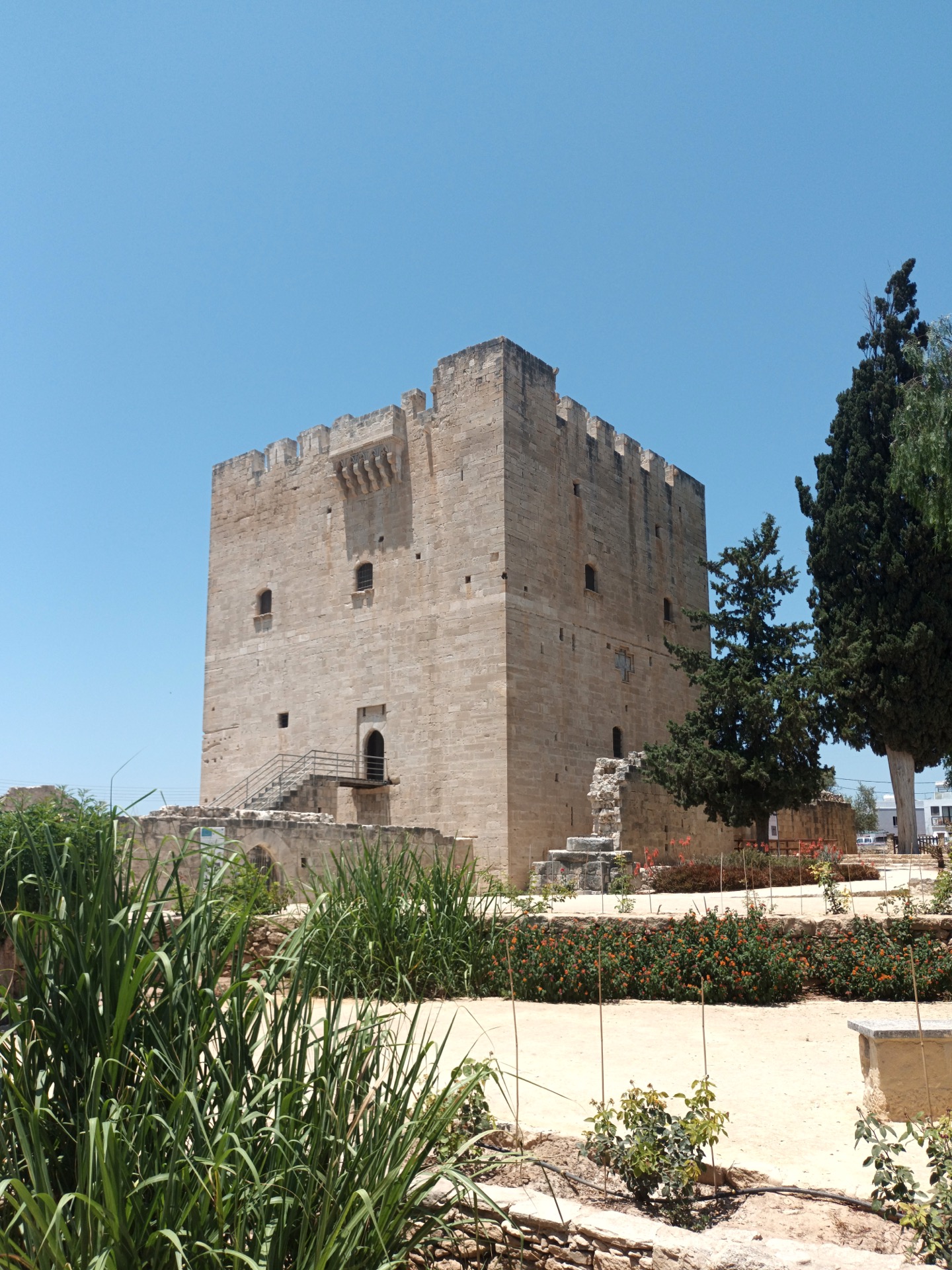 Wikimedia Commons (CC BY 4.0)
 - Ancient Amathus Open year-round, 11km east of Limassol
Inhabited since at least 1050 BC and founded by Eteocypriots, Amathus passed through Greek, Phoenician, Persian, Ptolemaic, and Roman rule before Arab raids destroyed it in the 7th century AD. The second-most important Aphrodite worship site on the island after Paphos, with an excavated Roman agora, baths, four basilicas, and a submerged ancient port.
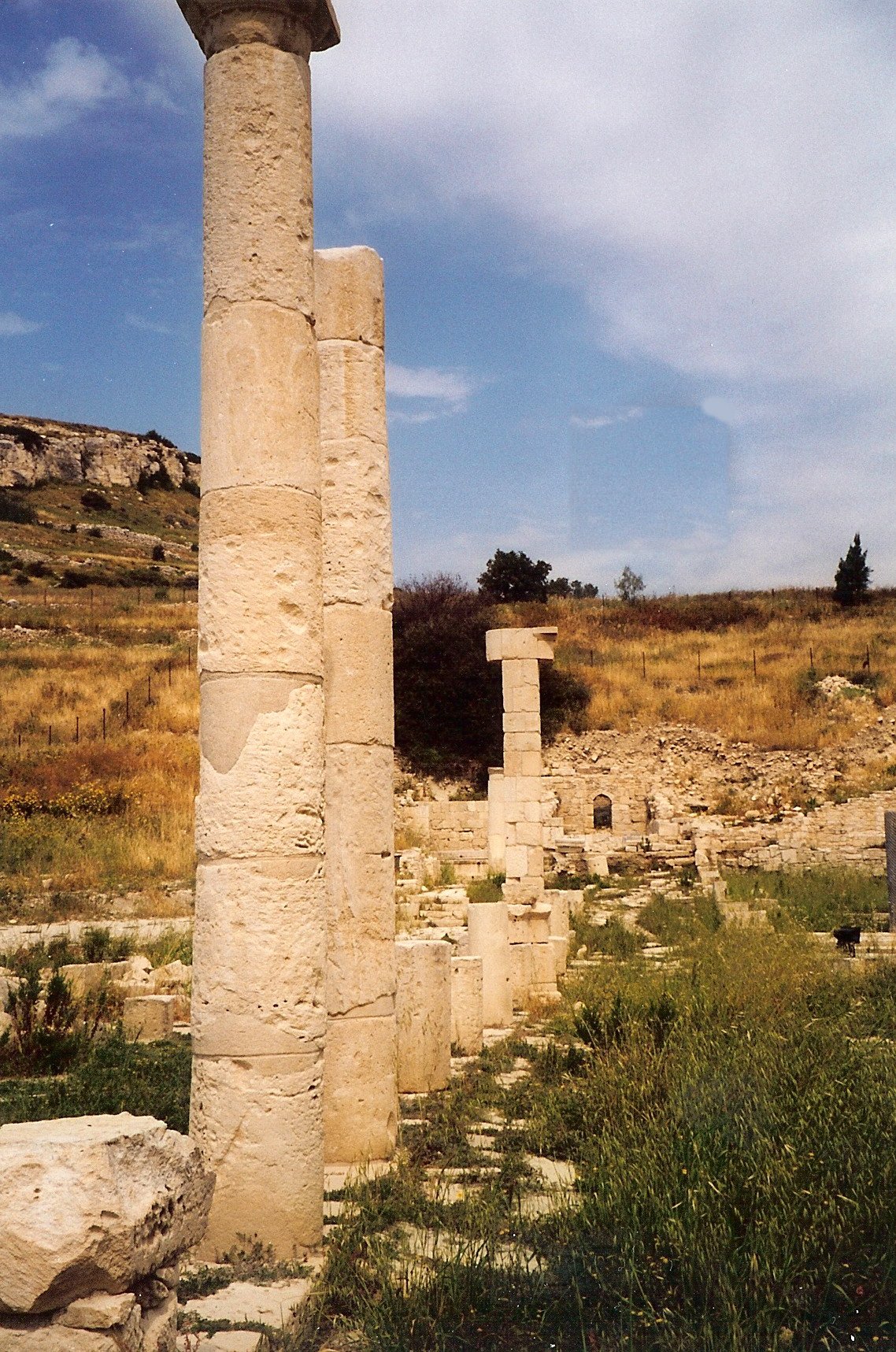 Wikimedia Commons (CC BY 3.0)
 - Limassol Medieval Castle & Old Town Open year-round, central Limassol
Byzantine in origin (around the 12th century). In 1191, Richard the Lionheart married Berengaria of Navarre here and crowned her Queen of England on the spot. Rebuilt as an Ottoman military fortress in the 16th century, with underground dungeons once used as prison cells.
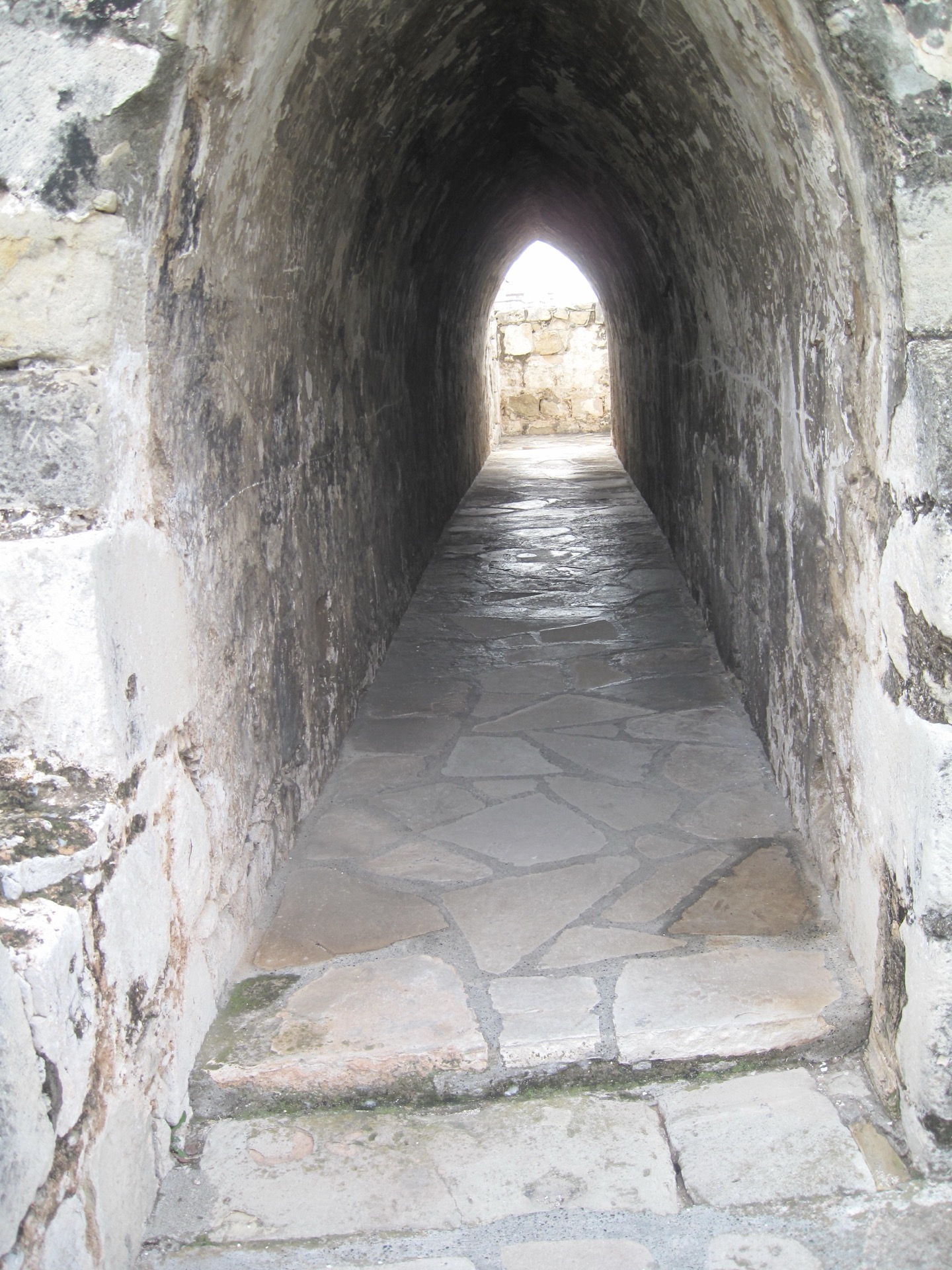 Wikimedia Commons (CC BY-SA 3.0)
 - Petra tou Romiou (Aphrodite's Rock) Year-round, on the coast road between Limassol and Paphos
The mythological birthplace of Aphrodite, per Hesiod's Theogony — sea foam from Cronus's severed strike on Uranus gave rise to the goddess here. A second, alternate legend ties the rock's Greek name to the Byzantine folk hero Digenes Akritas, said to have hurled it from the Troodos Mountains at Saracen invaders.
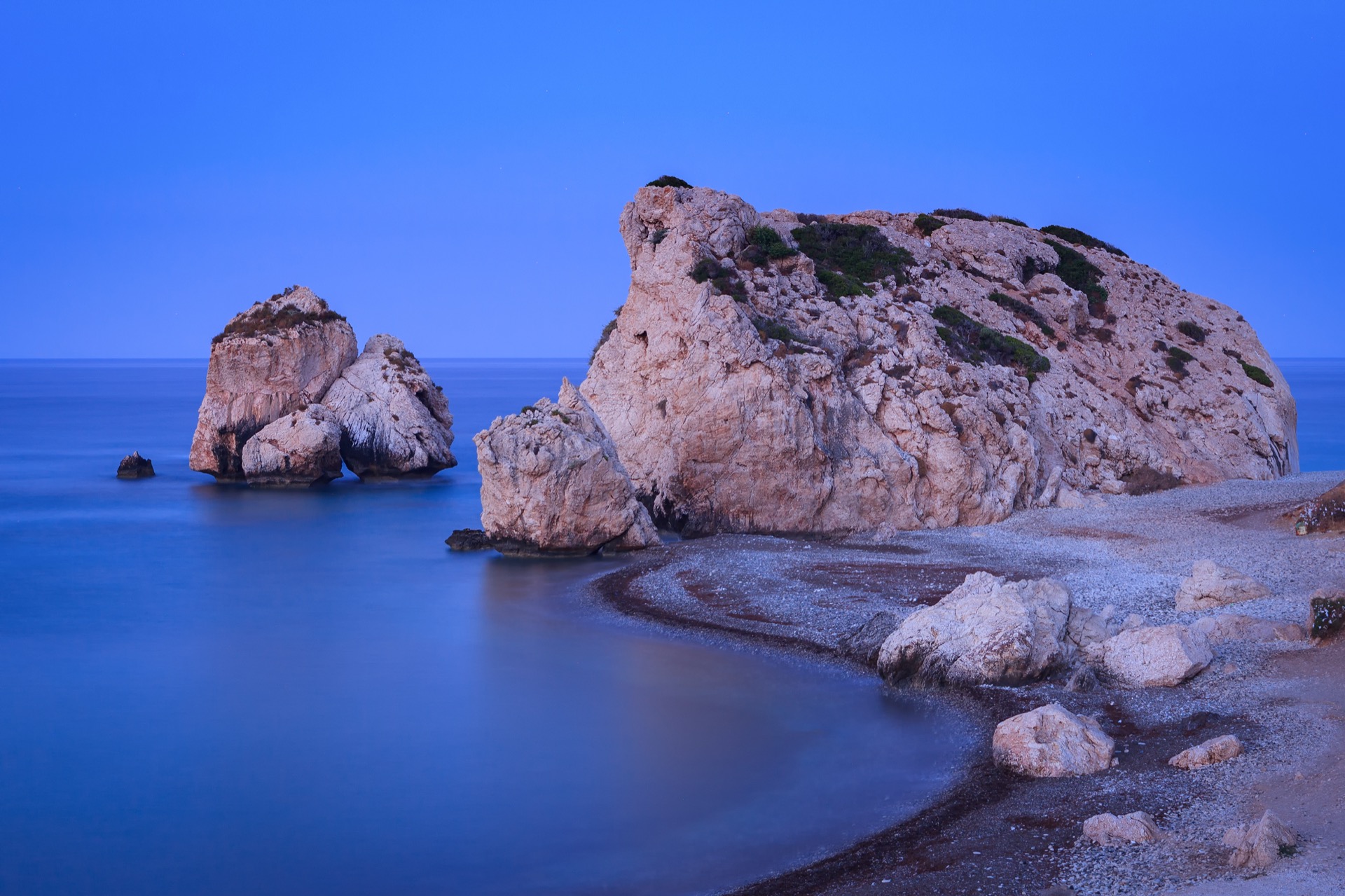 Wikimedia Commons (CC BY-SA 4.0)
 - Omodos & the Troodos Wine Route Roughly 45-50 min from Limassol — a half-day trip, not a quick add-on
A stone-built mountain village home to the Monastery of the Holy Cross and historic wine presses. Commandaria PDO wine has been produced in these foothill villages for over 5,000 years using indigenous Xynisteri and Mavro grapes, with small family wineries like Gerolemo Winery operating just outside the village.
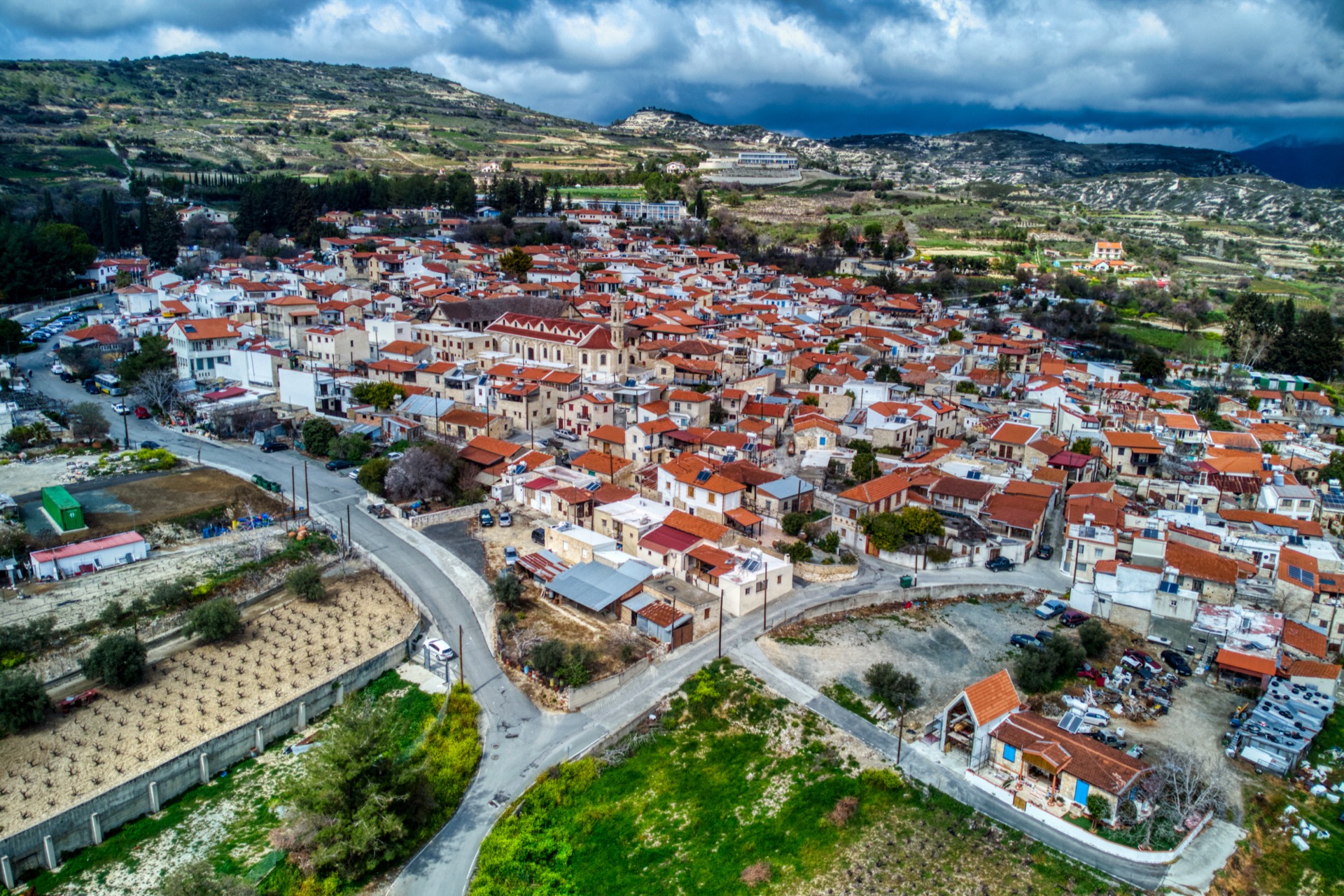 Wikimedia Commons (CC BY-SA 4.0)
 - Salt Lake Flamingos November-March, overlapping directly with the surf season
Cyprus's salt lakes — including Akrotiri, near the surf beaches — are a wintering ground for greater flamingos, once numbering up to 30,000 birds islandwide. It's a real conservation story as much as a scenic one: flamingo numbers have crashed in recent seasons (from an expected 3,500-4,000 down to under 100 in some years, with a partial 2024 recovery to around 300).
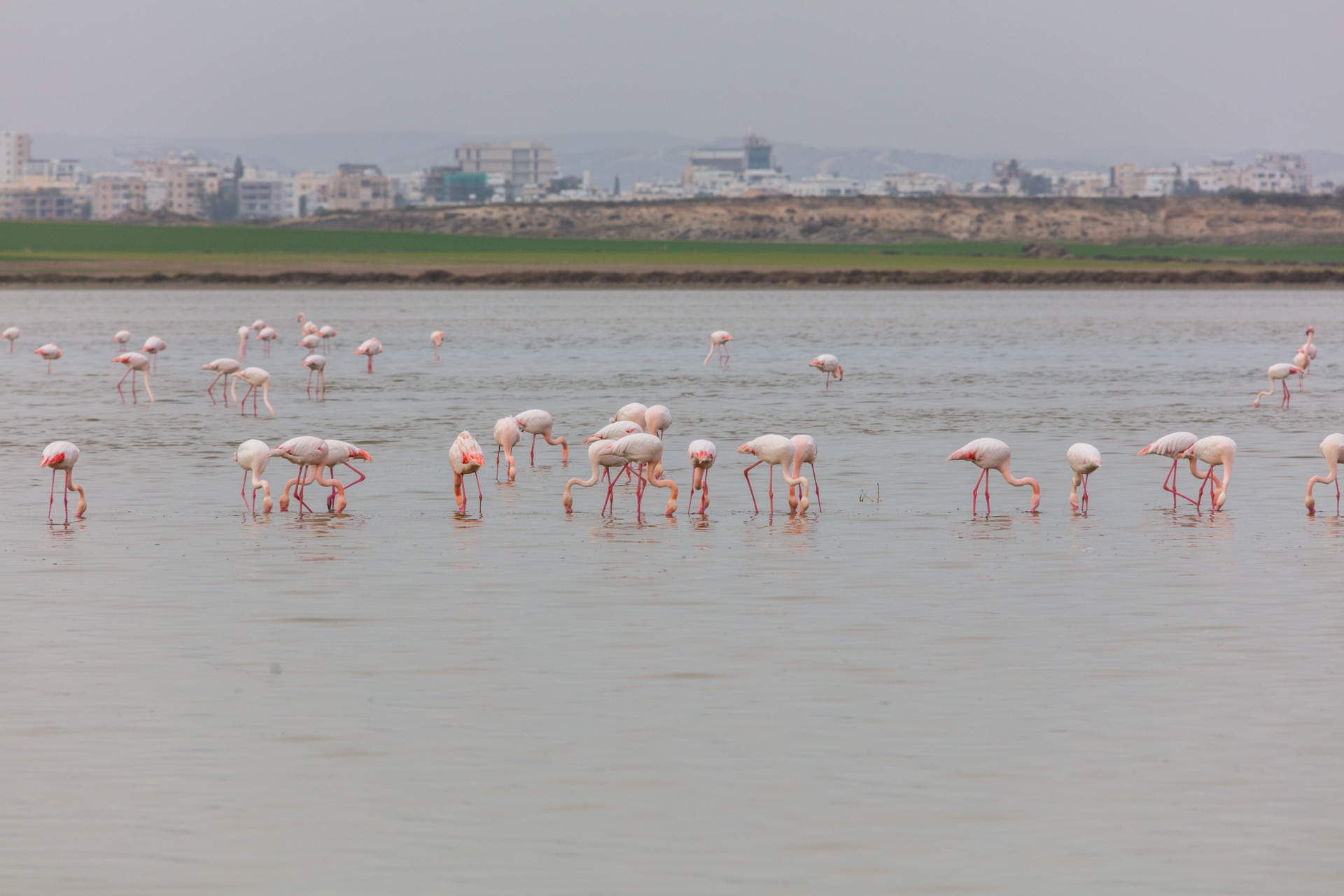 Wikimedia Commons (CC BY-SA 4.0)
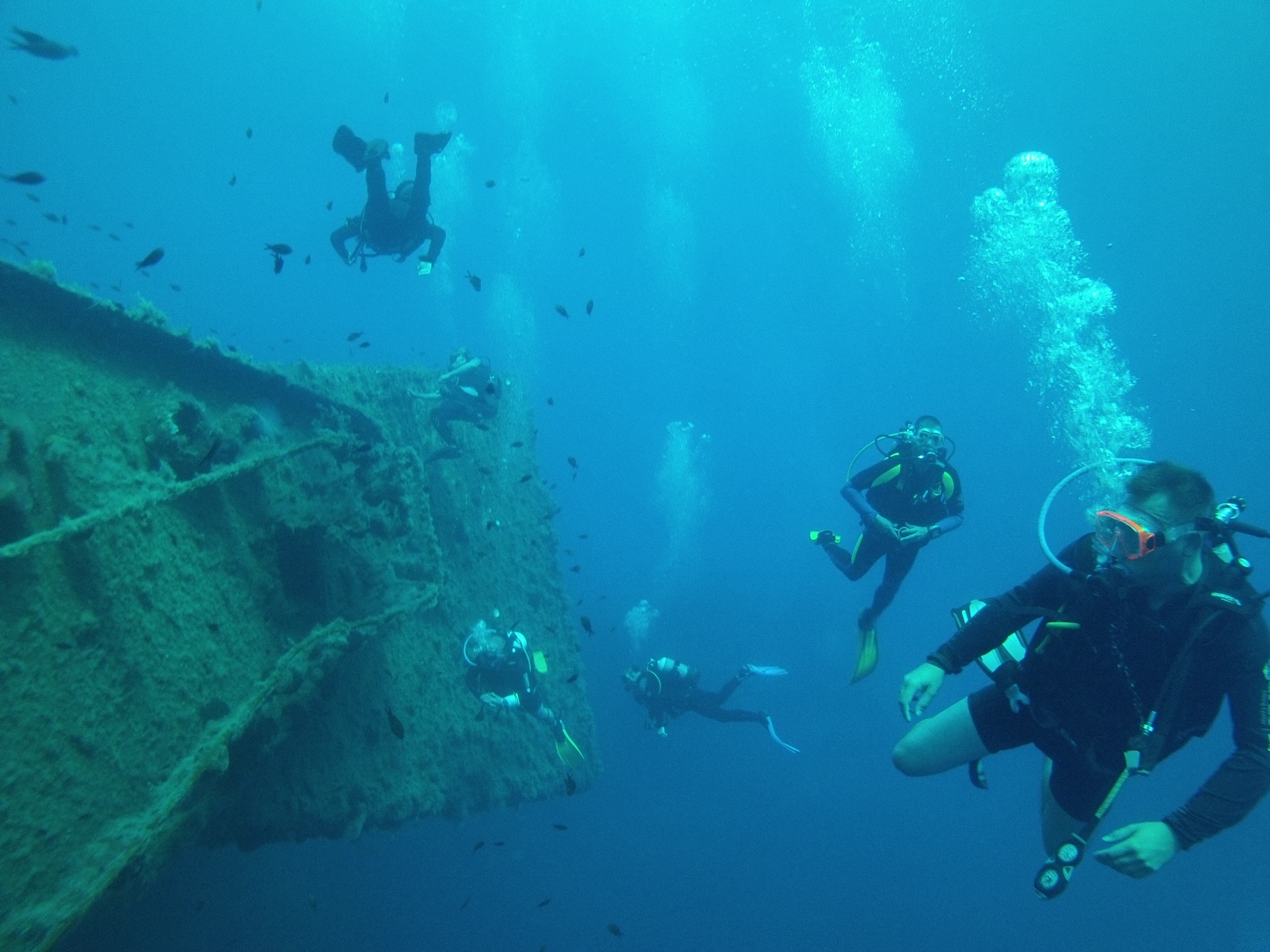
 - Wreck Diving Year-round, weather permitting
Limassol has its own local artificial reef wrecks, Costandis and Lady Thetis, sunk in 2014 at 18-23m depth. For the more famous option, the Zenobia — a capsized ferry near Larnaca, regularly ranked among the world's best wreck dives — is a reachable day trip through operators like Crest Dive.
 Wikimedia Commons (CC BY-SA 4.0)
Questions people actually ask.
Is Cyprus actually a surf destination?
Honestly, a small one — worth saying plainly rather than overselling it. Cyprus's water-sports culture leans wind and kite first; surfing exists as a real but minor, winter-only niche, mostly on the south coast around Limassol. There's a dedicated surf school, real board rental, and a genuine skill-level spread across a handful of beaches — but this isn't an Atlantic-scale surf trip. It's a real find for a committed surfer already routing through the Eastern Mediterranean, or someone island-hopping who wants ancient ruins and Crusader castles alongside a session.
Which airport should I fly into, and how do I get there from the US?
Larnaca (LCA) is the main gateway, about 42-50 minutes from Limassol; Paphos (PFO) is slightly closer in drive time but has a smaller, mostly European charter/budget-carrier network. There are no direct flights from the US to either airport — plan on one stop through a European hub. Athens (frequent short Aegean hops to Larnaca), London Heathrow (British Airways flies both LCA and PFO direct), or Frankfurt (Lufthansa) are the cleanest routings. Door to door, expect 12-16+ hours including the connection — notably longer than this site's Atlantic zones.
Does Cyprus use the Euro, and what about Northern Cyprus?
The Republic of Cyprus (the south, where this zone's hub sits) is a full EU member and adopted the euro on January 1, 2008. One genuine difference from this site's other EU zones: Cyprus is not in the Schengen Area, so time spent here doesn't count against a traveler's Schengen 90/180-day clock — a real upside if combining this trip with mainland Europe. Cyprus has been divided since 1974 along a UN-monitored line, with the Turkish Republic of Northern Cyprus recognized only by Turkey; it uses Turkish Lira, and crossing requires a valid passport at designated checkpoints. Surf infrastructure in the north is essentially nonexistent — this page doesn't build it out, and mentions it here only for practical trip-planning accuracy.
How warm is the water, really?
Genuinely warm by this site's standards — the outlier among every European zone built so far. The actual surf season runs roughly November through March, peaking December-January, with water around 17-19°C (63-66°F) — a 3/2mm wetsuit covers it. Summer water climbs to 26-28°C (79-82°F), board-shorts territory, but summer is also the flattest, least surfable stretch of the year. The best waves come with the coolest (still mild) water, and the warmest water comes with the flattest ocean — worth planning around.
Disclosure & how this page works.
Straight talk: Some links on this page are affiliate links — if you book through them, Secrets of Surf Travel earns a small commission at no extra cost to you. We only link places and people we'd use ourselves, and coverage is never for sale. Those commissions are what keep this site running and fund the next trip.
Today, the "Search Vrbo rentals," "Search Booking.com stays," and "Search Agoda stays" links on this page are affiliate links — every vendor listing link is still a plain courtesy link. As partnerships with these local businesses come online, more links (and discount codes, where Secrets of Surf Travel benefits from their use) may earn us a commission, and this page will keep saying so plainly. Coverage is never for sale: nobody on this page paid to be here, and nobody can.
Every listing was researched in 2026 and is being verified in person. Prices, hours, and policies change — treat them as strong starting points and confirm directly with the business. And per the No-Reveal Code: you will find no surf spots on this page, ever.