
Colombia
One of the wettest, most biodiverse coastlines on Earth — road-inaccessible entirely, reached only by small plane or boat, and home to some of the world's best close-shore humpback whale watching. Two genuinely separate access points, not one trip: Nuquí/Guachalito's eco-lodge cluster in Chocó, and Juanchaco/Ladrilleros roughly 200km south near Buenaventura. This closes out South America's push in SoST Rollout v10.
Straight talk: Some links on this page are affiliate links — if you book through them, Secrets of Surf Travel earns a small commission at no extra cost to you. We only link places and people we’d use ourselves, and coverage is never for sale. Those commissions are what keep this site running and fund the next trip.
Some vacation-rental search links on this page (marked “Search Vrbo rentals” or “Search Booking.com stays”) are affiliate links. Every vendor link below is still a plain courtesy link. As more partnerships come online, more links may earn us a commission; the promise above holds either way.
Getting There
Bogotá (BOG) is Colombia's international gateway. From there, this zone splits into two genuinely separate itineraries:
To Nuquí/Guachalito: fly Bogotá to Medellín (Olaya Herrera, the small downtown airport) or Quibdó, then a short regional flight (Satena or Pacífica de Aviación, small-plane service) into Nuquí's Reyes Murillo Airport (NQU). There is no road connecting Nuquí to the rest of Colombia — Wikipedia categorizes it explicitly among Colombia's "road-inaccessible communities."
To Juanchaco/Ladrilleros: fly Bogotá to Cali, then travel to the port city of Buenaventura, then a fast boat (Transporte Asturias is the named reliable operator, ~1 hour, return fare around 90,000 COP valid 15 days) to Juanchaco.
Documents: US citizens get visa-free entry for tourism, up to 90 days, with a valid passport. Yellow fever vaccination is required for entry to Colombia generally and specifically recommended for this coast.
Ground Transport (and the Real Geography)
- Guachalito Beach is not a separate town — it's a stretch of coast roughly 20-40 minutes by boat (lancha) south of Nuquí town, dotted with eco-lodges, with no airport or civic infrastructure of its own. All Guachalito lodges arrange boat transfer from Nuquí's airport as part of a stay.
- Juanchaco and Ladrilleros function as one hub, about 3km apart — Juanchaco is the boat-arrival port, Ladrilleros is where nearly all hotels, restaurants, and the one dedicated surf school actually sit.
- Neither hub has a road connection to the rest of Colombia, or to each other. There is no rental car category anywhere in this zone — don't expect one. Movement within each hub is on foot or by boat.
When to Go & What to Pack
- Humpback whale season is the marquee reason to time a trip here: June/July through October. Humpback whales migrate from Antarctic feeding grounds to breed and calve in these warm, shallow waters — one of the few places on Earth where mothers and newborn calves are reliably seen close to shore, across both Nuquí/Utría and the Juanchaco/Bahía Málaga area.
- This is genuinely one of the wettest regions on Earth — plan around rain, not around a dry season that doesn't really exist here. Nuquí averages 6,026mm of rain a year, wettest in August; nearby Lloró holds the world record for highest average annual rainfall (13,300mm). Juanchaco's side (Valle del Cauca) averages 7,366mm/year, wettest September-November. Expect rain most days year-round.
- Water: warm, tropical Pacific water at low latitude (3-6°N) — boardshorts territory year-round, no wetsuit needed.
Good to Know
- The advisory, stated specifically rather than with a blanket label: the UK government's official travel advisory recommends against all but essential travel to most of Chocó Department, but explicitly carves out Quibdó, Nuquí, Bahía Solano, and Capurganá as exceptions — the exact towns this page routes travelers through. The rest of Chocó (interior areas, the Panama border) is flagged as genuinely riskier, tied to established drug-trafficking transit routes. Separately, the advisory flags western Valle del Cauca including Buenaventura — Juanchaco's access city — for the same essential-travel-only caution, a materially different risk picture from Nuquí's carve-out. Take this seriously and specifically: it's not simply safe because it's a tourist area, and it's not uniformly dangerous either.
- Health: the CDC recommends malaria prophylaxis for this entire coast (all Colombian areas below 1,700m carry malaria risk) — genuinely necessary here, not overkill. Yellow fever vaccination is required for Colombia entry generally. Standard mosquito-bite precautions (dengue, chikungunya, Zika) apply, and avoid swimming in untreated rivers (leptospirosis risk).
- Tap water: not safe to drink — bottled or treated water only, especially in a region this remote where rural water infrastructure lags well behind Colombia's national average.
- Currency: Colombian Peso (COP) — check a live exchange rate before travel. Emergency: 123 nationwide.
- Connectivity: genuinely limited and lodge-dependent — this is one of the most remote tourism regions on the site, with many eco-lodges running on generator power and satellite-based wifi rather than reliable cell coverage. Don't expect the connectivity of this site's other zones.
- The pricing model here is genuinely different from every other zone on this site: nearly every stay in Nuquí/Guachalito prices per-person-per-night, all-inclusive, with meals and often some activities bundled — not a standalone-hotel-plus-separate-restaurant model. Factor that into any price comparison.
Respecting the Locals
This coast runs on family-owned eco-lodges — some, like Morromico, built and worked by the same family for decades — in towns with no road connection to the rest of Colombia and rainfall that measures among the heaviest on Earth. Whale-watching trips here often route through an Emberá community visit, a reminder that the rainforest and the coast belong to people who were here long before the surf camps arrived. Remote doesn't mean empty, and it doesn't mean the usual rules of being a good guest go away.
- Locals get first priority, always. Watch a session before you paddle out. Learn who's who before you learn the wave. Sit inside and catch what they let through — the leftovers are yours, not the set waves.
- Don't backpaddle. Ever. Being in position doesn't make the next wave yours, especially if you didn't wait your turn. If a local wants a wave, let them have it…even if it IS your turn. That older guy who may not be the best surfer out there has probably been surfing that wave before you even sat on a board. If you don't know someone, assume they're local.
- Don't snake. This shouldn't even need to be said, but…dropping in on someone, local or not, is the ultimate disrespect and the fastest way to be sent out of the water. Don't be that guy!
- Say hi. A “howzit,” “whatsup,” or “nice wave,” eye contact, or a nod in the channel — it costs nothing and it's the fastest way from stranger to welcome.
- This is somebody's home, not a resort amenity. The break you're surfing is where a local kid learned to swim, where someone's uncle has surfed for forty years. Act like a guest, because you are one.
- Spend where it actually helps. The food truck, the local shaper, the family-run rental, the local photographer — that's where a surf trip's money should land, not just the chain hotel gift shop. See The No-Reveal Code for why that's the whole premise of this site.
- Leave it better than you found it. Pick up trash that isn't yours. Don't touch reef, wildlife, or cultural sites.
Locals have watched hundreds, if not thousands, of people come and go — some for days, some for months or years — and almost all of them eventually go home. The locals are still there. It takes many, many years to actually become one. Keep that in mind the next time you feel entitled to the same waves they get.
None of this is a secret handshake. It's just how you'd want a guest to act in your own backyard.
Nuquí & Guachalito
Chocó's main tourism gateway — a small road-inaccessible airport town backing onto a coast of eco-lodges reached by boat, inside one of the world's most biodiverse rainforest regions. Nearly every stay here is all-inclusive, pricing per person per night.
Nuquí and the Guachalito coast run almost entirely on independent, family-owned eco-lodges — all-inclusive, priced per person per night, and worth cross-checking on the vacation-rental platforms too.
Search Vrbo rentals in Nuquí →
Surf Guides & Tours
- Newtours ColombiaNuquí (based in Barranquilla, operates on-site camps)Mid-rangeRuns two named 4-day surf-camp programs — "Nuquí Tercera" for beginners (from $499pp) and "Nuquí Termales" for all levels (from $599pp) — bundling instruction, guiding, and accommodation. The clearest standalone surf operator in the zone.
Stays (all-inclusive, per-person-per-night)
- MorromicoGulf of Tribugá, Guachalito areaUpper-mid/luxuryFamily-owned by the Montoyas since the founder settled the site ~40 years ago — caps occupancy at 10 guests. Whale watching, sport fishing, an Emberá community day trip, and an Utría National Park excursion included."Pricier than other resorts in the area, but worth it." — TripAdvisor reviewmorromico.com@morromico
- El Cantil EcolodgeVereda Termales, near Playa Guachalito and Playa JoviUpper-midSeven wooden cabins where rainforest meets ocean — 4.5/5 on TripAdvisor, 127 reviews. Whale/surf packages run roughly $250/night per person, full board."La excelente comida (aunque solo se ofrece pescado) y la amabilidad del personal" — excellent food and friendly staff, per TripAdvisor
- Hotel La KukaPlaya GuachalitoMid-range/upper-mid4/5, 81 reviews, ranked #2 of 35 specialty lodges in Nuquí — whale watching, jungle hiking, snorkeling, diving, fishing, canoeing, and on-site massage.lakukahotel.com
- Piedra Piedra LodgePlayas de Guachalito, between Morros Terco and TerquitoMid-rangeRegistered with Colombia's National Tourism Registry — sport fishing, whale watching, sea turtle observation.@piedrapiedralodgeWhatsApp
- El Amargal Nature Reserve & EcolodgeEl Amargal Beach, ArusíMid-range40 hectares of rainforest, a 1.5km volcanic-sand beach, and an on-site biological research station — won a 2022 hospitality award.@reservaamargalWhatsApp
Where to Eat
Genuinely thin as a standalone category — nearly all dining here is bundled into the all-inclusive lodges above. One in-town find, "El encanto de Nuquí" seafood restaurant, carries only a 3/5 rating on 24 reviews — reported honestly as mediocre rather than recommended.
Wheels, Ding Repair, Surf Shops
Genuinely nonexistent — Nuquí has no road network at all, so car rental doesn't apply. No dedicated ding-repair or standalone surf shop found; board access runs entirely through Newtours' camp packages.
Massage & Wellness
Only Hotel La Kuka offers this, as one of several on-site lodge amenities — no standalone wellness business found.
Other Adventures
Whale watching (Jul-Oct) is offered as an included, guided activity by essentially every lodge listed above rather than through separate tour companies. Morromico's Copete de Pava rainforest hike (3hrs) and "Biologist's Walk" (5hrs) are the most concretely documented jungle excursions; Ensenada de Utría National Park day trips (snorkeling, an elevated boardwalk) are offered by several lodges as well.
Juanchaco & Ladrilleros
A distinct hub roughly 200km south of Nuquí in Valle del Cauca, reached via Cali and a fast boat from Buenaventura rather than by air. Home to the zone's one genuine standalone surf school and a 25-year-established whale-watching operator.
Independent hotel-restaurant combos and small family-run stays cluster around Ladrilleros, where nearly all of the hub's beds actually sit.
Search Vrbo rentals in Ladrilleros →
Surf Guides & Tours
- Surf House Estilo LibreLadrilleros beachBudgetBuilt 2018 — a real hostel-plus-surf-school combo, the closest thing in this whole zone to a classic surf camp. Certified instruction beginner-to-advanced, 2-hour classes with board rental included, offered twice daily.surfhouseestilolibre.com
Stays
- Coral Resort LadrillerosUpper zone of Juanchaco/LadrillerosMid-range4.7/5 on Facebook (2.4K followers), 5/5 on TripAdvisor, ranked #2 of 4 specialty lodging in Juanchaco — rooms with A/C, TV, fridge, private bath.
- Hotel y Restaurante TeresaVereda Ladrilleros, Sector Villa LindaBudget/mid-rangeCombined hotel and seafood restaurant, 4.9/5 (7 reviews) — offers all-inclusive plans covering whales, waterfalls, jungle, and surf.@hotelyrestauranteteresa
Where to Eat
- Restaurante y Cevichería TeresaLadrilleros (doubles as lodging above)BudgetFresh-caught fish daily, breakfast with arepas/eggs/coffee, direct beach access.
Wheels, Ding Repair, Massage & Wellness
All genuinely nonexistent — same roadless reasoning as Nuquí. Board access runs entirely through Surf House Estilo Libre; no wellness business of any kind was found in Juanchaco/Ladrilleros.
Other Adventures
- Pío BallenasBahía Málaga/Juanchaco/La BarraMid-rangeOver 25 years operating — humpback whale tours (Jul-Oct) with a hydrophone add-on to hear whale song underwater, plus mangrove estuary tours, Uramba Bahía Málaga National Park visits, and bioluminescent plankton night tours. Day tour ~370,000 COP/pp; 2 nights/3 days ~750,000 COP/pp.@pioballenasWhatsApp
Local Secrets
Eight non-surf reasons this zone rewards the curious — humpback whales calving close to shore, a fjord-like national park, and one of the wettest, most biodiverse rainforests on the planet.
- Humpback Whale Watching June through November
Southeastern Pacific humpback whales migrate from Antarctic feeding grounds to breed and calve in these warm, shallow waters — one of the few places on Earth where mothers and newborn calves are reliably seen close to shore, across Bahía Málaga, Isla Gorgona, and Ensenada de Utría.
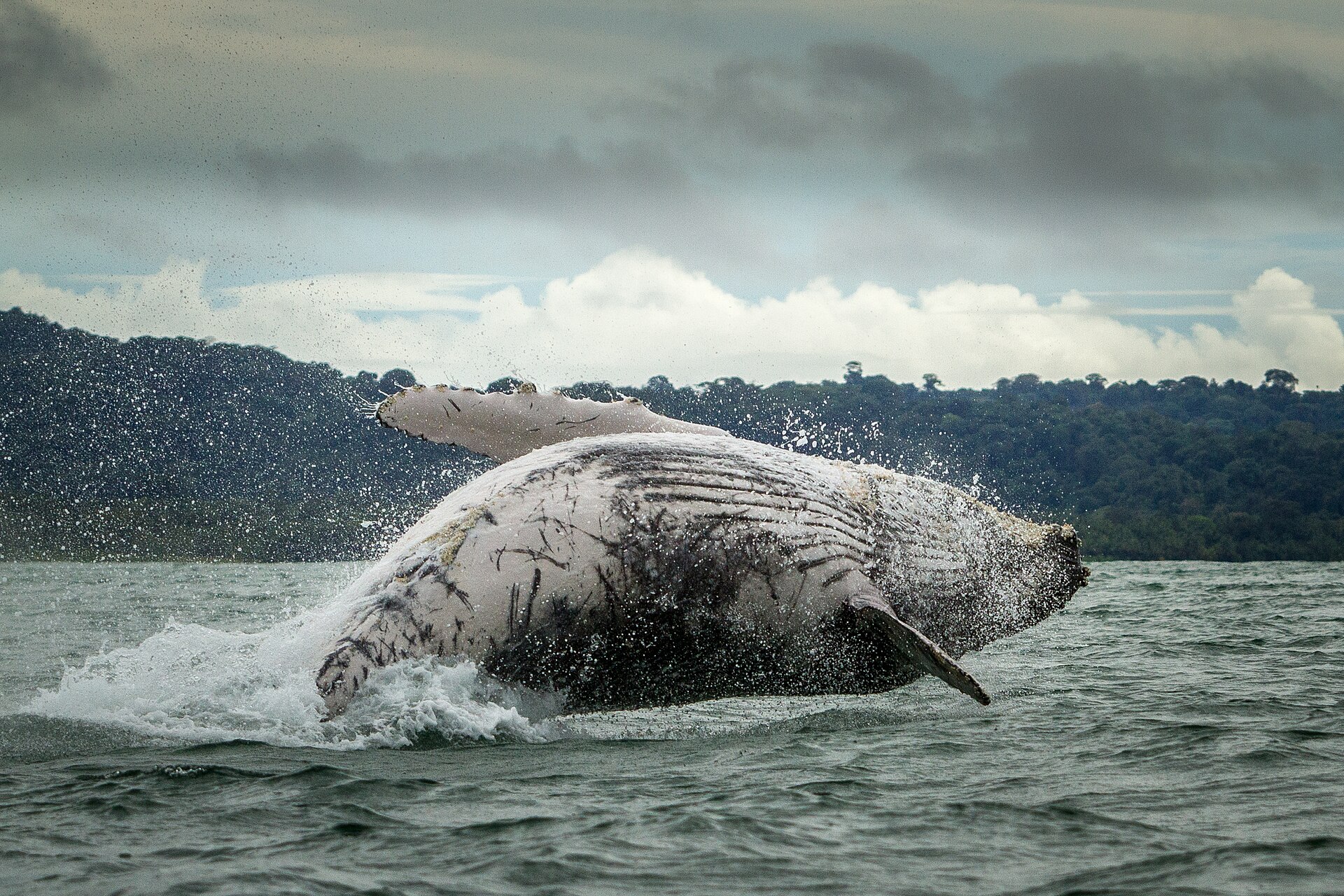 Photo: Dwayne Reilander / Wikimedia Commons (CC BY-SA 4.0)
 - Ensenada de Utría National Natural Park Year-round; drier stretch roughly Dec-Mar
A 543 km² park created in 1987, protecting a fjord-like tidal bay, rainforest, mangrove estuary, and offshore coral formations — home to roughly 125 mammal, 400 bird, and 1,000 reptile species.
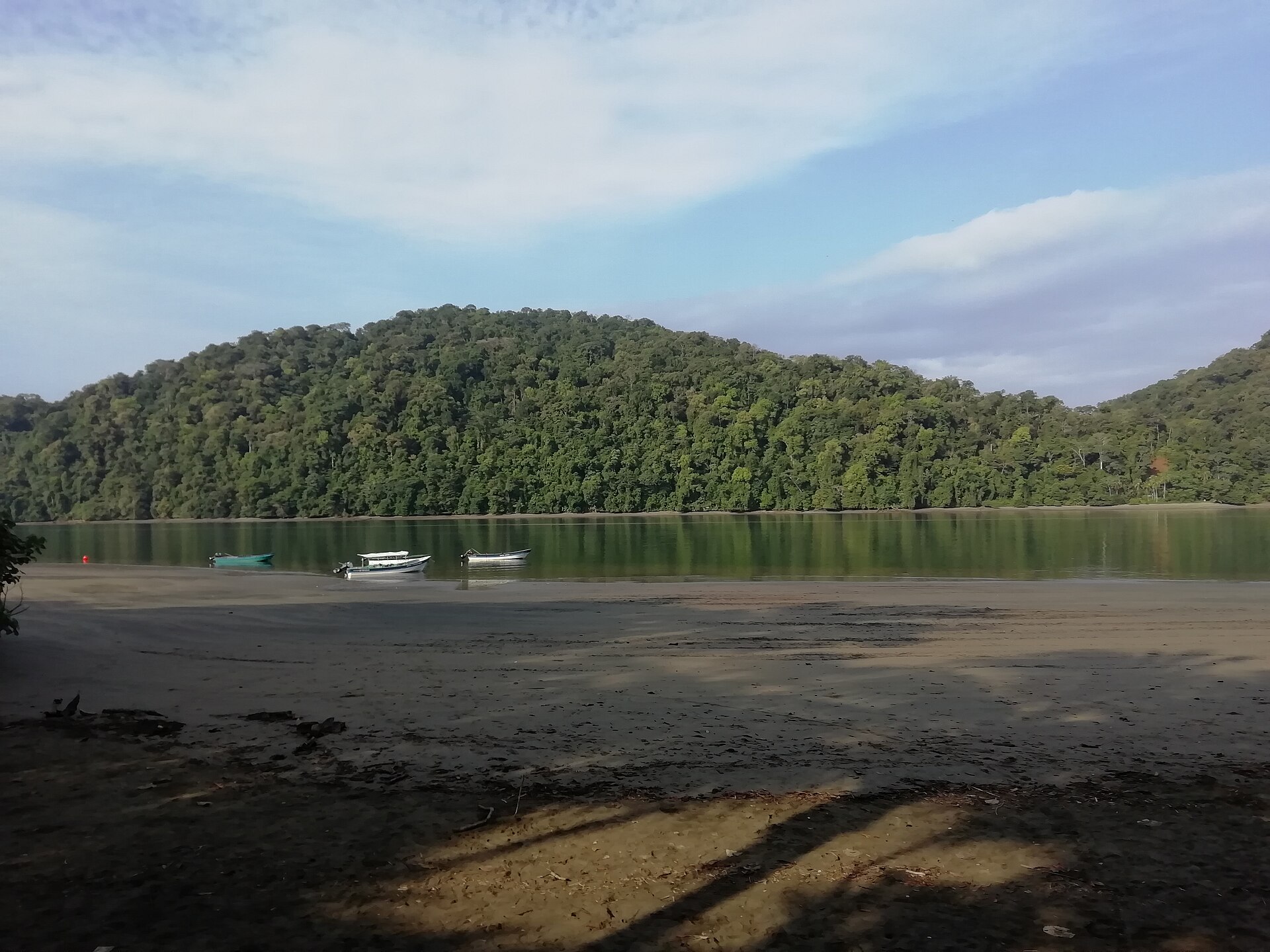 Photo: Jorgegutierrezpareja / Wikimedia Commons (CC BY-SA 4.0)
 - Mangrove Forests of Utría Year-round; mid-to-high tide for canoe access
Utría's estuary contains 4 of Colombia's 7 native mangrove species — guided canoe tours through these channels, and comparable routes on the Coquí and Joví rivers near Nuquí, are a standard ecotourism activity.
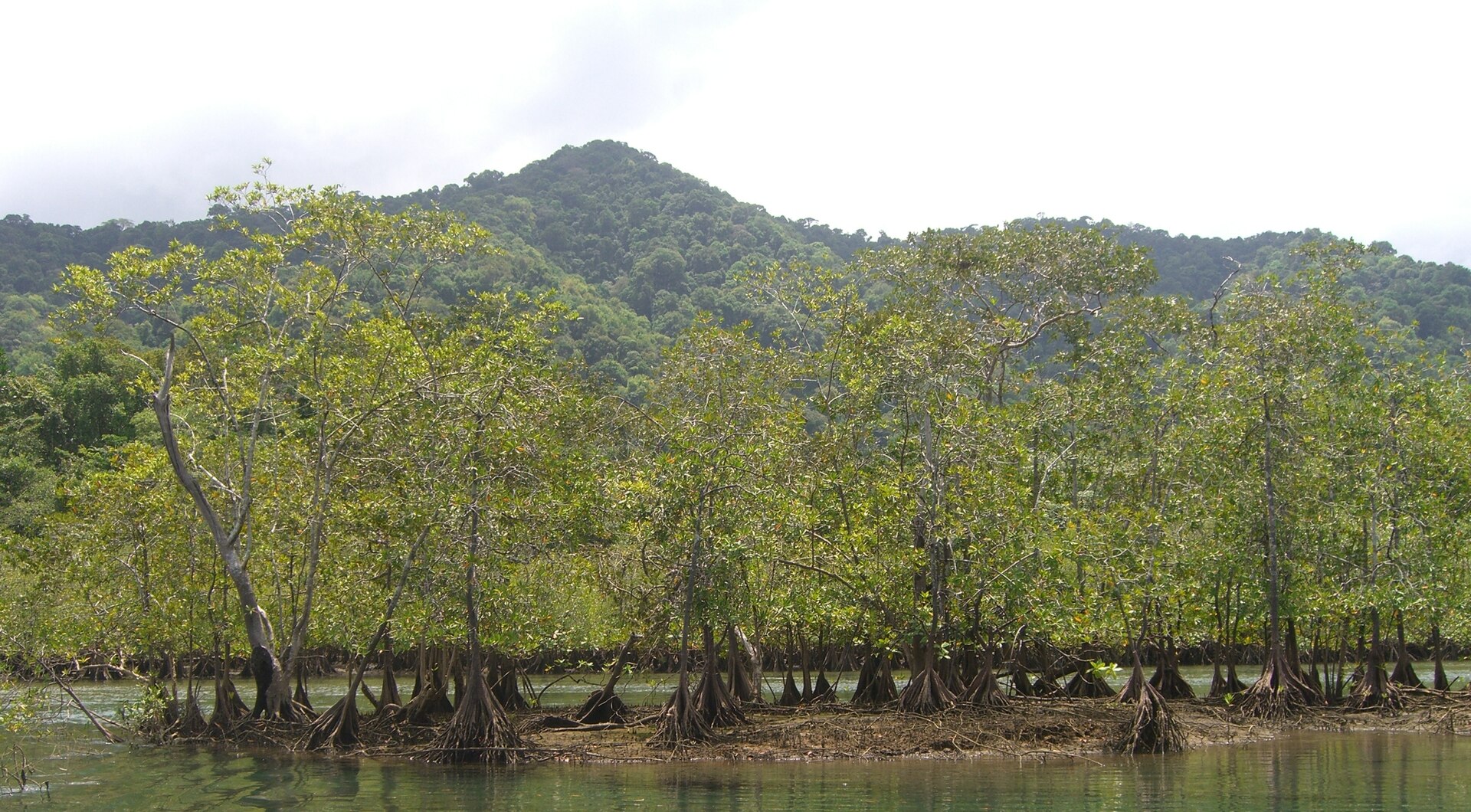 Photo: Philipp Weigell / Wikimedia Commons (CC BY 3.0)
 - The Walking Palm Year-round, on any rainforest walk inside Utría
A stilt-rooted palm (Socratea exorrhiza) common along Utría's trails, growing tall on above-ground prop roots — a genuine, frequently pointed-out botanical curiosity of this rainforest.
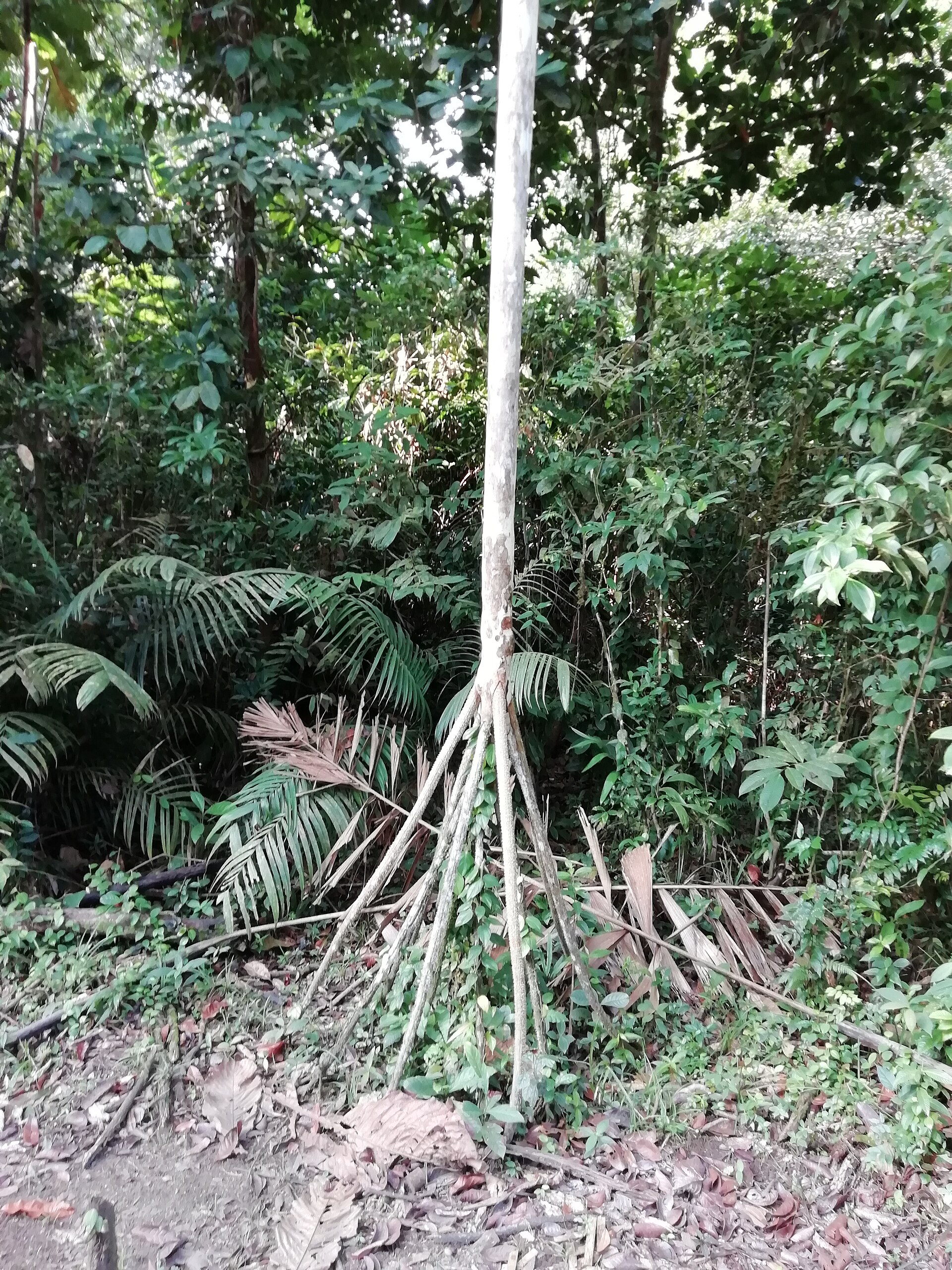 Photo: Jorgegutierrezpareja / Wikimedia Commons (CC BY-SA 4.0)
 - Birdwatching for Chocó Endemics Year-round; early morning best
Chocó sits inside a UN-recognized top-25 global biodiversity hotspot, with roughly 25% of plant and bird species considered endemic — the Pacific Flatbill is one of the specialty birds visiting birders come for.
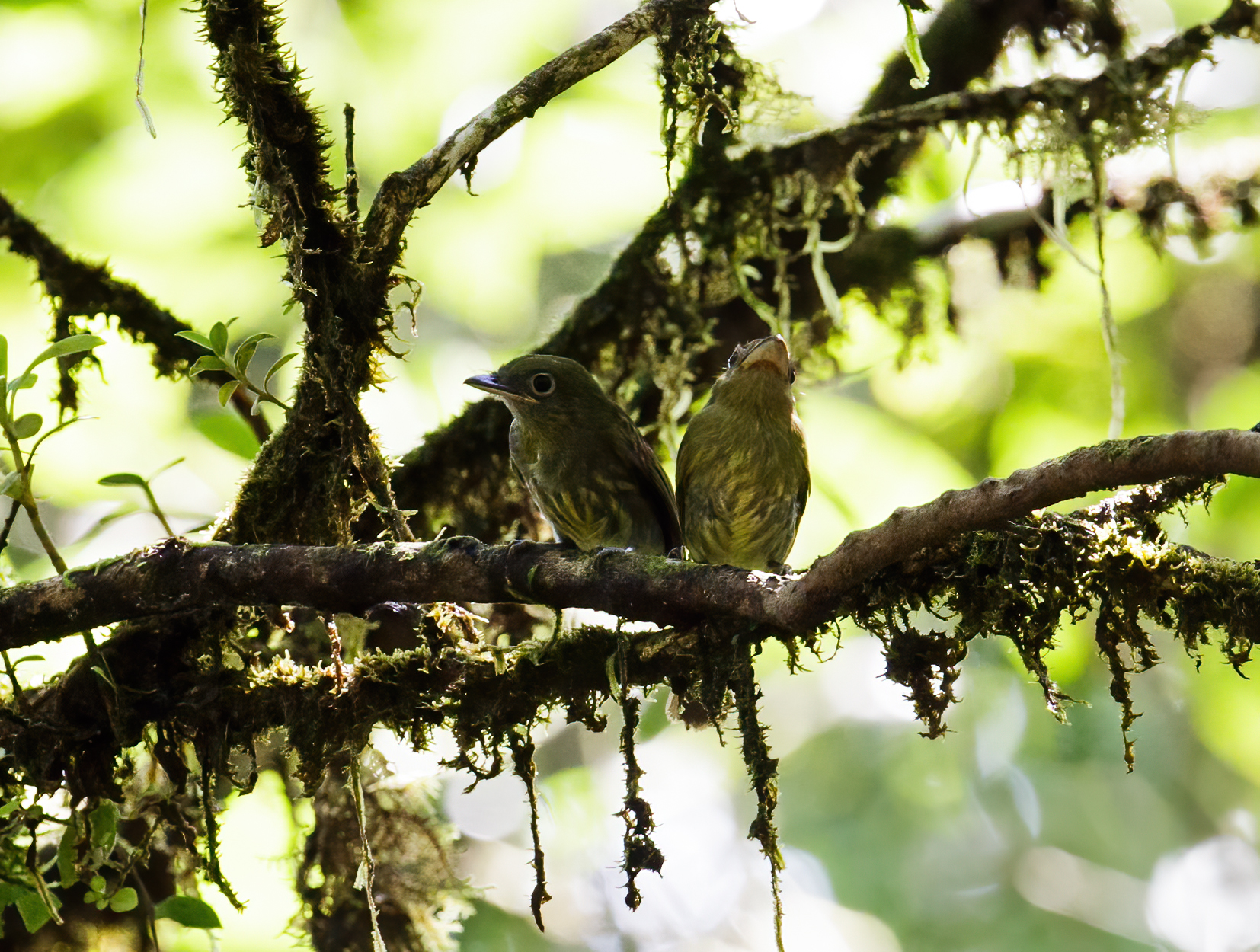 Photo: Nick Athanas / Wikimedia Commons (CC BY-SA 2.0)
 - Rainforest Giants: Megasoma mars Beetle Year-round; most active in the rainy season
One of the world's largest rhinoceros beetles occurs in the Chocó-Darién rainforest backing Nuquí's beaches — a real, documented find for anyone exploring the forest edge or shoreline at night in one of the planet's wettest regions.
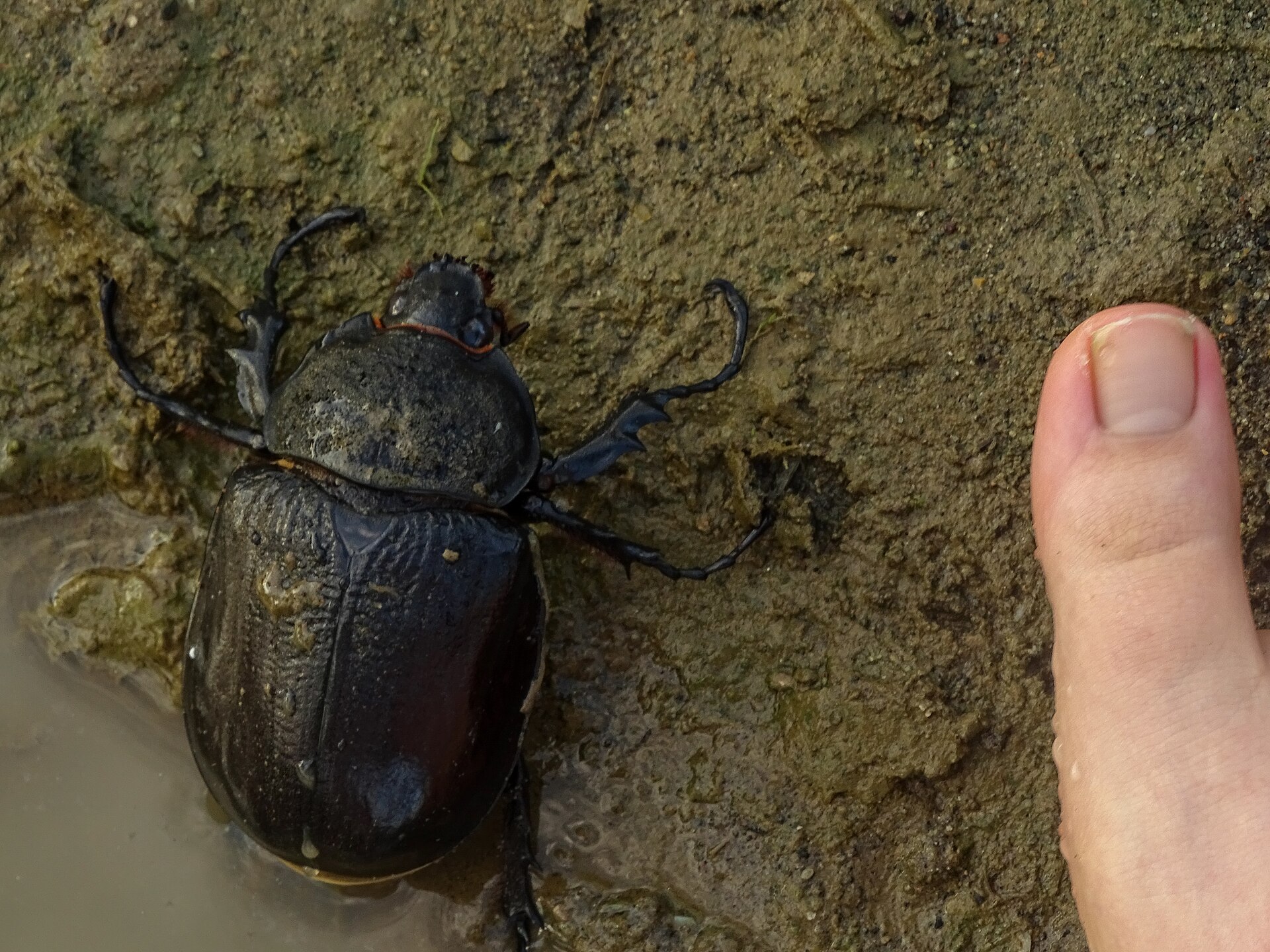 Photo: Reduvida3 / Wikimedia Commons (CC BY-SA 4.0)
 - Cascada Ostional Year-round, as a guided hike from Juanchaco/Ladrilleros
A rainforest waterfall inside Uramba Bahía Málaga National Natural Park (47,094 hectares, created 2010) — one of several documented jungle waterfalls in the park, reachable from Juanchaco and Ladrilleros.
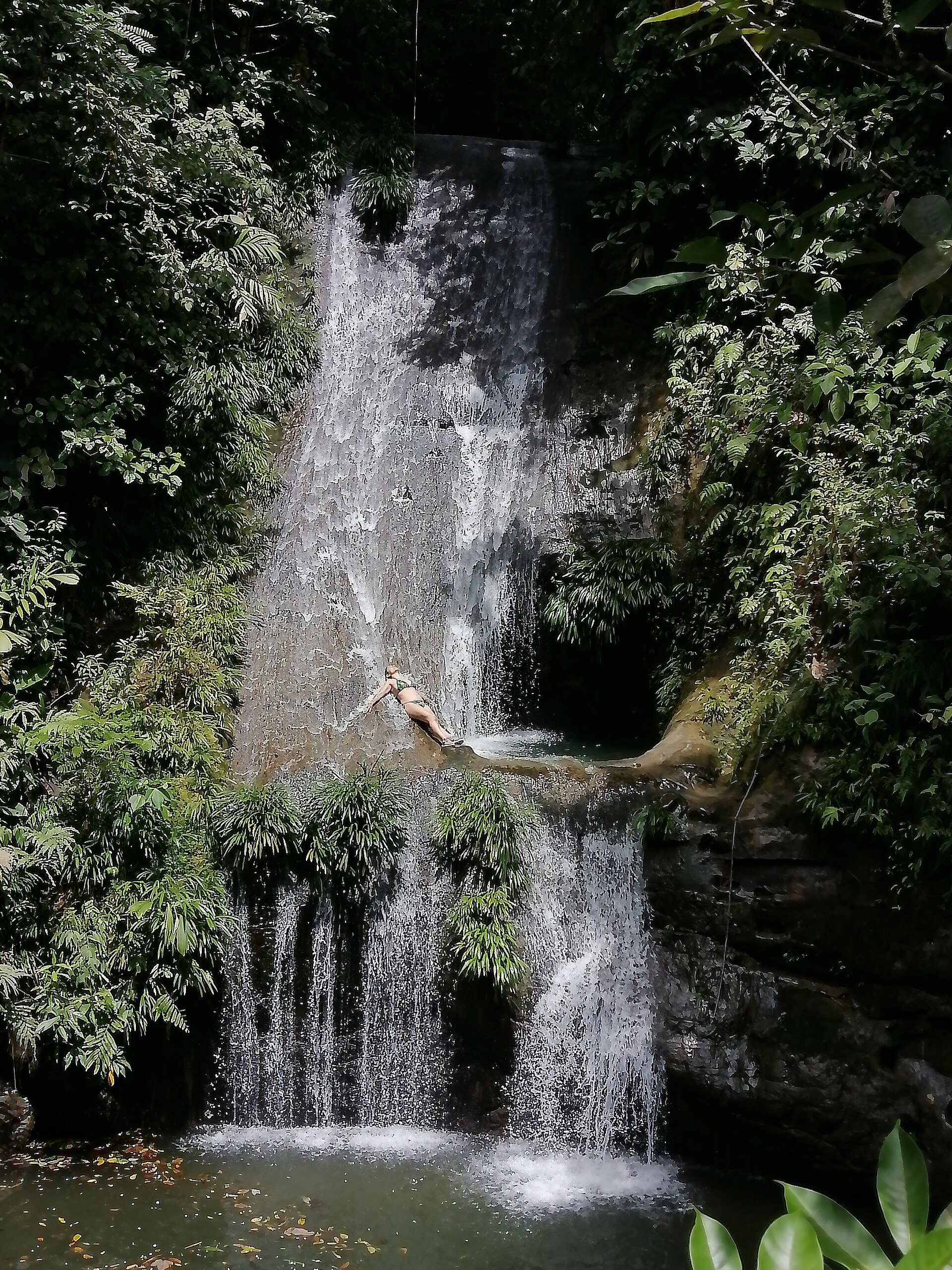 Photo: Valley Adventours / Wikimedia Commons (CC BY-SA 4.0)
 - Beachcombing for Land Hermit Crabs Year-round
Nuquí's black-sand beaches host the Ecuadorian land hermit crab (Coenobita compressus) — a real and easily observed feature of any beach walk on this coast.
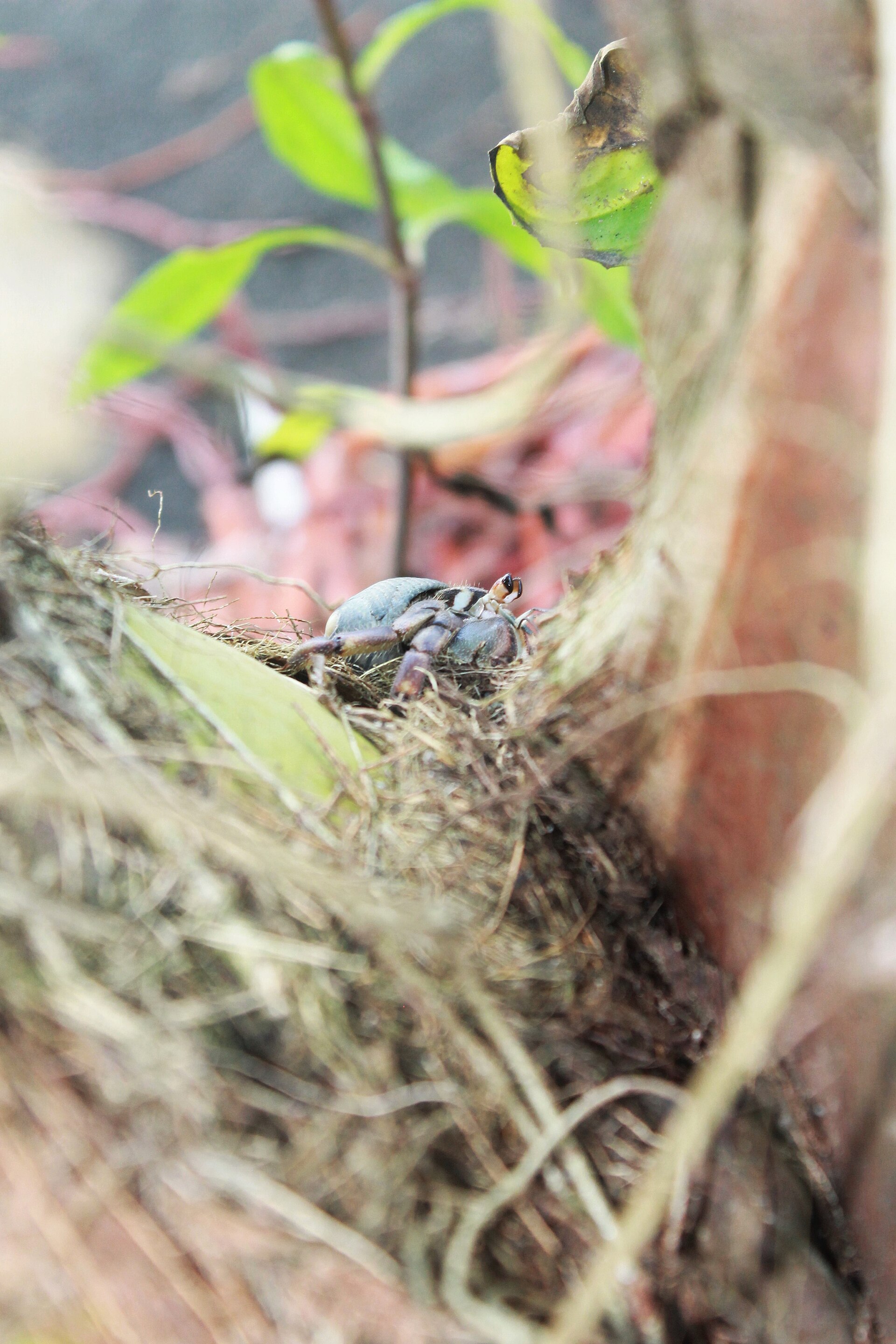 Photo: Mónica Páez S. / Wikimedia Commons (CC BY-SA 4.0)
Questions people actually ask.
How do I get to Colombia's Chocó Pacific coast?
Bogotá (BOG) is the international gateway. From there, Nuquí and Juanchaco/Ladrilleros are two genuinely separate access itineraries, not one trip: Nuquí is reached by a small regional plane (Satena or Pacífica de Aviación) from Medellín or Quibdó into Nuquí's small airport (NQU) — there is no road connection at all. Juanchaco/Ladrilleros is reached via Cali and the port city of Buenaventura, then a fast boat (Transporte Asturias, ~1 hour). The two hubs sit roughly 200km apart with no direct link between them.
Do I need a visa?
No. US citizens get visa-free entry for tourism, up to 90 days, with a valid passport. Yellow fever vaccination is required for entry to Colombia generally and specifically recommended for this coast.
Is this region safe?
This needs a specific, regional answer, not a blanket one — and the honest picture is genuinely more nuanced than most zones on this site. The UK government's official advisory recommends against all but essential travel to most of Chocó Department, but explicitly carves out Quibdó, Nuquí, Bahía Solano, and Capurganá as exceptions — meaning the exact towns this page routes travelers through are the ones the advisory treats as lower-risk, while the rest of Chocó (interior areas, the Panama border) is flagged as genuinely riskier. Separately, the advisory flags western Valle del Cauca including Buenaventura — Juanchaco's access city — for the same essential-travel-only caution, a materially different risk picture from Nuquí's carve-out. This coast has a real historical association with drug-trafficking transit routes; it is not simply safe because it's a tourist area, and the safety picture here is genuinely regional rather than uniform.
When should I go?
For whale watching, June/July through October — the marquee activity on this coast, with mothers and newborn humpback calves reliably seen close to shore. This is genuinely one of the wettest regions on Earth (Nuquí averages over 6,000mm of rain a year; nearby Lloró holds the world record for average annual rainfall) with essentially no real dry season — expect rain most days regardless of when you visit, and plan accordingly rather than chasing a dry-season window that doesn't really exist here.
What's the water like, and do I need a wetsuit?
Warm, tropical Pacific water at low latitude (3-6°N), boardshorts territory year-round — no wetsuit needed.
Disclosure & how this page works.
Straight talk: Some links on this page are affiliate links — if you book through them, Secrets of Surf Travel earns a small commission at no extra cost to you. We only link places and people we’d use ourselves, and coverage is never for sale. Those commissions are what keep this site running and fund the next trip.
Today, the “Search Vrbo rentals” and “Search Booking.com stays” links on this page are affiliate links — every vendor listing link is still a plain courtesy link. As partnerships with these local businesses come online, more links (and discount codes, where Secrets of Surf Travel benefits from their use) may earn us a commission, and this page will keep saying so plainly. Coverage is never for sale: nobody on this page paid to be here, and nobody can.
Every listing was researched in 2026 and is being verified in person. Prices, hours, and policies change — treat them as strong starting points and confirm directly with the business. And per the No-Reveal Code: you will find no surf spots on this page, ever.