
Central Chile
Chile's undisputed #1 surf town, a wave-adjacent point recognized as the world's 7th World Surfing Reserve, and a UNESCO World Heritage port city with a real, honest safety contrast to the quiet coastal towns around it. Cold, consistent, California-style water the whole way through — this zone closes out Chile's 2/2.
Straight talk: Some links on this page are affiliate links — if you book through them, Secrets of Surf Travel earns a small commission at no extra cost to you. We only link places and people we’d use ourselves, and coverage is never for sale. Those commissions are what keep this site running and fund the next trip.
Some vacation-rental search links on this page (marked “Search Vrbo rentals” or “Search Booking.com stays”) are affiliate links. Every vendor link below is still a plain courtesy link. As more partnerships come online, more links may earn us a commission; the promise above holds either way.
Getting There
Santiago (SCL) is Chile's international gateway, with real direct US service: American from Miami, Delta from Atlanta, United from Houston (seasonal), and LATAM from Miami, New York-JFK, and Los Angeles. Confirm exact current-season routes before booking — schedules shift year to year.
Documents: Chile is visa-free for US citizens for stays up to 90 days — just a valid US passport. Keep the immigration receipt (Tarjeta de Turismo) issued on arrival; you'll need it at departure, and it also exempts USD-paying travelers from Chile's 19% lodging VAT.
Ground Transport
- Santiago to Pichilemu: roughly 3.5 hours by bus from Terminal Alameda (shorter, ~2 hours, starting from San Fernando instead). Driving is faster than the bus and generally easy.
- Pichilemu to Punta de Lobos: 6km, a 10-minute drive — not literal walking distance, but close enough that many surf camps run shuttle service.
- Santiago to Valparaíso/Viña del Mar: ~120km, about 1.5 hours by bus, with frequent daily departures — genuinely one of Chile's best-served routes. Valparaíso and Viña del Mar are effectively conurbated, connected by commuter rail and local avenues, no separate transfer needed between them.
- Matanzas: sits 160km south of Santiago and 58km north of Pichilemu, roughly midway along the coast — confirm exact Valparaíso-to-Matanzas timing directly when planning, as it wasn't cleanly sourced this pass.
- Car vs. bus: Chile's bus network genuinely doesn't require a car for the Santiago-Valparaíso or Santiago-Pichilemu legs. A rental car becomes useful for hopping between the smaller coastal towns (Pichilemu-Matanzas) and reaching areas beyond each town center, since local bus service between small coastal villages is thin.
When to Go & What to Pack
- Surfing is possible nearly year-round, except the harshest deep-winter stretch (July-August). Fall/winter (roughly April-August) brings the biggest, most consistent swells — genuine big-wave conditions that put Punta de Lobos on the Big Wave World Tour circuit. Summer (December-February) is warmer, calmer, and more beginner-friendly, and also Chile's peak domestic beach-tourism season.
- The most consistent cold water on this site's South America roster: Pichilemu holds roughly 12-15°C (54-60°F) year-round, barely warming even in summer — a real California/NorCal comparison rather than the wide seasonal swing this site's Uruguay and Argentina zones have. Coldest is August-September (~12.2°C), warmest is February (~15.3°C).
- Wetsuit: a 4/3mm with boots is the realistic year-round standard; only January-February gets close to 3/2mm territory.
- Climate: genuine Mediterranean pattern — dry summers, wet winters (Pichilemu sees roughly 28 inches of winter rain).
Good to Know
- Worth a specific, honest safety answer rather than a blanket one. Pichilemu, Punta de Lobos, and Matanzas are small coastal towns without a big-city crime profile. Valparaíso is genuinely different — documented street crime (muggings, distraction theft targeting tourists, pickpocketing) is real there, and its port district is flagged as risky even by day. Standard city precautions cover it: bag awareness, no valuables on display, rideshare over hailed cabs at night. Confirm Chile's current national State Department advisory level directly before travel — it wasn't independently re-verifiable this research pass.
- Tap water: genuinely safe in Santiago and Valparaíso, both served by regulated utilities under Chile's WHO-recognized water regulator. Bottled water is the safer default in the smaller coastal villages (Pichilemu, Matanzas).
- Currency: Chilean Peso (CLP), roughly 935 CLP to $1 USD as of mid-2026. ATM withdrawals carry local bank fees (~5,500-8,000 CLP); 10% tipping is customary at restaurants.
- Emergency: 131 ambulance, 132 fire, 133 Carabineros (police), 134 Investigations Police (PDI).
- Cost of living: Santiago runs roughly 50% cheaper than Los Angeles excluding housing. Valparaíso trends noticeably cheaper than Santiago on rent. Viña del Mar carries an upscale-resort reputation — Forbes has ranked it among Latin America's most exclusive resort cities — and prices accordingly in its beachfront district. Pichilemu and Matanzas read as small-town-priced relative to the Santiago/Valparaíso corridor.
Respecting the Locals
Pichilemu is Chile's undisputed #1 surf town, and this zone's coastline is home to a wave-adjacent point recognized as the world's 7th World Surfing Reserve — that pedigree means a deep, established local surf culture that's watched the crowds grow for years. Valparaíso stands apart as a genuine UNESCO port city with real street life and its own honest safety realities, while the smaller coastal villages up and down the coast run at a much quieter, small-town pace. Whichever stretch of this zone you're on, the water belongs to the people who surf it every single day of the year, cold water and all.
- Locals get first priority, always. Watch a session before you paddle out. Learn who's who before you learn the wave. Sit inside and catch what they let through — the leftovers are yours, not the set waves.
- Don't backpaddle. Ever. Being in position doesn't make the next wave yours, especially if you didn't wait your turn. If a local wants a wave, let them have it…even if it IS your turn. That older guy who may not be the best surfer out there has probably been surfing that wave before you even sat on a board. If you don't know someone, assume they're local.
- Don't snake. This shouldn't even need to be said, but…dropping in on someone, local or not, is the ultimate disrespect and the fastest way to be sent out of the water. Don't be that guy!
- Say hi. A “howzit,” “whatsup,” or “nice wave,” eye contact, or a nod in the channel — it costs nothing and it's the fastest way from stranger to welcome.
- This is somebody's home, not a resort amenity. The break you're surfing is where a local kid learned to swim, where someone's uncle has surfed for forty years. Act like a guest, because you are one.
- Spend where it actually helps. The food truck, the local shaper, the family-run rental, the local photographer — that's where a surf trip's money should land, not just the chain hotel gift shop. See The No-Reveal Code for why that's the whole premise of this site.
- Leave it better than you found it. Pick up trash that isn't yours. Don't touch reef, wildlife, or cultural sites.
Locals have watched hundreds, if not thousands, of people come and go — some for days, some for months or years — and almost all of them eventually go home. The locals are still there. It takes many, many years to actually become one. Keep that in mind the next time you feel entitled to the same waves they get.
None of this is a secret handshake. It's just how you'd want a guest to act in your own backyard.
Pichilemu
Chile's undisputed #1 surf town — a deep, established bench of surf schools, surf camps, and design-forward lodges, anchored by a restored 19th-century casino-turned-cultural-center that predates the town's surf fame entirely.
Pichilemu's lodging bench runs deep — backpacker hostels through design-forward surf lodges with domes and private hot tubs — worth broadening beyond the list below.
Search Vrbo rentals in Pichilemu →
Surf Guides & Tours
- Escuela de Surf Manzana 54La PuntillaMid-rangeInstruction plus board/wetsuit/boot rental."Probably the best surf equipment shop in Pichilemu town." — TripAdvisor review
- Océanos ChilePichilemuMid-rangeInstruction and guided surf trips for all levels, plus a 1-week Surf Retreat for solo travelers or small groups.oceanoschile.com
- SuperFun ChileConstanza 525Mid-range3-day and extended surf camps bundled with cultural tours and photography — 3-day camp ~$420.superfun.cl
Stays
- Lof PichilemuDionisio Acevedo 324BudgetBackpacker-oriented hostel, 9.3/10 on Hostelworld.
- Buda LodgeEvaristo Merino 1080Upper-mid/luxuryNine distinct architect-designed room types, private hot tubs, sauna, meditation dome, yoga/pilates yurt.budalodge.cl@budalodge
- PichilemudomosCamino a Cahuil 2870Mid-rangeDomes, suites, and cabins from ~$62/night — holds a TripAdvisor Traveler's Choice badge.@pichilemudomosoficialWhatsApp
Where to Eat
- La Casa De Las EmpanadasPichilemuBudgetThe most-mentioned local budget pick.
- Casa CuestaPichilemuMid-rangeMediterranean-leaning seafood."Exquisitos pescados y mariscos, acompañados de deliciosos cócteles." — review
- Virú RestaurantePichilemuMid-rangePeruvian seafood.
Wheels: Car Rentals
- KM MotorsLa Concepción 1250Local independent rental agency.
- Rent a Car San FernandoServes San Fernando/Santa Cruz/Pichilemu corridor24/7 regional coverage.
Surfboard & Ding Repair / Surf Shops
- Escuela de Surf Manzana 54La PuntillaDoubles as the town's main equipment shop.
Honest note: no dedicated standalone ding-repair shop confirmed — likely exists informally through the surf schools.
Massage & Wellness
Concentrated in the lodges — Buda Lodge and Pichilemudomos both run on-site wellness offerings — rather than standalone storefronts.
Other Adventures
Horseback riding on the dunes and the nearby Cahuil salt flats are well-known local draws — a specific bookable operator wasn't independently verified this pass.
Punta de Lobos
6km from Pichilemu's center, its own small point with its own lodging cluster and social hub — recognized as the world's 7th World Surfing Reserve by Save The Waves Coalition, with a 4.5-acre public clifftop preserved as free, permanently open space through a real conservation campaign.
Punta de Lobos' small lodging cluster runs to surf camps, hostels, and multi-person cabins right on the point — worth checking the wider rental market too.
Search Vrbo rentals in Punta de Lobos →
Surf Guides & Tours
- Escuela de Surf "El Diamante"Playa Chica, Punta de LobosMid-range1-hour instruction plus 2 hours of practice, board and wetsuit included.
Stays
- Sirena Insolente Hostel & SuitesCamino Punta de Lobos 169BudgetPart of the TPI Hostels network, with sister properties in Santiago, Pucón, and Iquique.WhatsApp
- Punta de Lobos SurfcampCamino a Punta de Lobos 169Mid-range7-day programs with private rooms, breakfast, and a sauna — 5-10 minutes from the water. 4.5/5 on TripAdvisor."Spacious and clean." — TripAdvisor review
- Surf Lodge Punta de LobosCatrianca s/n, Lote BUpper-mid8 rooms/cabins for 2-10 people, on-site Bio Spa AWAKE. 4.2/5 on TripAdvisor.en.surflodgepuntadelobos.com
- Hotel AlaiaDirectly at the pointLuxurySits right on Punta de Lobos itself.hotelalaia.com
Where to Eat
- Los Piures Club SocialPunta de LobosMid-rangeLive music, drinks, and local food — the social and nightlife anchor of the point.
Massage & Wellness
- Bio Spa AWAKEInside Surf Lodge Punta de LobosMid-rangeTherapeutic massage and water circuits, including couples experiences.
Wheels, Ding Repair, Surf Shops
Covered by Pichilemu's businesses 6km away — Punta de Lobos itself is genuinely too small for its own standalone rental/repair infrastructure.
Valparaíso & Viña del Mar
A UNESCO World Heritage port city known for its hillside funiculars and street art, paired with its upscale beach-resort neighbor. Genuinely thin on surf infrastructure — this is a culture-and-city hub within the zone, not a surf town, and the page says so plainly.
Valparaíso's boutique inns pair with Viña del Mar's resort-and-condo market next door — the wider vacation-rental search sits in Viña del Mar.
Search Vrbo rentals in Viña del Mar →
Surf Guides & Tours
Honest gap: no named surf school confirmed here. This area is arts-and-city-dominant, not a core surf hub — consistent with its character, not a research shortfall to paper over.
Stays
- ZeroHotelLautaro Rosas 343, Cerro Alegre, ValparaísoUpper-mid/luxuryBoutique 9-room property with bay and Andes views.zerohotel.com
Where to Eat, Wheels, Ding Repair, Surf Shops, Massage, Other Adventures
Genuinely under-researched this pass — a search-tooling gap, not evidence these categories are empty in a metro area of over 1 million people. Valparaíso's funicular rides, street-art trail, and Casablanca Valley wine day trips are real and well-documented (covered under Local Secrets below); a dedicated follow-up pass on named restaurants, car rental agencies, and tour operators is recommended before this hub is called complete.
Matanzas
A tiny village of 590 people, 58km north of Pichilemu, known for fine grey sand and year-round wind — genuinely more a windsurfing/kitesurfing town than a walk-up surf-instruction destination, with one clear anchor business.
Matanzas' bench is thin — Hotel Surazo anchors it, with rental cabins reported around the village too, worth a wider search.
Search Vrbo rentals in Matanzas →
Stays, Eat, Wellness, Water Sports — all in one
- Hotel SurazoCarlos Ibañez del Campo s/nMid-rangeMatanzas's clear anchor business — beachfront hotel, restaurant/bar, spa/massage, and a water-sports desk (surfing, windsurfing, sport fishing) all under one roof. Maintains an English-language site.hotelsurazo.com/en
Honest note: Wikipedia confirms Matanzas has "hotels and rental cabins" beyond Hotel Surazo, but a specific second business wasn't independently verified this pass — worth a follow-up before calling this hub complete. Everything else (car rental, ding repair, dedicated surf shop) is genuinely thin to nonexistent in a village this small; agriculture and livestock, not tourism, remain the primary local economy.
Local Secrets
Ten non-surf reasons this zone rewards the curious — a UNESCO-listed hillside city, a poet's unfinished dream house, and a cool-climate wine valley between Santiago and the sea.
- Historic Quarter of Valparaíso Year-round; Dec-Mar for easiest walking
Valparaíso's hillside core — Cerro Alegre and Cerro Concepción — was inscribed as a UNESCO World Heritage Site in 2003, recognized for its improvised, colorful port-city urbanism built directly into the hills.
 Photo: Dysli Bastian / Wikimedia Commons (CC BY-SA 3.0)
 - Ascensor Concepción Daytime operating hours, any season
Built in 1883, the oldest of Valparaíso's funiculars, connecting the flat port area to Cerro Concepción — one of 16 historic ascensores the World Monuments Fund listed among the world's 100 most endangered historic treasures in 1996, still running today.
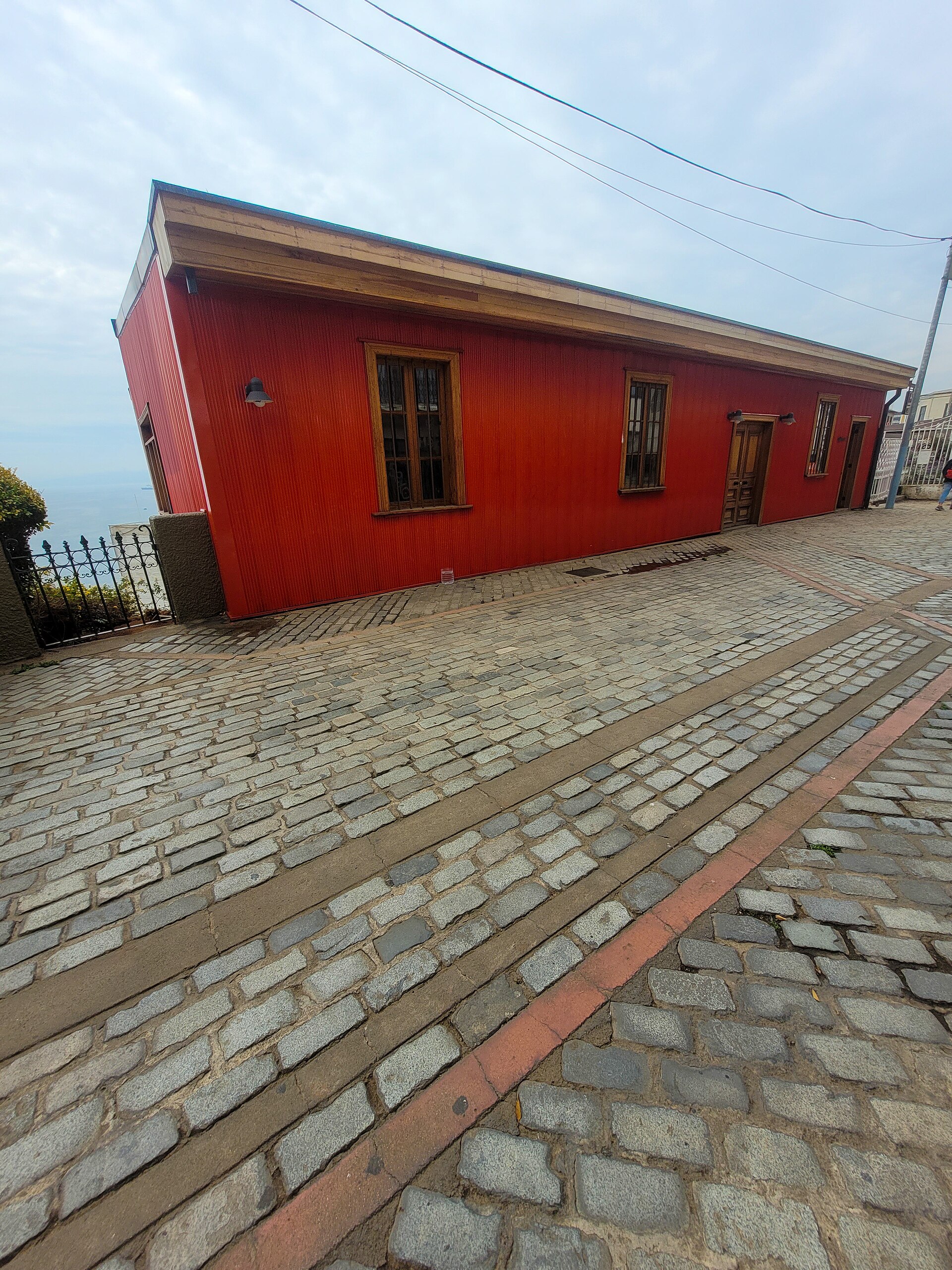 Photo: Sofía Leiva / Wikimedia Commons (CC BY-SA 4.0)
 - Museo a Cielo Abierto Daytime, for light and photography
A permanent open-air street-art trail on Cerro Bellavista, with large murals painted directly onto building facades by well-known Chilean artists including Roberto Matta and Gracia Barrios — a genuine long-standing public-art landmark, not a pop-up scene.
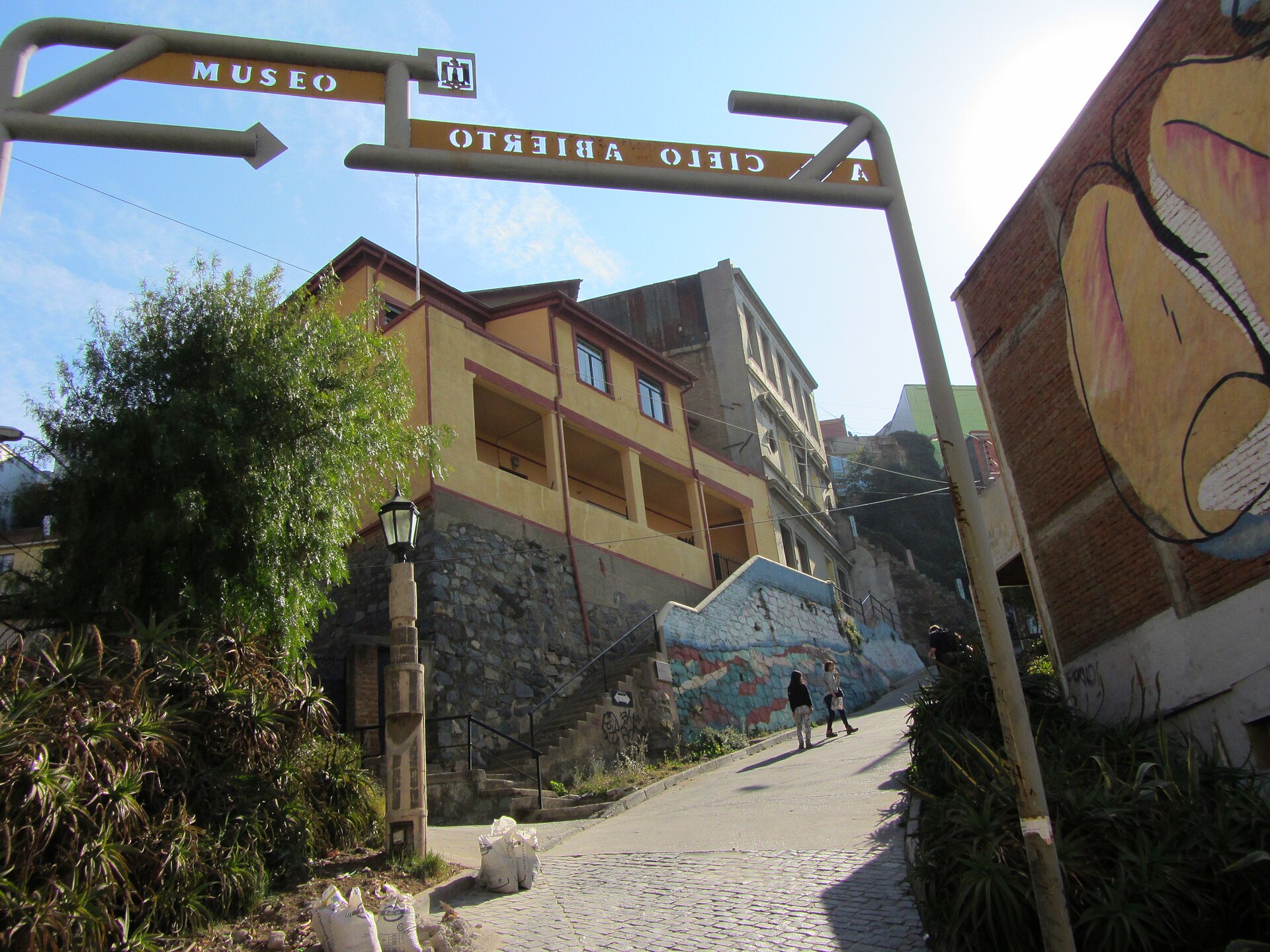 Photo: Roferbia / Wikimedia Commons (CC BY-SA 3.0)
 - La Sebastiana Check current hours, typically closed Mondays
Pablo Neruda bought this unfinished house on Cerro Bellavista in 1959 and inaugurated it in 1961; it opened to the public as a house museum in 1992 and was declared a Chilean National Monument in 2012.
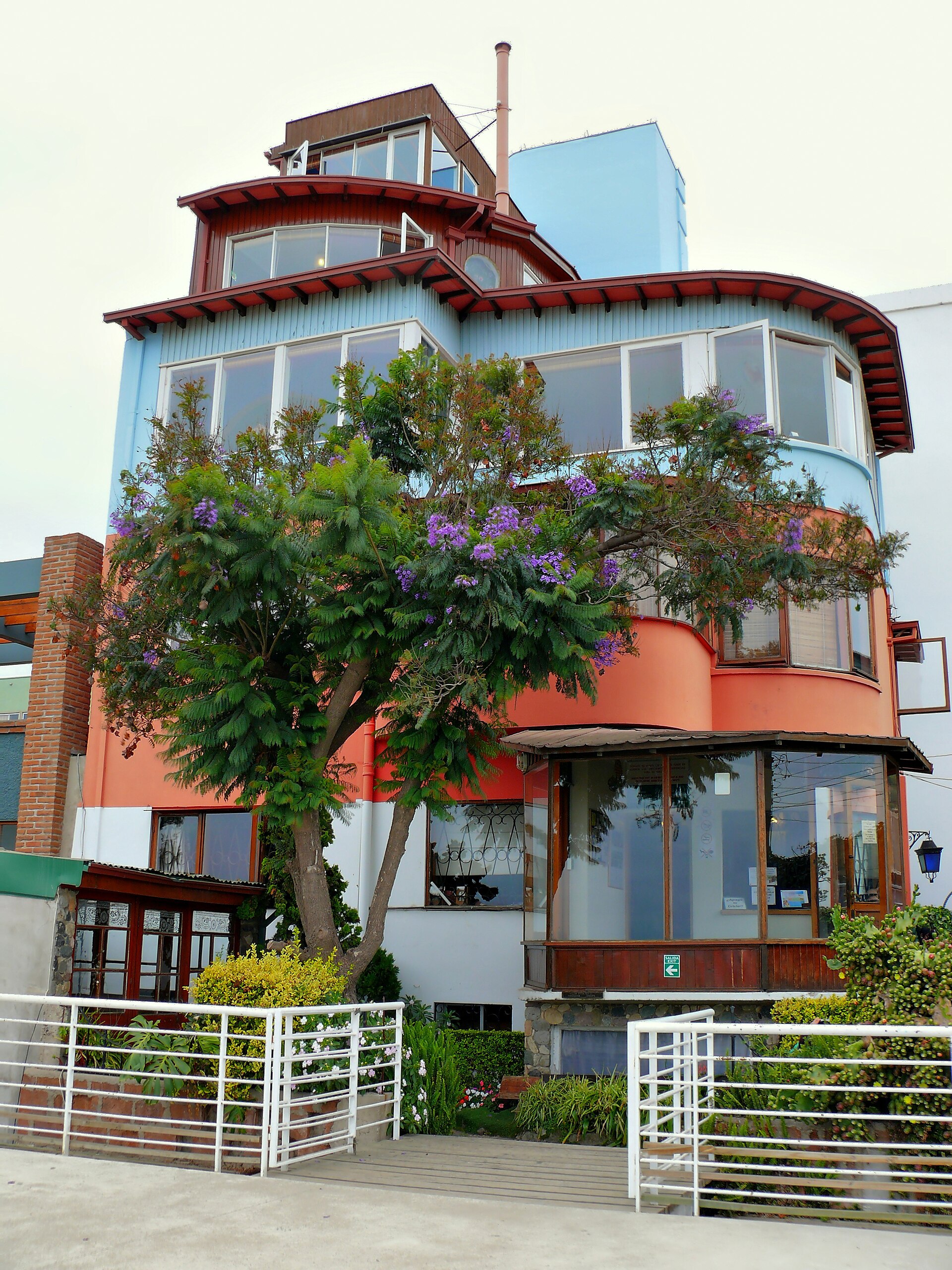 Photo: Marcelo Ois Lagarde / Wikimedia Commons (CC BY-SA 3.0)
 - Reloj de Flores Spring-summer (Sept-Feb) for full bloom
A working clock with a face made of planted flowering beds near Caleta Abarca beach in Viña del Mar, first installed in 1962 and rebuilt more than once since — one of the city's most-photographed fixed landmarks.
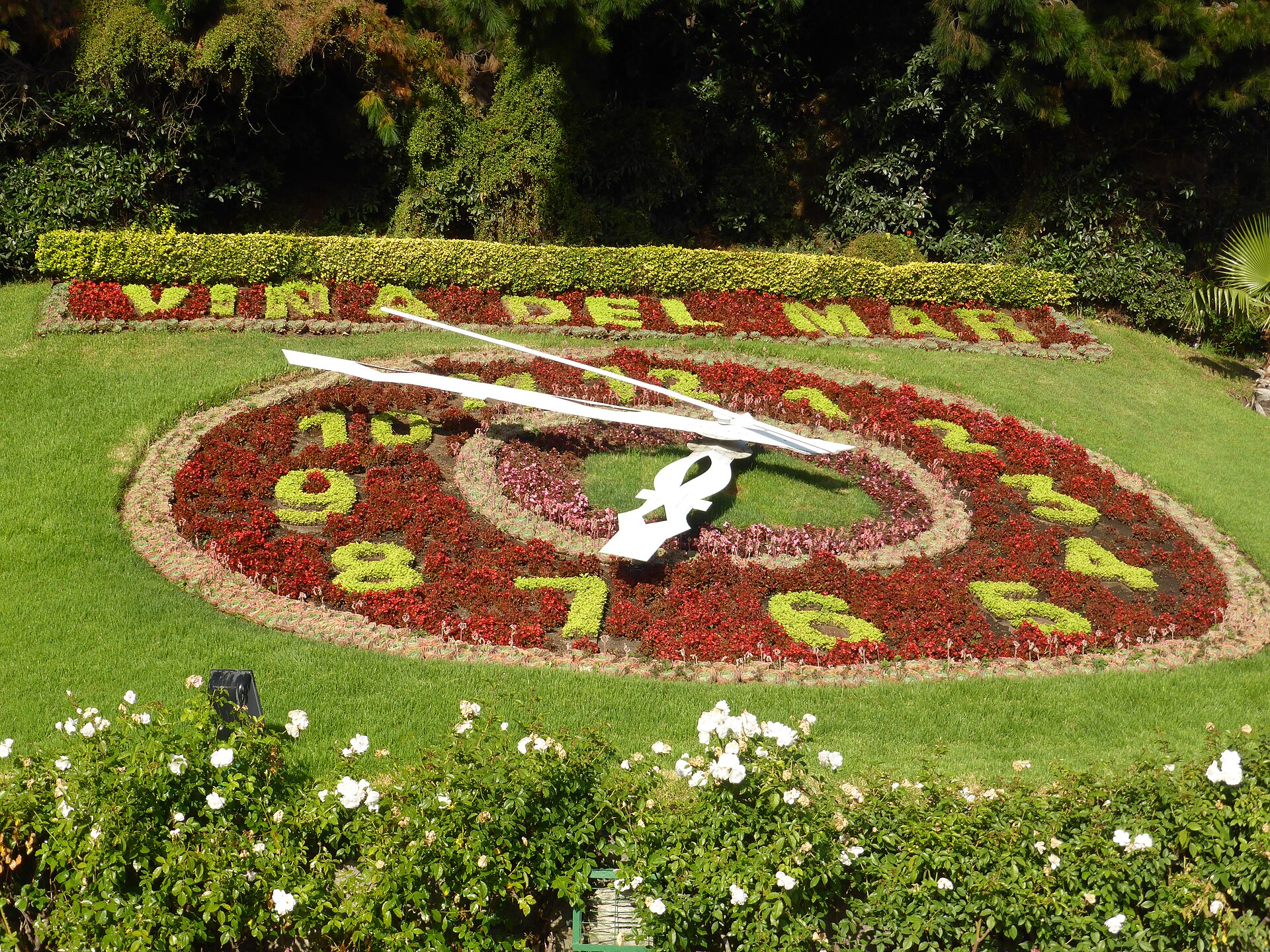 Photo: Carlos Teixidor Cadenas / Wikimedia Commons (CC BY-SA 4.0)
 - Quinta Vergara Park Year-round; late February for the Song Festival
A central Viña del Mar park built around the 1906 Vergara Palace and a 1960s open-air amphitheater that hosts Chile's biggest annual music event, the Viña del Mar International Song Festival.
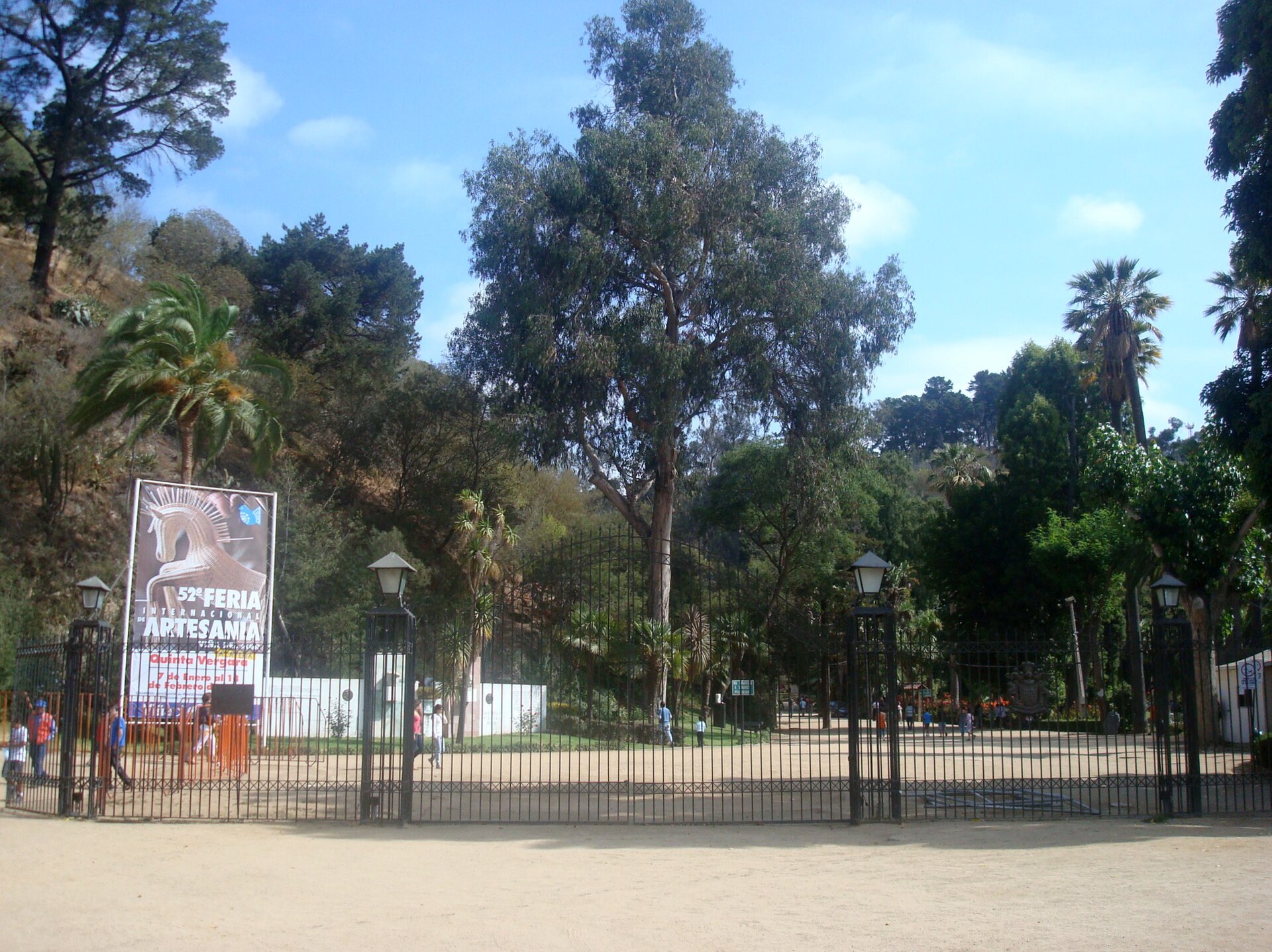 Photo: Carlos yo / Wikimedia Commons (CC BY-SA 4.0)
 - Castillo Wulff Daytime; confirm current public-access hours
Built in 1906 by businessman Gustavo Wulff Mowle in neo-Tudor style on the rocks at the Marga Marga estuary mouth, connected to its tower by a small bridge — declared a national monument in 1995, now mostly municipal heritage offices plus a restaurant.
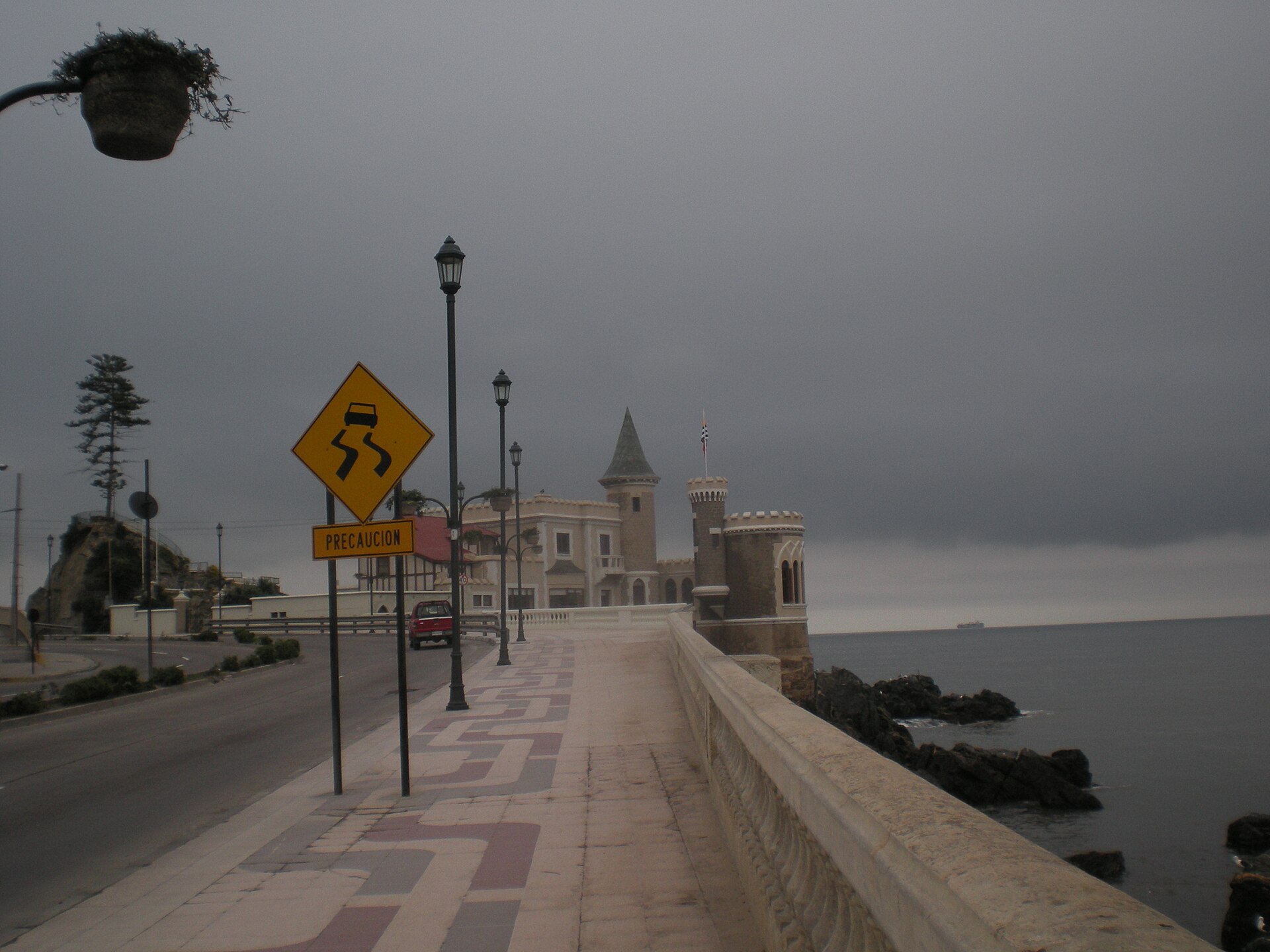 Photo: Lorna-Lorna / Wikimedia Commons (CC BY-SA 3.0)
 - Casablanca Valley Wine Route Tastings year-round; March-April for active harvest
A cool-climate wine appellation of roughly 3,700 hectares between Santiago and Valparaíso, known for Sauvignon Blanc, Chardonnay, Pinot Noir, and Syrah, with an established wine-route association and wineries like Matetic running biodynamic vineyard tours.
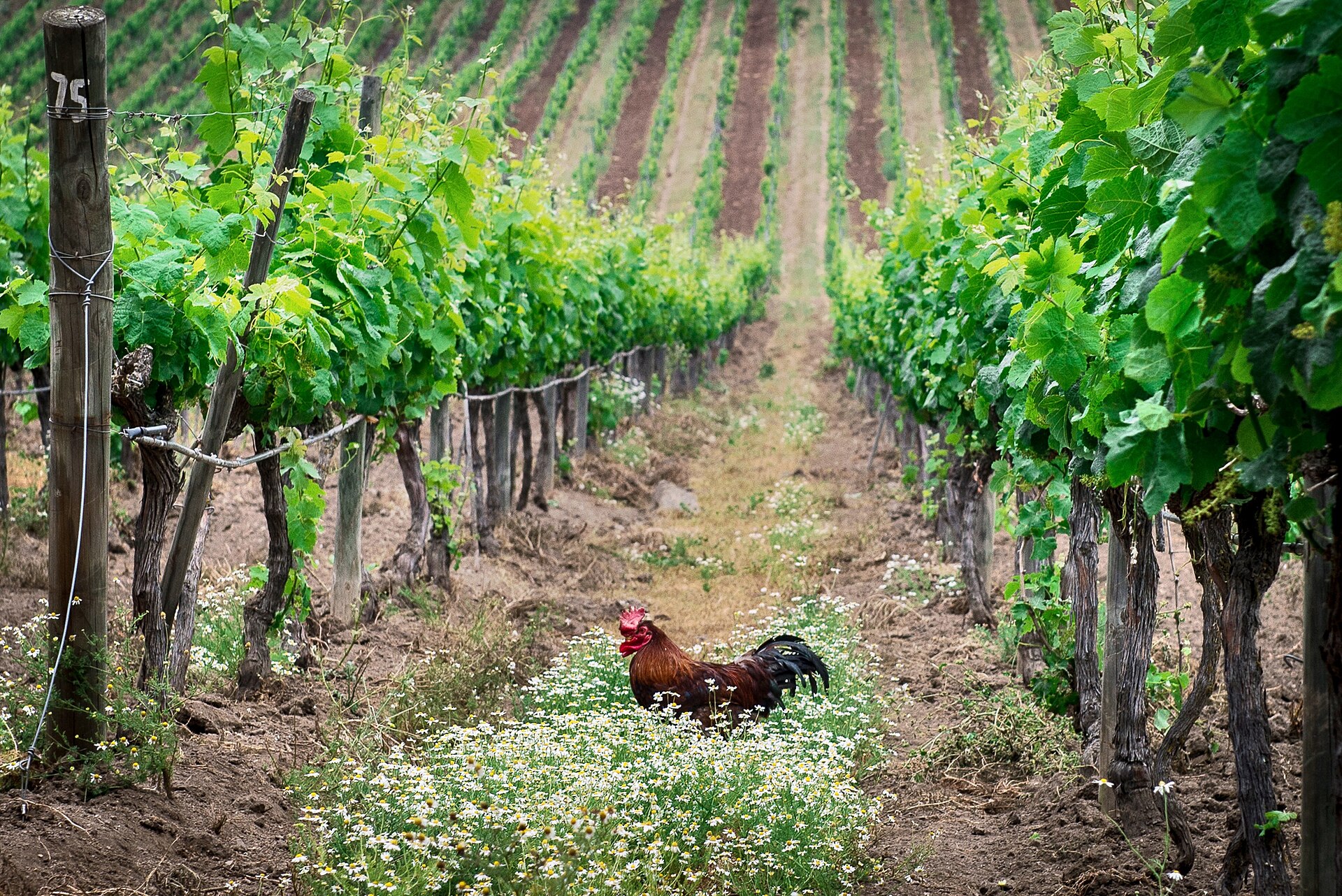 Photo: Winniepix (Sue Winston) / Wikimedia Commons (CC BY 2.0)
 - Centro Cultural Agustín Ross Year-round; late afternoon in the surrounding park
Built as a casino for developer Agustín Ross during Pichilemu's founding era, declared a Chilean Historical Monument in 1988, damaged in the 2010 earthquake/tsunami, and restored into a municipal cultural center in 2009 — the anchor of Pichilemu's historic core, independent of its surf reputation entirely.
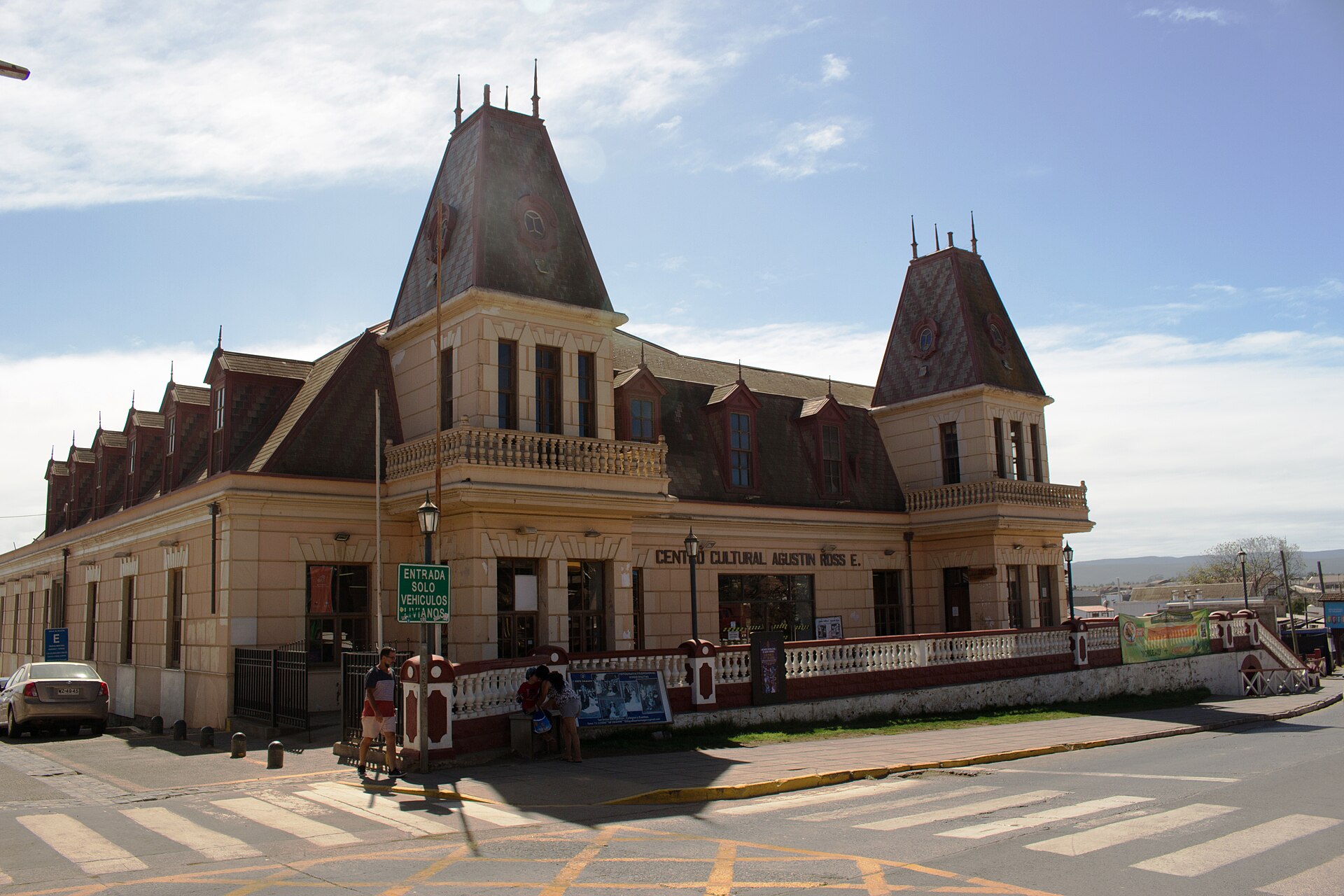 Photo: Marco Antonio Correa Flores / Wikimedia Commons (CC BY-SA 4.0)
 - Playa Matanzas & the Coastal Viewpoints Mornings for a quiet walk; the wind picks up most afternoons
A small fishing-village-turned-weekend-town on a wide grey-sand bay, with a rocky mirador above the beach — the offshore islets nearby held 31 bird species Charles Darwin personally recorded in 1846, and remain seabird and marine-mammal nesting sites today.
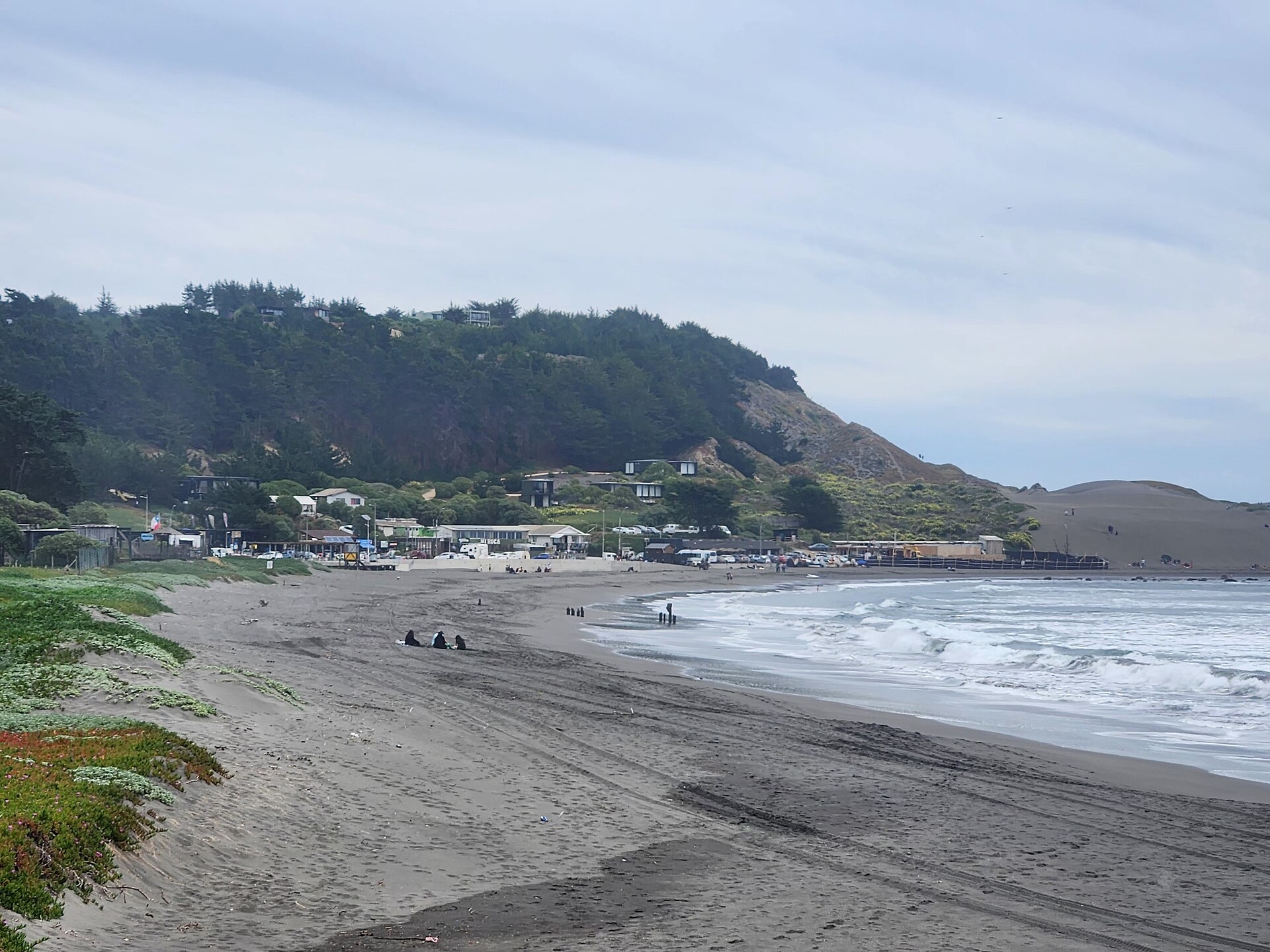 Photo: Aeveraal / Wikimedia Commons (CC BY 4.0)
Questions people actually ask.
How do I get to Central Chile?
Santiago (SCL) is the gateway, with real direct US service — American from Miami, Delta from Atlanta, United from Houston (seasonal), and LATAM from Miami, New York, and Los Angeles. From Santiago, buses to Pichilemu run roughly 3.5 hours from Terminal Alameda; Valparaíso/Viña del Mar is a well-served 1.5-hour bus ride with frequent daily departures. Punta de Lobos is a 10-minute drive from Pichilemu's center.
Do I need a visa?
No. Chile is visa-free for US citizens for stays up to 90 days. Keep the immigration receipt (Tarjeta de Turismo) you're issued on arrival — you'll need it at departure, and it exempts USD-paying travelers from Chile's 19% lodging VAT.
Is Central Chile safe, including Valparaíso?
Worth a specific, honest answer rather than a blanket one. Pichilemu, Punta de Lobos, and Matanzas are small coastal towns without the urban crime profile of a big city. Valparaíso is genuinely different — a real port city with documented street crime (muggings, distraction theft, pickpocketing in tourist zones) and its port district flagged as risky even by day. This is worth knowing plainly rather than glossing over the aesthetics: enjoy the funiculars and street art with standard city precautions (bag awareness, no valuables on display, rideshare over hailed cabs at night), same as you would in any major South American port city.
When should I go?
Surfing is possible nearly year-round here, with fall/winter (roughly April-August) bringing the biggest, most consistent swells — genuine big-wave conditions at Punta de Lobos, drawing Big Wave World Tour stops. Summer (December-February) is warmer, calmer, and more beginner-friendly, and also Chile's peak domestic tourist season for beach towns generally.
What's the water like, and what wetsuit do I need?
Cold and remarkably consistent year-round — a real California/NorCal comparison, not the wide summer-winter swing this site's Uruguay and Argentina zones have. Pichilemu holds roughly 12-15°C (54-60°F) all year, barely warming in summer. A 4/3mm suit with boots is the realistic year-round standard; only January-February gets close to 3/2mm territory.
Disclosure & how this page works.
Straight talk: Some links on this page are affiliate links — if you book through them, Secrets of Surf Travel earns a small commission at no extra cost to you. We only link places and people we’d use ourselves, and coverage is never for sale. Those commissions are what keep this site running and fund the next trip.
Today, the “Search Vrbo rentals” and “Search Booking.com stays” links on this page are affiliate links — every vendor listing link is still a plain courtesy link. As partnerships with these local businesses come online, more links (and discount codes, where Secrets of Surf Travel benefits from their use) may earn us a commission, and this page will keep saying so plainly. Coverage is never for sale: nobody on this page paid to be here, and nobody can.
Every listing was researched in 2026 and is being verified in person. Prices, hours, and policies change — treat them as strong starting points and confirm directly with the business. And per the No-Reveal Code: you will find no surf spots on this page, ever.