
Caribbean Collective
Four smaller islands bundled honestly into one zone: Aruba and Turks and Caicos are genuinely kite/windsurf/dive-first destinations with surfing as a side note; Curaçao hides one real reef break behind a diving-first identity; Saint Barthélemy has the most legitimate surf scene of the four, wrapped inside a luxury/yachting island. None needed a full standalone zone on its own — together, they're worth knowing.
Straight talk: Some links on this page are affiliate links — if you book through them, Secrets of Surf Travel earns a small commission at no extra cost to you. We only link places and people we’d use ourselves, and coverage is never for sale. Those commissions are what keep this site running and fund the next trip.
Some vacation-rental search links on this page (marked “Search Vrbo rentals” or “Search Booking.com stays”) are affiliate links. Every vendor link below is still a plain courtesy link. As more partnerships come online, more links may earn us a commission; the promise above holds either way.
Getting There
Political status, currency, and entry rules genuinely differ across all four islands — worth reading before you assume one set of rules applies everywhere in this zone.
- Aruba — Queen Beatrix International (AUA). Nonstop US service: American (Charlotte, Miami, Philadelphia year-round; seasonal Chicago, Dallas, New York-LGA), Delta (Atlanta, JFK year-round; seasonal Boston, Detroit, Minneapolis), JetBlue (Boston, Fort Lauderdale, JFK year-round). A constituent country of the Kingdom of the Netherlands — US citizens enter visa-free (sources vary between 30 and 90 days, confirm current cap at entry), with a mandatory online ED Card and $20 sustainability fee.
- Curaçao — Curaçao International/Hato (CUR). Nonstop US service: American (Miami year-round; seasonal Charlotte, Chicago), Delta (Atlanta year-round), JetBlue (JFK year-round), plus Houston service. A separate constituent country of the Kingdom of the Netherlands with its own immigration system from Aruba — visa-free up to 180 days within a 365-day period, with proof of funds (roughly $100-150/day) and accommodation sometimes requested.
- Saint Barthélemy — no direct flights from the US mainland exist. The standard route: fly a major US carrier into Sint Maarten (SXM), then take Winair or Tradewind Aviation on a short ~15-minute hop into Gustaf III Airport (SBH) — a short runway that limits aircraft size. Tradewind also flies direct from San Juan and Antigua. A French overseas collectivity using the Euro, not part of Schengen but France-administered — visa-free up to 90 days for US citizens.
- Turks and Caicos — Providenciales International (PLS) is the main gateway (Grand Turk has a smaller secondary airport). Extensive nonstop US service from 18 airports, including American, Delta, JetBlue, United, Southwest, and BermudAir. A British Overseas Territory — visa-free up to 90 days for US citizens, but note: a valid US passport book is required for air travel — a passport card is not accepted here.
When to Go & Hurricane Risk
Hurricane risk is genuinely bifurcated across this zone, worth knowing plainly rather than assuming one Caribbean-wide risk level. Aruba and Curaçao (the "ABC islands") sit outside the Atlantic hurricane belt and see essentially no direct hits — Aruba hasn't taken one in 50+ years. Saint Barthélemy and Turks and Caicos both sit inside the belt with real, documented hurricane history — both were hit hard by Hurricane Irma in 2017, and St. Barts also carries the memory of Lenny (1999), Luis (1995), and Gonzalo (2014).
- Aruba: sources genuinely conflict on the best surf-swell window — one popular guide claims May-October, but multiple independent sources with actual break-specific data point instead to October-March (winter N/NNE groundswell, December the most consistent month) as the real surf season; the May-Oct claim likely describes trade-wind/windsurf season instead. Worth a live surf-forecast check closer to your trip.
- Curaçao: surf season at Playa Kanoa runs November-March. Best general weather December-April (driest); a mild wet season runs October-December with light night showers.
- Saint Barthélemy: Lorient and Toiny both hold swell across much of the year (N/NE and E/SE respectively), though no single authoritative peak-swell-month source was confirmed — check a live forecast before booking around surf specifically. Best general weather (and highest prices) run December-April; the cheaper low season, July-November, overlaps hurricane season.
- Turks and Caicos: what wave surfing exists ties to winter trade winds, roughly November-March. Best general weather December-April, 80-86°F. Hurricane season itself runs August-October.
Good to Know
- Safety differs across the zone — don't assume uniform risk. Aruba, Curaçao, and Saint Barthélemy all currently sit at US State Department Level 1, Exercise Normal Precautions. Turks and Caicos alone sits at Level 2, Exercise Increased Caution, specifically for crime (petty theft and tourist-targeting scams concentrated on Providenciales) — and carries one serious, specific warning worth repeating: accidentally packing ammunition (even a stray shell casing) can lead to arrest there. Check bags carefully before you fly.
- Currency is a genuine patchwork: Aruba uses the Aruban Florin (AWG, ~1.79/USD, USD widely accepted interchangeably); Curaçao switched to a new currency, the Caribbean Guilder (XCG), in March 2025, replacing the old Netherlands Antillean Guilder; Saint Barthélemy uses the Euro; Turks and Caicos, despite being a British territory, uses the US Dollar as its own official currency.
- Languages: Aruba — Papiamento official, English widely spoken. Curaçao — Papiamentu, Dutch, and English, with Papiamentu most common day-to-day. Saint Barthélemy — French, English widely spoken in tourism areas. Turks and Caicos — English official, Creole spoken locally.
- Cost runs a wide spread across the zone. Saint Barthélemy is confirmed as one of the most expensive destinations in the Caribbean — hotel rates commonly run $900-1,700+/night in season, villas $3,500-$40,000+/week. Turks and Caicos is also genuinely expensive with no real budget tier. Aruba runs moderate-plus. Curaçao trends the most moderate of the four.
Respecting the Locals
Four genuinely different islands share this page — Aruba and Curaçao run on Papiamento/Papiamentu day-to-day, Curaçao's identity is diving-first with surfing tucked in as an afterthought, and Saint Barthélemy's luxury/yachting scene sits on top of one of the more legitimate surf cultures of the four. There's no single local culture to generalize about across a bundle this varied, which makes the underlying code more important, not less: whichever of these four islands you're on, you're a guest in someone else's smaller, tighter-knit community.
- Locals get first priority, always. Watch a session before you paddle out. Learn who's who before you learn the wave. Sit inside and catch what they let through — the leftovers are yours, not the set waves.
- Don't backpaddle. Ever. Being in position doesn't make the next wave yours, especially if you didn't wait your turn. If a local wants a wave, let them have it…even if it IS your turn. That older guy who may not be the best surfer out there has probably been surfing that wave before you even sat on a board. If you don't know someone, assume they're local.
- Don't snake. This shouldn't even need to be said, but…dropping in on someone, local or not, is the ultimate disrespect and the fastest way to be sent out of the water. Don't be that guy!
- Say hi. A “howzit,” “whatsup,” or “nice wave,” eye contact, or a nod in the channel — it costs nothing and it's the fastest way from stranger to welcome.
- This is somebody's home, not a resort amenity. The break you're surfing is where a local kid learned to swim, where someone's uncle has surfed for forty years. Act like a guest, because you are one.
- Spend where it actually helps. The food truck, the local shaper, the family-run rental, the local photographer — that's where a surf trip's money should land, not just the chain hotel gift shop. See The No-Reveal Code for why that's the whole premise of this site.
- Leave it better than you found it. Pick up trash that isn't yours. Don't touch reef, wildlife, or cultural sites.
Locals have watched hundreds, if not thousands, of people come and go — some for days, some for months or years — and almost all of them eventually go home. The locals are still there. It takes many, many years to actually become one. Keep that in mind the next time you feel entitled to the same waves they get.
None of this is a secret handshake. It's just how you'd want a guest to act in your own backyard.
Aruba
Real but secondary: Aruba is overwhelmingly a windsurf/kitesurf island first (Aruba Hi-Winds, running since 1987, is the Caribbean's biggest windsurf/kite event) — but genuine wave-surf spots exist on the east and north coasts, from remote advanced reef breaks to beginner-friendly options near the rental shops.
Aruba's stays run to small beachside boutiques and a thin scatter of hostels — genuinely light on the villa/vacation-rental side, worth checking the wider market beyond the hotel-anchored list below.
Search Vrbo rentals in Aruba →
Water Sport Schools & Rental
- Aruba Kitesurfing SchoolFisherman's Hut, NoordFamily-owned since 2002 — group instruction ~$130/2hrs, private ~$190/2hrs.@arubakitesurfingschool
- Aruba Active VacationsFisherman's Huts20+ years teaching both windsurf and kite, same pricing tier as above.
- Vela Aruba Windsurf and Kite SchoolFisherman's Huts, past the Ritz-CarltonLong-running, dedicated windsurf outfit with a two-level beach hut.
- Aruba Surf & Paddle SchoolOranjestadRun by local instructor Dennis — the closest thing to a dedicated wave-surf-adjacent operator on island, stable SUP boards, hotel/villa delivery available.
Stays
- MVC Eagle BeachAcross from Eagle BeachMid-range19-room boutique, free breakfast — a quaint beachside pick reviewers call hard to beat for the price.
- The Mill Resort & SuitesPalm Beach, walkableMid-rangeKitchenette rooms, relaxed social atmosphere.
- Hostel Room ArubaOranjestad, 4 min to the beachBudgetOne of only three hostels on the island — Aruba is genuinely thin on budget stays.
- Aruba Backpackers11-min walk to Surfside BeachBudgetGeared toward divers, windsurfers, and campers specifically.
Where to Eat
- ZeeroversSavaneta, waterfrontBudgetCash-only, pay-by-weight fried fish straight off the fishermen's boats — expect a 1-1.5hr wait at peak."Pelicans circle as the sun drops over Savaneta Bay." — reviewer
- Flying FishboneSavanetaUpperFine dining with tables literally set in the sand and water at the 4pm seating — book 2+ weeks ahead in season.
- Wacky WahooArubaBudgetOwned by a local fisherman, Caribbean dishes at genuinely reasonable prices, high local visitation.
Wheels
- Jean RentalArubaFive-star reviews, widely cited as the best scooter-rental service on the island for multi-day rentals.
- HS Rentals ArubaArubaPraised for pricing, mixed reviews on service.
Board & Gear Shops
- Bula Surf ShopHarbour House, OranjestadSurfer-owned and operated.
- Geert's kite repair & gear shopBoardwalk Boutique HotelOn-site kite-gear repair.
Massage & Wellness
- Clinical Massage Aruba & SpaNoordA tranquil garden setting, praised for spotless facilities.
Other Adventures
- Delphi WatersportsDeparts Aruba's west coastMid-range3-hour snorkel catamaran (~$65) stopping at the WWII Antilla shipwreck and Boca Catalina reef.
- Isabella CatamaranArubaMid-rangeA smaller, local, more personalized alternative to the big-boat operators.
Curaçao
A genuine surprise for this zone: while Curaçao's dominant water-sport identity is diving, it hides a real, consistent reef surf break at Playa Kanoa, complete with a surf school and local championships. Nearby Bonaire, the third of the "ABC islands," is worth a brief mention too — not a surf destination, but a world-class windsurfing one at Lac Bay/Sorobon.
Curaçao's bench mixes boutique hotels in Pietermaai with beach resorts and a hostel or two — worth widening the search toward the island's vacation-rental market too.
Search Vrbo rentals in Curaçao →
Surf & Kite Schools
- Curacao Surf SchoolPlaya KanoaBilled as "Curaçao's original surf school on wheels" — private and group instruction plus rentals at the island's most consistent reef break.
- iSurf CuraçaoPlaya KanoaRequires one coaching session before independent board rental — a genuine safety-minded local rule, not a sales gimmick.
- NIX Kiteboarding SchoolJan ThielEstablished 2014, billed as the Caribbean's most trusted kiteboarding instruction center — steady 15-25kt trades.
- Awasalu KiteboardingSt. Joris BaaiSelf-described island's best kite school.
Stays
- Pietermaai Boutique HotelWillemstad's UNESCO Pietermaai districtMid-range2026 Tripadvisor Traveler's Choice Award, walkable to Queen Emma Bridge and Mambo Beach.
- LionsDive Beach ResortMambo BeachMid-rangeDirect beach access with an on-site dive center.
- The Ritz HostelWillemstadBudgetAdults-only, pool and bar, small private beach.
Where to Eat
- RozendaelsPietermaaiMid-rangeOpen-air bistro serving local dishes — karni stoba (beef stew), keshi yena (cheese casserole), Krioyo-style catch.
- BijBlauwPietermaai, oceanviewMid-rangeCharcoal-oven steaks and seafood.
- NemoLionsDive ResortMid-rangeJapanese/sushi with sunset views near Mambo Beach.
Wheels
- Scooter Zone RentalsWillemstad10/10-rated, punctual drop-off and pickup with route advice included.
- NR1 Scooter RentalWillemstadOperating since 2014, self-described cheapest on the island.
Board & Gear Shops
No standalone board-repair shop found — the surf and kite schools above double as the island's rental and service points.
Massage & Wellness
- The Spa at LionsDiveMambo BeachBeach-massage option right on the sand.
- TranquilitasVilla-basedLuxury in-villa massage service.
Other Adventures
- Ocean EncountersLionsDive marinaMid-rangePADI 5-Star Gold Palm dive center — a house reef a fin-kick from the beach, plus the ~100-year-old Bapor Kibra wreck dive nearby.
Saint Barthélemy
The most genuinely surf-legitimate island in this zone — Lorient has two real peaks (a beginner-friendly inside break and an advanced far-left) and Toiny is a renowned, powerful left-hand point break with a real dedicated surf school. That said, St. Barts markets itself first as a luxury/yachting/fine-dining island, with surfing as one activity among many rather than the headline draw.
St. Barts' visible lodging skews boutique-luxury hotel, but the island's real volume runs through private villa rentals — worth searching beyond the hotel-anchored list below.
Search Vrbo rentals in St. Barts →
Surf Schools & Rental
- Surf St. Barths (David Blanchard)Lorient beach surf hutThe island's only dedicated surf school — native instructor David Blanchard, who also coaches the island's young competitive surfers, teaching at Lorient or Toiny depending on daily conditions.
- AJOE Reefer Surf ClubLorientRuns classes and local surf competitions.
Independent board rental is also available roadside across from the Lorient mini-market.
Stays
- Eden Rock – St BarthsSt. JeanLuxuryDining by Jean-Georges Vongerichten's team at The Sand Bar — guests call the setting "out of this world."
- Cheval Blanc St-BarthFlamands BeachLuxuryEntry rooms run $2,000+/night in high season — widely cited as the island's most polished property with its best spa.
- Sunset HotelGustaviaBudget-relativeRoughly €60/night — genuinely the island's floor, still not cheap by mainland standards.
- Auberge de la Petite AnseSt. BartsMid-rangeAround €100/night.
Where to Eat
- Le Ti St BarthLorientUpperA Caribbean tavern institution since 1995, running a nightly dinner-show/cabaret format.
A no-frills roadside picnic-table shack in Lorient is popular with surfers and locals per travel-press coverage, but its exact name couldn't be independently confirmed — flagged honestly rather than guessed.
Wheels
- Béranger RentalGustaviaOne of the island's oldest scooter, car, and quad operators.
- Rid'In St BarthSt. BartsItalian Prima/Viaggio scooters, 50cc and 125cc.
Board & Gear Shops
No standalone board-repair shop found — the Lorient surf-school ecosystem (Surf St. Barths, AJOE Reefer) doubles as the island's only rental and repair point.
Massage & Wellness
- Cheval Blanc Spa by GuerlainCheval Blanc St-BarthLuxuryRedesigned 2024 — hammam, VIP suite, signature Antilles Serenity massage.
- Sense, A Rosewood SpaLe GuanahaniLuxuryThe island's largest wellness facility.
Other Adventures
- St Barth ExcursionsGustaviaMid-rangeDay and sunset catamaran trips (45ft "Wayayaï") with kayak, SUP, and snorkel gear aboard, plus scuba add-ons via a dive-operator partner.
Turks and Caicos
Honestly the thinnest surf story of the four — Turks and Caicos' water-sport identity is dominated by diving (one of the Caribbean's largest barrier reef systems) and kiteboarding (Long Bay is named among National Geographic's greatest kiteboarding spots). Wave surfing exists tied to winter trade winds but barely registers against those two identities in most tourism coverage.
The Grace Bay strip runs resort- and condo-heavy with no real budget tier — worth checking condo and villa rentals beyond the hotel-anchored list below.
Search Vrbo rentals in Turks and Caicos →
Kite & Water Sport Schools
- Turks and Caicos Kiteboarding (TCK)Long BayTripadvisor's #1-rated kite school in TCI since 2012, IKO-certified.
- Kite ProvoLong BayCertified instruction across skill levels.
- Water PlayGrace Bay BeachThe zone's broadest single rental point — kiteboards, SUP, kayaks, fat-tire bikes, SUP yoga, windsurf and sailing instruction all from one tiki-hut operator.
Stays
- Grace Bay ClubGrace BayLuxuryAnchors the Grace Bay strip, with the Anani Spa on-site.
- Seven Stars Resort & SpaGrace BayLuxury
- The Inn at Grace BayGrace BayMid-range9.4 guest rating, free breakfast and parking — TCI has no true budget tier, and this is close to the floor.
- Villa del MarShort walk to Grace Bay BeachMid-rangeCondo-resort with two pools.
Where to Eat
- Da Conch ShackBlue Hills, beachfrontMid-rangeConch fritters, conch salad, cracked conch — a long-established institution with live Junkanoo music Wednesdays.
- Castaways Conch Bar & Island GrillGrace BayMid-rangeFresh conch ceviche daily, live music, "Boat Bar."
Wheels
- Scooter Bob's RentalsTurtle CoveCars, scooters, and e-bikes with airport-lot pickup arranged in advance — reasonably priced against the major rental chains.
Board & Gear Shops
No dedicated standalone board-repair shop found — Water Play and SupProvo double as the island's rental and service points for kite and paddle gear.
Massage & Wellness
- Anani SpaGrace Bay ClubSix treatment rooms plus a beachfront spa tent.
- Wymara Resort spaGrace BayGuests describe it as one of the best spa experiences they've had on the island.
Other Adventures
- Dive ProvoGrace BayMid-range30+ years operating, 36ft dive boats to Grace Bay, Northwest Point, West Caicos, and French Cay.
- Crystal Seas Adventures — Salt Cay whale watchingSalt CayMid-rangeLate January-early April humpback season — Salt Cay sits directly in the Columbus/Turks Island Passage migration corridor, a genuine zone standout.
Local Secrets
Twelve non-surf reasons this zone rewards the curious, spread across all four islands — a UNESCO-listed Dutch colonial waterfront, a Swedish free port hiding inside a French island, a 1795 slave rebellion that made a national hero, and a lagoon banning motorboats to protect its own color.
- Casibari Rock Formations Early morning or late afternoon, cooler climbing temperatures
Massive tonalite/quartz-diorite boulders near Paradera in Aruba's interior, some towering 20 meters, believed to be remnants of ancient volcanic activity and holding historical significance to the indigenous Arawak people.
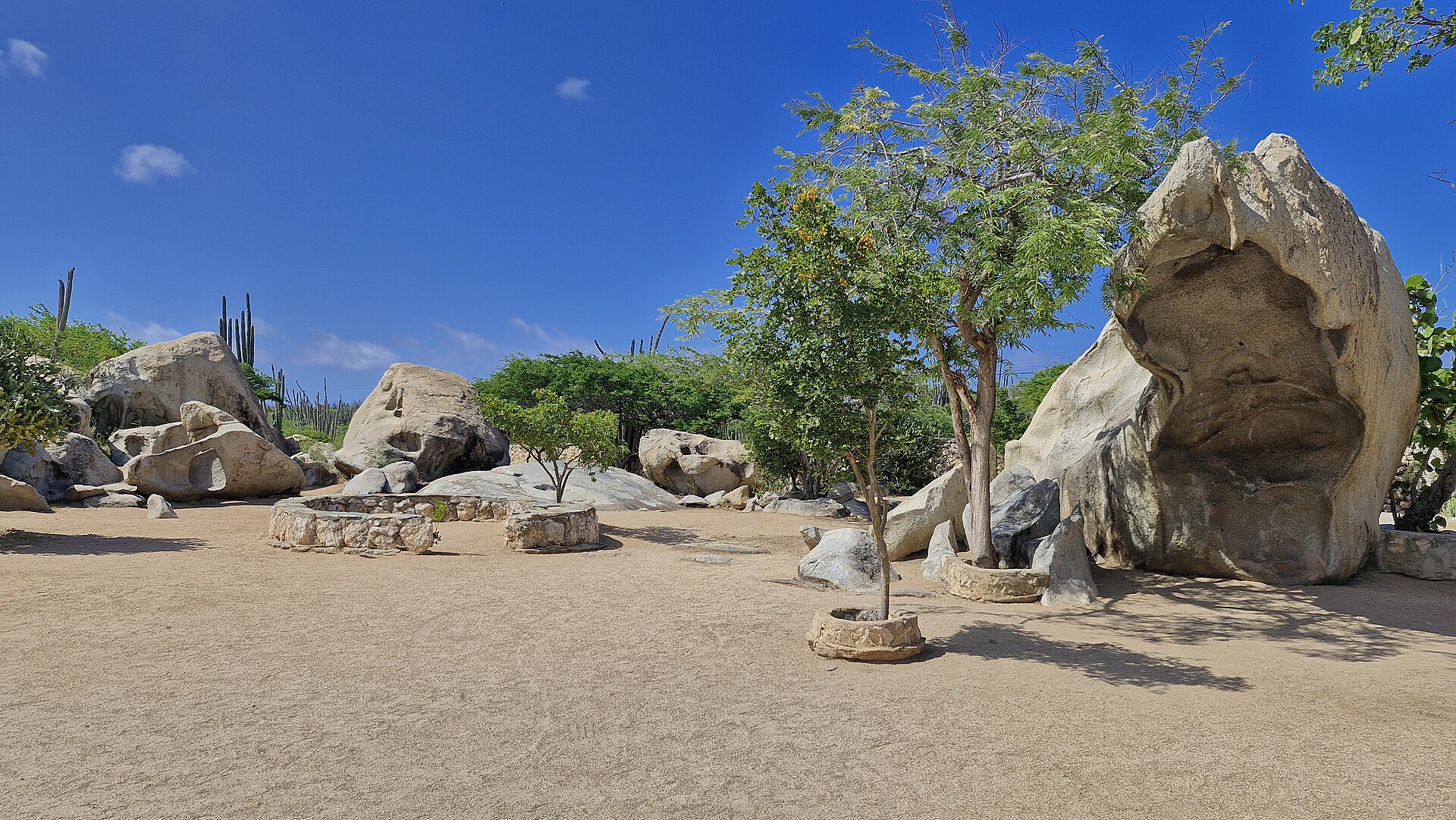 Photo: Rarends297 / Wikimedia Commons (CC0)
 - Alto Vista Chapel Early morning, quiet and low-traffic
Aruba's first Roman Catholic church, originally built in 1750 by Venezuelan missionary Domingo Antonio Silvestre funded out of his own pocket — abandoned by 1816 after a plague, later rebuilt and painted its now-signature bright yellow in 1952.
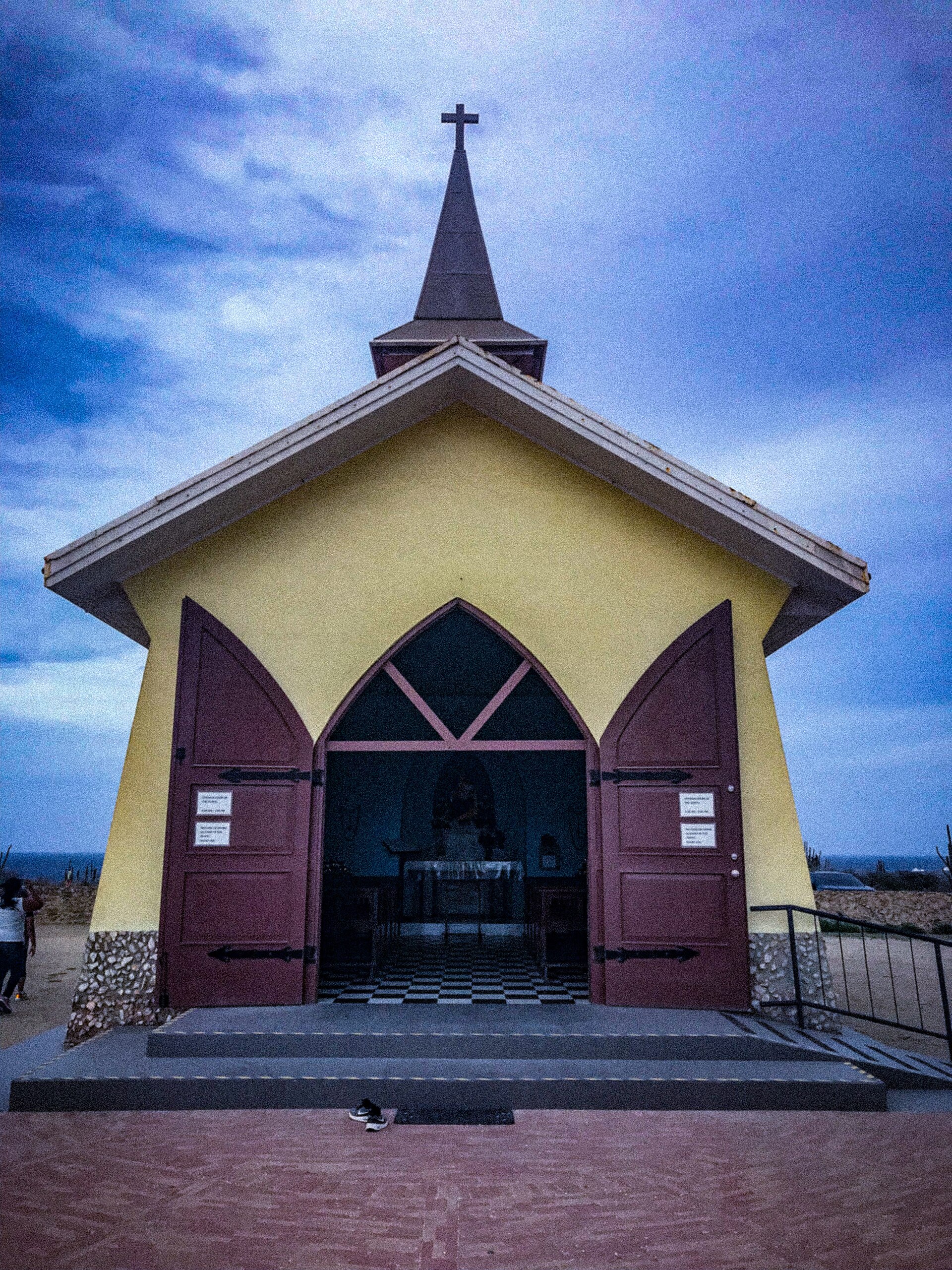 Photo: Islandgyal111 / Wikimedia Commons (CC BY-SA 4.0)
 - Conchi (Natural Pool), Arikok National Park Dry season (Jan-Sep) for calmer seas; early in the day
A saltwater tide pool enclosed by pillow-lava volcanic rock in Arikok National Park's north conservation zone, formed by centuries of wave action — accessible only by 4x4, ATV, horseback, or hiking.
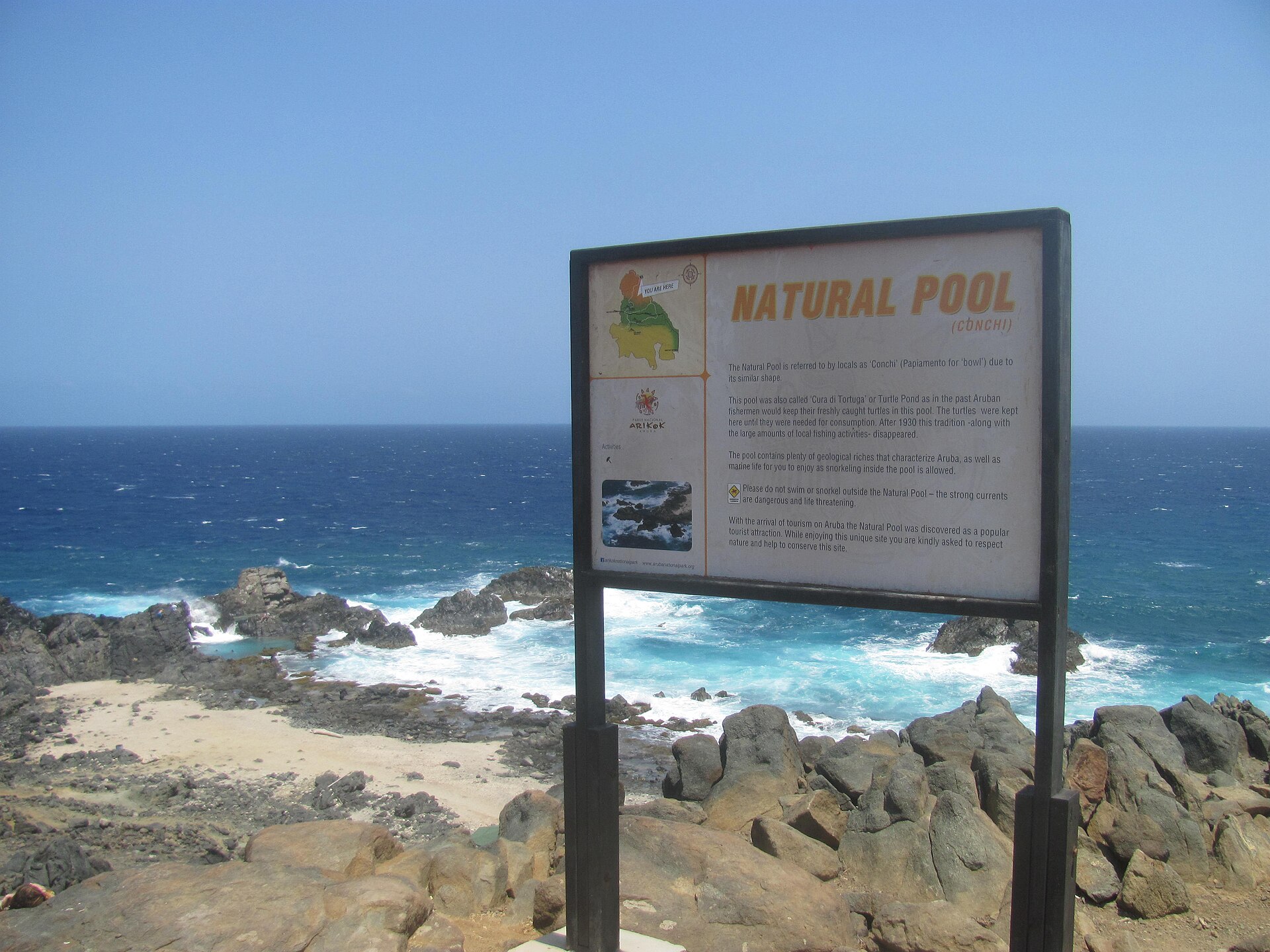 Photo: Oogstweg / Wikimedia Commons (CC BY-SA 4.0)
 - Handelskade, Willemstad Golden hour, when the pastel facades catch the light
A row of brightly colored 17th-19th century Dutch colonial merchant-house facades along Punda's harbor front. Willemstad's inner city and harbor were designated a UNESCO World Heritage Site in 1997 — an exceptionally preserved Dutch colonial trading settlement dating to 1634.
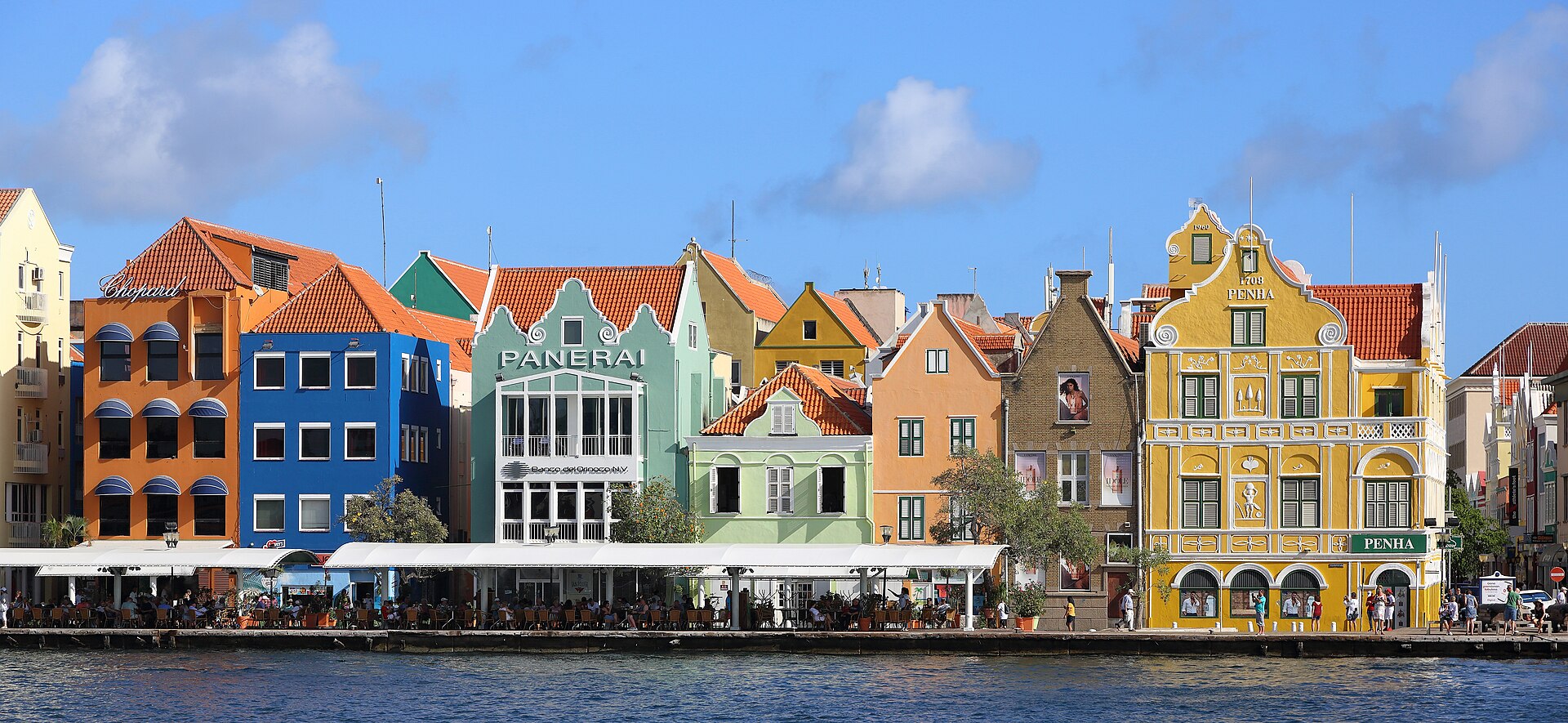 Photo: Martin Falbisoner / Wikimedia Commons (CC BY-SA 4.0)
 - Floating Market, Punda Early morning, when boats are freshest-stocked
Venezuelan vendors have sailed roughly 40 miles across the Caribbean for generations to dock boats along Sha Caprileskade and sell produce, since arid Curaçao can't grow enough locally. The trade nearly died when Venezuela shut its maritime border in 2019, and has been slowly reviving since it reopened.
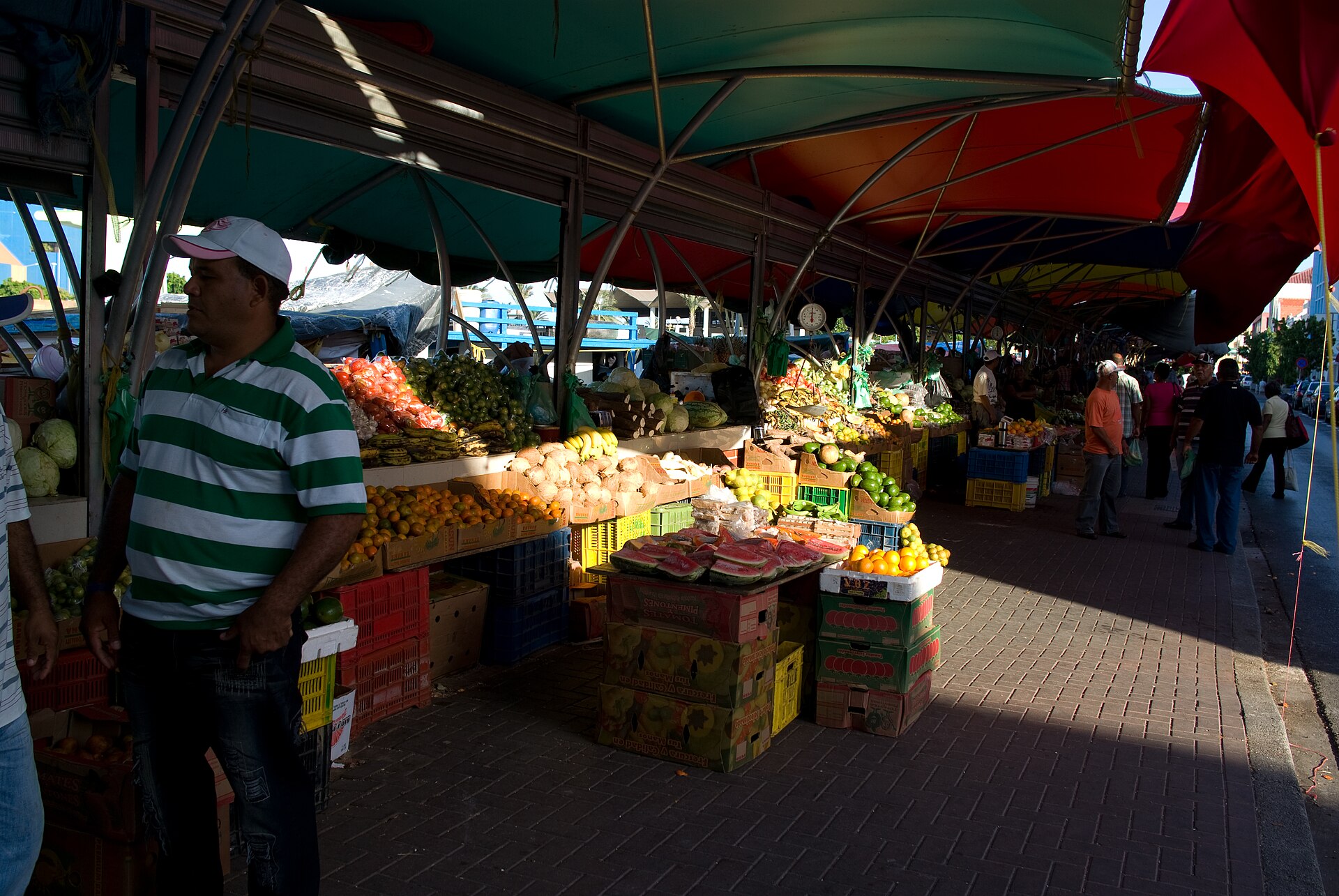 Photo: Charles Hoffman / Wikimedia Commons (CC BY-SA 2.0)
 - Landhuis Chobolobo (Blue Curaçao Distillery) Weekdays, free hourly guided tours
A 17th/18th-century plantation house in Willemstad's Salinja district where, since 1896, the Senior family has distilled the original blue Curaçao liqueur from dried peels of the bitter laraha orange — a fruit that evolved uniquely on the island from Spanish-introduced Valencia oranges.
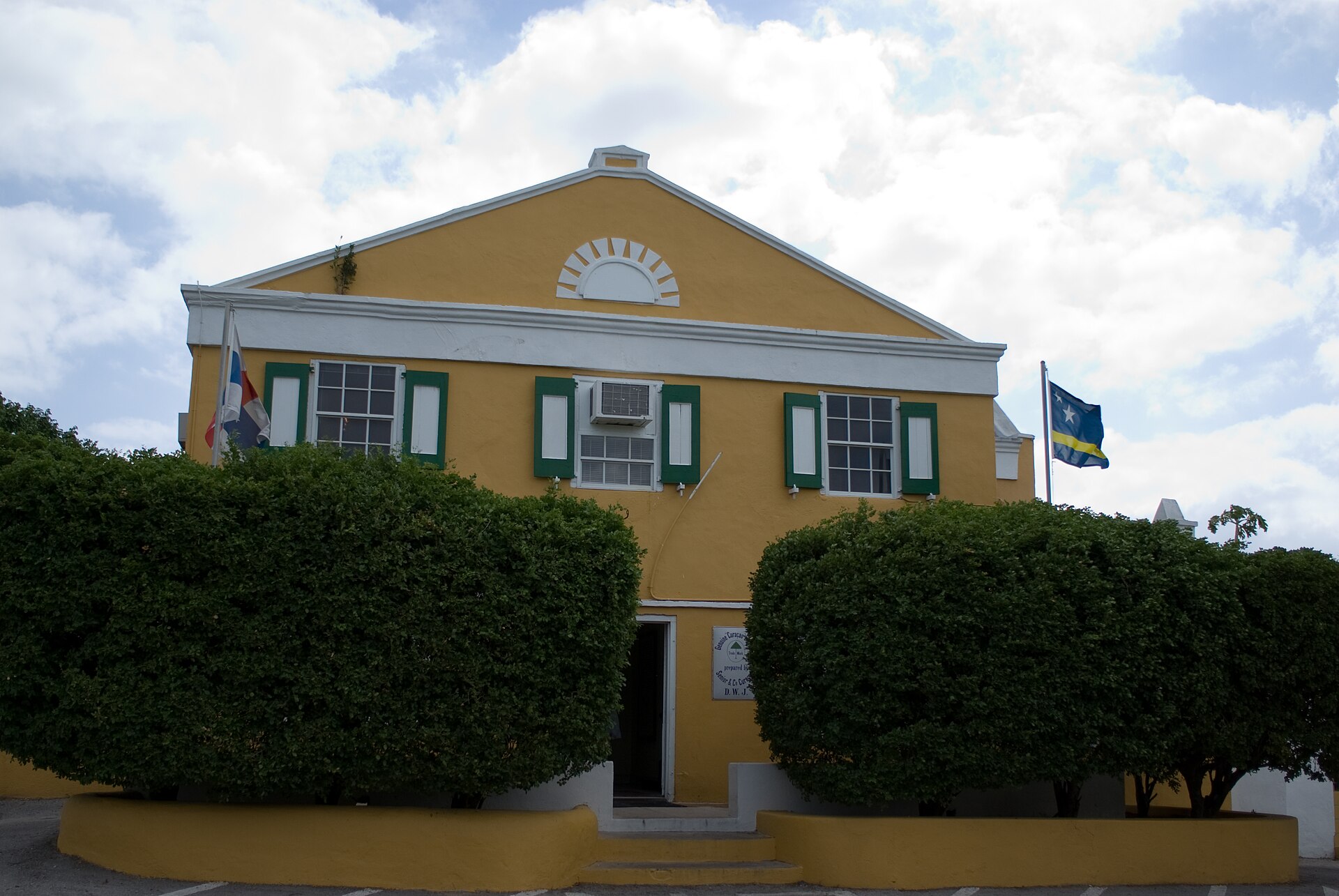 Photo: Charles Hoffman / Wikimedia Commons (CC BY-SA 2.0)
 - Landhuis Kenepa & Museo Tula Weekday mornings, guided tour
A 17th-century plantation house that was ground zero for Curaçao's most significant slave uprising: on August 17, 1795, Tula led an island-wide rebellion inspired by Haiti's — captured rebels were executed that October. Tula is now a national hero, commemorated annually, and the house holds a museum on the rebellion.
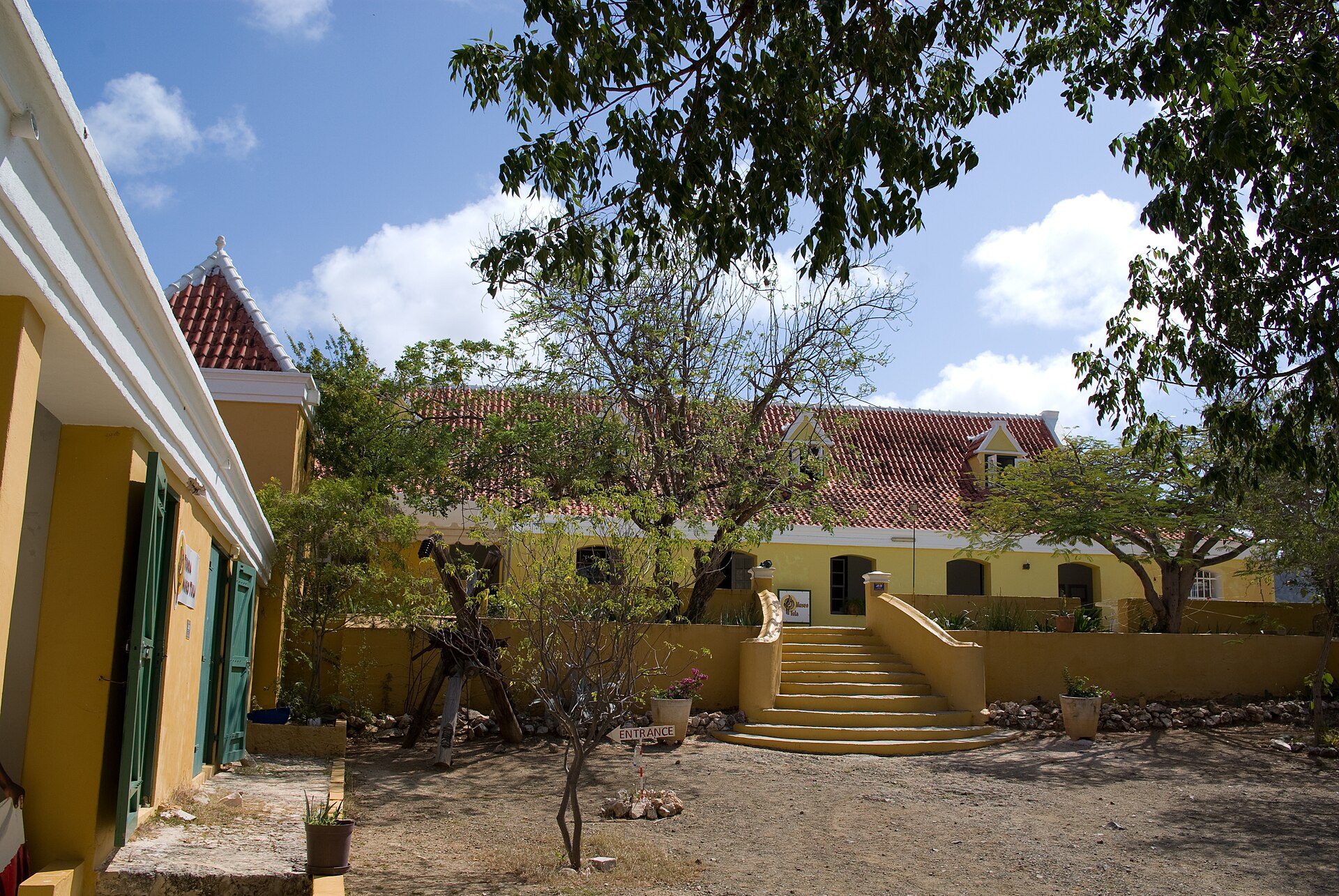 Photo: Charles Hoffman / Wikimedia Commons (CC BY-SA 2.0)
 - Gustavia — Swedish Colonial Free Port Late afternoon, when yachts fill the harbor
Sweden acquired the island from France in 1784 in exchange for trading rights in Gothenburg; the renamed port of Gustavia (after King Gustav III) became a free and neutral port with nearly 5,000 residents and 1,300+ ships docking annually by 1800. Returned to France in 1878, Gustavia kept its duty-free status — which persists today.
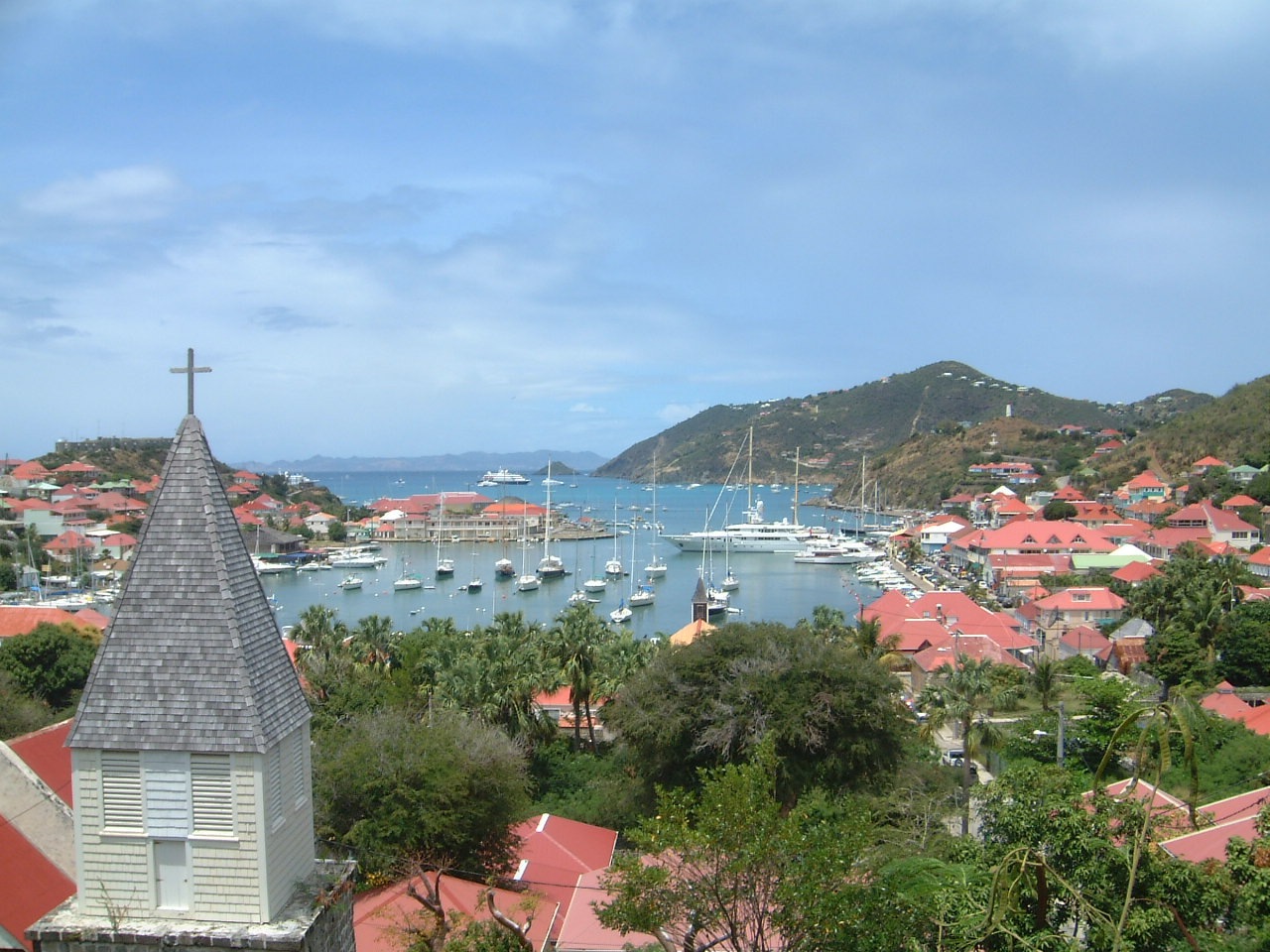 Photo: Evaneggers / Wikimedia Commons (CC BY-SA 3.0)
 - Anse de Grande Saline Dry season (Dec-Apr), undeveloped and quiet
Before tourism, St. Barts' arid terrain couldn't support sugar plantations like its neighbors, so the economy leaned on subsistence farming, goat herding, fishing, and salt extraction from this marsh pond behind the beach — a rare, genuine pre-tourism economic history for the island. The pond is now a protected natural habitat.
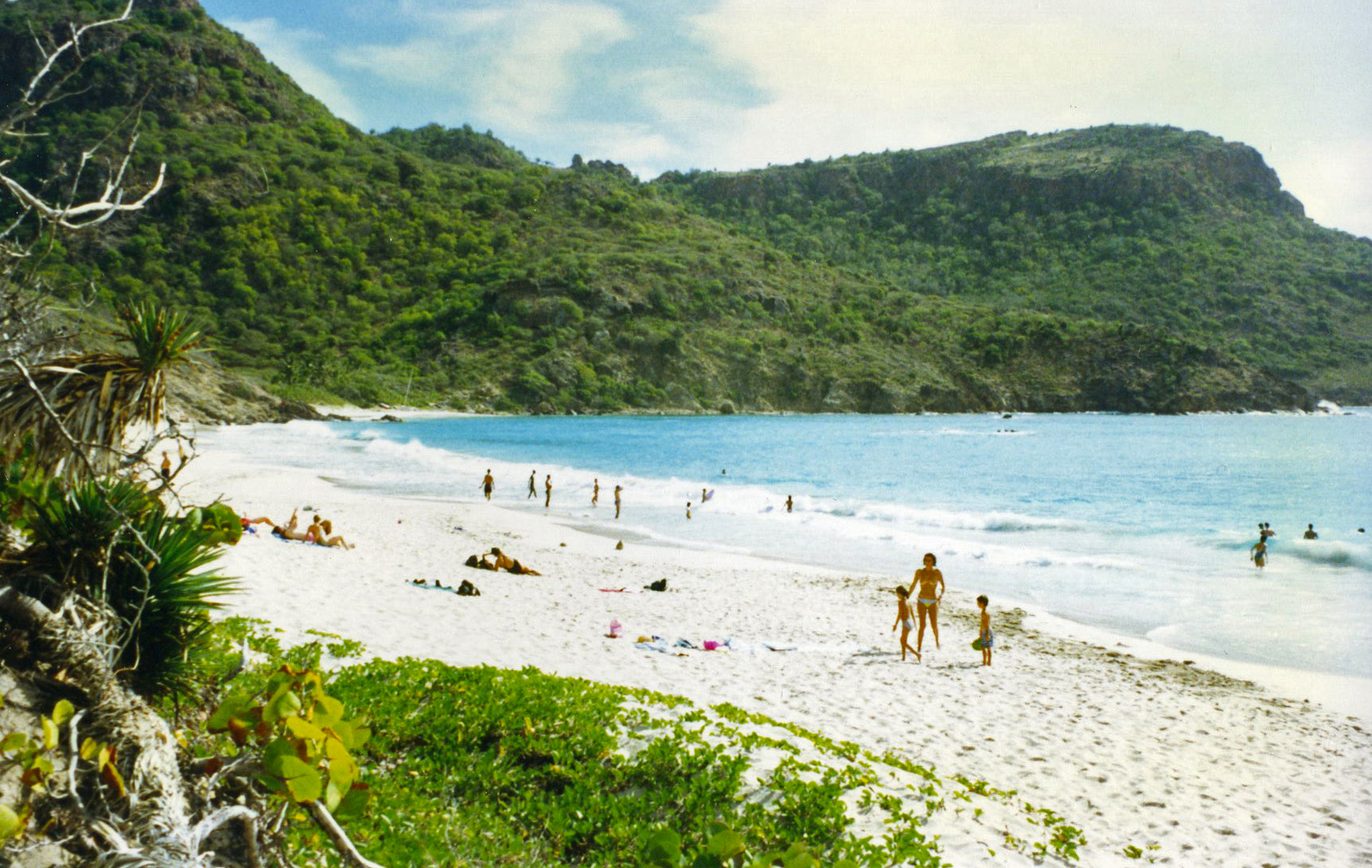 Photo: David Broad / Wikimedia Commons (CC BY 3.0)
 - Chalk Sound National Park Midday sun, for the most vivid turquoise
A shallow (mostly under 5ft) turquoise lagoon on Providenciales' southwest side, its color created by sunlight refracting off fine limestone sand. Motorized boats are banned here, keeping it a quiet paddling and birdwatching spot — osprey and flamingos included.
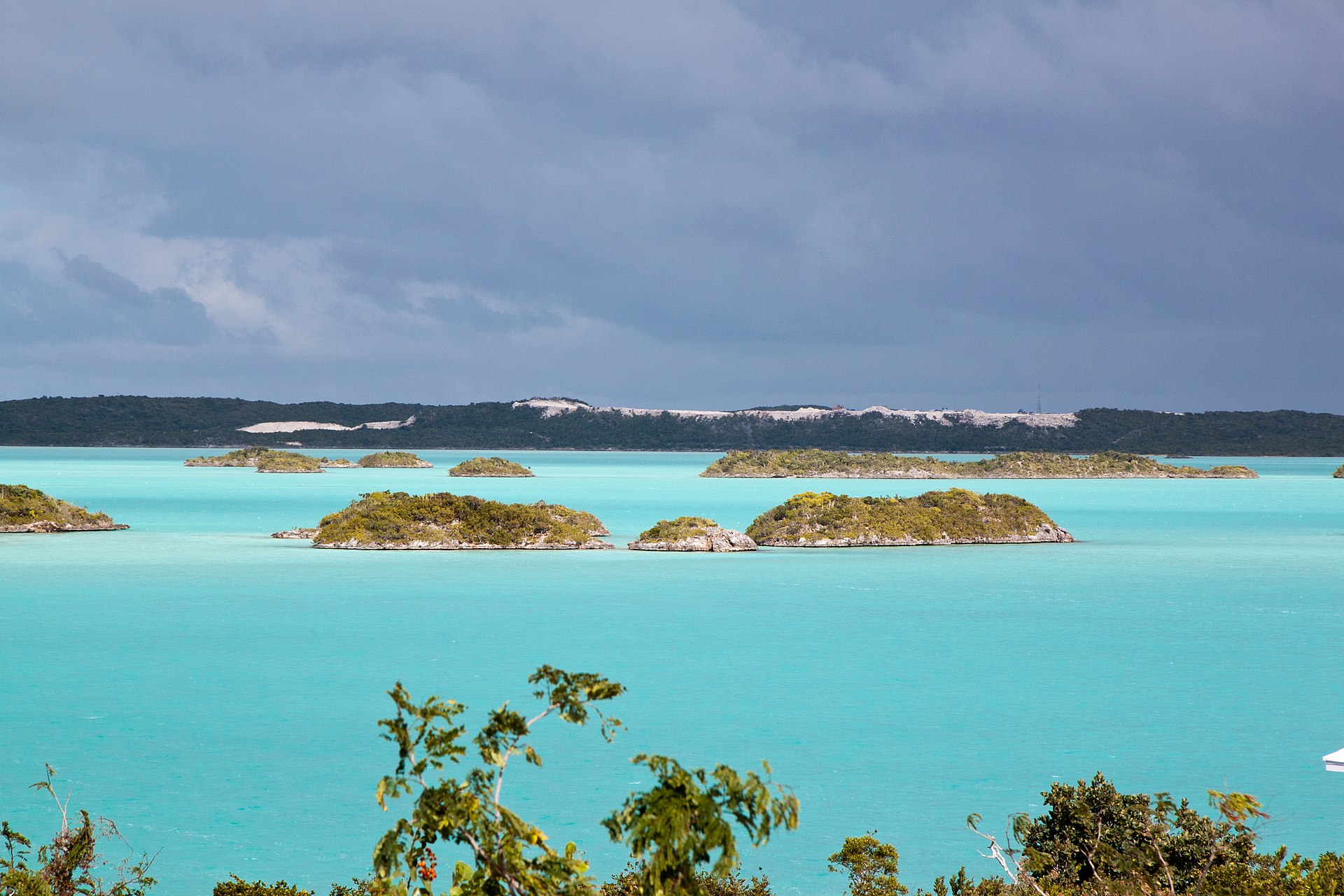 Photo: Tim Sackton / Wikimedia Commons (CC BY-SA 2.0)
 - Flamingos — Grand Turk / North Creek Early morning or late afternoon, active feeding
American (Caribbean) flamingos are genuinely found across the Turks and Caicos archipelago. North Creek on Grand Turk is a confirmed, documented viewing spot alongside terns, egrets, and herons, and North Caicos' Ramsar-listed Flamingo Pond is another well-known flock site.
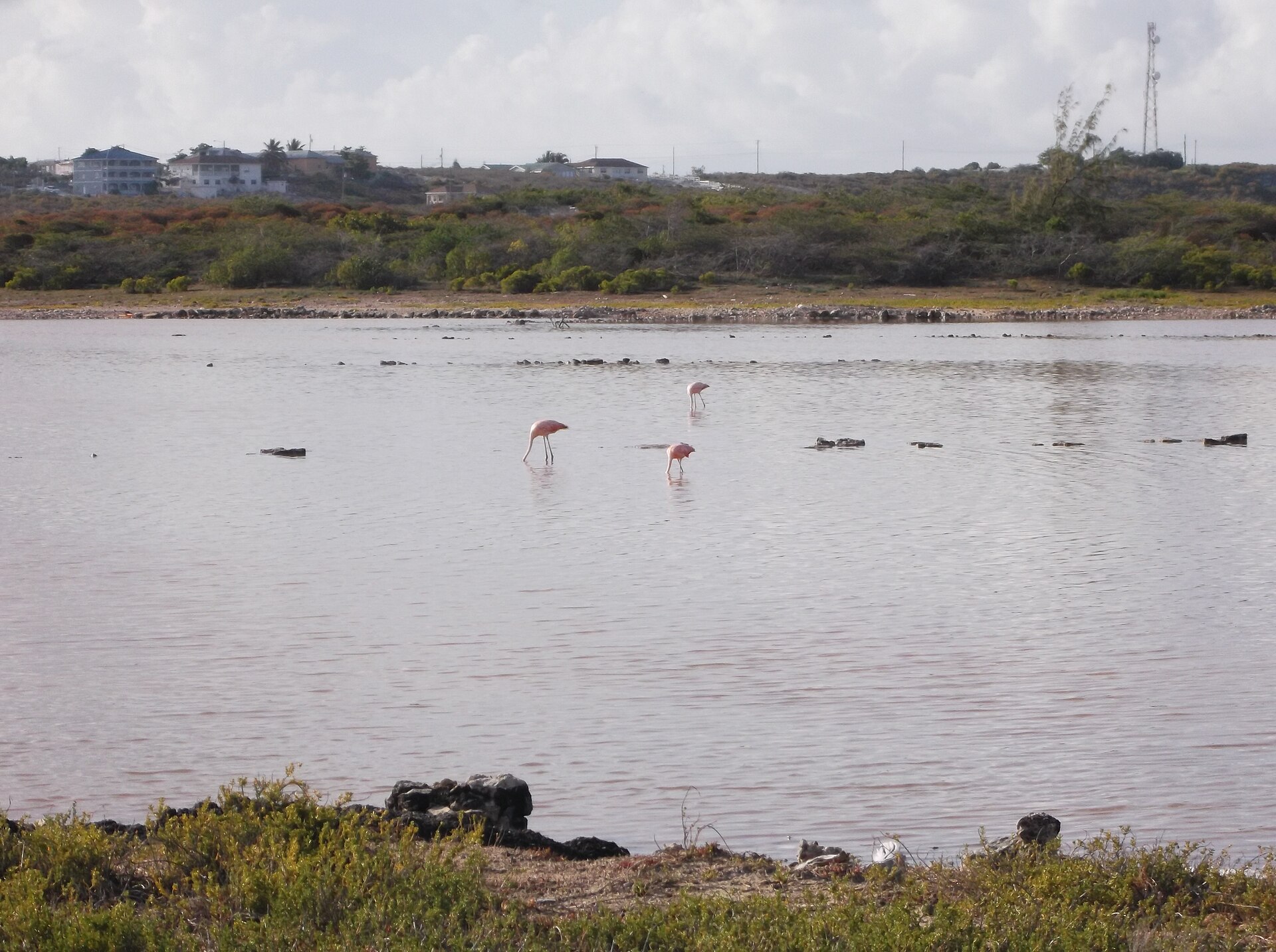 Photo: socaltraveler / Wikimedia Commons (CC BY-SA 3.0)
 - Cheshire Hall Plantation Ruins Morning, before midday heat
The best-preserved plantation-era ruins on Providenciales — a 5,000-acre sisal and cotton estate founded by Loyalist Thomas Stubbs in the late 1700s, later run by his brother Wade Stubbs, employing hundreds of enslaved people at its peak. Ruins include the great house, slave quarters, kitchen, and cotton-press bases, managed today by the Turks and Caicos National Trust.
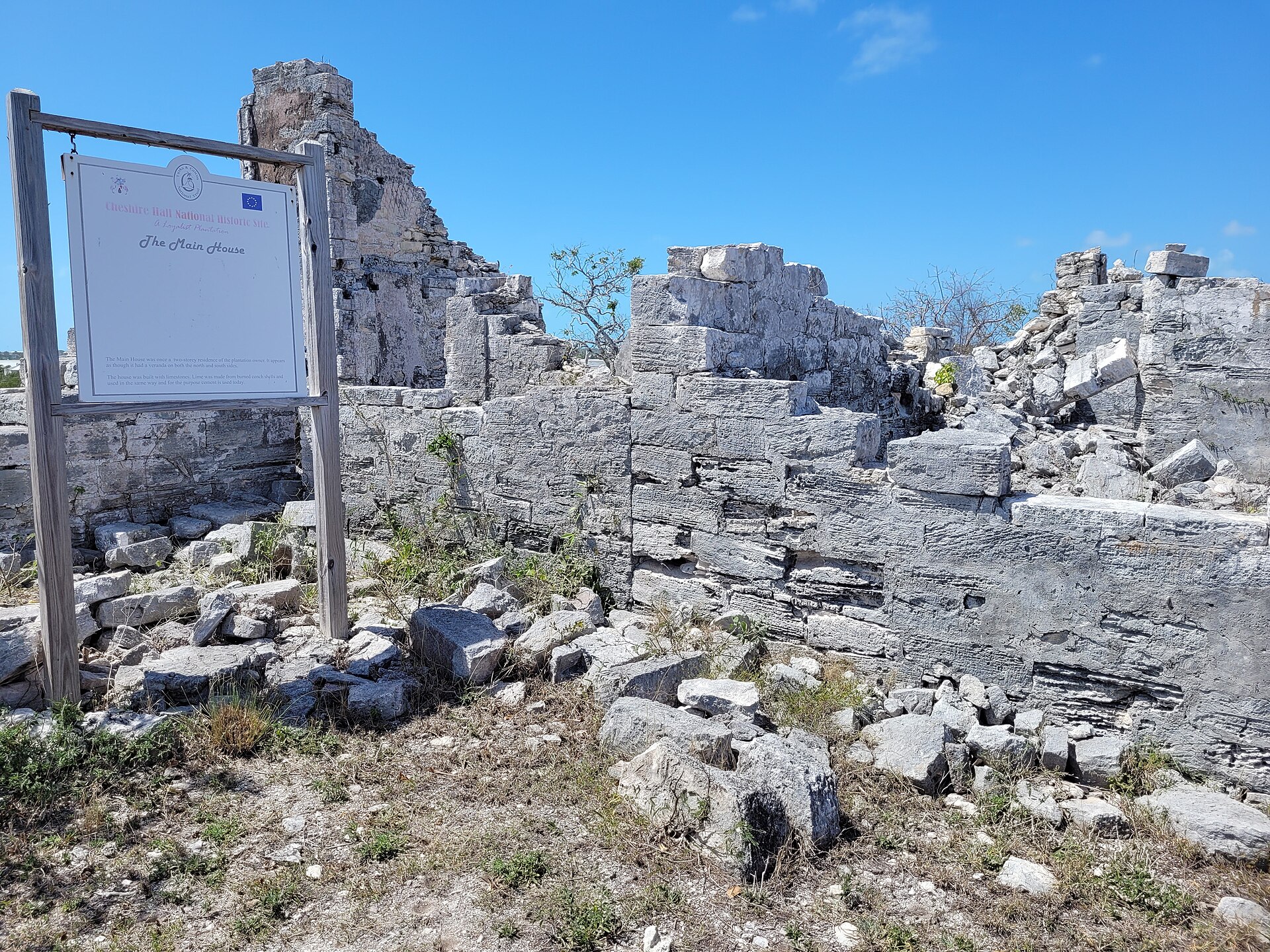 Photo: Dwkaminski / Wikimedia Commons (CC BY-SA 4.0)
Questions people actually ask.
Why are these four islands bundled into one zone instead of getting their own pages?
Honestly, because none of them center their tourism identity on wave surfing the way this site's standalone zones do. Aruba and Turks and Caicos are genuinely kite/windsurf/dive-first islands with surfing as a secondary activity. Curaçao has one real reef break. Saint Barthélemy has the most legitimate surf scene of the four, but the island itself markets as a luxury/yachting destination first. Bundled together, they cover real water-sport travel worth knowing about without stretching any one of them into a full standalone zone.
Which of these islands actually has real wave surfing?
Ranked by surf legitimacy: Saint Barthélemy (Lorient and Toiny are real, named breaks with a dedicated surf school) is the strongest. Curaçao's Playa Kanoa is a genuine, consistent reef break. Aruba has several real east-coast spots (Andicuri, Boca Grandi, Dos Playa) but they're overshadowed by the island's windsurf/kite branding. Turks and Caicos is the thinnest — wave surfing exists but barely registers against the island's kiteboarding and diving identity.
Are these islands all similarly safe, and is hurricane risk the same across all four?
No, on both counts, and it's worth knowing the real spread rather than assuming uniformity. Safety: Aruba, Curaçao, and Saint Barthélemy all currently sit at US State Department Level 1, Exercise Normal Precautions; Turks and Caicos sits at Level 2, Exercise Increased Caution, specifically for crime concentrated on Providenciales. Hurricanes: Aruba and Curaçao (the ABC islands) sit outside the Atlantic hurricane belt and see essentially no direct hits. Saint Barthélemy and Turks and Caicos both sit inside the belt and have real hurricane history — both were hit hard by Hurricane Irma in 2017.
How do I get to Saint Barthélemy — is there a direct US flight?
No direct flights from the US mainland exist. The standard route is a major US carrier into Sint Maarten (SXM), then a short ~15-minute hop on Winair or Tradewind Aviation into St. Barts' Gustaf III Airport (SBH), whose short runway limits it to small aircraft. Tradewind also flies direct from San Juan and Antigua.
Which of these islands is the most and least expensive?
Saint Barthélemy is confirmed as one of the most expensive destinations in the Caribbean — a genuine luxury island, with hotel rates commonly running $900-1,700+/night in season. Turks and Caicos is also a genuinely expensive destination, with no real budget tier. Aruba runs moderate-plus. Curaçao trends the most moderate of the four.
Disclosure & how this page works.
Straight talk: Some links on this page are affiliate links — if you book through them, Secrets of Surf Travel earns a small commission at no extra cost to you. We only link places and people we’d use ourselves, and coverage is never for sale. Those commissions are what keep this site running and fund the next trip.
Today, the “Search Vrbo rentals” and “Search Booking.com stays” links on this page are affiliate links — every vendor listing link is still a plain courtesy link. As partnerships with these local businesses come online, more links (and discount codes, where Secrets of Surf Travel benefits from their use) may earn us a commission, and this page will keep saying so plainly. Coverage is never for sale: nobody on this page paid to be here, and nobody can.
Every listing was researched in 2026 and is being verified in person. Prices, hours, and policies change — treat them as strong starting points and confirm directly with the business. And per the No-Reveal Code: you will find no surf spots on this page, ever.