Barbados
Bathsheba is a small fishing village on Barbados's wild, boulder-strewn Atlantic coast — a world away from the calm, resort-lined "Platinum Coast" on the other side of the island. Home to a genuinely world-class wave with no instruction infrastructure of its own: this is an experienced-surfer destination, and the page says so plainly.
Straight talk: Some links on this page are affiliate links — if you book through them, Secrets of Surf Travel earns a small commission at no extra cost to you. We only link places and people we’d use ourselves, and coverage is never for sale. Those commissions are what keep this site running and fund the next trip.
Some vacation-rental search links on this page (marked “Search Vrbo rentals” or “Search Booking.com stays”) are affiliate links. Every vendor link below is still a plain courtesy link. As more partnerships come online, more links may earn us a commission; the promise above holds either way.
Getting There
Grantley Adams International Airport (BGI), near Bridgetown, has real, multi-carrier US connectivity — not a single seasonal route. American flies direct from Miami, Charlotte, and Atlanta; JetBlue from New York-JFK (daily) and Boston (weekly); Delta from Atlanta (daily) and JFK (Saturdays).
Documents: no visa needed for US citizens, just a valid passport. Sources genuinely conflict on the allowed stay length (some cite 90 days, others 6 months) — confirm the current limit directly before booking. All visitors must complete an online Immigration & Customs form (ED Card) within 72 hours of arrival.
Ground Transport
- BGI to Bathsheba: roughly 14 miles / 23km, but a genuine cross-island drive from the south coast to the exposed east coast through the interior — 25-45 minutes depending on route and traffic.
- Barbados drives on the LEFT, British-style — a real adjustment for US travelers, with rental cars having the steering wheel on the right. A valid US driver's license is accepted at the counter; as of October 2025, a separate Barbados driving permit is no longer required (a recent change, worth confirming it's still current before travel).
- Public transport reaches Bathsheba via Transport Board buses, minibuses, and ZR vans (privately run, fast, packed) — standard fare around BDS$3.50 (~$1.75). Taxis are widely available but not metered — confirm the fare before you get in.
When to Go & What to Pack
- Winter (roughly November-March/May) is peak season, driven by North Atlantic groundswell from the northeast. Summer (July-October) still produces workable surf from easterly windswell and tropical-system-adjacent swell — a genuine mixed pattern rather than one narrow season; September is often cited as a sweet spot for consistency.
- Water temperature: warm year-round, roughly 79-82°F (26-28°C). No wetsuit needed at any point.
- A real hurricane-exposure differentiator: Barbados sits at the southern/eastern edge of the Atlantic hurricane belt — direct hits are rare, meaningfully lower exposure than the northern Caribbean (Bahamas, Puerto Rico, the Virgin Islands), though not zero.
Good to Know
- Safety: US State Dept Level 1, Exercise Normal Precautions. The main real risk is petty crime (pickpocketing, purse-snatching) in tourist areas, with a specific caution against walking alone at night, including on beaches — worth knowing since an evening beach walk in Bathsheba might otherwise seem like an obvious thing to do.
- Emergency numbers — genuinely different from what you'd default to: Barbados does NOT use 911. Police 211, Fire 311, Ambulance 511.
- Currency: Barbadian Dollar (BBD), fixed at a 2:1 peg to USD since 1975 — a real, useful simplification (halve a USD price for BBD, double a BBD price for USD). USD is widely accepted in tourist areas but not universal.
- Language: English, official — no language barrier.
- Tap water: safe to drink island-wide — treated to WHO standards, with the island's limestone geology providing natural filtration.
- Connectivity: Flow and Digicel are the main carriers with 4G/expanding 5G; eSIM is a practical pre-arrival option. Wi-Fi is common in tourist hubs but noticeably weaker in rural areas — relevant since Bathsheba sits away from the main west-coast tourist strip.
- Cost of living: genuinely one of the pricier Caribbean destinations — average daily tourist spend runs around $438, average hotel roughly $471/night, a cheap restaurant meal $20-30. Barbados skews toward mid-to-high-end tourism with fewer true budget options.
Respecting the Locals
Bathsheba is a small fishing village on Barbados's wild, boulder-strewn Atlantic coast — a world away from the calm, resort-lined "Platinum Coast" most visitors picture. There's no surf school or board shop in the village itself; the wave here is a serious, experienced-surfer break sustained by locals and guided trips from the south coast, not tourist-facing infrastructure. That means the people in this lineup have almost certainly been surfing it far longer than any visitor passing through.
- Locals get first priority, always. Watch a session before you paddle out. Learn who's who before you learn the wave. Sit inside and catch what they let through — the leftovers are yours, not the set waves.
- Don't backpaddle. Ever. Being in position doesn't make the next wave yours, especially if you didn't wait your turn. If a local wants a wave, let them have it…even if it IS your turn. That older guy who may not be the best surfer out there has probably been surfing that wave before you even sat on a board. If you don't know someone, assume they're local.
- Don't snake. This shouldn't even need to be said, but…dropping in on someone, local or not, is the ultimate disrespect and the fastest way to be sent out of the water. Don't be that guy!
- Say hi. A “howzit,” “whatsup,” or “nice wave,” eye contact, or a nod in the channel — it costs nothing and it's the fastest way from stranger to welcome.
- This is somebody's home, not a resort amenity. The break you're surfing is where a local kid learned to swim, where someone's uncle has surfed for forty years. Act like a guest, because you are one.
- Spend where it actually helps. The food truck, the local shaper, the family-run rental, the local photographer — that's where a surf trip's money should land, not just the chain hotel gift shop. See The No-Reveal Code for why that's the whole premise of this site.
- Leave it better than you found it. Pick up trash that isn't yours. Don't touch reef, wildlife, or cultural sites.
Locals have watched hundreds, if not thousands, of people come and go — some for days, some for months or years — and almost all of them eventually go home. The locals are still there. It takes many, many years to actually become one. Keep that in mind the next time you feel entitled to the same waves they get.
None of this is a secret handshake. It's just how you'd want a guest to act in your own backyard.
Bathsheba
A small fishing village in St. Joseph parish, defined by massive mushroom-shaped coral-limestone boulders and a wild Atlantic backdrop — genuinely worth knowing upfront: Bathsheba itself has no surf school or board shop. The wave here is a serious, experienced-surfer break, not a instruction beach, and the real surf-industry infrastructure (schools, rentals, repair) sits on the south coast, roughly 45 minutes to an hour away, offering guided east-coast trips rather than a village storefront presence. Open-water swimming off the main beach is genuinely dangerous due to strong currents — a real safety note, separate from the wave itself.
Bathsheba's few beds run to small, character-driven inns and boutique lodges rather than resort chains — historic guesthouses tucked above the boulders and tidal pools.
Search Vrbo rentals in Bathsheba →
Surf Guides & Tours
No operator is physically based in Bathsheba. The real, verified route to a guided session here runs through south-coast schools that offer east-coast trips:
- Dread or Dead Surf SchoolHastings Main Road, Christ Church (south coast)Mid-rangeFamily-run, 100% Bajan instructors, operating since 1995 — the island's most established surf operation."Friendliest most authentic surf school run by an amazing family." — TripAdvisor reviewWhatsApp
- Zed's Surfing AdventuresSurfer's Point, Inch Marlowe (south coast)Mid-rangeNamed National Geographic's #7 surf school worldwide in 2012.
Stays
- Round House InnOceanfront, above Bathsheba's tidal poolsBudget/mid4 architecturally distinct rooms in a historic inn with 150 years of history on the site — ~$145/night.
- Atlantis Historic InnBathsheba, St. JosephMid-rangeColonial-era boutique inn, 9 rooms, famous Sunday/Wednesday buffet — $176-540/night.
- ECO Lifestyle + LodgeBathsheba, St. JosephUpper-midEco-conscious boutique concept, 10 rooms, on-site ECO Restaurant — from ~$303/night."We were looking for a quiet and genuine place to stay, away from the mainstream, and we found it." — TripAdvisor review
Where to Eat
- Uncle Joe's Bar & GrillOverlooking the "mushroom rock"Mid-rangeFamily-run by the Goodman family — 4.4/5, #169 of 571 Bathsheba restaurants.
- Dina's Bar & CafeDirectly on the Bathsheba beachfrontBudgetOwner Dinah runs it personally — one of the few real dining options on this side of the island."Try the marlin!" — TripAdvisor review title
- Round HouseAt the inn aboveMid-rangeContinental-Caribbean menu, decks looking out over the Atlantic.
Wheels: Car Rentals
- MasterDrive Car RentalsBridgetown-based, dedicated Bathsheba/east coast serviceMid-rangeExplicitly markets access to Bathsheba, Cattlewash, Cherry Tree Hill, and Andromeda Gardens — 5.0 on Google, the only rental company found that names this coast as a specific service area.WhatsApp
Surfboard & Ding Repair / Surf Shops
Genuinely nonexistent in Bathsheba itself — real repair options (Dread or Dead, SurfinBarbados) are both Hastings-based, on the south coast. A dinged board here means a drive, not a village fix.
Massage & Wellness
Genuinely thin — no spa is physically located in Bathsheba, and the mobile spa services we found explicitly list west/south coast coverage areas, not the east coast.
Other Adventures
- Andromeda Botanic GardensTent Bay, BathshebaAn 8-acre organic garden right in the village, founded 1954, over 500 plant species — the signature non-surf attraction literally in Bathsheba.
- Chalky Mount PotteriesNearby Scotland DistrictA hilltop pottery village with 200+ years of tradition, open workshops, panoramic east-coast views.
Fishing charters are genuinely not based here — the east coast's cliffs make marina access impractical; verified operators (e.g. Billfisher III) depart from Bridgetown on the south/west side.
Local Secrets
Eight non-surf reasons this zone rewards the curious — the world's oldest rum brand, a crystallized limestone cavern, and a church holding the grave of a descendant of the last Byzantine emperor.
- Andromeda Botanic Gardens Year-round, mornings to avoid midday heat
An 8-acre organic garden right in Bathsheba, founded in 1954 by self-taught Barbadian horticulturalist Iris Bannochie around her holiday home — over 500 plant species, bequeathed to the Barbados National Trust in 1988.
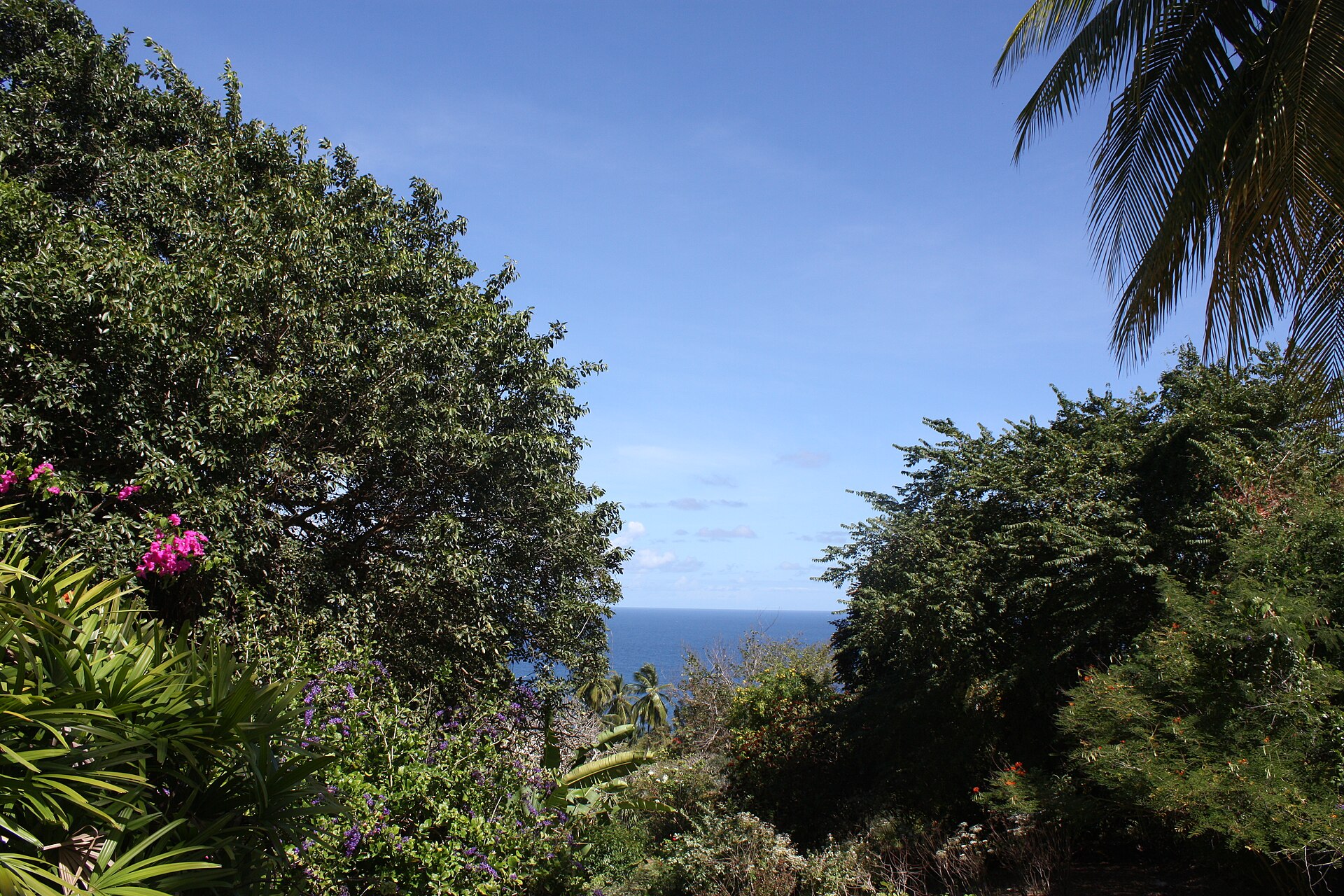 Photo: Postdlf / Wikimedia Commons (CC BY-SA 3.0)
 - The Bathsheba Boulders Sunrise for photography; low tide for closer viewing
Massive mushroom-shaped coral-limestone monoliths sitting on Eocene-age basement rock, formed as wave action erodes the softer base faster than the hardened cap — a genuine geological landmark distinct from the wave itself.
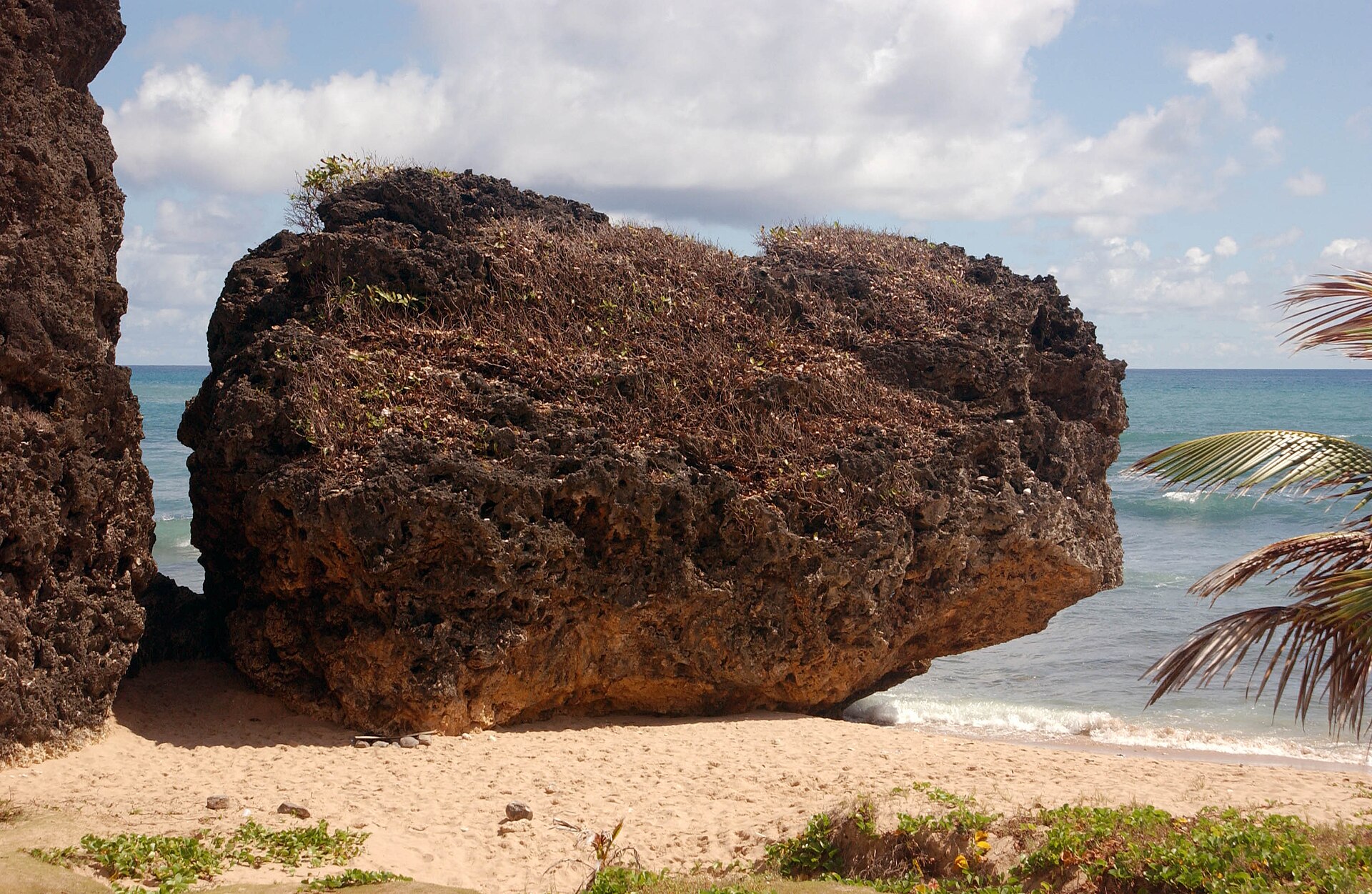 Photo: Jerrye and Roy Klotz, MD / Wikimedia Commons (CC BY-SA 3.0)
 - Harrison's Cave Weekday mornings, first tram departure
A crystallized limestone cavern system about 5 miles from Bathsheba, first documented in 1795 and opened via electric tram tour in 1981 — the tram winds roughly 1.5 miles through passages including the Great Hall, its ceiling around 50 feet high.
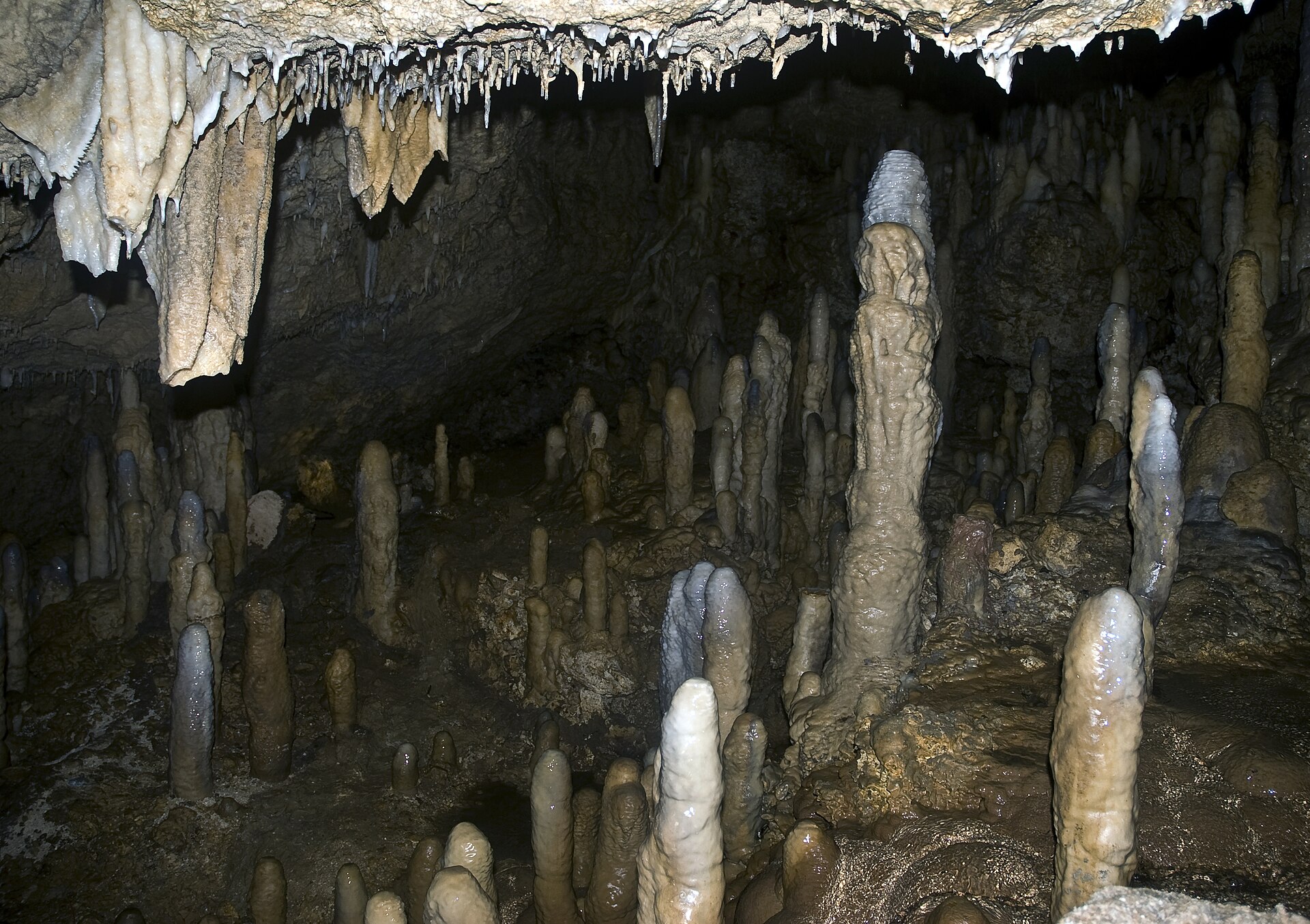 Photo: Berit Watkin / Wikimedia Commons (CC BY 2.0)
 - Mount Gay Rum Visitors Centre Weekday mid-morning tours
The world's oldest rum brand, with a property deed dating to February 1703, on Spring Garden Highway in St. Lucy — tours cover cane-to-bottle production and end with a guided tasting.
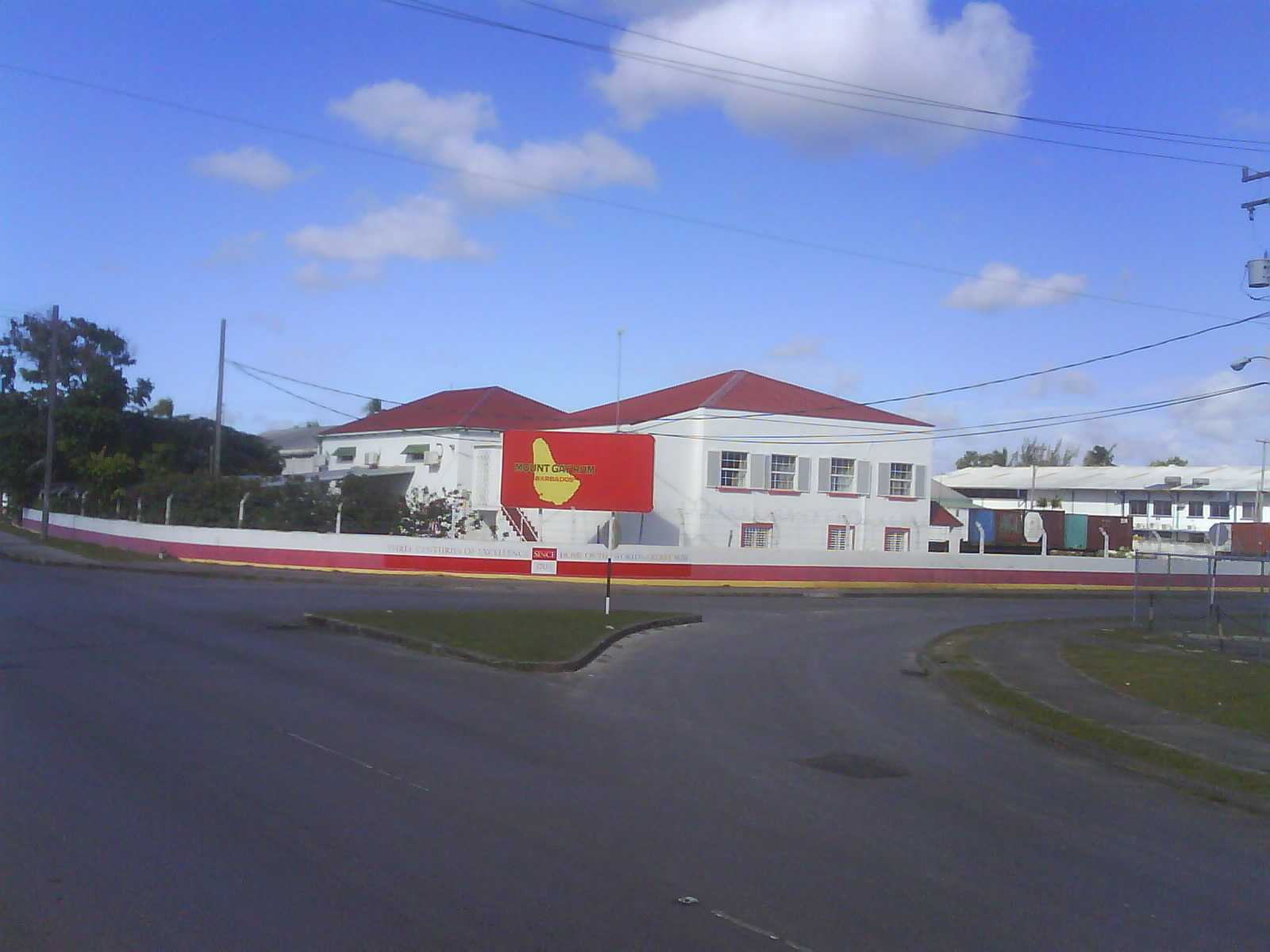 Photo: CaribDigita / Wikimedia Commons (CC0/Public Domain)
 - St. John's Parish Church Any clear day for the cliffside view
Perched on Hackleton's Cliff roughly 820 feet above the east coast — the current building, completed in 1836, is the fifth church on the site, and its churchyard holds the grave of Ferdinando Paleologus, a descendant of the last Byzantine emperor.
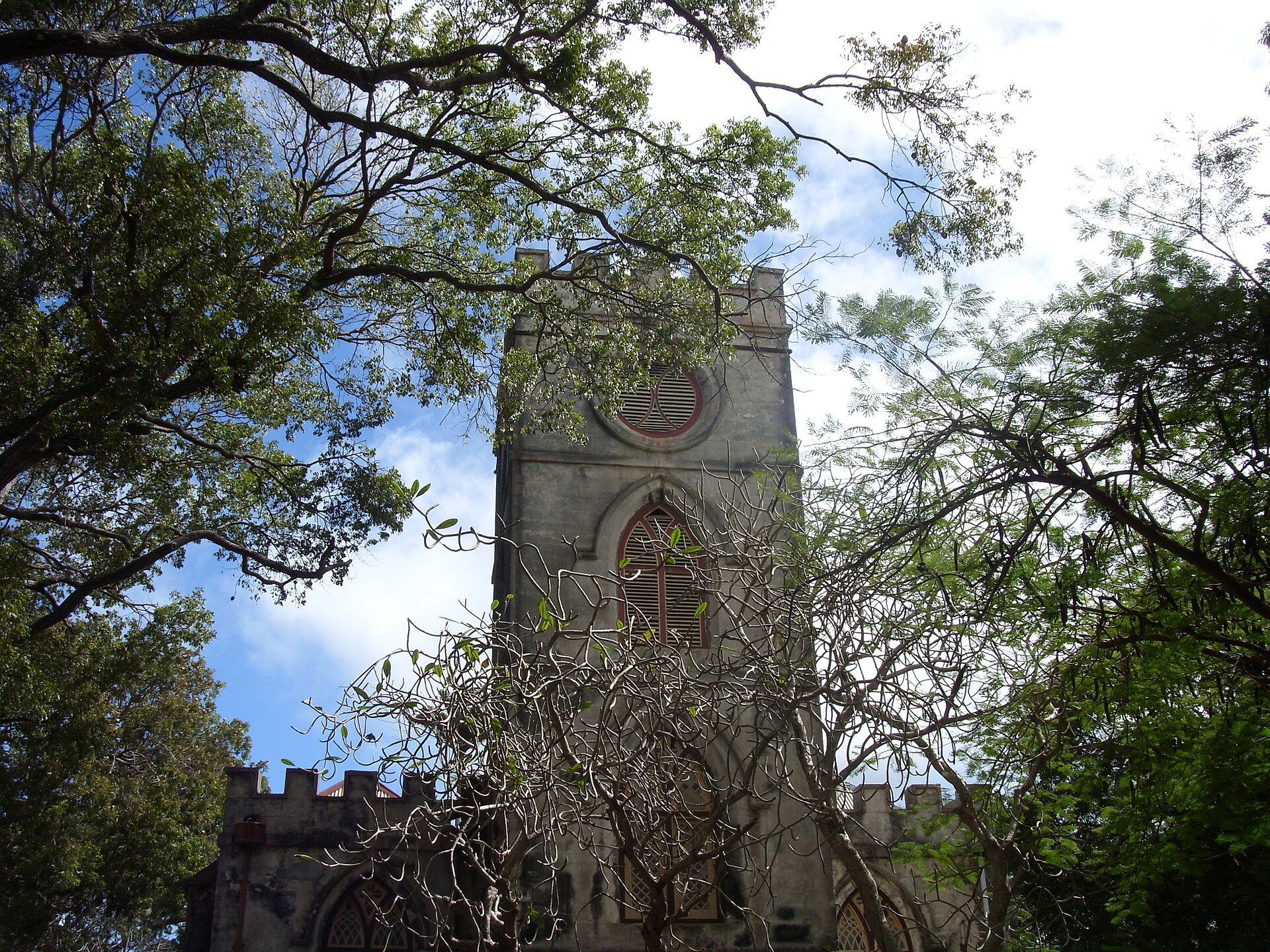 Photo: PaddyBriggs / Wikimedia Commons (Public Domain)
 - Barbados Wildlife Reserve Early afternoon — feeding time is around 2pm
A free-roaming reserve in St. Peter established in 1982, home to Barbados green monkeys — descendants of monkeys brought from West Africa roughly 350 years ago.
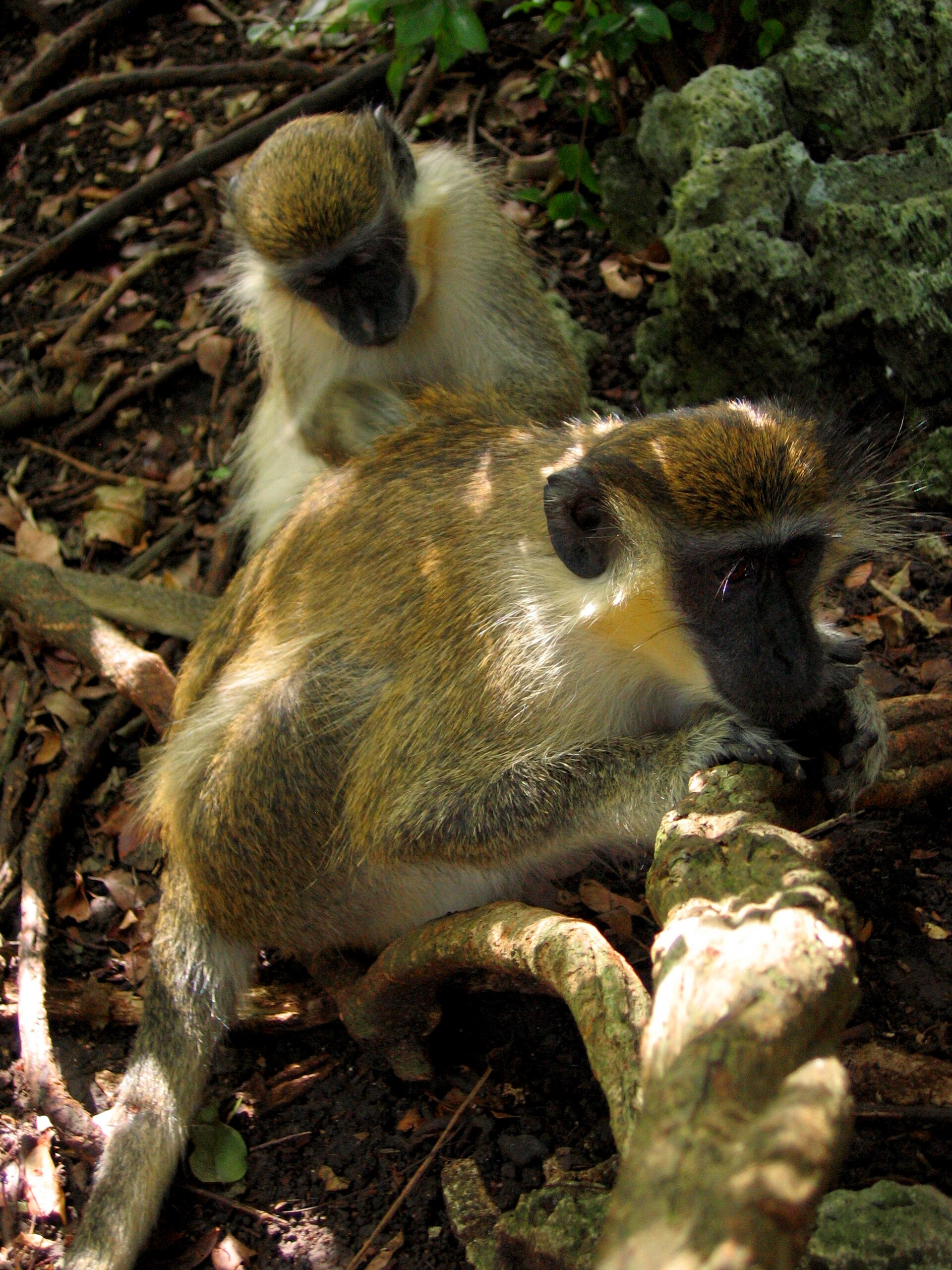 Photo: Postdlf / Wikimedia Commons (CC BY-SA 3.0)
 - Historic Bridgetown and its Garrison Weekday mornings, self-guided walking route
A UNESCO World Heritage Site since 2011, containing over 115 landmark 17th-19th-century colonial buildings — once the largest British garrison in the Caribbean, centered on the Garrison Savannah, a former 30-acre parade ground turned historic racetrack.
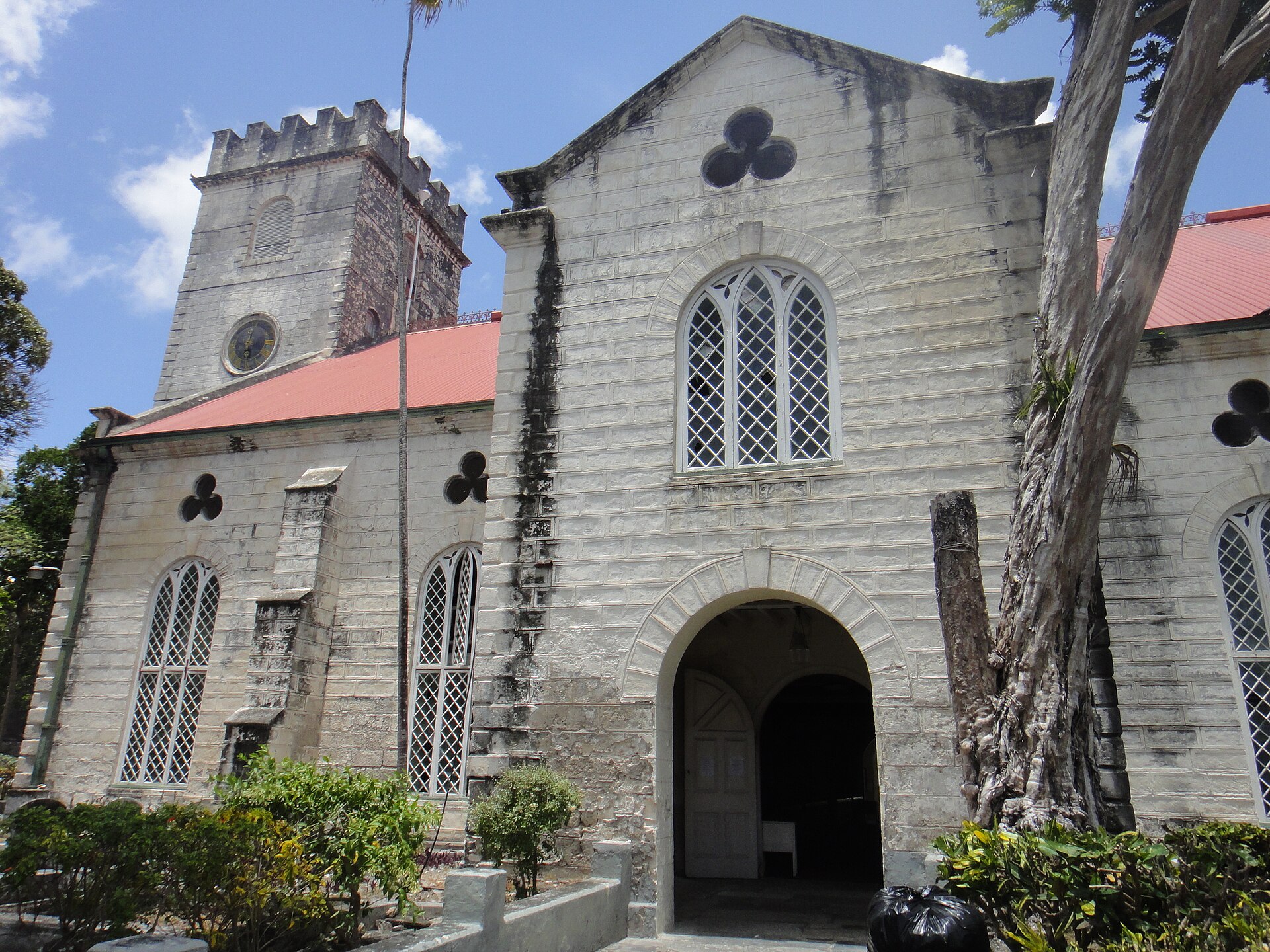 Photo: Sachiko Haraguchi / Wikimedia Commons (CC BY-SA 3.0 IGO)
 - Codrington College Weekday daytime; chapel visits by arrangement
The oldest Anglican theological college in the Western Hemisphere, endowed from an 1710 bequest and opened in 1745 on a former sugar estate — still an active seminary today.
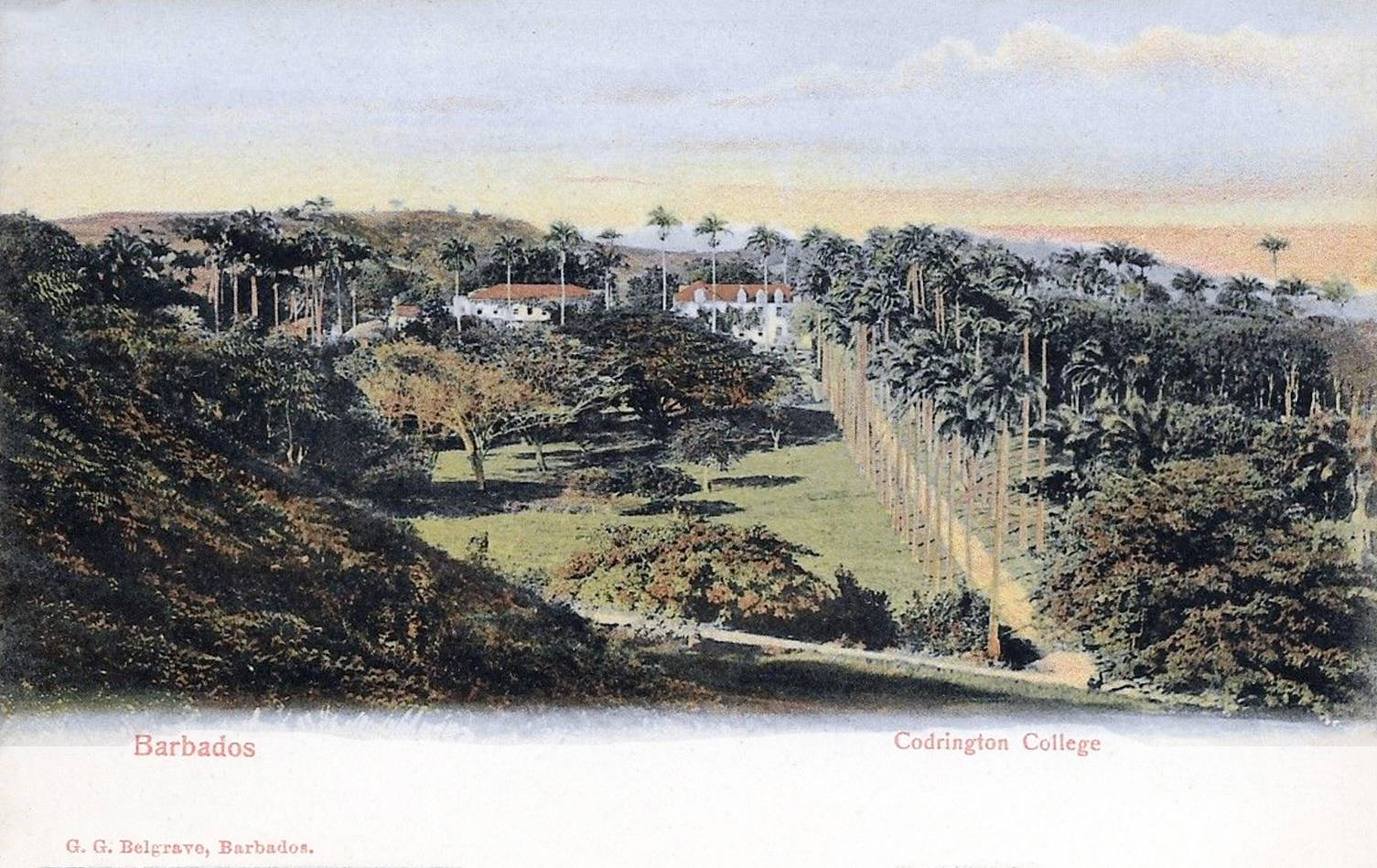 Photo: G.G. Belgrave, c. 1905 / Wikimedia Commons (Public Domain)
Questions people actually ask.
How do I get to Barbados?
Grantley Adams International Airport (BGI) has real, substantial US connectivity — American flies direct from Miami, Charlotte, and Atlanta; JetBlue from New York-JFK (daily) and Boston (weekly); Delta from Atlanta (daily) and JFK (Saturdays). From BGI, Bathsheba is a genuine cross-island drive to the east coast — roughly 14 miles, 25-45 minutes.
Do I need a visa?
No visa needed for US citizens — just a passport. Sources genuinely conflict on the allowed stay length (some say 90 days, others 6 months), so confirm the current limit directly before booking rather than assuming either figure. All visitors must also complete an online Immigration & Customs form (ED Card) within 72 hours of arrival.
Is Barbados safe, and what's the emergency number?
The US State Department rates Barbados Level 1, Exercise Normal Precautions. The main real risk is petty crime (pickpocketing, purse-snatching) in tourist areas, with a specific caution against walking alone at night, including on beaches — worth knowing since an evening beach walk in Bathsheba might otherwise seem like an obvious thing to do. One genuinely important practical note: Barbados does NOT use 911 — emergency numbers are Police 211, Fire 311, Ambulance 511.
When should I go?
Winter (roughly November-March/May) is peak season, driven by North Atlantic groundswell from the northeast. Summer (July-October) still produces workable surf from easterly windswell and tropical-system-adjacent swell — a genuine mixed pattern rather than one narrow season. Barbados also sits at the southern/eastern edge of the hurricane belt, meaningfully lower exposure than the northern Caribbean, though not zero.
What's the water like, and do I need a wetsuit?
Warm year-round, roughly 79-82°F (26-28°C). No wetsuit needed at any point.
Disclosure & how this page works.
Straight talk: Some links on this page are affiliate links — if you book through them, Secrets of Surf Travel earns a small commission at no extra cost to you. We only link places and people we’d use ourselves, and coverage is never for sale. Those commissions are what keep this site running and fund the next trip.
Today, the “Search Vrbo rentals” and “Search Booking.com stays” links on this page are affiliate links — every vendor listing link is still a plain courtesy link. As partnerships with these local businesses come online, more links (and discount codes, where Secrets of Surf Travel benefits from their use) may earn us a commission, and this page will keep saying so plainly. Coverage is never for sale: nobody on this page paid to be here, and nobody can.
Every listing was researched in 2026 and is being verified in person. Prices, hours, and policies change — treat them as strong starting points and confirm directly with the business. And per the No-Reveal Code: you will find no surf spots on this page, ever.