
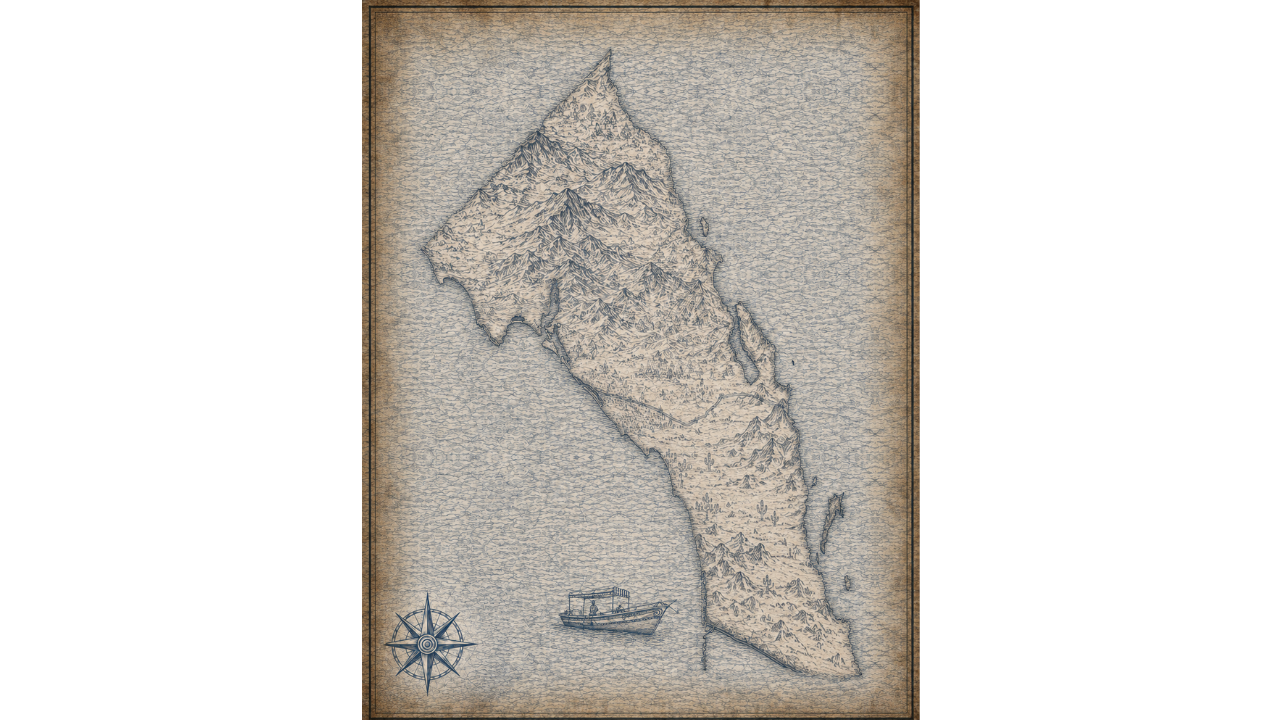
Baja Sur — The Remote Coast
The real surf here is thin but genuine: San Juanico is the main hub, Magdalena Bay has a town and a wave, Punta Abreojos shares its name with the spot it sits on, and Punta Conejo is camping-only. Guerrero Negro, San Ignacio, Mulegé, and Loreto have zero surf but real beachfront camping, fishing, kayaking, and snorkeling along the way. Beyond all of it, this coast holds plenty more for the adventurous willing to sail, off-road, and camp. Sister zone to Southern Baja; read that one first for the gateway towns.
 ABREOJOS & LA BOCANA
SAN IGNACIO – SANTA ROSALÍA – MULEGÉ
MAGDALENA BAY
LORETO
SAN JUANICO
CAMPING REGION
ABREOJOS & LA BOCANA
SAN IGNACIO – SANTA ROSALÍA – MULEGÉ
MAGDALENA BAY
LORETO
SAN JUANICO
CAMPING REGION

Straight talk: Some links on this page are affiliate links — if you book through them, Secrets of Surf Travel earns a small commission at no extra cost to you. We only link places and people we’d use ourselves, and coverage is never for sale. Those commissions are what keep this site running and fund the next trip.
Some vacation-rental search links on this page (marked “Search Vrbo rentals” or “Search Booking.com stays”) are affiliate links. Every vendor link below is still a plain courtesy link. As more partnerships come online, more links may earn us a commission; the promise above holds either way.
Getting There
This zone picks up where Southern Baja stops — San Juanico, Punta Abreojos, La Bocana, the inland staging towns, and Loreto as the fly-in gateway. Read that page first for SJD, LAP, and the drive-down basics; this page assumes you’ve already made it onto the peninsula.
Fly into LTO — Loreto
The best gateway for San Juanico and the Comondús/La Purísima side. Alaska Airlines flies from Los Angeles (San Francisco seasonal), American Eagle from Phoenix (Dallas–Fort Worth seasonal), WestJet from Canada seasonally, and Volaris/Calafia connect domestically through Tijuana, La Paz, Los Mochis, and others. Confirm current schedules — seasonal routes shift year to year. Rent a car at the airport and get the unpaved-road policy in writing; most international rental brands exclude graded and dirt roads from coverage.
Fly into LAP — La Paz
More flight options and cheaper cars, but it adds roughly 3.5–4.5 hours of driving to reach Ciudad Insurgentes via Highway 1. Covered in full on the Southern Baja page.
Drive routings into the coast villages
- Southern routing (recommended default, all-vehicle): Highway 1 to Ciudad Insurgentes, then paved BCS-53 north toward La Purísima, then the Las Barrancas turnoff and about 35 miles of graded coastal road into San Juanico. Longest but easiest — the sane choice towing or in 2WD.
- Inland routing (Loreto side): Highway 1 north of Loreto (Rosarito turnoff, about 80 km north), then roughly 43 miles of dirt and washboard to San Isidro/La Purísima, connecting to the southern routing. Conditions swing from fair to poor — ask locally before committing.
- Northern routing (San Ignacio side): south past the lagoon on mixed rock, hard-pack washboard, and sand. Flash-flood prone and frequently washed out; 4WD, two spares, and current local intel required. Not a default recommendation.
- Abreojos/La Bocana: a paved spur off Highway 1 south of Vizcaíno to Punta Abreojos, then a coastal graded road to La Bocana. Straightforward by Baja standards.
- The Comondús: paved/graded access from the Insurgentes–La Purísima road, with steep canyon grades — fine in a carefully driven 2WD in dry weather.
Graded does not mean maintained. Washboard eats tires and racks, rain closes roads for days, and signage is thin. Every itinerary through this corridor needs a weather check and a local phone call before departure day.
Fuel, Water, Supplies & Connectivity
This is the section that matters most for this zone. Plan around it, not just for it.
- Fuel gaps are the defining logistics problem here. Reliable Pemex stations: Loreto, Ciudad Insurgentes, Ciudad Constitución, Vizcaíno, Guerrero Negro, San Ignacio. San Juanico has informal drum gas only — availability and quality are not guaranteed. La Purísima and the Comondús: assume none. Rule of thumb: never pass a Pemex under three-quarters full when you’re bound for the coast, and carry a jerry can for a San Juanico stay.
- Water: bottled or garrafón only in the villages. Stock up in the staging towns before you drop to the coast.
- Cash: ATMs at Loreto, Ciudad Insurgentes, Ciudad Constitución, and Guerrero Negro. The coast villages are effectively cash-only — pesos, small bills. No ATMs in San Juanico, Punta Abreojos, La Bocana, La Purísima, or the Comondús.
- Connectivity: cell coverage is near-zero in San Juanico and patchy on the rest of the coast. Starlink has spread through some village businesses and rentals, but treat it as a bonus, not a plan. Download offline maps before leaving Highway 1, carry a satellite communicator (inReach or similar), and set check-in expectations with family before you go dark.
- Provisioning plan: do the big shop at El Pescador Supermercado in Loreto or the Ciudad Constitución supermarkets. Villages only carry top-up basics, on unpredictable restock schedules.
When to Go & What to Pack
- Heat: summer (July–September) runs regularly over 100°F in the inland staging towns; the coast stays cooler with marine-layer mornings. Winter is mild but can be genuinely cold at night in the desert — pack layers year-round.
- Wind: spring afternoons blow hard on this coast, so mornings are the working window for any ocean activity. Winter north winds can rake the Vizcaíno plain — plan driving and camping around it.
- Water temps (wetsuit guidance only): colder than visitors expect on this stretch of Pacific coast. Plan on a 3/2 most of the year, a 4/3 plus booties in winter/spring, and a spring suit only in the warmest late-summer windows.
- Hurricane season note: August–October chubasco remnants can cut every road in this corridor at once. Build flex days into any itinerary in that window.
- Pack: two spare tires (not one) for graded-road itineraries, a tire plug kit and compressor, a jerry can, more water than feels reasonable, cash in small bills, offline maps, a satellite communicator, sun shelter, and full self-sufficiency for repairs — there is no board repair and no surf retail anywhere in this corridor.
Good to Know
Calm register: the main risk out here is remoteness, not people. In order of importance:
- Distance between services is the real hazard. A breakdown on a graded road can mean hours before another vehicle passes. Two-vehicle travel is best practice on the northern routing; solo vehicles should stick to the southern paved-plus-graded routing.
- No cell service means no roadside rescue call. A satellite communicator is the single highest-value safety item you can pack.
- These are small cooperative fishing villages with strong community structures and very low crime by any standard. Respect coop norms in Abreojos and La Bocana — fishing waters and beach access are community-managed, and guests who ask first are welcomed.
- Medical: clinics (Centro de Salud level) exist in the larger villages; real hospitals only in Constitución, Loreto, and Guerrero Negro. Serious cases evacuate to La Paz.
- No night driving, anywhere, ever. Highway 1 and every graded road in this zone: cattle, no shoulders, no lighting.
- Fuel discipline and water margin cover 90 percent of realistic emergencies in this zone — plan both before anything else.
San Juanico
A small fishing village on the Pacific side, reached by long graded roads or the paved-plus-graded southern routing. Tiny year-round population, seasonal visitor traffic, minimal formal commerce. We reference it strictly as a village and logistics base.
Independent casita and casa rentals — Casitas San Juanico, Baja Surf Casa, Fourth Point Casa — cover much of San Juanico's bed count alongside the village hotel and campground.
Search Vrbo rentals in San Juanico →
Surf Guides & Tours
- Rana (local guide)San Juanico Local resident repeatedly named in trip reports as the go-to for guiding, board rentals, kayak rentals, and quad/ATV rentals. No direct site — reach through Scorpion Bay Hotel or village word-of-mouth. Surfer magazine profiles Jesús “Rana” Mayoral as “a formidable force” known for “unrelenting kindness.” Google Maps listing
- San Juanico Asociación de SurfSan Juanico Community non-profit surf association running donation-based programs, rentals, and gatherings for locals and visitors. San Juanico Asociación de Surf @sanjuanico_asociacionsurf Google Maps listing
- San Juanico Surf SocietySan Juanico Local community and visitor organization — civic and community-oriented, a good local-intel channel. Founder Jeffrey Westman describes it in a podcast interview as “building community and a Danish-inspired dream retreat.” sjsurfsociety.com @sjsurfsociety Google Maps listing
Wild Loreto Tours also runs guided surf tours from Loreto over to this coast — see the Loreto hub below.
Surf Camps
Thin — no standalone commercial surf camp found under that framing. The lodging options below fill the role informally.
Lodging
- Scorpion Bay HotelSan JuanicoMid-range Small hotel a block off the beach — casita buildings, gardens, breakfast, Wi-Fi, hot showers, A/C, next to the village stores. Likely the most reliable comms channel in the village. TripAdvisor guests loved “waking up to a healthy and organic breakfast every morning.” scorpionbayhotel.com Google Maps listing
- Scorpion Bay Cantina & CampgroundSan JuanicoBudget Long-running campground with palapas, plus the attached cantina — the default budget and camp option. Rates 4.4 stars on Google; overlanders note “the ladies at the cantina are very nice and helpful.” scorpionbay.net Google Maps listing
- Casitas San JuanicoSan JuanicoMid-range Small independent casita rentals. casitassanjuanico.com Google Maps listing
- Baja Surf CasaSan JuanicoMid-range Rental casa operation with a dedicated San Juanico property page. bajasurfcasa.com @bajasurfcasa Google Maps listing
- Fourth Point CasaSan JuanicoConfirm on the ground Independent casa and casitas rental for small groups. fourthpointcasa.com Google Maps listing
- Scorpion Bay Rentals (Let’s Do Mexico)San JuanicoConfirm on the ground Homes, quad rentals, and gear/vehicle storage for repeat visitors — a useful hook if you come back every season. letsdomexico.com Google Maps listing
- Cowabunga BungalowsSan JuanicoMid-range Hotel bungalows with free parking and Wi-Fi. 4.9 on Google across 46 reviews — a guest called it "best showers in all of Baja!" WhatsApp Email Facebook Google Maps listing
A handful of Airbnb/Vrbo listings also cover the village — platform-mediated, not itemized here.
Search Vrbo rentals in San Juanico →
Where to Eat
- Scorpion Bay CantinaSan JuanicoBudgetVillage institution — tacos, cold drinks, slow internet, and the de facto info hub.“The best fish tacos ever!” — Google reviewer; 4.5 stars across 95 ratings.Google Maps listing
- El Burro en PrimaveraSan JuanicoBudgetRestored restaurant with a cactus garden and roof deck — micheladas, ceviche, and limited board rentals on the side.4.7 stars on Google — leveled by a fire, rebuilt by the owners and the whole village.Google Maps listing
- 7 Breaks Coffee HouseSan JuanicoConfirm on the groundSmall village coffee house.Pours organic Mexican-farm beans roasted in Baja, per its own site.Google Maps listing
- Casa VeneziaSan JuanicoConfirm on the groundFriday-night pizza.Its rental bungalows have held Airbnb Superhost status since 2019.Google Maps listing
Friday rhythm: a farmers market in the morning, Dalia Meza’s sopas on the plaza, and pizza night at Casa Venezia — the whole village social calendar in one day.
Fuel & Supplies
Thin — treat as a warning, not a vendor slot. No formal Pemex. Informal drum/bucket gasoline is sold in the village at a markup with supply not guaranteed. Nearest reliable fuel is Ciudad Insurgentes (southern routing) or Vizcaíno/San Ignacio (northern routing). Small bodegas near the hotel carry basics only, cash only, restock days unpredictable.
Board & Ding Repair
- Scorpion Bay Surfboard Repair and RentalsSan JuanicoBoard repair and rentals, also runs an on-site sober-living stay (R&R Room).5.0 on Google (3 reviews) — a reviewer recalls "I went full lock and ran over my 9 footer in my Skoolie."Google Maps listing
Other Activities
- Kayak & quad rentalsSan JuanicoVia Rana and Scorpion Bay Rentals (above). Estero and fishing access via village pangueros — arrange in person.Google Maps listing
- Kiteboarding BajaSan JuanicoWindsurfing/kiteboarding shop and instruction.WhatsAppGoogle Maps listing
Magdalena Bay
A real town and real surf on the bay side, reached via Ciudad Constitución. Best known for its gray-whale season, but there's a genuine wave here too — this isn't purely a whale-watching stop.
Puerto San Carlos is the bay's main town and lodging base; Puerto López Mateos is the smaller, sleepier option closer to the calving channels.
Puerto San Carlos & Puerto López Mateos
- Hotel AlcatrazPuerto San CarlosBudget Practical town hotel, the standard base for whale season and bay access generally. Google Maps listing
- Villas Mar y ArenaPuerto San CarlosMid-range A step up from the town's motel-style options — small villa units. Google Maps listing
- Whales NestPuerto López MateosBudget The go-to lodging in the smaller, closer-to-the-channels village. Google Maps listing
Whale Tours
- Magdalena Bay WhalesPuerto San Carlos A local outfit more than 45 years running — gray-whale day tours through multi-day glamping, season December–April, peak February–March. magdalenabaywhales.com Google Maps listing
Surf access: real, but informal — no surf-specific outfitter found in research yet. This is a genuine gap to close on a future pass, not a claim that nothing exists. Ask locally in Puerto San Carlos.
Punta Abreojos & La Bocana
Two cooperative-run fishing villages off Highway 1, south of the Vizcaíno junction. Worth noting plainly: the town of Punta Abreojos shares its name with the surf spot here, which is about as close as this site ever gets to a direct reveal — the name itself is already public, well-documented Baja geography, not a secret we’re giving away. The fishing cooperatives are the civic backbone — the SCPP Punta Abreojos cooperative is internationally cited as a model sustainable fishery.
Coop-run cabins and camps — Campo Rene, Bocana Adventures — anchor the independent-lodging scene across these two fishing villages.
Search Vrbo rentals in Punta Abreojos →
Surf Guides & Tours / Surf Camps
- The Black Bass LodgePunta Abreojos Full-service fishing, surf, and adventure lodge — whole-lodge bookings for around eight guests, with a private chef, bartender, on-site manager, and all meals. The premium anchor for this hub. TripAdvisor guests call it rare to find a place that “marries solitude with service” this way. theblackbasslodge.com @theblackbasslodge facebook.com/blackbasslodge Google Maps listing
Thin beyond this. No standalone guiding outfit found under this framing — the lodges below arrange guided ocean days generally.
Lodging
- Campo ReneEstero El Coyote, between Abreojos and La BocanaBudget Rustic camp owned by the Punta Abreojos fishing cooperative — cabins, camping, a restaurant, and panga access to the estero. Coop-owned, which is exactly the values fit this site looks for. RV trip reports’ favorite detail: the restaurant will cook the fish you catch. camporene.com Google Maps listing
- Bocana Adventures cabinsLa BocanaBudget Simple beachfront log cabins, roughly 50 USD a night, hot water, fans, kayaks and paddleboards on hand. US booking agent is Baja Fishing Convoys. Anglers on the Bloodydecks forums call it “comfortable, clean and reasonably priced.” bajafishingconvoys.com @baja.fishing.convoys Google Maps listing
A handful of Airbnb listings also cover Punta Abreojos — platform-mediated, not itemized here.
Search Vrbo rentals in Punta Abreojos →
Where to Eat
Standalone restaurants: thin, as expected. Lodge and camp kitchens are the main game — the Black Bass Lodge chef, the Campo Rene restaurant, and La Bocana’s well-reviewed restaurant with a full bar. Village lobster and seafood are the draw, with lobster season running roughly October–February.
Fuel, Vehicle Services & Supplies
Thin. Both villages have small coop-adjacent fuel availability reported informally, but treat Vizcaíno on Highway 1 as the reliable fill. Tire help exists in Abreojos per traveler reports, but nothing formal is findable. Village abarrotes and a coop store presence in Abreojos cover basics — cash only.
Other Activities
- SCPP Punta Abreojos cooperativePunta Abreojos A model sustainable lobster and abalone cooperative — not a tourism vendor itself, but coop-blessed experiences (panga days, estero trips) route through it socially. Ask Campo Rene management for an introduction. Google Maps listing
- Estero fishing & kayak guidesEstero El Coyote / La Bocana Named captains in trip reports include Rigo at Campo Rene, and Domingo, Juanchy, and Joaquín as La Bocana guides. Book through Campo Rene or Bocana Adventures. Google Maps listing
Punta Conejo
Camping only — no town, no services, no lodging. Bring everything: water, fuel, food, and a way to fix what breaks. This is the honest end of the developed part of this zone; the coast keeps going well beyond it for anyone willing to camp, off-road, or sail to reach it.
Thin, as expected — deliberately. No named vendors here because none exist. Stage and fuel up in Vizcaíno or Ciudad Constitución before heading out, and treat this as a self-supported stop, not a destination with a safety net.
Staging & Access Towns
Ciudad Insurgentes, Ciudad Constitución, La Purísima/San Isidro, and the Comondús — the inland staging towns that make the rest of this zone possible. No surf here — this is fuel, sleep, cash, and supplies.
Ciudad Insurgentes
The junction town where the paved road north toward La Purísima leaves Highway 1’s inland corridor. Function: last full-service fuel, ATM, and groceries on the southern routing. Pemex stations, banks, supermarkets, tire shops, and mechanics exist here as ordinary town services — no destination vendors worth listing individually. Role: fuel, cash, and tires. No named vendors — expected.
Ciudad Constitución's lodging is motel-style staging hotels — the standard overnight between La Paz and Loreto, not a destination stay.
Search Vrbo rentals in Ciudad Constitución →
Ciudad Constitución — Stays & Supplies
- Hotel OasisCiudad ConstituciónBudget Motel-style hotel, pool, parking, pet friendly. A standard overnight staging stop. Booking.com guests score it 8.9 — a pool that “really feels like an oasis in the desert.” hoteloasis.mx Google Maps listing
- Hotel Cuatro MisionesCiudad ConstituciónBudget Well-rated budget hotel, parking, Wi-Fi — a backup staging stop. Found on booking platforms; no confirmed own site. “Cheap, reliable digs” per TripAdvisor; 4.4 stars across 254 Google reviews. Google Maps listing
The biggest supply stop between La Paz and Loreto on this side — full-size supermarkets, banks, Pemex, auto parts, and hospitals. Also the road gateway to Magdalena Bay, covered in its own hub below.
La Purísima / San Isidro
Twin oasis villages in a dramatic canyon — the last settlements before the graded roads on the inland routing. Thin, as expected: family-run rooms, a market, and simple eateries are reported in La Purísima, but no individual business has a findable web presence — show up and ask locally. San Isidro has additional modest rooms about 15 minutes away, same reality. No fuel guarantee and no ATMs — arrive fueled and cashed from Insurgentes or Loreto.
The Comondús (San José & San Miguel de Comondú)
- Hacienda Don MarioSan Miguel de ComondúBudget Small hotel repeatedly named by Baja road guides as the lodging in the Comondús. No own site — book by phone or show up. TripAdvisor guests call it “charming in a magical oasis” — modest, clean, with a decent kitchen. Google Maps listing
Stone-built mission oasis villages in a palm canyon — slow, historic, and nearly commerce-free. Everything else is tiny abarrotes and family kitchens by arrangement. Thin, as expected.
Guerrero Negro & Vizcaíno
Straight talk: there is zero surf here. You’ll drive past Guerrero Negro and Vizcaíno regardless heading to or from this zone, and beyond fuel and lodging, the real draw is beachfront camping, fishing, kayaking, and snorkeling — especially Ojo de Liebre Lagoon’s whale season. Worth a stop on its own merits, not just a fuel line.
Guerrero Negro's lodging runs family-run hotels built around whale season — practical staging beds, not resort country.
Search Vrbo rentals in Guerrero Negro →
Stays, Fuel & Whale Tours
- Hotel & Restaurant Malarrimo + Malarrimo Eco-ToursGuerrero NegroBudget A 30-plus-year family operation — hotel, restaurant and bar, and licensed lagoon whale tours (late December–early April). Contactable via WhatsApp. The north-edge anchor, with a winter whale add-on. TripAdvisor regulars rate the restaurant “VERY good” — the lobster and abalone draw repeat praise. malarrimo.com Google Maps listing
- Mario’s Tours & RestaurantGuerrero NegroBudget Restaurant plus licensed whale-tour operator, with RV parking. An alternative whale and meal stop. Findable via Tripadvisor; no confirmed own site. Nearly 30 years running lagoon whale tours; reviewers praise big portions under the thatched roof. Google Maps listing
- Hotel KadekamanVizcaínoBudget A 40-year family hotel on Blvd. Lázaro Cárdenas — restaurant, A/C, Wi-Fi, hot water. The staging bed before the Abreojos/La Bocana turnoffs. TripAdvisor guests say owner Fabiola treats guests like family; rooms “far exceeded expectations.” kadekaman.com Google Maps listing
Vizcaíno’s Pemex stations are the critical fill before leaving Highway 1 southbound to the coast villages — don’t skip them.
San Ignacio – Santa Rosalía – Mulegé
The Highway 1 stretch between Guerrero Negro and Loreto: a desert oasis, the first Sea of Cortez port town, and a river-mouth oasis with the best camping coves on this coast. Straight talk on Mulegé itself: zero surf, but genuinely great beachfront camping, fishing, kayaking, and snorkeling along Bahía Concepción — you’ll pass through here regardless heading south, and it’s worth the stop on its own merits.
San Ignacio's restored-hacienda rental units and Mulegé's Bahía Concepción beachfront bungalows cover the independent-lodging side of this corridor — Santa Rosalía's own small Airbnb cluster is noted further down.
Search Vrbo rentals in San Ignacio →
San Ignacio — the Desert Oasis
- Rice & Beans OasisSan Ignacio, attached to Hotel Ricardo'sBudgetRunning since 1963 — the town's food-and-margaritas anchor.TripAdvisor, 4.0 of 5 (25 reviews): "a must stop when you are in San Ignacio with a great funky atmosphere and great Mexican food and killer margaritas."Google Maps listing
- Hotel La Huerta (restaurant & rooms)San Ignacio, a block from the plazaBudgetSmall B&B-style hotel with a well-reviewed kitchen — good vegetarian options, a rarity out here.TripAdvisor, 4.6 of 5 restaurant / 4 of 5 hotel — "delicious and reasonably priced meals."Google Maps listing
- Desert Inn San IgnacioSan Ignacio, near the missionMid-rangeLarger, older resort-style property — pool, restaurant, a bit dated. The town's biggest bed count.Google Maps listing
- Hotel PosadaSan Ignacio centroBudgetBasic, old-fashioned rooms, walking distance to everything — the town's cheap bed.Google Maps listing
- Rancho Espinoza (La Casita / The Loft / Adobe House)San IgnacioMid-rangeA restored adobe hacienda (2016) let out as several distinct rental units — hosts William and Maria. The town's main house-rental option; no other distinct Airbnb/Vrbo listings surfaced in research.TripAdvisor guesthouse rating: 5.0 of 5 (19 reviews).Google Maps listing
Camping: Paraíso Misional (closest to the plaza, flush toilets, hot showers, WiFi), Camping Los Petates (riverside/palm grove, visible from the highway entrance), and RV Park Kadakaamang (~15-minute walk to the plaza, hot showers, free kayaks). All three sit in the oasis's palm-and-freshwater-pond setting. Fuel: one Pemex in town — the last reliable fill between Guerrero Negro and Santa Rosalía.
Santa Rosalía — the First Port Town
- El MuelleSanta RosalíaMid-rangeOne of the few reliably-open kitchens in town — a real menu, not a snack stop.TripAdvisor, 3.8 of 5, #2 of 29: "Their kitchen is very rich and there is everything and for everyone."Google Maps listing
- Tonka's GrillSanta RosalíaMid-rangeFunky bar-and-grill vibe, good steak.TripAdvisor, 4.4 of 5: "Great staff, very funky place, Great music, and best of all amazing New York steak."Google Maps listing
- Panadería El BoleoSanta RosalíaBudgetA French-mining-era wood-fired bakery running since 1901 — a genuine local landmark, not just a bread stop.Google Maps listing
- Casa de la Artesanía Santa RosalíaCentro, Calle 5 entre Av. Obregón y ConstituciónNonprofit municipal artisan co-op — proceeds go directly to local makers. The town's one verified gift-shop stop.Google Maps listing
- Hotel FrancésSanta RosalíaMid-rangeAn 1886 boarding house built by the El Boleo mining company for its French staff — Tiffany-lamp lobby, courtyard pool. The town's character stay.TripAdvisor, 3 of 5, #2 of 4 hotels: reviewers describe it as "like sleeping inside a museum."Google Maps listing
Airbnb: multiple listed units in town (Casa Flores, La Casita, Casita Azul, Casa Marlin), aggregate-rated around 4.8. Landmark: Iglesia Santa Bárbara, a prefabricated iron church attributed to Gustave Eiffel's firm, shipped from France and installed here — genuinely one of a kind on the peninsula. Fuel: Pemex confirmed present in town.
Search Vrbo rentals in Loreto →
Mulegé & Bahía Concepción — the Real Jewel
- Restaurant Doney Mely'sMulegé townMid-rangeClean, friendly, reliably fresh seafood in town.TripAdvisor reviewer: "The fish and seafood was perfectly cooked and absolutely fresh."Google Maps listing
- Mulegé Brewing CompanyMulegé townMid-rangeBrew pub with a kitchen — the highest-rated Mulegé eatery found in research.TripAdvisor, 4.8 of 5 (24 reviews) — reviewers praise "real, fresh ingredients."Google Maps listing
- Hotel SerenidadMulegé, on its own airstripMid-rangeThe town's storied gringo/pilot institution — pool with swim-up bar, full restaurant and bar. Reviews split: charming and quiet to some, dated with firm beds and no in-room TV/WiFi to others.3.3 of 5 (138 TripAdvisor reviews). Positive: "Peace and tranquility are the name of the game... it was clean and comfortable too." Negative: one reviewer flagged mouse traps outside the casitas.Google Maps listing
The real draw is south of town on Bahía Concepción — a string of coves where you camp on the beach or rent a bungalow, feet from the water:
Playa Santispac — the biggest, most developed cove, ~200 pesos/night dry camping, cold showers, dump station, kayaking among small islands offshore. Playa El Coyote — white sand, palapas, ~50 dry-camp sites, a highway-adjacent restaurant. Playa El Requesón — famous for its sandbar to a small island, walkable at low tide; basic restrooms, rentable palapas. Playa El Burro — cabanas and palapas, ~200 pesos/night, a small tienda still reportedly run by longtime local Bertha. Playa Escondida — quieter, rougher access road, free camping, pit toilets only, good snorkeling. Playa Los Cocos — easiest access right off Highway 1, calmer water for kayaking/SUP, ~10 USD/night.
Camping fees and which beachfront restaurants are currently open shift year to year — confirm on the ground. Fuel: Pemex confirmed in Mulegé town; winter Sea of Cortez storms can occasionally delay the barge fuel deliveries that supply this stretch, so don't run the tank down heading south.
Loreto — Fly-In Gateway
Loreto is the practical air gateway for this corridor: LTO airport, rental cars, big groceries, and the last good connectivity before you drop off Highway 1. Straight talk: zero surf in Loreto itself — but real beachfront camping, fishing, kayaking, and snorkeling on its own Sea-of-Cortez coast, covered here mainly as logistics since that’s this zone’s reason to pass through.
Air (LTO)
Alaska Airlines (Los Angeles; San Francisco seasonal), American Eagle (Phoenix; Dallas–Fort Worth seasonal), WestJet (Canada, seasonal), and Volaris/Calafia domestically (Tijuana, La Paz, Los Mochis, and others). Confirm current schedules — seasonal routes shift.
Rental Cars
- MEX Rent-A-CarLoreto airport (LTO) Local-market agency, all-in pricing roughly 20–50 USD a day — the most likely to have a real conversation about graded-road use. Ask about coverage terms off-pavement. Mixed marks — 6/10 on DiscoverCars: friendly desk staff, but airport insurance upsells are a recurring gripe. mexrentacar.com @mexrentacar Google Maps listing
Enterprise, Alamo, National, and Europcar all run desks at LTO. International brands, with Enterprise offering delivery within about a 40 km radius — but most rental contracts exclude unpaved roads. Flag this to clients before they sign.
Surf Tours
- Wild Loreto ToursLoreto Established multi-service operator — ocean and land tours, airport transport — that advertises guided surf tours from Loreto over to the Pacific corridor. The strongest formal surf-tour operator touching this zone. TripAdvisor reviewers praise knowledgeable captains — one trip counted a dolphin pod near a thousand strong. wildloreto.com @wildloreto Google Maps listing
Supplies
- El Pescador SupermercadoLoreto (Salvatierra y Independencia) The largest grocery in town — produce, meat, seafood, dry goods. Your last big provisioning stop before the coast. Tel. +52 613 135 0060. Overlander reviews call it clean and well stocked — “the bulk bacon here is the best in Baja.” Google Maps listing
Ferreterías and auto-parts shops exist in town as ordinary services, with no standout vendor found. Board and ding repair in Loreto: nothing findable — thin, as expected.
Loreto's town hotels and inns are covered adequately by the mainstream booking platforms — the direct search, since we don't itemize them here.
Search Vrbo rentals in Loreto →
Lodging
Ample town hotels and inns, covered adequately by mainstream booking platforms. Not itemized here — Loreto is a gateway, not a destination hub, for this sheet.
Local Secrets
Twelve non-surf reasons this remote stretch rewards the patient. This is the stuff you only find if you slow down.
- San Ignacio Lagoon Gray Whale Camps Jan–Apr
The friendly-whale phenomenon. Local family operators Pachico’s Ecotours, Kuyimá (office on the San Ignacio plaza), and Antonio’s Ecotours run day trips and lagoon-side eco-camps — the single best add-on in Baja for winter itineraries.
- Magdalena Bay Whale Season, Constitución Side Dec–Apr · peak Feb–Mar
Pangas out of Puerto López Mateos (closest to the calving channels) and Puerto San Carlos. López Mateos is a sleepy one-street town that fills for eight weeks then empties.
- Ojo de Liebre Lagoon Guerrero Negro
Highest whale counts anywhere in the region, plus the massive ESSA salt flats — among the world’s largest salt works — visible from the tour roads.
- San Ignacio Town Year-round
A date-palm oasis around a lagoon-fed river, with one of Baja’s most beautiful stone mission churches (1786) on a shady plaza. The classic decompression stop on the northern approach.
- The Comondús Canyon Year-round
Twin stone villages in a green palm gorge cutting through volcanic mesa — wine, dates, and mission ruins. Feels like Baja 150 years ago.
- La Purísima Oasis & El Pilón Year-round
A monolithic volcanic plug towering over irrigated palm gardens — a short walk-culture stop, and the friendliest place on the inland routing to buy a cold drink.
- Coop Lobster Culture, Punta Abreojos & La Bocana Season roughly Oct–Feb
The SCPP Punta Abreojos cooperative is a global case study in sustainable community fisheries. In season, the lobster on your plate was pulled that morning by the family that owns the restaurant.
- Estero El Coyote Campo Rene, between Abreojos and La Bocana
A mangrove estero for kayaking, birding, and coop-run panga trips, from a camp owned by the fishing cooperative itself.
- Mission-Road Detours Off the Constitución–Insurgentes corridor
Misión San Luis Gonzaga and the Misión La Purísima ruins — quiet side trips for history-minded clients.
- Loreto Old Town & Misión de Loreto (1697) Year-round
The mother mission of the Californias, a genuinely pleasant malecón, and the last espresso before the Pacific side.
- Friday Rhythm in San Juanico Fridays
A farmers market in the morning, sopas on the plaza, and pizza night at Casa Venezia — the whole village social calendar in one day.
- Vizcaíno Biosphere Reserve Desert Between Guerrero Negro and the coast turnoffs
UNESCO-listed cardón and cirio forest — sunrise drives through it are a trip highlight nobody plans for.
Questions people actually ask.
How do I plan fuel and supplies for this zone?
Fuel gaps are the defining logistics problem here. Reliable Pemex stations sit at Loreto, Ciudad Insurgentes, Ciudad Constitución, Vizcaíno, Guerrero Negro, and San Ignacio. San Juanico has informal drum gas only, with no guaranteed availability or quality — carry a jerry can. La Purísima and the Comondús have no fuel guarantee at all. Rule of thumb: never pass a Pemex under three-quarters full when you’re headed to the coast. Big grocery runs happen at El Pescador in Loreto or the Ciudad Constitución supermarkets; villages only stock basics.
What are the road conditions like getting to San Juanico and the coast villages?
It depends on the routing. The southern routing — Highway 1 to Ciudad Insurgentes, then paved road toward La Purísima, then about 35 miles of graded coastal road into San Juanico — is the longest but easiest, and the sane choice in 2WD or towing. The inland routing from north of Loreto runs roughly 43 miles of dirt and washboard with conditions swinging from fair to poor. The northern routing past San Ignacio is flash-flood prone, frequently washed out, and needs 4WD, two spares, and current local intel — it is not the default recommendation. Graded does not mean maintained: washboard eats tires and racks, and rain can close roads for days.
What is connectivity like in this zone?
Thin. Cell coverage is near-zero in San Juanico and patchy along the rest of the coast. Starlink has spread through some village businesses and rentals, but treat it as a bonus, not a plan. Download offline maps before you leave Highway 1, carry a satellite communicator such as an inReach, and set check-in expectations with family in advance — there is no cell service to call for roadside help out here.
Is this zone cash-only?
Effectively yes once you leave the staging towns. ATMs exist in Loreto, Ciudad Insurgentes, Ciudad Constitución, and Guerrero Negro. There are no ATMs in San Juanico, Punta Abreojos, La Bocana, La Purísima, or the Comondús — arrive with pesos in small bills. Village lodges, cantinas, and cooperative-run camps run on cash.
When is whale season in this zone?
Gray whales run roughly December through April, peaking February–March, at Magdalena Bay (Puerto San Carlos and Puerto López Mateos, out of the Ciudad Constitución side) and at San Ignacio Lagoon, reachable from the Guerrero Negro/Vizcaíno staging edge. Ojo de Liebre lagoon at Guerrero Negro sees the highest whale counts in the region during the same window. Book licensed local operators — several are family-run outfits with decades of history.
How do I get to San Juanico — fly or drive?
Fly into LTO (Loreto) for the best access to San Juanico and the Comondús/La Purísima side — Alaska from LAX (SFO seasonal), American from PHX (DFW seasonal), and domestic connections via Volaris and Calafia. Rent a car at the airport and confirm the unpaved-road policy in writing before you sign. Flying into LAP (La Paz) gets you more flight options and cheaper cars but adds three-and-a-half to four-and-a-half hours of driving to reach Ciudad Insurgentes. Either way, read the Southern Baja zone page first for the gateway-town details.
Is this zone safe?
The main risk here is remoteness, not people. These are small cooperative fishing villages with strong community structures and very low crime by any standard. The real hazard is distance between services: a breakdown on a graded road can mean hours before another vehicle passes, so two-vehicle travel is best practice on the northern routing, and solo vehicles should stick to the southern paved-plus-graded routing. No cell service means no roadside rescue call, which is why a satellite communicator is the single highest-value item to pack. Night driving on Highway 1 and all graded roads is a hard no — cattle, no shoulders, no lighting.
Is there surf retail or board repair out here?
No — there is no formal board or ding repair anywhere in this corridor, and no surf retail. A handful of village lodges and cantinas have limited loaner or rental boards, but come with your own repair kit and spares. Stock up in Loreto, La Paz, or the Los Cabos/Todos Santos corridor before you head out here.
Disclosure & how this page works.
Straight talk: Some links on this page are affiliate links — if you book through them, Secrets of Surf Travel earns a small commission at no extra cost to you. We only link places and people we’d use ourselves, and coverage is never for sale. Those commissions are what keep this site running and fund the next trip.
Today, the “Search Vrbo rentals” and “Search Booking.com stays” links on this page are affiliate links — every vendor listing link is still a plain courtesy link. As partnerships with these local businesses come online, more links (and discount codes, where Secrets of Surf Travel benefits from their use) may earn us a commission, and this page will keep saying so plainly. Coverage is never for sale: nobody on this page paid to be here, and nobody can.
Every listing was researched in 2026 and is being verified in person. This is the most remote zone we cover, and several categories are genuinely thin vendor pools rather than a research gap — we say so rather than padding. Prices, hours, and policies change — treat them as strong starting points and confirm directly with the business. And per the No-Reveal Code: you will find no surf spots on this page, ever.