
American Samoa
Tula, at Tutuila's eastern tip, and Poloa, at its western tip, bookend a genuinely DIY surf zone — real reef and point breaks, zero surf camps, zero board rental, zero guides. This is a US territory, but don't assume that means domestic-travel simplicity: US citizens need a passport to enter, a fact that catches most Americans off guard. What the zone lacks in surf infrastructure it makes up for with the only US National Park south of the equator and real WWII history at Poloa itself.
Straight talk: Some links on this page are affiliate links — if you book through them, Secrets of Surf Travel earns a small commission at no extra cost to you. We only link places and people we'd use ourselves, and coverage is never for sale. Those commissions are what keep this site running and fund the next trip.
Some vacation-rental search links on this page (marked "Search Vrbo rentals" or "Search Booking.com stays") are affiliate links. Every vendor link below is still a plain courtesy link. As more partnerships come online, more links may earn us a commission; the promise above holds either way.
Getting There
Pago Pago International Airport (PPG), also called Tafuna Airport, sits about 3 miles from Pago Pago town. Hawaiian Airlines runs the primary US gateway route, Honolulu to Pago Pago — but only twice weekly, a real bottleneck worth planning around rather than assuming a flexible "fly anytime" schedule. A real alternative for schedule flexibility: connect via Auckland or Fiji into independent Samoa's Faleolo Airport, then take a daily Talofa Airways or Samoa Airways hop over to Pago Pago.
Documents — read this before booking: despite being a US territory, American Samoa maintains its own border control. US citizens need a valid passport or certified US birth certificate, plus proof of onward/return travel and evidence of sufficient funds. Pago Pago is not a US port of entry — connecting onward to the mainland means clearing normal US CBP procedures elsewhere first.
Ground Transport
- Driving is on the right — same as mainland US, and a genuine contrast with independent Samoa, which switched to left-hand driving in 2009.
- Both Tula and Poloa are roughly 20-45 minutes' drive from the Pago Pago area — a car is effectively required.
- Tuanaitau's Car Rental (Nu'uuli) — family-owned, 100+ vehicles, serves all of Tutuila.
- Worldwide Car Rental — locally family-owned, the only operator offering premium trims (RAV4, Tacoma).
- Rates run genuinely high for the region, roughly $88-200/day — worth budgeting for accurately rather than assuming mainland-US pricing.
When to Go & What to Pack
- Surf season runs May-October (dry season), with consistent south swell driven by SE trade winds.
- Water temperature stays warm year-round, roughly 81.5°F (27.5°C) in August-September up to 85°F (29.5°C) in March-April — no wetsuit needed.
- Cyclone season runs November-April, with peak risk late December through early April — this overlaps the warmest water and should be treated as the trip-planning off-season.
Good to Know
- Currency is the US Dollar — no exchange needed.
- Emergency number: 911, same as the mainland — genuinely distinctive versus every other Pacific Islands zone built so far, which uses a local emergency number.
- No mainland US mobile carrier has coverage here. A local SIM (BlueSky or ASTCA) is needed — don't assume a US phone plan works.
- Roughly 90% of land in American Samoa is communally owned under fa'a Samoa custom, controlled by matai (family chiefs), with land transfer to those under half-Samoan blood restricted by law. This is a real, legally distinct system from independent Samoa's arrangements, and it's a direct reason resort/condo development hasn't happened near the surf breaks.
- No surfboard or wetsuit repair shop exists anywhere on the island. Bring a full travel repair kit — there's no local fallback.
- Real, practical safety notes: rip and reef-passage currents, no rabies but be cautious of dogs, mosquito-borne dengue/chikungunya present, and tap water isn't reliably potable everywhere — bring purification or buy bottled.
Respecting the Locals
This is fa'a Samoa territory, where roughly 90% of the land is still communally held under matai authority — a real, living system, not a historical footnote. Tula and Poloa run with zero commercial surf infrastructure and zero board rental, which means every wave you catch is on ground a matai family has stewarded for generations, not a resort's lineup. There's no crowd to hide in out here — you'll be a visible guest from the moment you arrive.
- Locals get first priority, always. Watch a session before you paddle out. Learn who's who before you learn the wave. Sit inside and catch what they let through — the leftovers are yours, not the set waves.
- Don't backpaddle. Ever. Being in position doesn't make the next wave yours, especially if you didn't wait your turn. If a local wants a wave, let them have it…even if it IS your turn. That older guy who may not be the best surfer out there has probably been surfing that wave before you even sat on a board. If you don't know someone, assume they're local.
- Don't snake. This shouldn't even need to be said, but…dropping in on someone, local or not, is the ultimate disrespect and the fastest way to be sent out of the water. Don't be that guy!
- Say hi. A “howzit,” “whatsup,” or “nice wave,” eye contact, or a nod in the channel — it costs nothing and it's the fastest way from stranger to welcome.
- This is somebody's home, not a resort amenity. The break you're surfing is where a local kid learned to swim, where someone's uncle has surfed for forty years. Act like a guest, because you are one.
- Spend where it actually helps. The food truck, the local shaper, the family-run rental, the local photographer — that's where a surf trip's money should land, not just the chain hotel gift shop. See The No-Reveal Code for why that's the whole premise of this site.
- Leave it better than you found it. Pick up trash that isn't yours. Don't touch reef, wildlife, or cultural sites.
Locals have watched hundreds, if not thousands, of people come and go — some for days, some for months or years — and almost all of them eventually go home. The locals are still there. It takes many, many years to actually become one. Keep that in mind the next time you feel entitled to the same waves they get.
None of this is a secret handshake. It's just how you'd want a guest to act in your own backyard.
Tutuila — Tula & Poloa
Tula sits at Tutuila's easternmost point (Cape Matātula, Vaifanua County); Poloa sits at the westernmost, past where the paved road effectively ends. Both are real, exposed reef and point breaks with genuine local respect behind them — and zero commercial surf infrastructure. Lodging, dining, and services all center on greater Pago Pago (Tafuna/Nu'uuli), 20-45 minutes from either hub by car.
Surf Schools & Guides
None operating in American Samoa. This is a genuine, honest gap, confirmed across multiple independent surf-travel sources — not an oversight. Come self-sufficient.
Stays
- Tradewinds HotelPago PagoMid-range3-star, business-oriented, the standard mid-tier base for the whole island. tradewinds.as · Facebook · Map
- Sadie Thompson InnPago PagoMid-rangeBeach access, adventure-traveler oriented. sadieshotels.com · Facebook · Map
- Sadie's by the SeaPago PagoMid-rangeSister property to Sadie Thompson Inn. sadieshotels.com · Facebook · Map
- Pago Airport InnNear PPG airportBudgetThe practical fly-in/fly-out option given Hawaiian Airlines' twice-weekly schedule. Facebook · Map
Neither Tula nor Poloa has a formal hotel or lodge. The one real, authentic option closer to the villages is the National Park of American Samoa's homestay program — visitors stay with local families in western-style houses or traditional beach fales, arranged through the park visitor center, not a commercial booking platform.
Agoda's partner search returned no inventory for American Samoa at all — a real platform gap for this remote a territory, deferred rather than forced.
Where to Eat
- Tisa's Barefoot BarAlegaMid-rangeBeachfront local institution — palm-leaf plates, a weekly Wednesday Samoan umu (earth-oven) feast. tisasbarefootbar.com · Instagram · Map
- Goat Island CafeUtuleiMid-rangeSamoan/international fusion, known for oka (raw fish, coconut, lime) and grilled wahoo. sadieshotels.com · Map
- DDW Beach CafeUtuleiBudgetHarbor-front breakfast spot — loco moco, Samoan panikeke pancakes. Facebook · Map
- Fagatogo Fish MarketFagatogoBudgetA real working fish market for fresh catch. Instagram · Map
Massage & Wellness
Other Adventures
- National Park of American SamoaBudgetSee Local Secrets. nps.gov/npsa · Facebook · Map
- National Marine Sanctuary of American Samoa / Fagatele BaySouth coast, TutuilaMid-rangeA NOAA-designated sanctuary inside an eroded volcanic crater — snorkeling and diving, humpback whale season June-September. americansamoa.noaa.gov · Map
- Aunu'u Island day tripBoat from AuasiBudgetSee Local Secrets. Map
Local Secrets
Eight non-surf reasons this zone rewards the curious — the only US National Park south of the equator, real WWII pillboxes at Poloa itself, and a rainfall record most visitors never expect from a US territory.
- National Park of American Samoa Open year-round; visitor center in Pago Pago
The only US National Park south of the equator, spanning Tutuila plus the remote Manu'a Islands (Ofu, Ta'u) — roughly 9,500 acres of rainforest plus 4,000 submerged acres. Distinctively, the park land is leased from village matai under a 50-year 1988 agreement rather than federally owned, a genuinely fa'a Samoa-compliant arrangement unlike any other US national park.
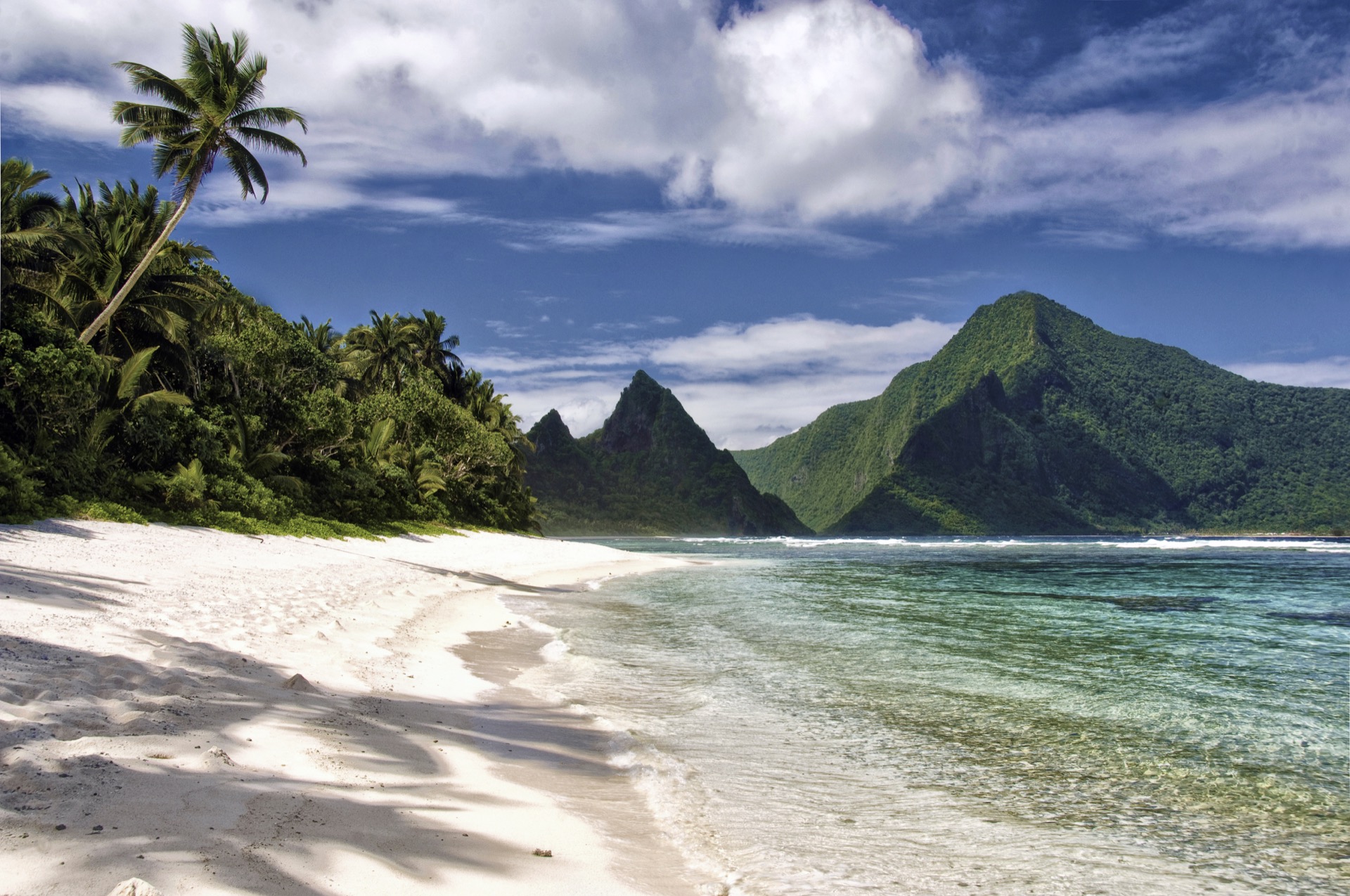 US National Park Service / Wikimedia Commons (Public Domain)
 - Rainmaker Mountain (Mount Pioa) Viewable year-round, overlooking Pago Pago Harbor
A three-pronged volcanic plug and National Natural Landmark since 1972 that drives roughly 200 inches of rain a year onto Pago Pago Harbor — one of the wettest harbors on Earth. Rich in Samoan legend.
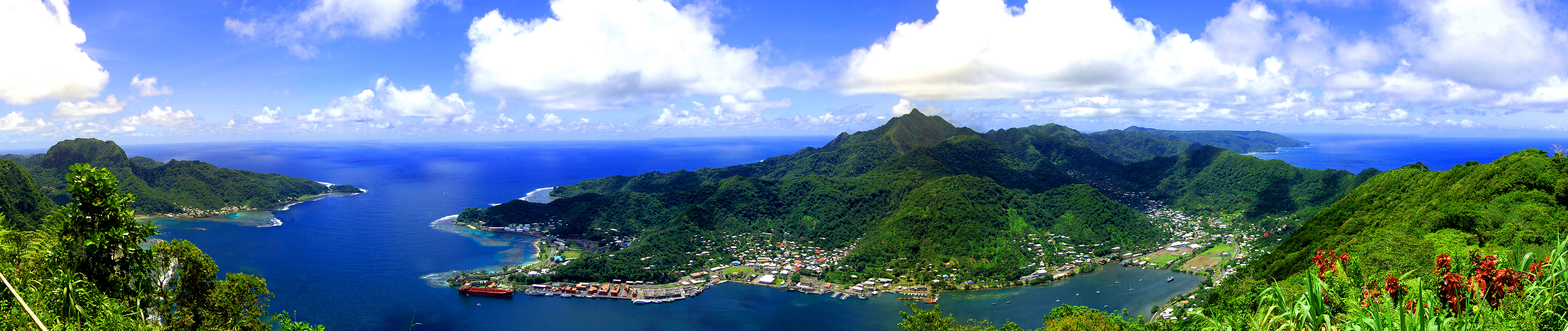 US National Park Service / Wikimedia Commons (Public Domain)
 - Poloa's WWII Pillboxes Open year-round, at the Poloa hub itself
Three concrete defensive pillboxes built in 1941-42 by US Marines directly at Poloa, listed on the National Register of Historic Places in 2012 — real WWII history sitting right at this zone's western hub, not a generic add-on.
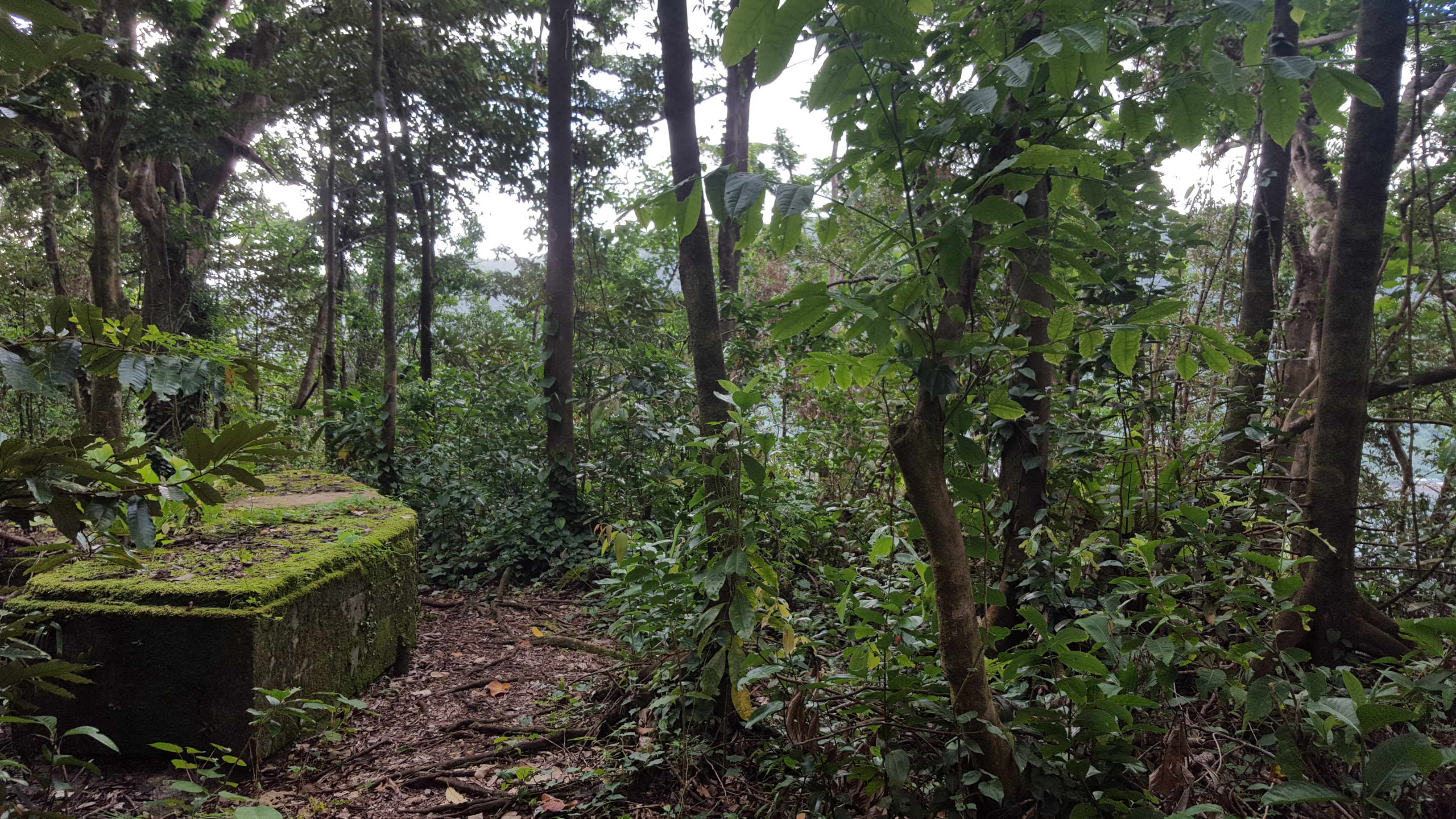 Wikimedia Commons (CC BY-SA 4.0)
 - 1st Samoan Battalion, the "Barefoot Marines" Historical context
A Samoan Marine Reserve unit that defended Tutuila from 1941-44, notable for wearing the traditional ie lavalava as part of their uniform. A Japanese submarine shelled Naval Station Tutuila on January 11, 1942 — real, documented, and directly tied to the Poloa pillboxes above.
- 2009 South Pacific Tsunami — American Samoa's Toll Historical context
The same September 29, 2009 tsunami that struck independent Samoa's south coast also hit American Samoa directly: 34 confirmed deaths here, with waves up to 72 feet in places and roughly $200 million in damage — a real, separate toll from the ~192 killed regionally, worth its own honest accounting rather than folding into the independent-Samoa story alone.
- StarKist Tuna Cannery & "Charlie the Tuna" Viewable from the road, Atu'u
A historic cannery that still generates a large share of the territory's jobs and revenue — genuinely distinctive to American Samoa's economy versus every other Pacific zone on this site. A roadside "Charlie the Tuna" statue, the brand's real mascot, is a well-known photographed landmark.
- Turtle and Shark Legend, Vaitogi Open year-round, south coast Tutuila
A real, well-documented Samoan legend site at a U-shaped lava cove — a genuine cultural and natural stop distinct from any surf content.
- Aunu'u Island's Red Lake Day trip by small boat from Auasi
Vai Lahi, a genuinely reddish volcanic crater lake and National Natural Landmark since 1972 — American Samoa's only natural lake, and the only place on the territory with true quicksand.
Two of the eight — the 1st Samoan Battalion history and the StarKist cannery/Charlie the Tuna — run without a photo here. The Battalion is historical context without a single-site photo candidate; the one Commons image of the Charlie the Tuna statue falls below this site's 800px minimum-dimension floor and separately carries a trademark notice for the branded mascot it depicts, so it runs as text rather than force either issue through.
Questions people actually ask.
Do US citizens need a passport to visit American Samoa?
Yes — and this genuinely surprises most Americans. American Samoa is the one US territory that maintains its own border control, distinct from the mainland. US citizens need a valid passport or a certified US birth certificate, plus proof of onward/return travel, to enter. Pago Pago is also not a US port of entry, meaning connecting onward to the mainland requires normal CBP procedures elsewhere. Currency, driving side, and the emergency number (911) are all standard US, but entry itself is not a domestic-travel formality.
Is there any surf infrastructure at Tula or Poloa?
Honestly, no. There are no surf camps, no formal surf schools, and no licensed surf guiding anywhere in American Samoa. Both hubs are real, exposed reef and point breaks with genuine local knowledge behind them, but this is a bring-your-own-board, bring-your-own-repair-kit, self-navigate destination — not a serviced surf trip.
Where do I actually stay if there's no lodging at Tula or Poloa?
Real hotels cluster in greater Pago Pago — Tafuna and Nu'uuli — roughly 20-45 minutes' drive from either hub, and that's the honest answer for most travelers. The one authentic option closer to the villages themselves is the National Park of American Samoa's homestay program, which places visitors with local families in western-style houses or traditional beach fales, arranged through the park visitor center rather than a commercial booking.
What's the water like, and when should I go?
Warm year-round, roughly 81.5-85°F (27.5-29.5°C) — no wetsuit needed. Surf season runs May-October (dry season), the most consistent south swell window. Cyclone season runs November-April, peaking late December through early April, and overlaps the warmest water — treat it as the off-season for trip planning.
Disclosure & how this page works.
Straight talk: Some links on this page are affiliate links — if you book through them, Secrets of Surf Travel earns a small commission at no extra cost to you. We only link places and people we'd use ourselves, and coverage is never for sale. Those commissions are what keep this site running and fund the next trip.
Today, the "Search Vrbo rentals" and "Search Booking.com stays" links on this page are affiliate links — every vendor listing link is still a plain courtesy link. Agoda's partner search returned no inventory for this zone at all, a real platform gap deferred rather than forced. As partnerships with these local businesses come online, more links (and discount codes, where Secrets of Surf Travel benefits from their use) may earn us a commission, and this page will keep saying so plainly. Coverage is never for sale: nobody on this page paid to be here, and nobody can.
Every listing was researched in 2026 and is being verified in person. Prices, hours, and policies change — treat them as strong starting points and confirm directly with the business. And per the No-Reveal Code: you will find no surf spots on this page, ever.